LinksLocal Links Social Media My Other Websites Music Politics Others Networking Music DatabaseArtist Search: Website SearchGoogle: |
Warming Up a RiffThe Annual Francis Davis Jazz Critics Poll at Mid-Year
Note: This is a slight reworking of the essays I wrote for the Mid-Year 2026 edition of the Francis Davis Jazz Critics Poll, in what now counts as our 21st year. A few years back, Francis noted that his poll was now old enough to vote. This year, it's old enough to drink. And boy, do we have a lot to drink about! The essays are:
I've kept the introduction title here, because that's where I want to start. The title itself is from a Charlie Parker tune. It occurred to me because I feel like I'm always rewriting the same piece. Francis Davis got the poll running in 2006, when we were both writing about jazz in the Village Voice: he did the serious feature essays, and I mopped up the leftovers in my jazz consumer guide. Even then there was more quality jazz coming out than anyone could properly follow. We lasted past the firings of Robert Christgau and Chuck Eddy, but were frozen out after Rob Harvilla got sacked, as the Voice self-destructed. Capitalism may make the world go round, but it leaves a lot of waste in its wake. While I voted from the start, I wasn't really involved in the poll until a couple years later, when the Voice's IT department balked at publishing all the ballots. By then the initial "circle" of 30 NYC voters had expanded nation-wide to 99 in 2009, and to 120 in 2010. Francis always insisted that every ballot be posted, so Harvilla worked out a deal where I would host the ballots. After the Voice, Francis moved his poll to Rhapsody, then NPR, and finally to Arts Fuse — where I did the drudge work of hosting the ballots. I was happy to do so, and made myself increasingly indispensable to the operation, especially as Francis's health began to fail. (I wrote about this history in 2022's Memoirs of a Pollwatcher.) In 2024, I proposed running our first mid-year poll. I had been following mid-year best-of lists, and was upset over how few jazz releases were mentioned. I figured I had the mailing list and the website tools, and could use a break from political news where the big question was how long Biden would hang on to the Democratic nomination. I started late, and had lots of email problems, but wound up with 90 ballots (Francis approved, but didn't vote). Struck with the breadth of the selections, I wrote an essay called Diversity Brings Riches. I was less interested in who won (Vijay Iyer, Charles Lloyd, and Mary Halvorson) than in how many albums got mentioned (366 + 109 in Rara Avis), over half of which I hadn't heard. I never was into winner-take-all beauty contests. I wanted to know about everyone, and everything. Francis kept his poll going for 19 years, until he died in April 2025. I figured he deserved a 20th, so I intended the 20th Annual Poll as a tribute to him, and saw the Mid-Year 2025 Poll as a practice run. I wound up exhausted and disappointed — the number of voters dropped from 177 to 168, the comments I invited rarely panned out (although the two for the piece on Davis were worth the effort; I'm sure I was right that much more could have been said). Then other perils and drudgeries of everyday life intervened, leaving me with doubts about carrying on. However, by June this year, I started feeling more confident, and once again I relished a break from the political news (especially the extraordinary stupidity of the war Trump had blundered into). I had started Notes on Everyday Life, where I wrote long pieces on the Trump-Netanyahu wars, but it's frustrating trying to reason about politicos who are so deluded and deranged. It's not like we're on the cusp of finding some magic evidence that will bring them down. We're drowning in a tsunami of evidence, and have been for years — as anyone I could conceivably reach must already know. We should be smart enough as a species to figure it out, but unfortunately we're run by people trapped in the tunnel vision of their own selfish interests, cloaked in a "society of spectacle" that doesn't "manufacture consent" so much as it renders dissent unimaginable. Yet most people can still go about their everyday lives, not oblivious to the drudgery and horror spreading everywhere, but detached enough to still be functional. And those who can still create art keep doing so. Granted, in many areas of the arts, much of the never-more-than-marginal money that once was available has dried up, a victim of the unprecedented transfer of money, both real and merely notional, to the tech and finance moguls, with their now relatively poorer cousins in what used to be called "the real economy" — the one where actual goods are made and personal services are rendered — scrambling bitterly to keep up. But jazz musicians and labels have lived on so little for so long they're used to surviving, and in many cases thriving, in this encroaching wasteland. Few things more clearly attest to the endurance of the human spirit and the drive for creativity than the uninterrupted and unstoppable torrent of brilliant new jazz albums we've already seen this year. But who has heard about them? Who has enjoyed them? Very few. The problem I see is threefold:
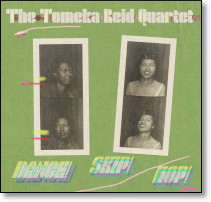
I don't have a solution to these problems, especially the third. (Well, not here. As an engineer, I have lots of ideas, but none we can do much about any time soon, other than the individual's last resort, "just say no!") But I figured there was one little something I could do about the first two: run another mid-year poll. This helps with the media problem by offering you a single source for a lot of basic information, presented in a consistent way, with no ulterior motives or hidden agendas. And this helps with the cornucopia problem by employing many expert critics to make an initial pass at listing the year's most interesting albums. We compiled the best-of lists from 127 critics. They identified 462 new jazz albums, and 137 rara avis (reissues/archival), a total of 595 albums (4 appeared on both lists). The sort may correlate somewhat with some notion of quality, but it also measures lots of other things, including how many critics heard a record, what kind of publicity it got, how extensively it was reviewed, and how useful and appealing that information was to the individual critic. Like all polls, this one may tell you more about its voters than about its subjects. To reach the top of the list, an album has to pretty much tick all the boxes for a large segment of the voters, but that segment could be 40% or less. This year's winner (Tyshawn Sorey) appeared on 35.4% of the ballots, followed closely by the runner up (Tomeka Reid) at 34.6%. Past poll winners have dipped much lower (24.2% for New Jazz Albums; 16.8% for Rara Avis). I wrote more about this in my draft articles on the archive website. Arts Fuse cut out several sections of my article here: one is just more statistics, the other circles back to the critics. I will pick up the latter in a bit. But before that, I want to pick up a section from the article on the New Jazz Albums chart: Consensus in Retreat, where I start to explain why my view of the poll focuses on large data:
But I do make an effort to spread all this noise out and see if I can find any larger patterns. The raw drafts, especially for the suppressed notes sections that Arts Fuse didn't see fit to publish, have many instances of my simplistic attempts to find signals in the noise. At some point, I hope to have better tools, and better organized data, but even then I expect that the questions I'll be asking draw more from intuition than conventional analysis. For instance, I wonder why MacArthur Genius winners do so well in our poll — the top two this Mid-Year, Tyshawn Sorey and Tomeka Reid, as well as Mary Halvorson in 5th place (winner of two polls), are prime examples — and/or why poll winners are likely to win prizes (Sorey, Reid, and Halvorson had all been strong contenders before becoming annointed). And why, for that matter, is Ken Vandermark the odd duck out, on both counts? (I don't even raise that question in the essays, because he's never been a factor in the poll. (I wrote about Vandermark and his MacArthur back in 2003.) My intuition tells me that publicity, labels, and distribution have as much or maybe more to do with poll placement as anything in the music, but nothing in this problem reduces very cleanly. So while lots of people look at polls and just see winners beating out also-rans, I look at the same poll and see questions and more questions. I've tried to explore some of those questions in my essays, but I keep generating more of them. I had hoped to write up the poll and be done with it 7 days after deadline. Now we're at D-Day + 18, and I haven't come close to explaining what it all means. I wrapped up the writing not because I was done, but because it's not really my poll, so I felt I needed to share what I had, and move on. The poll exists because Francis started it. But it continues because a community of critics want to keep it going. I've kept returning to this theme over the years, an old riff that can always be warmed up. In business terms, jazz is extremely marginal music. Efficient markets should have wiped it out, yet every year more musicians produce more albums, supported by a tiny number of fans, some of whom write about it, because they care and deem it important, or simply worthwhile. I find that not just aesthetically pleasing, but heroic. Notes on Everyday Life, 2026-07-23 |