|
An occasional blog about populist politics and popular music, not necessarily at the same time. LinksLocal Links Social Media My Other Websites Music Politics Others Networking Music DatabaseArtist Search: Website SearchGoogle: Recent Reading
Music DatabaseArtist Search: Website SearchGoogle: |
Blog Entries [1090 - 1099]Sunday, September 13, 2015 Weekend RoundupFriday was the 14th anniversary of the 2001 Al-Qaeda "attack" against America, when nineteen Arabs (mostly Saudis) hijacked four airliners and committed suicide by flying those planes into iconic buildings in New York City and Virginia (and a Pennsylvania corn field). The media went berserk, describing all of America as "under attack." The political class decided this was war, and vowed to return the fight back to foreign lands -- which, after all, is the only experience any of them had ever had of war. Within days the intelligentsia, including way too many who had identified with the left, launched a pre-emptive attack on pacifists and anyone else who tried to talk reason -- especially anyone who expressed doubts that America was wholly innocent of wrong-doing. I experienced those "attacks" from a barely comfortable distance, visting a friend, staying in her apartment above Grand Army Plaza in Brooklyn. I could stick my head out the window and see the smoking (still-standing) towers, and could watch masses of people trudging home on foot as the subways were stopped. One of my first thoughts was that I knew it wasn't an atomic bomb because the pedestrians' panic had subsisted a mere three miles into Brooklyn. I tried to imagine what it must be like to be under siege in Sarajevo -- the most graphic experience of war from the 1990s -- and concluded that this wasn't at all like that. War wasn't something that ordinary people in New York felt that day. War was just a concept in the fevered minds of the people who talk on TV. For people who were in lower Manhattan that morning, of course, it was immediate: a disaster on a scale no one had experienced or was prepared for. But just a few miles away from "ground zero" more than anything else it was damn inconvenient. Like the Con Ed blackout I lived through in the 1970s. Well, in some ways worse, but on that order. Of course, if you knew someone who was killed that day, it also had a tragic dimension. I knew one such person, a niece (the wife of my first wife's nephew), and I spent a fair amount of time the next two weeks with the family, so I did feel something other than inconvenienced. But I didn't experience that as war, but as random, sudden, violent, shattering -- like when my uncle was killed by a drunk driver, leaving his wife and three pre-teen children to fend for themselves. My niece had two children, one so young he'd never remember her. The manner of her death was obscenely worse, giving us days of uncertainty and months before they identified some of her DNA in the megatons of rubble. And something like that happened to nearly 3,000 other people, their families and friends, in not much more than an instant. Still, that's only about one in 2700 New Yorkers (or one in 94000 Americans, just barely one-thousandth of 1%). No one else I knew in New York in those weeks had such bad luck. I wish someone would sift through the new coverage and punditry we saw on TV those first few days and edit a fair sampling of the insanity we saw. I clearly remember Shimon Peres and Benjamin Netanyahu smiling and cackling about how this was "very good" for Israel, and John Major lecturing on how much the Uk could teach America about how to handle terrorism. I remember a bit of fuzzy nighttime footage of a rocket explosion near Kabul being aired over the presumptive banner line "America Strikes Back." I remember the junior senator from New York, Hillary Clinton, standing on the Capitol steps and daring Al-Qaeda to take their best shot at her. I spent much of the day thumbing through a book of photographs called Century, looking at images of the real wars that plagued the past century while the phony warriors nattered on TV. It helped to keep it all in perspective, something almost everyone was losing. For me, it wasn't hard to see that no good would come of such war fever. But how much bad would come was always hard to grasp, or even imagine. One might cite the nominal costs of 14 years of non-stop war, of endless war, of war with no prospect of victory or redemption -- over 6,700 US soldiers dead, many more maimed (physically and/or psychologically), trillions of dollars spent, and many times that much death, destruction, and destabilization that those wars have inflicted abroad -- but I'm ever more worried about the cognitive toll those wars have taken on American society, indeed on the ability of Americans to think clearly and to engage the world constructively. Another thought I had on 9/11 was even rarer, and I think more profound: it occurred to me that the "attacks" were a "wake up call" -- a reminder to look into your own self to see whether anything you've done might have contributed to this tragedy. Needless to say, no notion was more unwelcome in post-9/11 America. The idea isn't to partition blame. Rather, it is to make certain that we do not spread the blame with future acts. Within a few months the United States had done just that: protected against self-awareness, obsessed by a sense of self-righteous victimhood, Bush marshaled the full force of American military power not against the individuals who plotted 9/11 but against whole nations of people who had nothing to do with the "attacks." He thereby greatly compounded the crime many times over, something he could do because so few Americans questioned the assumptions he made: that America's fortunes depended on the world's fear of America's military power; that the "attacks" had been an affront to that power, which could only be restored by reassertion; and that the United States, due to its unique virtue, was uniquely entitled to project that power over the rest of the world; and that the American people would continue to support a bold leader (like Bush) who would restore America to its rightful greatness. It is difficult to overstate the amount of hubris, let alone ignorance, that feeds this worldview. Fourteen years later, by any objective measure, the stance has failed. Yet when Obama, recognizing that America's power to impose its will on Iran's leaders and people was limited, resorted to negotiating a framework that would at least ensure that Iran could not develop nuclear weapons -- the same "hot button" issue that Bush had used to provoke his ill-fated war in Iraq -- every single Republican senator and presidential candidate rose in opposition. Their objections have nothing to do with what Iran may or may not do. They object to the deal because it represents a retreat from their belief that American might (American greatness) is the answer to all problems in the world. Nonetheless, it is not just the Republicans who continue to cling to these core assumptions. You'd be hard pressed to find any example where Obama has rethought why America is involved in the Middle East, or reconsidered what effect that involvement has had. The Iran deal is merely a change of tactics: he continues to assume that Iran is America's (and Israel's) mortal enemy, and that it meant to escape the omnipresent threat of American (and Israeli) attack by developing its own nuclear deterrence. The difference is that Obama chose a more realistic, more effective, and less risky method of preserving nuclear monopoly than, say, Bush did while allegedly pursuing the same goals viz. Iraq. Of course, realism, effectiveness, and risk-limits are among the things Republicans hate about the deal. They suggest that Obama is not a true believer in America's greatness. Perhaps they even recall the Bush-era neocon mantra, "anyone can go to Baghdad; real men go to Tehran." Obama isn't their idea of a real man. Simple as that. Some scattered links this week:
Ask a question, or send a comment. Monday, September 7, 2015 Music Week
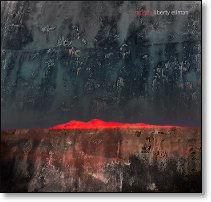
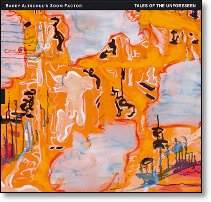
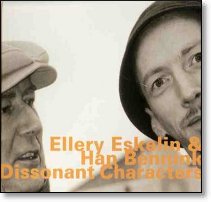
Music: Current count 25453 [25408] rated (+45), 426 [429] unrated (-3). Spent nearly the whole week listening to old jazz from Werner Uehlinger's Hatology label (or hatOLOGY, as he prefers), knocking off another 29 albums this week. As expected, the quality (at least as reflected in my grades) is dropping a bit: 6 A- records this week, so 20.6%, down from 28.5% (6/21) last week and 36.1% (26/72) from the previous database. Three of those six were from Anthony Braxton, so that won't happen again, and one of the others featured Ellery Eskelin -- I'm only aware of one more record by him that I haven't heard, something called Arcanum Moderne. Still, the next few weeks -- I have a list of 55 more Hatology albums I haven't heard yet, and I'm only up to about 2006 in Discogs' listings -- are bound to reveal some surprises. As the rated count shows, I've been working very fast. Two Braxton albums fell just short, mostly because at the time I didn't feel like giving either a second spin (the one with Max Roach was most deserving of further attention). I pulled the earlier Urs Leimgruber albums off my unplayed shelf. The first (Statement of an Antirider) was by far the best solo sax album I've heard in the last two weeks, out of way too many. I played it twice, wrote it up as an A-, then dialed it back a notch. I took a couple flings on related non-Hat albums (Ran Blake, Anthony Ortega) but they didn't turn up much. Not much new jazz this week, but I did manage to check out three new albums with saxophonist Jon Irabagon. I was surprised to note that I had only given one of his own albums an A- in the past -- 2010's Foxy -- because he must have more than a dozen side credits rated that or higher (mostly MOPDTK, but most recently Barry Altschul & 3Dom Factor: Tales of the Unforeseen). I took a look at his website calendar for July-August and he was working virtually every day, with almost as many different groups. He may be spreading himself thin, but he sure gets around. I expected better things from the Dave Douglas (with Irabagon) and Irabagon (with Tom Harrell) and gave them plenty of line. Nice things on both, but neither managed to break out of the postbop mold. Still, I came up with one superb album for the week, from guitarist Liberty Ellman. He writes good parts for all three of his horns, and I love Jose Davila's thumping tuba, but the solo that always grabs my attention is by alto saxophonist Steve Lehman. Ellman gets a lot of side credits for mixing, including the last several albums by Lehman and almost everything else on the label they share, Pi. This is the third A-list album of four releases on Pi, the highest batting average of any label (pretty much year after year, by the way, so don't let the small sample size fool you). The others are Henry Threadgill's In for a Penny, In for a Pound and Amir ElSaffar's Crisis are the others; I have Steve Coleman's Synovial Joints way down at B+(***), and a fifth release, Jen Shyu's Sounds and Cries of the World just arrived and in the queue. Probably have enough for a Rhapsody Streamnotes column, but I feel like I'm in the middle of all this Hat stuff. (I do: 128 records; but just 48 new, only 5 A-.) Also, I don't know how useful this file is (even to myself), but I fixed some typos in Music Tracking 2015 so now at least it's viewable. I also added everything in AMG's weekly "featured releases" up through last Friday, although I haven't gone through the other "review sources" in at least three months. Having an absolutely miserable day today -- perhaps a cold on top of the worst allergies I can remember since moving west. Comes on the second straight 100-degree day here, although only the seventh such day this year. (It may be a record hot year for the world world, but not for Kansas.) Happy Labor Day: a good day to remember that working people, and not profits or property, built everything you hold dear in America. New records rated this week:
Old records rated this week:
Unpacking: Found in the mail last week:
Ask a question, or send a comment. Sunday, September 6, 2015 Weekend RoundupThis week's scattered links:
Ask a question, or send a comment. Monday, August 31, 2015 Music Week
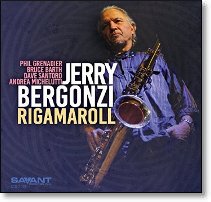
Music: Current count 25408 [25368] rated (+40), 429 [426] unrated (+3). Christgau makes a big point about never writing about an album until he is sure what he thinks about it, including a firm grade. I've never been so certain about anything, or at least about music, so I've always regarded my grades as provisional approximations. That doesn't mean that I don't take due diligence. I very rarely grade an album A- on one play, although I also rarely give a second play to a B+(*) to give it a chance to rise of fall a notch, or a B- to see how bad it really is. Still, it seems like the line between B+(***) and A- is unusually cloudy this week. The Barry Altschul album and a couple of the old Hat discs are pretty solid, but all the rest of the A- records are borderline. Some of the B+(***) come close, too -- in particular, it's tempting to bump up everything Ellery Eskelin does, while on the other hand, I rarely get excited enough by Paul Bley and/or Jimmy Giuffre. I finished digging through the ECM records on MPE. They only go back to March (or maybe later, as the label's German and US release dates aren't always the same), so there are still some 2015 ECM releases I missed -- notably everyone's favorite, Jack De Johnette's Made in Chicago. Despite the "[dl]" notation below, everything I rated was based on streaming, and the user interface requires me to login again every time I finish an album, so there's a built-in bias against second plays. The only ECM record I downloaded was Elina Duni's, and I haven't tried burning a copy yet, but it struck me as something I'd be willing to do a little work to hear again. (She's an Albanian folk singer, but works with a first-rate Swiss jazz group, Colin Vallon's piano trio.) Falling just short of that are two other B+(***) albums by Gary Peacock and Stefano Battaglia -- good records, but not as exceptional. Jerry Bergonzi's new record is probably the most borderline of all. I must have played it six, maybe as many as eight, times, and every time I was ready to file it as a high B+ I'd hear something special -- always from the tenor saxophonist. The problem is he get diluted with a second horn -- no knock on Phil Grenadier, whose trumpet sparkles throughout, but I prefer Bergonzi's trios and quartets, albums like Tenor Talk and Simply Put. After Christgau declared Stuff Like That There Yo La Tengo's "loveliest album ever," I almost reflexively considered it an A-, but then I looked up Fakebook in my database and was reminded that I had only given it a B+(*) -- the best thing about their covers album was that it showed that they owned some of the same esoteric records I did. Aside from the Hank Williams, this new batch of covers is even more esoteric, sometimes a plus, sometimes not. And while it is lovely -- it reminded me of one of those later, hitless Everly Brothers albums -- much of the middle wasn't especially distinguished. But it ends on a song so good I started having second thoughts. Just didn't follow up on them. Going into the week, it wasn't clear what I would do down in the old music section, but last week I had followed the new Gary Peacock album with an older Paul Bley duet, Partners -- a 4-star from the Penguin Guide list, and that got me to looking at what else Rhapsody had from Bley that I hadn't heard before. That's when I discovered that Rhapsody had added a sizable chunk of the Hatology (aka Hat Hut and Hat Art and Hat Now) catalogue. Hat was one of a handful of European labels that rescued avant-jazz in the late 1970s -- the only more important label, at least for American avant-gardists, was Black Saint/Soul Note (in Italy), with DIW (Japan) coming a bit later, and Leo (UK) and FMP (Germany) focusing more on European artists. Checking back through my database, I had previously rated 72 Hat albums, and had another 109 in the "shopping" list. To give you a taste, all of the following are rated A- or higher ([A] so marked):
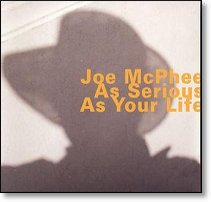
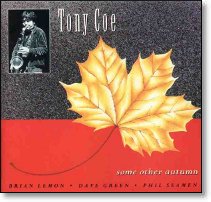
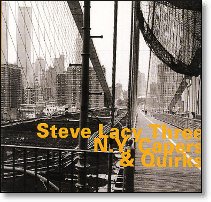
So that's 26 A/A- records, before I added six this week (plus one more after the cutoff, so next week). Possible I'm loosening up the curve: I'd expect the percentage of A-/A records to decline over time, having cherry-picked the best prospects early on. Indeed, it has: the legacy share is 36.1% (26/72), whereas this week's haul is down to 28.5% (6/21). I expect it will drop further as I keep tapping into this resource. By the way, I've run across a couple cases where cuts are missing. If that seems minor, I may just hedge, but Mal Waldron & Steve Lacy: Live at Dreher Paris 1981 was reduced from 4CD to three cuts (all takes of "Round Midnight"), so there's nothing a critic can do about that. Also, I haven't found much here that predates the launch of the Hatology (or as they prefer to style it, "hatOLOGY") label. There are several weird things about Hat's business model. One is that they tout their releases as "limited editions" -- usually that means a run of 3000 units -- so their most popular titles tend to run out of print, while they periodically binge and put the rest on deeply discounted sales (I've picked up a lot of titles for $5 or less over the years). Currently Hatology is used both for new releases and reissues of out-of-print titles. One pair of grades is worth breaking down. The two Joe McPhee discs are both solo, one coming in at A-, the other B-. As near as I can figure it, McPhee's 1976 album Tenor was his answer to Anthony Braxton's 1969 For Alto, an album often held to be brilliant as well as uncompromising -- Penguin Guide awarded it one of their crowns -- but which I've always found to be plug ugly (I gave it a D based on an LP I no longer own). Tenor takes the same approach and, given the larger horn, digs even deeper. If I were to revisit For Alto (and I do have the CD somewhere) I would probably bump it up some, but I found myself anxious for Tenor & Fallen Angels to end long before it did. On the other hand, As Serious as Your Life varies the instruments -- McPhee is also a superb trumpet player (actually, pocket cornet here), and will astonish you on crashing piano, and he adds some electronics to a couple cuts so he actually has a beat to bounce off, so it winds up being a very different album. The Tony Coe album is another Penguin Guide 4-star that I found while looking for Hat releases -- he has a couple of them, a long association with Derek Bailey and/or Tony Oxley, an avant side far removed from his roots with Humphrey Lyttelton in Britain's trad jazz movement. Could be this swing album sounded even better as a break from all the avant-jazz. At any rate, I found it delightful. One more thing to note: with the author's permission, I've revamped the Michael Tatum archive. Hopefully in the future we'll add some more old pieces, but for now it has all of the A Downloader's Diary columns (including his latest), all properly indexed, a total of 978 albums. New records rated this week:
Recent reissues, compilations, and vault discoveries rated this week:
Old records rated this week:
Unpacking: Found in the mail last week:
Ask a question, or send a comment. Sunday, August 30, 2015 Iran DealI want to start with the text of a short speech that Laura Tillem gave at a demonstration at the office of Rep. Mike Pompeo (R-Koch). It does a nice job of summarizing the basic points in favor of the Iran Deal, which Pompeo, in typically kneejerk fashion, opposes.
Of course, this is tailored a bit for the Wichita, Kansas audience. The appeal to "open-minded" and "independent" Republicans is partly because the Republicans have such a stranglehold on elective office in Kansas, but such people have been scarce since the Great 2010 Purge. Still, but Sens. Roberts and Moran embraced Obama's normalization efforts with Cuba (as well as his TPP nonsense), and both opposed Obama's request for authorization to use force against Syria (although they didn't object when Obama didn't ask, as in Libya or later in Syria once ISIS clouded the issue). On the other hand, Pompeo, like Sens. John McCain and Lindsey Graham, never saw a war he didn't want to jump into (he's a West Point grad, has run aerospace and oil businesses, rushed to the head of the NSA fan club, and did yeoman service as one of the Republicans' Benghazi! clowns -- he's so intransigent he made Bill Kristol's dream list of "October Surprise" presidential candidates). The case for supporting the Iran Deal is so overwhelming you have to question the sanity (and/or ethics) of anyone opposing it. Netanyahu opposes it, as far as I can discern, for three reasons: (1) because he is in principle opposed to anything that reduces the usefulness of a marketable enemy (Iran is the prime example, because Americans remain prejudiced against the people who overthrew their beloved Shah, and because Israeli leaders need foreign distractions to avoid talking about the Palestinians); (2) because the internal political dynamics of Israel favors right-wing leader who prove their toughness by never compromising with anyone (even though Israelis negotiated in private with the PLO pre-Oslo, when they refused to agree on a shape of a table for public meetings, and are reportedly negotiating in secret with Hamas now -- if/when such negotiations bear fruit, you can be sure that right-wing leaders like Netanyahu will condemn and undermine them); and (3) Netanyahu has made a personal ploy to bind his party to the Republicans in some sort of grand anti-Obama coalition, which thus far the Republicans are playing along with (among other things, this makes Netanyahu look to his homies like a big player in American politics, and encourages Americans to view Likud as the unified face of Israel). None of these reasons have to do with the effectiveness of the Deal at curbing the Iranian nuclear weapons threat, suggesting Netanyahu never took the threat seriously in the first place. (Gareth Porter wrote a whole book to that effect: Manufactured Crisis: The Untold Story of the Iran Nuclear Scare [2014]. Trita Parsi wrote an earlier [2007] book, Treacherous Alliance: The Secret Dealings of Israel, Iran, and the United States, on the relationship of Iran and Israel over time, pointing out that Israel discovered an existential threat in Iran not when the Ayatollahs came to power but when a new enemy was required after Iraq was disarmed in 1991.) Obama, on the other hand, seems to have taken the Iranian threat seriously, inasmuch as he bothered to build a coalition with Russia and China that put serious teeth into sanctions, then used that leverage to negotiate a strictly verifiable Deal that ensures that Iranian nuclear technology cannot for many years, if indeed ever, be used to build nuclear weapons. Anyone who took the Iranian threat seriously should be delighted by the Deal, and anyone who isn't -- that is, anyone who claims the previous regime of harsh sanctions, clandestine warfare, and periodic threats of Israel and/or the US bombing select targets would be more effective than inspections based on official agreements -- cannot be taken seriously. That means Netanyahu and his AIPAC cronies, and it also means the Republicans. The latter's rejection of the Deal is little more than an effort to tarnish one of Obama's signature accomplishments, built on the casual prejudice that Obama and the Democrats are intrinsically weak on security, and the even more casual assumption that Republicans, by snarling more, are tougher. (I won't bother demolishing this, in large part because I think Obama is already way too belligerent for the nation's good.) So most Republicans see this as a game, one they've been playing without much evident downside (forgetting Bush-Cheney), so they don't expect anyone to call them on their warmongering. On the other hand, it's interesting that they agreed to a process they cannot possibly win -- Obama only needs to sustain a veto, which can be done by the Democratic minorities in either house -- so no matter how much they rant and rave the deal will go through. And if, say, Ronald Reagan's demagogic attacks on Jimmy Carter's Panama Canal Deal in 1980 are any indication, they'll never act on what they're threatening now. (Indeed, even when Reagan's VP became president and invaded Panama, he didn't make any effort to renege on ceding the Canal to Panama.) Still, the Republicans' hot air campaign isn't harmless. Nor should it be painless for them. Every Republican who votes against the Deal should have to account for their stance in the next elections. They should be painted as warmongers: a party that so loathes the idea of diplomacy that they'd rather shoot first, and a party that, despite all the evidence to the contrary, believes that a quick show of force is the answer to all of America's problems in the world. In particular, their opposition to the Iran Deal shows the hollowness of their now common regrets over the Iraq War -- one that was started by Bush in 2003 over the same "WMD" charges, where Bush not only refused to negotiate but insisted that UN inspectors, which had not shown any evidence that Iraq had the alleged WMD, stop their work. What Obama has done is diametrically opposite to what Bush did with Iraq. It very predictably ensures that: (1) Iran will not be able to develop nuclear weapons for the duration of the deal, well beyond 10 years; (2) Iran will continue to be ruled by a stable government, and will not collapse into chaos as Iraq has done; (3) America will not earn new legions of enemies due to attacking another country. In doing this deal, it's hard to see any real cost to the US. Maybe some US defense contractors might lose some Persian Gulf business if Iran seems to be less of a threat. And oil prices may dip as Iran's oil enters the world market. But is that the platform Republicans want to run on in 2016: more arms jobs and higher gas prices? You can see the attraction for someone like Pompeo, but how many Americans actually live in the pockets of the defense and oil industries? -- as compared to, say, how many only pay the bills? (Lest you object that letting Iranian oil out into the world market would accelerate global warming, that's attacking the problem at the wrong end, with the wrong solution. Right now the main cause of cheap oil is conservation, and the main effect is to make particularly nasty oil, such as the Alberta Tar Sands, uneconomical.) On the other hand, the cost of a war to topple and replace Iran's regime would run into trillions of dollars (first approximation: Iraq + Afghanistan + another 50%) -- given the GOP's tax lock that adds to a national debt they already deem insupportable (although they won't say that if there's a Republican deficit -- most of the run up came under Reagan and "deficits don't matter" Cheney). The side-effects of such a war are incalculable, but one is that it will validate the argument that the only defense against American/Israeli aggression is to develop nuclear deterrence. Republicans might try to argue that harsher sanctions would suffice to contain Iran, but the only example of such they can point to is nuclear-armed North Korea, probably the most dangerously deranged state in the world today (unless you count Israel and the US -- i.e., the countries which actually do attack other countries with no thought to the consequences). The biggest problem I see with the deal is that it shows Obama and the Democrats to be not only smart and shrewd but rigorous and tough. The latter trait allows them to sell the deal on the grounds that it will be effective at ending a threat, burying the fact that Iran has never actually threatened to develop, let alone use, nuclear weapons. It allows the Democrats to continue portraying Iran as an international scourge, when in fact the balance of wrongs between the US and Iran is tilted the other way. And by continuing to demonize Iran, we give up opportunities to align with Iran to help stabilize the Middle East. Not that Iran's interests naturally align with America's, but mutual engagement might help both countries move towards peace, stability, democracy with respect for minority rights, open trade -- the sort of things that are mutually agreeable precisely because they are universally aspired to. Ask a question, or send a comment. Monday, August 24, 2015 Music Week
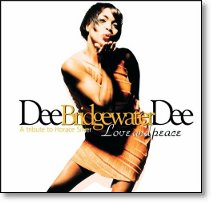
Music: Current count 25368 [25326] rated (+42), 426 [426] unrated (+0). Another big, busy week. Rhapsody Streamnotes came out on Wednesday, so some of this week's loot appeared there. I've added a Comments section to the archive file. The comments in question were scraped from emails from Facebook, mostly in response to a notice I posted. I don't know whether I'll do this as a regular feature. Depends mostly on whether I get feedback that adds to the long-term value of the piece: the clincher this time was Clifford Ocheltree's discography note on Huey "Piano" Smith. Other valuable points/tips are that the A-rated Irène Schweizer/Han Bennink album, Welcome Back, is on Bandcamp (as is about one-third of Intakt's catalog, including A- from this year: Schlippenbach Trio, Marilyn Crispell/Gerry Hemingway, Chico Freeman/Heiri Känzig, Christoph Irniger Trio, and Oliver Lake/William Parker -- looks like a "label of the year"), and that Phil Overeem's "Mid-August Top 50" list -- a big help for me recently -- can be found on his blog. (I've added his blog to my "Music" list on the left.) Since then I've spread out in all directions. I complained some while back that Rhapsody got rid of their interface for browsing new releases in genres, but it turns out that they merely hid it -- no doubt, as they like to say, "to improve your experience." As I tweeted, I took a look at their new folk releases and picked out three, all rated B+(***) below: Bobby Bare Jr: Don't Follow Me (I'm Lost); Lindi Ortega: Gloryville; and Rod Picott: Fortune. I then turned to country but didn't do so well (Emmylou Harris & Rodney Crowell, Shelby Lynne). Another resource that offered some things to check out is Robert Christgau's new iteration of Expert Witness at Noisey. Unfortunately, the first two weeks haven't yielded anything that I've been tempted to A-list (Miguel came closest the first week, while I had dismissed Sam Smith with prejudice when the first hype appeared; Hop Along is just too idiosyncratic vocally, and I panned Go! Team when it came out, but I rather like Girlpool). Don't mean to complain, just noting a minor anomaly. I'd also like to plug We Are Nots over any of the girl-rock bands in the second column. And wonder when he'll get to Sleaford Mods? The new one is the third A- I've listed (with their singles comp just a notch lower). And the old ones are on Bandcamp, so you don't have to take my word (or wait for Bob's): Another new resources is that I finally figured out how to use MPE Player to get recent ECM releases. They only go back a few months, so they don't have this year's early releases, including several I missed (Jack DeJohnette, Julia Hulsmann, Kenny Wheeler; I did manage to hear downloads, now lost, of Tim Berne, Jakob Bro, Vijay Iyer, and Chris Potter). Awkward interface, puts a premium on getting the record right the first pass, but does seem to have a download feature if I find anything worth hearing again. (The Gary Peacock Trio, with Marc Copland and Joey Baron, comes closest so far. PS: Tried downloading Elina Duni Quartet, which seems to have worked.) The Miles Davis boxes were done in one pass. I might have given the Acrobat an A- if I had the actual box, but Rhapsody only made the first half available (as Volume 1) and doesn't offer the booklet. The selling point is that you're catching John Coltrane in transition from sideman to superstar, a moment of some historical value, but not as rewarding musically as the later recordings where he really made his mark. I haven't seen enough of Acrobat's boxes to have any real guess as to the documentation. On the other hand, I'm pretty sure that Legacy's documentation and packaging are first rate. And I've heard nearly all of the music there -- Rhapsody dropped a couple tracks from the first disc -- albeit only once. Of that, I'm quite certain that the second and third discs are really superb -- not that I'd pick them above the best live sets already available from the period (the various Plugged Nickel packages from 1965, Live-Evil and Dark Magus from 1970-73). The fourth disc is more marginal (more like the Fillmores). The first I'm less certain about: it has the most reissued material, mostly from Miles Davis at Newport 1958, which when it came out in 2001 I dismissed with a B. Sounded better than that this time, but not quite A-list. Again, that's just one play (with a break midway), but it's also not stuff I have to recondition my ears to grasp. The old stuff this week is background to the new. I own a copy of Love and Peace but never got around to it, so I was particularly anxious to knock that off my todo list. The two disco albums and two live jazz albums could be described as varying degrees of competent. I'm still missing a well-regarded 1992 album, Keeping Tradition, but I've heard most of Bridgewater's later work, and it doesn't come close to the Silver set. Partners I had listed under Peacock -- a 4-star Penguin Guide record -- but careful inspection reveals Paul Bley gets top billing. I suppose I should go back and look through Bley's back catalog to see what I'm missing. I currently have 20 records graded, including his dazzling 1953 Introducing Paul Bley (with Mingus and Blakey), his 1958 Quintet (with Ornette Coleman), his 1965 ESP-Disk (Closer), and one more A-. Still working on the long-promised update to Robert Christgau's website. Any day now. New records rated this week:
Recent reissues, compilations, and vault discoveries rated this week:
Old records rated this week:
Unpacking: Found in the mail last week:
Ask a question, or send a comment. Sunday, August 23, 2015 Weekend RoundupSome scattered links this week:
Also, a few links for further study:
Ask a question, or send a comment. Friday, August 21, 2015 Thinking About the UnthinkableChristian Appy: America's Hiroshima and Nagasaki 70 Years Later: On Aug. 6, 1945, the US obliterated the Japanese city of Hiroshima with a single bomb. Three days later they repeated that feat with Nagasaki, demonstrating that the "total war" that had been fought for the past six years (actually, longer in China) would turn much more destructive in the future. Japan surrendered a couple weeks later, pretty much on terms they had (too discreetly) proposed in the weeks before Hiroshima: clearer messages could have spared us all the ordeal of nuclear warfare (but then mutual respect and understanding might have spared us so much more). I know people who every year mark the anniversary of Hiroshima with vigils, not because they remember the 100,000+ victims there any different than the other 60 million lives the war took. They mark Hiroshima because the weapon the US introduced there still looms over us with its threat to instantly devastate life as we know it. And they mark it because our own nation -- not the only one to possess such weapons but the only one to have actually used them on an "enemy" people -- has still not demonstrated the maturity and modesty necessary to put the age of nuclear terror behind us. Two pieces of evidence here: one is that the US, despite having negotiated a deal (the NPT) where the world's nuclear powers promise to dismantle their arsenals in exchange for the rest of the world pledging to never develop such weapons, continues to build new bombs and formulate war plans assuming their use; the other is that the US has engaged in conventional and guerrilla warfare almost continuously since WWII ended, using its nuclear weapons as an umbrella for an empire of bases that girdle the world, allowing the US to poke its nose into nearly every country around the world (and shun the few -- at least the little ones -- that deny its hegemony). Or maybe the second is just the reason and effect of the first. Another way to phrase the second is that the US has repeatedly failed to support international efforts to resolve conflicts (especially its own) without resorting to war. So where many thought the advent of nuclear weapons would make further wars unthinkable, American defense mandarins not only embraced the horror -- the classic is Herman Kahn's Thinking About the Unthinkable -- but have resuscitated the concept of limited war and applied it repeatedly (even though they've virtually never achieved their stated goals). I understand and appreciate anti-nuclear protesters, especially in the 1960s (which led to the Test Ban Treaty and the NPT) and in the 1980s (which led to several arms reduction treaties between the US and USSR). I also fully appreciate that Japan would have surrendered in 1945 regardless of whether the US bombed Hiroshima or Nagasaki. Nonetheless, those bombings don't bother me more than the rest of the war. I feel that it was inevitable that the bombs would be used once developed, and the end of WWII was as appropriate as any time could be: they were the icing on the cake, as if the fire-bombings of Dresden and Tokyo weren't enough, or the German death camps, or the Rape of Nanking, or the starvation of Bengals far from the fighting lines. They remind us, among other things, that by the end of the war the US had descended to the barbarity of its enemies -- that indeed the real enemy was war, and that it had morally crippled those it didn't kill outright. That realization gave rise to the UN as a forum for preventing future wars -- a failure nearly from the start, but at least the fear of another Hiroshima many times over, of what came to be called MAD (Mutually Assured Destruction), forced powers with no good will whatsoever to pull back from brinksmanship. Arguably, nuclear deterrence also thwarted a fourth India-Pakistan war in 2002, and has kept Israel safe from attack since 1973 -- no Arab nation even thinks of such a thing, even though Israel continues to strike Syria whenever it feels like it. I think it's fair to say deterrence works, but also that its driving force is fear, the effect of which is to preserve and nurture hostility or worse: our so-called "limited wars." Appy does a good job of reviewing Truman's "decision" to bomb Hiroshima:
Appy also writes about changing American attitudes to Hiroshima, which most recently appear to have hardened. For example, he writes about Laura Hillenbrand's 2010 bestseller, Unbroken: A World War II Story of Survival, Resilience, and Redemption:
Also see Susan Southard: Entering the Nuclear Age, Body by Body, on the bombing of Nagasaki -- adapted from her new book, Nagasaki: Life After Nuclear War. The second bomb has been much less documented than the first -- Southard seems to be aiming for a belated companion to John Hersey's first-on-the-scene reporting in Hiroshima. Lest you forget the immediate experience:
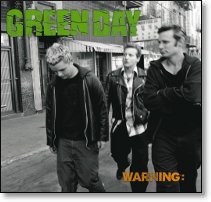
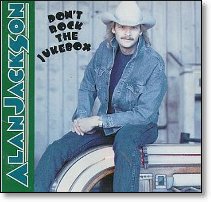
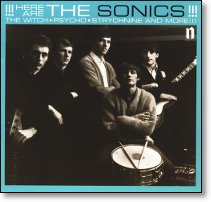
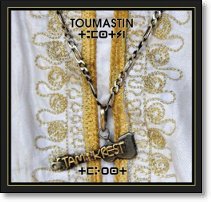
The Hiroshima and Nagasaki bombs were simple kiloton-range devices. The fusion-powered bombs first tested in the early 1950s were as much as a thousand times more powerful. J. Robert Oppenheimer famously argued against developing fusion bombs because the real-world targets were too small. Edward Teller was able to convince the US military not only to go ahead but to strip Oppenheimer of his security clearance, excluding him from future influence. With hawks like Teller clearing out all possible opposition, it shouldn't be surprising that virtually every proposal of a pre-emptive nuclear strike came from the US. Until the Soviet Union developed its own bomb, many hard-core anti-communists agitated for "preventive war." When American efforts in Korea stalled and Vietnam went from bad to worse, many hawks saw nukes as a way to snatch victory from defeat. Nixon's version of this was what he called his "Madman Strategy": the idea was to convince the Soviets that he was so crazed he'd risk destroying the world to avoid losing Vietnam. By the 1980s, Andropov was so unnerved by America's "first strike" threats that the Soviets almost started a nuclear war by accident. Even recently, the US was promoting the idea of nuclear bombs as "bunker busters" to "take out" deeply buried infrastructure in Iran and North Korea. In fact, every time an American politician makes a point about "not taking options off the table," the world hears a threat to use nuclear weapons. No wonder the US is so flustered by Iran: every time we look at them, we see a mirror image of the US. (Israel, of course, has the same problem.) Ask a question, or send a comment. Tuesday, August 18, 2015 Rhapsody Streamnotes (August 2015)My trip to the northwest pushed July's compilation all the way to the end of the month, but I've been knocking down records at a furious clip this August. Still, this is only average length for this year, where I've only done one Rhapsody Streamnotes per month, usually close to the middle. I suppose I could have waited another week and come up with something ridiculous. But I hit a logical endpoint in the "old music" section and I'm looking forward to doing something different there in the future. (Not that I know what.) The "old music" section is mostly the result of my attempt to fill in the gaps in Spin's Top 300 Albums of 1985-2014. When that list was published on May 11, I copied it down, noted my grades, and discovered that I hadn't heard 81 of those 300 records (27%). Not a big surprise. There's a generation gap between me and the younger critics who picked the list -- I know 1970s rock pretty well, but didn't review records during much of this period (1980-2003), so I had no reason to pay attention to things I wasn't likely to like. And while I like alt/indie much more than metal, say, I don't like it enough to write for Spin. (For diversity, Spin likes, and does a pretty decent job of covering, hip-hop -- 19.6% of their list -- but my tastes there are more underground, and I missed a lot of the 1990s gangsta bubble they're so fond of. Their EDM is about as spotty as mine -- making it hard to intersect -- and they only listed three country albums, one Africa comp, and no jazz.) On the other hand, since I got onto Rhapsody -- 2007 was when I started taking notes -- it's been more tempting (or at least cost-effective) to check out records other people like even when I'm pretty doubtful I'll like them myself. For instance, I wound up hearing 47 of the top 50 finishers in last year's EOY Aggregate (OK, only 42 of the next 50, 38 of the third 50, and with interest really starting to wane, 20 of the fourth -- although I later caught up with U2 and Fred Hersch). So the Spin list offered a form for working backward. Along the way, I picked up other records of likely interest by artists placing a record on the list. For instance, Green Day's American Idiot made the list, but Christgau had much preferred their previous album, Warning (A- to C+), so it didn't make sense to hit one without checking out the other. On the other hand I didn't bother rechecking records I had previously rated -- in Green Day's case, Dookie (also on Spin's list) and Insomniac (not on the list). In those cases, for your convenience, I listed my previous grades at the bottom. Of course, not every artist got the same treatment. I checked out an extra album for Aerosmith, M83 and Cursive and found that was more than enough. And I didn't feel like exploring Tori Amos or Killers at all. Of course, not everything was available on Rhapsody. I wound up with 10 records still missing (3.3%). I've heard that most of those are available on YouTube, but haven't tried chasing them down yet. (I did go to YouTube to find the Nots album, and I noticed a lot of unheard Ty Segall there -- Memphis artists. Segall's Manipulator was number 25 on last year's EOY Aggregate list.) Since then I've added a few more "old music" artists, a side trip from listening to their new albums: Kurt Elling, Alan Jackson, the Sonics, Tamikrest. The new stuff is relatively straightforward, although I should note again that one exceptional source of leads was Phil Overeem's "Top 50 of 2015 (So Far)" list (posted on Facebook, so no link), pointing me toward 79rs Gang, Dead Moon, Mdou Moctar and Nots among the A-list, and several more high B+s. Only three records came from my jazz queue (Adair/Aliquo, ElSaffar, and the magnificent Schweizer/Bennink disc) -- I had to chase James Brandon Lewis, and for that matter, Miles Davis, down on Rhapsody. Both Davis boxes, by the way, are incomplete on Rhapsody -- the Acrobat is only half there, the Sony just missing a couple cuts. I felt I had heard enough (in one pass) to offer a fair grade, but I would much rather had heard it all. (I do, by the way, never grade something I haven't listened to all the tracks I can hear.) In both Davis reviews I take pains to explain my limits. My hedge on the Acrobat box was to pick the lower of the two most likely grades. It could be that the missing material will nudge it over the A- cusp. Also possible that doc and multiple plays might make the difference, but that's pure speculation. Most of these are short notes/reviews based on streaming records from Rhapsody. They are snap judgments based on one or two plays, accumulated since my last post along these lines, back on July 29. Past reviews and more information are available here (6797 records). Recent Releases
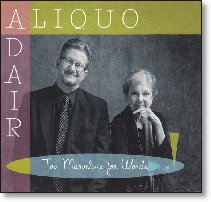
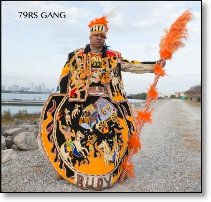
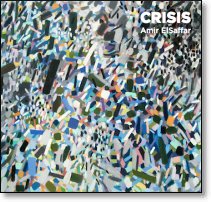
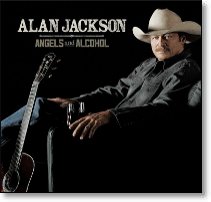
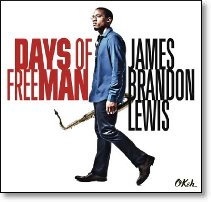
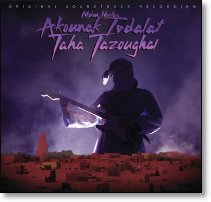
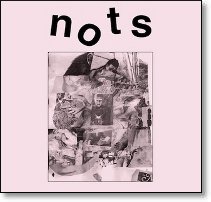
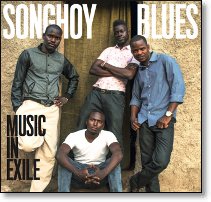
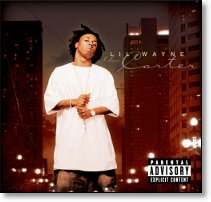
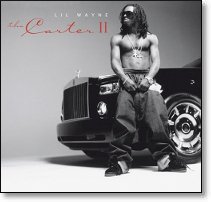
79rs Gang: Fire on the Bayou (2015, Sinking City/Urban Unrest): Big Chief Romeo Bougere of the 9th Ward Hunters and Big Chief Jermaine Bossier of the 7th Ward Creole Hunters team up to form the Soixante Dix Neufleurs Bande, aka 79rs Gang. A throwback to the great New Orleans Indian bands of the 1970s, though the beats are sharper and tenser, the jungle denser, the struggle harder. A- Beegie Adair/Don Aliquo: Too Marvelous for Words (2015, Adair Music Group): Piano and tenor sax quartet from Nashville, backed by Roger Spencer on bass and Chris Brown on drums. I hadn't run into Adair before, but AMG credits her with 48 albums since 1997 -- admittedly a rather cheesy list with lots of standards and tributes, piano music for special occasions (not just Xmas but Mother's Day), a Cocktail Jazz Party and Beautiful Ballads. She goes for standards here, especially Strayhorn with a dash of Monk. I am familiar with Aliquo, a mainstream tenor who really shines on the ballads. Perhaps too easy, but they earn their title. A- [cd] Alessio Alberghini/Garrison Fewell: Inverso (2014 [2015], Floating Forest): Duets, Fewell plays guitar, Alberghini mostly soprano sax, sometimes baritone. Originals plus two pieces by John Tchicai. Nice, intimate, "little gem" is the phrase from the liner notes. B+(**) [cd] Gregg Allman: Gregg Allman Live: Back to Macon, GA (2014 [2015], Rounder): Like Elvin Bishop, Allman realizes that the long-term career strategy for southern rockers is to revert to the blues, so he starts off here with Blind Willie McTell and works his way through Muddy Waters, Sonny Boy Williamson and Elmore James, also Ray Charles and Wilson Pickett, working in a few ravers from his old band. Saxophonist Jay Collins always hits the spot. B+(***) Takeshi Asai: French Trio Vol. 2 (2014 [2015], De Trois Cités): Pianist, based in New York, only bio I've seen (AAJ) gives his birth date as 1864 (presumably a typo on '8') but doesn't mention where. He has a couple New York Trio records, but also likes France, and Pascal Combeau (bass) and Maxime Legrand (drums) show why. B+(**) [cd] Baltazanis: End of Seas (2015, self-released): Guitarist, first name Costas, has previously recorded in the group Iasis. This is a postbop quintet (trumpet, keyboards, bass, drums) plus guests) which favors a steady groove. B+(*) [cd] Bastet: Eye of Ra (2015, self-released): Cat-headed Egyptian goddess, something I know because my sister had a black cat she named Bastet. This one is a San Francisco-based quartet where guitarist Justin Rock writes the songs, backed by sax, bass, and drums -- a little more postbop than fusion, a lot more guitar than sax. B [cd] Louie Belogenis: Blue Buddha (2015, Tzadik): Tenor saxophonist, credits go back to 1993 with groups God Is My Co-Pilot and Prima Materia, but not much under his own name -- indeed, looked like this was an eponymous group album until I found his name on the spine, and I can't be sure of that. Quartet, with Dave Douglas on trumpet, Bill Laswell on bass, and Tyshawn Sorey on drums. B+(***) [cdr] Karl Berger/Kirk Knuffke: Moon (2013-14 [2015], NoBusiness, 2CD): Duets, Knuffke on cornet, the 80-year-old German best known on vibraphone but he's also a remarkable pianist. Runs long, and not a lot of sparks, but gaps of age and continent give way to shared dreams (old and new). B+(**) [cd] Luciano Biondini: Senza Fine (2014 [2015], Intakt): Accordion player, from Italy, AMG credits him with eight records, I've run across him on a couple of Rabih Abou-Khalil's discs. This one is solo, but his instrument is so rich harmonically the set escapes the spareness of so many solo sets. B+(*) [cd] Michael Blum/Jim Stinnett: Commitment (2015, self-released): Guitar and bass, plus a couple others (Brad Smith on piano, Fred Haas on tenor sax, Grant Stinnett one track on bass guitar) here and there. I wasn't sure why Stinnett got cover billing, but he contributed three (of ten) songs, two more than Blum, who plays tasteful guitar and sings several standards ("Pick Yourself Up," How Deep Is the Ocean") with awkward charm. B+(*) [cd] Don Braden: Luminosity (2010-14 [2015], Creative Perspective Music): A fine mainstream tenor saxophonist with 18 albums since 1991. Credit here refers to his Organix Quartet, with Dave Stryker (guitar), Kyle Koehler (organ), and Cecil Brooks III (drums), with Claudio Roditi and Sherman Irby listed as special guests (one track each). Sumptuous soul jazz, but too much flute. B+(*) [cd] The Dan Brubeck Quartet: Celebrating the Music and Lyrics of Dave & Iola Brubeck (2013 [2015], Blue Forest, 2CD): Five of Dave & Iola Brubeck's six children became professional musicians, Dan playing drums. Iola was a jazz lyricist before she married Dave in 1942, and they both lived together into their nineties, so there's something especially sweet about this project, with its thick booklet and many pictures. Dan's quartet is modeled on dad's, with Steve Kaldestad on tenor sax, Tony Foster on piano, and Adam Thomas on bass -- Thomas also sings the lyrics that figure largely (although not exhaustively) here. B+(***) [cd] Casa: Futuro (2012 [2015], Clean Feed): Avant-sax trio: Pedro Sausa on sax, Johan Berthling on bass, Gabriel Ferrandini on drums. Has some strong moments, but doesn't sustain them. B [cd] Kasey Chambers: Bittersweet (2015, Sugar Hill): Australian singer-songwriter, emerged in 2000 with a voice that rivaled anyone in Nashville. She married Shane Nicholson in 2008 and has a couple duet albums with him, but this is her first solo since divorce. Still, not much of a breakup album, not that the title cut -- a duet with Bernard Fanning -- doesn't try. Does end on an up note with "I'm Alive." B Greg Cohen: Golden State (2014, Relative Pitch): Bassist, has only a handful of albums under his own name but has appeared on many dozens more, equally home in trad jazz (Marty Grosz), in avant-garde (John Zorn, Ornette Coleman), and with the occasional rock star (Tom Waits, Lou Reed). This is a duo album with guitarist Bill Frisell doing his impressionist folkie thing on a set of venerable California-themed chestnuts. B+(**) Jay Collins and the Kings County Band: Rivers Blues and Other People (2012, Sundown): Tenor saxophonist for Gregg Allman and Levon Helm, who appreciate his blues honk, Collins has an early (1994) jazz album with Kenny Barron, Joe Locke, Rufus Reid and Ben Riley I'd like to hear someday, but here he's moved into a blues format. Presumably he's the singer -- I don't see a credits list, but he's still got some jazz guys in the band (Dred Scott, anyway). B+(***) The Coneheads: L.P. 1 (2015, Erste Theke Tonträger, EP): Title runs on: Aka 14 Year Old High School PC-Fascist Hype Lords Rip Off Devo For The Sake Of Extorting $$$ From Helpless Impressionable Midwestern Internet Peoplepunks L.P.. Punk band from Indiana, I don't know that they aren't 14 but they're old enough to know from Devo. Discogs lists five other albums, all self-released cassettes since 2014. This has 15 songs, two of them covers (Residents' "Lizard Lady" and Talking Heads' "Psycho Killer"), runs 21:11 with a slow fade at the end. B+(***) [bc] The Convergence Quartet: Owl Jacket (2013 [2015], NoBusiness): Avant-jazz group -- Taylor Ho Bynum (cornet), Andrew Hawkins (piano), Dominic Lash (bass), Harris Eisenstadt (drums) -- has a couple good records together. Hawkins continues to impress in this group, but the cornet seems less out there. B+(**) [cdr] Easton Corbin: About to Get Real (2015, Mercury Nashville): Country singer, more/less neo-trad, third album. One thing that strikes me, looking at Wikipedia, is that while his three albums have peaked on the country charts higher (4-2-1) sales have hit the skids (371-177-29, in thousands). I've heard sales in general have slacked off, but not that much. B Linda Dachtyl: A Late One (2015, Chicken Coup/Summit): Organ player, third album since 2006, with Don Hales on guitar and Cary Dachtyl on drums, plus various guest slots for sax and/or brass. Two originals, most of the rest from early bop sources (Dameron, Monk, Silver) but swung pretty hard -- one tune's "A Tribute to Cozy Cole," and another has a croonerish vocal. B+(**) [cd] Doomtree: All Hands (2015, Doomtree): Minneapolis hip-hop crew -- includes solo artists I've heard: P.O.S., Dessa, Sims, plus four more I don't know -- sixth group album. Lots going on here -- maybe too much, plus the synths can get busy and they try to slam everything down. B+(***) Benjamin Duboc/Jean-Luc Petit: Double-Basse: This Is Not Art (2013 [2015], Clean Feed): Double-bass duets, most often one plucked, the other bowed, the latter offering deep moans as a backdrop to random rhythm. B+(*) [cd] Kurt Elling: Passion World (2015, Concord): Jazz singer, a dozen albums since 1995, used to be an impressive dervish of fancy technique, which isn't to say better, but this is rather plodding. C Amir ElSaffar: Crisis (2015, Pi): Trumpet player, originally from Iraq, named his 2007 album Two Rivers and calls his group Two Rivers Ensemble -- more appropriate than ever as he figures out more ways to integrate Arabic motifs into his music. The superb jazz rhythm section of Carlo DeRosa (bass) and Nasheet Waits (drums) is matched by Tareq Abboushi (buzuqi) and Zafer Tawil (oud, percussion), and ElSaffar sings three pieces. Ole Mathisen's sax complements his trumpet, which has advanced to a new plane. A- [cd] Field Music: Music for Drifters (2015, Memphis Industries): Fifth album, this one written as a soundtrack to a 1929 documentary (John Grierson's Drifters), dispenses with vocals and plays more like a series of jazz set pieces, a bit regular but more hypnotic for that. B+(**) Nick Finzer: The Chase (2014 [2015], Origin): Trombonist, second album, leads a sextet with Lucas Pino on sax, Alex Wintz on guitar, Glenn Zaleski on piano, plus bass and drums. All originals, postbop, nice to hear the deep leads but nobody gets dirty. B+(*) [cd] Future: DS2 (2015, Epic): Rapper Nayvadius Cash, third album, title short for Dirty Sprite 2. B+(***) Laszlo Gardony: Life in Real Time (2014 [2015], Sunnyside): Pianist, originally from Hungary, has a dozen albums since 1986, most trios but this time he unleashes the saxophones: Don Braden, Bill Pierce, and Stan Strickland (all tenor, with Strickland also playing bass clarinet), and they create all sorts of excitement. B+(***) [cd] Mary Halvorson: Meltframe (2014 [2015], Firehouse 12): Guitarist, one of several impressive musicians to study under Anthony Braxton at Wesleyan, has been very prolific since 2005 -- AMG lists 20 albums, Discogs 19. This is solo, ten pieces written by other jazz musicians, Ellington and (maybe) Coleman the only standards. Shows off many of her favorite tricks, and when she gets noisy and dissonant you don't miss anyone else. B+(***) [cd] Lafayette Harris, Jr. Trio: Bend to the Light (2011 [2015], Airmen): Mainstream pianist, seven albums since 1973, this a sparkling trio with Lonnie Plaxico and Willie Jones III (also "help" on percussion by Thomas Dyani, and uncredited scat by Jazzmeia Horn. B+(**) [cd] Albert "Tootie" Heath/Ethan Iverson/Ben Street: Philadelphia Beat (2014 [2015], Sunnyside): Brother of Jimmy and Percy Heath, the drummer's discography goes back to 1957 (Red Garland, John Coltrane, Nina Simone) and runs on for hundreds of records since then, but before 2013 he only had two albums under his own name. Second album with this piano trio, all standards. Nice to spotlight the drummer, although Iverson offers the surprises. B+(**) Bret Higgins: Bret Higgins' Atlas Revolt (2015, Tzadik): Bassist, from Canada, first record, leads a quintet with electric guitar (Tom Juhas), violin, keyboards, and drums. They keep a groove going, a touch of klezmer in the violin, but mostly opens up for the guitar. B+(**) [cdr] Paul Hubweber/Frank Paul Schubert/Alexander von Schlippenbach/Clayton Thomas/Willi Kellers: Intricacies (2014 [2015], NoBusiness, 2CD): Trombone, alto/soprano sax, piano, bass, drums, respectively, mostly German. I had never heard of Hubweber before, but he seems to be a fairly major figure in the German avant-garde: Discogs credits him with 15 albums since 1998, but his Wikipedia page (in German) lists 37 albums going back to a solo, Aus meiner Sicht, in 1976. Two long improvs (49:39 and 44:40) plus a 14:34 encore. Focus on the pianist, who most likely you have heard of. B+(***) [cd] Alan Jackson: Angels and Alcohol (2015, Capitol Nashville): Sixteen albums in, the neo-traditionalist sounds most like himself. If this seems easier than most of his albums, like he's aging comfortably, that's probably because he knows he's got a good bunch of songs. A- Jar-e: Chicas Malas (2009, Exotic): In the new records queue for six years now -- can't even find a hype sheet. Jar-e sings (male) and plays keyboards and trombone, band includes guitar-bass-drums, some horns, and background singers (female). Third album, recorded after he moved from North Carolina to Mexico. Basically southern rock, ulta-lightweight division. B- [cd] Stefan Keune/Dominic Lash/Steve Noble: Fractions (2013 [2015], NoBusiness): German saxophonist, sopranino and tenor here (alto elsewhere), ten or so albums since 1992, backed by bass and drums. Free improv, fast and furious, although the sopranino tends to be a bit squeaky. B+(***) [cdr] Lama + Joachim Badenhorst: The Elephant's Journey (2015, Clean Feed): Lama is a mostly Portuguese trio led by bassist (and composer) Gonçalo Almeida, with Susana Santos Silva on trumpet and Greg Smith on drums. Here they add a clarinet -- gives them some color contrast but doesn't perk up the group much. B+(*) [cd] Gaetano Letizia/Mike Clark/Wilbur Krebs: Froggy & the Toads (2015, self-released): Guitar-drums-bass trio, the leader originally from Naples, plays in blues and fusion groups, this trio somewhere in between, maintaining a groove while adding something more. B+(**) [cd] Daniel Levin Quartet: Friction (2015, Clean Feed): Avant-cellist, ten albums since 2003, this a quartet with Nate Wooley (trumpet), Matt Moran (vibes), and Torbjorn Zetterburg (bass). Has a couple moments when they all get moving, but also bogs down a lot. B [cd] James Brandon Lewis: Days of FreeMan (2015, Okeh): Tenor saxophonist, born in Buffalo, went into gospel before jazz, self-released an album in 2011 and got his second picked up by Sony when they relaunched the Okeh label. Third album, a sax trio with Jamaaladeen Tacuma and Rudy Royston, although he's mixed in some vocal bits, which may (or may not) have anything to do with the hip-hop the hype sheet says he's been studying. The horn, however, rings clear. A- Lil Wayne: The Free Weezy Album (2015, Young Money/Republic): A good-will gesture, I suppose, dumped on the web after Wayne sued Birdman and Cash Money over the delay/non-release of Tha Carter V (although Sorry for the Wait 2 came out first). His post-jail albums have lost something -- nothing in technique so much as that swagger that elevated rather mundane ideas (mostly "fuck bitches/make money") into a transcendent joke. Obviously, he can still crank this shit out by the truckload. B+(*) [dl] Frantz Loriot/Manuel Perovic Notebook Large Ensemble: Urban Furrow (2014 [2015], Clean Feed): The leaders composed this, with Loriot playing viola and Perovic conducting. The group itself isn't that large -- I count nine pieces, including Loriot (but not Perovic): two reed players (tenor and alto sax, but also bass clarinet and bassoon), two brass, guitar, cello, bass, drums. I don't know what to make of the bit of vocal, but the ensemble work is powerful. B+(**) [cd] Shai Maestro Trio: Untold Stories (2014 [2015], Motema): Israeli pianist, third album, recorded in Brooklyn and France, backed by Jorge Roeder (bass) and Ziv Ravitz (drums). B+(*) [cd] Nick Mazzarella Trio: Ultraviolet (2015, International Anthem): Alto saxophonist from Chicago, with Anton Hatwich (bass) and Frank Rosaly (drums), has several previous albums plus tenure in the Chicago Reed Quartet. B+(***) Miguel: Wildheart (2015, RCA): Neo-soul singer from Southern California, surname Pimentel, third album, built with thick, loopy layers of chorus, occasionally punctured by an unexpected "fuck." I could see losing oneself in the swim, but I don't relish drowning, even if that's someone's idea of heaven. Does end on two exceptional pieces, both (wtf?) "feat. Lenny Kravitz" (guitar, I guess). Easy to underrate. Easy to overrate, too. B+(***) Mdou Moctar: Afelan (2013, Sahel Sounds): Tuareg guitarist from Niger, one of those Saharan rockers although this keeps its groove on a fairly even keel. B+(*) [bc] Mdou Moctar: Akounak Tedalat Taha Tazoughai [Original Soundtrack Recording] (2015, Sahel Sounds): English title of the film is Rain the Color of Blue With a Little Red in It, about a Tuareg musician, which is exactly what Moctar is. None of the usual soundtrack pitfalls, just lots of guitar, some chant vocals, and that Saharan beat that's as accessible as the blues. A- [bc] Mount Eerie: Sauna (2015, PW Elverum & Sun): Lo-fi singer-songwriter Peter Elverum, started out as the Microphones in 1999, has more than a dozen albums since 2004, when he adopted this more appropriate moniker -- AMG describes his albums as "massive and mysterious." Dirges built on drone (or organ), tarted up with background voices. B- Larry Newcomb Quartet: Live Intentionally! (2015, Essential Messenger): Guitarist, I don't see any previous albums, but Bucky Pizzarelli seems to like him. Three originals, the rest standards and jazz tunes from Charlie Parker and Carla Bley. Eric Olsen plays a lively piano, and everyone swings. B+(*) [cd] Nots: We Are Nots (2014, Goner): "Weird punk" band from Memphis, originally guitarist Natalie Hoffmann and drummer Charlotte Watson before adding bass and keyboards. Eleven songs, only runs 26:28. Not sure I caught any of the words, but Hoffmann has a unique guitar sound ("reverb-soaked noise bursting forth like shards of aural shrapnel") and they build up an impressive sonic wall. A- [dl] Obnox: Know America (2015, Ever/Never): Lamont Thomas, from Cleveland, fifth album under this moniker since 2011, has bounced around through various other bands (Unholy Two, Puffy Areolas, Bassholes, and the only one I've heard of, This Moment in Black History -- look for their 2006 album, It Takes a Nation of Assholes to Hold Us Back). A synthesis of surrealism and noise rock, seems promising as it wears you down. B+(*) [bc] Oceaán: The Grip (2014, B3SCI, EP): Electronica, approximately trip-hop, from Oliver Cean (Brussels-born, Manchester-based), four songs, 15:15. B+(*) César Orozco & Kamarata Jazz: No Limits for Tumbao (2015, Alfi): Piano/keyboard player, born in Cuba but also identifies as Venezuelan, group a quartet with bass, percussion, and drums, to which the album adds many featured guests and a few surprising turns, like Linda Briceño's vocal on "A Nightingale Sang in Berkeley Square." Orozco argues that tumbao is as pervasive as swing was for Ellington. B+(**) [cd] Matt Panayides: Conduits (2014 [2015], Pacific Coast Jazz): Guitarist, second album, tone and lines put him in the Montgomery mainstream of jazz guitar. Quartet: Rich Perry's tenor sax helps out but doesn't threaten to steal the show. B+(*) Evan Parker/Joe Morris/Nate Wooley: Ninth Square (2014 [2015], Clean Feed): Sax-guitar-trumpet improv, live from Firehouse 12, the guitarist at his most prickly, which brings out the same when Parker switches from tenor to soprano. The trumpeter manages to get himself into all sorts of interesting avant mixes, but doesn't add much. B+(**) [cd] Simon Phillips: Protocol III (2015, Phantom): British drummer, started out in trad jazz bands, but has run the table doing jazz, classical, and rock (Big Country, Judas Priest, Toto). This is your basic fusion quartet, with Andy Timmons (guitar), Ernest Tibbs (electric bass), and Steve Weingart (keyboards), all with long resumes (not that I didn't have to look them up). B [cd] Howard Riley: 10.11.12 (2012 [2015], NoBusiness): No sound (someone screwed up), no grade. [cdr] Robyn & La Bagatelle Magique: Love Is Free (2015, Konichiwa/Cherrytree/Interscope, EP): The Swedish pop-disco diva, keyboardist Markus Jägerstedt, and the late Christian Falk (1962-2014, best known as a producer). Four originals, an Arthur Russell cover, total 20:50. One terrific dance piece after another. Wish there were more. A- Jason Roebke: Every Sunday (2014 [2015], Clean Feed): Avant-bassist, from Chicago, has appeared on 40+ albums since 1997, several under his own name. This is one of those bass-guitar-drums trios where the normally louder guitar (Matthew Schneider) is held down to play around the bass. Drummer Marcus Evans does leave marks. B+(**) [cd] Robert Sabin: Humanity Part II (2014 [2015], Ranula Music): Bassist, wrote his Ph.D. dissertation on Gary Peacock. Third record, originals except for the title piece by Morricone, arranged for ten pieces -- five brass, two saxes, guitar-bass-drums. B+(***) [cd] Irène Schweizer/Han Bennink: Welcome Back (2015, Intakt): Piano-drum duo, both should be household names by now, and indeed the Dutch percussionist is one of the very few Europeans to make Downbeat Hall of Fame ballot. On the other hand, I've had to write in the name of the Swiss pianist the last few years -- this year ahead of Myra Melford and Marilyn Crispell, who are similar players only in the sense that anyone can be described as similar to Cecil Taylor; Schweizer comes as close as anyone to matching Taylor, but she can also work in some boogie woogie or pennywhistle jive, and closes here with a bit of Monk that evokes "Lullaby of Birdland." In the late 1980s Schweizer started a series of duos with top avant drummers (Louis Moholo was the first, followed by Gunter Sommer and Andrew Cyrille). The best was her 1995 meeting with Bennink (although I also have the 1990 Pierre Favre at A). This return engagement belongs alongside. A [cd] Songhoy Blues: Music in Exile (2015, Atlantic): The group members fled war-torn north Mali for Bamako, and have kept on moving, finding a welcome for their desert blues/Saharan rock in the west. Produced by a guitarist in the Yeah Yeah Yeahs, this seems a bit slowed down and bulked up compared to their numerous competitors. On the other hand, that may make them a bit more accessible. A- The Sonics: This Is the Sonics (2015, Revox): Garage rock band from Tacoma led by Gerry Roslie, had a hitless run in the late 1960s, regrouped in 1972 and 1980 and 2007, putting out some live albums but this is their first studio joint in many decades. Still hard, fast, loud, ramshackle, and Rob Lind is still on sax. Fewer obvious covers, and they can't quite write them like they steal 'em. B+(***) Vince Staples: Summertime '06 (2015, Def Jam, 2CD): West coast rapper, came up in a group called the Cutthroat Boyz, released a much-admired EP last year (Hell Can Wait), intends to make a big splash with his studio debut (split into two discs, but total time just 59:07). B+(***) Grant Stewart: Trio (2014 [2015], Cellar Live): Mainstream tenor saxophonist, recorded three albums 1992-99 then picked up the pace since 2005. I think of him as the kind of guy who usually has a piano on hand, but this time it's just bass (Paul Sikivie) and drums (Philip Stewart). B+(**) Swervedriver: I Wasn't Born to Lose You (2015, Cobraside): British band, filed with shoegaze for their guitar echo, released four albums 1991-98, broke up, regrouped a decade later, but only now do they have a new album. Much like the old sound, maybe a bit heavier, as happens, a bit more obscure too. B Tamikrest: Taksera (2015, Glitterbeat): Tuaregs from Mali, fourth record, "live" which may make it redundant as it certainly doesn't kick out the jams. B+(**) Brianna Thomas: You Must Believe in Love (2013 [2015], Sound on Purpose): Singer-songwriter, debut album, wrote four originals to go with seven standards, lined up some guests to go with Allyn Johnson's piano trio -- trombonist Wycliffe Gordon made the biggest impression on me. Will Friedwald and Bill Clinton are fans. B+(*) [cd] Helen Tzatzimakis: Soulfully (2014 [2015], Cobalt Music): Pianist-singer, from Greece, has at least one previous album (also a book of poetry), mistakes sadness for soul, gloom too -- quotes Brecht, "In the dark times/Will there also be singing?/Yes, there will also be singing/about the dark times." Most appealing when I can't make out the words -- not just not "Crazy," but not "Ne Me Quitte Pas" either. On the other hand, Marianne Faithfull's "So Sad" does her justice, or vice versa. B+(*) [cd] Bill Warfield and the Hell's Kitchen Funk Orchestra: Mercy Mercy Mercy (2015, Blujazz): Trumpet player, has led big bands since 1988 (at least). Shows funk is just another twist on swing. B+(*) [cd] Brad Allen Williams: Lamar (2012-13 [2015], Sojourn): Guitarist, UNT grad, first album, trio with Pat Bianchi on organ and Tyshawn Sorey on drums, nice soul jazz groove, nothing that hasn't been done dozens of times. B+(*) [cd] Mark Winkler: Jazz and Other Four Letter Words (2015, Cafe Pacific): Jazz singer, has a dozen albums since 1985, writes most of his own lyrics but draws on Dave Frishberg and Bob Dorough for the song that frames the album "I'm Hip" -- he ends with his own "Stay Hip," so close it sounds like a reprise. Two songs are paeans to beatnik-era jazz (title cut, which name drops no one after the '50s, and "You Cat Plays Piano"). Two duets with Cheryl Bentyne, who is also hip. B+(***) [cd] Wire: Wire (2015, Pink Flag): Seems a little late in the day to be releasing an eponymous album -- suggests the imagination is flagging. But what they've come up is the most generic rendering of their brand yet. Doesn't blow you away, but it's served them well over nearly 40 years. B+(***) Recent Reissues, Compilations, Vault Discoveries
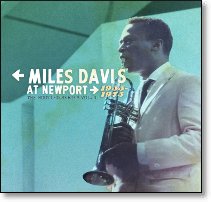
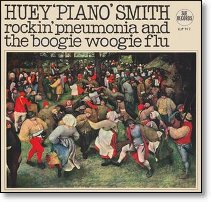
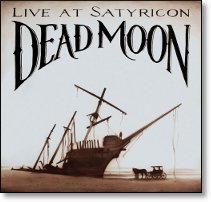
The Miles Davis Quintet: All of You: The Last Tour 1960 (1960 [2014], Acrobat, 4CD): Cover adds "featuring John Coltrane" -- the tenor saxophonist who had played in Davis' Quintet since 1955 but had finally broken out as a star in his own right with 1959's Giant Steps. The Quintet was filled out with Wynton Kelly (piano), Paul Chambers (bass), and Jimmy Cobb (drums). The tracks come from eight dates on a European tour, and while Davis gets the first solo, the cuts were picked to show Coltrane breaking away from the band. He's making those giant steps, but Wynton Kelly is also superb doing his usual bebop thing, and Davis gets his licks in. Rhapsody bills this as Vol. 1, only including the first two discs. It seems unlikely that the other two drop off much, but I'll hedge a bit. Caveat emptor. B+(***) Miles Davis: Miles Davis at Newport 1955-1975 [The Bootleg Series, Vol. 4] (1955-75 [2015], Columbia/Legacy, 4CD): Since I fell off Legacy's mailing list, it's been impossible to fairly evaluate their bootleg boxes. I used to ease myself into a box, playing a disc here and there until I was familiar with the terrain, and then there's the booklets with all that info and pictures and such. Those are the tangible things that make box sets worthwhile, and judging from the reviews by critics so treated this one must be a dandy. (Then, again, box sets almost never get negative reviews.) The 1955 group was a rather ad hoc mix of stars (Zoot Sims, Gerry Mulligan, Thelonious Monk, Percy Heath, Connie Kay), but I can't say much about them given that Rhapsody dropped 3 (of 4) cuts. Davis returns with his regular group in 1958, with seven cuts that were previously released on CD in 2001: I gave that a B but was more impressed this time, especially by Coltrane's "Bye Bye Blackbird" solo. (Some also on the 1963 LP Miles & Monk at Newport, more on a French LP in 1968.) The second disc gives us two Quintet sets from 1966 and 1967: really superb material, with Wayne Shorter in especially fine form. The third disc offers three 1969 cuts by the transitional electric band (Chick Corea, Dave Holland, Jack DeJohnette), starting with "Miles Runs the Voodoo Down" -- again, superb. Then we get six sizzling tracks from the 1973 8-piece band playing in Berlin, a bit sloppier but the trumpet rises to the occasion, and one cut from 1975. Fourth disc steps back to 1971, a Newport show in Switzerland with Gary Bartz on alto, Keith Jarrett on electric piano and organ, Michael Henderson on electric bass, and lots of percussion, which drags a bit in the 25:38 "Funky Tonk" but closes strong -- I can't say it's essential but it fills a slot on a shelf full of dazzling early '70s live albums. Assuming the box is up to snuff, probably: A- Dead Moon: Live at Satyricon (1993 [2015], Voodoo Doughnut): Guitarist-singer Fred Cole drifted through close to a dozen bands from 1965 until he formed this DIY punk trio, which lasted two decades, with wife Toody on bass and Andrew Loomis on drums. They subsisted on self-released records and touring, cutting corners by limiting their album covers to black ink only. AMG lists this as Tales From the Grease Trap, Vol. 1: evidently we can expect a series of old live tapes. As someone who hasn't heard any of their previous albums -- 10 studio, 4 live, the 2-CD retrospective Echoes From the Past -- I can't really say this is their best or the one you should have, but it could be. A- Charlie Haden/Gonzalo Rubalcaba: Tokyo Adagio (2005 [2015], Impulse): The search through the late great bassist's vault tapes continues, having yielded a thoroughly delightful duo with guitarist Jim Hall last year. This matches him with a familiar Cuban pianist -- they and Paul Motion appeared on The Montreal Tapes Volume 4. Rather placid, though. B+(*) Phil Haynes: Sanctuary (1999 [2015], Corner Store Jazz): Drummer, has close to ten records since 1998 and more side credits going back another decade. This is solo, a limiting factor on any instrument. B+(*) Nu Yorica! Culture Clash in New York City: Experiments in Latin Music 1970-77 (1970-77 [2015], Soul Jazz, 2CD): Updates a compilation with the same title issued in 1996, dropping 4 (of 16) tracks, adding 5. One of the first things I did when I got to New York in the 1970s was to try to dive into salsa music, but while it always sounded great on the street I never developed a knack for finding records I much liked. This does better than I did, but for every couple blistering rhythm tracks there's one that throws up something incomprehensibly prog. The luck of the experiments, I guess. B+(***) Mammane Sani et Son Orgue: La Musique Electronique du Niger (1978 [2013], Sahel Sounds): Full name Mamman Sani Abdoulaye, originally released this album of organ groove pieces on cassette -- typos seem to be as common as copies of this (the original cassette, optimistically titled Vol. No. 1, is credited to Mamman Sani Aboullaye, while the LP reissue is as above. B+(***) [bc] Mamman Sani: Taaritt (1985-88 [2014], Sahel Sounds): Previously unreleased groove pieces recorded in Niamey and Paris using analog synths, originally intended as a "relaxation guide," the album cover depicting a fantastic space ship hovering over the Agadez Mosque in the middle of a very barren desert. Much more beat than you get from new age, and more amusing than either minimalism or prog rock. B+(**) [bc] Daniel Smith: Jazz Suite for Bassoon (1995-97 [2015], Summit): Bassoonist, recorded a lot of classical music since 1986 (including at least thirteen CDs of Vivaldi) before trying his hand at jazz with 2006's Bebop Bassoon -- best title is 2014's Smokin' Hot Bassoon Blues, but none are very good. This is earlier material, transitional I suppose. The 20:16 "Jazz Suite for Bassoon" was written by someone else (Steve Gray, who plays piano) and has some twisty moves but not a lot of dynamic range (nothing that would bury the bassoon). The first two-thirds of the album contains "Baroque Adaptations for Bassoon and Jazz Trio" and three "Scott Joplin Rags" -- so at least you get a regular beat. B [cd] Huey "Piano" Smith: Rockin' Pneumonia and the Boogie Woogie Flu (1956-62 [2012], Hallmark): I first heard the title tune on the Flamin' Groovies' Supersnazz and was even more delighted when I tracked down the original -- ever since every bit as essential to my New Orleans soundtrack as "West End Blues." That may not have occurred until Rhino compiled Serious Clownin': The History of Huey "Piano" Smith & the Clowns (1986). Later I picked up Music Club's now-out-of-print This Is . . . Huey "Piano" Smith (2000) and, on Christgau's tip, this shorter (14 vs. 18 cuts) and cheaper redundancy. Note, though, that you get no liner notes at all, And while more isn't necessarily better, if I had it to do again I'd check out the 24-cut The Very Best of Huey "Piano Smith & the Clowns, Volume 1 (1999, Westside; evidently reissued 2013, Traditions). A- [cd] J.B. Smith: No More Good Time in the World for Me (1965-66 [2015], Dust-to-Digital, 2CD): Bruce Jackson's field recordings of Prisoner No. 130196 at Ramsey State Farm in Rosharon, TX. This is much extended beyond the three songs that appeared on the Takoma LP Ever Since I Have Been a Man Full Grown (1965). All vocal, on some Smith may be leading others, a couple spoken sections every bit as dramatic. B+(**) Old Music
2Pac: 2Pacalypse Now (1991, Interscope): Lesane Parish Crooks (1971-96), aka Tupac Shakur, first album, peaked at 64 on the charts but eventually went gold as his next three albums -- all he released before he was shot and killed -- proved increasingly popular. Nothing splashy here, just solid beats and fairly conventional observations, even "Words of Wisdom." B+(*) 2Pac: Strictly 4 My N.I.G.G.A.Z... (1993, Interscope): Acronym allegedly stands for "Never Ig'nant Getting Goals Accomplished" with the "Z" signifying something plural, whatever any of that might mean, but I'll take the acronym over the onomatopoeia (I guess that's the right word). The album itself is also rather opaque, which may at least save it from being something worse. B 2Pac: Me Against the World (1995, Interscope): In 1992 Shakur's gun shot and killed a 6-year-old (he reportedly drew the gun, put it down, and it accidentally fired when one of his entourage picked it up -- who says "guns don't kill people; people do"?). In April 1993 Shakur pled to an assault charge, doing a few days in jail. In October Shakur was charged with shooting two off-duty cops, but charges were dropped. In November Shakur was charged with sexual assault and sentenced to 18-54 months in jail, but was released pending appeal. In early 1994 he was found guilty of assault and served 15 days in jail. In November he was robbed and shot five times -- an event detailed in the "Intro" here. In February 1995 he began serving his sentence for sexual assault, and was in jail when his third album topped the charts. I don't see when he got out of jail, but in September 1996 he was in Las Vegas, where he assaulted a Crips gang member and later that night was shot and killed. Shouldn't it be I Against the World? Not his worst grammatical offense, nor is his grammar his worst criminal trait. B- 2Pac: All Eyez on Me (1996, Death Row, 2CD): Working off his bail debt -- Suge Knight and Jimmy Iovine ponied up $1.4 million and got a deal for Shakur's next three, this counting as two. Two things: first is that the production has taken a big step forward -- nearly every song is full of ear candy, which had never been the case before; second is that the political context has given way in favor of the supposed luxuries of the thug life, a parable of capitalism triumphant. The combination, probably hyped by his martyrdom, sold more than five million copies. Actually, third thing: the auteur himself generally disappears into the mix, a trait which must have helped him become so prolific after his death. B+(*) Aerosmith: Aerosmith's Greatest Hits (1972-79 [1980], Columbia): A hard-rocking band from Boston, one that I've rarely bothered with or took an interest in. This is their original best-of, LP-length at 10 songs, 37:32, often preferring edited-down singles to album cuts. Two originals rise above the generic, and the two covers at the end help. B+(**) Aerosmith: Pump (1989, Geffen): This album (and its successor, Get a Grip, is their second act, a resurgence of hard and fast, presumably what made them in the first place. B- Tori Amos: Little Earthquakes (1991, Atlantic): Singer-songwriter, plays piano, previously led a synthpop band that released an eponymous album, Y Kant Tori Read (1988). Not clear at this point which way this falls. B Animal Collective: Sung Tongs (2004, Fat Cat): Evidently just a duo at this point, Avey Tare and Panda Bear, the idea to present a more stripped down sound, achieved by blocking out half the group. A typical piece is "Visiting Friends," with its basic folk guitar strum and background noises, not exactly animal sounds. Actually, more typical is the incoherent shit that follows. C+ Animal Collective: Feels (2005, Fat Cat): Back at full strength, which means they can add some harmony to the guitar riffs and they can keep a groove going on the rare occasions when they can find one. And when they can't, that's why they call it "experimental" -- frequent failure is to be expected. B+(*) Birdman & Lil Wayne: Like Father, Like Son (2006, Cash Money/Universal): Bryan Williams pops up on records here and there, originally with Big Tymers, most recently with Young Thug, but his real claim to fortune (if not fame) was in co-founding Cash Money Records. This started as a mixtape to promote his biggest star -- Wayne is 13 years his junior -- and turned into a legit album. The father frames his business as a classic gangsta operation. The son plays along, showing respect, earning his keep. B+(***) Neko Case: Blacklisted (2002, Bloodshot): Singer, grew up in Tacoma, joined Canadian alt/indie New Pornographers in 2000 but was also pursuing a solo career, initially on country-ish but later the country influence faded -- this album is transitional, neither here nor there. B+(*) Cursive: Domestica (2000, Saddle Creek): Alt/indie band from Omaha, third album of seven 1997-2012, a little heavy-handed for my taste. B Cursive: The Ugly Organ (2003, Saddle Creek): Proves its case against the organ, then sinks deeper. B- The Deftones: White Pony (2000, Maverick): Alt-metal band, guess that means they can suspend the grind for a few moments of relative peacefulness and make something musical out of it. They do, several times, and while the vocal scream could easily wear thin, their grind is succinct enough I can get into it. B+(*) Kurt Elling: Close Your Eyes (1994 [1995], Blue Note): Jazz singer, from Chicago, made a big splash with this his first album, impressing people with his quick shifts and flashy scat. I can't say he has an especially effective voice on ballads, but it's much clearer than on the new album, twenty years later. Has a good band with pianist Laurence Hobgood, and slots a couple guests on sax (notably Von Freeman). B Kurt Elling: The Messenger (1994-96 [1997], Blue Note): Second album, leads with an impressive enough "Nature Boy" and a not-bad "April in Paris," but soon wanders into usual thing, way too convoluted for me to follow let alone care, although I noticed myself noticing the vocalese "Tanya Jean" on both plays, the hip-talkie "It's Just a Thing" too, plus there are scattered touches, like the saxophone. Cassandra Wilson joins in on "Time of the Season" -- I wouldn't call that success but it is sorta interesting, par for the album. B+(*) Kurt Elling: This Time It's Love (1997-98 [1998], Blue Note): Like Betty Carter -- another singer I admire more than like -- he has a tight command on the band, and when he's not singing there's almost always something interesting going on. But I doubt I'll ever care much for his voice or mannerisms, especially when he loads up on the ballad schmaltz as he does here. B Kurt Elling: Flirting With Twilight (2001, Blue Note): Seems like the same formula mix, but the voice is more plodding and very little strikes me as interesting, even in a bad way. B- Kurt Elling: Man in the Air (2003, Blue Note): A Penguin Guide 4-star album, like Live in Chicago and Flirting With Twilight, although I can't begin to fathom why. (Unlike his first albums, where he seemed to have something novel going.) B- Green Day: Kerplunk (1992, Lookout): Postpunk, early (second album), keeps it clean and straightforward. B+(*) Green Day: Nimrod (1997, Reprise): Fifth album -- Dookie was their ten-million unit breakthrough, with Insomniac selling a couple million more, but neither much impressed me at the time. This is probably no better, but they do have a way of being hard and clean and crunchy at the same time. B+(**) Green Day: Warning (2000, Reprise): Reviews argue over "maturity" but they mean things like the ability to construct credible songs along multiple lines, to slow down as well as speed up, and to throw things into the mix I never expected from this band. Doesn't feel like a masterpiece, and I doubt I'll ever love it, but there's not a bad moment. A- Green Day: American Idiot (2004, Reprise): I assume the title song is for Bush, although he's hardly the only American idiot they could have targeted. It's as snappy as they ever got, but other pieces are merely loud, and when they toy with the Who's rock opera concept they can get, uh, operatic. B+(*) Alan Jackson: Here in the Real World (1989, Arista): First album, leads off with the only song Jackson didn't have a hand in writing and it's the one song that comes off a bit stilted. He's clearly studied country music, coming up with a sound that came to be called neo-traditionalism -- like real country music -- and songs that ply classic country tropes, occasionally with a modern dollop (like "I like my sushi southern fried"). First single only made it to 45, but the next 27 went top 10, only 3 falling short of top 3. Four of them are here. B+(***) Alan Jackson: Don't Rock the Jukebox (1991, Arista): Declares his fealty to country music over rock in the title song, and doesn't make you regret it, even though he's not the sort of guy who drinks doubles or hops trains. But he namechecks George Jones (twice, even eliciting a cameo), pays tribute to Hank, and spins Ernest Tubb around. A- Alan Jackson: A Lot About Livin' (and a Little 'Bout Love) (1992, Arista): Five more singles, one cruising on a motorcycle, another in a Mercury (suggesting he's secretly been searching through old rock & roll records). B+(**) Alan Jackson: Everything I Love (1996, Arista): Skipping ahead to his sixth album, he's become really consistent, mostly because his sound -- that fiddle and steel guitar and honky tonk piano -- is so appealing. Still, I note that this has a record number of other people's songs, including the ones that grab your attention ("Little Bitty," from Tom T. Hall, and "Who's Cheatin' Who," by Jerry Hayes). B+(**) Alan Jackson: High Mileage (1998, Arista): Jackson dips a toe into the political economy. Sure, his "Little Man" wasn't a worker -- just a small business proprietor buried by big business, but when he thinks it through he'll find a worker, and maybe he'll find more than nostalgia. B+(***) Alan Jackson: Under the Influence (1999, Arista): A dozen covers. You'd expect as devout a student of country music as Jackson to dig deeper into the tradition, but 10 (of 12) songs came out 1971-81, when he was 13-23 (the other two came out in 1963 and 1967). He picks Merle Haggard and George Jones twice, but his Hank is Jr. and he winds up in "Margaritaville" -- sober as usual. B Alan Jackson: When Somebody Loves You (2000, Arista): Seems to be struggling with his writing -- song titles include "www.memory" and "Three Minute Positive Not Too Country Up-Tempo Love Song" -- but the songs he picked off the rack are pretty lame. Maybe one can make a case for "It's Alright to Be a Redneck" but you need a better song than the one Bill Kenner and Paul McLaughlin wrote. B Alan Jackson: Like Red on a Rose (2006, Arista Nashville): Alison Krauss replaces Jackson's longtime producer Keith Stegall here. The most obvious result is that everything slows down, but also note that Jackson only penned one song, and that was a remake ("A Woman's Love"). B+(*) Killers: Hot Fuss (2004, Island/Universal): From Las Vegas, which has shed its tawdriness to become the home of homegenized American culture. Even the group's name have become as main street as apple pie. Still, seems like a perfectly average new wave rock band. B Frankie Knuckles: Beyond the Mix (1991, Virgin): Francis Nicholls, born in the Bronx but became "The Godfather of House Music" DJing in Chicago. This was his first album, nine fine dance tracks, plus an undanceable gospel wail, "Soon I Will Be Done." B+(**) Frankie Knuckles: Best of Frankie Knuckles (1986-87 [1998], Mirakkle): I don't think anyone has tried to assemble a career retrospective for Knuckles like Rhino did for Larry Levan, so the "best-ofs" are side glimpses. I was only able to track down about half of these 12-inchers (5-of-12 released under Knuckles' name), and they all come from his first year or two of recording. ("It's a Cold World") B+(**) Lil Wayne: Tha Block Is Hot (1999, Cash Money/Universal): First album from the New Orleans rapper, must have been about 17 at the time, but he had signed with Cash Money when he was nine and had been in the Hot Boys. Long (70:18), most tracks have "featuring" credits (but not big stars -- mostly his old crew: B.G., Juvenile, [Young] Turk, producer Mannie Fresh). Basically a mixtape, gone platinum. B+(**) Lil Wayne: 500 Degreez (2002, Cash Money/Universal): Third album, another long one (70:21), Mannie Fresh again produces, but the "featuring" credits are way down as Wayne (Dwayne Michael Carter) comes into his own. B+(***) Lil Wayne: Tha Carter (2004, Cash Money/Universal): Fourth album, a breakthrough at least in the sense that he returned to this title three more times, even though this didn't sell nearly as well as his debut. Even longer (79:07), chock full of hooks -- even one called "Hoes" is too catchy to fret over. A- Lil Wayne: Tha Carter II (2005, Cash Money/Universal): His worldview has finally settled down to "get money/fuck bitches," although sometimes he swaps the priority. But he doesn't stop there, and in the long run -- and his records always run long -- I can't help but marvel at the beats and grooves and wordplay, sometimes even the change ups. A- Lil Wayne: The Leak (2007, Cash Money, EP): Five tracks, 19:29, leaked outtakes from The Carter III sessions, quickly turned into product, then eventually palmed off as bait for the album's "deluxe edition." B+(**) M83: Dead Cities, Red Seas & Lost Ghosts (2003, Gooom Disques): French electronic group, second album, last with co-founder Nicolas Fromageau (survived by Anthony Gonzalez). Multiple synths, have some appeal when you can sort them out but not much when they amass into huge curtains of sound. B- M83: Saturdays = Youth (2008, Mute): I guess someone told them they'd need vocals to break pop, so they subcontracted some. B Maxwell: Maxwell's Urban Hang Suite (1996, Columbia): First album from one of the blander neo-soul discoveries of the '90s. No doubt it flows. B The Microphones: The Glow, Pt. 2 (2002, K): Early lo-fi project from singer-songwriter Phil Elvrum, recorded four main albums 1999-2003 plus a lot of mini-albums, EPs, singles, etc. -- Elvrum adopted the last of his album titles, Mount Eerie, as moniker from 2005 on. This one is very erratic, with many flashes of promise, some noisy and some not. Evidently, "The Glow, Pt. 1" was just a track on the previous album, It Was Hot, We Stayed in the Water. B+(**) Miguel: All I Want Is You (2010, Jive): Debut album, makes his bid at a "love man" and backs it up with slinky, marginally funky rhythm. B+(**) My Chemical Romance: Three Cheers for Sweet Revenge (2004, Reprise): I guess you'd call this an emo band: a little anguished which comes off as heavy but not quite metal. Recorded four albums (2002-10), this the second their major label breakthrough. B- Ride: Nowhere (1990, Sire): British shoegaze band, cut five albums 1990-96 but only the first two are well-regarded. This is their debut, a steady, rolling storm of guitar wrapped around songs with some pop appeal. B+(***) Slint: Spiderland (1991, Touch & Go): Math rock band from Louisville, started out in punk then mixed up time signatures, volume levels, etc., working in spoken word vocals -- considered innovative although they also come off as tentative and unfocused, at least on this, their second and last album. B The Sonics: Here Are the Sonics (1965, Etiquette): Garage rock band from Tacoma, first album, four original songs by singer-keyboardist Gerry Roslie ("The Witch," "Boss Hoss," "Psycho," and "Strychnine") padded with eight covers (two from Berry Gordy) done as rough and raw as they could. Retro even then. A- The Sonics: Boom (1967, Etiquette): Second album, similar mix of originals (5) and covers (8), though neither are quite up to the first album's. B+(**) Swervedriver: Mezcal Head (1993, A&M): British group, second of four albums from their 1991-98 heyday, a little on the heavy side of shoegaze, but the guitar pulse is strong, consistent, a bit nervous. B+(**) System of a Down: Toxicity (2001, American): LA hardcore group's second album -- AMG considers them alt metal, overlooking the humor and politics and quirky rhythms, although I have to admit no real hardcore group would interpose a hymn about "when Angels deserve to die," or the Gypsy touches that anticipate Gogol Bordello. (One metal trait is that they tend to wear out their welcome.) B+(*) Tamikrest: Adagh (2010, Glitterbeat): Tuareg group from northeast Mali, dodged civil war in a French school and picked up scattered western influences which they combined following the model of Tinariwen. Discovered at Festival au Désert in 2008, which led to Chris Eckman (of Dirtmusic and the Walkabouts) producing this first album. B+(**) Tamikrest: Toumastin (2011, Glitterbeat): Christgau went through the trot sheet and approves ("tell the world that a little education can be a broadening thing"). I'll settle for the sound, which is clear in details that are rarely rushed -- there are certainly hotter Tuareg bands. A- The Unicorns: Who Will Cut Our Hair When We're Gone? (2003, Alien8): Canadian band, from Montreal, their only studio album (not counting a limited edition live set and a couple EPs, one from a brief reunion in 2014). Lo-fi, likes flutes, not without a certain element of whimsy. B+(*) Revised GradesSometimes further listening leads me to change an initial grade, usually either because I move on to a real copy, or because someone else's review or list makes me want to check it again:
Miguel: Kaleidoscope Dream (2012, RCA): Listening to the new one, I suspected that I must have underrated this widely praised second album smash, but the first few cuts -- through the title track -- were limper than anything on the first or third, and when it got better it wasn't by much. B+(*) Additional Consumer News:Previous grades on artists in the old music section:
NotesEverything streamed from Rhapsody, except as noted in brackets following the grade:
Ask a question, or send a comment. Monday, August 17, 2015 Music Week
Music: Current count 25326 [25277] rated (+49), 426 [432] unrated (-6). Huge rated count. I got off to a fast start when I decided to fill in the records I hadn't previously heard by Kurt Elling and Alan Jackson, both with new records last week. I've never cared for Elling, but he has a huge reputation, including four Penguin Guide 4-stars. Main thing I found out was that his exuberance on the first two albums makes his mannerisms more palatable. After Elling, Jackson cleaned my ears out, and the albums were so short they piled up fast. Still best, I think, to approach his early work through compilations, like 1995's The Greatest Hits Collection, or 2007's more economical 16 Biggest Hits. His new one, Angels and Alcohol, was A- last week. (Elling's new Passion World came in at C: by my reckoning his worst ever, not that Night Moves or 1619 Broadway were much better.) The next thing that happened was that Phil Overeem posted a list on Facebook of his top 50 albums so far this year. I jotted them down in my notebook, and tallied up that 25 of the 34 I had heard were rated B+(***) or higher. That's close enough to my taste that I tried tracking down the rest. I managed to find 11 of the missing 16, and the first three (79rs Gang, Nots, Mdou Moctar) came in at A- (as did, later on, Dead Moon). Overeem's list also included the new Sonics album (***), which led me to their back catalog and a belated A- for their 1965 debut. Of the remaining five, I managed to find bits of Big Chief Don Pardo and Golden Comanche (New Orleans Indians) and the Reactionaries (pre-Minutemen D. Boon from 1979) -- not enough to rate but both sounded promising. That leaves three albums to keep an eye open for: Jack DeJohnette, Made in Chicago; Iris DeMent, The Trackless Woods; and J.D. Allen, Graffiti. I had, by the way, tracked down Coneheads (***) and The Red Line Comp (*) from earlier Overeem notices -- I would never have known about them otherwise. One thing I had trouble with was hip-hop: three albums (two from Overeem's list -- Doomtree and Vince Staples -- plus Future) wound up at B+(***). I gave them two plays each, all were pretty good, but they didn't come through quite clearly enough to grade higher. That seems to be happening a lot -- others on my 2015 list: Joey Badass, Action Bronson, Cannibal Ox, Rae Sremmurd. Or maybe that's just a normal break: A- hip-hop so far: BBNG/Ghostface Killah, Heems, Kendrick Lamar, Murs. Michael Tatum, who's resumed his A Downloader's Diary, recommended Songhoy Blues -- a close second, I think, to Moctar's soundtrack. Overeem also recommended the new Tamikrest (**), so I went back and filled in the old ones, netting Toumastin. Mamman Sani (Overeem picked his 2013 album) is also from Niger, but not in the dessert blues genre -- more like spacey electronic minimalism. It was a big help for me finding Sahel Sounds on Bandcamp -- will probably explore some more older titles later on. That didn't leave a lot of time for my current jazz queue, but I moved Irène Schweizer to the front and was dazzled: not a surprise given that her previous record with Han Bennink was an A -- one of 4 A records I credit her with (plus 5 A-). A really great pianist, and a pretty great percussionist too. The one I still recommend to start with is her 2006 2-CD compilation, Portrait. Maybe I should change its grade to A+. Biondini (*), Braden (*), Halvorson (***), Harris (**), Letizia (**), Maestro (*), Mazzarella (***), and Orozco (**) also came from the new jazz queue, but I had to grab James Brandon Lewis (A-) from Rhapsody. I did find some mail on the record, apparently with a watermarked download link I never bothered with. No telling how many records like that slip past me. My pre-crash system for dealing with download links is still broken -- Firefox refuses to connect to a mail server that has self-signed SSL certificates, even after storing the exception, so my message-passing mechanism is broken. Also, all the ECM links I had are stale now, and I find myself not caring enough to get them refreshed. Similarly, I hardly ever deal with the world music links I get from Rock Paper Scissors: true that a high percentage of important world music comes through them, but also true that that's a small slice of what they promote. I keep getting disabused of the concept that I can cover it all. There needs to be some meeting of the willing for this to work, but this week at least it seems to have worked pretty well. Robert Christgau found a new outlet for his Expert Witness -- I still think of it as The Consumer Guide -- column, at Noisey, promising a new one every Friday. Last week's covered three "love men" he likes more than I do: Miguel (***), Jason Derulo (*), and (most surprising) Sam Smith (B- last time I heard it), with Tinashe (**) and Oceaán (* -- the only one I hadn't previously checked out) in the HMs. Once again, he's catching up to make up for the downtime since Medium sacked him in early June. I've noticed, for instance, that there were 17 albums on his 2013 Dean's List that he never caught up with when he moved from MSN to Cuepoint. (My plan is to add stubs in his website database for those records -- presumably all A- or A, but not my place to say. I'm also looking through earlier lists to see if anything else should be stubbed -- thus far I've found three albums, but it's a slow slog to check everything.) By the way, I am getting closer to doing an update of Christgau's website. I've already uploaded a number of fixes since the ISP's server change ("upgrade") broke some old code, but the long delay demanded by Medium and my own procrastination kept me from doing an update to the CG database. Right now, I have everything from Medium in my local copy, and I'm working through some proofreading (my heroes there are George Allan and Lucas Fagen). Probably later this week, assuming I don't hold it up to do more stub work. (I've long thought that the artist pages should list albums that don't have proper CG reviews but do have significant mentions in lists or ACN, so that's a long-term project.) I should also mention that I got a notice today that Carola Dibbell's recent novel, The Only Ones, is now available as an audiobook, narrated by Sasha Dunbrooke. New records rated this week:
Recent reissues, compilations, and vault discoveries rated this week:
Old records rated this week:
Unpacking: Found in the mail last week:
|