|
An occasional blog about populist politics and popular music, not necessarily at the same time. LinksLocal Links Social Media My Other Websites Music Politics Others Networking Music DatabaseArtist Search: Website SearchGoogle: Recent Reading
Music DatabaseArtist Search: Website SearchGoogle: |
Blog Entries [1230 - 1239]Monday, July 14, 2014 Music WeekMusic: Current count 23501 [23488] rated (+13), 534 [538] unrated (-4). I got the news that my aunt Freda Bureman died Tuesday morning and drove to Independence, KS on Thursday afternoon. She had moved there about six years ago, living in Eagle Estates, where she could be closely attended to by her son, my cousin, Ken Brown. The funeral was Friday, with Ken and his older sisters, Lou Jean Fleron and Jan Barnes, giving touching and eloquent testimony to how much Freda meant to them, and really to us all. She was 99, had suffered from increasing dementia over the last few years, and had been unresponsive the last few weeks, essentially wasting away -- a slow fade into oblivion in stark contrast to how engaged I recall her at, say, her 90th birthday party. So I spent most of the week with my cousins, some of their children and many of their grandkids (the great-grand was among the missing), and as a result was pretty much off the grid -- my cell phone carrier didn't even provide coverage for Independence. Hence, very little music to report below. Also, although I got back early enough today, a long nap and some TV kept me from getting the incoming packages logged. Things should return to normal, or to whatever the new normal is, next week. I should also note that the dedicated server that I lease from Hosting & Designs was hosed a week ago. It crashed, and when they finally got it running again all of the configuration and data was erased. I've yet to receive an explanation of what happened, and don't have backups in any form that makes it easy to reconstruct, so it will be a while before I get that all running again (if indeed I do). Needless to say, I was very distracted last week. Hopefully I will be able to focus more this week. New records rated this week:
Old records rated this week:
Unpacking: Found in the mail last week (does not include end of week):
Ask a question, or send a comment. Tuesday, July 8, 2014 Rhapsody Streamnotes (July 2014)I feel like I've been sleepwalking through the last 2-3 weeks. That hasn't stopped, or even slowed down much, sorting through these records. At least the numbers are strong. Hard to judge whether it has anything to do with the relative shortfall of A-list albums. I currently have 63 A or A- records on the 2014 list, which seems like about right for this time of the year, but it's possible that a couple of the non-jazz HMs might have clicked with more time -- best candidates are Kasai All-Stars, Popcaan, and War on Drugs. I should note that Rhapsody Streamnotes has now passed the 5,000 album mark. That's a little more than 20% of my total rated count (as of this minute, 23498), and the RS count has been inflated somewhat this year since I started doing actual CDs here, but it shows how much streaming has helped broaden my ability to cover the whole semi-popular music spectrum. Also, as my review copy stream dries up, it keeps me from folding up my tent and quitting: more than half of my A-list records this year (32 of 63) were at least first encountered on Rhapsody or some other digital source. (Actually, the ratio in 2013 was even higher: 76/146. The three previous years were lower: 61/131, 62/132, 60/132.) These are short notes/reviews based on streaming records from Rhapsody. They are snap judgments based on one or two plays, accumulated since my last post along these lines, back on June 21. Past reviews and more information are available here (5017 records). New Releases (More or Less)
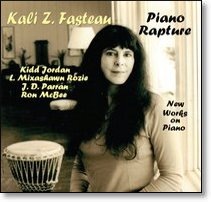
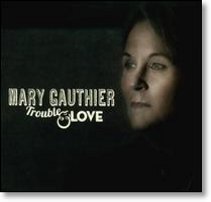
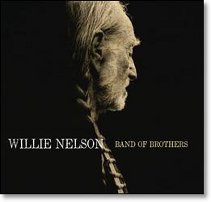
Ab-Soul: These Days . . . (2014, Top Dawg): Rapper from the Black Hippy group, can't say as I can follow him very well, except for the 23:00 "W.R.O.H." -- sort of a beatless bull session, just the rapper with a small audience, probably some kind of bonus. B+(**) Darren Barrett: Energy in Motion: The Music of the Bee Gees (2014, dB Studios): Trumpeter from Canada, studied and teaches at Berklee, won a Monk prize in 1997, not sure how serious to take him given how bad the idea of jazzing up the Bee Gees is. The melodies can hardly help but come through as muzak, while the disco effects can't help but be cheesy. B- [cd] Darren Barrett dB Quintet: Live and Direct 2014 (2014, dB Studios): This shows Barrett to be an upbeat, fairly aggressive postbopper, and suggests that "dB" stands for loud as well as his monogram. Myron Walden plays tenor and soprano sax, Takeishi Onbayashi piano. The applause is ambivalent. B [cd] Beat Funktion: Voodooland (2014, DO Music): Just what you'd expect, except from Sweden, where this probably qualifies as acid jazz. Second-rate disco is more like it, minus any attempts to move the dance floor. B- [cd] Itamar Borochov Quartet: Outset (2011 [2014], RealBird): Trumpet player from Israel, father a notable musician and brother Avri plays bass here, first record, with Hagai Amir on alto sax and Aviv Cohen on drums. Close to hard bop at the start, varies more toward the end. B+(**) [cd] Camper Van Beethoven: La Costa Perdida (2013, 429 Records): A very important band in the mid-1980s, broke up in 1990, returned a couple times since 1999, but this was their first since 2004. They get back a fair bit of their sound and some of their nonchalance, and a single called "Northern California Girls." B Camper Van Beethoven: El Camino Real (2014, 429 Records): Similar artwork to last year's album, but they've made progress in getting their sound back, and have reinforced that with a handful of memorable songs -- a stark one about bigotry in "Sugartown," a good-natured invite in "I Live in L.A.," a tentative farewell in "Darken Your Door." B+(**) Mark Charig/Georg Wolf/Jörg Fischer: Free Music on a Summer Evening (2010 [2014], Spore Print): Charig plays cornet and alto horn, a brass instrument which pairs with cornet much like the flugelhorn does with trumpet. Both horns are a bit scrawny in a rather scratchy avant context. B+(*) [cd] Sébastien Chaumont Quartet: Still Walkin' (2011-13 [2014], ITI): French alto saxophonist, backed by piano-bass-drums. Not finding much info, even on the hype sheet -- presumably "Nice" is his home town and not a succinct review, although it would work: he has a rich tone and hits the sweet spot for a mainstream alto sax quartet. B+(**) [cd] Jeff Colella/Putter Smith: Lotus Blossom (2013 [2014], The American Jazz Institute/Capri): Piano-bass duets, one original each, six covers including the title track from Strayhorn. Rather quiet, unimposing, all the lovelier for that. B+(**) Ry Cooder/Corridos Famosos: Live at the Great American Music Hall, San Francisco Aug 31-Sept 1, 2011 (2011 [2013], Nonesuch): A live sampler after forty-some years, with some songs dating back to his heyday as a folk revivalist in the early 1970s and others from his strong run of albums since 2005. B+(**) Davina & the Vagabonds: Sunshine (2014, Roustabout): Minneapolis group led by singer Davina Sowers, who wrote 8 (of 11) songs, finishing with covers of Eddie Miller, Fats Waller, and Patty Griffin. Group has a blues orientation with more jazz feel, the instrumentation including trumpet, trombone, and vibraphone. B+(**) [cd] Lana Del Rey: Ultraviolence (2014, Interscope): Everything's slow and nothing's much fun, not that she doesn't drop many hints that she might be an interesting person, or at least one unique enough to bear watching. Sonically I should bump this up a notch, but I'm not sure I want to get to know her better. Love guns and roses? Even generically speaking, that's not true. B+(***) Andrew Downing/Jim Lewis/David Occhipinti: Bristles (2013 [2014], Occdav Music): Bass, trumpet, guitar respectively, makes for low-key chamber jazz group, playing six joint pieces (probably improv) and six standards (Schwartz-Dietz, Mercer-Mandel, Styne-Cahn, Jobim). B+(*) [cd] East India Youth: Total Strife Forever (2014, Stolen): Alias for William Doyle, young man with a synthesizer, first album, some nice rhythmic runs here but his efforts at ambient are far less pleasant. At best I'm reminded of early Eno, a reference his fans probably don't know, but then I think of the coming dark ages and all the other references being forgotten, as postmodern reverts into premodern. B Kali Z. Fasteau: Piano Rapture (2014, Flying Note): From a very cosmopolitan (and as she says, "musical") family, Fasteau got into avant-jazz through husband Donald Rafael Garrett (1932-89), who had some connections with AACM and played on several late Coltrane albums. They toured the world together, and after his death she kept recording, playing dozens of exotic instruments and singing some, an eclectic mix that never led to very satisfying albums. But lately she's developed a rapport with a regular band -- Kidd Jordan (tenor sax), L. Mixashawn Rozie (soprano and tenor sax), J.D. Parran (alto flute and clarinet), and Ron McBee (percussion). Here she finally settles into just playing piano and turns in a surprisingly solid performance, centering horns which otherwise like to scatter chaotically. Still has some spots you wonder about, but overall remarkable. A- [cd] Lee Fields: Emma Jean (2014, Truth & Soul): Soul singer from Georgia, a reissue of his 1979 album Let's Talk It Over showed him to be a worthy chip off James Brown. He's still around, and if the new one has lost a step, that just means more ballads, a strong point anyway. B+(**) Danny Freyer: Must Be Love (2014, Blue Bend): Crooner, throwback to the 1950s trying to conjure up "That Old Black Magic" and tossing in a bit of "Yardbird Suite" (seguing into "Let's Make Babies Baby"). "Dean Martin looks and a Sinatra voice" sez the website -- one look at the picture makes you wonder if the voice is really as far off the mark. Pleasant enough with a jazz band, but the strings are really awful. B- [cd] Ben Frost: Aurora (2014, Bedroom Community): Ambient sturm und drang, something else we didn't need, but all the banging around is not without its interesting, even industrial, moments. B+(**) Future Islands: Singles (2013 [2014], 4AD): Synthpop band based in Baltimore, four albums, singer Samuel T. Herring takes a bit of getting used to but the songs stand up, not as singles so much as album building blocks. B+(*) Mary Gauthier: Trouble & Love (2014, In the Black): Folk singer-songwriter from Louisiana, always has a finely detailed sense of her subjects. These eight songs move slowly, which gives them all the more resonance. A- Brian Groder Trio: Reflexology (2013 [2014], Latham): Trumpet player, hangs in avant circles -- trio mates are Michael Bisio and Jay Rosen -- but doesn't sound so far out. Indeed, front cover shows a footprint with various points mapped to musicians, with Oliver Nelson out on a toe, Mingus and Joe Farrell at the arch, and Monk on the heel. B+(***) [cd] Luke Haines: New York in the '70s (2014, Cherry Red): Former Auteurs/Black Box Recorder namechecks Alan Vega and Jim Carroll and proclaims "Dolls Forever" using tunes picked up wholesale from Lou Reed then dipped in starch and irony. B Holly Hofmann: Low Life: The Alto Flute Project (2014, Capri): Flute player, 14 albums since 1989, few that I have heard have any appeal to me, but it helps here that she sticks to alto flute, also that in addition to longtime accompanist Mike Wofford (piano) she has a rhythm section that flows and sometimes even swings: Anthony Wilson (guitar), John Clayton (bass), Jeff Hamilton (drums). B+(*) [cd] Bobby Hutcherson/David Sanborn/Joey DeFrancesco: Enjoy the View (2014, Blue Note): After the three principals, who each contribute two or three originals, we see "featuring Billy Hart." You don't run into many organ-vibraphone pairings but the combination works well here. As for Sanborn, he reminds you that he has the chops to be a well respected alto saxophonist, but you can never quite trust him. B+(*) B.J. Jansen: Ronin (2013 [2014], ARC): Baritone saxophonist, from Cincinnati, now in New York, has a couple albums, this one backed by piano-bass-drums, fairly mainstream leaning toward quiet storm. B+(**) [cd] Kasai Allstars: Beware the Fetish [Congotronics 5] (2014, Crammed Discs, 2CD): A large Kinshasa group, their band built with thumb pianos and makeshift percussion shared, at least in this series, with Konono No. 1. I find the vocals a bit rougher and less compelling, and the length wears you down, although disc-buyers will only play one half at a time. B+(***) Seun Kuti + Egypt 80: A Long Way to the Beginning (2013 [2014], Knitting Factory): Fela Kuti's youngest son seems to have inherited the old band, probably because he's able to keep up the intensity, even more than the old days -- his main innovation is to introduce raps, which cut sharper than the still more common chants. B+(***) Dawn Landes: Bluebird (2014, Western Vinyl): Singer-songwriter from Kentucky, at one time married to Josh Ritter, mostly quiet and personable guitar-and-vocals. B+(**) Peter Lerner: Continuation (2014, OA2): Guitarist, from Chicago, second album, lists a large group but in two columns, suggesting that the core group consists of pianist Willie Pickens (listed as "featuring" on the cover) and bass and drums, with the second column -- three horns including Geof Bradfield on saxes and flute plus Joe Rendon on percussion -- supplementary. Still, they all fit together nicely -- I'm tempted to use the word "slick" but that would raise some false connotations. I haven't run across Pickens before, but he earns his feature. B+(***) [cd] The John A. Lewis Trio: One Trip Out (2014, Valarteri): Pianist, originally from Dallas, studied at SMU, played trumpet in R&B bands, has been a musician "for over thirty years"; website only shows this one record, a nice mainstream piano trio. B+(*) [cd] Roberto Magris Trio: One Night in With Hope and More, Vol. 2 (2008-10 [2013, JMood): Pianist from Italy, rooted in 1950s bebop styles, which this album (and its predecessor) pay tribute to. Trio, some cuts with Tootie Heath on drums. Terrific bonus track with Paul Carr on tenor sax, and 4:25 of "audio notebook." B+(**) [cdr] Roberto Magris Septet: Morgan Rewind: A Tribute to Lee Morgan Vol. 2 (2010 [2012], JMood, 2CD): A broad selection of tunes by the hard bop trumpet great plus two African-influenced pieces by the pianist-leader. They work hard to get the rhythmic feel right and build up the harmonics, but don't expect Hermon Mehari to make you recall, much less forget, Morgan. B+(*) [cdr] Roberto Magris Quintet: Cannonball Funk'n Friends (2010 [2013], JMood): The subject of this tribute is Julian "Cannonball" Adderley, although only one song originates with him -- other sources include Duke Pearson, Frank Rosolino, Walter Booker, Oscar Pettiford, and Eddie Vinson, plus two originals by pianist Magris. Emphasizes funk beats over bebop, and Hermon Mehari's cornet shines more than Jim Mair's alto sax. B+(**) [cdr] Roberto Magris Space Trek: Aliens in a Bebop Planet (2011 [2012], JMood, 2CD): Concept is an alien discovering bebop and working through it, with covers of Fats Navarro, Sir Charles Thompson, Kenny Clarke, "The Gypsy," and "Giant Steps," and originals venturing as far as fellow space traveller Sun Ra. Magris' piano is up to the demands, but I'm often even more entranced by saxophonist Matt Otto, who has a lock on the cool. Eddie Charles' three vocals are neither here nor there. Paul Collins' "audio notebook" is a fully overblown review. B+(***) [cdr] MARS 4-Tet: The Blind Watchmaker (2014, Summit): Acronym for Don Murray (bass), Jeff Antoniuk (sax), Frank Russo (drums), and Donato Soveiro (guitar). First album, although Antoniuk has a couple previous efforts, and shares the songwriting with Soveiro. Solid mainstream group, one you'd be delighted with if you walked in on them with no expectations. Covers: Monk, Jarrett, "Black Dog" (a Led Zeppelin blues). B+(**) [cd] The Pete McGuinness Jazz Orchestra: Strength in Numbers (2013 [2014], Summit): Trombone player and sometime singer (three tunes here), working with a big band here -- mostly familiar New York names, with pianist Mike Holober (a big band specialist) notable. Many striking passages, the vocals more an acquired taste (e.g., "You Don't Know What Love Is"). B+(*) [cd] Willie Nelson: Band of Brothers (2014, Legacy): Billed as Nelson's first album of "mostly original" songs since 1996's Spirit, most are co-credited to Buddy Cannon, and 5 (of 14) don't have Nelson's name on them. A while back Legacy included Nelson in their Valentine's Day release of Love Songs, inadvertently showing that no country singer in our memory has pitched less woo or waxed less romantic than Nelson, but he tops himself time and again here -- if "Used to Her" and "Wives and Girlfriends" seem too witty, there's "I Thought I Left You," where he compares his beloved to measles and the whooping cough. The warmest he comes is "I love you because you're crazy like me," but he didn't write that. Nor did he write "it's hard to be an outlaw who ain't wanted any more" -- that's Billy Joe Shaver's line. But he did write "I can't forget the shit you put me through, and of course I can't forgive you because that's just what I do" ("I've Got a Lot of Traveling to Do"). A- Conor Oberst: Upside-Down Mountain (2014, Nonesuch): Singer-songwriter, has a knack for pop melodies although these are less cut and dry than usual. B+(**) Beata Pater: Golden Lady (2013 [2014], B&B): Jazz singer, mostly standards but nothing from the standard songbooks save Jobim, not the only nod toward Latin America. B [cd] Matt Pavolka: The Horns Band (2013 [2014], Fresh Sound New Talent): Bassist, second album, formed this group around three horns -- Kirk Knuffke (cornet), Jacob Garchik (trombone), and Loren Stillman (alto sax) -- with Mark Ferber on drums. Not the brightest sound, but the post-whatever shuffle is worth keying on. B+(**) [cd] Felix Peikli: Royal Flush (2013 [2014], self-released): Clarinetist (including bass), from Norway, first album, quintet with guitar, piano, bass, and drums, plus guests, some "special," some not. His speed is impressive in a group that can keep up with him, like Ralph Peterson's Fo'tet, but can be overly lush, especially when the guests add vocals and/or flute. B [cdr] The Ralph Peterson Fo'tet Augmented: Alive at Firehouse 12: Vol 2: Fo' n Mo' (2013 [2014], Onyx): I didn't get Vol. 1, with a group drummer Peterson calls the Unity Project. Peterson's Presents the Fo'Tet appeared in 1989 and that's been rubric for his small group ever since: currently Felix Peikli (clarinet, bass clarinet) and Joseph Doubleday (vibes). The "Mo'" is Steve Wilson (soprano sax) and Eguie Castrillo (percussion), and they help plenty, but the core group is impressive too. B+(***) [cd] Popcaan: Where We Come From (2014, Mixpak): Jamaican singer, came up doing dancehall although this strikes me as more idiosyncratic than that. B+(***) Rallidae: Paper Birds (2013 [2014], self-released, EP): Vocal trio, where Angela Morris also plays tenor sax, Scott Colberg bass, and Alex Samaras just sings. Group name refers to the family of coots, crakes, and gallinules (collectively rails), mostly small birds found in wetlands. Four songs, 23:24. The vocals fall out of the classical art-song tradition I generally despise, but the instruments are jazz. B- [cd] Andrew Rathbun Quartet: Numbers & Letters (2012 [2014], SteepleChase): Saxophonist (credited here "reeds, voice"), from Toronto, lists George Russell and George Garzone among his tutors, a postbop guy. Backed by a veteran piano trio here -- Phil Markowitz, Jay Anderson, Bill Stewart -- with two guest spots for Taylor Haskins on trumpet. Starts off bold, but in going through the various phases and changes loses impresses more than interests. B+(**) [cdr] Sam Reed Meets Roberto Magris: Ready for Reed (2011 [2013, JMood): Alto saxophonist from Philadelphia, childhood friend and protégé of Jimmy Heath, has been around long enough to have a story about Charlie Parker asking him to hold his horn between sets, but only has side credits to my knowledge: Teddy Pendergrass, but also Odean Pope's Sax Choir. Relaxed, very charming mainstream set with a full band, led by pianist Magris but including a trombone. Record ends with an "audio notebook" -- an interview where you get to know a bit more about Reed. B+(***) [cdr] Jefferson Rose Band: Feel Like Dancing (2014, self-released): Seattle group led by bassist Rose, second album, describe themselves as "a tightly honed ensemble of world music players," although at first blush they sound like a salsa band -- losing that spell only when singer Alex Kitchen takes up a lyric in English. Upbeat enough to justify the title. B [cd] Harold Rubin/Barre Phillips/Tatsuya Nakatani: E on a Thin Line (2009 [2014], Hopscotch): Clarinetist, also notable as a visual artist, b. 1932 in South Africa, moved to Israel in the 1960s after running afoul of the Apartheid regime, has at least 10 albums since 1990 (AMG counts 2). This is the first I've heard, and I'm struck by his distinctive avant approach. B+(***) [cd] Saxophone Summit [Dave Liebman/Ravi Coltrane/Joe Lovano]: Visitation (2011 [2014], ArtistShare): The first such "summit" was in 2004 with Liebman, Lovano, and Michael Brecker -- their Gathering of the Spirits was awful, even with the comic relief of their wood flute special. Coltrane is a more compatible replacement, and the first thing you notice is how tightly the horns fit together, then how ably the rhythm section -- Phil Markowitz, Cecil McBee, and Billy Hart -- help out. Six pieces, one from each, each for all. B+(***) [cd] Bobby Selvaggio: Short Stories (2013 [2014], Origin): Alto saxophonist, has seven albums over the last decade. Quartet here, with Aaron Goldberg on piano. Reminds me of Donny McCaslin with his fast, swooping, virtuosic sax runs, which dominate this album. B+(**) [cd] Sonny Simmons: Leaving Knowledge, Wisdom and Brilliance/Chasing the Bird? (2006-14 [2014], Improvising Beings, 8CD): This arrived in a water-soaked plastic bag, the cardboard box destroyed, so it was unclear just what the title was, some web sources suggesting 80th Anniversary Box Set. Other web sources, and the now dry remains of the box, lean toward the title above. Simmons started on alto sax with ESP-Disk in the mid-1960s, recorded little in the 1970s and 1980s, cut a couple major label albums in the mid-1990s (Warner Bros.), and then from 2001 on has had a remarkably productive stretch flittering around avant spots in Europe -- his main labels Norwegian, Polish, and now French. The music here follows from a fairly basic concept even though it's been elaborated into more than seven hours of variations: Simmons plays alto sax and cor anglais, backed by amplified Indian instruments, guitar and/or keyboard, and percussion. Extravagant exotica, randomly replayable. Don't know how I was so fortunate to get a copy, especially at a time when Sony can't be bothered to answer my email. B+(***) [cd] Sonzeira: Brasil Bam Bam Bam (2014, Talkin' Loud/Virgin): British DJ Gilles Petersen assembled various Brazilian stars for this (as well as ringer Seun Kuti) and mixed the results, an Afro-Brazilian dance tape with attractive quirks. B+(***) Storyboard [David Boswell/Alex Locascio/Rod MacDowell]: Hello (2014, My Quiet Moon): Guitars/synth, drums, electric bass. Boswell cites Pat Metheny as a formative influence, and McDowell cites Jaco Pastorius, but all they wind up with is a basic groove album. B [cd] Strand of Oaks: Heal (2014, Dead Oceans): Indiana singer-songwriter Timothy Showalter, second album, don't know if the first is amped up like this one, which starts with a dense guitar scream and rarely descends below heavy, except to declaim something intensely emotional. B- Sun Kil Moon: Benji (2014, Caldo Verde): Mark Kozelek group, although the extremely personal first person songs and simple arrangements don't allow for much group. Blue collar confessionals, mostly about family, some about work, not much of a love life -- no idea whether this is Kozelek's norm, but I'm touched and fascinated. B+(***) Swans: To Be Kind (2014, Young God, 2CD): Michael Gira's group dates back to 1982 with a breakup from 1997-2010. Before the breakup they were an obscure postrock/noise band (titles included Soundtracks for the Blind and Public Castration Is a Good Idea). Since regrouping they've become a "critics band" -- this one is currently the top-rated Album of the Year. With one piece topping 30 minutes, others filling out more than two hours. B Allison Adams Tucker: April in Paris (2012 [2014], Allegato Music): Jazz singer, from San Diego, second album, one original, eight standards including a Jobim and a Beatles song, several in Romance languages (Italian, French, Portuguese; her website also has a Japanese version, as she lived in Japan at some point). She nails "It Might as Well Be Spring" but wanders after that. B [cd] Paul Tynan & Aaron Lington: Bicoastal Collective: Chapter Four (2013 [2014], OA2): Trumpet and baritone sax, plus their ever-shifting collective, this time just guitar, organ, and drums. The organ gives them a nice little boost. B+(*) [cd] Sharon Van Etten: Are We There (2014, Jagjaguwar): A critically hailed singer-songwriter although I can't tell you why: slow, heavy, one could even say leaden, presumably effects that set up the melodrama, if indeed that's what it is. B- Cornelius Veit/Eugen Prieur/Jörg Fischer: Stromraum (2012-13 [2014], Spore Print): Guitar trio, Prieur playing electric bass; second group album, the first in 2005, the trio going back as far as 2000. Even scratchier than Fischer's trio with Marc Charig, but the cohesiveness of the sound helps frame the invention. B+(***) [cd] Brahja Waldman Quintet: Sir Real Live at Resonance (2013 [2014], self-released): Two-sax quintet, the leader on alto, Adam Kinner on tenor, with piano (Damon Shadrach Hankof), bass, and drums. Live vamp pieces, the repetition easy on the ears but with points to jump off from. [Limited vinyl.] B+(**) [cdr] The War on Drugs: Lost in the Dream (2014, Secretly Canadian): Currently the number three highest ranked album this year over at Album of the Year (behind Swans and St. Vincent; a while back it was number one). I love the guitar textures, but notice the singer flinging lines out like Dylan, only with none of them sticking. B+(***) Walt Weiskopf: Overdrive (2013 [2014], Posi-Tone): Tenor saxophonist, 16 albums since 1989, a mainstream player with a lot of drive, gets more help then he needs here -- piano (Peter Zak), guitar (Yotam Silberstein), vibes (Behn Gillece), bass and drums -- a little clutter, which the fast ones only scatter. B Wild Beasts: Present Tense (2014, Domino): English art rock/deam pop group, fourth album, the slack beats and falsetto vocals conjure up that dream effect and it's pretty tolerable while it lasts. B Reissues, Compilations, Vault Discoveries
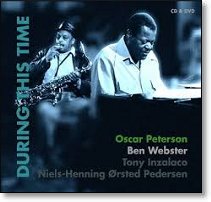
Dexter Johnson & Le Super Star de Dakar: Live à l'Étoile (1969 [2014], Teranga Beat): The leader was a saxophonist, born in Nigeria and based in Senegal at the time, later in Guinea and Côte d'Ivoire. Songs have a crude ska-like feel, more likely derived from soul (there's a Wilson Pickett cover) and boogaloo (the Latin tinge is pronounced), the vocals par for the period but they bounce off the sax in captivating ways. B+(***) Oscar Peterson/Ben Webster: During This Time (1972 [2014], Art of Groove): Recorded in the NDR studios in Hannover, backed by Neils-Henning Ørsted Pedersen on bass and Tony Inzalaco on drums, this was just a year before the tenor sax great's death, although I find him playing faster than anything I've heard by him in the previous five years, and just slightly off his finest ballad tone -- a pleasant surprise even though you'd expect the pianist to perk up anyone. Packaged with a DVD. A- Old Music
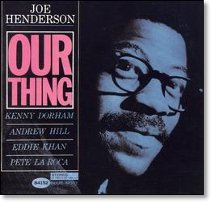
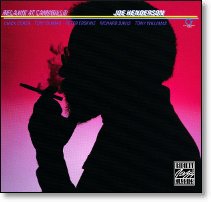
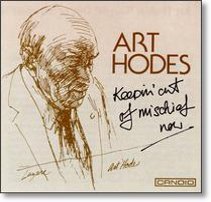
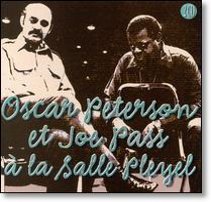
Air: Open Air Suit (1978, Novus): An important avant jazz group from the mid-1970s, with Henry Threadgill on various saxes (and too much flute), Fred Hopkins on bass, and Steve McCall on drums. Four pieces, titled as if selected from five, meant to imply something larger. B+(**) Chris Burn: Music for Three Rivers (1995-97 [1997], Victo): English pianist, records infrequently with avant musicians like John Butcher and Lol Coxhill, plays solo here, two long pieces and a bunch of short ones. Not much momentum, hard to get a handle on this. B+(*) Gerry Hemingway Quartet: Devil's Paradise (1999 [2003], Clean Feed): The BassDrumBone trio (Mark Dresser, Hemingway, and trombonist Ray Anderson), which date back at least to 1987, plus tenor saxophonist Ellery Eskelin -- a dream group, although the latter fits in awkwardly, the choppiness a trademark of the trio. B+(***) Joe Henderson: Our Thing (1963 [1995], Blue Note): The tenor saxophonist's second album, a typically strong showing with trumpeter Kenny Dorham sharing the front line and writing half the songs (3 of 6). Pianist Andrew Hill is often the most interesting player here, mixing up what otherwise would be a hard bop outing. A- Joe Henderson: Joe Henderson Quintet at the Lighthouse (1970 [2004], Milestone/OJC): With Woody Shaw on trumpet and George Cables on piano, these tracks were initially released on several albums and lost a track in the squeeze when they were belatedly reassembled. The trumpet raises Henderson's competitive blood, but that's not necessarily a plus. B+(**) Joe Henderson: Joe Henderson in Japan (1971 [2006], Milestone/OJC): Tenor sax quartet, the leader picking up a sprightly rhythm section led by Hideo Ichikawa on electric piano (with Kunimitsu Inaba on bass and Motohiko Hino on drums, the latter a name I recognize). Four cuts, the spaced-out solos most impressive. B+(***) Joe Henderson: Relaxin' at Camarillo (1979 [1993], Contemporary/OJC): Tenor sax quartet, pieced together from two sessions with different bass-drums, but Chick Corea plays sparkling piano throughout, and the leader is in fine form. A- Joe Henderson: Joe Henderson Big Band (1992-96 [1997], Verve): Riding high on a major label comeback, the fourth (of five) albums Verve released, with three early tracks produced by Don Sickler, the other five by Bob Belden with a huge list of musicians, few common to both sessions. Buries the star, but has some snap as Belden albums go. B+(*) Art Hodes: Keepin' Out of Mischief Now (1988, Candid): Born in Russia, moved to Chicago as an infant, mastered stride piano and recorded in trad jazz groups from the 1940s. He was 84 when this solo set was cut, a batch of songs he'd spent his life with, nothing fancy, nothing to rush him, all the more poignant. A- New Air Featuring Cassandra Wilson: Air Show No. 1 (1986 [1989], Black Saint): The "New" signifies that Pheeroan Aklaff has replaced Steve McCall on drums; otherwise, bassist Fred Hopkins and alto saxophonist Henry Threadgill (also flute and banjo) carry on. Wilson is an effective singer here. B+(**) Oscar Peterson et Joe Pass: À La Salle Pleyel (1975 [1997], Pablo/OJC, 2CD): Piano and guitar, Pass has mostly recorded solo, calling an early album Virtuoso and mostly adding numbers onto subsequent efforts. The record starts with Peterson solo, then adds a solo Pass set, then finally six duets. Peterson is a formidable solo performer too, but even better when socializing. A- The Michael Jefry Stevens/Dominic Duval Quintet: Elements (1994 [1996], Leo): The leaders play piano and bass, but this is more of a group effort, with all but two Stevens pieces attributed to the group, including Mark Whitecase (alto sax), Dom Minasi (guitar), and Jay Rosen (drums). B+(*) NotesEverything streamed from Rhapsody, except as noted in brackets following the grade:
Ask a question, or send a comment. July 7, 2014 Music Week
Music: Current count 23488 [23459] rated (+29), 538 [539] unrated (-1). Cut this off Sunday night, so I don't have Monday's mail in the unpacking. Main reason I fell short of thirty records was that I spent two days playing almost nothing but the Sonny Simmons box. Main reason I even came close to thirty records was that I went through Album of the Year's The Highest Rated Albums of 2014 and played a lot of things on Rhapsody that I had missed. The notebook has a table of the top 100 records with my grades where I have them. Thus far I've heard 40 of those 100, pretty concentrated toward the top of the list (18 of top 20, 24 of top 30, 27 of top 40, 32 of top 50, only 8 of the next 50 (Sharon Jones, Dolly Parton, Laura Cantrell, Schoolboy Q, Future, Luke Haines, YG, Lykke Li). AOTY's list isn't very useful for prospecting. Only 6 of those top 100 albums are on my 63-album A-list (Todd Terje, Cloud Nothings, Ought, Parquet Courts, Miranda Lambert, Laura Cantrell -- I haven't heard the UK-only Paul Heaton/Jacqui Abbott record at 56, although Michael Tatum and Jason Gubbells have convinced me I'll love it ), 11 more as high HMs (St. Vincent, The War on Drugs, Sun Kil Moon, Neneh Cherry, Carla Bozulich, EMA, Freddie Gibbs & Madlib, Isaiah Rashad, Tinariwen, Sturgill Simpson, Fear of Men). Most of my missing A-list is jazz, but skipping the non-vocal jazz records, the following records on my A-list didn't make AOTY's top 100: Lily Allen, The Strypes, Jenny Scheinman, The Hold Steady, Old 97's, Pharrell Williams, Shakira, Barbara Morrison, Rodney Crowell, Deena, Big Ups, Mary Gauthier, Grieves, Catherine Russell, Jon Langford, Wussy, Company Freak, The New Mendicants, Willie Nelson, Dave Alvin/Phil Alvin, Leo Welch, Amy LaVere, and Supreme Cuts. I'm partial, of course, but it strikes me that the difference between these artists and the AOTY ones I downgraded is personality (and maybe brains). For a second opinion, I checked Michael Tatum's grades, skipping compilations. He has 10 AOTY 100 records graded A- or above (Against Me!, Laura Cantrell, Cloud Nothings, EMA, Freddie Gibbs/Madlib, Paul Heaton/Jacqui Abbott, Bob Mould, Parquet Courts, St. Vincent, Tinariwen -- two records there I haven't heard); and 22 A-list albums not in the AOTY 100 (Lily Allen, Katy B, Toni Braxton/Babyface, Company Freak, Deena, Drive-By Truckers, Hold Steady, Chrissie Hynde, Kool AD, Kool and Kass, Amy LaVere, Steve Malkmus, Modern Baseball, The New Mendicants, Conor Oberst, Old 97's, The Roots, Shakira, Withered Hand, Wussy, Young Thug/Bloody Jay, Young Thug/Gucci Mane -- I had 23). I didn't bother writing up tweets for many of the AOTY records. Some of them I just played and felt next to nothing, they were so instantly forgettable. Some, like Ab-Soul or Conor Oberst, weren't so bad but left me feeling I had little to say. I've promised in the past to do better on that, but this week I slipped up a bit. Some personal things are very much up in the air right now. My last remaining aunt, Freda Bureman, appears to be dying. If/when that happens, I'll have to drop whatever I'm doing and take care of some things. Also, the server I lease looks to be dead (and the support staff doesn't seem too healthy or alert either). I had a bunch of work I wanted to do on that machine, so that's totally up in the air. Indeed, I may wind up having to reconstruct everything previously stored there (at best, a lot of unpleasant work; at worst, impossible). Barring disaster, I should post Rhapsody Streamnotes later this week. (I currently have 77 records in the draft file.) I hope to get through the Roberto Magris records by then. Meanwhile, the incoming queue has dried up so severely I could remove one (maybe two of three) baskets from my floor. Perhaps it's time to buckle down, clean up, put all this crap behind me. Recommended music links: New records rated this week:
Recent reissues, compilations, and vault discoveries rated this week:
Unpacking: Found in the mail last week:
Ask a question, or send a comment. Monday, June 23, 2014 Music Week
Music: Current count 23423 [23394] rated (+29), 559 [568] unrated (-9). Most of what follows showed up on Saturday's Rhapsody Streamnotes column -- Mary Gauthier's lovely little record is an exception, as are several of the "old music" entries, including two Joe Henderson sets. (More Henderson next week -- such splits are what you get with arbitrary cutoffs.) With Henderson, I've started to go beyond Penguin Guide 4-stars (Our Thing) to pick up a few 3.5 stars (Relaxin' at Camarillo, which by the way I think is the better of the two, probably because he's more comfortable as the sole horn). The unrated 4-star list was already 950 long and I was in no worry about running out (even with Rhapsody's omissions cutting that list way down). It just seemed likely that I would find some of the 3.5-star records more appealing -- indeed, I know that's often the case. I've started to put an unrated 3.5-star record list together, and it will have a bit more than 4000 records. I doubt that I'll put much effort into tracking them all down, but when I hit an artist I'm inclined to explore further (like Henderson, or the late Horace Silver) I'm likely to delve a bit deeper down the list. Finished painting my basement steps, and that looks like a real improvement. Probably the next step is to paint a segment of basement wall that I want to build some new storage in and around. At some point I want to cover up the cement floor with something nicer, but it will take a number of steps to get there, and that wall is the start. On the other hand, the real critical project is reducing the clutter around my workspace -- a bummer, I'm afraid, every time I enter and try to work on something. Not just hideous but ridiculous. Note that the incoming mail practically dried up this week. Indeed, only two (of five) records were by names I recognized -- one of those by a recently deceased flute player. Sorry I haven't been able to keep up with tweeting all the old music grades. I need to hit them more in real time to avoid clustering. Recommended music links: New records rated this week:
Recent reissues, compilations, and vault discoveries rated this week:
Old records rated this week:
Unpacking: Found in the mail last week:
Ask a question, or send a comment. June 20, 2014 Disruption in Theory and PracticeI read Jill Lepore's The Disruption Machine: What the Gospel of Innovation Gets Wrong with great interest and a little nostalgia. Her subject is Clayton M. Christensen, who became an instant business guru with his 1997 book The Innovator's Dilemma: The Revolutionary Book That Will Change the Way You Do Business. From 1980 through 2000, I worked in a variety of businesses -- two large typesetting equipment manufacturers, a prepress software startup, and an operating systems spinoff -- as a software engineer and product manager. Almost from the beginning, I had unusually close access to top management, in part because I always tried to look at the big picture, at how the business worked and what it needed to survive and grow. In this I was often informed by reading business management books, although I often took them with a grain of salt. The first big fad book I ran into was In Search of Excellence: Lessons from America's Best-Run Companies (1982), by Thomas J. Peters and Robert H. Waterman Jr. The executives at my company at the time, Varityper, were much taken with the book, taking great pains to list out all the areas where their own management could be rated excellent. There was, in fact, little evidence for their conceit. I spent a great deal of time trying to figure out how they even managed to stay in business, and eventually came up with an understanding of how a company with mediocre products and service could muddle through. But the relevant lesson here was realizing how fickle top management could be, how readily they could fall for the flattery of self-appointed business gurus. Christensen's book had a similar impact when I was working for SCO much later. Like In Search of Excellence, The Innovator's Dilemma attempts to promulgate a set of general lessons from a handful of carefully selected case studies. Lepore goes back and reviews those cases, showing how arbitrarily they were selected and how systematically they were misanalyzed, effectively demolishing the book's research claims. But like Peters, who parlayed his fame into a lucrative consulting business (and continued to churn out increasingly ecstatic books, including: Thriving on Chaos, Liberation Management, The Pursuit of WOW!, and after Christensen came around, Re-Imagine! Business Excellence in a Disruptive Age), Christensen moved to cash in almost immediately. The notion of "disruption" made a certain intuitive sense to anyone in the computer industry. The essential fact of electronics since the advent of integrated circuits has been radically falling costs and increasing capacity. The central challenge that high-tech companies faced was to find new markets for newly cost-effective technology, and often as not this was done by startup companies. By definition, their success was innovative, and that contrasted with the staid "cash cow" management strategies popular in "mature" industries. Christensen's innovation was to add the word "disrupt" to management vocabularies, which made him a big hit with managers flattered by this swashbuckling identity. Christensen's book set off a great snark hunt for "disruption." SCO's business was selling UNIX operating systems ported to Intel microprocessors. They mostly sold OS licenses for about $1000 per machine through VARs, who would combine relatively inexpensive PC hardware, UNIX, and their own applications software into some kind of turnkey system which would be price/performance competitive against offerings from Sun and other UNIX-based "workstation" vendors. You could make an argument that SCO's business model was disruptive, and indeed companies like Sun would lose a good deal of business in the following decade. Moreover, SCO's business plan called for them to continue to profit as ever-faster-and-cheaper Intel chips powered larger-and-larger "enterprise" computers. SCO's management hired Christensen to speak at one of their gatherings, and sure enough he blessed their business plan as "disruptive." However, when I read the book, I drew a different lesson. I saw that SCO was increasingly vulnerable to Linux, the "open source" UNIX-like operating system that anyone could use and work on for free. Companies that adopted it could add features that they needed. They just couldn't keep those features exclusively, but sharing the code reduced their costs and helped Linux grow rapidly for larger and more powerful computers. (At the time, I often quipped that SCO could sell UNIX to people who were too smart for Microsoft, or to people who were too dumb for Linux, but not both at the same time.) Needless to say, despite their endorsement from Christensen, SCO got disrupted before they could disrupt anyone. They enjoyed record revenues leading up to the Y2K drop dead rate, then collapsed and were effectively out of business a couple years later. I don't really think that Christensen's original research and thesis were as bad as Lepore makes out. I did get several useful insights from the book: particularly, a reminder of how desperately managers cling to existing margin models. (Not really news to me: I recall Varityper's VP of Marketing explaining to me that he would like to sell a publishing front end based on Apple's $10k Lisa computer but couldn't afford to sell one based on Apple's then-forthcoming $1.5k Macintosh. The former turned out to be an overpriced stepping stone, while the latter turned out to be the desktop publishing platform that ate the entire typesetting industry. We were, by the way, fully aware of DTP start-ups like Aldus, but we were petrified by our business model.) But what I find indefensible about Christensen is how he turned his research into a business, and how easily he perverted that research into paid advertising. My academic background was in sociology, and my focus there was in understanding how sociological research is perverted to reproduce the assumptions of its practitioners. Happens all the time, even when the researcher isn't the least bit corrupt or deceitful. But sociology at least aims at being a science. The same can't be said of whatever you call what business departments do: like, say, seminaries, they train people to fulfill a function (e.g., CEO) and to that end provide some common cultural information, scattered skills, and contacts. I don't know what all goes into the making of an MBA -- I imagine one popular course would be "Sports Clichés for Managers" but it could be that everyone in the program would test out of that -- but the essential insight MBA programs aim for seems to be that money is everything (at least all that matters). That's the environment that produces con men like Christensen. Some other posts commenting on Lepore's piece:
Krugman makes the best point, which is that not only does the cult theory of disruptive innovation flatter rich high-tech entrepreneurs, it lets them be more insensitive to the plight of others (the people commonly known as losers. Krugman also recalls how Schumpeter's famous definition of capitalism as "creative destruction" has the same effect, hence its popularity among capitalists. Ask a question, or send a comment. prev -- |