Blog Entries [850 - 859]Sunday, September 3, 2017
Weekend Roundup
At some point I need to write about the book I just finished, Rosa
Brooks' How Everything Became War and the Military Became Everything:
Tales From the Pentagon (2016; paperback, 2017, Simon & Schuster).
I didn't bother with this when it came out in hardcover last year, but
I noticed the paperback about the time Gen. Kelly replaced Reince Priebus,
which got me to wondering what is was people see in flag officers that
makes them seem to be uniquely capable functionaries. This mindset seems
to be especially widespread on the right, though perhaps by default as
their more fundamental belief is that all other bureaucrats are incapable
of doing anything worthwhile, or perhaps they mean just up to no good.
Still, liberals have grown increasingly fond of brass, and politicians
of all stripes trip all over themselves in prostrating themselves to
America's sainted heroes.
Unfortunately, while Brooks sometimes gets caught up in such idolatry,
she never offers much elucidation. The closest she comes is to point out
that the military has increasingly tended to take over functions that
previously belonged to the State Department because the military has so
much more money to work with. Even that gets very little analysis beyond
the "day everything changed" 9/11 cliché. But the disturbing thing about
9/11 wasn't what changed then but what had changed sometime earlier. The
objective facts of 9/11 meant we should at least have considered the
option of responding to crimes through law enforcement (FBI and Interpol,
maybe drawing on "intelligence" from CIA and NSA) as opposed to declaring
war and sending the military to invade distant countries. Clearly, Brooks'
title described something real: in the mindsets of the Bush administration,
and evidently with the Clintons before, and possibly much further back,
the default worldview of America's politicians had become militarized.
So how, and why, had that happened? Brooks doesn't tell us.
Well, she does provide a couple of hints, starting with a critique
of "metaphorical wars" -- basically, political campaigns that attempted
to recruit the sort of public unity and support, including self-sacrifice,
that WWII had achieved: the "war on poverty" and "war on drugs" perhaps
the most famous examples, with cancer, crime, AIDS, and terror getting
various degrees of attention. Even going back to the 1950s, something
as basic and benign as building interstate highways could only make it
through Congress if rationalized as national defense. Brooks provides
other examples where people (businesses and non-profits as well as
politicians) tried selling us things by invoking the military -- e.g.,
we were told that obesity is bad because it reduces the recruitment
pool of possible soldiers. What she doesn't seem to notice is that
every one of these conceptualizations failed, often because they
were laughably stupid, more so because they were inappropriate and
misguided, and I suspect ultimately because, regardless of what you
might think WWII proved, war never really accomplishes its original
goals nor redeems its initial reasoning.
I've tried to formulate this before, and Brooks has only, albeit
inadvertently, increase my conviction. The first thing to understand
about war is that you lose the moment it begins. Arguably, you may
cause the other side to lose more than you do, but the misfortune of
others never compensates for your own losses, especially what the
experience of war does to your own psyche. The second thing is that
war isn't "an extension of politics by other means" but the abject
failure of politics to resolve potential conflicts short of war.
Brooks spends much of her book delving into anthropology, trying
to convince herself that war is a constant, inevitable feature of
humanity, even though she'd like to subject it to a system of law
to manage it better, to limit some of the atrocities that seem to
mess up so many wars. Her big innovation here is to push the idea
that war/peace represent a continuum with many intermediate "gray"
areas as opposed to the dichotomy or negation we are used to thinking
in terms of. Here's a sample quote (pp. 353-354):
What would it mean, in practice, to manage this churning, changing
"space between" -- to develop laws, politics, and institutions
premised on the assumption that we will forever remain unable to draw
sharp boundaries between war and peace, and that we will frequently
find ourselves in the space between?
This will be the work of many minds and many years. But the task is
surely not impossible if we remind ourselves that we human beings can
make and unmake categories and rules. And it is surely not
inconsistent with the core principles enshrined both in America's
founding documents and in human rights law: that life and liberty are
unalienable rights, that no person should be arbitrarily deprived of
these rights, and that no one -- no individual, no organization, no
government, and no state -- should be permitted to exercise power
without being held accountable for mistakes or abuses.
If we take these principles seriously, we might, for instance,
develop better mechanisms to prevent arbitrariness, mistake, and abuse
in targeted killings.
Thus she inches up to the edge of a chasm, then plunges in. Why isn't
it obvious that "if we take these principles seriously" we wouldn't be
doing any "targeted killings"? All you have to do is to reverse the
case examples to see that the problem is the idea of targeted killing,
not the likelihood of "arbitrariness, mistake, and abuse." In larger
terms, the problem isn't that war is very probably compounded by all
manner of mistake and abuse, but that war is practiced at all. After
all, what is war but an elaborate moral charade meant to justify all
sorts of slaughter and havoc? -- things that are sensibly prohibited
under law in the domain of peace. And isn't Brooks' campaign to map
out gray areas just a ruse for allowing war (and the military) to seep
into civil society, spoiling peace?
One odd thing here is that while Brooks seems to be a big fan of
international laws which prohibit many common practices of war and which
promote broad notions of human rights, she doesn't seem to grasp that
the intention behind those laws is to outlaw war. Moreover, that very
point is obvious to the conservatives, nationalists, and militarists
who instinctively reject such international law -- and at least in the
former case, any notion of human rights based on equality. Way back in
1945 when the UN was founded, it was at least an aspirational goal of
the liberals who then ran the US government to prevent future wars by
establishing a mutually acceptable creed of equal rights for nations
and for people within nations. Obviously, the real nations of the time
had some work to do to achieve those aspirations, but at least they
pretty much all recognized the need to avoid a repeat (or escalation)
of the just-concluding world war. And they understood that by putting
their best ideals forward, they could inspire one another to do better.
However, since that date, many Americans, including virtual all working
politicians, have discarded those ideals and instead embraced the US
military -- its power to terrify and cower the rest of the world -- as
the root of their security, and therefore their sense of justice.
I'm not really sure why that happened, but certainly the seeds were
all present before the end of the Korean War (1953). Part of it was
that many Americans found WWII to be exhilarating, the source both of
community and prosperity. Part was the hatchet job done on the working
class by the Red Scare and the Cold War. (Conveniently, many American
workers were temporarily shielded by anti-communist unions, but we all
know how that eventually turned out.) Part was the way we fought the
Cold War, especially by embracing right-wing dictators against their
own people. One thing America's emerging militarism cannot be blamed
on was actual wartime successes by the US military: Korea was a bloody
stalemate; Vietnam an unequivocal loss; Iraq an expensive, tainted and
temporary technical win; Afghanistan not even that. Sure, the Soviet
Union folded, but the nations we struggled hardest against have proven
the most resistant to our hegemony -- notably including Russia. All
the while, the US has sunk to the bottom of the list of "rich nations"
in every measure of widespread prosperity -- something we should blame
on extravagant military budgets and the right-wing political factions
which benefit from continuous hostility and war.
It's probably unfair to blame all of this on Brooks and the liberal
hawks of her generation -- the lawyers and policy wonks who felt so
much shame over inaction in Rwanda and who counted Bosnia and Kosovo
as big successes for a military juggernaut they idealized and came to
love (Brooks actually marrying a Green Beret). It is especially sad
that Brooks fell for this con, given that
her mother (Barbara Ehrenreich) is one of the most incisive social
and political critics of our time -- one who, among many other things,
wrote her own insightful anthropology of war, the 1997 book Blood
Rites: Origins and History of the Passions of War. The difference
was that Ehrenreich strove to raise myths and primeval emotions to a
level of consciousness, where we could rationally encounter them and
consciously change. Brooks does the opposite, starting with reason
and remythologizing it, turning war from a conscious option back into
a quasi-religious belief.
Well, that's the gist of what I wanted to say. Someone should write
a big book on how and why American political figures lost their faith
and interest in international cooperation, law, justice, and peace.
When I searched for "america turns against international law" the
first piece that came up was from 2015:
Alfred W McCoy: You Must Follow International Law (Unless You're
American). It's not as if no one notices American contempt for
international law, but it's so ensconced it's hardly even an issue
for politicians here. At most it's a nuisance, an inconsequential
way other people have of insulting us. The serious question of how
this attitude limits our options in dealing with the world never
seems to come up.
So I guess the best thing about Brooks' book is the title. Too
bad she didn't write a better book on its subject.
Some scattered links this week:
Michael Arria: In Attacking Overtime Pay, Trump Is Hurting His Biggest
Fans: In his campaign to make sure no good deed is allowed to stand,
Trump continues to reverse Obama-era regulations, especially where they
limit his favorite business interests:
In 1975, Gerald Ford set the income threshold above which employees
could be exempt from overtime to around $58,000 in today's dollars,
but this number was never updated to reflect inflation or wage growth.
That means the number is now $23,660. In May 2016 Obama announced that
he was doubling the annual salary threshold to $47,476, effectively
giving millions of salaried employees making less than that a raise.
Obama's move was hardly radical. In fact, it wasn't even as progressive
as Ford's. The new rule would have covered 34 percent of full-time
salaried workers in the United States; in the 1970s, 50 percent of
them were covered. Nonetheless, according to the Department of Labor
(DOL), it was poised to raise wages for an estimated 4.2 million
workers.
More:
Helaine Olen: The Rollback of Pro-Worker Policies Since Trump Took
Office Is Staggering.
Eric Holthaus: Harvey Is What Climate Change Looks Like:
Houston has been sprawling out into the swamp for decades, largely
unplanned and unzoned. Now, all that pavement has transformed the
bayous into surging torrents and shunted Harvey's floodwaters toward
homes and businesses. Individually, each of these subdivisions or
strip malls might have seemed like a good idea at the time, but in
aggregate, they've converted the metro area into a flood factory.
Houston, as it was before Harvey, will never be the same again.
Harvey is the third 500-year flood to hit the Houston area in the
past three years, but Harvey is in a class by itself. By the time the
storm leaves the region on Wednesday, an estimated 40 to 60 inches of
rain will have fallen on parts of Houston. So much rain has fallen
already that the National Weather Service had to add additional colors
to its maps to account for the extreme totals. . . .
Climate change is making rainstorms everywhere worse, but particularly
on the Gulf Coast. Since the 1950s, Houston has seen a 167 percent
increase in the frequency of the most intense downpours. Climate
scientist Kevin Trenberth thinks that as much as 30 percent of the
rainfall from Harvey is attributable to human-caused global warming.
That means Harvey is a storm decades in the making.
While Harvey's rains are unique in U.S. history, heavy rainstorms
are increasing in frequency and intensity worldwide. One recent study
showed that by mid-century, up to 450 million people worldwide will
be exposed to a doubling of flood frequency. This isn't just a Houston
problem. This is happening all over. A warmer atmosphere enhances
evaporation rates and increases the carrying capacity of rainstorms.
Harvey drew its energy from a warmer-than-usual Gulf of Mexico, which
will only grow warmer in the decades to come.
Other links on Texas, Hurricane Harvey, and related issues:
Kate Aronoff: Now Comes the Uncomfortable Question: Why Gets to Rebuild
After Harvey? Mostly about the National Flood Insurance Program (NFIP),
which underwrites most flood insurance at below-market rates, and thanks
to Katrina, Sandy, and lesser flood events is pretty much bankrupt -- or
at least will be later this month, unless Congress acts.
Alleem Brown: Harvey Victims Face Toxic Pollution as Hurricane Recovery
Begins.
Naomi Klein: Harvey Didn't Come Out of the Blue. Now Is the Time to
Talk About Climate Change.
George Monbiot: Why are the crucial questions about Hurricane Harvey
not being asked?
Steven Mufson: ExxonMobil refineries are damaged in Hurricane Harvey,
releasing hazardous pollutants.
Eliza Relman: Trump reversed regulations to protect infrastructure
against flooding just days before Hurricane Harvey: Part of his
effort to obliterate everything Obama did, especially regarding the
threats of climate change.
But because of Trump's rollback of President Barack Obama's Federal
Flood Risk Management Standard, experts across the political spectrum
say much of the federal money sent to Texas is likely to be wasted on
construction that will insufficiently protect against the next
storm. . . .
Lehrer called Trump's decision to revoke the standards "the biggest
step backwards that has ever been taken in flood-management policy" and
said the move would waste taxpayer money, harm the environment, and cost
lives.
Neena Satija et al: Houston is a sitting duck for the next big hurricane.
Why isn't Texas ready? Published March 2016, with a photo from a 2006
hurricane that has now been totally eclipsed.
Dylan Scott: A perfect Hurricane Harvey response is impossible.
David Sirota et al: Texas Republicans Helped Chemical Plant That Exploded
Lobby Against Safety Rules.
Wen Stephenson: Houston's Human Catastrophe Started Long Before the
Storm.
Joan Walsh: Everyone's a Socialist After a Natural Disaster: Even
Ted Cruz, who voted against federal aid to the New York area following
Sandy on principles he'll gladly give up when his own state has been
battered.
George Zornick: Trump Budget Cuts Could Halt the Investigation Into the
Texas Chemical Plant Explosion: "Trump wants to eliminate the US
Chemical Safety Board, which is looking into the Arkema explosion."
Anup Kaphle: South Asia Is Also Experiencing the Worst Flooding in Decades
and the Photos Are Horrifying.
Hank Johnson: President Trump is giving police forces weapons of war.
This is dangerous: "The president has signed an executive order
that will reopen the floodgates of military-grade weaponry entering
American streets." Again, Trump is reversing an Obama executive order
from 2015 -- not sure when the surplus program began, but it had
already caused a lot of problems. Coming shortly after a Trump
speech encouraging local police to abuse prisoners, Trump's "many
sides" reaction to Charlottesville, and his pardon of Arpaio, this
looks to be a step toward creating some kind of fascist police
state, more focused on controlling a disgruntled population than
on serving and protecting against crime. A big part of the problem
is that the military has been massively involved in setting up and
training police in Iraq and Afghanistan along this very model. Add
to that the fact that many police officers in the US have military
backgrounds, that a large percentage of veterans have PTSD issues,
and that lax gun laws have greatly increased the risks of police
work in the US. For more, equally ominous, see:
Attorney General Jeff Sessions: Hurricane Harvey Is Proof We Need to
Militarize Our Police Forces. Also consider another of Trump's
favorite sheriffs:
John Nichols: Scandal-Plagued Sheriff David Clarke Would Make a Bad
Trump Administration Even Worse.
Mike Konczal: Well-off "helicopter" parents are super annoying, but
they didn't create economic inequality: Reviews Richard Reeves'
book Dream Hoarders, which charges the upper 20 percent ("the
professional class") as the main beneficiaries and perpetrators of
increasing inequality in America, especially for how their zealous
parenting practices seek to hoard opportunity for their own children,
rather than allowing meritocracy to rebalance itself. Most critics,
including Konczal, would rather discuss inequality in terms of the
top 1% (or even 0.1%), because that's where the changes have been
most dramatic -- Konczal provides a chart of "share of GDP by income
level, 1979 to 2014" showing no visible change from 79-94 percentile,
slanting up to about a 35% rise at 98 and 90% at 99. Beyond demolishing
Reeves' arguments, Konczal offers some practical proposals:
Here are more practical ideas: We know how to start draining the rents
from the upper middle class. An aggressive public option and governmental
price-setting in health care would deflate medical sector rents. Free
college would force private schools to compete on price rather than
continue to feed off people's desperation to climb illusory status
ladders. Deeper transparency in financial markets, more comprehensive
prudential regulations, and enforcement of financial crimes would make
it harder for financiers to profit off the systemic risk they create.
Enforcing antitrust and public utility rules more aggressively would
open up bottlenecks in economic activity. Higher progressive taxation
reduces the incentives to rent seek in the first place. . . .
If you want to go after the upper-middle-class's 401(k) deductions,
you're going to have to strengthen Social Security. If you want to go
after employer provided health care, it matters greatly whether or not
there will be Medicare for All or a serious "public option" as an
alternative. And if you want to go after college savings accounts,
you need to have broadly accessible free public colleges.
Paul Krugman: Fascism, American Style: Fascism in each country
has its own style: while Mussolini looked back to Rome, Hitler used
two previous German Reichs, while Franco was fond of the Inquisition.
America doesn't have anything quite like those, but Trump's slogan
implies a similar mythic past. Still, what makes fascism a coherent
political ideology isn't aesthetics. It starts by denouncing groups
of people, and uses the hatred it generates as a springboard to power,
moving on to use state violence to attack supposed enemies, while its
elite cadres help themselves to the spoils. I haven't seen a lot of
value in describing Trump as a fascist, mostly because I still see
more mainstream Republican conservatives as more dangerous, but no
doubt that he colors himself fascist, even when he doesn't have the
more expert Steve Bannon to touch up the details. One thing that
helps Trump out is that conservatives have already done much of the
intellectual work in creating a view of a fallen past greatness
Trump can promise to restore: think of Scalia's "originalism," the
distorted Founding Father images invoked by the Tea Party, and most
effectively how the cult of the "lost cause" was used to reestablish
white supremacy (although most Americans have grown weary of making
a fetish out of slavery). Krugman doesn't work this out. What pushed
him into using the F-word was Trump's Arpaio pardon:
Let's call things by their proper names here. Arpaio is, of course,
a white supremacist. But he's more than that. There's a word for
political regimes that round up members of minority groups and send
them to concentration camps, while rejecting the rule of law: What
Arpaio brought to Maricopa, and what the president of the United
States has just endorsed, was fascism, American style.
Trump's motives are easy to understand. For one thing, Arpaio,
with his racism and authoritarianism, really is his kind of guy.
For another, the pardon is a signal to those who might be tempted
to make deals with the special investigator as the Russia probe
closes in on the White House: Don't worry, I'll protect you.
Finally, standing up for white people who keep brown people down
pleases Trump's base, whom he's going to need more than ever as the
scandals creep closer and the big policy wins he promised keep not
happening.
I haven't been reading Krugman's columns lately, nor his blog
(which he seemed to be abandoning as his attention span moved to
Twitter), but here are some recent columns:
Trump and Pruitt, Making America Polluted Again (Aug. 25).
What Will Trump Do to American Workers?
Trump Makes Caligula Look Pretty Good (Aug. 18).
Who Ate Republicans' Brains? (July 31):
The Republican health care debacle was the culmination of a process
of intellectual and moral deterioration that began four decades ago,
at the very dawn of modern movement conservatism -- that is, during
the very era anti-Trump conservatives now point to as the golden age
of conservative thought.
A key moment came in the 1970s, when Irving Kristol, the godfather
of neoconservatism, embraced supply-side economics -- the claim,
refuted by all available evidence and experience, that tax cuts pay
for themselves by boosting economic growth. Writing years later, he
actually boasted about valuing political expediency over intellectual
integrity: "I was not certain of its economic merits but quickly saw
its political possibilities." In another essay, he cheerfully conceded
to having had a "cavalier attitude toward the budget deficit," because
it was all about creating a Republican majority -- so "political
effectiveness was the priority, not the accounting deficiencies of
government."
The problem is that once you accept the principle that it's O.K.
to lie if it helps you win elections, it gets ever harder to limit
the extent of the lying -- or even to remember what it's like to
seek the truth.
The Sanctimony and Sin of G.O.P. 'Moderates' (July 27).
Meanwhile, Krugman's blog has a useful post on
Monopoly Rents and Corporate Taxation (Wonkish); also
How Bad Will It Be If We Hit the Debt Ceiling?, and the post-Bannon
Whither Trumpism?:
So if Bannon is out, what's left? It's just reverse Robin Hood with
extra racism.
On real policy, in other words, Trump is now bankrupt.
But he does have the racism thing. And my prediction is that with
Bannon and economic nationalism gone, he will eventually double down
on that part even more. If anything, Trumpism is going to get even
uglier, and Trump even less presidential (if such a thing is possible)
now that he has fewer people pushing for trade wars.
Jim Lyons: The Rush to Develop Oil and Gas We Don't Need: The
Trump administration is going apeshit in its eagerness to do favors
for the oil and gas industry, even at a time when oversupply undercuts
prices and companies are loathe to develop the properties they already
have. Also see:
Alison Rose Levy: Who's Behind Fossil Fuel Extraction? It's Not Just
Republicans.
Danielle Ofri: 'No Apparent Distress' Tackles the Distress of the Sick,
Poor and Uninsured: Book review of Rachel Pearson: No Apparent
Distress: A Doctor's Coming-of-Age on the Front Lines of American
Medicine, about what happens to people who can't get (mostly
because they can't afford) decent health insurance:
This is the blossoming truth of No Apparent Distress -- that
a segment of American society has been casually cast aside, left to
scavenge on the meager scraps of volunteer health services, and
failing that, left to die. Such abdication is no mere oversight, as
Pearson outlines. The president of U.T.M.B. later publicly stated
that care for those without means was no longer part of the school's
"core mission." The same can be said for much of the United States.
Pearson describes a homeless man whom the students diagnosed with
throat cancer. (Texas chose not to expand Medicaid under the Affordable
Care Act so is now home to 25 percent of the adult Americans who fall
into the coverage gap between private insurance and Medicaid.) It took
eight cruel months until a hospital accepted the patient into its
indigent program for treatment. To satisfy a requirement that the man
live nearby, a relative was found who bought him a tiny trailer home.
Just after the first scans were done, though, the hospital got wind
of the trailer. This "asset" disqualified him as indigent and he was
promptly kicked out of the program. The cancer was never removed or
treated.
Matthew Rozsa: Missouri Republican: People who vandalize Confederate
statues should be lynched: Well, that's certainly in the spirit
of the people who put them up. I normally don't bother with
stupid-things-stupid-people-say articles, otherwise I'd wind up
linking to things like
This pastor thinks that Houston deserved Hurricane Harvey because of
its "pro-homosexual mayor".
Gershon Shafir: Why has the Occupation lasted this long? A slice
from the author's new book: A Half Century of Occupation: Israel,
Palestine, and the World's Most Intractable Conflict. Mostly stuff
you should know by now, but it's worth recalling that settlements in
the Occupied Territories were driven from two distinct movements, each
operating from their own peculiar logic. The first was the LSM (Labor
Settler Movement), driven by habit from the earliest days of Zionism
but couched in terms of defense and security, and implemented by a
state and military controlled by Labor until 1977. The other was led
by Gush Emunim (Bloc of the Faithful), a messianic cult led by Rabbi
Kook, which was adopted by the Revisionist camp after Likud (Menachem
Begin) came to power in 1977. The following quote sums up this change
nicely, underscoring that the latter settler movement always intended
to dominate the Palestinians, even though that formula precluded any
possible peace. One should also note that because Labor was genetically
disposed toward settlement, Labor politicians have never been able to
check the expansion of the settlements, even if they realized how much
they were an obstacle to peace and ultimately to the defense of Israel.
In short, to gain national legitimation, Gush Emunim made the great legacy
of colonization its own even as it reinterpreted it through a religious
lens. After a conversation with Gush Emunim representatives in July 1974,
Shimon Peres concluded: "We are living in two separate countries. You live
in a country that needs to be settled, while I live in a country that needs
to be defended." Porat rejected the assertion that the role of Zionism was
to constitute a safe haven for Jews so they could hold their own in the
world. Gush Emunim viewed Zionism differently, as "the process of redemption
in its concrete sense -- the redemption of the people, and the redemption
of the land -- and in its divine sense -- the redemption of the godhead,
the redemption of the world." Just how far Gush Emunim had distanced itself
from the idea of maintaining a "military frontier" may be seen from its
rejection not only of the principle of security but also of the goal of
peace. "A secular peace," said another founder of Gush Emunim, "is not our
goal." Its starting point with regard to peace was religious and messianic,
so it saw peace as attainable only in the end of days.
Third, Gush Emunim colonization rejected demographic criteria for
choosing the location of Jewish colonies. The odd "N"-shaped pattern of
colonization during the Yishuv -- running from Upper Galilee down to the
Bet Shean Valley and then diagonally across the Jezreel Valley (Marj
Ibn-Amer) up to Haifa and Nahariya, and down again to Gedera -- followed
the layout of the valleys and coastal areas, less secure during Ottoman
times and consequently less densely inhabited by Palestinians. Gush Emunim
colonization, in contrast, was aimed at the mountainous regions where the
vast majority of Palestinians resided (see map 2). As Gush Emunim saw it,
Jewish settlements up to the 1948 War had spread out over the "wrong" part
of the Palestine, the coastal region that in antiquity was inhabited not
by the Jews but by the Philistines. Gush Emunim wanted not only to correct
this pattern and restore history by moving Jews into the lands they had
held in biblical times but to join the ancient homeland to Israel within
the Green Line. In the process, Gush Emunim tossed overboard the LSM's
goal of creating an ethnically homogeneous colony. It advocated pushing
settlement into the locations of ancient Jewish towns and villages that
had a dense Palestinian population in order to undermine the possibility
of territorial partition. It also raised the Israeli-Palestinian conflict's
stakes by leaving little contiguous territory for a potential Palestinian
state, increasing friction, and producing higher levels of violence in
which the settlers themselves played the role of both vigilantes and
soldiers drafted into regional military units that protected their
settlements.
In case you've wondered about Jared Kushner's "peace mission" to
Israel-Palestine, note that he's actually showed up for work, then
refused to do any. Richard Silverstein explains:
Trump Trashes Two-States . . . and 30 Years of U.S. Policy on
Israel-Palestine. By giving up on the "two state solution" Trump
and Kushner are admitting they're not even going to go through the
motions of pretending that they have any interest or intent on
resolving the conflict peacefully. Maybe they imagine that Abbas
will eventually surrender to an Israeli diktat, but I doubt the
Israeli leadership can even come up with one. As we've seen from
fifty years now, they'd much prefer the status quo -- and that's
not about to change as long as the US continues to provide them
unquestioning support and cover:
It's vitally important to understand the broader implications: there
will be no advances in the peace process as long as Trump is president.
We knew this implicitly. But now we see it plain as day. . . .
I hate to repeat myself, as I've written something like this before:
we are in for a wicked few years of chaos and violence given this policy
vacuüm caused by Trump's absconding from a meaningful role. A people
with no hope has nothing to lose. If you think you've seen violence,
it can and will get worse. And in ways we can't now foresee.
Even Peter Beinart, who first noticed the import of the quotation
in the Post article, calls the Trump position "absurd." The only thing
I could add is to call it criminally absurd. That is because of this
atrocious policy position tens of thousands are likely to die. Among
them will be scores, if not hundreds of Israelis (this last statement
is meant for the hasbarafia who will likely cheer this development in
the comment threads).
I'll add that the world -- and I don't just mean the "Arab world"
or "Muslim world," although there's that too -- already sees the US
as culpable for Israel's repression, cruelty, and violence, and the
more evidence the world sees, the more resentment will build up. At
the same time Trump is more directly engaged in murderous wars against
ISIS and other Islamist groups from Afghanistan through Syria to Libya
and Somalia, while US proxies are committing mass murder in Yemen --
and Trump has largely ceded direction of those wars to narrow-minded
generals. Moreover, Trump is closely aligned to Islamophobes in the
US and Europe, who would like nothing better than to impose their
injustice and bigotry in the harshest terms possible.
Eileen Sullivan/Mark Landler: Trump Says US Is Paying 'Extortion Money'
to North Korea: Nobody knows what he's talking about, possibly
because they were more terrified by his next line: "Talking is not
the answer!" Over recent months I've taken some solace when I've
taken the "nothing is off the table" cliché as meaning that talks
are still possible, but Trump seems determined to exclude the only
thing that might actually work, even though he really doesn't have
any other option. As for "extortion," from the start of his campaign
he's been clear that other countries should be paying the US more --
including South Korea and Japan, whose "defense" has the US has long
subsidized.
Kenneth P Vogel: Google Critic Ousted From Think Tank Funded by Tech
Giant: Decades ago the right-wing laid the foundations of their
power by funding so-called think tanks to give their agenda a bit of
intellectual spit and polish. In the 1990s, liberals realized they
needed to play that game too, founding a number of groups, including
the "non-partisan" New America Foundation in 1999. Google's Eric
Schmidt is chairman of a board which includes finance capitalists,
some fairly well-known middle-of-the-road authors (James Fallows,
Atul Gawande, Zachary Karabell, Daniel Yergin, Fareed Zakaria) and
some token conservatives (David Brooks, Walter Russell Mead, Reihan
Salam), with liberal hawk Anne-Marie Slaughter president. [By the
way, Rosa Brooks is a fellow there. One of her articles cited there,
published back in October, is:
The Importance of Working in the Trump Administration.] The fired
researcher is Barry C. Lynn, director of their Open Markets project,
author of two important books: End of the Line: The Rise and
Coming Fall of the Global Corporation (2005) and Cornered:
The New Monopoly Capitalism and the Economics of Destruction.
As his New America bio notes:
Lynn's writings on the political and economic effects of the extreme
consolidation of power in the United States have influenced the
thinking of policymakers and antitrust professionals on both sides
of the Atlantic.
Google was recently found guilty of violating EU antitrust law
and fined 2.42 billion Euros ($2.7 billion) for rigging its search
results in favor of its advertisers -- offhand, that sounds more
like racketeering than antitrust, but it's their de facto search
engine monopoly that makes such a racket possible. Lynn's statement
on this appeared in a
New America press release:
The Open Markets Team congratulates European Commissioner for Competition
Margrethe Vestager and the European competition authority for this important
decision. Google's market power is one of the most critical challenges for
competition policymakers in the world today. By requiring that Google give
equal treatment to rival services instead of privileging its own, Vestager
is protecting the free flow of information and commerce upon which all
democracies depend. We call upon U.S. enforcers, including the Federal
Trade Commission, the Department of Justice, and states attorneys general,
to build upon this important precedent, both in respect to Google and to
other dominant platform monopolists including Amazon. U.S. enforcers
should apply the traditional American approach to network monopoly,
which is to cleanly separate ownership of the network from ownership
of the products and services sold on that network, as they did in the
original Microsoft case of the late 1990s.
Some more pieces on Google, New America, and Lynn's firing:
Sam Biddle/David Dayen: Google-Funded Think Tank Fired Google Critics
After They Dared Criticize Google.
Alexis C Madrigal: The Dumb Fact of Google Money.
Dominic Rushe: Google-funded thinktank fired scholar over criticism of
tech firm.
Matthew Yglesias: A leading Google critic's firing from a Google-funded
think tank, explained: Most useful for its background on Google's
lobbying efforts and political alignments. For example:
Google has been especially an especially aggressive player at deep
influence. The Wall Street journal reported in July, for example, that
they've spent millions of dollars subsidizing academic research that
backs Google policy positions, often mapping out the thesis to be
proven and then shopping to find the scholar to do the work. Google's
money, not always disclosed, has backed donations to think tanks
across the ideological spectrum as well as more prosaic forms of
influence peddling like campaign contributions.
What makes Google somewhat unusual for such a big company is that
it's fairly closely aligned with the Democratic Party. Dozens of
people moved from jobs at Google to jobs in the Obama administration,
and vice versa, over its eight-year span. Schmidt was a major Hillary
Clinton donor. More tellingly, Schmidt owns a company called Civis
Analytics that does an enormous amount of behind-the-scenes data work
for Democratic Party campaigns. This alignment grows out of both
cultural affinity between Democrats and Google on social issues, and
also years of regulatory struggle that often saw Google, Democrats,
and consumer groups on one side pitted against telecommunications
industry incumbents.
David Dayen: New Think Tank Emails Show "How Google Wields Its Power"
in Washington.
Zephyr Teachout: How I Got Fired From a D.C. Think Tank for Fighting
Against the Power of Google.
Evidently Open Markets will be spun off as an independent outfit,
Citizens Against Monopoly, so at least this gives them some
much needed publicity. For more on Google, see
Jonathan Taplin: Why is Google spending record sums on lobbying
Washington?:
Given the increased antitrust scrutiny that is coming from the Democrats'
new "Better Deal" policy platform, Donald Trump's random tweets attacking
Google's fellow tech giant Amazon for its connection to the Washington
Post, and his adviser Steve Bannon's recent comments that Google and
Facebook should be regulated as utilities, it is likely Google will only
increase its lobbying expenditure in the next few months.
The largest monopoly in America, Google controls five of the top six
billion-user, universal web platforms -- search, video, mobile, maps and
browser -- and leads in 13 of the top 14 commercial web functions,
according to Scott Cleland at Precursor Consulting. . . .
It is important to understand that Google is not politically neutral.
Though its executives may signal liberal stances on gay rights and
immigration, it is at heart a libertarian firm which believes above
all that corporations should not be regulated by the government. Just
as extreme lobbying by the bank industry led to a loosening of
regulations, which then resulted in the great mortgage scam of 2008,
Google's efforts to keep the government out of its business may have
deep implications for the next 10 years. . . .
But now, for the first time in their histories, the possibility of
regulation may be on the horizon. Google's response will be to spend
more of its $90bn in cash on politicians. K Street is lining up to help.
It's probably dated by now, but the first taste that I got that Google
was potentially dangerous came from Siva Vaidhyanathan's 2011 book, The
Googlization of Everything (And Why We Should Worry). I'm still less
bothered by Google than I was by Microsoft when I followed the antitrust
case closely circa 1999, but their profits, power, and potential for
abuse are comparable. Moreover, Schmidt's chuminess with Obama and the
Clintons doesn't make any of them better public servants. Also, one of
the most sobering facts I've run across lately is how Trump's massive
buy of last-minute YouTube advertising probably tipped the election --
that's one of Google's platforms, an effective monopoly that he had no
problem selling to the highest (or in many ways, the lowest) bidder.
Real competition would save us from that kind of power.
Odd Arne Westad: The Cold War and America's Delusion of Victory:
Excerpt from the author's book, The Cold War: A World History.
a broad picture with many things I'd quibble with (e.g., he says
"Stalin's policies" made conflict with the US inevitable, and he
dismisses Mao's entire rule as "out of tune with its needs").
America's post-Cold War triumphalism came in two versions. First was
the Clinton version, which promoted a prosperity agenda of market values
on a global scale. Its lack of purpose in international affairs was
striking, but its domestic political instincts were probably right:
Americans were tired of foreign entanglements and wanted to enjoy
"the peace dividend."
As a result, the 1990s was a lost opportunity for international
cooperation, particularly to combat disease, poverty and inequality.
The most glaring examples of these omissions were former Cold War
battlefields like Afghanistan, Congo and Nicaragua, where the United
States could not have cared less about what happened -- once the Cold
War was over.
The second was the Bush version. Where President Bill Clinton
emphasized prosperity, President George W. Bush emphasized predominance.
In between, of course, stood Sept. 11. . . .
As America entered a new century, its main aim should have been to
bring other nations into the fold of international norms and the rule
of law, especially as its own power diminishes. Instead, the United
States did what declining superpowers often do: engage in futile,
needless wars far from its borders, in which short-term security is
mistaken for long-term strategic goals. The consequence is an America
less prepared than it could have been to deal with the big challenges
of the future: the rise of China and India, the transfer of economic
power from West to East, and systemic challenges like climate change
and disease epidemics.
Gradually between the founding of the UN in 1945 and the mid-1990s
American politicians lost all faith in international institutions and
law, and that's ultimately a big story. The first stage was when the
US started creating captive alliances to exclude the Soviet Union and
launch the Cold War (Marshall Plan, NATO, etc.). The second was when
the US formed alliances with imperial powers (like France in Vietnam)
and local despots (like Iran's Shah and Indonesia's Suharto) against
popular movements, democracy, and human rights. Along the way the US
developed an instrumental view of the UN, trying to use it to advance
exclusive interests and eventually finding it to be more of an obstacle
than a subordinate. In this regard, Israel has been pivotal: the more
Israel become ostracized in the UN, the more the US seeks to obstruct
and marginalize the UN. By the 1990s, liberal hawks came to prefer US
unilateral military action to international stalemate. The neocons
brought all of these tendencies together, insisting that world order
be dictated by the US as the "sole superpower." Early on US foreign
policy was captured by globalized corporations and arms merchants,
and while they didn't necessarily see eye-to-eye, their compromises
turned the US into the dangerously conceited rogue state we see
today. It's easy enough to see that anti-communism was at the root
of all this, and that the contempt it held for workers has not only
turned the US imperious abroad, it has flooded back into domestic
politics, its promotion of inequality rendering government, business,
and society ever more careless and cruel.
Matthew Yglesias: Four Stories That Actually Mattered This Week:
Devastating floods hit Texas and Louisiana; Congress is facing a busy
September; Trump is cutting Obamacare marketing to the bone; DACA is
hanging in the balance. Other Yglesias posts:
Mick Mulvaney brags that he tricked Trump into proposing Social Security
cuts;
Trump is looking to revive a discredited Bush-era tax gimmick;
Paul Ryan's postcard tax return is really dumb;
It's time for Democrats' wonk class to write some single-payer plans.
The "postcard tax return" piece has some interesting points -- some gleaned
from T.R. Reid's book A Fine Mess, a survey of how other nations run
their tax collection systems. He points out that in Japan, for example, the
government collects tax input information continuously and automatically
adjusts withholding so that most people wind up paying exactly the right
amount each year. At year end, the government sends out a notice of what
it did, which taxpayers can amend, but otherwise they needn't file returns.
Such a system is pretty easy for most wage earners, even with interest
and other currently tracked earnings. I can imagine it being developed
further to handle more complex cases, like small businesses. Yglesias
points out that things like tax brackets have no real effect on form
complexity. Virtually all of the complication in the income tax system
comes from income determination, mostly deciding what expenses to allow
in offsetting gross receipts. (Itemized deductions to personal income
have largely been phased out in favor of a relatively generous "standard
deduction," although it wouldn't be too hard to track them in real time
either.) Moreover, the government could start an open source software
project to implement all of this, adding accounting and personal finance
features that would reduce the cost for businesses while collecting all
the necessary inputs. Of course, politicians like Ryan don't want to do
any of this: they want to keep taxation painful so it will be easy to
rile people up against the tax system. And, of course, making sure the
government doesn't do useful or helpful things for most people makes
taxes look like expenses instead of investments.
The big breaking story as I was writing all of this is that North
Korea has tested some sort of hydrogen-booster nuclear warhead, one
reportedly small enough that it can be delivered by one of their
recently tested ICBMs. This has resulted in a lot of typically
unguarded and occasionally insane threats from Trump and company:
e.g.,
Trump: North Korea Is a 'Rogue Nation' for Conducting a 'Major Nuclear
Test';
After Reported H-Bomb Test, Trump Mulls Attacking North Korea;
Trump: Maybe we'll end all trade with countries that trade with North Korea;
Mnuchin Says He Will 'Draft a Sanctions Package' Against North Korea;
Mattis: US Will Meet 'Any Threat' With 'Massive Military Response';
Trump Says He'll Meet With 'Military Leaders' to Discuss North Korea.
Also note that Trump has lately become increasingly hostile to China
and Russia, the most obvious diplomatic channels to Pyongyang -- e.g.,
US Plans More South China Sea Patrols to 'Challenge China';
Jim Mattis, in Ukraine, Says U.S. Is Thinking of Sending Weapons;
US Seizes Russian Diplomatic Posts in San Francisco, Washington, New York;
Russia to 'Respond Harshly' to Latest US Measures;
Putin Warns US-North Korea Standoff Risks Starting Large-Scale Conflict.
When asked whether he intends to attack North Korea, Trump's response was
"we'll see." I've written enough about this I shouldn't have to rehash
the risks and follies of US policy. Indeed, most knowledgeable people
in Washington -- a group that excludes the president -- seem to grasp
the basic issues, but their minds are stuck in the rut that sees the
military as the only answer to every problem. So, I guess, we'll see.
Ask a question, or send a comment.
Wednesday, August 30, 2017
Streamnotes (August 2017)
I suppose I should make a big deal out of the fact that the rated
count since I started writing this
Streamnotes column in late 2007 has
now topped 10,000 records. But that's only a thousand per year, 85 or
so per month, less than 3 per day. The metric measures time more than
anything else. And even if the records were all new at the time, my
sample of what's been added to the world's pile of recorded music
during this time is well under 2%, probably under 1% -- so I've lost
way more ground than I've gained.
Back in 2007, I did a little work for Rhapsody, and one of the
perks was a free subscription. I figured I should take notes on what
I heard there, hence the column. Well, it didn't even become a column
until sometime later -- the notes originally appeared in my Notebook,
until I realized I was checking out enough stuff to post something
regularly. At the time I was doing
Jazz Consumer Guide,
Jazz Prospecting, and
Recycled Goods, but RG was erratic
after I stopped posting at Static Multimedia, and JCG ended after
2009 -- although I continued to get jazz promos, the rate has
gradually declined (currently a bit less than half the 2009 level).
In January 2014 I decided to consolidate everything under the
Streamnotes umbrella -- even actual CDs (about half of the jazz
below (25/51 of new jazz, but adding in the old jazz changes the
share to 26/87, or 29.8%). The share of non-jazz that is streamed
is, like most months, 100%.
So it's fair to say that streaming has not only changed my life
as a reviewer, it's the main reason I've been able to hang on. I
dropped "Rhapsody" from the title when they rebranded as Napster --
an early digital music purveyor that I never used and never felt
any nostalgia for -- but they remain my main source, followed by
Bandcamp (not bothering with records that only have a few cuts
available), then by download links provided by publicists. I've
never mastered the more arcane methods of downloading, so when I
run into a wall I tend to back out. And it's been a long time
since I bothered to pitch or beg a release -- only one I recall
in the last couple years was a letter to the since-departed Joe
Fields that got me two top-rated 2016 releases: Houston Person's
Chemistry and JD Allen's Americana. (If Steven
Joerg is reading, the new William Parker Quartets is at
the very top of my wish list -- it's also at the top of
Chris Monsen's favorites list, which also notes a new JD Allen
release, Radio Flyer).
So, in a sense, this column is running on fumes. This month's
119 records is down from 136 in July and 149 in June, although
it's slightly above the previous three-month lull: 111-115-114.
And it is August -- never a pleasant month here in Wichita,
although pace global warming we've gone all month without a
single 100F day, and we've had enough rain to keep the grass
green (most years it's brown). Still, always glad when August
is over.
Most of these are short notes/reviews based on streaming records
from Napster (formerly Rhapsody; other sources are noted in brackets).
They are snap judgments, usually based on one or two plays, accumulated
since my last post along these lines, back on July 28. Past reviews and
more information are available
here (10029 records).
Recent Releases
Laura Ainsworth: New Vintage (2017, Eclectus):
Standards singer (not the actress), one original here, from Dallas,
third album since 2012. Nice voice and phrasing, stays away from
overly familiar songs, nice sax touches.
B+(**) [cd]
Carol Albert: Fly Away Butterfly (2017, Cahara):
Singer-songwriter, plays keyboards, seven albums since 2005, bills
herself as smooth jazz but I recognize this as art-disco, the dance
beat on the soft side and occasionally nodding toward MPB. Pleasant
surprise.
B+(**) [cd]
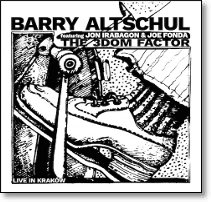
Barry Altschul 3Dom Factor: Live in Krakow (2016
[2017], Not Two): American drummer, a free jazz legend since his
early 1970s records with Dave Holland, later with Anthony Braxton's
1980s quartet, dropped from sight in the 1990s until 2010 when he
appeared on saxophonist Jon Irabagon's Foxy, the first of a
bunch of collaborations under one name or another (third as 3Dom
Factor, with Joe Fonda on bass). Mostly notable for Irabagon's no
holds barred sax, although the bass-and-drums duets are super too.
A-
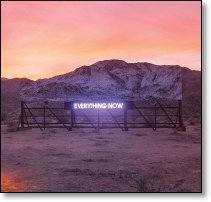
Arcade Fire: Everything Now (2017, Columbia):
Alt/indie group from Montreal, fifth album since 2004, hugely
popular and critically esteemed -- third album, The Suburbs,
seemed to be a lock on album of the year polls until Kanye West
spoiled their party. I'm not a huge fan but haven't found much
cause to fault their albums. I might quibble about this being
too ornate, but after five or six plays nearly every song has
clicked. Still, probably won't play it again until EOY, but I
have little doubt I'll enjoy it then.
A-
Gerald Beckett: Oblivion (2017, Summit): Flutist,
from Beaumont, TX, studied at UNT, moved on to San Francisco. Sixth
album, long personnel list but typical groups have 5-6 musicians,
the standout alto saxophonist Ruben Salcido. Nine covers, several
(Piazzolla, Pascoal, Tjader) bringing the Latin tinge, others
mainstream jazz (Davis, Mulligan, Ellis Marsalis), with a long
"Out of This World" to close.
B+(*) [cd]
Tim Berne's Snakeoil: Incidentals (2014 [2017],
ECM): Alto saxophonist, influenced by Julius Hemphill, which shows
up strongest here in his harmonics with Oscar Noriega (clarinet,
bass clarinet). Group name comes from their 2012 Snakeoil,
with Ryan Ferreira (guitar), Matt Mitchell (piano/electronics),
and Ches Smith (drums, vibes, percussion). Dense and turbulent,
has some marvelous moments as well as puzzling ones.
B+(***) [dl]
Big Bold Back Bone: In Search of the Emerging Species
(2015 [2017], Shhpuma): Swiss-Portuguese quartet: Marco von Orelli
(trumpet), Sheldon Suter (prepared drums), Luis Lopes (guitar), and
Travassos (electronics). One 43:02 piece, plumbs sonic depth but
rarely rises to demand your attention.
B
Jane Ira Bloom: Wild Lines: Improvising Emily Dickinson
(2017, Outline, 2CD): Soprano saxophonist. Group: Dawn Clement (piano),
Mark Helias (bass), Bobby Previte (drums), plus Deborah Rush reading
Dickinson poetry on the second disc only. I'm inclined to favor the
music-only disc, but while I rarely register the words, somehow the
music on the second disc seems even more vibrant.
B+(***) [cd]
Burnt Sugar/The Arkestra Chamber: All You Zombies Dig the
Luminosity (2016-17 [2017], Avant Groidd): Group assembled
by noted rock critic Greg Tate back in 2001, more of a jazz group
then but with more lyrics their 13th album is exceptionally jazzy
funk. Steven Bernstein (trumpet) and Avram Fefer (alto sax) are
probably the best known musicians, but the core is guitars (4),
bass, keys, violin, and drums -- not counting Tate, creditd with
guitar, bass, and "beats & loops."
B+(***)
Anat Cohen & Trio Brasileiro: Rosa Dos Ventos
(2017, Anzic): The clarinetist joins a Brazilian choro group --
Dudu Maia (bandolim), Douglas Lora (7-string guitar), Alexandre
Lora (pandeiro, hand pan, percussion). Clarinet tends to blend
in with the strings.
B
Anat Cohen & Marcello Gonçalves: Outra Coisa: The Music
of Moacir Santos (2017, Anzic): More Brazilian, a duo with
Cohen on clarinet and Gonçalves playing 7-string guitar, on a set of
"things" from Brazilian saxophonist Santos. The clarinet is somewhat
delicate here, but still stands out framed against spare guitar.
B+(**)
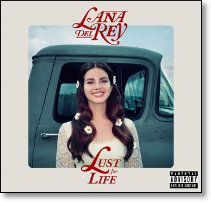
Lana Del Rey: Lust for Life (2017, Interscope):
Fifth album since 2010, started as a young pop ingenue but shifted
last time into a winning slowcore groove which works even better
here, especially when she plaintively demands "the fucking truth" --
helps that she doesn't evince any of the genre's depressiveness,
and employs the occasional rapper. Tails off a bit at the end, but
only after a trio of songs that I take to be patriotic in the best
sense -- about caring for each other.
A-
Beth Ditto: Fake Sugar (2017, Virgin): Mary Beth
Patterson, "fat, feminist lesbian from Arkansas," singer in the so-so
indie band Gossip, went solo with an EP I liked in 2011. This is her
first full-length solo effort, produced by Jennifer Decliveo as
exceptionally straight and clear, perhaps even a bit simplistic,
major league pop.
B+(***)
Miles Donahue: The Bug (2015 [2017], Whaling City Sound):
Alto saxophonist, b. 1944, didn't record until around 1992, also plays
trumpet and flugelhorn here, keyboards elsewhere. Even when he switches
off you get strong saxophone from Jerry Bergonzi, guitar by Mike Stern
on three tracks, piano (Tim Ray), bass, and drums.
B+(*) [cd]
Downtown Boys: Cost of Living (2017, Sub Pop):
Radical punk band from Providence, formed by a tuba player and
singer Victoria Ruiz. Third album, pounding beat, loud scream
and indecipherable screed, probably smart but I like it best
when topped with a little saxophone.
B+(**)
The Fall: New Facts Emerge (2017, Cherry Red):
Mark E. Smith's pioneering post-punk group, dating back to 1979,
still featuring their trademark crunch and growl. While I'm a
fan of the growl, the signature-sounding closing instrumental
piece is this album's saving grace.
B+(*)
Filthy Friends: Invitation (2017, Kill Rock Stars):
Portland supergroup, only ones I'm familiar with are singer Corrin
Tucker (Sleater-Kinney), guitarist Peter Buck (REM), and bassist
Krist Novolselic (Nirvana). First album, after group appeared on
the politically themed Battle Hymns benefit album. Seems
like a better-than-average hard rock group here, nothing more.
B+(*)
Floating Points: Reflections - Mojave Desert (2017,
Luaka Bop): British, someone with the memorable but not very original
name Sam Shepherd, has a previous album and beaucoup short pieces,
plays keyboards but works with larger groups. The dominant sound for
much of this is guitar, reminding me of Pink Floyd spaced out under
a vast nightsky.
B+(*)
Billy Flynn: Lonesome Highway (2017, Delmark):
Chicago blues guitarist-singer, originally from Wisconsin, seventh
album since 1992, whips up impressive groove but somehow it all
feels rote.
B
Jim Gailloreto's Jazz String Quintet: The Pythiad
(2016 [2017], Origin Classical): Soprano saxophonist, with a string
quartet plus bass and singer Cheryl Wilson -- a combination I don't
care for on many levels, one where the classical underpinnings make
it hard to hear any jazz.
B- [cd]
Hal Galper and the Youngbloods: Live at the Cota Jazz
Festival (2016 [2017], Origin): Pianist, started in the
mid-1970s and has had a long and remarkable career, joined here
by three young musicians I've never heard of -- Nathan Bellott
(alto sax), Dean Torrey (bass), and David Frazier (drums) -- on
four pieces ranging from 11:08 to 17:40. I'm especially struck
by Bellott and, of course, the pianist.
B+(**) [cd]
Julian Gerstin Sextet: The One Who Makes You Happy
(2017, self-released): Percussionist, teaches ethnomusicology in
Vermont, credits here include tanbou bèlè, congas, tupan; seems
to be his first album although I've found a side-credit on a 1992
album by Kotoja -- a California-based Nigerian-American group.
Sextet adds clarinet, trumpet, piano, bass, and drums, plus a
singer shows up on one track that sounds rather Brazilian.
B+(*) [cd]
Gogol Bordello: Seekers and Finders (2017, Cooking
Vinyl): Gypsy punk band from New York with roots back in Ukraine,
first emerged in 1998 and has some very notable records. This one
scores high marks for energy and sometimes adds insight and humor.
B+(**)
Laurel Halo: Dust (2017, Hyperdub): Born in Ann
Arbor, based in Berlin, third album, disjointed electronica with
(presumably her own) vocals.
B+(*)
Hamell on Trial: Tackle Box (2017, New West):
Singer-songwriter Ed Hamell has been cranking out DIY folk tunes
with punk intensity since 1989, includes a song here mostly about
Trump ("The More You Know"), one about the fear even white folk
have about getting shot by cops, and best of all an Australian
"Mouthy B"'s critique of America (some choice lines: "I don't
think your government cares about its people," "what's with all
the flags? I've never seen such insecurity in all my life,"
"along with freedom 'heroes' is the most overused word in your
national vocabulary"), as well as four "Froggy" songs. Cover
shows a burning city behind a blasphemous Lady Liberty. Title
song is about life coming with many hooks.
A-
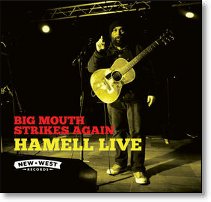
Hamell on Trial: Big Mouth Strikes Again: Hamell Live
(2017, New West): Seems to be download only, with a code provided
with the new studio album, but streams separately. Some redundancy
(including another "Mouthy B"), some songs from earlier albums (like
"The Happiest Man in the World"), some patter including a story
about three grandmas coming up to him and asking whether he has
any edgier material. He tries to satisfy them, even to the point
of explaining "that's how you wave a towell."
A-
Hard Working Americans: We're All in This Together
(2017, Melvin): Todd Snider's hard working alt-rock band, with a
few other guys I don't recognize from bands I've barely heard of
(Widespread Panic, Chris Robinson Brotherhood, Great American
Taxi). Title cut actually works as a live band intro after their
hardest guitar rave, followed by a souped up "Is This Thing Working?"
and ending with a Chuck Berry anthem -- a fine encore.
B+(***)
H. Hawkline: I Romanticize (2017, Heavenly): Welsh
singer-songwriter Huw Gwynfryn Evans. Fourth album, has a high voice
and a light, jangly feel that gradually grows on you.
B
Paul Heaton + Jacqui Abbott: Crooked Calypso (2017,
Virgin EMI): Main singer-songwriter behind the Housemartins and the
Beautiful South, probably my favorite bands in the waning days of
the 20th century. Third album with Abbott, their most problematical
one, with flashes that bring back fond memories but he's packed it
with way too much pomp. Deluxe edition adds four long songs (25:26),
changing little
B+(*)
Fred Hersch: Open Book (2016-17 [2017], Palmetto):
Solo piano. Three originals plus pieces from Monk, Jobim, Benny
Golson, and Billy Joel. He reached a new plateau with 2014's
Floating, and continues at that level, thoughtful, serene,
touch as deft as ever.
B+(***) [cd]
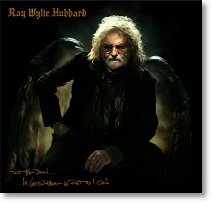
Ray Wylie Hubbard: Tell the Devil I'm Gettin' There as Fast
as I Can (2017, Bordello/Thirty Tigers): Singer-songwriter
from Oklahoma, called the band on his first (1976) record the Cowboy
Twinkies, didn't strike me as very important until his 2010 album
A. Enlightenment B. Endarkenment (Hint: There Is No C), but
has topped that good one three times since.
A-
Jon Irabagon/John Hegre/Nils Are Drønen: Axis (2013
[2017], Rune Grammofon): Saxophone-guitar-drums trio, the latter two
Norwegian. Two pieces, 17:43 and 18:56, focus on stress, eventually
breaking free.
B+(*)
Vijay Iyer Sextet: Far From Over (2017, ECM): Pianist,
very highly regarded, used to lead a group called Fieldwork with Steve
Lehman on alto sax and Tyshawn Sorey on drums -- they had three superb
albums 2002-08 -- and essentially doubles that group here, adding Mark
Shim (tenor sax), Graham Haynes (cornet/flugelhorn/electronics), and
Stephan Crump (bass). I'm not sure the extra weight helps, but Lehman
remains especially striking, as is the dense piano scaffolding.
B+(***) [dl]
Max Johnson: In the West (2014 [2017], Clean Feed):
Young bassist, b. 1990, fifth album, with Susan Alcorn (peddle steel),
Kris Davis (piano), and Mike Pride (drums) -- the pianist making by
far the biggest impression.
B+(*)
Paul Jones: Clean (2017, Outside In Music): Tenor
saxophonist, has at least one previous album. Postbop, all original
pieces, core group a quintet with Alex LeRe on alto sax and Glenn
Zaleski on piano, plus various extras including the SNAP Saxophone
Quartet (5/14 tracks), the Righteous Girls (flute/piano, same 5),
guest clarinet/oboe (same 5), cello (4 others), and bassoon (9).
B [cd]
Noah Kaplan Quartet: Cluster Swerve (2011 [2017],
Hatology): Saxophonist (tenor and soprano), has a couple previous
records. MVP here is guitarist Joe Morris, invariably the one you
wind up focusing on. With Giacomo Merega (electric bass) and Jason
Nazary (drums & electronics).
A- [cd]
LAMA + Joachim Badenhorst: Metamorphosis (2016 [2017],
Clean Feed): Mostly Portuguese avant trio with Susana Santos Silva
(trumpet), Gonçalo Almeida (bass/keys), and Greg Smith (drums), the
latter two dabbling in electronics. Their guest, who also appeared
on their 2015 album, plays clarinet and bass clarinet -- Chris Speed
was their guest back in 2013. Wound tight, makes me think it's the
bassist's album, but the horns get the best breaks.
B+(*)
Steve Langone Trio: Breathe (2016 [2017], Whaling
City Sound): Drummer-led piano trio, with Kevin Harris on piano and
Dave Zinno on bass. Zinno wrote two songs, one each for the others,
plus pieces from Chick Corea, Richard Rodgers, and "unknown" --
"Down By the Riverside" is a highlight.
B+(**) [cd]
Lean Left: I Forgot to Breathe (2015 [2017], Trost):
Fifth album, the first subtitled The Ex Guitars Meet
Nilssen-Love/Vandermark Duo -- the former being Terrie Hessels
(aka Terrie Ex) and Andy Moor, with Paal Nilssen-Love on drums and
Ken Vandermark on reeds.
B+(**)
The Liberation Music Collective: Rebel Portraiture
(2017, Ad Astrum): Nearly a big band -- 13 pieces, plus an extra
guitar on a couple cuts, and singers, based in Chicago, founded by
bassist Hannah Fidler and trumpeter Matt Riggen, citing the "activist
tradition of such jazz composers as Charles Mingus, Max Roach, and
Charlie Haden." Not quite, of course, and the lyrics never grab me.
B+(*) [cd]
Charles Lloyd New Quartet: Passin' Thru (2016 [2017],
Blue Note): Not exactly new -- this Quartet lineup dates back to Rabo
De Nube, recorded in 2007: Jason Moran (piano), Reuben Rogers (bass),
Eric Harland (drums). His tenor sax is as lucid as ever, and Moran is
an impressive accompanist. Flute feature has Indian airs and what sounds
like guitar -- presumably bass.
B+(***)
Manchester Orchestra: A Black Mile to the Surface
(2017, Loma Vista): Indie rock group from Atlanta, fifth album since
2006, all serious and a bit heavy-handed.
B
Rob Mazurek: Chants and Borders (2016 [2017], Clean
Feed): Trumpet player from Chicago, credited here with cornet, modular
synth, sampler, and piano, with a group in Brazil that expands beyond
Mazurek's São Paulo Underground group: Guilherme Granado (keyboards,
synthesizer, sampler, electronics), Thomas Rohrer (rabeca, flute,
soprano sax, electronics), Philip Somervell (piano, prepared piano),
Mauricio Takara (drums).
B+(**)
Rob Mazurek: Rome (2014 [2017], Clean Feed): Solo,
credits read: cornet, piano, prepared piano, electronics. Recorded
in Rome, which inspires some titles but probably has little to do
with the music. Tends toward atmospheric but doesn't intend to stay
there.
B+(*)
Vic Mensa: The Autobiography (2017, Roc Nation):
Chicago rapper, name shortened from Mensah, first studio album
after a couple of well-regarded EPs/mixtapes. This rubbed me wrong
from the start -- a boast about striking it rich while keeping
one's integrity -- but the teenage sex yarns aren't so bad, not
that I don't get he's some kind of cad. Still no interest in the
drugs or suicide.
B-
Meredith Monk: On Behalf of Nature (2015 [2016], ECM):
Composer, has worked in music, dance, theatre and film since the 1960s,
with a dozen records for ECM since 1981's Dolmen Music, mostly
in their postclassical New Series. She sings here, often with others,
against a fairly minimalist backdrop.
B+(*) [dl]
Marcus Monteiro: Another Part of Me (2017, Whaling
City Sound): Alto saxophonist, from Massachusetts, has at least one
previous record. Quartet with piano, electric bass, and drums (Steve
Langone). Wrote three originals (of 12 songs), covers ranging from
Horace Silver to Michael Jackson. Fairly mainstream, but rich tone
and easy swing.
B+(***) [cd]
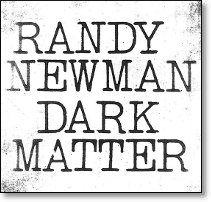
Randy Newman: Dark Matter (2017, Nonesuch): First
album of new songs since 2008's Harps and Angels, not that
he hasn't been busy during the Obama era: Discogs shows him with
two Songbook volumes, two live albums, and five soundtracks --
by now, not just his meal ticket but his toolchest. The first three
songs, with their historical-philosophical concerns, are so detailed
it takes little effort to imagine the videos. The rest of the album,
aside from the story of Sonny Boy the First, is unsentimental filler,
and probably better for that. Christgau proclamed this an "album of
the year contender" -- something I don't hear at all, but I massively
underestimated Harps and Angels, doubting it for much the same
offhandedness.
A-
Pale Horse: Badlands (2015 [2016], 5049): Clarinet player
Jeremiah Cymerman, group name taken from the previous album by this
"apocalyptic chamber ensemble" with Christopher Hoffman on cello and
Brian Chase on drums. Two LP-length tracks, total 34:02. Cites as
inspiration "the work of composers Scelsi & Ligeti, the novels
of Cormac McCarthy, the films of Wim Wenders and the hypnotic beauty
of Swans." More modest than any of those, but more pleasing than his
early raw noise.
B+(*) [bc]
Elan Pauer: Yamaha/Speed (2015 [2017], Creative Sources):
German pianist, real name seems to be Oliver Schwerdt -- has a previous
trio album with Axel Dörner and Christian Lillinger and a couple albums
as Schwerdt. This is solo, short (31:46), named for two of the three
pieces (the other is the 2:21 "Farewell"). Impressive, more for the
rumble he generates than for the runs.
B+(***) [cd]
Richard Pinhas/Barry Cleveland: Mu (2016, Cuneiform):
Pinhas is a French guitarist, formed the "electronic rock" band Heldon
in the 1970s, has also recorded as Schizo and Schizotrope, and has
twenty-some records under his own name, three with Merzbow. Cleveland
is another guitarist ("new age and experimental ambient"), and Michael
Manring (bass, elbow bass) and Celso Alberti (drums, electronic drums,
percussion) are also "featuring" on the cover, if not the spine.
B+(**) [dl]
John Pizzarelli: Sinatra & Jobim @ 50 (2017,
Concord): Marks the 50th anniversary of the 1967 encounter between
the crooner and Brazil's most famous songwriter (who played piano
and guitar and contributed some backing vocals) -- not a very good
album for either, with Claus Ogerman's arrangements part of the
problem. Pizzarelli's catalog includes titles like Dear Mr.
Sinatra and Bossa Nova, so I don't doubt his dedication.
He takes some liberties with the arrangements, turning two pairs
of songs into medleys and interposing bits of other songs. Daniel
Jobim adds his voice, Helvio Alves and Duduka Da Fonseca manage
the rhythm, and someone they don't mention plays some nice sax.
B-
Platform: Flux Reflux (2017, Clean Feed): French
clarinet player Xavier Charles, discography goes back to 1996,
second album under this name, with Katrine Schiøtt (cello), Jan
Martin Gismervik (drums), and Jonas Cambien (keyboards). All
improvised, the focus more on deep sound than on flow.
B
Lewis Porter/Phil Scarff Group: Three Minutes to Four
(2017, Whaling City Sound): Saxophonist Scarff has been a member of
Aardvark Jazz Orchestra since 1993, and leads the group Natraj, which
plays Indian classical music. Pianist Porter has played with AJO on
several occasions, and has shown up on a couple Allen Lowe projects,
but is probably better known as an author and educator. With John
Funkhouse (bass) and Bertram Lehmann (drums). Can't say I hear the
"east-meets-west jazz, where Indian raga merges with western classical" --
reminds me more of someone like Charlie Mariano, with a real sharp
rhythm section.
B+(***)
Dave Potter: You Already Know (2017, Summit):
Drummer, first album, has a few side credits with Jason Marsalis
(vibes), Miguel Alvarado (saxes), and Will Goble (bass), all
present here. Mostly originals, one tune each by Marsalis and
Alvarado, five covers, mostly jazz sources (Monk, Shorter,
Golson, Watson). Cut in several sessions, using three bassists,
three pianists, two trumpeters, but never more than quintets.
Swings, bops, swings some more.
B+(**) [cd]
Eric Revis: Sing Me Some Cry (2016 [2017], Clean
Feed): Bassist, played for Betty Carter and Branford Marsalis but
has tended to be more avant on his own albums. Quartet here with
Ken Vandermark (tenor sax/clarinet), Kris Davis (piano), and Chad
Taylor (drums) -- an explosive combination, most often moderated
by the bassist but extraordinary when he cranks them up.
A-
Roots Magic: Last Kind Words (2016 [2017], Clean
Feed): Italian group, second album: Alberto Popolla (clarinet, bass
clarinet), Errico De Fabritiis (alto/baritone sax), Gianfranco
Tedeschi (double bass), Fabrizio Spera (drums), plus guests on
organ/piano (4 tracks), cello (2), and dub effects (1). Plumbs a
deep blues base drawing on Charlie Patton and similarly influenced
jazz musicians like Julius Hemphill and Marion Brown, tuned up to
a fine fury.
A-
Mark Rubin, Jew of Oklahoma: Songs for the Hangman's
Daughter (2017, Rubinchik): Folk singer-songwriter, plays
a range of instruments, born in Stillwater, OK, but "Texas-reared,
and now living in New Orleans" -- clearly not one to shy away from
audience prejudices. He sings about being bipolar ("it's a wonder
I've yet to land in prison"), shows his regional colors when he
decries "the war of northern aggression," claims to have mastered
barbecue with kosher beef, covers "a fun old Bad Livers tune" (a
band he was in).
B+(**) [bc]
Oliver Schwerdt: Prestige/No Smoking (2015 [2017],
Euphorium, 2CD): German pianist, also records as Elan Pauer, goes
long here with two substantial servings of solo piano, dense and
crunchy, much like the Pauer record above.
B+(***) [cd]
Matthew Shipp: Invisible Touch at Taktlos Zürich
(2016 [2017], Hatology): Solo piano, recorded live at the Swiss
festival, all originals except for "Tenderly." His usual impressive
range from deep rumble through long lines to delicate touch.
B+(***)
Skyzoo: Peddler Themes (2017, First Generation
Rich/Empire, EP): Rapper Gregory Taylor, from Brooklyn, seven LPs,
scads of mixtapes, third EP, eight solid tracks (30:36).
B+(**)
Tyshawn Sorey: Verisimilitude (2016 [2017], Pi):
Drummer, sometime pianist -- he played a big chunk of his 2007 2CD
album That/Not -- I've even seen him lately on trombone,
but here just drums. I mention this because this strikes me as
very much a piano album (Corey Smythe), the percussion and bass
(Chris Tordini) often all but vanishing. Sometimes the piano,
too. I'd prefer something more in-your-face, and there's some
of that here too.
A- [cd]
Chris Speed Trio: Platinum on Tap (2016 [2017],
Intakt): Tenor saxophonist, has a fairly short list of albums
under his own name since 1997, but has a pretty long list of
side credits. This format, with Chris Tordini on bass and Dave
King on drums, pushes him out front, and he doesn't bother with
the clarinet, so you get a consistent sound which grows in
authority and panache.
A- [cd]
Jason Stein Quartet: Lucille! (2017, Delmark):
From Chicago, plays bass clarinet, quartet adds Keefe Jackson
(tenor sax, contrabass clarinet), Joshua Abrams (bass), and Tom
Rainey (drums) -- terrific group, with Jackson complementing
the leader's airy sound. Three originals, covers from Bird and
Monk, two from Lennie Tristano and another from Warne Marsh,
plus one called "Roused About" that I assume honors Charlie.
A- [cd]
Vieux Farka Touré: Samba (2017, Six Degrees):
Guitarist-singer from Mali, father was Ali Farka Touré, pioneer
of Saharan/desert blues, a tradition he carries on and extends,
mostly by rocking harder.
B+(***)
Triocity [Charles Pillow/Jeff Campbell/Rich Thompson]: I
Believe in You (2016 [2017], Origin): Reeds-bass-drums
trio, Pillow credited with alto sax, alto flute, bass flute,
clarinet, and bass clarinet -- last is certainly not least. He
only has a couple previous albums, but appears in quite a few
notable big bands (John Fedchock, Alan Ferber, David Liebman,
Pete McGuinness, Bob Mintzer, Ted Nash, Maria Schneider, and
others). Songbook and jazz standards (Monk, Parker, Davis),
closing with "Cherokee" -- always a thrill.
B+(**) [cd]
Tyler, the Creator: Flower Boy (2017, Odd
Future/Columbia): Los Angeles rapper Tyler Okonma, started out
in Odd Future collective, never seemed like he was quite ready
but gets a major label deal here. Has managed to smooth off
the rough edges, but that doesn't leave him with much.
B
Ken Vandermark/Klaus Kugel/Mark Tokar: Escalator
(2016 [2017], Not Two): Tenor sax/clarinet trio, drums and bass
respectively, recorded live at Alchemia in Krakow. I'm afraid I
find the clarinet annoyingly squeaky, but Vandermark is a tower
of power in this context, and remarkably adept.
B+(***) [bc]
Raphael Vanoli: Bibrax (2017, Shhpuma): Guitarist,
based in Amsterdam, first record, solo. Metallic tones, patiently
experimental.
B+(*)
John Vanore: Stolen Moments: Celebrating Oliver Nelson
(2016 [2017], Acoustical Concepts): Trumpet player, leads a big band
(16 pieces, only 2 saxes and 2 trombones, but 5 trumpets and 2 French
horns) through a splashy set of Nelson pieces, with sharp solos and
a certain postbop swing.
B+(**) [cd]
Matt Wilson: Matt Wilson's Honey and Salt (2016
[2017], Palmetto): Subtitle: "Music inspired by the poetry of Carl
Sandburg." Snatches of Sandburg poetry as well, read by various
members of the band and extras, as well as vocals (and guitar) by
Dawn Thompson. With Ron Miles (cornet), Jeff Lederer (reeds),
Martin Wind (bass), and Wilson on drums. Too many words for my
taste, but sometimes remarkable music.
B+(*) [cd]
Reggie Young: Forever Young (2017, Whaling City Sound):
Guitarist, first album but not so young, born in 1936, started out
playing rockabilly in Memphis, part of the Bill Black Combo (led by
Elvis Presley's first bass player, opened for the Beatles on their
1964 US tour). Best known for session work, including "Down in the
Boondocks" (Billy Joe Royal), "The Letter" (Box Tops), Dusty in
Memphis (Springfield), "Suspicious Minds" (Elvis), and "I Can
Help" (Billy Swan). Nice relaxed groove album with keyboards, bass,
drums, and sometimes a little cello.
B+(*) [cd]
Bobby Zankel & the Wonderful Sound 6: Celebrating William
Parker @ 65 (2017, Not Two): Alto saxophonist, a couple years
older than the famous bassist -- on board here, an event in Philadelphia,
along with Steve Swell (trombone), Diane Monroe (violin), Dave Burrell
(piano), and Muhammad Ali (drums). Old-fashioned avant joust, something
the bassist has presided over many times.
B+(**)
Omri Ziegele: Where's Africa: Going South (2016 [2017],
Intakt): Credit could be parsed several ways, including mention of Yves
Theiler (keyboards, reed organ, melodica, vocals) and Dario Sisera
(percussion, drums). Where's Africa is the name of a 2005
album -- a duo with pianist Irène Schweizer -- and was also used in
the credit of a 2010 trio (with Schweizer and Makaya Ntshoko). Ziegele
is Swiss, plays alto sax, Uzbek flute, and is credited with vocals.
Not sure who sings (weirdly) and who raps (impressively), affectations
which annoyed me at first as they interfered with the wonderful Township
Jive-inflected groove.
A- [cd]
Recent Reissues, Compilations, Vault Discoveries
Albert Ayler Quartet: European Radio Studio Recordings
1964 (1964 [2016], Hatology): Two sessions from the tenor
saxophonist's banner year, a quartet -- Don Cherry (cornet), Gary
Peacock (bass), Sunny Murray (drums) -- that toured Europe in the
latter months of the year. Six tracks from Hilversum, three more
from Copenhagen -- The Hilversum Sessions first appeared in
1980, The Copenhagen Tapes (also including a Club Montmartre
date) in 2002. Strikes me as a bit hit-and-miss, which isn't quite
the same as saying his avant-garde's become old hat.
B+(**)
Albert Ayler Quartet: Copenhagen Live 1964 (1964
[2017], Hatology): This is the Club Montmartre set previously released
on The Copenhagen Tapes, minus the three radio shots moved into
European Radio Studio Recordings 1964 -- these releases are
evidently part of an Ayler Estate effort to bring some order to the
various long-circulating Ayler bootlegs. Same quartet. Same chaos.
B+(**)
Albert Ayler: Stockholm, Berlin 1966 (1966 [2011],
Hatology): Two dates, a week apart, same group: Donald Ayler (trumpet),
Michel Sampson (violin), William Folwell (bass), Beaver Harris (drums).
Tightly layered, especially with the violin, around a skeleton of
gospel and circus music.
B+(***)
Paul McCandless With the Paul Winter Consort: Morning Sun:
Adventures With Oboe (1970-2010 [2017], Living Music): Playing
oboe mostly, some English horn (soprano sax and bass clarinet elsewhere,
notably with Oregon from 1980 on), McCandless joined soprano saxophonist
Winter's group for three 1969-72 albums, with several reunions from 1986
to 2010. Together they sound like medievalists trying to pass for new
age, and the occasional vocals hardly qualify as either.
C+ [cd]
John Prine: September 78 (1978 [2017], Oh Boy):
Recorded Sept. 23, 1978 in Chicago, after his four justly famous
Atlantics and first of three mostly forgotten Asylums (Bruised
Orange). Originally released on numbered orange vinyl for Record
Store Day 2015, now available for the masses. I first saw him a
decade later when he was reduced by playing solo, which he carried
off easily on wit, but this band, with organ and flashy guitar,
hems him in, although they rock impressively on his lesser known
songs (one appeared later on 1980's Storm Windows, two only
show up here, including one tantalizingly close to Chuck Berry).
B+(***)
Old Music
Burnt Sugar/The Arkestra Chamber: Not April in Paris: Live
From Banlieus Bleues (2004, Trugroid): Cover reads Live
01 at Banlieus Bleues but website gives this title. This closes
out the group's most intensive period, following six releases (7-CD)
in three years. Personnel list omits credits, but aside from leader
Greg Tate the names I don't need to look up are Vijay Iyer (keybs),
Lewis Barnes (trumpet), Matana Roberts (alto sax), and Mazz Swift
(violin) -- figure most of the 16 for guitar and vocals, plus bass
and drums. Slippery groove, not a lot of vocals but they can swing
either atmospheric or funky.
B+(***)
Burnt Sugar/The Arkestra Chamber: If You Can't Dazzle Them
With Your Brilliance, Then Baffle Them With Your Blisluth
(2004 [2005], Trugroid, 2CD): Another live set, from performances
in Spain, France, and New York. Unable to find a credits list, but
the first concerts immediately follow Not April in Paris.
"A Night in Tunisia" gives you something you can calibrate from, or
try, as the multipart pieces run on and on. No idea what "blisluth"
means.
B+(***)
Burnt Sugar/The Arkestra Chamber: More Than Posthuman:
Rise of the Mojosexual Cotillion (2006, Trugroid, 2CD):
Personnel list runs to 37 names: 4 guitarists, 5 drummers, and
10 vocalists (counting "rhymes" and "recitation/oratory"), the
goal "23rd century R&B," the grooves stretched and pliable.
Like most of their records, especially the long ones, there are
patches of brilliance and long stretches of enjoyable groove.
B+(***)
Burnt Sugar/The Arkestra Chamber: Chopped and Screwed:
Volume 2 (2007, Trugroid): Remixes, the title referring
to a technique DJ Screw developed in Houston in the 1990s based
on slowing the beat down -- something I don't know enough about
to judge how it was applied here. No evidence of a Volume 1.
Personnel listed as Greg Tate, Jarid Michael Nickerson, and Mazz
Wright, although horns are audible, as is some spoken word (rap?).
B
Jeremiah Cymerman: Purification/Dissolution (2011-12
[2012], 5049): Clarinetist, fifth album since 2007, solo but also
credited with amplifiers, synths, and electronics, which push this
into the domain of avant-noise. Bit harsh for me.
B [bc]
Jeremiah Cymerman/Christopher Hoffman/Brian Chase: Pale Horse
(2013 [2014], 5049): Clarinet/cello/drums, two cuts at 21:45 and 16:26.
Less of a noise album, but dense and mysterious, not anything you'd
take for chamber jazz.
B+(*) [bc]
Jeremiah Cymerman/Evan Parker/Nate Wooley: World of Objects
(2013 [2014], 5049): The clarinetist returns to noise world through his
"digital post-production." Saxophonist Parker is still unmistakable,
especially on soprano, while trumpet player Wooley remains a journeyman.
Not uninteresting, but my tolerance for this sort of thing is limited.
B- [bc]
Bill Frisell: Ghost Town (1999 [2000], Nonesuch):
Solo guitar, sometimes banjo, mostly originals but five covers offer
framework -- two old country songs, two showbiz standards, a piece
from John McLaughlin. Nothing exciting, but picks carefully.
B+(*)
George Garzone: Moodiology (1998 [1999], NYC):
Saxophonist (tenor/soprano), from Boston, a legendary educator and
mentor to many dozens of famous saxophonists, has most often recorded
as the Fringe, a sax trio as ragged as its name. With Fringe rhythm
section here -- John Lockwood on bass and Bob Gullotti on drums --
plus Douglas Yates (alto sax/bass clarinet), Claire Daly (baritone
sax), Kenny Werner (piano), and Mike Mainieri (vibes). Exceptional
chops, but the other horns sometimes add a sour note, and some of
his cover ideas don't work out so well.
B+(**)
George Garzone: The Fringe in New York (2000, NYC):
The Fringe albums date back to 1978, and this is the only one with
the star saxophonist's name on the cover, hence the credit. Mike
Mainieri joins on vibes, which can tilt the group into something
merely pretty -- especially when Garzone gives up his fierce tenor
for pretty soprano.
B+(**)
George Garzone: Among Friends (2009, Stunt):
Especially pianist Steve Kuhn, who often takes over the album,
also Anders Christensen (bass) and Paul Motian (drums). The
leader's tenor sax is especially eloquent on the ballads.
B+(***)
Jon Irabagon/Andrew Neff/Danny Fox/Scott Ritchie/Alex Wyatt:
Here Be Dragons (2009 [2012], Fresh Sound New Talent):
Tenor sax/alto sax/piano/bass/drums, with Chris Cash (programming)
a guest on one cut. Opens with the saxes neatly in sync, but the
leader is hard to contain.
B+(*)
Noah Kaplan Quartet: Descendants (2008 [2011],
Hatology): Same group as on the new album. Guitarist Joe Morris
is the main draw, with the leader playing more soprano sax, and
taking the tenor slower.
B+(**)
Joe Morris Trio: Antennae (1997, AUM Fidelity):
Avant guitarist, discography starts around 1990. With Nate McBride
on bass and Jerome Deupree on drums, loose yet jagged.
B+(**)
Joe Morris/Mat Maneri: Soul Search (2000, AUM Fidelity):
Guitar and viola duets, both electric, neither overpowering, closer in
effect to Maneri's bent avant-classicism than to the guitarist's usual
idiosyncrasies.
B+(*)
Joe Morris: Singularity (2000 [2001], AUM Fidelity):
As the title suggests, a solo album, with Morris playing steel string
acoustic guitar instead of his usual electric -- adds more texture
while better exhibiting his speed and dexterity.
B+(**)
Joe Morris Bass Quartet: High Definition (2007 [2008],
Hatology): No fear, just one bassist -- Morris, better known at guitar
but has many recordings on double bass. Two horns: Alan Chase (alto,
soprano, and baritone sax) and Tyler Ho Bynum on cornet, with Luther
Gray on drums. Tails off a wee bit at the end, but most of the way
the horns spin gloriously, while the leader's longtime drummer keeps
the rhythm surprising.
A-
Joe Morris: Mess Hall (2011 [2014], Hatology):
Guitarist, emphasis on electric here, backed by Jerome Deupree on
drums and (less obviously) Steve Lantner on keyboards. Five pieces
from 9:01 to 11:52, dense and gnarly.
B+(**)
Randy Newman: Live (1971, Reprise): Recorded at the
Bitter End in New York, just singer-songwriter and his piano, after
only two studio albums -- notably his likely best-ever 12 Songs
(4 songs from there, 5 from his debut, 2 destined for Sail Away,
1 eventually reworked for 1977's Little Criminals, 2 more).
B
Randy Newman: The Randy Newman Songbook Vol. 1 (2003,
Nonesuch): Reconstructed demos, just the songwriter pounding on his
piano and barking out his lyrics -- except to songs you already know --
well, songs I know. Strikes me as long on history and "Political Science"
(a title as well as a theme). "Rednecks" catches ever deeper in my craw,
perhaps because he sings it with such gusto. He does "God's Song" the
same way, and that's fine by me.
B+(*)
Randy Newman: The Randy Newman Songbook Vol. 3 (2016,
Nonesuch): Released five years after Vol. 2, itself eight years
following Vol. 1, he's obviously in no hurry. He opens with two
of his most famous/notorious songs, "Short People" and "Mama Told Me
Not to Come," although he winds up picking a couple songs I don't recall
(one with a surprisingly generous refrain: "it's just amazing how fair
people can be"). Also one song I've been thinking about a lot as Trump
and Pruitt lay waste to the environment: "Burn On," about the time the
Cuyahoga River caught fire. Just piano and vocal, scaling "I Love L.A."
back to human size, especially touching on "Guilty."
B+(***)
Randy Newman: The Randy Newman Songbook (2003-16 [2016],
Nonesuch, 3CD): This box rolls up the three Songbook volumes,
plus four extra songs at the end, including the caustic Bush-era "A
Few Words in Defense of Our Country" and the presumably satiric
Obama-era "I'm Dreaming" ("of a white president") with lines like:
"he won't be the brightest/but he'll be the whitest/and I'll vote
for that."
B+(**)
Flip Phillips: Swing Is the Thing (1999 [2000],
Verve): Tenor saxophonist, original name Joseph Edward Flipelli,
born 1915 in Brooklyn, came up in big bands including the Benny
Goodman and Woody Herman outfits and was a Jazz at the Philharmonic
regular. Died in 2001, so this was his last album: with Benny Green
(piano), Howard Alden (guitar), Christian McBride (bass), Kenny
Washington (drums), and guest spots for Joe Lovano and James Carter --
they bump up the energy level, but the leader's light tone swings
everything else.
B+(**)
Flip Phillips: Celebrates His 80th Birthday at the March
of Jazz 1995 (1995 [2003], Arbors): Big party, as befits
an eminent swing-to-bop saxophonist, surrounded here by near
contemporaries and younger retro players -- eighteen names in the
"combined personnel," including fellow saxophonists Scott Hamilton,
Phil Woods, and Bob Wilber, plus Buddy DeFranco on clarinet, Randy
Sandke on trumpet; three each pianists, guitarists, and bassists;
two drummers. Gives the party a JATP flavor, especially closing
with "Perdido."
B+(***)
John Pizzarelli: Let There Be Love (2000, Telarc):
Guitarist, working on becoming a standards crooner, with band going
soft to keep from overwhelming his voice -- Ray Kennedy on piano,
brother Martin Pizzarelli on bass, Tony Tedesco's credit is "brushes
on book." Some guests (including father Bucky Pizzarelli) show up
late but don't make much of an impression.
B
John Prine: Prime Prine: The Best of John Prine
(1971-75 [1976], Atlantic): Twelve songs from four albums worth
owning on their own, released as soon as Prine left (was cut?)
for Asylum. Christgau panned this: "Not as rewarding cut for cut
as John Prine or Sweet Revenge, not as interesting
conceptually as Diamonds in the Rough or Common Sense.
Good songs, useless album." I wouldn't have bothered but I owned
the album way back when -- probably bought it after I got my first
taste on personal favorite Common Sense but before I wised
up and grabbed the others. Superseded by the first disc of Rhino's
Great Days, but somehow this is the one that stayed in print.
So if you don't know any better:
A-
John Prine: Pink Cadillac (1979, Asylum): Sixth
album, second for Asylum, recorded in Memphis at Sam Phillips
Recording Studio by sons Knox and Jerry Phillips, with only five
Prine originals -- Billy Lee Riley joins to duet on his song, and
others include Floyd Tillman's "This Cold War With You," "Baby
Let's Play House," and "Ubangi Stomp." I'm not sure that any of
the rockabilly moves work -- for one thing the sound leaves much
to be desired -- but the Tillman cover shows that he can always
fall back on country tradition, and "Down by the Side of the Road"
is top-shelf.
B
John Prine: Storm Windows (1980, Asylum): Midway
in a series of five albums between the four Atlantics and his two
brilliant 1991-95 albums (The Missing Years and Lost Dogs
and Mixed Blessings), a solid album I might have taken for more
had I been paying attention at the time. Only two covers, and his
originals are much more appealing -- a couple I know from elsewhere
(probably Great Days), others that couldn't be by anyone
else.
A-
John Prine: John Prine Live (1988, Oh Boy):
Double LP, later a single CD, with 19 songs, recorded at five
spots but the only dates provided are song copyrights -- all
but two 1971-79 (1981, 1986). Mostly solo, acoustic guitar and
vocals, which fits my memory of the period -- I didn't pick up
a lot of the patter but did recognize "the happy enchilada song"
bit. Steve Goodman joins in for one song, and Bonnie Raitt takes
the lead on "Angel From Montgomery."
B+(*)
Schweizer Holz Trio [Hans Koch/Urs Leimgruber/Omri Ziegele]:
Love Letters to the President (2008, Intakt): Swiss
wood, as in woodwinds: bass clarinet/soprano sax, soprano/tenor
sax, alto sax/voice. With no rhythm to move them along, the horns
are erratic, prickly, and sometimes a bit warbly.
B+(*)
Matthew Shipp: Duos With Mat Maneri and Joe Morris
(1997-98 [2011], Hatology): Alternates tracks from two of Shipp's
Duo albums, Thesis with guitarist Morris (6/13 tracks), and
Gravitational Systems with violinist Maneri (5/10). Neither
were personal favorites, but the mix helps focus on the remarkable
pianist.
B+(*)
Chris Speed: Yeah No (1997, Songlines): The tenor
saxophonist's first album, a title he later recycled as a group name.
He also plays some clarinet, with Cuong Vu on trumpet, Skuli Sverrisson
on bass, and Jim Black on drums. The two-horn freeplay starts in high
gear, downshifts later.
B+(**)
Chris Speed: Deviantics (1998, Songlines): Same group,
with trumpeter Vu doing much of the slicing and dicing.
B+(**)
Chris Speed: Emit (2000, Songlines): Same quartet, the
leader playing some clarinet as well as tenor sax, drummer Jim Black
also credited with melodica. Trumpet player Cuong Vu continues to claim
the high ground.
B+(***)
Chris Speed/Chris Cheek/Stéphane Furic Leibovici: Jugendstil
(2006 [2008], ESP Disk): I've been known to confuse the two Chrises:
they were born a year apart, both mostly play tenor sax, have less
than a dozen headline albums (starting in 1997-98) but play on many
more. Cheek plays tenor and soprano here, Speed clarinet, Leibovici
bass. Very minimal, soft harmonies with a little fuzz, no beat. A
second disc, Jugendstil II, was released in 2010 with Lee
Konitz replacing Speed.
B
Chris Speed/Zeno De Rossi: Ruins (2011-13 [2014],
Skirl): Duets. De Rossi is an Italian drummer -- not much under
his name but he's recorded in a couple dozen groups, especially
with Franco D'Andrea but the groups also include Full Metal Klezmer
and Meshuge Klezmer Band. Speed plays some of his most powerful
tenor sax in this stripped down framework.
A-
Chris Speed: Really OK (2013 [2014], Skirl): Tenor
saxophone trio with Chris Tordini (bass) and Dave King (drums), same
as his later Platinum on Tap, pushing him to the forefront to
show off his chops. Seven originals, plus pieces from Coltrane and
Coleman and "All of Me."
B+(***)
Omri Ziegele Billiger Bauer: The Silence Behind Each Cry:
Suite for Urs Voerkel (2001 [2002], Intakt): Alto saxophonist,
born in Israel, studied in Boston and London, settled in Zürich. Group
here is a nonet, named for a "workplace" (Google translates as "cheap
farmer") in Zürich. Voerkel was a Swiss pianist (1949-99), honored but
evidently uninvolved in this project, a four-part suite built around
poems by Robert Creeley (sung operatically, presumably by Ziegele).
B+(*)
Omri Ziegele Billiger Bauer: Edges & Friends (2004
[2006], Intakt): Octet, just two horns (Ziegele on alto and Jürg
Wickihalder on soprano sax), with piano, cello, two each bass and
drums. Eight pieces, again structured around poetry -- Robert Creeley,
Dylan Thomas, Ziegele himself. The band can impress -- especially
pianist Gabriela Friedli -- but I could do without the poetry.
B
Omri Ziegele's Where's Africa Trio: Can Walk on Sand
(2009 [2010], Intakt): Expands the Swiss alto saxophonist's duo with
pianist Irène Schweizer from their 2005 Where's Africa, adding
South African drummer Makaya Ntshoko, with Jürg Wickihalder adding
his soprano sax to three cuts. Abdullah Ibrahim is a shared passion.
B+(***)
Notes
Everything streamed from Napster (ex Rhapsody), except as noted in
brackets following the grade:
- [cd] based on physical cd
- [bc] available at bandcamp.com
- [dl] something I was able to download from the web; may be freely
available, may be a bootleg someone made available, or may be a publicist
promo
Ask a question, or send a comment.
Monday, August 28, 2017
Music Week
Music: Current count 28590 [28563] rated (+27), 374 [378] unrated (-4).
August weekly rating totals: 18, 30, 25, 27, for a total of 100,
down a bit given that typical months top 120. Streamnotes draft file
currently has 111 reviews, so maybe the rated counts have missed a
few things. I'll post Streamnotes by the end of the month, Thursday
at latest. Maybe I'll find something more by then, but I currently
have 14 new A- records. That's actually a bit above average -- e.g.,
see my
2016 list, which shows 142 new
A/A- records last year (average month just under 12). My
2017 list currently shows 88 A-
(no A) records so far, so I'm averaging 11/month. The split is
currently 49 jazz, 39 non-jazz. In recent years, as far back as
I've noticed, jazz runs up a big edge early then non-jazz catches
up when I start looking at EOY lists. Last year's split wound up
74 jazz,
67 non-jazz.
Guitarist John Abercrombie died last week. You can find my
grade list here. As I recall, I had Timeless on LP
back shortly after it appeared. I was rather underwhelmed at the
time, but came to appreciate him over the last 10-15 years, often
when he made appearances on other folks' records. Could be I still
have The Third Quartet underrated. It garnered a crown in
the last edition of the Penguin Guide. When I initially
panned it, ECM's publicist wrote me to ask if I was feeling OK.
As it happened, I wasn't -- it was shortly after a very traumatic
event. I eventually went back to the album, gave it another chance,
and found much more there. Died at age 72.
One piece of news last week was that the Village Voice announced
they would cease publication of its print edition, which had been
distributed for free since 1998. The paper was founded in 1955, and
had become famous enough that I bought a subscription when I was
living in Wichita in 1968 or 1969. (Somewhat before I also had a
subscription to the New York Free Press; no Wikipedia and very little
Google on that -- did it only exist in 1968?) I mostly read politics
and theater reviews then, but several years later, after I started
reviewing records for the Voice, I was able to find Robert Christgau's
1969 articles stashed away in my parents' attic. I doubt I read the
Voice regularly while I was at college in St. Louis, but after I
dropped out, I started reading a lot of rock crit. wrote a little,
and wrote to Christgau in 1975. He wrote back and asked me to write
a review of a new Bachman-Turner Overdrive album (see
my archive). I moved to New York City
a couple years later and got to know him pretty well, but never
developed much of a relationship with the Voice except through him.
I stopped writing for the Voice in 1979, moved to New Jersey to
write software, and on to Massachusetts, back to NJ, and finally
returned to Kansas in 1999. In 2004 Christgau asked me to write
a Jazz Consumer Guide for the Voice, which continued past 2006
(when Christgau was fired) until Rob Harvilla left in 2011.
The Voice continues
online, and since Peter
Barbey bought the paper from New Times (the company responsible
for the mass firings of 2005-06) they've started to bring back
some of the writers who made the paper so distinctive. It's been
over a decade since I've even seen a print copy, but still this
seems like another end-of-era moment. To mark this, the following
are a couple links to articles with reminiscences by several
writers/editors:
New records rated this week:
- Laura Ainsworth: New Vintage (2017, Eclectus): [cd]: B+(**)
- Barry Altschul's 3Dom Factor: Live in Krakow (2016 [2017], Not Two): [r]: A-
- Gerald Beckett: Oblivion (2017, Summit): [cd]: B+(*)
- Fred Hersch: Open Book (2016-17 [2017], Palmetto): [r]: B+(***)
- Jon Irabagon/John Hegre/Nils Are Drønen: Axis (2013 [2017], Rune Grammofon): [r]: B+(*)
- Noah Kaplan Quartet: Cluster Swerve (2011 [2017], Hatology): [cd]: A-
- LAMA + Joachim Badenhorst: Metamorphosis (2016 [2017], Clean Feed): [r]: B+(*)
- The Liberation Music Collective: Rebel Portraiture (2017, Ad Astrum): [cd]: B+(*)
- Pale Horse: Badlands (2015 [2016], 5049): [bc]: B+(*)
- Dave Potter: You Already Know (2017, Summit): [cd]: B+(**)
- Chris Speed Trio: Platinum on Tap (2016 [2017], Intakt): [cd]: A-
- Bobby Zankel & the Wonderful Sound 6: Celebrating William Parker @ 65 (2017, Not Two): [r]: B+(**)
- Omri Ziegele: Where's Africa: Going South (2016 [2017], Intakt): [cd]: A-
Recent reissues, compilations, and vault discoveries rated this week:
- Paul McCandless: Morning Sun: Adventures With Oboe (1970-2010 [2017], Living Music): [cd]: C+
Old music rated this week:
- Jon Irabagon/Andrew Neff/Danny Fox/Scott Ritchie/Alex Wyatt: Here Be Dragons (2009 [2012], Fresh Sound New Talent): [r]: B+(*)
- Noah Kaplan Quartet: Descendants (2008 [2011], Hatology): [r]: B+(**)
- Schweizer Holz Trio [Hans Koch/Urs Leimgruber/Omri Ziegele]: Love Letters to the President (2008, Intakt): [r]: B+(*)
- Chris Speed: Yeah No (1997, Songlines): [r]: B+(**)
- Chris Speed: Deviantics (1998, Songlines): [r]: B+(**)
- Chris Speed: Emit (2000, Songlines): [r]: B+(***)
- Chris Speed/Chris Cheek/Stéphane Furic Leibovici: Jugendstil (2006 [2008], ESP Disk): [r]: B
- Chris Speed/Zeno De Rossi: Ruins (2011-13 [2014], Skirl): [r]: A-
- Chris Speed: Really OK (2013 [2014], Skirl): [r]: B+(***)
- Omri Ziegele Billiger Bauer: The Silence Behind Each Cry: Suite for Urs Voerkel (2001 [2002], Intakt): [r]: B+(*)
- Omri Ziegele Billiger Bauer: Edges & Friends (2004 [2006], Intakt): [r]: B
- Omri Ziegele's Where's Africa Trio: Can Walk on Sand (2009 [2010], Intakt): [r]: B+(***)
Unpacking: Found in the mail last week:
- Dave Douglas: Little Giant Still Life (Greenleaf Music): October 20
- Tomas Fujiwara: Triple Double (Firehouse 12): October 20
- Philipp Gerschlauer/David Fiuczynski: Mikrojazz: Neue Expressionistische Musik (Rare Noise): cdr, September 25
- Dave Rempis: Lattice (Aerophonic): October 10
- The Rempis Percussion Quartet: Cochonnerie (Aerophonic): October 10
Ask a question, or send a comment.
Sunday, August 27, 2017
Weekend Roundup
The big story, one I have nothing on below, is probably what Hurricane
Harvey is doing to Texas as I write -- and as I look at the forecast map,
will keep doing through Wednesday. I watched one woman on Fox News going
on about how this disaster will finally give Trump the chance to appear
presidential and gain back some of his lost support. I noted how the
governor of Texas was thanking the federal government for their support.
Evidently this won't be the week when Republicans go around quoting
Ronald Reagan on how the scariest words in the English language are
"I'm from the government, and I'm here to help." In point of fact, the
party that wants to reduce government so small it can be drowned in a
bathtub doesn't have a very good record in responding to natural
disasters (or, really, any kind of disaster -- cf. 9/11 as well as
Katrina).
This week's scattered links:
Zeeshan Aleem: Nikki Haley's path to the presidency runs right past
Trump: Notes that "The UN ambassador's profile is rising as she
runs her own show," and quotes Sen. Lindsey Graham as saying, "She
sounds more like me than Trump." I wonder if Haley didn't get the
idea that UN Ambassador would be a plum presidential stepping stone
from House of Cards. It certainly gives her opportunities to
poise bellicose for the press. Of course, if people start talking
her up, Trump might get jealous and sack her. On the other hand,
that's probably in her plan as the next step.
Randall Balmer: Under Trump, evangelicals show their true racist colors.
Zack Beauchamp: Sebastian Gorka, Trump's most controversial national
security aide, is out: Obviously the next to go after Bannon got
sacked, at least he took the time to write a blustery resignation
letter, vowing to fight on against the administration's "globalists"
in Trump's name -- as the old joke goes, now he'll be outside the
tent pissing in.
Alvin Chang: We analyzed 17 months of Fox & Friends transcripts.
It's far weirder than state-run media.
Since Trump was elected, Fox & Friends has taken a special
place in the media landscape. It's clear that the program is in something
of a feedback loop with the president. But contrary to what CNN president
Jeff Zucker says, this isn't state-run television "extolling the line out
of the White House." Scholars tend to say state-run media usually aims to
keep the rank and file in line, while demobilizing the populace and
deflating political opposition. Most of it is very boring. Watch some
live Chinese state-run media and you'll immediately understand. . . .
What we found is that Fox & Friends has a symbiotic
relationship with Trump that is far weirder and more interesting than
state media. Instead of talking for Trump, they are talking to
him.
The regular hosts -- Steve Doocy, Brian Kilmeade, and Ainsley Earhardt --
and their rotating cast of guests increasingly view their role as giving
advice to the president. They prognosticate on what the president, his
staff, or his party should do. And it's all couched in language that makes
it seem they are on his side -- that the damning news reports from
mainstream media were unfair obstacles to his presidency.
That is in contrast to what Fox & Friends was before Trump.
In 2013, media scholar Jeffrey P. Jones argued that Fox & Friends
creates an ideologically homogeneous community and reinforces it by creating
a high school-like atmosphere. "The show is designed to thrust the viewer
into a common-sense groupthink, complete with all the rumours, smears,
innuendo, fear-mongering, thinly veiled ad hominem attacks, and lack of
rational discourse they can muster -- you know, just like high school,"
he writes.
But in the 2016 election, the man who loves their show and listens
to their political and cultural ruminations became the leader of the
free world.
Fox & Friends went from being the bully on the periphery
to the prom king's posse.
Esme Cribb: Trump's Afghan Strategy: 'Killing Terrorists,' Not Nation
Building: Quick summary of Trump's Monday night "Afghanistan Strategy"
speech. Despite all the "pillars" and "multi-pronged strategy," what this
sounds like is that he's shelving the COIN theory -- all that stuff about
protecting Afghan communities and helping them develop -- and returning
to the core competency of the US military, which is wholesale slaughter
of anyone who gets in our way (aka, "killing terrorists"; who are these
"terrorists"? well, the people we kill). To accomplish this he'll allow
the generals to requisition whatever forces they want, with no review
from the White House let alone Congress. And he's set the standard for
ending the war so high that it's become a moot point. In effect, he's
put the war on autopilot, where the only real goal is to punish the
Afghan people for America's failure to secure any form of stability.
This approach is not unprecedented in American history: Nixon did the
same thing in Vietnam when he reduced US troop levels while winding
up with a murderous rampage, hoping to impress on the world that while
a people may defy the United States, they will suffer mightily for the
affront. The only word that described this is sadism: having failed
to impose American will, the only way Trump can recover his sense of
power is by inflicting suffering on others. Trump's concept of "America
First" doesn't seem to extend much beyond "fuck everyone else" (nor
does his concept of America extend to many people living here).
Some more links on Trump and Afghanistan:
Andrew J Bacevich: The conflict in Afghanistan is Trump's war now:
True enough, in the sense that Trump could have stuck to his campaign
rhetoric and ordered withdrawal, ending America's 16-year (or, actually,
38-year) war in Afghanistan. Failure to do that stamps the war with his
hand, much as Obama's 2009 "surge" added to his personal responsibility
for the war. On the other hand, saying "From this point forward, blaming
President Obama for whatever happens in Kabul or Kandahar or the Hindu
Kush won't work," won't work either. No matter how poorly Trump's generals
perform, Trump will never give up blaming Obama.
David Faris: Why Trump's Afghanistan plan will end in utter failure.
Emran Feroz: Fearful Villagers See the US Using Afghanistan as a "Playground
for Their Weapons".
Rod Nordland: What an Afghanistan Victory Looks Like Under the Trump
Plan: Allegedly, this show of force sets the stage for talks that
reconcile the Kabul government with the Taliban, but also note: "The
last Taliban leader to espouse peace talks, Mullah Akhtar Muhammad
Mansour, was killed in an American drone strike last year." And despite
the title:
President Trump mentioned "victory" four times and "defeat" of the
enemy seven times in his speech. But it remains unclear what victory
would even look like.
In another New York Times article,
Julie Hirschfeld Davis/Matthew Rosenberg: Trump Seeks a Clear Victory
in a Murky War, the best they can offer is: "For Mr. Trump, winning
looks a lot like a very long war."
Daniel Larison: Trump's Awful Afghanistan Speech.
Mark Perry: How the Brass Talked Another President Into a Losing
Strategy
John Feffer: Avoiding War With Pyongyang: alternate title, "Trump
and the Geopolitics of Crazy." Good in-depth article, which points out
that the US (Jimmy Carter, at least) has successfully negotiated with
the DPRK before, that in terms of crazy vs. crazy Trump and Kim Jong-un
have little if anything on Nixon and Mao in 1970, and that despite all
those sanctions North Korea has been cautiously changing toward the sort
of market economy corporations love doing business with in China. Now,
if only someone in Washington was listening. Another report suggesting
that Kim Jong-un might not be the crazier of the adversaries is:
Jon Schwarz: North Korea Keeps Saying It Might Give Up Its Nuclear Weapons --
but Most News Outlets Won't Tell You That.
Rebecca Gordon: Is Anything the Moral Equivalent of War? Reading the
title, I recognized the phrase but couldn't place it, perhaps because it
never made sense to me: at least from the early Americanization of the
Vietnam War I never saw anything moral in war, so couldn't imagine any
virtuous activity as being its "moral equivalent." The phrase turns out
to have been coined by
William James in 1906 attempting to find an alternative activity to
the "martial spirit" that warmongers like Theodore Roosevelt were so keen
on promoting. The phrase was then popularized in a
1977 speech by President Jimmy Carter where he tried to marshall
America's militarist spirits to tackle the "energy crisis." As you no
doubt recall, the American people responded by voting Carter out of
office, choosing instead to bury their heads in Reagan's "morning in
America" fantasy. Probably didn't help that the acronym militarists
gave the speech was MEOW, but the fact is that by 1977 even real war
didn't satisfy James' MEOW demands. A couple years earlier the Army
had given up on the draft because way too many of those impressed into
service couldn't be trusted to carry out orders -- the obvious advantage
of the no-draft army is that volunteers were much less likely to "frag"
their officers. On the other hand, even "professional" soldiers are
likely to have joined for purely economic reasons, which only made
sense if their risk was minimal. Gordon plays a bit with MEOW theory,
noting that war "requires from whole populations a special kind of
heroic focus, a willingness to mobilize and sacrifice, a commitment
to community or country . . . it also requires people to relinquish
their own petty interests in the service of a greater whole." That,
at least, is the idea behind America's many metaphorical wars -- on
crime, poverty, drugs, cancer -- none of which have been particularly
successful, possibly because Americans no longer seek MEOWs -- or, in
most cases, let real shooting wars impose much on their everyday lives.
But it's also because our conventional thinking about war corrupts and
perverts these metaphorical wars, which is something Gordon does go
into at more depth. She also suggests that the War on Terror is itself
yet another metaphorical war, even though this one is fought with bombs
and bullets.
Josh Marshall: Thoughts on Trump's Speech: On Tuesday's rally in
Phoenix:
Aside from the rambling weirdness, the big things are these. President
Trump spent something like forty-five minutes in a wide-ranging primal
scream about Charlottesville, ranting at the press, giving what might
generously be called a deeply misleading and dishonest summary of what
he actually said. It all amounted to one big attack on the press for
supposedly lying about him.
There were some other points that were momentary and perhaps easy
to miss but quite important.
- Trump essentially promised he would pardon Sheriff Joe Arpaio, a
major sop to the anti-immigrant, white nationalist base.
- Trump suggested he would probably end up withdrawing from NAFTA
because negotiations will fail. That statement will have major
repercussions.
- Trump threatened to shut down the government to force Congress's
hand on getting his border wall.
- While grandiosely not mentioning the names of Jeff Flake or John
McCain, he nonetheless went after them and made his opposition to both
quite clear. Presidents don't generally attack members of their own
party going into a midterm elections.
More links related to Trump's speech in Arizona:
Jenna Johnson: As Trump ranted and rambled in Phoenix, his crowd slowly
thinned:
Just before President Trump strolled onto the rally stage on Tuesday
evening, four speakers took turns carefully denouncing hate, calling
for unity and ever so subtly assuring the audience that the president
is not racist. . . . Meanwhile, a supporter seated directly behind
stage even wore a T-shirt that stated: "Trump & Republicans are
not racist."
Then Trump took the stage.
He didn't attempt to continue the carefully choreographed messaging
of the night or to narrow the ever-deepening divide between the thousands
of supporters gathered in the convention center hall before him and the
thousands of protesters waiting outside.
Instead, Trump spent the first three minutes of his speech -- which
would drag on for 75 minutes -- marveling at his crowd size, claiming
that "there aren't too many people outside protesting," predicting that
the media would not broadcast shots of his "rather incredible" crowd
and reminiscing about how he was "center stage, almost from day one,
in the debates."
Dara Lind: Joe Arpaio, the anti-immigrant sheriff That Trump wants to
save from prison, explained. Also on Arpaio, see:
Noah Feldman: Arpaio Pardon Would Show Contempt for Constitution.
Heather Digby Parton: Trump in Arizona: Threats, paranoia and a dark
lesson in white history.
Charles P Pierce: I Have No More Patience for Trump Supporters:
Before we get to the other stuff, and there was lots of other stuff, I'd
like to address myself to those people represented by the parenthetical
notation (Applause) in the above transcript, those people who
waited for hours in 105-degree heat so that they could have the G-spot
of their irrationality properly stroked for them. You're all suckers.
You're dim and you're ignorant and you can't even feel yourself sliding
toward something that will surprise even you with its fundamental
ugliness, . . .
A guy basically went mad, right there on the stage in front of you,
and you cheered and booed right on cue because you're sheep and because
he directed his insanity at all the scapegoats that your favorite radio
and TV personalities have been creating for you over the past three
decades.
On Friday, Joe Arpaio became the first person Trump issued a
presidential pardon for. See:
Dara Lind: The real reason Trump pardoned Joe Arpaio:
[Arpaio's contempt of court conviction ] was a predictable consequence
of the way he'd run his department -- guided by a philosophy that as
long as law-enforcement officials were grabbing headlines by going after
undesirable people, the public wouldn't care so much about how it was
done.
The Trump administration has turned that philosophy into a matter of
federal rhetoric (such as Trump's "joke" urging officers to be rough
with suspects when shoving them into the backs of police cars) and policy
(in walking back court-enforced federal oversight of police departments).
President Trump himself is liable to tweet angrily about "so-called"
judges when he doesn't get his way.
Joe Arpaio is lucky that he was convicted under a president who cares
more about the order Arpaio professed to maintain than the laws to which
he was supposed to adhere. But Donald Trump is far luckier that he had,
in Arpaio, a model for how such a politician could operate.
Lind also wrote:
Trump's Arpaio pardon sends a message to sheriffs: I'm your
get-out-of-jail-free card; also see:
Lawrence Douglas: Why Donald Trump pardoned the unpardonable Joe Arpaio;
Andrew Rudalevige: Why Trump's pardon of Joe Arpaio isn't like most
presidential pardons;
Conor Friedersdorf: The Arpaio Pardon Is a Flagrant Assault on Civil
Rights;
Scott Lemieux: The disturbing lessons of Trump's shameful Arpaio pardon.
Douglas may have the best quote:
What unites these acts of teardown are their cheapness, cynicism and
recklessness. They are cheap: requiring nothing in the way of the hard
work of shaping and negotiating policy. This is a politics of fatigue,
indolence elevated to administrative practice. They are cynical: the
performance of a president-cum-snake-oil-salesman, working to dupe his
credulous audience that his bogus recipes constitute the promised potent
tonic. And they are reckless, profoundly reckless, as they represent a
contempt for the rule of law and for the norms of constitutional
democracy.
In pardoning Arpaio, our unpresident has undone the principle that
informs the practice of pardon; he has sided with the lawless renegade
against our federal judiciary and the constitution itself.
Also on Arpaio, here's a link to a 2008 story, about how
taxpayers had to pay $1.1 million "to settle another of Sheriff Joe
Arpaio's lawsuits," also "on top of the more than $43 million the
county has paid for the jail lawsuits":
Matt Shuham: 'Arizona Republic' Slams Arpaio Pardon: Trump Made It
Clear Racism 'Is a Goal';
A Phony Murder Plot Against Joe Arpaio Winds Up Costing Taxpayers
$1.1 Million.
By the way, there is a case for presidential pardons. Here's a story
where the power was used constructively:
Ted Gioia: The Jazz Pianist That John F. Kennedy Saved.
Josh Marshall: Trump Is Killing McConnell in Kentucky: Latest PPP
poll gives McConnell an 18% approval rating vs. 74% disapproval -- a
drop which necessarily includes a lot of Republicans who have followed
Trump's lead in blaming McConnell for Senate inaction on Trump agenda
items. Also note that Trump's approval rating in Kentucky is still up
at 60%, so he has way more sway there than nationwide. Still unlikely,
I think, that Trump can convert such dissatisfaction into a viable
primary challenge, but these numbers don't prove that he can't.
Corey Robin: Will Steve Bannon's war tear apart the Republican party?
The right-wing racial populism that once served the conservative cause
so well is now, as even the most conservative Republicans are acknowledging,
getting in its way. Whatever the outcome of the civil war Bannon intends
to fight, it'll be waged against the backdrop of a declining rather than
an ascendant movement, with the tools of yesterday rather than tomorrow.
That is why, having had seven months in the White House to prosecute
his populist war on the Republican establishment -- something Buckley and
his minions could only dream of in 1955 -- Bannon now finds himself staring
into the abyss of a website, hoping to find there a power he couldn't find
in the most powerful office of the world.
Robin also wrote
When Political Scientists Legitimate Torturers, about John Yoo's
featured role in next week's American Political Science Association
get together. Yoo was one of lawyers who rationalized the Bush-Cheney
craving for torture, in a series of legal briefs that were pretty
sadly tortured themselves. Robin cites Victor Klemperer arguing that
the intellectuals who celebrated the Third Reich should be held as
more guilty than the henchmen who merely carried out the crimes.
Indeed, as I recall, there was a special session of the Nuremberg
trials that focused on lawyers and judges. Lawyers like Yoo were
in a position to prevent crimes from happening, and their failure
to do so -- indeed, their active efforts as enablers -- should
never be forgotten.
Dylan Scott: Why Obamacare didn't implode: Specifically, why every
county in the country has at least one insurance company offering private
coverage under ACA, contrary to recently raised alarms. Still lots of
money to be made out there, at least as long as the federal government
keeps paying subsidies. And while counties with no coverage are simply
wasted, being the only insurer in a county is especially profitable.
Matt Taibbi: The Media Is the Villain -- for Creating a World Dumb Enough
for Trump: More on how constant chaos and disaster has been good for
business. The more general charge -- that the media have created the very
conditions in which someone like Trump could become president -- could
use a little more sharpening, but he does get this far:
We learned long ago in this business that dumber and more alarmist
always beats complex and nuanced. Big headlines, cartoonish morality,
scary criminals at home and foreign menaces abroad, they all sell.
We decimated attention spans, rewarded hot-takers over thinkers, and
created in audiences powerful addictions to conflict, vitriol, fear,
self-righteousness, and race and gender resentment.
There isn't a news executive alive low enough to deny that we use
xenophobia and racism to sell ads. Black people on TV for decades were
almost always shirtless and chased by cops, and the "rock-throwing
Arab" photo was a staple of international news sections even before
9/11. And when all else fails in the media world, just show more
cleavage somewhere, and ratings go up, every time.
Donald Trump didn't just take advantage of these conditions. He
was created in part by them. What's left of Trump's mind is like a
parody of the average American media consumer: credulous, self-centered,
manic, sex-obsessed, unfocused, and glued to stories that appeal to his
sense of outrage and victimhood.
We've created a generation of people like this: anger addicts who
can't read past the first page of a book. This is why the howls of
outrage from within the ranks of the news media about Trump's election
ring a little bit false. What the hell did we expect would happen? Who
did we think would rise to prominence in our rage-filled, hyper-stimulated
media environment? Sensitive geniuses?
We spent years selling the lowest common denominator. Now the lowest
common denominator is president. How can it be anything but self-deception
to pretend this is an innocent coincidence?
Paul Woodward comments
(How
much responsibility does the media have for creating Trump?), but
doesn't really get to the heart of the problem. I don't have time to
start unpacking this here.
Jean M Twenge: Have Smartphones Destroyed a Generation? "More comfortable
online than out partying, post-Millennials are safer, physically, than
adolescents have ever been. But they're on the brink of a mental-health
crisis." I've long been impressed with arguments about how technological
change shapes how we view the world -- most memorable was John Berger's
"Moment of Cubism," which attributed the sudden emergence of abstract
art to the extraordinary mechanization circa 1900. As a "baby boomer"
(b. 1950), I noted that all generations had their gaps, but ours seemed
to be exceptionally large, contrasting the despair of depression and war
my parents came of age in to the relative prosperity and security of my
youth -- and, of course, I noted the technological factors, especially
television. Indeed, it's tempting to blame nearly everything bad that's
happened since on television (and, I'd add, its advertising) -- although
more recent social critics have moved on to blaming computers and the
internet, which have become vastly more immersive with the advent of
smart phones. On the other hand, I've learned to lean against most claims
of generational change, recognizing that continuity has a powerful way
of reasserting itself. For instance, when I read this:
My friends and I plotted to get our driver's license as soon as we could,
making DMV appointments for the day we turned 16 and using our newfound
freedom to escape the confines of our suburban neighborhood. . . .
But the allure of independence, so powerful to previous generations,
holds less sway over today's teens, who are less likely to leave the
house without their parents. The shift is stunning: 12th-graders in
2015 were going out less often than eighth-graders did as recently
as 2009.
I think the anomaly here was back in the 1950s/60s, when cars (and,
belatedly, roads) seemed to open up vast new vistas to explore and to
experience. Since then cars have become ordinary and so utilitarian,
while their maintenance costs have become more onerous -- something
to be put off as long as possible. Meanwhile, air travel has become
the portal to new vistas. I suspect her data on dating can be given
a similar explanation. Still, I was struck by this, partly because
the statistics given seem to be so significant:
Girls have also borne the brunt of the rise in depressive symptoms
among today's teens. Boys' depressive symptoms increased by 21 percent
from 2012 to 2015, while girls' increased by 50 percent -- more than twice
as much. The rise in suicide, too, is more pronounced among girls.
Although the rate increased for both sexes, three times as many
12-to-14-year-old girls killed themselves in 2015 as in 2007, compared
with twice as many boys. The suicide rate is still higher for boys, in
part because they use more-lethal methods, but girls are beginning to
close the gap.
If total numbers are very small such a sudden jump might not be
significant, but I suspect it is. I'd be more inclined to look for
causes in the politico-economic sphere: increasing inequality chokes
off opportunity for most people, persistent war generates terror,
and American stupidity on things like climate change is enough to
bum out any sentient being, but those things will hit the young much
longer and harder than I can relate to. I grew up in a time when it
was easy to be optimistic, yet even then my teen years were the most
depressing of my life. Smart phones obviously steal time away from
other things teens used to do, but as someone who had no appreciable
social life back then I'm tempted to think the change may be for the
better. But like all change, the blessings are mixed, and it would
be better if we understood and appreciated that.
Matthew Yglesias: 4 stories that actually mattered this week:
Trump announced a "new" strategy for Afghanistan; Republicans were
consumed with weird infighting; Obamacare's empty counties all got
filled; Health care at a crossroads.
Other Yglesias:
Trump's big mistake on health care was not realizing Republicans were
lying;
Democrats' 2018 gerrymandering problem is really bad ("a leading
forecast says they'll get 54% of the votes -- and only 47% of the
seats");
Justin Trudeau, unlike Trump, is taking NAFTA renegotiation really
seriously;
After embracing orthodox Republicanism on all fronts, what's the point
of Trump?;
Steve Bannon's "economic nationalism" is total nonsense. The
latter piece could, I think, be better argued, but it's not like
Trump (or even Bannon) has given us anything very substantial to
work with. About the only idea I've heard to advance this thing
called "economic nationalism" was a big tax on selected imports --
what we used to call a tariff -- but that's been squelched by
lobbyists for companies that import lots of stuff, like WalMart.
More simplistically, no one doubts that globalization has both
winners and losers, both inside America and outside. The problem
is our political system caters to winners and deplores losers.
Trump was able to get some votes in 2016 by appearing less part
of that system, but he never offered anything concrete to help
the victims of globalization, and the lobbyists and millionaires
he stocked his administration with aren't going to come up with
anything either.
I also have problems with "Trump's big mistake," which tries
to credit Trump with wanting something better, at least during
the campaign:
On the campaign trail, he outlined some humane and politically popular
ideas about health care policy like that Medicaid shouldn't be cut and
that the United States should have a system that covers everybody even
if that means the government needs to pay for it. A responsible president
would move beyond peevish anger at congressional Republicans for failing
to help him fulfill that vision and start reaching out to people who can
help him. McConnell and Ryan aren't going to get the job done, but Trump's
failure to even try to work across party lines on health policy is
staggering -- and his anger at Republican leaders only makes it more
glaring.
The plainly obvious fact is that Trump doesn't care what's in the
Republican Congressional bills, nor did he care what positions he took
during the campaign. Remember his victory celebration when the House
passed the second iteration of Ryan's bill, tweaked to gain right-wing
votes even though it was obvious then that the bill would have to be
scrapped and retooled to have a prayer in the Senate? If Trump cared
about his campaign promises, he would have worked to make the bill
less (not more) malevolent, but he didn't. And quite plainly, the
only complaint he has about McConnell is that his bill failed, making
Trump and the Republicans look weak. This matters not just for his
ego, but because the idea that he's some kind of juggernaut helps
to keep his business allies in line.
For background on the Confederate monuments issue,
Paul Woodward points us to a 2001 book review by
James M McPherson: Southern Comfort, which makes it crystal clear
that the Confederate states seceded to buttress and defend (and ultimately
to promote) their system of race-based slavery. That's shown well in the
quote Woodward plucked out. That much has been clear to me for a long time,
but I was struck by the timeliness (or timelessness) of the following:
As Richards makes clear, Southern politicians did not use this national
power to buttress states' rights; quite the contrary. In the 1830s Congress
imposed a gag rule to stifle antislavery petitions from Northern states.
The Post Office banned antislavery literature from the mail if it was sent
to Southern states. In 1850 Southerners in Congress, plus a handful of
Northern allies, enacted a Fugitive Slave Law that was the strongest
manifestation of national power thus far in American history. In the
name of protecting the rights of slave owners, it extended the long arm
of federal law, enforced by marshals and the army, into Northern states
to recover escaped slaves and return them to their owners.
Senator Jefferson Davis, who later insisted that the Confederacy
fought for the principle of state sovereignty, voted with enthusiasm
for the Fugitive Slave Law. When Northern state legislatures invoked
states' rights and individual liberties against this federal law, the
Supreme Court with its majority of Southern justices reaffirmed the
supremacy of national law to protect slavery (Ableman v. Booth, 1859).
Many observers in the 1850s would have predicted that if a rebellion
in the name of states' rights were to occur, it would be the North
that would rebel.
Of course, having grown up in the '50s and '60s when Senate filibusters
were almost exclusively used to frustrate majority-supported civil rights
bills, it's always been clear to me that "states rights" was never more than
an opportunistic ruse. More recently, it's become clear that Republicans
will exalt the use of any jurisdiction they happen to hold power over --
the most obvious example is how they have taken to using their state
legislative powers to overturn city and county statutes they dislike
(Missouri vs. St. Louis is a leading case-in-point). Most recently, we
see Trump and Sessions attempting to impose broad federal powers on
"sanctuary cities" -- ostensibly to force them to help enforce federal
anti-immigration law, which come to think of it isn't far removed from
the 1850s Fugitive Slave Law.
Ask a question, or send a comment.
Monday, August 21, 2017
Music Week
Music: Current count 28563 [28538] rated (+25), 378 [378] unrated (+0).
First, I want to single out a link from yesterday's
Weekend Roundup that I added late, barely scanned, and didn't much
comment on:
Heather Boushey: How the Radical Right Played the Long Game and Won.
I see now that I got it way out of my usual alphabetical-by-author order,
but that's not worth correcting. It's a book review. The book is Nancy
McLean's Democracy in Chains: The Deep History of the Radical Right's
Stealth Plan for America. It's primarily about an economist who
Charles Koch knows well even if you or I didn't: James McGill Buchanan.
I've bought a copy of the book, and intend to read it soon. (I figured
I'd read the new paperback of Rosa Brooks' How Everything Became War
and How the Military Became Everything first, in honor [horror?] of
Trump's new Chief of Staff, John Kelly.) Anyhow, if I hadn't been so
rushed, I would have singled out this quote:
In the United States, promising and then delivering services and protections
for the majority of voters provides a path for politicians to be popularly
elected. Buchanan was concerned that this would lead to overinvestment in
public services, as the majority would be all too willing to tax the wealthy
minority to support these programs. So Buchanan came to a radical conclusion:
Majority rule was an economic problem. "Despotism," he declared in his 1975
book The Limits of Liberty, "may be the only organizational alternative
to the political structure that we observe."
Buchanan therefore argued for "curbing the appetites of majority coalitions"
by establishing ironclad rules that would curb their power. . . . He knew
that the majority would never agree to being constrained. He therefore helped
lead a push to undermine their trust in public institutions. The idea was
to get voters to direct their ire at these institutions and divert their
attention away from increasing income and wealth inequality.
This is all stuff I had figured out, so the only surprise is the extent
to which it was designed, and I suppose the frankness with which it was
articulated as a strategy to subvert democracy and impose despotism. My
own discovery started with the observation that while rich people strongly
favor Republicans and poor people strongly favor Democrats in every state
all across the nation, richer states tend toward Democrats (the exceptions
are Alaska and Utah) while relatively poor states go Republican. The latter
happens because people in those states have learned better than o expect
help from their elected government, because governments long controlled
by reactionaries have long disabused them of their hopes and faith in
democracy.
People in richer states have more faith in government, because public
institutions there serve them better, not least because a more efficient,
more supportive state helps build the economy. (The Republican capture of
Wisconsin is offering a real time example of turning a rich state into a
poor one.) Of course, Republicans didn't need Buchanan's theorizing to
understand that the first step in turning a popular program into one
seen as worthless was rendering it incompetent: Richard Nixon provided
a classic example of this when he put Donald Rumsfeld in charge of the
Office of Economic Opportunity. Still, no one ever came out and said
that's what Nixon and Rumsfeld were up to and why. They simply set up
a situation which later Republicans could exploit by arguing that the
OEO was a waste of money, that government never could have alleviated
poverty in the first place. What Buchanan, and McLean's book, give us
is the smoking gun: they show how disaster was planned, and why a few
extraordinarily greedy people made it happen.
They also remind us that this is a program to subvert democracy
and install despotism in its place. Once you grasp this struggle in
those terms, you can see clearly how critical stealth and deception
have been to their program, and start to see through them.
I've read a couple of pieces on Afghanistan in anticipation of
Trump's big speech tonight. General themes: many antiwar quotes
from his campaign, bits on how the hawks are delighted to have
gotten rid of Bannon, and pretty much universal agreement that
he's going to double down on the war and make things worse rather
than better. The only twist I've heard of is a plan to coerce
whoever's in charge of Pakistan this week to do its dirty work
else face the wrath of America supporting India to bring
Pakistan to heel -- as if nuclear brinksmanship in Korea
wasn't bad enough.
Nothing really to quote yet. Meanwhile, here's Matt Taibbi
misunderestimating Trump again:
Why Trump Can't Quit the Alt-Right. Taibbi talks about how
Trump's "secret technique" worked so well during the campaign:
"He continually keeps his enemies off-balance by alternately
playing the menace and the raving buffoon" -- then notes that
the buffoon bit doesn't work so well for an actual president.
I expect that Trump will stick to the teleprompter tonight, and
therefore look semi-coherent, which in some quarters will pass as
"presidential" given that he's doing what so many other presidents
before him have done: blundering into a wider, deeper, and even
dumber war.
Not much to say about music this week. Rated count is down a bit
as I missed a day-plus cooking. Following my citation of
Tim Niland's blog last week I checked out several Clean Feed
and Hatology releases. Roots Magic makes two A- records I didn't
get from Clean Feed (along with Eric Revis' Sing Me Some Cry,
last week). I spent a lot of time on the Beth Ditto record that
Robert Christgau likes -- I previously gave Waxahatchee's Out
in the Storm an A-, Ivy Tripp B+(**), Paramore B+(***),
and Valerie June B+(**), so we're fairly close this week. By the way,
it wasn't really Ditto's solo debut: she released a quality EP
in 2011, which I thought an A- at the time (and you all know how I
tend to downgrade EPs).
The old music mostly came from trying to look for 2000 releases I
had missed, although I poked around a bit more, not really finding
anything very important. The 2000-03 period predates my Jazz Consumer
Guide column, and therefore is the least well covered period as I
try to collect my Recorded Jazz in the 21st Century: A Consumer
Guide.
Jason Stein's album cover appeared, without mention, in last week's
Music Week: I graded the record A- after I close my listings, but
before I finished writing the post. Same thing this week with the new
Chris Speed Trio album, Platinum on Tap.
New records rated this week:
- Big Bold Back Bone: In Search of the Emerging Species (2015 [2017], Shhpuma): [r]: B
- Jane Ira Bloom: Wild Lines: Improvising Emily Dickinson (2017, Outline, 2CD): [cd]: B+(***)
- Beth Ditto: Fake Sugar (2017, Virgin): [r]: B+(***)
- Miles Donahue: The Bug (2015 [2017], Whaling City Sound): [cd]: B+(*)
- Floating Points: Reflections - Mojave Desert (2017, Luaka Bop): [r]: B+(*)
- H. Hawkline: I Romanticize (2017, Heavenly): [r]: B
- Ray Wylie Hubbard: Tell the Devil I'm Gettin' There as Fast as I Can (2017, Bordello/Thirty Tigers): [r]: A-
- Max Johnson: In the West (2014 [2017], Clean Feed): [r]: B+(*)
- Steve Langone Trio: Breathe (2016 [2017], Whaling City Sound): [cd]: B+(**)
- Rob Mazurek: Chants and Borders (2016 [2017], Clean Feed): [r]: B+(**)
- Rob Mazurek: Rome (2014 [2017], Clean Feed): [r]: B+(*)
- Marcus Monteiro: Another Part of Me (2017, Whaling City Sound): [cd]: B+(***)
- Platform: Flux Reflux (2017, Clean Feed): [r]: B
- Roots Magic: Last Kind Words (2016 [2017], Clean Feed): [r]: A-
- Matthew Shipp: Invisible Touch at Taktlos Zürich (2016 [2017], Hatology): [r]: B+(***)
- Jason Stein Quartet: Lucille! (2017, Delmark): [cd]: A-
Recent reissues, compilations, and vault discoveries rated this week:
- Albert Ayler: European Radio Studio Recordings 1964 (1964 [2016], Hatology): [r]: B+(**)
- Albert Ayler Quartet: Copenhagen Live 1964 (1964 [2017], Hatology): [r]: B+(**)
- Albert Ayler: Stockholm, Berlin 1966 (1966 [2011], Hatology): [r]: B+(***)
Old music rated this week:
- Jeremiah Cymerman: Purification/Dissolution (2011-12 [2012], 5049): [bc]: B
- Jeremiah Cymerman/Christopher Hoffman/Brian Chase: Pale Horse (2013 [2014], 5049): [bc]: B+(*)
- Jeremiah Cymerman/Evan Parker/Nate Wooley: World of Objects (2013 [2014], 5049): [bc]: B-
- George Garzone: Moodiology (1998 [1999], NYC): [r]: B+(**)
- George Garzone: The Fringe in New York (2000, NYC): [r]: B+(**)
- George Garzone: Among Friends (2009, Stunt): [r]: B+(***)
- Flip Phillips: Celebrates His 80th Birthday at the March of Jazz 1995 (1995 [2003], Arbors): [r]: B+(***)
- Flip Phillips: Swing Is the Thing (2000, Verve): [r]: B+(**)
Unpacking: Found in the mail last week:
- Mike Downes: Root Structure (Addo): September 27
- David Lopato: Gendhing for a Spirit Rising (Global Coolant, 2CD): September 8
- Wadada Leo Smith/Natsuki Tamura/Satoko Fujii/Ikue Mori: Aspiration (Libra): September 8
Ask a question, or send a comment.
Sunday, August 20, 2017
Weekend Roundup
Tina Fey got flack for
this skit on Thursday's Saturday Night Live
news special, where she advised people to skip Nazi/White Supremacist
counter-protests and express their frustration by eating cake instead.
I followed her advice and made a pan of extra-rich brownies, but I had
an occasion to honor: Frank Smith was passing through Kansas, returning
home after an AFSCME conference in DC, where he also found time for a
demonstration outside the White House. I fixed a little vegetarian (not
vegan) dinner in his honor: a leek-goat cheese quiche, three Ottolenghi
salads -- spinach with dates, onions, toasted pitas and almonds; roast
eggplant with tahini sauce; sweet potatoes with maple syrup and pecans --
and the brownies. I was so exhausted afterwards I went to bed early and
slept eleven hours. It wasn't so much the work as general world-weariness.
I remember a sense of unease back in 2001 when a friend chirped "we
survived one George Bush; we can survive another." Well, lots of folks
didn't survive that second one, and hardly anyone came out better from
the ordeal. And as you get older, you start to wonder whether you're
ever going to see a better world. Still, cake tastes good. Brownies
with 6 oz. premium unsweetened chocolate even better.
[PS: Also see
Tom Carson: The Brilliance of Tina Fey's Cake Satire, Explained.]
Meanwhile, I offer these links and comments because I don't really
feel up to working on anything more creative or constructive.
The usual scattered links:
Kurt Andersen: How America Lost Its Mind: I can't argue with the
conclusion -- clearly, a huge swath of Americans have lost their minds --
but I'd offer a simpler explanation than the '60s and the internet.
In fact, I'd argue that the '60s at least opened up a vein of critical
thinking in stark contrast to the rampant hypocrisy of the 1950s. That
led directly to the most important revolutions of the post-WWII era:
civil rights and liberties, women's liberation, rejection of war, the
movement for the environment, consumer and worker protections. Also,
the internet help break out of the corporate media stranglehold that
had consolidated in the 1980s. The problem was the 1980s, when a cabal
of conservative businessfolk somehow convinced most people to ignore
reality and pretend it's "morning in America again" -- a deception
that has become increasingly unhinged as right-wing and/or neoliberal
control has proved ever more dysfunctional. Indeed, it's gotten so
bad that the naïveté (and relative egalitarianism) of the 1950s has
started to look good again, not that anyone seriously wants to go
back there. But there's more wrong now than just the notion that
reality and truth are subject to political interpretation. It's
that the political agenda of the upper crust demands deception,
and they have the means to mass-propagate it. All we have to fight
back is critical thinking and what's left of the decentralized
internet.
David Dayen: More Trump Populism: DOJ Shuts Down an Operation That Was
Successfully Combatting Consumer Fraud:
The justice department plans to terminate Operation Choke Point, an
Obama-era law enforcement crackdown on scam consumer transactions
that conservatives characterized as an attack on gun sellers and
legal businesses. It concludes one of the more brazen misinformation
efforts in recent political history -- with misinformation triumphing.
. . .
Karl Frisch, executive director of Allied Progress, a consumer
rights group, said in a statement: "Ending this program will make
it easier for financial predators and other unscrupulous industries
to get the resources they need to carry out their deceptive and
frequently unlawful business practices."
Jason Ditz: Trump: Afghan War Decisions Made: Trump's promising
a major speech revealing his Afghanistan strategy on Monday, following
a round of meetings at Camp David mostly attended by hawks, including
mercenary mogul Erik Prince, and excluding Steve ("skeptic of military
escalation") Bannon. I could probably dig up some speculation on this,
but we might as well wait for the ball to drop. Then on Tuesday Trump
flies to Phoenix for his big rally there, a chance to meet up with his
old pal Joe Arpaio and, one assumes, talk about The Wall.
Tara Golshan: Anti-racism protesters totally eclipsed Boston's right-wing
Free Speech rally: I've seen reports of up to 40,000 anti-racism
protesters.
Mehdi Hasan: Donald Trump Has Been a Racist All His Life -- and He Isn't
Going to Change After Charlottesville:
Consider the first time the president's name appeared on the front page
of the New York Times, more than 40 years ago. "Major Landlord Accused
of Antiblack Bias in City," read the headline of the A1 piece on Oct. 16,
1973, which pointed out how Richard Nixon's Department of Justice had
sued the Trump family's real estate company in federal court over alleged
violations of the Fair Housing Act. . . .
Over the next four decades, Trump burnished his reputation as a bigot:
he was accused of ordering "all the black [employees] off the floor" of
his Atlantic City casinos during his visits; claimed "laziness is a trait
in blacks" and "not anything they can control"; requested Jews "in
yarmulkes" replace his black accountants; told Bryan Gumbel that "a
well-educated black has a tremendous advantage over a well-educated
white in terms of the job market"; demanded the death penalty for a
group of black and Latino teenagers accused of raping a jogger in
Central Park (and, despite their later exoneration with the use of
DNA evidence, has continued to insist they are guilty); suggested a
Native American tribe "don't look like Indians to me"; mocked Chinese
and Japanese trade negotiators by doing an impression of them in broken
English; described undocumented Mexican immigrants as "rapists";
compared Syrian refugees to "snakes"; defended two supporters who
assaulted a homeless Latino man as "very passionate" people "who love
this country"; pledged to ban a quarter of humanity from entering the
United States; proposed a database to track American Muslims that he
himself refused to distinguish from the Nazi registration of German
Jews; implied Jewish donors "want to control" politicians and are all
sly negotiators; heaped praise on the "amazing reputation" of conspiracy
theorist Alex Jones, who has blamed America's problems on a "Jewish
mafia"; referred to a black supporter at a campaign rally as "my
African-American"; suggested the grieving Muslim mother of a slain
U.S. army officer "maybe . . . wasn't allowed" to speak in public
about her son; accused an American-born Hispanic judge of being "a
Mexican"; retweeted anti-Semitic and anti-black memes, white supremacists,
and even a quote from Benito Mussolini; kept a book of Hitler's collected
speeches next to his bed; declined to condemn both David Duke and the Ku
Klux Klan; and spent five years leading a "birther" movement that was bent
on smearing and delegitimizing the first black president of the United
States, who Trump also accused of being the founder of ISIS.
For another background piece on Trump as racist:
Klaus Brinkbäumer: The True Face of Donald Trump.
Janine Jackson: "Trump TV": How the Sinclair Merger Would Move Media
Further Right: Sinclair is looking to take over Tribune Media.
Sarah Jones: Liberals Helped Create Trump's New Bogeyman, the
"Alt-Left": Centrists assume that there must be some mirror-image
faction on the left for every horror they see on the right, hence an
"alt-left" to the white nationalist "alt-right." So when Trump needed
to expand on his "many sides" Charlottesville claim, his apologists
started looking for words to describe his hypothetical villains, and
"alt-left" offered the symmetry they desired, allowing their guarded
denials of the right to serve double duty as attacks on the left. By
the way, self-proclaimed alt-rightists were more likely to refer to
their opponents (a subset of their enemies) as "antifas" (short for
anti-fascists). That at least is a label we can live with. However,
what rankles most about "alt-left" is that it's primarily used by
centrists/liberals trying to score points with conservatives for
their willingness to throw their more principled allies under the
bus (much like a previous generation's red-baiting).
Unlike the term "alt-right," which was coined by white supremacists
to give their age-old movement a modern edge, the "alt-left" is an
insult. As my colleague Clio Chang
wrote in March of liberals who choose to use the term: "A graver
sin is the adoption of a term that was created by conservatives to
smear the left and discredit criticisms of the growing clout of the
racist right."
It should go without saying, but the left does not promote hate
crimes or commit them. It does not strive for an ethno-state. It is
explicitly anti-racist and feminist. It demands the redistribution of
wealth. You may find that terrifying, but it's not actually terrorism.
And when a horde of white supremacists overran Charlottesville with
their tiki torches and Confederate flags, the left was at the front
lines, defending everyone else's right to freedom. A member of the
left died for those rights. . . .
Liberals often use "alt-left" to describe progressives they consider
rude or with whom they have Twitter beef; it is personal animus disguised
as politics. . . . The function of the term "alt-left" is to collapse the
distinction between the activist left and the racist right. That's why
reactionaries like Sean Hannity use it. That's why Donald Trump has taken
it up. We are likely to hear a lot more about the alt-left in the coming
months and years -- and if liberals continue to use it, they will be doing
the right-wing's work.
Shawn McCreesh, in
Antifa and the 'Alt-Left', traces out the long history of leftists
who specifically focused on opposing Fascist movements, a concern which
dates back to the early days of Fascism and Nazism, and which in the
late 1930s led some Americans to travel to Spain to aid in the fight
against Franco there. I don't know whether there were counter-protests
at pro-Nazi rallies in the US (such as the famous one Trump's father
attended at Madison Square Garden), but there were certainly many people
offended by and opposed to those rallies -- anti-fascism is a stance
which many more people agree with than act upon. After Germany declared
war on the US (and vice versa), American officials started referring to
those individuals as "premature anti-fascists" (I've long thought that
would be a good blog title, although the window of opportunity seems to
be closing). Ever since WWII it's been pretty much impossible to hold an
explicitly Nazi rally in the US (or Europe) without counter-protests.
One might construct a similar history of white supremacists, except
that the immediate threat of violence (at least in the US, especially
in the ex-Confederate states, was always much greater, so there were
fewer direct challenges to the KKK and its ilk. (And while the most
dependable opponents of lynching in the pre-WWII period were American
Communists, I've never heard anyone called a "premature anti-racist.")
The thing is, anti-fascism and anti-racism aren't factions of the left --
those are widespread beliefs and sympathies, and to some extend spread
even beyond the left.
As for the "Alt-Left" in Charlottesville,
Dahlia Lithwick: Here's What Witnesses Saw.
Fred Kaplan: Ugly History Shouldn't Be Beautiful: "What Germany can
teach the US about remembering an ugly past without glorifying it."
Olga Khazan: The Dark Minds of the 'Alt-Right': Draws on an academic
psychology paper surveying "447 self-proclaimed members of the alt-right."
The article doesn't refer to the late-1940s work of Adorno and Horkheimer
that created the "F-scale" -- a measure of affinity to fascism -- but
that's essentially what they reinvented. If you hear about this study,
it will probably be to argue that self-identified "alt-right" members
don't suffer from economic anxiety -- they're mostly just racists with
a persecution complex, and therefore a paranoia about others they see
as being unjustly privileged by the system. That may be true, but the
alt-right in its various guises is a small and marginal splinter of the
public. What Democrats need to worry about is that people who do feel
economic anxiety will buy into the alt-right's paranoia instead of more
reasonable programs. Of course, it would be a big help there to actually
develop some more reasonable programs, and to make them more credible
by not sucking up so shamelessly to the very rich.
Kevin M Levin: Why I Changed My Mind About Confederate Monuments:
This is as good a place as any to start as any. I was ten when the
Civil War centennial started and I was very interested in history,
so the Civil War made a big impression on me. As a dutiful Kansan,
I never doubted the justness of the Union cause, and by then I was
beginning to comprehend the evils the South had perpetrated, both
in slavery and in the later Jim Crow period. Still, we frequently
visited Arkansas and Oklahoma back then -- my mother's grandfather
and great-grandfather had fought for the Union but after the war
settled in Arkansas, so I had relatives both there and in Oklahoma.
And one thing that always puzzled me was why there seemed to be a
Southern cannon or other monument in every town square in Oklahoma,
which wasn't part of the Confederacy nor even a state until 1908.
I knew that monuments were signposts of history, and respected that,
but in Oklahoma that history was clearly fake. It took me a while
to understand that the monuments were part of a political movement,
one that could be called the Counter-Reconstruction but these days
is more quaintly known as Jim Crow -- the often-violent restoration
of white supremacy in the former slave states (more than just the
Confederate states, which is why you see so many Southern markers
in border states like Maryland, Kentucky, Missouri, and Oklahoma).
But the great era of Southern monument-building ebbed long ago,
and has been in retreat along with the racist policies it was
meant to foster. As Southern racists switched political parties
from Goldwater on, their fetishism for the Confederate flag and
generals should have waned, but we saw little evidence of that
until 2015, when a flag-waver massacred nine in a South Carolina
church, and Governor Nikki Haley took the lead on lowering the
Confederate flag. Since then there's been a broad push to mop up
all sorts of racist trash left over from the Civil War/Jim Crow
eras, to the extent that nowadays the last folks defending the
stuff are unregenerate racists -- a group that sadly features
President Trump.
I might not have cared either way before, but
the crowd that came out to defend Robert E. Lee in Charlottesville
convinced me that all such monuments have to come down, and the
sooner the better: these are people way beyond deplorable, and
they should be denied any hint of victory. [Note that former
Homeland Security Secretary Jeh Johnson says pretty much the
same thing:
Confederate Statues Are Now 'Rallying Points' for Hate Groups.]
As Levin notes: "The
national debate over the monuments' future is not unlike what
happened in Prague and other cities at the end of the Cold War.
And I hope they meet the same fate." He could just as easily
have mentioned Saddam Hussein's statues.
For another example of how monuments and naming are used to
shape (pervert really) political space, look at the group that
has been working nonstop to institutionalize Ronald Reagan's
name in every nook and cranny of the country. Hopefully some
day he, too, will be as stripped from the current world as
Joseph Stalin. Of course, like Stalin (and Robert E. Lee)
he'll never be erased from history -- which, for students, is
full of such cautionary tales.
Robinson Meyer: What Kind of Monuments Does President Trump Value?
Obviously, he likes those Confederate statues -- mementos of a past
when most white people were as racist as he still is. But it's more
than a little ironic that at the same time he's defending monuments
to notorious Americans, he's also "threatening to undo as many as 40
conservation parks" -- aka, National Monuments. Thanks to a law that
Teddy Roosevelt signed in 1906, the president can designate any piece
of public land as a National Monument. Clinton and Obama used this
law a number of times (as did both Roosevelts), but occasionally
land so designated is coveted by oil and/or mining companies, and
nothing seems to rival profits in Trump's aesthetic sense. By the
way, the article includes some gorgeous pictures of endangered
National Monuments, plus one picture of a Nathan Bedford Forrest
that must count among the world's ugliest (without even factoring
its subject in).
Justin Miller: Paying for Trump's Tax Cuts Would Devastate the Poor:
It's not just who pays less taxes ("90 percent of the taxpayers in the
top 1 percent will get a pretty big tax cut") but also who loses out in
the inevitable spending cuts needed to offset the tax cuts.
Jonathan Ofir: Trump uses Barcelona attacks for incitement to mass murder
of Muslims: While Trump struggled with the facts when a white right-wing
terrorist struck in Charlottesville, he had no problems at all identifying
Muslim terrorists in Barcelona, nor did he make any effort to blame the
victims there, as he had in Virginia. Ofir's title is more sensational
than the one Yglesias uses below, but it does capture the gist of his
tweet.
Alex Pareene: Charlottesville Was a Preview of the Future of the Republican
Party: Key argument here is that the alt-right is the only group
successfully recruiting young people to the Republican Party, so that's
where future party leaders will come from. I'm not sure I buy that,
given that the rich have never had much trouble hiring help, and they
have a nice patronage system even if they can't get you elected.
Aja Romano: The President's Committee on the Arts and Humanities
resigns, urging resistance against Trump: All 17 members signed
the resignation letter. Not a major rebuke, as all were appointed by
Obama, so Trump may not have realized that PCAH even existed.
Heather Boushey: How the Radical Right Played the Long Game and Won:
Book review of Nancy McLean's Democracy in Chains: The Deep History
of the Radical Right's Stealth Plan for America -- primarily about
economist James McGill Buchanan. I've picked up a copy. Hope to get to
it soon.
Mark Joseph Stern: Joe Arpaio Illegally Tortured Latinos. Of Course
Trump Wants to Pardon Him. The former Republican Sheriff of
Maricopa County, Arizona (Phoenix), a long-time grandstanding
anti-Latino bigot, was recently convicted of criminal contempt
for repeatedly failing to respect civil rights. He was an early
Trump supporter, and several reports have Trump granting him a
pardon -- perhaps at Trump's planned big rally in Phoenix next
week.
[Arpaio] set up "tent cities" to house overflowing jail population
and boasted that they were actual "concentration camps." In the summer,
the heat in these facilities reached 145 degrees Fahrenheit; inmates'
shoes literally melted. Arpaio told the inmates not to complain,
declaring: "It's 120 degrees in Iraq and the soldiers are living in
tents and they didn't commit any crimes, so shut your mouths."
In fact, many of these inmates had not yet been convicted of a
crime -- but Arpaio treated all detainees as though they had already
been found guilty. He introduced a number of schemes designed to
humiliate inmates, including chain gangs for women and juveniles,
and a live webcast that broadcast video of jailed pretrial detainees
on the internet. One camera captured the toilet in the women's holding
cell. The 9th Circuit ultimately blocked these webcasts, but not
before millions of people had tuned in.
Arpaio also worked with former Maricopa County Attorney Andrew
Thomas to investigate and prosecute their political enemies. Together,
Arpaio and Thomas went after judges who ruled against them, attorneys
who opposed them in court, and even a journalist who covered them
critically for a local paper. The county wound up paying out tens of
millions of dollars in settlement money to Arpaio and Thomas' victims,
and Thomas was disbarred. Arpaio famously investigated President
Barack Obama's birth certificate, as well, and concluded that it
was forged.
A pardon for Arpaio not only condones this sort of behavior,
it promises a "get out of jail card" to others who break the law
in ways that align with Trump's prejudices.
Matt Taibbi: Fire Steve Bannon: This came out on Thursday, a day
before Bannon was actually fired. His reasoning is sound, although
that doesn't really explain why Bannon was actually fired.
The list of nitwits in the Trump administration is long. Betsy DeVos,
in charge of education issues, seems capable of losing at tic-tac-toe.
Ben Carson thought the great pyramids of Egypt were grain warehouses.
Rick Perry, merely in charge of the nation's nuclear arsenal, probably
has post-it notes all over his office to remind him what things are:
telephone, family photo, souvenir atomic-reactor paperweight, etc.
Lots of dunces, but chief strategist Steve Bannon, sadly, isn't one
of them. The intellectual leader of the alt-right movement is no genius --
nobody with his political views could be -- but neither is he an idiot.
He's one of the few people in that White House with even a primitive
grasp of long-term strategy, . . .
But Bannon is the one person in that White House who we know for
sure both embraces a white supremacist ideology and has a vision for
how to implement it. The mere threat of that, that Trump's political
energy might somehow be married to a sober strategy, is terrifying
and unacceptable. Bannon saved Trump's political career once. He can't
be allowed to do it again; he has to go, and finally let Trump drown
on his own.
Taibbi had two stories to report on. One was to review how Bannon
helped turn Trump's campaign around, leading it to improbable victory.
The other was a report by
Robert Kuttner: Steve Bannon, Unrepentant, which is probably
what got Bannon fired, not so much for any particular gaffe as
because Bannon stuck his neck out just enough to get it chopped
off. We started hearing rumors about Bannon being out back on
Monday, which seemed odd because Trump's off-the-rails appearance
that day seemed like his most Bannon moment ever. Bannon clearly
had enemies within the White House: especially the Goldman-Sachs
crowd running the NEC and Treasury, and the hawks trying to dig
a deeper hole in Afghanistan (and Syria and Korea and so forth).
Sure, any of them could also have found Bannon's racism a little
too uncircumspect, but those other issues affected business, not
just optics -- and frankly they had given up any claim to shame
when they signed up to work for Trump.
Two takeaways from the Kuttner article: first, Bannon's main
preoccupation is starting a major trade war with China, and he's
willing to rattle sabres against China to get his way (on the
other hand, he views military action against North Korea as
hopeless and foolish, and he doesn't see China helping there --
he cites a recent Kuttner article,
US vs. North Korea: The Winner? China, as the reason for
his call; and second, he trashes the Charlottesville alt-right
("it's losers. It's a fringe element. . . . These guys are a
collection of clowns"). The latter may make you wonder why he
was reportedly elated when Trump came out defending Nazis and
white supremacists, but I suspect that's because he thinks that
a big part of Trump's appeal is his readiness to say things that
piss off the mainstream media -- to his base, that establishes
him as honest and forthright, as someone unwilling to read canned
bullshit from a teleprompter.
Some more Steve Bannon links:
Ashley Parker et al.: Trump gets rid of Stephen Bannon, a top proponent
of his nationalist agenda: Stresses that Kelly got Bannon fired for
being divisive, but here are some interesting quotes on divisions:
[Bannon] became fixated in recent months on trade and immigration issues,
and he had a large dry-erase board in his office that served as a checklist
for promises in those areas. But some of his ideas -- such as a proposal
to raise the top tax rate on the wealthiest Americans -- were easily batted
away by other senior advisers in the White House.
Bannon had been advocating internally against sending additional troops
to Afghanistan, putting him at odds with national security adviser H.R.
McMaster and others. Yet he was excluded from a South Asia strategy session
Trump convened at Camp David on Friday with nearly two dozen senior
officials.
Bannon has told associates in recent days that if he were to leave
the White House, the conservative populist movement that lifted Trump
in last year's campaign would be at risk. One person close to him said
that the coalition would amount to "Democrats, bankers and hawks."
Bannon also predicted that Trump would eventually turn back to him and
others who share the president's nationalist instincts, especially on
trade.
There's a link here to an important article that came out in March,
essential for understanding Bannon and his political vision:
Matea Gold: The Mercers and Stephen Bannon: How a populist power base
was funded and built. During his campaign, Trump essentially became
a vehicle for Mercer and Bannon and had a knack for selling their vision,
but he never built any supporting organization, so once he was elected
he fell back on whatever the Republicans already had, which idea-wise
was a complete betrayal of Bannon's populist promise.
Zack Beauchamp: Steve Bannon tried to destroy "globalism." It destroyed
him instead.
Tara Golshan: With Bannon out, will Breitbart News go to war with the
Trump administration? Threats abound, and there will certainly be
some kind of push against Bannon's enemies in the White House, who
will be blamed as Trump continues to fail to deliver on many of his
alt-right campaign promises. Still, my guess is that what happens
depends mostly on Bannon's billionaire sugar daddy, Robert Mercer --
no reason to think he won't continue to be influential in the Trump
administration as long as he wants to be (or thinks it worthwhile --
it's already beginning to look like a lost cause). [PS: Bannon was
welcomed back at Breitbart; see:
Bannon Returns to Breitbart Where He Plans to Keep Boosting Trump; also
Trump Thanks Steve Bannon, Cheers On His Return to Breitbart News.
Key quote there: "Bannon said that he will continue to fight for Trump's
agenda from the outside." Of course, Bannon's view of "Trump's agenda"
is uniquely his own -- literally -- and the "real" Trump is bound to
disappoint him, though he'll have plenty of opportunities to blame the
people surrounding Trump. Expect to hear a lot about how it's better
to have someone like Bannon "inside the tent pissing out, vs. outside
pissing in."]
Rosie Gray: Bannon Is 'Going Nuclear'
Mehdi Hasan: Steve Bannon Is Gone, but His Bigotry Stays in the White
House: Argues that Bannon's fatal flaw wasn't in-fighting and sure
wasn't ideological, just an ego clash with "the Narcissist-in-Chief":
Thanks to relentless leaking from inside the White House, we have known
for some time that Trump has been bothered by the rise and rise of
Bannon. He was annoyed by the Time magazine cover story that asked
whether the chief strategist was now "the second most powerful man
in the world." He was irritated by the #PresidentBannon hashtag on
Twitter and upset over the SNL sketch showing Bannon running the
White House while the president sits at a kid's desk playing with
toys. And, in recent days, Trump was angered by the much-discussed
new book by Joshua Green, Devil's Bargain, which suggests
that it was the former Breitbart boss who paved the way for Trump's
shock victory over Hillary Clinton. "That fucking Steve Bannon
taking credit for my election," Trump recently told a friend,
according to BuzzFeed News.
Ryan Lizza: The Rise and Fall of Steve Bannon: Interesting bit
of background here, with Bannon in Shanghai in 2008 giving up on a
failed business venture:
Bannon was looking for his next reinvention. "I came back right before
the 2008 election and saw this phenomenon called Sarah Palin," he told
me last year. The neo-populist movement that Trump eventually rode to
victory was being born in the waning days of that campaign. Bannon
thought that Republicans, who had become the party of tax cuts and
free-market libertarian philosophy, exemplified by people like Paul
Ryan, didn't yet have the right vocabulary to speak to its own base.
"The Republicans would not talk about anything related to reality,"
he told me. "There was all this fucking Austrian school of economic
theory."
Bannon started making what are essentially crude propaganda films
about people and issues on the new populist right, including ones
about Palin, Ronald Reagan, Michele Bachmann, Phyllis Schlafly, and
the Tea Party. He became a fixture on the conservative-conference
circuit and befriended Andrew Breitbart, a former blogger and then
a new-media entrepreneur who was the hidden talent behind the success
of both the Drudge Report and the Huffington Post. Bannon helped
Breitbart raise money for Breitbart News Network, including a
ten-million-dollar investment from the Mercer family, which during
this period emerged as a crucial patron for the populist right.
When Breitbart died, in March, 2012, Bannon took over editorial
control as well. Traffic exploded, from eleven million page views
per month to two hundred million. "Frankly that's why, when Breitbart
puts its fucking gun sights on you, your life changes," Bannon
bragged to me once.
In 2013, Bannon and Steven Miller were pushing Jeff Sessions to
run for president. The piece doesn't explain how the trio settled
on Trump. By the way, I'm pretty sure that Mercer's real politics
are closer to the Kochs and the Austrians, but that he supports
Bannon (and Trump) because he recognizes the need to cater to the
Republican base, and because he's sure he can shut his hirelings
down before they do any real harm to the rich. I'm reminded here
of Robert Paxton's argument in The Anatomy of Fascism: that
fascist movements rise in democratic countries by offering a popular
base to the aristocratic/antidemocratic right. The rub there is that
no matter how subservient they promise to be, fascists have their
own agenda, one that can totally wreck nations. Bannon fits this
model perfectly -- not least in thinking of Trump and Mercer not
as patrons but as tools for his own glory. Lizza has written several
other pieces on Bannon:
How Steve Bannon Conquered CPAC -- and the Republican Party (Feb. 24),
Can Steve Bannon Save Trumpcare? (Mar. 17), and
Firing Steve Bannon Won't Change Donald Trump (Aug. 15).
Pter Maass: Steve Bannon said he learned to fear Muslime when he
visited Pakistan. Except he was probably in Hong Kong.
Jeremy W Peters/Michael M Grynbaum: Steve Bannon, Back on the Outside,
Prepares His Enemies List: Of course he has an enemies list. He
defines his very being by who he hates.
Wil S Hylton: Down the Breitbart Hole: Long Sunday Times
article, probably seemed like a good idea when it was commissioned
but has been more/less overtaken by events, now that Bannon is out
of the White House and returning to Breitbart.
Asawin Suebsaeng: Seb Gorka's Fate 'Extremely Uncertain' as His Boss
Bannon Is Ousted: I'd say it's pretty much inevitable that Gorka,
who worked for Bannon at Breitbart, will be axed soon. Some people
think Steven Miller has deeper ties to Trump so may last longer. I'd
say Miller's more salient trait is his extreme idolatry of Trump and
how readily he's able to contort himself to Trump's every whim, but
those traits also make him redundant and superfluous.
Matthew Yglesias: Donald Trump's tumultuous week, explained.
More Yglesias:
The real driver of regional inequality in America;
Trump calls for the United States to imitate fake war crimes to
fight terrorism;
The huge problem with Trump comparing Robert E. Lee to George
Washington;
7 things Republicans could do to check Trump without ditching
conservative policy;
The Trump Tango is tiresome and pointless;
Rich CEOs are the big winners of Trump's race war;
The real "deep state" sabotage is happening at the Fed.
From the "Rich CEOs" piece:
Trump embraces a politics of racial conflict because it works for him.
As Bloomberg's Joshua Green recounts in his new book Devil's Bargain:
Steve Bannon, Donald Trump, and the Storming of the Presidency,
candidate Trump shrugged off media and political attention to his
dalliances with the unsavory racist elements of the alt-right. "We
polled the race stuff and it doesn't matter," Bannon told Green in
September; "it doesn't move anyone who isn't already in [Clinton's]
camp."
The fundamental issue is that the United States contains very few
committed and vocal white supremacists (turnout for the Virginia rally
was dwarfed by counterprotests nationwide). But it does contain an
awful lot of white people. To the extent that politics is seen as a
crude zero-sum struggle between racial groups, most of them are going
to back the side they perceive as supporting the interests of white
people.
Yet the reality is that while Trump is inflicting tangible
disproportionate harm to racial minorities across the country, he's
not doing anything substantive to advance the interests of his typical
white supporter either. He's loudly embraced a brand of toxic racial
politics while quietly creating a narrow winner's circle of C-suite
executives and inheritors of vast fortunes. And it's the loyalty of
the business class, not of neo-Nazi street brawlers, that ultimately
ensures Trump's position of power and is in turn receiving its due
rewards. . . .
Trump and congressional Republicans, for example, deployed the
Congressional Review Act to roll back many of the Obama administration's
2016 regulatory actions. Thanks to Trump:
- It's easier for mining companies to dump pollution into streams.
- It's easier for oil companies to bribe foreign governments.
- It's easier for broadband internet providers to sell their customers'
user data.
- But it's now harder for state governments to set up low-fee retirement
accounts so people could save money without getting ripped off.
Trump doesn't tweet about it much, but it turns out that making it
harder for people to avoid financial rip-offs is something of a passion
for the Trump administration. He has, for example, gutted enforcement
of an Obama-era rule that would have made it illegal for financial
advisers to deliberately rip off their customers.
None of this, obviously, has anything to do with helping white
people any more than the Trump Federal Communications Commission's
ongoing efforts to dismantle net neutrality or the Trump Treasury's
efforts to reopen corporate tax loopholes are motivated by concern
for the welfare of the European-American population. At the behest
of the chemical industry, the Trump Environmental Protection Agency
has approved the continued sale of a pesticide that poisons children's
brains, and at the behest of for-profit colleges, the Trump Education
Department is rolling back regulations offering debt relief to students
misled by scam schools.
The winners here are not "anxious" working-class heartlanders, but
the owners and managers of big companies who have the government off
their backs and barely even need to defend their stances in public
with Trump's antics sucking up the bulk of attention.
Angelo Young: After more executives flee, Trump's advisory board, White
House claims he planned to disband the council anyway. Related:
Matthew Sheffield: Trump's big business CEOs are horrified by his Confederate
excuses -- but his religious advisers have nothing but praise.
I wrote a bit recently about how my parents voted for George Wallace
in 1968 (not a post, probably in the notebook): they had soured on the
Vietnam War (after the next-door neighbor kid was killed there, and my
brother and I turned hard against the war), intensely distrusted Dick
Nixon, and had no particular fondness for Hubert Humphrey. They weren't
particularly racist -- my father still resented the South from the Civil
War (his grandfather was named Abraham Lincoln Hull, his father Robert
Lincoln), and my mother hailed from an all-white Republican stronghold
in Arkansas (her grandfather fought for the union before moving from
Ohio to the Ozarks) but they weren't very sensitive about race either,
and Wallace's "little guy" message appealed to them. I grew up with
Republican leanings, but the war pushed me away from conventional
politics. In 1968 I was very enthusiastic about Gene McCarthy's primary
challenge to LBJ, and continued to support him through the convention.
So I was trying to remember who I preferred in the 1968 election --
certainly not Nixon or Wallace, and while I probably wound up hoping
Humphrey would win, I never thought of myself as supporting him. The
most likely answer to my question died last week: Dick Gregory. I had
long enjoyed his stand-up comedy, and when he ventured into politics
in 1967-68, I bought and read his book Write Me In. I was too
young to vote in 1968, but certainly would have written him in. He
would have made a better "first black president" than the one we
wound up having. I never noticed him much after 1968, but according
to his
Wikipedia page he remain active politically. And I'm sure he
could still be funny (when he wasn't dead serious, and sometimes
when he was). Here's an
obituary.
I also see that
Jerry Lewis has died. I was a huge fan, starting
about as far back as I can remember. By that time Lewis had already
split from Dean Martin (who I later loved for other reasons). I can't
say as I ever noticed him much after his 1968-69 talk show (aside
from The King of Comedy in 1982), but he was the funniest
person in the world for the first decade I was conscious of.
Ask a question, or send a comment.
Monday, August 14, 2017
Music Week
Music: Current count 28538 [28508] rated (+30), 378 [375] unrated (+3).
Average week, although more old music than usual as I followed a
recent Burnt Sugar album into their back catalog (still missing 2011's
All Ya Needs That Negrocity), then also picked up old records
from avant-jazz guitarist Joe Morris -- I found some new Ken Vandermark
albums on his Catalytic Sound Bandcamp, although better still was a
2008 album Morris album with Vandermark. Unfortunately, a lot of the
new Catalytic Sound albums don't come with any music, but I found
several on Napster.
Another of the new Vandermark albums is under Eric Revis' name --
like his last several, a good one. It's the first album on Portugal's
Clean Feed label I've reviewed since they stopped sending me CDs --
I hope they don't take the grade as positive reinforcement. I probably
have download codes for more, but haven't chased them down yet. I did
pick up new albums on ECM by Vijay Iyer, Tim Berne, and Gary Peacock.
I spent quite a bit of time with the Iyer, and basically timed out in
trying to determine whether it's an A-, so I guess it isn't. Still,
the Fieldwork-times-two band dazzles here and there, and the mix is
more interesting than his last couple ECM albums. Will get to the
others sooner or later.
The Hamell Live album seems to be some sort of download-only
bonus to the new studio album, but I figured I'd treat it as a separate
release as that's how it appears on Napster. Figured it would slack off
a bit, but I like it as much (if not more).
I'm a little confused about how the numbers add up, since I graded
5 CDs while only unwrapping 3 new ones, yet wound up with +3 unrated
instead of -2. I've double-checked and haven't found the discrepancy.
No progress on the Jazz Guides this past week. I have started on
collecting Robert Christgau's
Expert Witness pieces at
Noisey for a website update, probably by the end of the month.
I've probably lost some of the corrections readers sent in. If you
sent one in and haven't heard back from me, assume that I did and
resubmit it.
I should also note that I've added
@BirdIsTheWorm to my twitter feed. He probably tweets too much
(13.1K tweets vs. 1815 for me, but he has 3588 followers to my 271),
but I figured maybe he'd point me toward some things that I was
missing, as in his latest
The Round-up: What went unseen. Actually, I've seen 2 (of 5) of
those new records -- both B+(*) -- but hadn't heard of the others
(just added to my
Music Tracking file). I also
recommend following
@TimothyNiland.
At this moment, the front page of his
Music and More
blog has seven substantial album reviews on it: three of records
I've heard [A-, B+(***), B+(*)], the others I will want to check
out soon. (Playing Shipp as I write.)
New records rated this week:
- Carol Albert: Fly Away Butterfly (2017, Cahara): [cd]: B+(**)
- Burnt Sugar/The Arkestra Chamber: All You Zombies Dig the Luminosity (2016-17 [2017], Avant Groidd): [r]: B+(***)
- Downtown Boys: Cost of Living (2017, Sub Pop): [r]: B+(**)
- Julian Gerstin Sextet: The One Who Makes You Happy (2017, self-released): [cd]: B+(*)
- Laurel Halo: Dust (2017, Hyperdub): [r]: B+(*)
- Hamell on Trial: Tackle Box (2017, New West): [r]: A-
- Hamell on Trial: Big Mouth Strikes Again: Hamell Live (2017, New West): [r]: A-
- Hard Working Americans: We're All in This Together (2017, Melvin): [r]: B+(***)
- Vijay Iyer Sextet: Far From Over (2017, ECM): [r]: B+(***)
- Lean Left: I Forgot to Breathe (2015 [2017], Trost): [r]: B+(**)
- Charles Lloyd New Quartet: Passin' Thru (2016 [2017], Blue Note): [r]: B+(***)
- Meredith Monk: On Behalf of Nature (2015 [2016], ECM): [r]: B+(*)
- Richard Pinhas/Barry Cleveland: Mu (2016, Cuneiform): [dl]: B+(**)
- Eric Revis: Sing Me Some Cry (2016 [2017], Clean Feed): [r]: A-
- Mark Rubin, Jew of Oklahoma: Songs for the Hangman's Daughter (2017, Rubinchik): [bc]: B+(**)
- Oliver Schwerdt: Prestige/No Smoking (2015 [2017], Euphorium, 2CD): [cd]: B+(***)
- Ken Vandermark/Klaus Kugel/Mark Tokar: Escalator (2016 [2017], Not Two): [bc]: B+(***)
- John Vanore: Stolen Moments: Celebrating Oliver Nelson (2016 [2017], Acoustical Concepts): [cd]: B+(**)
- Matt Wilson: Matt Wilson's Honey and Salt (2016 [2017], Palmetto): [cd]: B+(*)
Old music rated this week:
- Burnt Sugar/The Arkestra Chamber: Not April in Paris: Live From Banlieus Bleues (2004, Trugroid): [r]: B+(***)
- Burnt Sugar/The Arkestra Chamber: If You Can't Dazzle Then With Your Brilliance, Then Baffle Them With Your Blisluth (2004 [2005], Trugroid, 2CD): [r]: B+(***)
- Burnt Sugar/The Arkestra Chamber: More Than Posthuman: Rise of the Mojosexual Cotillion (2006, Trugroid, 2CD): B+(***)
- Burnt Sugar/The Arkestra Chamber: Chopped and Screwed: Volume 2 (2007, Trugroid): [r]: B
- Joe Morris Trio: Antennae (1997, AUM Fidelity): [r]: B+(**)
- Joe Morris/Mat Maneri: Soul Search (2000, AUM Fidelity): [r]: B+(*)
- Joe Morris: Singularity (2000 [2001], AUM Fidelity): [r]: B+(**)
- Joe Morris Bass Quartet: High Definition (2007 [2008], Hatology): [r]: A-
- Joe Morris: Mess Hall (2011 [2014], Hatology): [r]: B+(**)
- Randy Newman: Live (1971, Reprise): [r]: B
- Matthew Shipp: Duos With Mat Maneri and Joe Morris (1997-98 [2011], Hatology): [r]: B+(*)
Unpacking: Found in the mail last week:
- Chet Doxas: Rich in Symbols (Ropeadope): September 8
- San Francisco String Trio: May I Introduce to You (Ridgeway): September 8
- Triocity [Charles Pillow/Jeff Campbell/Rich Thompson]: I Believe in You (Origin): August 18
Ask a question, or send a comment.
Sunday, August 13, 2017
Weekend Roundup
Laura came downstairs yesterday playing
Chris Hedges Best Speech in 2017 so I wound up listening to a fair
chunk of it. We all know that Hedges in 2007 was a Premature Antifascist --
a term US "intelligence agencies" used to describe Americans who turned
against Hitler before Pearl Harbor -- when he published his book
American Fascists: The Christian Right and the War on America,
but is he still "premature" in 2017? The world he decries sounds an
awful like the one we have come to live in. If there is a common theme
to the stories below, it's that Trump and his crew have moved decisively
into a fascist orbit: one that worships naked power while practicing
shameless greed. Of course, Trump didn't invent this world. He's just
risen to the top, like scum in a stockpot.
Brief scattered links this week:
Andrew J Bacevich: Yes Congress, Afghanistan Is Your Vietnam.
Also by Bacevich:
The Great Hysteria. The latter piece goes beyond his specialty area
(losing hopeless wars) to spell out a political agenda which in its
diagnosis of the symptoms afflicting America is remarkably similar to
that of Hedges above (except, being a conservative, he doesn't blame
capitalism):
Yet these advances have done remarkably little to reduce the alienation
and despair pervading a society suffering from epidemics of chronic
substance abuse, morbid obesity, teen suicide, and similar afflictions.
Throw in the world's highest incarceration rate, a seemingly endless
appetite for porn, urban school systems mired in permanent crisis, and
mass shootings that occur with metronomic regularity, and what you have
is something other than the profile of a healthy society.
He then follows this up with a ten-point political wish list, including
a couple proposals I disagree with (mandate a balanced federal budget,
return to a draft-based military) and other more sensible points sure to
be rejected by his fellow "conservatives" (e.g., "enact tax policies
that will promote greater income equality").
Dean Baker: The Zika Vaccine: The Miracle of Government-Funded Research.
Also by Baker:
Breitbart Strikes Out in Trying to Give Donald Trump Credit for Stock Market
Run Up. And this tweet, introducing:
Why Is It So Hard for Intellectuals to Envision Alternative Forms of
Globalization?
The upward redistribution from globalization was not an accidental outcome;
it was the point of globalization.
Doug Bandow: North Korea Does Not Trust America for a Pretty Good
Reason. For more history, see:
Bruce Cummings: Americans once carpet-bombed North Korea. It's time
to remember that past.
Celisa Calacal: These two Supreme Court cases protect police who use
excessive force.
Marjorie Cohn: A Preemptive Strike on North Korea Would Be Catastrophic
and Illegal: Well, the second point is bound to fall on deaf ears
in Washington, where hardly anyone has any fear of or respect for
international law. I'm not sure that Americans ever had any such fear,
but for many years after 1945 they at least gave lip service to the
idea of international law, and took some effort to pretend to respect
it. I think this shift started with the developing Cold War in the
late-1940s, as the US found it couldn't use the UN to automatically
rubber-stamp its policies, but it was in the 1990s when the US stopped
going through the motions. The obvious signal point was when Bush
refused to sign the International Criminal Court treaty, but Bush's
failure to even consider responding to the 9/11 terror attack via
international law shows us how far Washington had already crawled
up its own asshole. The two world wars led many people to believe
that a strong system of international law was necessary to prevent
further wars and genocides -- a goal which stalled under the Cold
War, but should have been rekindled after the Soviet Union ended
and the free market capitalism had become ubiquitous. Indeed, the
mass slaughters in Yugoslavia and Rwanda spurred many nations in
that direction, but the neocon ascendancy in the US derailed those
efforts, and it's rare today even to find Democrats standing up
for the UN, the World Court, and (especially) the ICC.
There are still people in Washington who recognize Cohn's point
about "catastrophic" -- and they're the only real defense we have
against Trump's impulsiveness and recklessness. Possibly the most
definitive statement of the hopelessness of Trump's evident policy
of huffing and bluffing North Korea into submission is
Jeffrey Lewis: The Game Is Over, and North Korea Has Won.
Esme Cribb: Trump TV Ad Attacks Democrats, Media as 'The President's
Enemies': Several things about this ad campaign are unprecedented:
I've never before seen a president actively campaigning for re-election
six months after taking office, but Trump started a few months back --
especially raising money, in stark contrast to his "self-financed" 2016
campaign; Trump is actively building a "cult of personality" while at
the same time claiming a false equivalency between his supporters and
the nation; he takes every criticism of his program as a personal attack
and tries to turn it into an attack on the nation, who in turn are at
least implicitly implored to lash back; he adds an air of whininess,
pleading to be allowed to be the dictator he imagined being president
to be. In some ways I wish Obama had taken this tack -- if anyone ever
had just cause to complain about vilification and obstructionism it was
he, but he never would have proclaimed himself "our president," even
though his efforts to be "a president of all the people" left his own
supporters neglected.
Yochi Dreazen: The North Korean crisis won't end until Donald Trump
stops talking.
John Feffer: Welcome to 2050. The 'Climate Monster' Has Arrived.
Katie Fite: Grouse Down: Focuses mostly on the sage grouse population
in California, but her description of the political pressures has also
been echoed here in Kansas, where Republicans have all but campaigned
for the extermination of prairie hens -- a nuisance, evidently, to
the local oil industry. Also, note that grouse hunting is a controversy
in the UK:
Mark Avery: Grouse shooting: half a million reasons why time's up
for this appalling 'sport'.
Margaret Flowers: Improved Medicare for All Is the Answer: A
rebuttal to the recent Nation article,
Joshua Holland: Medicare for All Isn't the Solution for Universal
Health Care. Flowers answers many point by positing an Improved
Medicare for All Act. The real differences have to do with political
will, especially in the face of special interests that make a lot of
money off the current system, and stand to keep making more and more.
One may critique Single Payer/Medicare for All schemes for not being
able to fix all of America's many health care problems. But private
insurance companies add very little value for their cut of the pie,
which makes them the easiest target for reform, and therefore the
obvious place to start. But also see:
Steven Rosenfeld: Eleven Steps for States to Rein in Health Care
Costs While Building Toward Single-Payer. Even if you support
single-payer, here is a list of things that can be done (many at
the state level) to help manage cost -- things that contribute to
providing more/better actual care, which is what we're really
looking for:
- Create a state-chartered body to process all medical bills with
a single form.
- Require all private insurers to offer three uniform plans with
simple rules.
- Create a single state agency to buy drugs for pharmacies and
physicians.
- Restore hospital price regulation so all facilities charge the
same fees.
- File anti-trust legal actions against monopolistic hospital
networks.
- Put price controls in medical group contracts with private
insurers.
- Reject spending caps for hospitals and patients as that hurts
care.
- Ban drug company payments to doctors by their sales reps.
- Issue public reports on the few doctors causing most medical
errors.
- Integrate other social safety net services with providing
health care.
- Give the state subpoena power to review claims and find fraud.
Also note what's going on in Maryland:
Ann Jones: Medicare for All in One State.
Thomas Frank: Finally, Democrats are looking in the mirror. That's
reason for optimism.
Ryan Grim: Gulf Government Gave Secret $20 Million Gift to DC Think
Tank: That would be the UAE (United Arab Emirates) and the MEI
(Middle East Institute).
Gabriel Hetland: Venezuela May Be on the Brink of Civil War:
I'm having a tough time getting a coherent explanation of just what's
the problem with Venezuela these days, and this doesn't answer many
of my questions, but it's a start. (There's also Hetland's
Why Is Venezuela in Crisis?, which cites government blundering but
also a violent opposition supported by Washington, and the pre-election
Greg Grandin: What Is to Be Done in Venezuela?) Of course, never
underestimate the power of Donald Trump to make things even worse:
Ben Jacobs: Trump threatens 'military option' in Venezuela as crisis
escalates.
David Leonhardt: Our Broken Economy, in One Simple Chart:
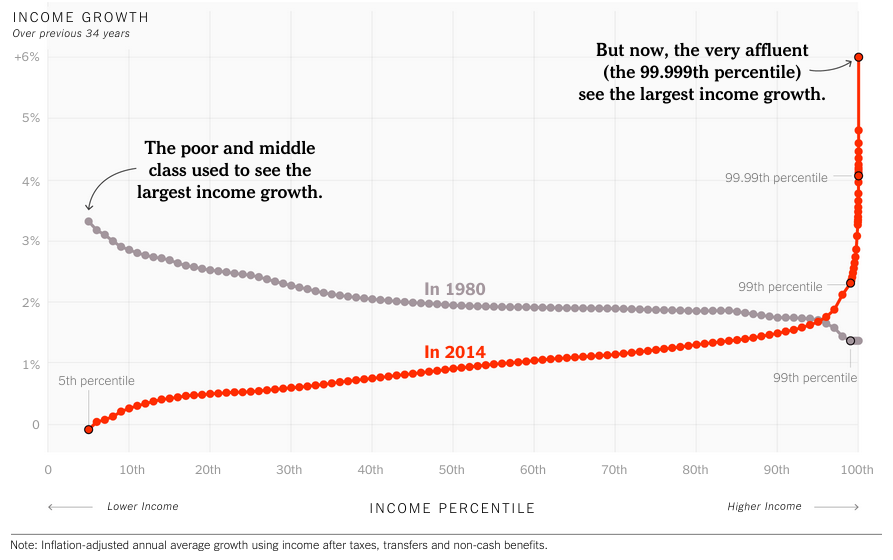
The chart measures income growth at every percentile starting with 5th,
with additional subdivisions for the 99th, at two points in time: 1980
and 2014. There's also an animated chart showing the intervening years,
which the lower percentiles being depressed before the top percentile
really spikes after 2000. A third chart shows that average income
growth dropped from 2.0% in 1980 to 1.4% in 2014, with the median
dropping far more than that -- they don't pull the number out, but
the median in 2014 is so depressed that only the top 15 percentile
receive even the reduced average income growth.
Conor Lynch: Emmanuel Macron's Sudden Collapse: French 'Radical
Centrist' Now as Unpopular as Trump: Oh my, that was an awfully
short honeymoon. Could it be that shameless neoliberalism isn't all
that popular? I've seen columns by so-called centrists speculating
that Macron's model could be translated to the UK and even to the
US. If the US had a top-two runoff like France, I could imagine a
fairly charismatic independent (someone like a younger Ross Perot,
say, but not Michael Bloomberg) getting close to Macron's first
round vote (23.8%), then beating either Trump or Clinton in the
runoff (although it's unlikely that either Trump or Clinton would
sink that low).
Bill McKibben: The Trump administration's solution to climate change:
ban the term. And for more on language chance on Trump government
websites, see:
Oliver Milman/Sam Morris: Trump is deleting climate change, one site
at a time.
David McCoy: Even a 'Minor' Nuclear War Would Be an Ecological Disaster
Felt Throughout the World: Just in case you were wondering.
Peter Montgomery: Trump's dominionist prayer warriors: Inside the
"Prophetic Order of the United States":
In the early morning hours of November 9, 2016, God told Frank Amedia
that with Donald Trump having been elected president, Amedia and his
fellow Trump-supporting "apostles" and "prophets" had a new mission.
Thus was born POTUS Shield, a network of Pentecostal leaders devoted
to helping Trump bring about the reign of God in America and the
world. . . .
POTUS Shield's leaders view politics as spiritual warfare, part of
a great struggle between good and evil that is taking place continuously
in "the heavenlies" and here on earth, where the righteous contend with
demonic spirits that control people, institutions and geographic regions.
They believe that Trump's election has given the church in America an
opportunity to spark a spiritual Great Awakening that will engulf the
nation and world. And they believe that a triumphant church establishing
the kingdom of God on earth will set the stage for Christ's return. Amedia
says that the "POTUS" in the group's name does not refer only to the
president of the United States, but also to a new "prophetic order of
the United States" that God is establishing.
Related:
Chris Hedges: What Trump Owes America's Christian Fascists.
Sarah Newell: Is Foxconn a Fantasy? The High Cost of Bringing
Manufacturing Jobs to Wisconsin. Trump and Gov. Scott Walker
are bully on a deal where giant Chinese electronics Foxconn
would build a factory, adding 3000 jobs in Wisconsin, maybe
13000 eventually. All they need in return:
In order for this plan to become a reality, the Wisconsin state
legislature would need to approve $3 billion in corporate incentives
to defray capital costs and workforce development costs. The math is
startling: Wisconsin will pay out $230,000 in tax dollars for each
one of the 13,000 jobs. This means Wisconsin taxpayers will shell
out $66,000 per year to subsidize jobs that will pay less than the
state average income.
Trita Parsi: For Netanyahu and the Saudis, Opposing Diplomacy With
Iran Was Never About Enrichment: An excerpt from Parsi's new
book, Losing an Enemy: Obama, Iran and the Triumph of Diplomacy.
I suspect that the real reason both Israel and Saudi Arabia decided
to take such rejectionist stands against Iran was that they realized
that they could push American buttons by doing so -- most Americans
have harbored deep-seated grudges against Iran ever since the fall
of the Shah and the Hostage Crisis -- thereby elevating their own
importance in Washington's eyes. They've doubled down since the Iran
deal, and while leaving the deal intact (so far), both countries have
effectively increased their influence in Washington (especially with
Trump).
William Rivers Pitt: We Have Been at War in Iraq for 27 Years:
It started in 1990, when Saddam Hussein misinterpreted ambiguous
signals from a US ambassador as a go-ahead to invade Kuwait, an
oil-rich sheikdom that, following American inclinations, had made
large loans to Iraq for its war against Iran -- loans it then
insisted Iraq must repay. The first George Bush thought he'd get
a nice political boost from a quick little war, but sold it by
comparing Saddam to Hitler, digging a hole for political himself
when the initial Gulf War came up short -- a hole which Clinton
defended and deepend through his sanctions and no-fly zones until
the Bush II decided to fix it by plunging the US into a massive
occupation morphing into a civil war which led to ISIS and Obama
re-entering Iraq. Throughout this whole quarter-century, official
Washington doctrine has blocked out any and all dissent against
the ever-expanding sinkhole of Middle Eastern carnage fed by the
massive introduction of US troops in 1990. Actually, one can
point to a few earlier signs of the wars to come: US inheritance
of British outposts around the Gulf, Carter's declaration that
the Persian Gulf is an US security area, Reagan's installation
of American troops in Lebanon, and US support for proxy wars
against Afghanistan and Iran. Any way you slice this, the only
Americans with any clue as to how this might go awry were the
antiwar protesters. And note that while Pitt focuses on Iraq,
US involvement in Afghanistan started in 1979 -- 38 years ago --
and is at least as far from resolution (never mind success)
there as it is in Iraq, Syria, Libya, Yemen, Somalia, anywhere
else you find American drones and/or special forces.
Aja Romano: Google fird "politically incorrect" engineer has
sparked a broad ideological debate: Actually, I only see a
relatively narrow debate here, which is corporations can fire
employees for what we would otherwise deem constitutionally
protected free speech. I would favor more such protections,
but these days it's hard to stop a company -- especially one
without a union -- from firing anyone for any reason. The two
most obvious reasons for firing this particular engineer are
that he's very stupid, and that by exposing that stupidity
he's embarrassed the company. But I don't see him engendering
any serious debate on his claim that women aren't competent
at software engineering. More on this:
Cynthia Lee: I'm a woman in computer science. Let me ladysplain
the Google memo to you.
Anis Shivani: How we got from George W. Bush to Donald Trump: Liberals
had more to do with it than we'd like to think: Big thought piece
which is probably a bit harsh on Obama but reminds us how extreme the
Bush-Cheney agenda was, and how little of it was rolled back by Obama.
We need to remind ourselves that the early years of the Bush administration
felt utterly radical, that the defense of freedom of speech and mobility,
of the civility and respect that make a constitutional democracy work, never
felt so threatened, never felt more precious and worth saving, as in those
years. That feeling, unfortunately, is gone now, despite Trumpism and
whatever else will follow, because the anti-constitutional innovations
have become normalized. This happened particularly because the succeeding
Democratic administration did not take any steps to counter, philosophically,
any of the constitutional violations, or even the disrespect for science,
reason and empiricism that had deeply saturated the public discourse.
I think it's fair to say that Obama left most of his anti-Bush critique
on the campaign trail. I'm not sure how to partition the blame for that
between his wholesale adoption of Clintonites in his administration and
his innate conservatism, with its emphasis on projecting continuity and
stability. Clearly, he missed the opportunity to do important things:
to roll back the corrosive effects of money on politics; to return to
a previous American belief in international law and institutions; and
to lean back against increasing inequality. One might counter that he
had difficulty enough with more modest efforts on health care, finance
reform, and climate change.
Still, the main difference between the Bush-Cheney agenda and Trump's
is the relative shamelessness of the latter -- the garrish greed, the
naked lust for power, and the absence of any scruples over how to get
the riches they crave. You'd think that would blow up in their face --
that if nothing else the American people and media are still capable of
being shocked by corruption. But then why hasn't that already happened?
Can you mark that all down to "normalization"?
Richard Silverstein: Bibi: "This is the End, My Friend": On the
corruption scandal that threatens to bring down Israeli Prime Minister
Netanyahu, with sideward glances toward Trump's own nest feathering.
Silverstein also wrote
Israel to Shutter Al Jazeera, Join Ranks of Arab Authoritarian Regimes
Suppressing Press Freedom. As for everyday life in Israel-Palestine,
see Kate's latest news clip compendium:
Settler violence against Palestinians nearly doubled from 2016 to 2017.
This includes a quote from Gideon Levy about how certain nations have
held themselves to be above international law and norms:
More than 100 states signed the international treaty banning the use
of cluster bombs; Israel, as usual, isn't one of them. What has Israel
to do with international treaties, international law, international
organizations -- it's all one big unnecessary nuisance. Israel's fellow
rejectionists are, as usual, Russia, Pakistan, China, India and of
course the United States, the world's greatest spiller of blood since
World War II. This is the company Israel wants to keep, the club it
belongs to. Cluster bombs are an especially barbarous weapon, a bomb
that turns into countless bomblets, spreading over a wide area, killing
and wounding indiscriminately. They sometimes explode years after were
fired. The world was appalled and disgusted by such a weapon of mass
destruction, and for good reason. The world -- but not Israel. We're
a special case, as is commonly known. We're allowed to do anything.
Why? Because we can. This has been proved. We used cluster bombs in
the Second Lebanon War and the world was silent. We also use flechettes,
unmercifully. In 2002 I saw a soccer field in Gaza hit by IDF flechette
shells, which spray thousands of potentially lethal metal darts. All
the children playing on it had been hit.
Matt Taibbi: Is LIBOR, Benchmark for Trillions of Dollars in Transactions,
a Lie? Well, sure.
Clara Torres-Spelliscy: Trump Is Already Profiting From His 2020
Campaign.
Jason Wilson/Edward Helmore: Charlottesville: one dead after car rams
counter-protesters at far-right gathering: I skipped over several
articles leading up to Saturday's right-wing rally to oppose removing
a statue of Confederate General Robert E. Lee from a park in Virginia,
and "counter-protests" against those defending the pro-slavery icon.
However, the events were interrupted when someone droves his car into
the "counter-protest" crowd, killing one and injuring 19, then managed
to drive off. A police helicopter later crashed in the area, adding
two to the death toll.
Related links:
Sheryl Gay Stolberg/Brian H Rosenthal: Man Charged After White Nationalist
Rally in Charlottesville Ends in Deadly Violence;
Summer Concepcion: David Duke: Charlottesville Rally 'Fulfills the
Promises of Donald Trump;
Esme Cribb: What We Know About the Man Accused of Ramming Car Into
C'Ville Protesters;
Michael Eric Dyson: Charlottesville and the Bigotocracy;
Josh Matshall: "I'm Not the Angry Racist They See in That Photo"
(complains a misunderstood white guy; but when you go around complaining
about "the slow replacement of white heritage within the United States" --
when you even think "white heritage" is a thing -- you're racist);
Colbert L King: These are your people, President Trump;
Glenn Thrush/Maggie Haberman: Trump Is Criticized for Not Calling Out
White Supremacists;
Esme Cribb: Trump Didn't Want to 'Dignify' White Supremacy by Condemning
It (but he has no qualms about dignifying "radical Islamic terror"
or Rosie O'Donnell?);
German Lopez: We need to stop acting like Trump isn't pandering to white
supremacists; and, just for historical context:
Philip Bump: In 1927, Donald Trump's father was arrested after a Klan
riot in Queens. One thing I noticed during the campaign was that
Trump was quick to reverse himself whenever he inadvertently blurted
out something contrary to conservative doctrine -- as when he initially
argued that women seeking abortions should be punished -- but he never
apologized for the violence of his supporters, nor did he ever disown
the white supremacists who rallied to his cause.
Jana Winter/Elias Groll: Here's the Memo That Blew Up the NSC:
The author was Rich Higgins, a Flynn acolyte who has since been fired:
The full memo, dated May 2017, is titled "POTUS & Political Warfare."
It provides a sweeping, if at times conspiratorial, view of what it
describes as a multi-pronged attack on the Trump White House.
Trump is being attacked, the memo says, because he represents "an
existential threat to cultural Marxist memes that dominate the prevailing
cultural narrative." Those threatened by Trump include "'deep state'
actors, globalists, bankers, Islamists, and establishment Republicans."
Zak Witus: To Combat Trump's Attacks on Democracy, We Must Understand
Precedents Set by Obama: "Seven months into the Trump presidency,
many people still deny how some of Donald Trump's most regressive and
harmful policies directly continue the legacy of Barack Obama." That's
true in a number of cases ranging from prosecution of "leakers" to
brutal ICE tactics to Saudi arms sales and drone murders around the
world, though the bigger problem is that Obama failed "to change the
way we think about war" and many more things -- race, equality, the
culture of corruption. Part of that was his "no drama" pledge to
restore competency to government after the politicized corruption
of the Bush years -- something he rarely claimed credit for, and
which few Americans even noticed. One thing about Trump is that he
has no quibbles about taking credit for "good" things, regardless
of how little he was actually involved, while chalking all of his
obvious failures up to "fake news."
Matthew Yglesias: What to know about the biggest stories of the
week: We had a lot of loose talk about nuclear war; Trump feudud
with Mitch McConnell; the opioid crisis gets an official "state of
emergency"; Paul Manafort seems to be in legal trouble. Other Yglesias
pieces this week:
Trump's new immigration plan would make Americans poorer;
Big business wants you to think a tax cut for big business will stop
outsourcing;
The looming debt ceiling fight, explained;
Donald Trump gets a daily briefing all about how great he is.
When I looked at
Crooked Timber I noticed that Laura Tillem had one of the recent
comments. It was in response to Henry Farrell's
Five Books, listing five novels:
- John Le Carré, A Perfect Spy
- Charles Dickens, Our Mutual Friend
- Dennis Lehane, The Given Day
- Marlon James, A Brief History of Seven Killings
- Hilary Mantel, Bring Up the Bodies
I had to look up the authors (although I guessed 3/5, maybe 4).
We were recently talking about how much I enjoyed the 1998 BBC/PBS
series of Our Mutual Friend, and we had recently watched
the 1987 TV rendition of A Perfect Spy (which I didn't much
care for). I doubt I've read enough novels (probably about 50,
which wouldn't last my wife a year) to construct such a list --
only obvious one is Thomas Pynchon, V., though the unfinished
Gravity's Rainbow might have wound up even better.
I probably could offer a list of non-fiction:
- George P Brockway, The End of Economic Man: Principles of Any
Future Economics
- Geert Mak, In Europe: Travels Through the Twentieth Century
- John McPhee, Annals of the Former World
- Jan Myrdal, Angkor: An Essay on Art and Imperialism
- David Quammen, The Song of the Dodo: Island Biogeography in
an Age of Extinctions
My "recent books" roll currently runs 552 books, so that at least
is a sample (roughly from 2003 to the present), although only one of
the books listed above comes from it (Mak's magnificent
history-qua-travelogue).
Ask a question, or send a comment.
Thursday, August 10, 2017
Book Roundup
This is only the second Book Roundup I've done this year -- the
last one was back on
April 26, with the second most recent, on
August 21, 2016, dating from almost a year ago. Limiting myself
to 40 blurbs per post, I should be able to do one of these every
other month (six times a year), but it's hard to get into the right
research mode. Still, when I do, I tend to overshoot, coming up with
two or more posts in rapid succession (five is my current record).
Right now I only have 18 leftover blurbs in the scratch file, but
I expect it won't be hard to round them up to a second post.
I suppose one thing that helps thin them out is that I recently
started adding a section listing books without blurbs -- gives me
a way I can note the existence of something without having to take
the time to write much. I don't count those books under my 40 limit.
On occasion I've also noted paperback reprints of previously noted
books, and there are some of those below. The Thomas Frank and Jane
Mayer books were written before the 2016 election, but they turned
out to be the year's most prophetic books (note that both paperbacks
have post-election I-told-you-so afterwords).
Most recently I've been reading Hacker and Pierson, a book that's
been sitting on my shelves a fair while. Its paean to "the mixed
economy" could be sharper, but its review of the political forces
that stripped us of past keys to prosperity is reasonably thorough.
I would add that the more you forget about how things work, and
the more you adopt ideas that are just plain wrong, the deeper
you enter into what the late Jane Jacobs recognized as "the coming
dark age."
Going through this list, some books that I either already have
or am particularly likely to pick up are Andrew Bacevich: America's
War for the Greater Middle East, Michael Chabon/Ayelet Waldman:
Kingdom of Olives and Ash, Michael J Hudson: J Is for Junk
Economics, Ibram X Kendi: Stamped From the Beginning,
Nancy McLean: Democracy in Chains, Nathan Thrall: The Only
Language They Understand. I'll also note that my wife is currently
listening to China Miéville: October. One thing I've learned
from this book so far is that the Bolsheviks came out on top because
they were the only party willing to walk away from the disastrous
World War.
Tariq Ali: The Dilemmas of Lenin: Terrorism War Empire Love
Revolution (2017, Verso Books): One expects that the centenary
of the Russian Revolution will produce the usual spate of new books,
so this is nominally one of them. But for a good while now we've known
that in his last couple years Lenin was unhappy about the drift of his
revolution, so it's never been quite fair to blame him for the whole
dead weight of the Stalinist system. Not sure whether Ali can freshen
him up in any useful way, but it's worth noting that the hopes that
many people held for the workers' paradise weren't wrong, even if
they were somewhat misplaced. Forthcoming [Sept. 19]: Slavoj Zizek:
Lenin 2017: Remembering, Repeating, and Working Through (2017,
Verso Books).
Jon Bakija/Lane Kenworthy/Peter Lindert/Jeff Madrick: How Big
Should Our Government Be? (paperback, 2016, University of
California Press): Looks like each author gets separate chapters
around the question. The only one I'm familiar with is Madrick,
who wrote The Case for Big Government (2008), so you know
where he's going. Right-wingers have argued for shrinking federal
government back to an arbitrarily small percent of GDP, a level not
seen since Calvin Coolidge, although few of them are on record in
favor of shrinking the federal government's most cancerous tumor,
the Department of Defense, proportionately. Even so, they've shown
no allowance for the ways the world has changed since the 1920s,
such as the much greater complexity of the marketplace, the need
for a much more skilled and knowledgeable workforce, the need for
modern transportation and communication networks, the impacts of
larger population and production on the environment, and many
other things -- even if (like me) you think the growth of the
"defense" and "security" sectors (i.e., war and repression) is
largely bogus. I would go further and argue that public takeover
of dysfunctional markets like health care would be a good idea,
as well as some way to subsidize creative development of products
that can be freely mass-produced (like software and many forms
of art). I don't see how you can map any of these needs to a
fixed size, so size itself isn't a very good measure.
John Berger: Portraits: John Berger on Artists (2015,
Verso Books): Art critic and novelist, died earlier this year at 90,
his early books Art and Revolution (1969), The Moment of
Cubism (1969), Ways of Seeing (1972), and About Looking
(1980) had a huge effect of me personally. This is a collection of 74
pieces on more/less famous artists, starting with the Chauvet Cave
Painters but quickly jumping to Bosch (6) and Michelangelo (11), and
ending with ten names born post-1950 (most, sad to say, unknown to me).
The sort of book you're bound to learn a lot from. Tom Overton edited
this, and also: Landscapes: John Berger on Art (2016, Verso
Books). Also recent: John Berger: Confabulations (paperback,
2016, Penguin Books); Lapwing & Fox: Conversations Between
John Berger and John Christine (2016, Objectif).
Heather Boushey/J Bradford DeLong/Marshall Steinbaum, eds:
After Piketty: The Agenda for Economics and Inequality
(2017, Harvard University Press): Large (688 pp) collection of
essays on Thomas Piketty's pathbreaking book Capital in the
Twenty-First Century and the myriad problems associated with
increasing inequality.
Michael Chabon/Ayelet Waldman, eds: Kingdom of Olives and
Ash: Writers Confront the Occupation (paperback, 2017, Harper
Perennial): Connecting with Breaking the Silence, a number of well
known writers (mostly novelists) took a tour of Israel and its
Occupied Territories, and chronicled what they found as they bear
"witness to the human cost of the occupation."
Frans de Waal: Are We Smart Enough to Know How Smart Animals
Are? (2016, WW Norton): Interesting question, most likely one
the biologist/primatologist has much fun poking holes in. More or less
related: Jennifer Ackerman: The Genius of Birds (2016, Penguin);
Jonathan Balcombe: What a Fish Knows: The Inner Lives of Our Underwater
Cousins (2016, Farrar Straus and Giroux); Charles Foster: Being
a Beast: Adventures Across the Species Divide (2016, Metropolitan
Books); Sy Montgomery: The Soul of an Octopus: A Surprising Exploration
Into the Wonder of Consciousness (paperback, 2016, Avila); Virginia
Morell: Animal Wise: How We Know Animals Think and Feel (paperback,
2014, Broadway Books); Carl Salina: Beyond Words: What Animals Think
and Feel (paperback, 2015, Picador).
Bill Emmott: The Fate of the West: The Battle to Save the
World's Most Successful Political Idea (2017, Economist
Books): British, editor of The Economist, same basic shtick
as Edward Luce: The Retreat of Western Liberalism. Blames
Moscow, Beijing, but also Washington, and locates "the west" as
much in Tokyo and Seoul as in Europe, the idea being the promise
of neoliberalism (if not necessarily the reality): "It relies on
the operation and staunch defense of several principles, first
among them relative equality of income and opportunity as well as
openness . . . An open society is thus one of porous borders rather
than of walls, friendly to free trade agreements as opposed to
protectionist tariffs, outward-looking rather than nationalist."
Perhaps the idea wouldn't be fairing so poorly if the practice
did a better job of delivering the promised broad-based wealth.
The recent Brexit vote provides a detailed map of who wins and
loses from open borders.
Niall Ferguson: Kissinger: 1923-1968: The Idealist
(2015, Penguin Press): Hagiography, based on access to private papers,
the first installment of a "magisterial two-volume biography," written
by a pseudo-scholar with politics and morals flexible enough for the
task. Anyone else would subtitle the second volume War Criminal,
even if the time frame had to extend beyond 1976. But my guess is that
Ferguson is thinking of The Realist, a suitable philosophical
refuge for idealists once their hands get bloody. Myself, I'm more
inclined to call this period The Bullshit Artist, then look
for something even more scatological to follow.
Peter Fleming: The Mythology of Work: How Capitalism Persists
Despite Itself (paperback, 2015, Pluto Press): Argues that
"neoliberal society uses the ritual of work (and the threat of its
denial) to maintain the late capitalist class order," despite all
sorts of technological and cultural changes that could reduce the
class-definitional role of work toward the sidelines. In the US you
might want to substitute "jobs" for "work," and I-don't-know for
"neoliberal society" -- the corporate-political system? Also wrote
Resisting Work: The Corporatization of Life and Its Discontents
(paperback, 2015, Temple University Press).
James Forman Jr: Locking Up Our Own: Crime and Punishment
in Black America (2017, Farrar Straus and Giroux): How
many black politicians got wrapped up in the post-1970 "war on
crime" and its attendant mass incarceration. Forman worked six
years as a public defender, a stark contrast to other jobs on his
resume, like Supreme Court clerk and Yale Law School professor.
Thomas L Friedman: Thank You for Being Late: An Optimist's
Guide to Thriving in the Age of Accelerations (2016, Farrar
Straus and Giroux): Anyone who can get away with as many clichés and
as much cant as Friedman must truly feel blessed. However, the very
facts and trends that makes him so optimistic signify little more
than mental rot to me. For more, see
Matt Taibbi's review.
Kelly Fritsch/Clare O'Connor/AK Thompson, eds: Keywords for
Radicals: The Contested Vocabulary of Late-Capitalist Struggle
(paperback, 2015, AK Press): Recalling Raymond Williams' Keywords:
A Vocabulary of Culture and Society (1976), the activist-editors
and forty-some contributors attempt to map contemporary movements by
their jargon, terminology, language. Probably a worthy undertaking,
interesting to me because I opened a file recently under the same
rubric, but not to explore language so much as to offer a framework
for hanging short topical essays on. Williams' book goes deeper into
history and etymology -- he was, after all, primarily a literary
critic. Best case this one does too. Worst case it tries to codify
some form of "political correctness" -- to pick a term that postdates
Williams' work.
Bruce Cannon Gibney: A Generation of Sociopaths: How the Baby
Boomers Betrayed America (2017, Hachette): Author is a venture
capitalist, a guy who made a fortune mostly betting on high-tech start
ups, so it's rather ripe for him to blame a whole generation for the
short-sighted squandering of the unprecedented wealth many Americans
enjoyed after the Great Depression and WWII. He berates "a generation
whose reckless self-indulgence degraded the foundations of American
prosperity . . . [who] ruthlessly enriched themselves as the expense
of future generations . . . turned American dynamism into stagnation,
inequality, and bipartisan fiasco." That all happened, and I think it
is fair to say that the Boomer generation, which grew up with postwar
prosperity and its focus on individual freedom was further removed
from the previous generation than is generally the case, but those
effects the author describes as sociopathic were just one political
strain in a broad spectrum, that of the resurgent right-wing and its
promotion of often predatory greed. Perhaps the author has some other
political agenda, but offhand this looks like he's representative
of the rarefied class that captured the nation's wealth then blamed
the less fortunate for their "entitlements." Just who are the real
sociopaths here?
Joshua Green: Devil's Bargain: Steve Bannon, Donald Trump,
and the Storming of the Presidency (2017, Penguin): Campaign
reporting, focusing on Bannon -- presumably the Devil in the title,
although it's since become clear that he picked a very leaky and
unstable vessel for his machinations. I have no idea what Bannon's
been able to accomplish since moving into the White House. During
the campaign he provided Trump with a gloss of fascist aesthetics
and a whiff of ideological coherence distinct from the usual run
of conservative nostrums -- that probably contributed to Trump's
win, but was far less significant than Hillary's failures, the
lock-step support of the Koch/Republican machines, and the amazing
gullibility of so much media and so many people. On the other hand,
one might cast Trump as the Devil, and explore why Bannon would
invest all his hare-brained ideological fantasies in such a shoddy
salesman. I suppose because doing so made him famous, and in America
fame is merchantable (and money is everything).
Chris Hedges: Unspeakable: Talks With David Talbot About
the Most Forbidden Topics in America (2016, Hot Books):
Conversations, evidently the publisher has a series of these.
Hedges was a divinity student who left the church and became a
prize-winning war journalist, then the more he saw the more he
moved to the left. Among his books: American Fascists,
written back in 2007.
Michael Hudson: J Is for Junk Economics: A Guide to Reality
in an Age of Deception (paperback, 2017, Islet): Presented
as a "companion" to his 2015 book, Killing the Host: How Financial
Parasites and Debt Destroy the Global Economy. Starts with an
"A-to-Z" of key economic terms, nothing that "economic vocabulary
is defined by today's victors -- the rentier financial class," and
working to unmask their spin. Follows up with several scattered
essays, like "The 22 Most Pervasive Economic Myths of Our Time,"
"Economics as Fraud," and "Methodology Is Ideology, and Dictates
Policy." He was one of the first to recognize the real estate
bubble of the 2000's and predict its bust -- a now obvious point
that all but a few conventional economists missed.
Frederic Jameson: An American Utopia: Dual Power and the
Universal Army (paperback, 2016, Verso): Marxist literary
critic and political theorist -- I must have a copy of his 1971
Marxism and Form: Twentieth Century Dialectical Theories in
Literature somewhere upstairs -- takes a shot at sketching
out his utopia in the lead essay here, followed by nine responses
edited by Slavoj Zizek (only other author I recognize is novelist
Kim Stanley Robinson). I haven't read any of his later books, most
recently (all Verso): Raymond Chandler: The Detections of Totality
(2016); The Ancients and the Postmoderns: On the Historicity of
Forms (2015); The Antinomies of Realism (2013, Verso);
Representing 'Capital': A Reading of Volume One (2011);
The Hegel Variations: On the Phenomenology of Spirit (2010);
Valences of the Dialectic (2009).
Matthew Karp: This Vast Southern Empire: Slaveholders at
the Helm of American Foreign Policy (2016, Harvard University
Press): When I think of southerners running US foreign policy, I
think of James Byrne's decisive role in launching the Cold War,
and later Lyndon Johnson plotting a coup in Brazil as well as
"Americanizing" the civil war in Vietnam. But this goes back to
the first half of the nineteenth century, before the South tried
to secede from the union, a period when prominent southerners
agitated to expand American power south and west, and thereby
to buttress and advance their system of slavery. I suppose you
can start with the Louisiana Purchase and the Monroe Doctrine,
as well as the Mexican War and the annexation of Texas, but
there were other schemes that didn't come to fruition, notably
the desire to annex Cuba as a "slave state."
Ibram X Kendi: Stamped From the Beginning: The Definitive
History of Racist Ideas in America (2016; paperback, 2017,
Nation Books): I've long thought that the "definitive" history was
Winthrop Jordan's monumental White Over Black: American Attitudes
Toward the Negro, 1550-1812, which won the National Book Award
for 1968, but that book was focused more on the early development
of Anglo-American racism. Those ideas have since been recapitulated
(sometimes with mutations) in many ways up to the present day -- the
key to Kendi's own National Book Award winning tome. Many reviewers
describe this book as "painful" -- often citing the skewering of
otherwise admirable abolitionists like William Lloyd Garrison for
adopting racial stereotypes (the book consists of five parts built
around individuals: Cotton Mather, Thomas Jefferson, Garrison, WEB
DuBois, and Angela Davis). I don't know whether the author adopts
a fatalist position on the racist ideas, but I believe that their
persistence has everything to do with increasing inequality, much
as the origins of those ideas had everything to do with exploiting
negro labor. As Kendi argues: "Hate and ignorance have not driven
the history of racist ideas in America. Racist policies have driven
the history of racist ideas in America."
Naomi Klein: No Is Not Enough: Resisting Trump's Shock
Politics and Winning the World We Need (paperback, 2017,
Haymarket Books): Describes Trump as "a logical extension of the
worst and most dangerous trends of the past half-century" --
trends Klein has made a career of writing about; e.g., No
Logo: Taking Aim at the Brand Bullies (2000), The Shock
Doctrine: The Rise of Disaster Capitalism (2007), This
Changes Everything: Capitalism vs. the Climate (2014).
James Kwak: Economism: Bad Economics and the Rise of
Inequality (2017, Pantheon): A primer on how "Economics
101" is wrapped up in political biases which promote inequality,
passing it off as the genius of markets. Another book along the
same lines: Joe Earle/Cahal Moran/Zach Ward-Perkins: The
Econocracy: The Perils of Leaving Economics to the Experts
(paperback, 2016, Machester University Press); also Michael
Hudson: J Is for Junk Economics: A Guide to Reality in an
Age of Deception (paperback, 2017, Islet).
Guy Laron: The Six-Day War: The Breaking of the Middle
East (2017, Yale University Press): Fifty years later, has
the advantage of recently declassified documents. "The Six-Day War
effectively sowed the seeds for the downfall of Arab nationalism,
the growth of Islamic extremism, and the animosity between Jews
and Palestinians." The latter started much earlier, but the war
led to a massive increase in the number of Palestinians living
under Israeli military occupation, and started the great land
grab known as the Settler Movement -- so, yes, it did much to
poison relations. I don't know if Laron discloses anything new
about the run up to the war -- 90% of the book is on the events
before the war itself -- but it seems pretty clear to me that
Ben-Gurion regarded the 1950 armistices as temporary stays while
Israel gathered strength to launch new offensives to grab the
various territories they've long coveted. Their military success
changed the nation's psychology, as they stopped paying heed to
world law and opinion, and set out on their own arrogant path,
trusting only in their own brute force and cunning.
Chris Lehmann: The Money Cult: Capitalism, Christianity, and
the Unmaking of the American Dream (2016, Melville House): A
book on how often throughout America's history Christianity has upheld
and celebrated economic iniquity -- "the pursuit of profit, as well as
the inescapability of economic inequality."
Edward Luce: The Retreat of Western Liberalism
(2017, Atlantic Monthly Press): British political writer, has
covered both Washington and New Delhi for Financial Times.
No relation to Henry Luce, but you get the feeling he'd like to
occupy a similar perch, but where Henry proclaimed "the American
century," Edward bemoans its eclipse, lamenting both the decline
of western power in the world and the erosion of Democratic norms
in the west. At first blush, this all has a whiff of "white man's
burden" to it. Not sure if that's fair, but one should note that
the assault on liberal democracy in America and elsewhere comes
almost exclusively from entrenched elites whose "populist" pitch
is purely cynical.
Nancy McLean: Democracy in Chains: The Deep History of the
Radical Right's Stealth Plan for America (2017, Viking):
This traces the Koch political machine back to the ideas of an
Nobel prize-winning economist, James McGill Buchanan (1919-2013),
a president of the Mont Pelerin Society, distinguished senior
fellow at the Cato Institute, and professor at George Mason U. --
although the reality has more to do with the Kochs' money than
with Buchanan's ideas (which included the book Why I, Too, Am
Not a Conservative: The Normative Vision of Classical Liberalism).
Should be an interesting book (in my queue, anyway).
Viet Tranh Nguyen: Nothing Ever Dies: Vietnam and the Memory
of War (2016, Harvard University Press): Vietnamese novelist,
moved to US at age 4, won a Pulitzer Prize for his novel The
Sympathizer, writes about how most or all sides remember the
war and aftermath he grew up in.
Thomas M Nichols: The Death of Expertise: The Campaign Against
Established Knowledge and Why It Matters (2017, Oxford University
Press): My own impression is that we don't lack for expertise, but as
inequality increases so does the temptation for experts to hire themselves
out to private interests, which in turn makes people more suspicious of
experts. The author seems more inclined to blame the internet for
'foster[ing] a cult of ignorance" -- but that strikes me as a secondary
effect.
PJ O'Rourke: How the Hell Did This Happen? The Election of
2016 (2017, Atlantic Monthly Press): Famed right-wing humorist,
not that he was ever very funny -- if you ever bother to scan through
conservative editorial cartoons you'll get a sense of how low the bar
is -- but do you really want to bother with lines like this: "America
is experiencing the most severe outbreak of mass psychosis since the
Salem witch trials of 1692. So why not put Hillary on the dunking
stool?"
Ilan Pappé: Ten Myths About Israel (paperback, 2017,
Verso Books): Only ten? Some are big ones, long since debunked, like
that Palestine was "a land without people" (therefore perfect for "a
people without land"), that Palestinians who fled their homes in 1947-49
did so voluntarily, and that Israel had no choice but to start the 1967
war. I don't have the full list, but they evidently extend to Israel's
rationalizations for its periodic assaults on Gaza and the question of
why people who have repeatedly sabotaged the "two state solution" still
insist it's the only one possible. Pappé has written many important
books on Israel and the Palestinians, especially The Ethnic Cleansing
of Palestine (2007), and more recently The Idea of Israel: A
History of Power and Knowledge (2014).
Keith Payne: The Broken Ladder: How Inequality Affects the
Way We Think, Live, and Die (2017, Viking): Textbooks on
inequality invariably start with lists or charts of numbers --
after all, the most straightforward thing you can do with money
is count it. However, the problem with inequality has never just
been who gets (deservedly or not) what. Every bit as important
is how it makes us think and behave toward each other. Several
books have explored these ways -- e.g., how inequality worsens
health care outcomes, even beyond the correlation between inequal
societies and crappy health care systems -- although this promises
to delve deeper into experimental psychology.
Charles Peters: We Do Our Part: Toward a Fairer and More Equal
America (2017, Random House): Founder and long-time editor of
The Washington Monthly, a journal I've long admired both for its
heart-felt liberal bearings and its shrewd analysis of what government
can and cannot do. And while he would like to point us toward "fairer
and more equal," the trajectory he's recognized since 1970 has been
pointed the other way. (Although I've lately discovered that he coined
the term "neo-liberal" and seems to have a dark side -- especially an
antipathy to unions, which for many years were the most effective and
practical advocates for "a fairer and more equal America.")
Kate Raworth: Doughnut Economics: 7 Ways to Think Like a
21st-Century Economist (2017, Chelsea Green): The doughnut
image depicts "a sweet spot of human prosperity" -- where economics
should aim for widespread human satisfaction, as opposed to the
20th-century (and earlier) obsession with scarcity and growth. The
seven ways are better captured by their subtitles: from GDP to the
Doughnut; from self-contained market to embedded economy; from
rational economic man to social adaptable humans; from mechanical
equilibrium to dynamic complexity; from 'growth will even it up
again' to distributive by design; from 'growth will clean it up
again' to regenerative by design; from growth addicted to growth
agnostic. The last few years have seen a rash of books complaining
about how economic theory is shot through with false and damaging
assumptions, so it was only a matter of time before someone tried
to build a new understanding around more contemporary goals.
TR Reid: A Fine Mess: A Global Quest for a Simpler, Fairer,
and More Efficient Tax System (2017, Penguin Press): Author
of a very good international survey of health care systems, The
Healing of America: A Global Quest for Better, Cheaper, and Fairer
Health Care (2009), tries to work the same magic by comparing
tax codes around the world. While he's probably correct that the US
tax code (plus the huge state-by-state variations and wrinkles for
other taxing authorities) is "a fine mess," and that other nations
have come up with "tax regimes that are equitable, effective, and
easy on the taxpayer," the whole issue seems much less important.
It is, however, something that Republicans obsess on, as with most
things usually with an eye toward making it much worse.
Walter Scheidel: The Great Leveler: Violence and the History
of Inequality From the Stone Age to the Twenty-First Century
(2017, Princeton University Press): A rather depressing argument: he
argues that inequality has been the default state of civilization ever
since agriculture started producing surpluses that predatory elites
could seize. The exceptional periods of leveling only seem to occur
due to wars and other disasters. One might still hope that reason
might come to our rescue, but empiricists are unconvinced.
Gershon Shafir: A Half Century of Occupation: Israel, Palestine,
and the World's Most Intractable Conflict (2017, University of
California Press): Fiftieth anniversary of 1967, when Israel dismantled
its internal military occupation and seized new territory from Egypt,
Jordan, and Syria, allowing them to bring back military occupation on
an even larger scale. Author has written a number of books on the
conflict, going back as far as Land, Labor, and the Origins of the
Israeli-Palestinian Conflit 1882-1914.
Thomas M Shapiro: Toxic Inequality: How America's Wealth
Gap Destroys Mobility, Deepens the Racial Divide, and Threatens
Our Future (2017, Basic Books): We certainly need more
books that come up with vivid examples of how inequality poisons
social and political and economic relationships, which is what
this title promises. Focuses on race, which follows up from the
author's previous The Hidden Cost of Being African American:
How Wealth Perpetuates Inequality. One thing that should be
obvious is that you can't achieve racial equality in an era of
increasing wealth/income inequality.
Steven Slowan/Philip Fernbach: The Knowledge Illusion: Why
We Never Think Alone (2017, Riverhead): "Humans have built
hugely complex societies and technologies, but most of us don't even
know how a pen or a toilet works." (For the record, I can answer
both of those, although never having read about pens -- unless
Henry Petroski's book on pencils ventured there -- I'd have to
offer a guess there, based on other principles I understand.) But
the basic idea is sound. I'm not sure what the authors draw from
this, but I'd say that one important thing is that as we become
ever more dependent on advanced technology, it becomes ever more
important that we develop social relations that increase trust.
This in turn implies several changes: we need to cultivate more
widespread expertise; we need to make that information more open;
and we need to shift incentives for experts toward openness and
generosity and away from selfishness and exploitation. I should
also add that this has generally been the direction over the last
couple centuries, hand in hand with technological advancement.
But all this is increasingly at risk because various business and
political interests find it more profitable to appropriate and
monetize "knowledge" -- for a sketch of the possible outcomes
here, see Peter Frase's Four Futures.
Wolfgang Streeck: How Will Capitalism End? (2016,
Verso): Depicts a world of "declining growth, oligarchic rule, a
shrinking public sphere, institutional corruption, and international
anarchy," adding up to instability, probably collapse, certainly a
need for profound change. Contradictions of capitalism has been a
staple of Marxist thought for 150 years now, so even if the author
doesn't come up with an answer to his question, he has plenty of
theory to build on. Streeck also wrote Buying Time: The Delayed
Crisis of Democratic Capitalism (2nd edition, paperback, 2017,
Verso).
Nathan Thrall: The Only Language They Understand: Forcing
Compromise in Israel and Palestine (2017, Metropolitan Books):
Hard to think about the conflict without considering how to end it,
especially if you're an American, since we've long assumed that our
mission on Earth is to oversee some sort of agreement. Thrall has
been following the conflict closely for some time now, and writes
up what he's figured out: that the only way it ends is if some
greater power wills it. The title has a certain irony in that the
Israelis, following the British before them, have often said that
violence is the only language the Palestinians understand. But as
students of the conflict should know by now, the only times Israel
has compromised or backed down have been when they been confronted
with substantial force: as when Eisenhower prodded them to leave
Sinai in 1956, when Carter brokered their 1979 peace with Egypt,
when Rabin ended the Intifada by recognizing the PLO, or when Barak
withdrew Israeli forces from Lebanon in 2000. Since then no progress
towards resolution has been made because no one with the power to
influence Israel has had the will to do so -- although Israel's
frantic reactions against BDS campaigns shows their fear of such
pressure. On the other hand, one should note that force itself
has its limits: Palestinians have compromised on many things,
but some Israeli demands -- ones that violate norms for equal
human rights -- are always bound to generate resistance. What
makes the conflict so intractable now is that Israel has so
much relative power that they're making impossible demands. So
while Thrall would like to be even-handed and apply external
force to both sides, it's Israel that needs to move its stance
to something mutually tolerable. The other big questions are
who would or could apply this force, and why. Up to 2000, the
US occasionally acted, realizing that its regional and world
interests transcended its affection for Israel, but those days
have passed, replaced by token, toothless gestures, if any at
all. It's hard to see that changing -- not just because Israel
has so much practice manipulating US politics but because
America has largely adopted Israeli norms of inequality and
faith in brute power.
Bassem Youssef: Revolution for Dummies: Laughing Through
the Arab Spring (2017, Dey Street Books): Egyptian, dubbed
"the Jon Stewart of the Arabic World," had a popular television
show during the brief period when that was possible -- the brief,
unpopular period of democracy sandwiched between the even less
popular (but who's counting?) Mubarak and Sisi dictatorships.
Other recent books also noted:
Gilad Atzmon: Being in Time: A Post-Political Manifesto
(paperback, 2017, Interlink)
Nir Baram: A Land Without Borders: My Journey Around East
Jerusalem and the West Bank (paperback, 2017, Text)
Mark Bowden: Hue 1968: A Turning Point in the American War
in Vietnam (2017, Atlantic Monthly Press)
Noam Chomsky: Optimism Over Despair: On Capitalism, Empire,
and Social Change (paperback, 2017, Haymarket Books):
interviews by CJ Polychroniou.
Joan Didion: South and West: From a Notebook (2017,
Knopf)
Richard Falk: Palestine's Horizon: Toward a Just Peace
(paperback, 2017, Pluto Press)
Al Franken: Giant of the Senate (2017, Twelve)
Henry A Giroux: America at War With Itself (paperback,
2016, City Lights Press)
Al Gore: An Inconvenient Sequel: Truth to Power
(paperback, 2017, Rodale Books)
Jeremy R Hammond: Obstacle to Peace: The US Role in the
Israeli-Palestinian Conflict (paperback, 2016, Worldview)
Yaakov Katz/Amir Bohbot: The Weapon Wizards: How Israel
Became a High-Tech Military Superpower (2017, St Martin's
Press)
China Miéville: October: The Story of the Russian Revolution
(2017, Verso)
Vijay Prashad: The Death of the Nation and the Future of
the Arab Revolution (paperback, 2016, University of California
Press)
David Roediger: Class, Race, and Marxism (2017,
Verso Books)
Alice Rothchild: Condition Critical: Life and Death in
Israel/Palestine (paperback, 2017, Just World Books)
Raja Shehadeh: Where the Line Is Drawn: A Tale of Crossings,
Friendships, and Fifty Years of Occupation in Israel-Palestine
(2017, New Press)
Peter Temin: The Vanishing Middle Class: Prejudice and
Power in a Dual Economy (2017, MIT Press)
Also, some previously mentioned books new in paperback:
Andrew J Bacevich: America's War for the Greater Middle East:
A Military History (2016; paperback, 2017, Random House):
A self-styled conservative, but a useful critic of militarism in
post-Vietnam America (see 2005's The New American Militarism:
How Americans Are Seduced by War). As the Cold War wound down,
the military pivoted to focus on the Middle East, most dramatically
with the 1990-91 Gulf War, which turned into a 12-year containment
project aimed at Iraq, and boosted by 9/11 backlash into a massive
war in Afghanistan and Iraq, and more clandestine operations from
Libya to Yemen and Somalia to Pakistan.
David Daley: Ratf**ked: The True Story Behind the Secret Plan
to Steal America's Democracy (2016; paperback, 2017, Liveright):
More nuts-and-bolts on how the right-wing -- the financiers of the
Koch Bros. dark money networks -- has plotted its takeover of American
democracy, especially by targeting and capturing state legislatures.
Thomas Frank: Listen, Liberal: Or What Ever Happened to the
Party of the People? (2016; paperback, 2017, Picador): Shows
how the Democratic Party, especially since the arrival of Bill Clinton
in 1992, has triangulated its way into the good graces of bicoastal
urban elites more often than not at the expense of the party's old
base -- people they could continue to take advantage of because the
Republicans have left them nowhere else to go. This was damning and
embarrassing when it came out last summer, and after white working
class voters flocked to elect Trump over Hillary people started
pointing to this book as prescient. Paperback includes an afterword
where the author gets to "I told you so." Real question is whether
the Democratic Party moving forward can learn from its mistakes.
A good place to start is here.
Jacob S Hacker/Paul Pierson: American Amnesia: How the War on
Government Led Us to Forget What Made America Prosper (2016;
paperback, 2017, Simon & Schuster): Argues that ever since Madison
and Hamilton crafted a strong federalist constitution, America has
benefited from a strong activist government, one that regulated
commerce to limit market failures, that made major investments in
infrastructure, and eventually built a modern safety net -- lessons
that too many Americans have forgotten as narrow-minded business
interests have sought to capture government for their own greedy
ends.
Jane Mayer: Dark Money: The Hidden History of the Billionairse
Behind the Rise of the Radical Right (2016; paperback, 2017,
Anchor): To assess the disaster of the 2016 elections, it is not only
important to look at the shortcomings of the Democrats -- start with
Thomas Frank: Listen, Liberal before you move on to Jonathan
Allen/Arnie Parnes: Shattered: Inside Hillary Clinton's Doomed
Campaign -- but also at what made the Republicans so effective,
mostly a huge clandestine political machine only marginally connected
to the RNC and/or the Trump Campaign, largely funded by the Koch Bros.
and their fellow travelers. This is the best book on the latter, and
the paperback as an "I told you so" afterword. Still, Mayer's excavation
of these misanthropes has only barely begun.
Ask a question, or send a comment.
Monday, August 7, 2017
Music Week
Music: Current count 28508 [28490] rated (+18), 375 [365] unrated (+10).
Basically took a break for the latter half of the week (Wednesday to
Saturday). Main reason:
Korean dinner.
For this stretch, I mostly played CDs from one of my travel cases:
Lilly Allen, Beautiful South, Bobby Bland, Manu Chao, Dance Floor
Divas, Duke Ellington/Coleman Hawkins, English Beat, Franco, Girl
Group Greats, Mighty Sparrow, Roger Miller, Van Morrison, Nigeria
70, Pet Shop Boys, Public Enemy, Wilson Pickett, Shirelles, Phil
Spector, Velvet Underground, Mary Wells, Hank Williams. That, plus the
work, kept me in a pretty good mood.
Before that, I was probably off to a typical week. The Tyshawn Sorey
album took a bit of time, and I think I probably played the Elan Pauer
(the only other CD in the list below) 3-4 times. Evidently Pauer is an
alias for Oliver Schwerdt -- he also sent me a 2-CD under that name,
one of a fair number of things in a suddenly resurgent queue (seems to
be split evenly between September-October releases and things already
out). For a long stretch the queue had been so depleted I stopped
paying much attention to it, but I got more records in the mail last
week than in any week for many months.
I spent Sunday playing Randy Newman. Robert Christgau proclaimed
his new Dark Matter an "album of the year contender" on
Friday. I still don't hear anything like that, but gave it five
plays before parking it in the bottom half of my
2017 A-List -- didn't want to
underrate it as badly as I had Harps and Angels, but I still
doubt I'll wind up liking it as much. I had heard "Putin" on a late
night show, and it seemed pretty awful at the time. It's funnier
here with orchestra and "the Putin girls" chorus. But the opener
(whence the title, but not its title) is an awkward, incoherent
mess, and "Brothers" is just a bummer until it breaks into a
celebration of Celia Cruz. Good song about the original Sonny Boy
Williamson, and "She Chose Me" works for him.
I also went back through the Songbooks -- I had given Vol. 2
a B+(**), but missed Vol. 1 and Vol. 3, and wound up
replaying the whole 3-CD "box" to pick up the songs Bob mentioned
that were left off Vol. 3: "A Few Words in Defense of Our
Country" as timely as it was in 2008 (the death of one of those
Supreme Court Italians proving inconsequential), but I'm not hip
enough to his irony to stomach his 2012 "I'm Dreaming [of a white
president]" ("he won't be the brightest/ but he'll be the whitest/
and I'll vote for that"). The box does offer a really terrific
"A Wedding in Cherokee County."
I bumped up the grade of Lana Del Rey's Lust for Life
from where I had it last Monday. Among other things, it offers
a sharper political commentary than Newman does. We need more
people demanding "the fucking truth." And while she's right
that "critics can be mean sometimes" I'm not feeling that now.
New records rated this week:
- Anat Cohen: Rosa Dos Ventos (2017, Anzic): [r]: B
- Anat Cohen & Marcello Gonçalves: Outra Coisa: The Music of Moacir Santos (2017, Anzic): [r]: B+(**)
- Lana Del Rey: Lust for Life (2017, Interscope): [r]: A-
- Billy Flynn: Lonesome Highway (2017, Delmark): [r]: B
- Paul Heaton + Jacqui Abbott: Crooked Calypso (2017, Virgin EMI): [r]: B+(*)
- Randy Newman: Dark Matter (2017, Nonesuch): [r]: A-
- Elan Pauer: Yamaha/Speed (2015 [2017], Creative Sources): [cd]: B+(***)
- John Pizzarelli: Sinatra & Jobim @ 50 (2017, Concord): [r]: B-
- Skyzoo: Peddler Themes (2017, First Generation Rich/Empire, EP): [r]: B+(**)
- Tyshawn Sorey: Verisimilitude (2016 [2017], Pi): [cd]: A-
- Tyler, the Creator: Flower Boy (2017, Odd Future/Columbia): [r]: B
Old music rated this week:
- Bill Frisell: Ghost Town (1999 [2000], Nonesuch): [r]: B+(*)
- Randy Newman: The Randy Newman Songbook Vol. 1 (2003, Nonesuch): B+(*)
- Randy Newman: The Randy Newman Songbook Vol. 3 (2016, Nonesuch): [r]: B+(***)
- Randy Newman: The Randy Newman Songbook (2003-16 [2016], Nonesuch, 3CD): [r]: B+(**)
- John Pizzarelli: Let There Be Love (2000, Telarc): [r]: B
Unpacking: Found in the mail last week:
- Laura Ainsworth: New Vintage (Eclectus)
- Gerald Beckett: Oblivion (Summit)
- Jane Ira Bloom: Wild Lines: Improvising Emily Dickinson (Outline, 2CD): September 8
- Miles Donahue: The Bug (Whaling City Sound)
- Fred Hersch: Open Book (Palmetto): September 8
- Noah Kaplan Quartet: Cluster Swerve (Hatology)
- Steve Langone Trio: Breathe (Whaling City Sound)
- The Liberation Music Collective: Rebel Portraiture (AD Astrum): August 17
- Paul McCandless: Morning Sun: Adventures With Oboe (Living Music): October 20
- Marcus Monteiro: Another Part of Me (Whaling City Sound)
- Dave Potter: You Already Know (Summit)
- Chris Speed Trio: Platinum on Tap (Intakt): August 18
- Jason Stein Quartet: Lucille! (Delmark): September 5
- Omri Ziegele: Going South (Intakt): August 18
Ask a question, or send a comment.
prev -- next
|