LinksLocal Links Social Media My Other Websites Music Politics Others Networking Music DatabaseArtist Search: Website SearchGoogle: |
Music Week (10:2)A few select reviews from week 2 of month 10 (October 2026).
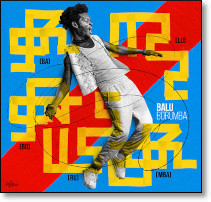
Having done nothing but complain about my lack of productivity in September, I'm even further embarrassed to have even less to show for the first third of October. It remains unseasonably hot, topping 90°F several days (including today). It seems like most of the time I'm just sitting at the computer, idly staring into space. I'm pretty close to just declaring myself done. But I do keep the music going, and this week the rated count went +41 (to 46721), and the unrated queue dropped by 7 (which counts CDs in hand, but not the possible downloads I so rarely get to). Every now and then, I snap close enough to consciousness to jot down a few notes, as well as a letter grade, which helps clarify the limited array of adjectives, and serves as an aide de memoire to albums I'm less and less mindful of. But rather than write the entire week off, I suppose I could mention that I have made some slow and fitful progress on a rather serious essay about Israel I'm calling "Is It Possible to Negotiate a Gentler Genocide?" There are four major words there, and each presents serious problems, so one has to tread carefully. Yet one also has to finish the essay, which means skipping over or evading all sorts of deep digressions (including Godwin's law). So I suppose a certain amount of staring into space may not necessarily be due to depression and lethargy. Yesterday's post on the Gaza Apocalypse was a break for me: a chance to clear my head of some thoughts I didn't want to put in the essay, but were still worth putting forth (e.g., the "eye-for-an-eye" line). And it helped serve as a reminder of what October 7, 2023 was, and was not: a blip in the much longer conflict, but also a reminder that even as powerful as Israel is, they are not quite safe from the ramifications of their injustice. As with September 11, 2001, or for that matter the two Trump elections in 2016 and 2024, the horror of the day was overshadowed by the anticipation of horrors to come — some of which still seem to be in our futures. And it checked off a post idea that I had bandied about for some time. The Hussein Agha/Robert Malley book, Tomorrow Is Yesterday, is one of the most enlightening books available on the subject (at least, of the many I've read). The break helped push this out to the end of the week. That's probably the new normal, but it's nice to have no fixed day to work to. Especially given that "work" here is so indefinite. ◆ ◆ ◆ Jocelyn Balu: Borumba (2026, Vu Prod): Congolese
vocalist, member of Bakolo Music International, first solo album.
Touted as a future rumba star, hits the sweet spot, or as the
Bandcamp page puts it, "fidèle à ce qui constitue la signature
du genre et aux canons définis . . . de Nico à Luambo."
A− Curly Castro: Yaphet (2026, Backwoodz Studioz):
Underground rapper, from Philadelphia, part of the duo Shrapknel,
solo debut 2013, last heard from in 2021, with Locust producing
the beats, and many features, notably Margel the Sophant.
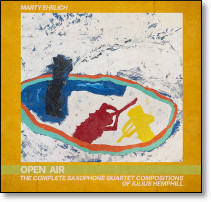
A− Marty Ehrlich: Open Air: The Complete Saxophone Quartet Compositions of Julius Hemphill (2025 [2026], Out of Your Head): Hemphill was an alto saxophonist (1940-95), from St. Louis, who recorded some important albums in the 1970s, but by 1977 was putting most of his effort into the World Saxophone Quartet, which has survived but never really replaced him. In recent years, there have been several attempts to revive his compositions, as well as releasing archival tapes. This is one of the most ambitious, with Allan Chase, Rob DeBellis, Brian Landrus, Andy Laster, Jeff Lederer, Lisa Parrott, and Jason Robinson joining Ehrlich. (There is also one "forgotten" track from 1997.) My problem is the one that I've long had with WSQ and its ilk: monophonic horns, focusing on harmony, sound slow and stodgy. I was inclined to write this off, but the CD showed up and got extra time, at which point the sheer beauty, especially on disc 2, swept me away. [Spotify, which I listened to initially, seems to be incomplete. Bandcamp only offers 5/42 tracks.] A− Kiefer: Memory Bomb (2026, Blue Note): Pianist, mostly electric, last name Shackleford, from Los Angeles, sixth album since 2017, first on Blue Note, in what seems to be a return to the label's Mizell Brothers era (if you've forgotten, and why shouldn't you?, there's a 1972-76 compilation that the label released in 2005). I can't really hate the rinky-dink keys, the synth ambiance, or even the slick guest vocals and raps, at least until this slows to stall speed. B− Miranda Lambert: Crisco (2026, Vanner): Tenth solo album since 2005, probably the best track record of any singer-songwriter in country music in that period, but this seems like a major slip up, and not entirely for embracing the concept of "country disco," whatever that is supposed to be. "Sunset Marquis" is clearly disco, but not very good. "Crisco" is more country, but also not very good. By the way, while my mother used to fry chicken in Crisco, she gave that up long ago, for schmaltz with a bare minimum of vegetable oil. I keep Crisco, but these days only use it for chicken and dumplings. B Kevin Sun: Kevin Sun, II (2024 [2026], Endectomorph
Music): Tenor saxophonist, immediately impressed with his 2018
Trio, demonstrating considerable chops as well as a command
of history. By my reckoning, he followed that up with four more
A− albums, then slipped into the range of very honorable
mentions; meanwhile running a record label that regularly produces
interesting releases by others. This year he's come up with two
simultaneous quartet albums, both recorded on the same day, so the
numbering is rather arbitrary. This one I found more engaging,
perhaps because Christian Li's piano adds dimensions I didn't
find in the first volume, or maybe just because the saxophonist
seemed more engaged from the start. With Walter Stinson (bass)
and Kayvon Gordon (drums).
B+(***) Chris Whiteman/John Toomey Quartet: Live at Révéler (2025 [2026], self-released): Guitar and piano, backed by bass and drums. I'm only finding side-credits for both — more for Toomey, who goes back to 1982, and has a Quartet but second-billed to a singer (Laura Martier, in 2001). He's second here, nice accompaniment to a very pleasant guitarist, who also slipped a couple of originals in with eight standards. B+(***) John Prine: Found Dogs (1995 [2026], Oh Boy):
Folkie singer-songwriter (1946-2020), from Illinois, recorded
four 1971-75 albums long regarded as classics, then three more
for Asylum little remembered, then he started his own label.
It took another decade before he released one of his all-time
albums (The Missing Years, in 1991), followed up by the
even-better Lost Dogs & Mixed Blessings (1995). Then
he got cancer, wrecked his voice, and struggled, sometimes
brilliantly, until Covid cut him down in the early days of the
pandemic. His widow still runs his record company, and they've
cultivated some fine talents (most famously Todd Snider and
Kelsey Waldon), but the meal ticket is still his back catalog.
The first five songs here are alternate versions of songs from
the album, each interesting in its own right. The other five
songs, including a Johnny Horton cover, are lesser affairs, at
this point more endearing for the singer than for the songs.
B+(***) Notes on Everyday Life, 2026-10-10 |