LinksLocal Links Social Media My Other Websites Music Politics Others Networking Music DatabaseArtist Search: Website SearchGoogle: |
Music Week (10:4)A few select reviews from week 4 of month 10 (October 2026).
Another short week: rated count was 21, up from 19 the week before. I took a couple days off to cook, and wound up spending most of yesterday reconnoitering for a second major culinary project: my annual birthday dinner. That project will no doubt sandbag my review time next week as well. After that, I should take a few days to wrap up an October edition of Loose Tabs. If you'd like a sneak peek, the working draft file is here (currently 6438 words). Not only is the reviewed count down, but I was hard-pressed to find six reviews that topped two sentences. The Lewis record is not out until Friday, but I figured that's close enough. It's possible that more will be on Bandcamp then. I've been holding back until Friday to pick up the week's releases, but this week I figured I'd rather clear the deck early, than imagine that another day would make a difference. I have too much to do on Friday, as it is. I don't expect to listen to anything new until Monday or Tuesday, so next week will also be thin. Further out, I'm debating whether to make an absolutely minimal effort at the Jazz Critics Poll, or to try to lay the groundwork for a transition beyond my stewardship. What is clear is that I'm running out of gas, which may mean energy or perhaps just desire, or maybe even self-esteem. I look at other Substacks, and cannot imagine any way to compete (to drop some names: Brad Luen and Dan Weiss, with Chuck Eddy and Brian Morton mostly beyond the paywall — as is Tom Carson, but his productivity seems to be built on two manuscripts I will probably prefer buying as books). I do expect to go through the motions for the next couple months, but that's about all. We got a chance to see Matty Winshow's documentary about Robert Christgau, The Last Critic, at the Tallgrass Film Festival last week, and thought it was very good. It helped to be able to draw on Paul Lovelace's earlier footage, where most docs just whipsaw between old stills and new commentary. The latter was of particular interest to me, as I personally know most of the people interviewed — except the musicians, who added an unnecessary and uncharacteristic element of celebrity-mongering to the mix — but haven't seen many of them in decades. If I had the time and access, I could go through it frame-by-frame and make notes. But overall I thought they did a good job of explaining being a rock critic matters, and why Christgau's career is unique among the many of us who have tried it out. (For my own tangent, see my contribution to the Christgau festschrift: A Rock & Roll Critic Is Something to Be.) I'm most of the way through Eyal Weizman's Ungrounding, which is harrowing, even though I noted most of what he reveals in real time. It occurs to me that "genocide" is as much of an euphemism for something more sinister than "ethnic cleansing." But also that the word was never meant to be descriptive, but as some sort of talisman to war off evil. That it failed only shows it to have been weak medicine. What's missing from the book is an exposure of the psychology that makes such evil possible. I hardly know where to begin there, but I suspect it doesn't stop with those who would vote for Netanyahu or his allies. It takes much the same mindset to trust your fate to Trump's Republicans, or (in an even sooner election) to Bolsonaro. But I'll have to save that for a later date. ◆ ◆ ◆ Rhiannon Giddens: Hope Is the Thing With Feathers
(2026, Nonesuch): Folkie singer-songwriter, plays banjo and other
instruments, started in Carolina Chocolate Drops, wrote four songs
here (one with a lyric adapted from Emily Dickinson), covers more
traditional songs.
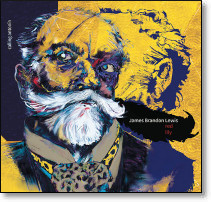
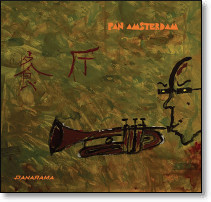
B+(***) James Brandon Lewis/Red Lily: Calling Antonin (2025 [2026], TAO Forms): Tenor saxophonist, has been exceptional since his 2011 debut, already this year has a superb quartet album on Intakt (Omni) and an album with the Messthetics that many others like more than I do, and last year a trio on what is normally a rock label (Anti-) that I really like. But for heavy conceptual weight, he convenes his Red Lily group, with Kirk Knuffke (cornet), Tomeka Reid (cello), Joshua Abrams (bass), Chad Taylor (drums), and added this time Melanie Dyer (viola) — which has thus far won him the Francis Davis Jazz Critics Poll twice. The concept here is based on Czech composer Antonin Dvorak (1841-1904), who spent some time in the US absorbing Afro-American music. My prejudice against classical music has more to do with sound triggers than with form, so not a problem here — as I recall, Steve Swell also did a Dvorak tribute I really liked. Lots going on here, including a dedication to the late Roy Campbell. A− Pan Amsterdam: Panarama (2026, Def Pressé):
Rapper Leron Thomas, from Houston but based in New York, also
plays trumpet, which is a nice touch. Fifth album since 2018.
Rambling, shuffling, inscrutable.
A− Eli Paperboy Reed: Getting There (2026, Yep Roc):
R&B traditionalist Eli Husock, from Boston, debut from 2005
was optimistically subtitled "And Other Smash Hits!" Gets an extra
boost here from producer Jerry Williams, aka Swamp Dogg, who knows
better than most that "one man's trash (is another man's treasure)."
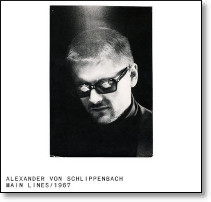
B+(***) Peggy Lee: Too Marvelous for Words (1955 [2026], Peggy Lee Associates): Originally Nora Egstrom (1920-2002), from North Dakota, I remember her as a big star/celebrity in the 1950s, but she started with Benny Goodman's big band in 1940 ("Why Don't You Do Right" was a 1942 hit), later with Gordon Jenkins ("Lover" in 1951), sang some duets with Bing Crosby, wrote many of her own songs, but most successfully covered "Fever" in 1958, acted, did a voice in Lady and the Tramp (later suing Disney for millions for breach of contract). She recorded these 49 songs for radio syndication, with a small jazz combo anchored by Gene DiNovi (piano) and Bill Pittman (guitar), with Pete Candoli (trumpet). Mostly songbook standards, some she never recorded elsewhere. B+(***) Alexander von Schlippenbach: Main Lines/1967
(1967 [2026], Corbett vs. Dempsey): German free jazz pianist,
just getting started — Globe Unity was recorded
in 1966, with his Penguin crown album Pakistani Pomade
still five years out — in a set of four radio tracks
(46:21), drawing on various musicians in the Manfred Schoof
Quintet, Peter Brötzmann Quarter, and Irène Schweizer Trio
(so some of the piano is by Schweizer or Fred van Hove; bass
and drums also appear in threes). Final piece really brings
the noise.
A− Notes on Everyday Life, 2026-10-22 |