|
An occasional blog about populist politics and popular music, not necessarily at the same time. LinksLocal Links Social Media My Other Websites Music Politics Others Networking Music DatabaseArtist Search: Website SearchGoogle: Recent Reading
Music DatabaseArtist Search: Website SearchGoogle: |
Monday, February 9, 2026 Music Week
February archive (in progress). Music: Current count 45523 [45518] rated (+5), 29 [27] unrated (+2). It was tempting to simply declare "No Music Week" this week, but just as easy to show you what I have. It's virtually nothing, which is about the only point I have to make. I've had a very rough January. While the weather has gotten markedly better the last couple days, I'm still struggling. I've been hobbled by a cold, which is showing no signs of clearing up. But on top of all the other disappointments, I've felt like doing nothing, constructive or otherwise. I've been logging incoming music, but I've only been playing old music, moving beyond the well-worn travel cases to pick out oldies I haven't heard in years. I could see doing that for years to come. I'm not seeing much reason for doing anything else. I still plan to listen to, and write about, everything that actually comes in, but I'm in no hurry. I do feel bad about never properly wrapping up the 20th Annual Francis Davis Jazz Critics Poll. I had every intention of adding a dozen or more comments to the published essays. I also knew that I had a fair amount of website work to do, especially at top level. I update the website piecemeal, which makes it harder to keep everything in sync. I have, for instance, made some local changes in the annual sections that haven't been propagated. I was still shocked to look at it today and find the top almost totally devoid of mention of the 2025 poll. I made some quick repairs today, and updated. I also killed off the forwarders for "25votes" and "25comments": the idea behind them was to be able to shut them down as they get spammed. I've been getting troubling reports about the latter, it what is pretty clearly some kind of scam. I have no concrete plans about the poll moving forward. While most of the participants this year were pleased to see it still active, and many were quite flattering in their thanks for my work, I have serious doubts about my ability to keep it going. Still, at present the big problem is my almost total lack of energy or enthusiasm, which applies to pretty much every other aspect of my life. I finished January with only one Substack post. I have 90 subscribers, which is +9 since 2025-11-13. I have 134 followers on Bluesky. Sure, my bad for not posting more often. (And maybe for not using their apps? I've never gotten the point — aside from the obvious one that they want to own your phone.) The only plan I do have this week is to re-open the "weird" book file. I've been reading books on the growing madness on the right, most recently Paul Heideman's Rogue Elephant and John Ganz's When the Clock Broke, and I've ordered Laura K Field's Furious Minds and Paul Starr's American Contradiction. Field's book is about the so-called "MAGA intellectuals," who are trying to derive a coherent political philosophy out of the movement's mass of irritable mental gestures. Starr is offering a broader history which goes back to the 1950s, which aligns it perfectly with my memories. I've read much more along these lines. The one book I was most impressed by was Kurt Andersen's Evil Geniuses: The Unmaking of America. In the introduction to the latter book (2020), Andersen wrote:
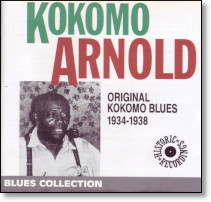
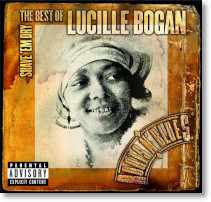
While this broad outline has long been obvious — back in the 1980s, I liked to tell people that the only boom industry in America was fraud, but I don't recall ever trying to explain how it came about, why it was so seductive, and how defenseless ordinary people had become to its pervasive rot. Recognizing the evil geniuses is only one part of the battle. The other part is understanding how the Democrats had detached themselves from the left and its principles, and how the left had disconnected from the majority of the people. I hope to make some small contribution to better understanding the democratic fumbles. I could add some suggestions on how to fix it, but doesn't everyone claim that? It's not even midnight, and I'm too tired to write any more. So I might as well let it be. Writing about music is so much a part of my routine I doubt I'll stop anytime soon. I suppose I should note that lacking any new A- records this week, I picked up covers of two better compilations I reviewed way back: Kokomo Arnold: Original Kokomo Blues 1934-1938 ([1998], EPM/Blues Collection); and Shave 'Em Dry: The Best of Lucille Bogan (1933-35 [2004], Columbia/Legacy). PS: I watched the Super Bowl, for the first time in probably 30 years. (Laura usually tunes in for the hyped half-time shows, but never learned to follow the game. I watched the first dozen Super Bowls, and was an AFL fan back when that made a difference, but it's been decades since I had any interest in the sport, the business, or the spectacle.) The game itself was easy enough to follow. Both offenses seemed inept compared by my memories, but I learned early on (thanks to Alex Karras) to focus on the line play, and both sides put on tremendous pass rush pressure. The secondaries also seemed exceptional, with New England's Christian Gonzalez singled out for praise, but that was largely because Seattle's quarterback was the more accurate passer. New England's Drake Maye struggled all game long. Nothing here is likely to bring me back to watch more, but I felt like doing nothing for the day, and the game was good for that. But I'm left with the sense that football is sinking into pure gladiatorialism. Aside from the game, the big points were the half-time show, and the commercials. I have nothing to say about Bad Bunny, but I'll look into the political reaction and see if I can make any sense of that. For what little it's worth, I've heard six of his albums, enjoying them enough for various shades of B+, but nothing higher. I don't doubt that he's earned his stardom, but much of it (and not just the language) sails right past me. I didn't get the symbolism or iconography. As for the commercials, I found them rather disturbing, but there was so much happening so fast that I never got a handle on it. Again, a subject for further research. If I understand the AI pitches correctly, they say we'll be able to get all of our work done instantly, spending the rest of our (still employed?) time at the beach. I doubt it's going to work out like that. New records reviewed this week: Al Green: To Love Somebody (2026, Fat Possum, EP): Classic, near-perfect string of hit albums from 1971 (Gets Next to You) through 1978 (The Belle Album), gospel with some exceptions from then up to 2008. Four covers (16:40): title from Bee Gees, closer from R.E.M., two Lou Reed in the middle ("Perfect Day" the single, with Raye). B+(**) [sp] Recent reissues, compilations, and vault discoveries: None. Old music: Lucille Bogan/Walter Roland: (1927-1935) (1927-35 [1992], Yazoo): Classic female blues singer (1897-1948), original name Lucille Anderson, married a Bogan in 1914, later divorced him, also released songs as Bessie Jackson, the name that appears on the earliest Yazoo LP of this material (1969). Vocals divided here, with Roland playing piano or guitar, but sometimes others. Bogan's best-known songs are missing. B+(**) [sp] CeDell Davis: Feel Like Doin' Something Wrong (1993 [1994], Fat Possum): Blues guitarist-singer-songwriter (1926-2017), from Arkansas, developed a distinctive variation on slide guitar after polio, active since 1953, but it wasn't until 1993 when this first album was released (on Demon in UK; picked up by Fat Possum in US B+(***) [sp] CeDell Davis: The Best of CeDell Davis (1994, Fat Possum): Actually a new session, backed by Col. Bruce Hampton and the Aquarium Rescue Unit, but they may have guessed that a newly discovered bluesman well into his 60s could sell a back story. B+(**) [sp] Casey Bill Weldon/Kokomo Arnold: Bottleneck Guitar Trendsetters of the 1930's (1927-38 [1992], Yazoo): Seven tracks by each, although either could have filled a compilation: Blues Collection has a CD by each, Classic Blues as 2-CD sets, and Document has 3-4 CDs of completism, nearly all from 1934-38. They're pretty easy to tell apart, with Weldon the more genteel songster, Arnold with a darker disposition. Both have disputed birth dates (per Wikipedia), and both quit in 1938. I'm not sure that the balance particularly works (although originally intended for separate LP sides), but both could merit further research. B+(***) [sp] |