|
An occasional blog about populist politics and popular music, not necessarily at the same time. LinksLocal Links Social Media My Other Websites Music Politics Others Networking Music DatabaseArtist Search: Website SearchGoogle: Recent Reading
Music DatabaseArtist Search: Website SearchGoogle: |
Saturday, September 26, 2026 Music Week
September archive (in progress). Music: Current count 46640 [46602] rated (+38), 25 [23] unrated +2). Advance Music Week appeared September 25 on Substack as Music Week (9:4). It is also archived here. My cutoff was done before the Substack post, but the introduction is revised/rewritten. I've had a very frustrating week, nearing the end of a very frustrating month, in a year I nothing nice to say about. About all I have to show for the week is a Music Week that breaks down to 14 new albums, 2 new old music albums, and 22 old albums. The new music count was down around 4 back on Tuesday or Wednesday, when I first ran a count. As I explained last week, I took Brad Luen's decade list posts as a challenge, and converted them into my own checklist. I hadn't heard about a third of the 1950s-1970s records listed, mostly antiquities from Africa and Latin America. Since I have some longstanding interest in both — my database rates 1194 African albums (+ 140 from North Africa through the Middle East including Turkey and Iran); my investigations into Latin America are much spottier, but add up to 664 albums (279 from Brazil, 358 from Hispanic countries, and 27 from French; Anglo-Caribbean would add another 590, mostly from Jamaica, but that also counts some UK reggae). Luen picked nearly a third of his albums from Africa and Latin America, and to better fit his decadal focus went for original albums of artists I often, having only discovered them much later, knew only from compilations. While I recall records from the late 1950s and 1960s, my own firsthand experience only got serious in the mid-1970s, and took a comprehensive turn in the mid-1990s. Most of what Luen picked turns out to be relatively easy to find, either on Spotify or YouTube. (The main problem so far has been early Astor Piazzolla.) Still, it's been frustrating, with no language skills, few references, limited background, and not nearly enough time to give anything a fair hearing. About half of the albums I've checked out cleared A− (10 vs. 9 with lower grades this week). Still, I don't have a lot of confidence in these grades. They're first impressions, not considered ones — although I do feel more secure about the ones closer to my areas of expertise, which is part of the reason I included O'Day and Tharpe in the Substack post. I did decide to cut some corners and not dig up all of the album covers. I could cite various problems, but it's mostly too much (both work and clutter). Looks like I still have another half-dozen or so albums left, so I can see this coming to an end fairly soon (with or without Piazzolla). Of course, there's much more I could look up where these came from. For instance, I ran across the List of Rolling Stone Brasil 100 Greatest Brazilian Music Records, and I've only heard four of the top 10 { 1, 2, 6, 9 }, with 4 more in my "shopping" database, and 2 more completely unknown to me. With most of my demo queue still slated for future release, and my email still screwed, I struggled a bit to find new albums. I did get a boost when Robert Christgau posted his Consumer Guide: September 2026. I broke this down into four lists:
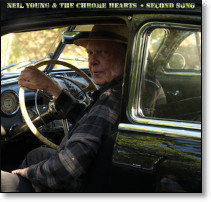
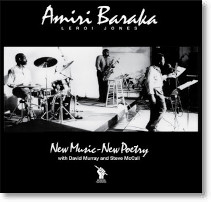
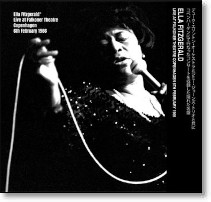
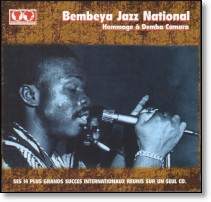
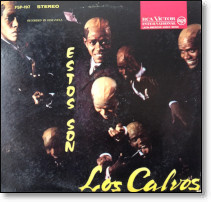
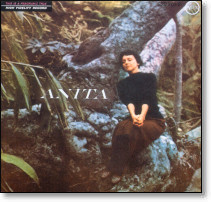
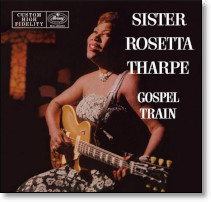
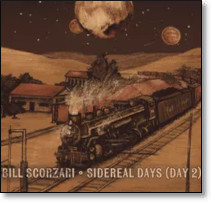
I assume the higher grades (group 2) represent more listening: I like the three albums just fine, even if my grades look hedged. The three adds I'm more skeptical of. Allen and Kaye end with songs I like, but rechecking Allen didn't budge my grade. I like his previous work, and might like this one more if it was more him and less family. In the latter regard, it's similar in concept to Federico Ughi's My Face Is Dancing, cut up from family tapes (although Ughi is a jazz drummer, and his family is more into hip-hop and electronica). But group 3 bothers me more, because I've spent enough time with those albums to rate them higher. He's consistently rated Staples higher than I have, so we may be tuning into different things. He's topped me with two A− grades for Evans' EPs. I tend to grade EPs down a bit, not so much because I feel cheated on length as because I find it takes a while to settle into an album, and EPs don't offer that time. But the Scorzari grade, after a full A on (Day 1), is hard to figure. I jumped the gun and reviewed the album a couple weeks ago, but I didn't include it on Substack because it wasn't out yet. It's out now, so I included it on Substack to reiterate my point, and share the Bandcamp. It's currently my number two album of 2026, just behind the live Laurie Anderson, Let X = X. My email situation is partially fixed: I've given up on trying to access Yahoo via POP3, and set up a IMAP account. That allows me to see my mail using Thunderbird, instead of having to use their webmail app. But it also requires a lot of extra synchronization, and that generates various error messages that I've yet to figure out how to properly check. (My guess is that IMAP is designed to recover from failures, not least because it's designed to fail a lot.) I still have a lot of work to do here: moving messages from the old account to "local folders," removing the old account, and possibly adjusting settings on the IMAP account to do more downloading. The persistent failures mean I still want to set up a new email address, at least for most of my personal communication. I should do that sooner rather than later, as I want to move the Jazz Critics Poll over to the new address — and verify that it's working before the Poll opens. I haven't done any serious work on the Poll yet, which is a problem, as if I wait for November again, I'll be sandbagged (once again). I need to start, which perhaps first of all means firming up my own plans and intentions. Before then, I'll try to put up a Loose Tabs. Last one was August 27. I currently have 211 links, 11617 words. The way things are going, it's hard to promise anything more. Not clear whether this will generate anything for Substack, but that will depend more on my will than on what's available to write about. I am increasingly disturbed by the situation in Israel, and by the utter haplessness of the Trump administration — the only bright spot there is that they appear to be completely fumbling the mid-term election (although that's usually what Democrats do). And I still want to do a Substack post on the DownBeat Poll — at this point, mostly to get a start on voter prospecting, as I don't really care that much about good vs. bad picks. New records reviewed this week: Terry Allen: Blood Sucking Maniacs (2026, Paradise of Bachelors): Singer-songwriter, born in Wichita, based in Santa Fe, but mostly associated with Lubbock, thanks to his 1979 album Lubbock (On Everything) (1979). Album title can also be read as group name, especially given that Allen only wrote 5 (of 22) songs, while other Allens (Bale, Bukka, Calder, Kru, Sled, and wife Jo Harvey) also contributed songs. Strikes me as a bunch of half-baked ideas: some appealing, some interesting, most requiring more work than I feel up to. (Two plays, with the closing "Family Tree" the one that suggests more effort might pay off.) B+(**) [sp] Lucian Ban & Elevation: Rush (2024 [2026], Sunnyside): Romanian pianist, moved to New York in 1999, debut album 2002 on CIMP, moved on to ECM and Sunnyside, often reflecting on his roots. Quartet here with Abraham Burton (tenor sax), John Hébert (bass), and Eric McPherson (drums). Burton reminds one of the strong impression he made in the 1990s, after which he seemed to vanish. Mostly postbop, but ends with a Gavril Tarmure vocal that ties this back to the old country. B+(**) [sp] Ran Blake: Voices (2023 [2026], Tzadik): Pianist, b. 1935, so 88 when this was recorded, his umpteenth solo album since 1965, his main alternative format duos — vocalists start with Jeanne Lee in 1961, up to a new one with Dominique Eade this year, but also saxophonists (Houston Person, Clifford Jordan, Anthony Braxton, most recently Jared Sims), pianists (Jaki Byard, Claire Ritter), and various others (Enrico Rava, David Fabris, Kresten Osgood). I might as well admit I have no idea how to evaluate his solo work. That's not just my opinion: I once pitched a column idea to Bob Rusch, who turned me down because he decided, citing one of my Ran Blake reviews, that I wasn't critical enough to write for Cadence. He joined New England Conservatory in 1967, heading their "Third Stream Department," which opened the academic doors to jazz. He won his Guggenheim Fellowship in 1982, and his MacArthur Genius Grant six years later — one of the first jazz musicians so fêted. I don't doubt that he deserves his reputation, but his solo albums usually leave me unmoved, and his others turn on his accompanists: I've credited him with three A− albums: his 1966-67 duets with Lee, his 2017 duo with Ritter, and his unique 1986 quartet, Short Life of Barbara Monk, with Ricky Ford. But his solo albums more often landed on an indifferent B: my solo piano favorites, where even Tatum and Taylor fall short, are Earl Hines and Don Pullen, and even there I'd rather they add a Budd Johnson or George Adams. Here, Blake tiptoes through 19 pieces, mostly standards, most of which I should have recognized anywhere (but only "You Are My Sunshine" registered on first pass; what does it say about my ears to have missed "Hallelujah I Love Her So" or "La Vie En Rose" followed by "Ain't Misbehavin'"?). Still, I feel fortunate to have this, enough so to grade it in the keep range. After all, with Rusch passed, and me nearing the end, what's to be gained by translating my prejudices into snark? B+(***) [cd] George Garzone: Themes for Good Friends (2026, Jojo): Tenor saxophonist, b. 1950, from Boston, has a couple dozen albums since 1978, many in the Fringe (1978-2001), more under his own name, but is probably best known as the teacher every saxophonist who passed through Boston wants to thank. Quartet with Luis Perdomo (piano), Santi Debriano (bass), and Jeff "Tain" Watts (drums), plus Randy Brecker on trumpet for five (of 8) tracks. Ends with originals "The Mingus That I Knew" and "To Michael Brecker." What is it about Brecker that never quite works for me? B+(**) [sp] Ned Hill Band: Saw Jesus at the Park (2026, self-released, EP): Hype sheet says "longtime Nashville icon," Discogs reluctantly listed two albums, Bandcamp says "acclaimed veteran songwriter," and offers 21 releases, including singles, other attributed to the Cowards or Ned Van Go. Six songs, 20:11. B+(*) [sp] The Hobknobs: Helmets Off (2026, 12XU/THK): Dutch art-pop duo (Arie van Vlilet, Yaël Dekker), first album after a 2025 EP. B+(**) [sp] Lenny Kaye: Goin' Local (2026, Yep Roc): Early rock critic, compiled the genre-defining Nuggets album of 1960s garage rock, played guitar for Patti Smith, self-released a tape in 1982, followed by an album in 1984, but while he was famous enough for groups like the Fleshtones to seek him out, he never made a star move before. Maybe not here, either. While he has taste and sensibility, he doesn't have an aesthetic, or much of a voice. Leaving him with a batch of fairly good songs, done disarmingly. Choice cut: "The Things You Leave Behind." B+(**) [sp] Takashi Matsunaga: Ride Five (2026, Ride Five): Japanese pianist, has a half-dozen albums since 2003, recorded this one in New York, original pieces, nearly solo — some bass by Christian McBride, but I hardly noticed it first time through. I was, however, struck by the calm, reassuring piano. B+(**) [cd] My Face Is Dancing: My Face Is Dancing (2021-25 [2026], 577/Positive Elevation): Drummer Federico Ughi and members of his family, an experimental electronic mix of tapes from "different moments throughout the children's lives, documenting their growth and artistic evolution between the ages of two and ten." B+(*) [dl] Angela O'Neill and the Outrageous 8: A Live Musical Tribute to Peggy Lee (2024 [2026], Outrageous 8): Standards singer, from California, has at least one previous album, opens with effusive band intros, website includes a full page of band bios, a lot of gray hair in the pics, but no denying their swing. Lee started singing for Benny Goodman in 1941, went on to have many pop hits up to 1969, the main one here being the closer, "Fever." B+(**) [cd] Matthew Putnam/Hilliard Greene/Francisco Mela: Bright Sun Outside (2025 [2026], 577): Pianist, presumably not the same as the mathcore/metal drummer, as the other piece of information I've been able to find on him is that "he is best known for his work in nanotechnology." Trio with bass and drums, evidently their second. B+(**) [os] Springfield Symphony Jazz Orchestra: Royalty: The Music of Duke Ellington & Count Basie (2026, T2 Music): First question was: which Springfield? Answer is Ohio, so I didn't expect to find any familiar names, but was pleased to see that Edwin Bayard (tenor sax) had made it out from Columbus, and I also recognized Pharez Whitted (trumpet), plus "special guests" Jeff Hamilton (drums), Kurt Elling (vocals), and Ekep Nkwelle (vocals). That the band can play the charts, and that the charts are great, is pretty much a given. But the details also stand out. Most obviously, the vocalists, and surprisingly for me, that includes Elling, who missed his calling as a blues shouter. Also Bayard! B+(***) [cd] Tricky: Different When It's Silent (2026, False Idols): British trip-hop producer Adrian Thaws, his reputation set by his 1995 debut Maxinquaye, 15th studio album, his longest gap from 2003-08. Most tracks feature vocalist Mitch Sanders. B+(*) [sp] Neil Young & the Chrome Hearts: Second Song (2026, Reprise): Wikipedia says this is Young's 50th studio album. This is his second studio album with this band, along with a live album. In the long run, this is likely to get lost on the shelves, but on first play, he's rarely sounded so comfortable, or quietly compelling. A− [sp] Recent reissues, compilations, and vault discoveries: Amiri Baraka: New Music ~ New Poetry (1982 [2026], Modern Harmonic): Afro-American poet (1934-2014), hard to avoid mention of race with him, even in reference to his early plays, essays (Blues People), and novel (The System of Dante's Hell) published under his original name, Leroi Jones, when he was celebrated in Greenwich Village, before he moved back to Newark, getting arrested in the 1967 riots. (Fun fact: his son, Ras Baraka, wound up as mayor of Newark.) I read much of his early work, and he made a big impression on me. His Wikipedia has a long list of "controversies," but they strike me as ephemeral, distractions from the deeper truths he lived and felt. He's accompanied here by David Murray (tenor sax/bass clarinet) and Steve McCall (drums), as if he wasn't intense enough on his own. A− [bc] Ella Fitzgerald: Live at the Falkoner Theatre Copenhagen 6th February 1966 (1966 [2026], Gearbox): A previously unreleased live tape, recorded the night before The Stockholm Concert, an appearance with Duke Ellington that's been widely available since 1994. Ellington skipped this tune-up, with Jimmy Jones and his trio picking up the slack, but Ellington's horns were out in force, at least for the first seven tracks. One highlight is a scat from "How High the Moon" through "A Tisket, a Tasket" to "A Hard Day's Night." A− [sp] Old music: Sunny Ade & His African Beats: The Master Guitarist Vol. 11: Sunny Ti De (1974, African Songs): Nigerian juju pioneer, was introduced to American audiences by Island in 1982, his albums critically acclaimed but one heard complaints that touring with his big band was prohibitively expensive. I've never made much sense of his earlier Nigerian discography, but two compilations Shanachie assembled were outstanding (The Best of the Classic Years is A+). The Master Guitarist series goes at least to Vol. 12, but Discogs has only half of the titles (1971-74), and there are other series that circle through the same years. This one, which was Brad Luen's pick of the 1970s albums, appears to have been issued as Sunny Ti De and Sunny Tide 2. I can't recommend this over those comps, but on its own, this is superb. A− [yt] Nelson Angelo/Joyce: Nelson Angelo E Joyce (1972, Odeon): Brazilian singer-songwriter, b. 1949, plays guitar, first album, with singer Joyce Moreno (b. 1948), her third album, with an illustrious career ahead. Angelo I'm not so sure about. B+(**) [sp] Bembeya Jazz National: Hommage À Demba Camara (1974 [2000], Sylla): Afropop group from Guinea, originally from Beyla but gained national status thanks to state support. Camara was a singer, killed in an auto accident in 1973, hence this tribute. A− [sp] Nat King Cole: Unforgettable (1946-54 [1954], Capitol): Originally a jazz pianist of some note, ran a trio in the 1940s and developed as a singer, regularly topping the r&b charts from 1942 on, sometimes scoring pop hits. In the late 1940s, he started using string orchestras and backing singers, topping the pop charts in 1946 with "(I Love You) For Sentimental Reasons," and later "Mona Lisa" and "Too Young" (included here) and "Nature Boy" (not here); the title song, from 1951, was his first certified silver single. This was originally released as an 8-song 10-inch LP in 1952, then reissued as a 12-inch with 12 songs in 1954. I've often had trouble with these arrangements, ranging as they do from treacly to bombastic, marring good songs and a great singer. I've long searched for a quality compilation of his 1950s hits, but found nothing until 2005's The World of Nat King Cole, which cheats from early trio tracks to his posthumous duet with daughter Natalie Cole on "Unforgettable." B+(*) [sp] Willie Colón & Héctor Lavoe: Lo Mato (1973, Fania): Salsa musician (1950-2026) from the Bronx, many albums 1967-2013, played trombone and sang — backup here, as Lavoe, from Puerto Rico (1946-93) took the leads (as he had since hooking up on El Malo in 1967). B+(***) [sp] Celia Cruz: The 'Brillante': Best of Celia Cruz with the Orchestras of Johnny Pacheco & Willie Colon (1974-77 [1978], Yaya): Cuban singer (1925-2003), started in Sonora Mantancera, moved to Mexico then to the US after the Revolution, joining Tito Puente and many other salsa bands, including the Fania All Stars. I've only lightly sampled her work, so I have no special insights here. But this is relentlessly up, 1970s salsa at its finest. A− [sp] Aracy De Almeida: Noel Rosa (1950-54 [2002], Continental EastWest/Warmer): Brazilian singer (1914-88), recorded two sets of 78s in 1950-51 of songs by samba composer Rosa (1910-37). They were collected in a 1954 album, followed by 1955's Canções De Noel Rosa Com Aracy De Almeida (a different album, from what I can tell). The guitar is often fortified with strings, the sound a bit creaky, but the singer is capable. B+(**) [sp] Heitor Dos Prazeres/Jorge Fernandes/Ataulfo Alves/João Da Baiana: Macumba (1958, Fantasia): Brazilian samba singer-composers, birth dates range from 1887-1909. Same title (refers to Afro-Brazilian Orixas, sometimes combined with Lucumi) as a 1955 album by Heitor Dos Prazeres E Sua Gente, but no songs in common. Unclear whether this is a compilation or collaboration, or whether it has anything to do with the 1958 movie Macumba. Kind of rough, which is rather refreshing compared to the softness of later MPB. A− [sp] Heitor Dos Prazeres E Sua Gente: Macumba (1955, Discos Rádio, EP): Earlier album, raw samba as its most primal, which seems to be the point. Eight songs, 20:53. B+(***) [sp] Antonio Carlos Jobim/Luis Bonfa: Black Orpheus (Orfeu Negro) [The Original Sound Track of the Movie] (1959 [1960], Epic): Famous movie, co-written and directed by Marcel Camus, won the Palme d'Or at Cannes in 1959, set in a favela of Rio de Janeiro. Wikipedia tells me that the film has been criticized for eroticized Afro-Brazilian stereotypes, but that sounds like a plus in a soundtrack. Indeed, the drum tracks are pretty graphic, which could have sufficed, but the proper songs are sensuous too. A− [sp] Los Calvos: . . . Y Que Calvos! (1968, RCA): Venezuelan salsa group, led by pianist Ray Pérez, debut album 1967, followed by this second album, Pérez then moving on to a solo career, at least through 1992. Hotter than the average salsa band, but hard for me to gauge how much or why that matters. B+(***) [sp] Los Calvos: Estos Son Los Calvos (1967, RCA): First album, why not? Starts off with an extra noise quotient, which adds excitement and uncertainty to a form I often find just a bit too cut-and-dry. A− [sp] E.T. Mensah and His Tempos Band: Tempos on the Beat (1959, Decca): From Ghana (1919-96), the King of Highlife, formed his Tempos band in 1946, toured England in 1953, Discogs lists singles from 1953 and several 10-inch LPs from 1958, including this one. 10 songs, 28:25, goes down easy. B+(***) [yt] Anita O'Day: Anita (1956, Verve): Jazz singer (1919-2006), née Colton, started with Gene Krupa, had several hit singles including "Let Me Off Uptown" (1941) with Roy Eldridge. She sang with other big bands, then went solo, moving into bop and developing her scat technique, but struggled with drugs and men. In the 1950s, she became a Norman Granz project, with this the first of several albums she recorded for Verve. Buddy Bregman arranged and produced a dozen standards. While the strings are best not dwelled on, she nailed every song. A− [sp] Hermeto Pascoal: Slaves Mass (1977 [2004], Warner Bros./Rhino): Brazilian composer/multi-instrumentalist (1936-2025), albums start in 1964, gained some international fame appearing with Miles Davis in 1971. Plays keyboards, soprano sax, flutes, guitar, and sings some. Band includes Ron Carter (bass), Airto Moreira (percussion), and Flora Purim (vocals on two songs). Original album 42:43, with the CD reissue adding three bonus tracks (34:30). B+(***) [sp] Le Seigneur Rochereau & L'Afrisa International: À L'Olympia (Paris) 1970 (1970 [1997], African): Congolese superstar (1940-2013), originally Pascal-Emmanuel Sinamoyi Tabu, best known as Tabu Ley Rochereau, composed some 3000 songs over 250 albums, two 2-CD sets on Stern's Africa (The Voice of Lightness) do a good job of representing him, but the well appears bottomless. This was his debut in Paris, a triumph. A− [sp] Jamaaladeen Tacuma: Hotel Le Prince (2009 [2022], Jam-All Productions): Electric bassist, most prominently a member of Ornette Coleman's Prime Time (1976-87), recorded a series of jazz-funk albums for Gramavision in the 1980s, played in groups like Cosmetic and Free Form Funky Frēqs, with widely scattered albums since. This one features David Murray (tenor sax/bass clarinet), with his son Mingus Murray (guitar), Paul Urbanek (keyboards), and Ranzell Merrit (drums), with a bit of spoken word, from Amiri Baraka to Barack Obama. B+(***) [bc] Sister Rosetta Tharpe: Gospel Train (1956, Mercury): Gospel singer (1915-73), played electric guitar with such authority she shows up in rock & roll roots anthologies, appeared in John Hammond's 1938 "Spirituals to Swing" concert, and in the big bands of Cab Calloway and Lucy Millinder; she had some crossover r&b hits in the 1940s. This was her first LP, new recordings including some previous hits (e.g., "Up Above My Head There's Music in the Air," from 1947). I haven't tracked the others down, but they sound definitive here. [Note: I played the original 12-song edition, remastered in 2002. There is also a 17-track "Expanded Edition," but it's unclear when it appeared — Spotify says 1956. Also a 14-track Gospel Train: Expanded Edition from 1958, on Decca, but it has different songs, mostly drawn from 1940s singles.] A [sp] Toots and the Maytals: Sweet and Dandy (1969, Beverley's): Jamaican reggae group, started in 1962 as the Maytals, this the first album with lead singer Frederick "Toots" Hibbert (1942-2020) listed first, although a third just Maytals album came out a year later, and key songs like "Monkey Man," "54 46 That's My Number," and "Pressure Drop" recur on multiple albums (the latter on their 1975 American debut, Funky Kingston and compilations. A− [sp] Papa Wemba & L'Orchestre Viva La Musica: Mabele Mokonzi (Elou) (1976-77 [1977], Special Molokai): Congolese guitarist, singer, and bandleader, started with Zaïka Langa Langa before organizing his own group here. Huge number of albums. I recommend his 2-CD Sterns comp, 1977-97, which starts here. The guitar sound is classic soukous, and the energy rarely flags. B+(***) [yt] Edmundo P. Zaldivar (H): Carnavalitos (1955, Pampa, EP): Argentinian musician (1917-78), credits include "(h.)," Spanish equivalent "(hijo)" for "Jr.," recorded this delightful set of folk dances (8 tracks, 23:27) with "su conjunto de Arte Folklórico y Nativo." [Album was expanded to 12 tracks in 1957, as Carnavalitos de Argentina.] A− [yt] Tom Zé: Imprensa Cantada (2003, Trama): Brazil-only album, as Zé regarded it as too tied to its political context to be comprehensible elsewhere, which given the scattered reactions may have been well-founded (among graders, Christgau rated it A−, while Brazil Beat, which at least entertains the idea of Zé as the "greatest Brazilian musician of all time," went for C). Reports are that it started as an EP, with other odds and sods tacked on. Only song I can really calibrate is his trot of "You're the Top," which I find cringeworthy. Other than that, lots of exercises in style, mostly mild. B+(*) [sp] Unpacking: Found in the mail last week:
|