Blog Entries [1130 - 1139]Friday, June 12, 2015
Ornette Coleman
As I'm sure you know by now, Ornette Coleman died yestertoday,
age 85. He was the first jazz musician I developed a real interest
in and affection for. That was in the mid-1970s, at least 15 years
after Coleman made his initial big splash, about the time he was
inventing a second wave of jazz-rock fusion, one much more radical
than the funk-oriented Miles Davis or the prog of John McLaughlin.
Coleman was part of the first wave of jazz avant-gardists, a group
which variously sought to explore and find novel sounds, rhythms, and
harmonics -- to violate the known rules of jazz, to do things that
are wrong and somehow make them sound right. (Mingus put it most
succinctly: "It's like organized disorganization, or playing wrong
right.") Most of that wave wound up contributing to the postmodern
synthesis jazz students today are
taught: what we call postbop. Martin Williams was so impressed with
Coleman that he concluded his Smithsonian Collection of Classic
Jazz with three Coleman pieces (plus a Coltrane), arguing that
[early] Coleman was the endpoint of the classic jazz tradition. Yet
even today most novices find [early] Coleman puzzling before they
are swept away. I saw this at work when my hip-hop-loving nephew
wanted to get acquainted with jazz and I handed him The Shape of
Jazz to Come.
Later Coleman pushed further and harder, but by the time he cut
his last album, 2006's Sound Grammar, all the stars aligned:
no jazz record in the past decade (or really, ever -- and I've been
involved in a lot of critic polling on such things) has been so
universally exclaimed. It even won the Pulitzer Prize that had so
notoriously been denied Duke Ellington. Yet it sounded so offhand
you could imagine him knocking sequels out every year -- so it seems
odd that it came ten years after his previous album, and nine years
before his death. He had remained active well into last year --
playing at a tribute concert in his honor in Brooklyn (and suing
to keep the ablum from being released). He never got comfortable
with the record business as he hopped from label to label, taking
long breaks, never settling in -- he didn't even seem to be happy
with his own labels, going back to Artist House in the late 1970s.
One imagines he has hoards of tapes that greedy heirs will eventually
dump onto the market. Or respectful ones, given that his son Denardo
has been his preferred drummer ever since puberty in the 1970s.
(Denardo first played on an album in 1966 when he was 10, but it
took him a while to finally push Ed Blackwell, Billy Higgins, and
Shannon Jackson out of the picture.)
My semi-obligatory database dump:
Mainline Albums:
- Ornette Coleman: Something Else: The Music of Ornette Coleman (1958, Contemporary) -- ([1988], Contemporary/OJC): B+(***)
- Ornette Coleman: Tomorrow Is the Question (1959, Contemporary) -- ([1988, Contemporary/OJC): B+(**)
- Ornette Coleman: The Shape of Jazz to Come (1959, Atlantic) -- ([1990], Atlantic): A+
- Ornette Coleman: Change of the Century (1959 [1960], Atlantic) -- ([1992], Atlantic): A-
- The Ornette Coleman Quartet: This Is Our Music (1960 [1961], Atlantic): A-
- Ornette Coleman Double Quartet: Free Jazz: A Collective Improvisation (1960 [1961], Atlantic): A-
- Ornette Coleman: Ornette! (1961 [1962], Atlantic): A-
- Ornette Coleman: Ornette on Tenor (1961 [1962], Atlantic): B+(***)
- Ornette Coleman: Town Hall, 1962 (1962 [1965], ESP-Disk): B+(***)
- Ornette Coleman: Chappaqua Suite (1965, Columbia): B+
- The Ornette Coleman Trio: At the "Golden Circle" Stockholm: Volume One (1965 [1966], Blue Note) -- (1987, Blue Note): A
- The Ornette Coleman Trio: At the "Golden Circle" Stockholm: Volume Two (1965 [1966], Blue Note) -- (1987, Blue Note): A-
- Ornette Coleman: New York Is Now! (1968, Blue Note) -- ([1989], Blue Note): A-
- Ornette Coleman: Love Call (1968 [1971], Blue Note): B+(**)
- Ornette Coleman: Friends and Neighbors: Live at Prince Street (1970 [1972], Flying Dutchman) -- ([2013], BGP): A-
- Ornette Coleman: Skies of America (1972, Columbia) -- ([2000], Columbia/Legacy): B+
- Ornette Coleman: Dancing in Your Head (1973-75 [1977], Verve) -- ([2000], Verve): A
- Ornette Coleman/Charlie Haden: Soapsuds, Soapsuds (1977, Artists House) -- ([1996], Verve/Harmolodic): B+
- Ornette Coleman: Body Meta (1976 [1978], Artists House) -- ([1996], Verve/Harmolodic): A-
- Ornette Coleman: Of Human Feelings (1979 [1982], Antilles): A
- Ornette & Prime Time: Opening the Caravan of Dreams (1985, Caravan of Dreams): B+
- Ornette Coleman [The Original Quartet & Prime Time]: In All Languages (1985 [1987], Caravan of Dreams, 2LP): A
- Ornette Coleman: Virgin Beauty (1988, Portrait): A-
- Ornette Coleman & Prime Time: Tone Dialing (1995, Harmolodic/Verve): B+
- Ornette Coleman: Sound Museum: Hidden Man (1996, Harmolodic/Verve): B+
- Ornette Coleman: Sound Museum: Three Women (1996, Harmologic/Verve): B
- Ornette Coleman + Joachim Kühn: Colors: Live From Leipzig (1996 [1997], Verve/Harmolodic): A-
- Ornette Coleman: Sound Grammar (2005 [2006], Sound Grammar): A
Miscellaneous Albums: side-credits, compilations, live albums
that only appeared much after the fact:
- Paul Bley Quintet: The Fabulous Paul Bley Quintet (1958 [], Musidisc) -- also released as Paul Bley/Ornette Coleman/Don Cherry/Charlie Haden/Billy Higgins: Live at the Hilcrest Club 1958 (1958 [1976], Inner City), and Coleman Classics, Vol. 1 (IAI): A-
- John Lewis Presents: Contemporary Music 1: Jazz Abstractions (1960 [1961], Atlantic) -- compositions by Gunther Schuller and Jim Hall; other cover names: Coleman, Eddie Costa, Eric Dolphy, Bill Evans, Scott LaFaro: A-
- Ornette Coleman: To Whom Who Keeps a Record (1959-60 [1975], Atlantic) -- ([2007], Water): A-
- Ornette Coleman: The Art of the Improvisers (1959-61 [1970], Atlantic) -- ([1988], Atlantic): A-
- Ornette Coleman: Twins (1959-61 [1971], Atlantic) -- ([2008], Water): A-
- Ornette Coleman: Beauty Is a Rare Thing (1959-61 [1993], Rhino/Atlantic, 6CD) -- collects all the Atlantic recordings: A-
- Jackie McLean/Ornette Coleman: New and Old Gospel (1967, Blue Note) -- ([2007], Blue Note): Coleman plays trumpet: A-
- Alice Coltrane: Universal Consciousness (1971, Impulse): B
- Ornette Coleman: The Complete Science Fiction Sessions (1971-72 [2000], Columbia/Legacy, 2CD) -- collects Science Fiction [1972] and the outtakes later issued as Broken Shadows [1982]: A-
- Ornette Coleman: Ken Burns Jazz: The Definitive Ornette Coleman (1958-75 [2000], Columbia/Legacy): A-
- Charlie Haden: Closeness (1976, Horizon) -- one of four duets: B+
- Charlie Haden: The Golden Number (1976 [1977], Horizon) -- one of four duets: B+(***)
- James Blood [Ulmer]: Tales of Captain Black (1978 [1979], Artists House) -- ([1979], DIW): A-
- Jamaaladeen Tacuma: Renaissance Man (1983 [1984], Gramavision): B
- Pat Metheny/Ornette Coleman: Song X (1985 [1986], Geffen): A-; Song X: Twentieth Anniversary ([2005], Nonesuch): A
- The Ornette Coleman Quartet: The 1987 Hamburg Concert (1987 [2011], Domino, 2CD): A-
- Geri Allen: Eyes in the Back of Your Head (1995-96 [1997], Blue Note): B+
- Rolf Kühn & Friends: Affairs (1997, Intuition): Coleman on 1 cut: A-
- Lou Reed: The Raven (2003, Sire/Reprise): B+
- Jamaaladeen Tacuma: For the Love of Ornette (2010 [2011], Jazzwerkstatt): B+(***)
- Sonny Rollins: Road Shows Vol. 2 (2010 [2011], Doxy/Emarcy) -- one cut: A-
- The Master Musicians of Jajouka, et al.: The Road to Jajouka: A Benefit Album (2013, Howe): A-
Selected albums I have not heard:
- Ornette Coleman: The Empty Foxhole (1966 [1967], Blue Note)
- Ornette Coleman: Ornette at 12 (1968 [1969], Impulse!)
- Yoko Ono: Plastic Ono Band (1968-70 [1970], Apple) -- Coleman played on the one 1968 track
- Ornette Coleman: Crisis (1969 [1972], Impulse!)
- Louis Armstrong: Louis Armstrong and His Friends (1970, Flying Dutchman) -- no dream date: Armstrong only sings, and Coleman's credit reads "backing vocals"
- Cosmetic With Jamaaladeen Tacuma: So Tranquilizin' (1985, Gramavision)
- Ornette Coleman: Prime Design/Time Design (1985, Caravan of Dreams): composition only, played by string quartet + Denardo Coleman
- Ornette Coleman: Naked Lunch [Soundtrack] (1988, Portrait)
- New Vocabulary: New Vocabulary (2014, System Dialing) -- Coleman sued over this "unauthorized" release.
Miscellaneous unheard live albums:
- Ornette Coleman Quintet: Complete Live at the Hillcrest Club (1958 [2007], Gambit) -- see above, usually attributed to Paul Bley Quintet
- Ornette Coleman/Don Cherry/Jimmy Giuffre/Kenny Dorham: The Lenox Jazz School Concert: August 29, 1959 (1959 [2009], Free Factory)
- Ornette Coleman: The Great London Concert (1960 [1975], Arista/Freedom, 2LP) -- also released as An Evening With Ornette Coleman ([1967], Polydor, 2LP)
- Ornette Coleman Trio: Live at the Tivoli (1965 [1992], Magnetic)
- Ornette Coleman Trio: Croydon Concert (1965 [2008], Free Factory)
- Ornette Coleman: Who's Crazy? (1966 [1982], Affinity, 2LP) -- previously two separate LPs, 1 and 2 ([1979], Atmosphere)
- Ornette Coleman: Lonely Woman Trio '66 (1966, no label): Copenhagen, Denmark
- Ornette Coleman: Live in Milano (1968 [1989], Jazz Up)
- Ornette Coleman: The Unprecedented Music of Ornette Coleman (1968 [1996], Passport)
- Ornette Coleman: The Belgrade Concert (1971 [1995], Jazz Door)
- Ornette Coleman: European Concert (1971, Unique Jazz): Berlin
- Ornette Coleman: Paris Concert (1971 [1977], Trio, 2LP) -- later Live in Paris 1971 (1971 [2008], Gambit)
- Ornette Coleman: Lonely Woman Quartet '74 (1974, no label): Italy
- Ornette Coleman/Prime Time: Jazzbühne Berlin '88 (1988 [1990], Repertoire)
- Ornette Coleman Quartet: Reunion 1990 (1990 [2010], Domino, 2CD): Reggio Emilia, Italy
I expect many more live albums will appear in the future, especially as
his estate swings into action, and as Europe's 50-year copyright limit
legitimizes more bootlegs.
An informal scan indicates that at least 500 albums have Ornette
Coleman compositions on them (maybe more than 600; I couldn't check,
but "Lonely Woman" is undoubtedly the song leader). I'd hazard a wild
guess that two dozen or more albums are tributes/dedicated to Ornette
Coleman: most obviously, everything by Old and New Dreams (Don Cherry,
Dewey Redman, Charlie Haden, Ed Blackwell -- note that Coleman outlived
all the members of his ghost band); also (hard to check this precisely):
Affinity [Joe Rosenberg], Borah Bergman, Paul Bley, Charlie Haden, Dave
Liebman, Pat Metheny, Paul Motian, Jamaaladeen Tacuma, John Zorn.
Ornette Coleman was one of the few jazz musicians Robert Christgau
continued to review regularly. His own Consumer Guide reviews are
here.
This reminds me that the first time I heard Dancing in Your Head
was when Bob played it for me. The symphony theme was the most
deliriously joyful piece of music I had ever heard. That wasn't
the first time I heard Coleman, but it pushed my interest to a
higher level.
Some links as others write about Coleman:
-
Ben Ratliff: Ornette Coleman, Composer and Saxophonist Who Rewrote the
Language of Jazz, Dies at 85
-
Jason Gubbels: RIP Ornette Coleman, Who Confounded Most People and Humbled
Us All
-
Richard Brody: Ornette Coleman's Revolution
-
David Fricke: Ornette Coleman: The Man Who Set Jazz Free: Fricke
also interviews
Vernon Reid: "He set a lot of people free."
-
Charles J Gans: Obituaries
-
David A Graham: Ornette Coleman, Still the Shape of Jazz to Come
-
Howard Mandel: Ornette Coleman, Jazz Iconoclast, Dies at 85
-
Chris Monsen: Ornette Coleman, 1930-2015: a few words, with a helping hand
from Robert Palmer
-
Christopher Morris: Saxophonist Ornette Coleman, Jazz Legend, Dies at 85
-
Stef: Ornette Coleman
-
George Varga: Ornette Coleman -- Jazz giant dies at 85: quotes Lou
Reed, 16 in 1959 when he first heard Coleman at the Five Spot: "Hearing
Ornette gave me a license to kill."
-
Matthew Kassel: Jazz Musicians Tell Their Ornette Coleman Stories:
Calvin Weston: "He set me free."
-
Randall Roberts: Why Was Ornette Coleman so important? Jazz masters both living
and dead chime in: includes Mingus quote above.
-
Milo Miles: R.I.P. Ornette: "Perhaps the most beloved musician in my
life."
Some older pieces:
For a final word, Sonny Rollins (quoted in Gans, above):
We're all happy that we had an opportunity to witness the work and
life of Ornette Coleman, and the human race is better for it.
Ask a question, or send a comment.
Monday, June 8, 2015
Music Week
Music: Current count 25069 [25024] rated (+45), 432 [422] unrated (+10).
When I counted the number of newly rated records below, I found more
than my count this week. I went back and rechecked the database, and
found four albums listed as unrated that I should have filled in grades
for. Then the count exceeded the list, so I went to the Streamnotes
draft file and checked what I had written up against the Music Week
lists, and found more discrepancies. I added them to the list below,
and now the list is longer than the rated count increase again. Most
likely that's the Pixies, who probably should have been reported last
week. (At least seems to me like it's been a while.) Of course, if I
had a system where I didn't have to update my records 4-5 times when
I file a grade, I'd make fewer mistakes. But they'd also be harder
to fix, so I guess there's that.
The large quantity of old music is due to my attempt to fill in
the holes in
Spin's Top 300 Albums: 1985-2014 list. I'm a little more than a
third of the way through the list. I'm not just doing albums on the
list: if I find something else that has a substantial rep and/or looks
interesting, I'll slip it in too. Still working on Built to Spill.
Next up is Kate Bush (list isn't alphabetical). I'm not spending a
lot of time with them, although the A- records get at least two spins,
as do some near misses. I'm also not reviewing anything I've graded
before, even though some of them look like I may have underrated a
bit. It's impossible to keep a list as long as mine in lockstep.
New records include two jazz A-listers from old favorites, albeit
of very different stripes. But I have been dragging my feet on the
jazz queue, which has been growing at a surprising rate. The main
source of new records this week was
Spin's 50 Best Albums of 2015 . . . So Far (my comp list is
buried in the
June 1 notebook). That
led me to: American Wrestlers, Cannibal Ox, Dan Deacon, Eye, I Love
Makonnen, Knocks, Bassekou Kouyate and Ngoni Ba, Monster Rally &
Jay Stone, Colin Stetson/Sarah Neufeld, and Young Thug -- two more
A-list records there, with Cannibal Ox real close and nothing real
bad. I expected Jason Derulo on that list too -- it was plugged as
"Spin album of the week" on the same page, and has gotten rapturous
reviews from critics I usually agree with, and I loved Talk Dirty
as much as they did. I played it twice and it irritated me more than
my low B+ grade reveals. The other two new A-list records were obvious
things to listen to (Murs, Willie Nelson/Merle Haggard). For a while
last week I was logging so many A- records I wondered if I was going
soft.
As you may have noticed, Medium's music venture
Cuepoint hasn't added any new
content since June 2, notably missing last Friday's expected appearance
of Robert Christgau's Expert Witness. I don't have any inside info on
what's happening, but there's evidently some sort of shakeup going on.
The basic idea behind Medium is to sucker people into contributing free
content, but Christgau at least has been paid from the start. It wasn't
unreasonable at first to seed the free content with some commissioned
pieces, but sooner or later some bean counter is going to insist on
cutting expenses, and freelancers are easy to stiff. So one possibility
is that Medium is tightening the screws. Another is that the "vertical"
websites like Cuepoint built on Medium's platform haven't clicked. I
think one problem with Cuepoint is that they've never had anyone else
doing the sort of thing Christgau does -- either as a columnist with a
regular schedule or as a reviewer. Everything else is feature writing,
and I only recognize two writers on their current homepage, so they're
not exactly trying to build a prestige roster. One result is that I've
never found anything other than Christgau worth reading there.
You may recall that something similar happened at the previous home
of Christgau's consumer guide, MSN Music. They had a slightly better
music site, probably because living off the fat of Microsoft's monopoly
they had more money to throw at it. They had a few columnists, although
none generated as much as 5% of Christgau's comment traffic. They hired
Christgau to write some live reports, and occasionally you could find
something else worth reading there, but it was never organized very
well. There are other music websites that seem to be successful, but
they do so by cultivating a niche audience and covering that niche at
considerable depth -- I'm thinking of Pitchfork, PopMatters, All About
Jazz, not that I know how much money they really make. But both MSN
Music and Cuepoint seemed to have the idea that they could build a
mass audience by covering music at the most superficial level. That
they failed should not be a big surprise.
Christgau wrote for MSN Music and for Cuepoint for the most
pedestrian of reasons: because they paid him to do something he
wanted to do anyway. If Cuepoint folds this could be the end of
Christgau's Consumer Guide. Or he could find another web angel
willing to lose money on him (though it's hard to imagine an
infinite chain of them). He could even publish a few CG reviews
in a non-paying outlet -- he had written a number of them during
his last hiatus just because writing had become an integral part
of the way he understands records, and was thinking about giving
them to Odyshape (which
more or less suspended operations last September). I'd be happy
to publish them on his website, where at least they'd add value
and interest.
Or he could just hang it up -- something I think about, even
after I reconciled myself to writing for free. Could be time to
start thinking about a post-Christgau website.
Expect a Rhapsody Streamnotes later this week. Current draft has
50 new records, 3 new compilations, and 75 old records, so that
should be plenty. I'm also working on a series of book blurb posts.
I came back from New Jersey last fall with many pages of notes I
took in various bookstores, but technical problems have kept me
from working on them. The last Book Roundup was on
July 3, 2014, so nearly a year. There should be several hundred
books worth mentioning in that time.
New records rated this week:
- All Included: Satan in Plain Clothes (2014 [2015], Clean Feed): [cd]: B+(***)
- American Wrestlers (2014 [2015], Fat Possum): [r]: B
- Cannibal Ox: Blade of the Ronin (2015, iHipHop): [r]: B+(***)
- François Carrier/Michel Lambert: Io (2013 [2015], FMR): [cd]: B+(***)
- François Carrier/Michel Lambert/Rafal Mazur: Unknowable (2014 [2015], Not Two): [cd]: A-
- Dan Deacon: Gliss Rifter (2015, Domino): [r]: B+(*)
- Jason Derulo: Everything Is 4 (2015, Warner Brothers): [r]: B+(*)
- Deux Maisons: For Sale (2013 [2015], Clean Feed): [cd]: B+(**)
- Chris Dingman: The Subliminal & the Sublime (2013 [2015], Inner Arts Initiative): [cd]: B+(*)
- The Eye: The Future Will Be Repeated (2015, Ba Da Bing): [r]: B+(**)
- Scott Hamilton: Scott Hamilton Plays Jule Styne (2015, Blue Duchess): [cd]: A-
- I Love Makonnen: Drink More Water 5 (2015, OVO Sound): [dl]: B+(**)
- The Knocks: So Classic (2015, Big Beat, EP): [r]: B+(*)
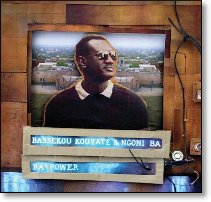
- Bassekou Kouyate & Ngoni Ba: Ba Power (2015, Glitterbeat): [r]: A-
- Major Lazer: Peace Is the Mission (2015, Mad Decent): [r]: B+(*)
- Monster Rally & Jay Stone: Foreign Pedestrians (2014 [2015], Gold Robot): [r]: B+(*)
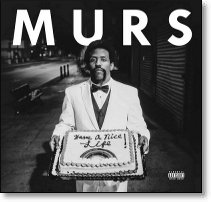
- Murs: Have a Nice Day (2015, Strange Music): [r]: A-
- Willie Nelson/Merle Haggard: Django and Jimmie (2015, Legacy): [r]: A-
- Pixies: Indie Cindy (2014, Pixiesmusic): [r]: B
- Colin Stetson/Sarah Neufeld: Never Were the Way She Was (2015, Constellation): [r]: A-
- Davide Tammaro: Ghosts (2014 [2015], self-released): [cd]: B
- Frank Vignola & Vinny Raniolo: Swing Zing! (2015, FV): [cd]: B+(**)
- Young Thug: Barter 6 (2015, 300/Atlantic): [r]: B+(**)
Recent reissues, compilations, and vault discoveries rated this week:
- The Red Line Comp: A DCHC Compilation ([2015], self-released, EP): [bc]: B+(*)
Old records rated this week:
- Mary J. Blige: What's the 411? (1992, Uptown/MCA): [r]: B+(**)
- Mary J. Blige: No More Drama (2001, MCA): [r]: B+(**)
- Built to Spill: Ultimate Alternative Wavers (1992, C/Z): [r]: B+(***)
- Built to Spill: There's Nothing Wrong With Love (1994, Up): [r]: A-
- Built to Spill: Keep It Like a Secret (1999, Warner Brothers): [r]: A-
- Built to Spill: Ancient Melodies of the Future (2001, Warner Brothers): B
- Built to Spill: You in Reverse (2006, Warner Brothers): [r]: B+(**)
- Depeche Mode: Construction Time Again (1983, Sire): [r]: B
- Depeche Mode: Some Great Reward (1984, Sire): [r]: B+(*)
- Depeche Mode: Catching Up With Depeche Mode (1980-85 [1985], Sire): [r]: B+(**)
- Depeche Mode: Black Celebration (1986, Sire): [r]: B
- Depeche Mode: Violator (1990, Sire/Reprise): [r]: B
- Depeche Mode: Songs of Faith and Devotion (1993, Sire/Reprise): [r]: B-
- Dinosaur Jr.: You're Living All Over Me (1987, SST): [r]: B+(**)
- Pixies: Come On Pilgrim (1987, 4AD, EP): [r]: B+(*)
- Pixies: Surfer Rosa (1988, 4AD/Elektra): [r]: B+(*)
- Primal Scream: XTRMNTR (2000, Astralwerks): [r]: A-
- Radiohead: Pablo Honey (1993, Capitol): [r]: B+(**)
- Radiohead: The Bends (1995, Capitol): [r]: B
- Radiohead: Hail to the Thief (2003, Capitol): [r]: B+(*)
- Tears for Fears: The Hurting (1983, Mercury): [r]: B+(*)
- Tears for Fears: Songs From the Big Chair (1985, Mercury): [r]: B
- Tears for Fears: The Seeds of Love (1989, Mercury): [r]: B-
Unpacking: Found in the mail last week:
- Stephen Anderson/360° Jazz Initiative: Distracted Society (Summit)
- Brett Carson: Quattuor Elephantis (Edgetone)
- Casa: Futuro (Clean Feed)
- Linda Dachtyl: A Late One (Summit)
- Benjamin Duboc/Jean-Luc Petit: Double-Basse: This Is Not Art (Clean Feed)
- Satoko Fujii Tobira: Yamiyo Ni Karasu (Libra): July 14
- Vance Gilbert: Nearness of You (Disismye Music)
- Chris Golinski/Tim McNally/Boaz Roberts: Rodeo (Edgetone)
- Dre Hocevar Trio: Coding of Evidentiality (Clean Feed)
- Keith Kelly Ask Not: A Grand Apparatus, Discarded (Edgetone)
- Lona Kozik/Chris Golinski: Spelaeology (Edgetone)
- Lama + Joachim Badenhorst: The Elephant's Journey (Clean Feed)
- Marsa Fouty: Concerts (Fou)
- Bob Mintzer Big Band: Get Up! (MCG Jazz): June 23
- Gard Nilssen's Acoustic Unity: Firehouse (Clean Feed)
- Caili O'Doherty: Padme (Odo): July 7
- Rent Romus' Life's Blood Ensemble: The Otherworld Cycle (Edgetone)
- Wayne Wallace Latin Jazz Quintet: Intercambio (Patois): July 7
Ask a question, or send a comment.
Sunday, June 7, 2015
Weekend Roundup
Some scattered links this week:
Jason Ditz: Senate Votes to Block Pentagon Paying Millions to NFL
to 'Honor Troops': You probably thought (if you thought about
it at all) that the NFL was just engaging in patriotic showboating,
but it turns out they were on the government dole. Precious quote,
from Sens. McCain, Flake, and Blumenthal: "the US cannot afford to
give 'scarce defense dollars to wealthy sports teams.'" They're
talking about $5.4 million, a tiny drop in the trillion or so
dollars the US spends on "defense" each year. Indeed, it's probably
only a small fraction of what the Defense Dept. spends on PR, the
effect of which is to make war more politically acceptable.
Paul Krugman: Why Am I a Keynesian?
Noah Smith sort-of approvingly quotes Russ Roberts, who views all
macroeconomic positions as stalking horses for political goals, and
declares in particular that
Krugman is a Keynesian because he wants bigger government. I'm an
anti-Keynesian because I want smaller government.
OK, I'm not going to clutch my pearls and ask for the smelling
salts. Politics can shape our views, in ways we may not recognize.
[ . . . ]
So, am I a Keynesian because I want bigger government? If I were,
shouldn't I be advocating permanent expansion rather than temporary
measures? Shouldn't I be for stimulus all the time, not only when
we're at the zero lower bound? When I do call for bigger government --
universal health care, higher Social Security benefits -- shouldn't
I be pushing these things as job-creation measures? (I don't think I
ever have). I think if you look at the record, I've always argued for
temporary fiscal expansion, and only when monetary policy is constrained.
Meanwhile, my advocacy of an expanded welfare state has always been
made on its own grounds, not in terms of alleged business cycle
benefits.
In other words, I've been making policy arguments the way one would
if one sincerely believed that fiscal policy helps fight unemployment
under certain conditions, and not at all in the way one would if trying
to use the slump as an excuse for permanently bigger government.
But in that case, why am I a Keynesian? Maybe because of convincing
evidence?
First of all, the case for viewing most recessions -- and the Great
Recession in particular -- as failures of aggregate demand is
overwhelming.
Now, this could be a case for using monetary rather than fiscal
policy -- and that actually is the policy I advocate in response to
garden-variety slumps. But when the slump pushes rates down to zero,
and that's still not enough, any simple model I can think of says
that fiscal expansion can be a useful supplement, while fiscal
austerity makes a bad situation worse.
And while it's true that there was limited direct evidence on
the effects of fiscal policy 6 or 7 years ago, there's now a lot,
and it's very supportive of a Keynesian view.
Krugman is generally right that Keynesian macro is preferred
because it provides a more accurate and efficient understanding
of the interaction between government spending and economic growth,
and can back that up with evidence, especially of a predictive
nature. But whether you want growth and what kind of growth you
want are political issues. Those who do, like Krugman (or Nixon,
when he wanted to take credit for a robust economy, and had one
that often seemed to be on the verge of collapse), will be Keynesians
because they want tools that work. But those who don't care about
growth (except of business profits) will disparage Keynes -- after
all, why acknowledge an analysis that could work when that's not
what you want? Keynes wouldn't be controversial but for the purely
political desire to slag the economy. You might wonder why Republicans
would want to do that -- some combination of making a Democrat in the
White House look bad and a preference for increasing inequality over
economic growth.
The "big government" association with Keynesianism is, as Krugman
shows, misdirection. I'd personally like to trim large segments of
government -- especially the biggest one of all, the military. That
doing so would be contractionary doesn't bother me. One can always
spend more elsewhere, and finding more productive investments than
the US military should be easy. Or you can reduce taxes and, as Bush
liked to put it, let people spend their own money. Strangely enough,
anti-government obsessives rarely worry about the military -- even
though from the founding of the republic up to WWII many Americans
regarded a standing army as the greatest threat to liberty. Rather,
what they object to is that government is subject to democratic rule
and as such can be used to rebalance private fortunes, whereas their
vaunted private sector tends to exacerbate inequities. They object
not to the government which they need to secure private property,
but to what that government might do to satisfy the masses. Over the
ages they've pulled every trick imaginable to keep the belief that
the nation was founded upon -- that all men are created equal --
from becoming reality. Denying the efficacy of Keynesian economics
is just one such trick.
Bill McKibben: How mankind blew the fight against climate change:
Strange scenes from Exxon Mobil's annual shareholders meeting:
The meeting came two days after Texas smashed old rainfall records --
almost doubled them, in some cases -- and as authorities were still
searching for families swept away after rivers crested many feet beyond
their previous records. As Exxon Mobil's Rex Tillerson -- the highest-paid
chief executive of the richest fossil fuel firm on the planet -- gave
his talk, the death toll from India's heat wave mounted and pictures
circulated on the Internet of Delhi's pavement literally melting.
Meanwhile, satellite images showed Antarctica's Larsen B ice shelf on
the edge of disintegration.
And how did Tillerson react? By downplaying climate change and mocking
renewable energy. To be specific, he said that "inclement weather" and
sea level rise "may or may not be induced by climate change," but in any
event technology could be developed to cope with any trouble. "Mankind
has this enormous capacity to deal with adversity and those solutions
will present themselves as those challenges become clear," he said.
But apparently those solutions don't include, say, the wind and sun.
Exxon Mobil wouldn't invest in renewable energy, Tillerson said, because
clean technologies don't make enough money and rely on government mandates
that were (remarkable choice of words) "not sustainable." He neglected to
mention the report a week earlier from the not-very-radical International
Monetary Fund detailing $5.3 trillion a year in subsidies for the fossil
fuel industry.
All in all, a sneering and sad performance by a man paid nearly $100,000
a day, whose company spends $100 million a day looking for new oil and gas
even though scientists say we simply can't burn most of the fossil fuel
we've already located without devastating consequences.
The science explaining climate change, like Keynesian economics
(above), has become inconvenient for certain well established interests
who prefer to think that politics trumps science, or that anything that
challenges their personal interests and prejudices must be nothing but
propaganda against them. While this is often true, nowhere more so than
in the oil industry, where fortunes were built on nothing more than a
lottery of land titles, yet every tycoon considers himself a self-made
man, not to mention graced by God.
Daniel Strauss: Brownback May Empower Kris Kobach to Prosecute 'Voter
Fraud' Cases Himself: Kobach has been lobbying for this power ever
since he was elected Secretary of State in 2010, although it's never
been clear who he'd prosecute with this -- as he hasn't been able to
get a single county to prosecute one of his cases yet. If anyone
should be prosecuted for voter fraud it's Kobach, Brownback, and
the state legislature, whose ID laws have prevented thousands of
otherwise eligible citizens from voting.
Josh Marshall comments: "He can just prosecute anyone he wants."
Certainly a dream come true for a self-aggrandizing demagogue.
Maybe the GOP Candidates Are Just as Self-Deluding as Their Voter Base:
Much discussion with little insight into the plethora of Republicans who
are mounting campaigns for president in 2016. This keys off a Kevin Drum
piece (title:
Why Do So Many Obvious Losers Think They Can Be President?) that, in
the most pedestrian tradition of horserace journalism tries to handicap
the hopefuls. Both pieces are governed by the idea that only candidates
with reasonable chances should bother running -- an idea which in the
past has mostly been used to avoid considering the issues that "fringe"
candidates (Dennis Kucinich is pretty close to the archetype here) run
on and for. But Republicans are so ideologically homogeneous that it's
hard to think of a candidate with issues to be silenced. (Drum tries to
dismiss Rand Paul as having views "just flatly too far out of the tea
party mainstream" -- actually, Paul's tea party bona fides are as strong
as any candidate's [Cruz being the only obvious competition], his one
major unorthodoxy [opposition to the PATRIOT Act] is quite popular among
tea party rank-and-file, and he's shown remarkable willingness to shelve
libertarian positions on fetish issues like abortion and Israel.)
Of course, Drum's supposition is fully operative among Democrats.
Hillary Clinton's inevitability -- a combination of name, stature, and
an almost unique access to a resource base formidable enough to stand
up to Republican money power -- doesn't give any other Democrats any
real chance at raising the money they'd need to be taken seriously.
(This on top of the usual Democratic fundraising disadvantages, such
as a lower return on graft.)
On the other hand lots of Republicans seem to be coming up with
the money to run, and the fact that they're all saying the same thing
just helps reinforce the brand. (One person's may be a crackpot, but
three add up to a trend, and nine gives you a new conventional wisdom
even if what they're saying still sounds crazed.) And all saying the
same thing reduces the contest to one of personality -- something
they'd much rather have us talking about than issues, which usually
require a thick layer of packaging to be palatable at all. As usual
with the Republicans, one suspects that this is just pre-primary
dog-and-pony show to drum up interest, with the fix revealed later
at an appropriately dramatic moment.
One hint here is the recent demise of the candidacy of
Dennis Michael Lynch -- a candidate you never heard of, probably
because he doesn't fit the profile of "rising Republican star," maybe
because his obsessive issue (anti-immigration) is one Republican
powers would rather not talk about. On the other hand, there is a
role for the nearly-as-obscure Carly Fiorina.
Steve M. writes:
My first impression of [Fiorina's] campaign wasn't that it was a
campaign for president or vice president -- it was that,
as a candidate, she's like the one female member of a rich accused
rapist's defense dream team, the attorney whose principal role is
to do a really vicious cross-examination of the victim, because
that would come of as sexist if a man did it.
Also, a few links for further study:
Chloe Angyal: The Subculture of Embattled Abortion Workers:
Abortion is one of the very few political issues today where ordinary
debate is shadowed and haunted by one side adopting a network of
harrassment and terror. Of course, this is not unprecedented in
American history: the civil rights movement was met by even more
violence, both in the 1960s and throughout the previous century,
with much of that violence orchestrated by the various states. The
labor movement up to the 1930s comes in a not-too-distant second.
Still, while racism and anti-laborism persist, the level of violence
and its chilling effects are far less than that experienced by the
people who run and work with clinics that provide abortions. (Part
of the reason may be the demagoguery of anti-choice politicians like
Sam Brownback, playing the role George Wallace and Lester Maddox did
on race.) Angyal reviews a book by David S Cohen and Krysten Connon:
Living in the Crosshairs: The Untold Stories of Anti-Abortion
Terrorism (2015, Oxford University Press), which details much
of this history.
Jared Bernstein/Ben Spielberg: Inequaliity Matters: Lead in:
Lately, one argument that's been making the rounds is that people should
worry less about inequality and more about opportunity. Arthur Brooks,
head of the conservative American Enterprise Institute, said, "I don't
care about income inequality per se; I care about opportunity inequality."
Senator and presidential candidate Marco Rubio believes that inequality
is but a symptom of immobility and constrained opportunity. Tyler Cowen
argued in the New York Times that what matters is not the fact
that the top 1 percent is capturing a much larger share of total income
growth than they used to, but that the poor are stuck in poverty.
These individuals have identified a worthy goal. Unequal access to
opportunity offends deeply held American values, and poverty is not only
a matter of near-term material deprivation -- too often, it also robs
low-income children of the chance to realize their intellectual and
economic potential.
But it's not possible to effectively address either poverty or
inadequate opportunity if America hives off its opportunity concerns
from the broader problem of inequality (nor, as Senator Rubio intimates,
can America reduce inequality by focusing solely on increasing mobility).
Boosting mobility will require reductions in wage, income, and wealth
inequalities.
The authors back up their initial assertions. One question they
don't address is whether opportunity is being
deliberately constricted by the rich; e.g., by making elite education
both more necessary for advancement and more inaccessible to the
unwealthy. It makes sense that a politically aggressive upper class
recognizing a stagnant economy with austerity reducing the number
of slots near the top would focus more on securing those slots for
their own progeny. I don't know that anyone has sorted out the
evidence for this, but there are many hints -- e.g., the nepotism
boom under the second Bush administration.
Garrett Epps: Out of Spite: The Governor of Nebraska's Threat to Execute
Prisoners: Nebraska's state legislature passed a bill to ban capital
punishment. Governor Ricketts vetoed the bill, and the legislature overrode
the veto, making the bill law. So what does Ricketts do? Follow the law?
No. He vows to speed up the executions of ten prisoners already on death
row. Epps surveys many of the issues, including the increasing difficulty
that states are having obtaining lethal injection drugs.
David Himmelstein/Steffie Woolhandler: The Post-Launch Problem: The
Affordable Care Act's Persistently High Administrative Costs:
Insuring 25 million additional Americans, as the CBO projects the ACA
will do, is surely worthwhile. But the administrative cost of doing so
seems awfully steep, particularly when much cheaper alternatives are
available.
Traditional Medicare runs for 2 percent overhead, somewhat higher
than insurance overhead in universal single payer systems like Taiwan's
or Canada's. Yet traditional Medicare is a bargain compared to the ACA
strategy of filtering most of the new dollars through private insurers
and private HMOs that subcontract for much of the new Medicaid coverage.
Indeed, dropping the overhead figure from 22.5 percent to traditional
Medicare's 2 percent would save $249.3 billion by 2022.
The ACA isn't the first time we've seen bloated administrative costs
from a federal program that subcontracts for coverage through private
insurers. Medicare Advantage plans' overhead averaged 13.7 percent in
2011, about $1,355 per enrollee. But rather than learn from that mistake,
both Democrats and Republicans seem intent on tossing more federal dollars
to private insurers.
Esther Kaplan: Losing Sparta: The Bitter Truth Behind the Gospel of
Productivity: That's Sparta, Tennessee, home of a huge unionized
factory owned by Philips and shut down in 2010, the equipment (and
business) to be moved to Mexico.
When Philips announced its plans to shut down the plant in Sparta,
the firm was in the black, aided by $7.2 million in federal stimulus
grants and contracts. Profits were even better the following year as
the firm began to lay off the plant's nearly 300 workers. Even Philips's
lighting division was doing well. By late 2010, three years into the
recovery, corporate profits, in general, had bounced back decisively,
reaching record highs. Yet layoffs continued apace -- 1.4 million in
2010, 1.3 million a year in 2011 and 2012 -- well above prerecession
levels.
Among other profitable firms -- indeed, Fortune's list of
America's most profitable firms in 2012, the year the Philips plant
finally closed its gates -- closures and layoffs have been widespread:
Chevron lays off 103 from a New Mexico mine; Walmart shuts down a New
York office, putting 275 out of work; Ford shuts down two assembly
plants in Minnesota, laying off nearly 1,700; IBM lays off 1,790 from
its business units; Microsoft lays off 5,000. Exxon, ranked number one
in profitability by Fortune in 2012, with $41 billion in profits in
2011, shrank its global workforce by more than 15,000 between 2010
and 2012. Chevron, at number two with profits of $27 billion, added
only a thousand US jobs during that period. Apple was the only one of
the country's five most profitable firms to add more than 10,000 jobs
during that time (and Apple's public disclosures don't specify how many
of those jobs were domestic). The latest Commerce Department data show
that all US multinationals combined added a net total of only half a
million jobs domestically between 2002 and 2011, but added 3.5 million
jobs abroad, an indication of offshoring on a very grand scale.
Ask a question, or send a comment.
Monday, June 1, 2015
Music Week
Music: Current count 25024 [25005] rated (+19), 422 [420] unrated (+2).
Missed four days for my trip to Arkansas. Fortunately, caught a break
in the moonsoon on both travelling days, although it rained a lot the two
full days at my cousin's house. They let me cook. I opted for comfort food
on Friday -- boiled chicken with biscuits with green beans on the side --
and for blowout eight-dish Chinese on Saturday. Still, best meal was
probably the standard Arkansas breakfast my second cousin put together
Sunday morning -- including the chocolate gravy her grandmother (my aunt)
was famous for, although I prefer the sausage gravy on my biscuits.
For "old music" I continue to pick off unheard albums from
Spin's 1985-2014
list. Sometimes I go deeper into back catalogs I never paid much
attention to back in the day, and sometimes not. In the case of Blur
I started with a couple of early unheard albums, then skipped to the
one selected (13), then checked out this year's reunion album,
but I left a few holes I didn't bother with. I started from the git
go with Depeche Mode, but doubt I'll go beyond the list album (1990's
Violator). Running across more records not on Rhapsody, like
Dr. Dre's The Chronic and Guided by Voices' Bee Thousand.
Didn't get to much new jazz last year, but did find two surprises:
a teenaged standards singer from Spain, Andrea Motis, and a tribute
album to little-remembered vibraphonist Gary McFarland. I wrote a
little tweet-review of the former mostly to share the
bandcamp link. The McFarland tribute was an even bigger surprise:
I hear a lot of fine mainstream postbop, but almost by definition the
genre sticks with ordinary conventions. But after sitting on the fence
for a couple plays, the sparkling performances paid off here.
New records rated this week:
- Priscilla Badhwar: Mademoiselle (2014 [2015], self-released, EP): [cd]: B+(**)
- Blur: The Magic Whip (2015, Parlophone): [r]: B+(**)
- Joan Chamorro & Andrea Motis: Feeling Good (2012 [2015], Whaling City Sound): [cd]: B+(***)
- Lorin Cohen: Home (2014 [2015], Origin): [cd]: B
- Colours Jazz Orchestra: Home Away From Home: Plays the Music of Ayn Inserto (2013 [2015], Neu Klang): [cd]: B+(*)
- The Gary McFarland Legacy Ensemble: Circulation: The Music of Gary McFarland (2015, Planet Arts): [cd]: A-
Old records rated this week:
- Blur: Leisure (1991, SBK): [r]: B
- Blur: Modern Life Is Rubbish (1993, SBK): [r]: B-
- Blur: 13 (1999, Virgin): [r]: B+(**)
- Daft Punk: Homework (1997, Virgin): [r]: B
- Depeche Mode: Speak & Spell (1981, Sire): [r]: B
- Depeche Mode: A Broken Frame (1982, Sire): [r]: B-
- J Dilla: Donuts (2006, Stones Throw): [r]: B
- Slayer: Reign in Blood (1986, Def American): [r]: B
- TLC: CrazySexyCool (1994, La Face): [r]: B+(**)
- TLC: Fanmail (1999, La Face): [r]: B+(***)
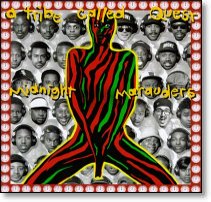
- A Tribe Called Quest: Midnight Marauders (1993, Jive): [r]: A-
- A Tribe Called Quest: Beats, Rhymes and Life (1996, Jive): [r]: A-
- A Tribe Called Quest: The Love Movement (1998, Jive): [r]: B+(**)
Unpacking: Found in the mail last week:
- Tiffany Austin: Nothing but Soul (Con Alma): June 2
- Kevin Bachelder/Jason Lee Bruns: Cherry Avenue (Panout Music Group)
- Kenny Carr: Idle Talk (self-released)
- Jerry Granelli Trio + 3: What I Hear Now (Addo)
- Brianna Thomas: You Must Believe in Love (Sound On Purpose)
- John Yao and His 17-Piece Instrument: Flip-Flop (See Tao): June 9
Ask a question, or send a comment.
Wednesday, May 27, 2015
The Bully Pulpit
Ed Kilgore quotes
Mike Huckabee on, well, I guess you'd call this defense doctrine,
though I'm not sure you can do that with a straight face:
I'm not a war monger, let me be very clear -- I think the best way
to avoid war is to have the most robust military in the history of
mankind and the kind of military nobody ever wants to wake up and
find on the other end of the fight.
I learned this on the playground as a kid, all of you did. If there
is a bully in your school, who does he pick on? He picks on who he thinks
he can whip his butt. He never picks on a kid who he thinks can whip his
butt. And the day that he picks on the wrong kid, and that kid beats his
butt, he never does it again.
This reminds me of a lot of things, but let's start with Robert
Fulghum's slim 1989 bestseller, All I Really Need to Know I
Learned in Kindergarten. Fulghum was a minister, so that may
explain why he never needed to know anything about geometry or
chemistry or, more generally, history and arts and sciences. Even
so, I doubt he really meant to deprecate post-kindergarten learning.
Rather, he wanted to make a point about the value of certain things
that can be learned in kindergarten. A
Wikipedia summary:
The title of the book is taken from the first essay in the volume,
in which Fulghum lists lessons normally learned in American kindergarten
classrooms and explains how the world would be improved if adults adhered
to the same basic rules as children, i.e. sharing, being kind to one
another, cleaning up after themselves, and living "a balanced life" of
work, play, and learning.
I never read the book, but got the gist from the blurb, and it
always struck me as a clever idea with a kernel of wisdom. I thought
of it because Huckabee is also a minister, so that got me wondering
whether a kindergarten frame of mind is endemic to the profession.
On the other hand, I don't recall Fulghum's list -- as I recall, 21
short items (the shortest: "Flush.") -- including anything on the
importance of beating down bullies. Maybe that's a Baptist thing?
(Fulghum's ministry was Unitarian Universalist.)
Still, there's more wrong with Huckabee's bully analogy than his
infantilist mindset. I suppose it's possible that bullies are more
of a problem today than they were when I went to grade school -- I
knew a couple but I'd characterize them more as thugs than bullies.
But while Huckabee is probably right that bullies tend to pick on
kids weaker than themselves, what distinguishes them more is their
isolation from social norms and their willingness to cross authority.
As usual, the best defense was to keep the problem from appearing,
which has more to do with good management than stern policing. But
one thing I never saw was a "sheepdog" (to use Chris Kyle's term)
who would defend the weak (the "sheep") by beating down the bullies
(the "wolves"). But then, had one appeared, he would have gotten
nabbed by the authorities: bullying is intimidation, so it makes
sense that intimidating "bullies" is bullying too.
In Kyle's mind what distinguishes the sheepdog from the wolf is
the purity of his intentions. One thing that means is that it is
hard, perhaps impossible, for an independent observer to tell the
difference. For the US Army, pure intentions are a given -- not
something any American politician, least of all a simpleton like
Huckabee, would dare examine. If the US Army whips your butt, you
had it coming. Still, there are at least four problems with this
assumption: one is that pure intentions are real hard to come to
and maintain (especially in an individualist/capitalist society
which puts so much motivational weight on self-interest); second,
even if your intentions are pure, the information you act on is
often faulty (which is the main reason we keep killing people we
didn't intend to); third, power is seductive and addictive, so
as you build it you'll be tempted to flaunt it (cf. Madeleine
Albright's tease: "What's the point of having this superb military
that you're always talking about if we can't use it?" ); fourth,
no one else can see (or trust) your intentions, so all they have
to go on is your acts.
If the last paragraph seems theoretical, remember that what
Huckabee is proposing isn't a hypothetical. The US has had the
world's most dominant, most expensive, most far-reaching military
in the world at least since 1945, so we have seventy years of
history we can reflect upon. No one can doubt that the US had
the power to destroy any nation that tried to bully it. As a
first approximation, you might even think that strategy worked:
no other nation has directly attacked US soil, nor the soil of
any nation the US has a multilateral defense treaty with. On
the other hand, that hasn't meant 70 years of secure peace. In
fact, the US has engaged in dozens of overt and/or covert wars
throughout the period. I'm not going to run down the list. The
point is that being able to "whip butts" isn't a formula for
peace. As practiced by the US for seventy years, it's a formula
for perpetual war.
One reason is that lots of people have come to view the US as
the bully. After all, what do bullies do? They use the threat of
violence, demonstrated on occasion, to intimidate weaker folks,
to take advantage of them, to limit their freedom. Arguably the
US has done this many times. Bullying doesn't explain every US
war -- US support for the Contras in Nicaragua and the Muhajedin
in Afghanistan was more malicious, meant not to impose order but
to tear down an order we didn't like -- but it is a pattern, and
is more often than not never comes to war, the merest of threats
sufficing. On the other hand, the bully pose is most explicit
when faced with possible defeat: the Bush response to 9/11 was
obsessed with reasserting American global domination, while the
Nixon response to impending defeat in Vietnam was to raise the
stakes, to show the world how much anyone who challenged us
could be made to suffer.
On the other hand, the calculus of bullying is more complex,
as Todd Snider points out in his song,
Is This Thing On?, where he describes a kid who stands up to
a bully, not by beating him down but by letting the bully disgrace
himself:
Well, that bully just laughed and laughed
Of course, and so did all of his friends
And he beat that kid unmercifully
For days and days on end
Only less and less impressively
To that girl and all his friends
Who would eventually, secretly
Start hoping, the kid might win
You can see this dynamic most clearly with Israel and Palestine,
where the former's periodic wars, no matter how overwhelming the
result, only generate more sympathy for the latter. But even where
the tide of public opinion never turns, overwhelming intimidation
may be met not with submission but with greater resolve to find
other, more asymmetric, forms of resistance. Guerrilla warfare and
terrorism are two such forms, but the range of options is myriad.
And while the US has weapons sufficient to kill virtually every
living thing on earth, all that power has proven impossible to use
with much precision. (The central problem of the "war on terror"
is to distinguish friend from foe, but inability to exclusively
target the latter has actually led to a multiplication of foes,
a trend that portends failure.)
One more point: In the early post-WWII (post-New Deal) period,
the US enjoyed a full range of options for dealing with the rest
of the world, backed by an ideology which for the most part was
democratic, progressive, and anti-colonial. In particular, the
US supported international organizations, especially the UN, to
provide a diplomatic framework for resolving conflicts, based on
a broad and universal declaration of human rights, much as law
provides a framework for resolving civil conflicts. The US also
had the wherewithal to provide extensive economic aid to other
countries. The military only became a significant factor with
the Berlin Blockade (1948) and the Korean War (1950), and has
become increasingly hegemonic in American thinking, with the
CIA gaining ground in the 1950s. This shift in approaches was
locked into an ideological sea change, as the US came to side
with capitalism against labor, and as such with crony dictators
against popular movements. This shift not only makes it harder
to justify America's "pure intentions" -- it has led Americans
to take an increasingly brutal view of the rest of the world,
and indeed of ourselves. One tiny example is the hero worship
accorded a stone cold killer like Chris Kyle (the SEAL hero of
American Sniper), but you find it everywhere, not least
in Huckabee's passion for whipping butt.
I have a little quote from Linda Robinson's review of
Bill Russell Edmonds: God Is Not Here:
All that said, Edmonds's time in Iraq did give him an opportunity
to capture an essential lesson about the war: Americans' behavior
toward ordinary Iraqis contributed actively to frictions, discontent,
anger and ultimately a population that was less inclined to assist
the United States-backed government than to aid the insurgency -- or
at least stay silent. As the violence grew, American soldiers became
more aggressive, which, coupled with the protective measures they
took and their general ignorance of Iraqi culture, created a highly
dysfunctional atmosphere. Edmonds's book is full of Iraqi voices
expressing outrage at the Americans. As an adviser, he had to deal
with almost daily invective. He concludes: "Our actions, our tactics
and our one-on-one American and Iraqi interactions are causing a few
civilians to turn insurgent and the majority to look away when the
few insurgents act."
Edmonds was stationed in Mosul in 2005-06, and was working as an
advisor to Iraqi intelligence officers, so was involved in interrogating
Iraqi civilians (the key word in the subtitle is "Torture") He later
suffered some sort of mental breakdown, something this book attempts
to reckon with. Just one case, but this sheds some light on how the
bully army breaks down at the individual level. Many other soldier
reports don't show this because most soldiers are more isolated from
the people they harrass and kill -- contained within their units,
fearing the unknown.
Ask a question, or send a comment.
Monday, May 25, 2015
Music Week
Music: Current count 25005 [24971] rated (+34), 420 [407] unrated (+13).
Rated count creeped over the 25,000 mark yesterday. Much of last
week's haul was picked up on Rhapsody as I've been filling in the
previously unheard records on
Spin's Top 300 1985-2014 list. Thus far I've filled in all but
one of the top 75 slots -- Metallica won't allow their precious
music (ranked 34 was 1986's Master of Puppets) to be exposed
through a cheap streaming service, so fuck them too. I've only found
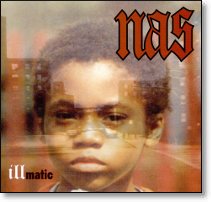
two A-list albums in this exercise so far -- Nas' Illmatic
last week and, more marginally, Aphex Twin's I Care Because You
Do this week (not actually on Spin's list but I checked
it out and gave it a slight edge over two high-B+ albums on the list,
Selected Ambient Works 85-92 and Richard D. James Album).
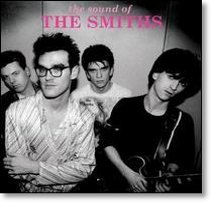
(Oh, already forgot about those two Smiths best-ofs, not on the list
but picked up in my sweep.)
Not sure if I'll stick with this exercise. I was only missing 11
of the top 75 albums (14.6%), but I haven't heard 64 of the remaining
225 (28.4%), and wouldn't be surprised if the law of diminishing
expectations kicks in. Indeed, it may alraedy have: I played three
Smashing Pumpkins albums yesterday (including Gish, not on
the Spin list). All three were better than I expected, but
pricked no personal interest whatsoever. Slayer (77) comes next.
Then Bikini Kill (80), but not on Rhapsody. Then A Tribe Called
Quest (84), Pixies (86), J Dilla (90), Daft Punk (93), Blur (96),
TLC (99), Guided by Voices (100) -- a stretch of records I can
look forward to.
I've been rather slow going through the incoming mail, but
this week brought in a new batch of Clean Feeds, two records
from François Carrier, three from Ivo Perelman, and a pleasant
change-of-pace from Scott Hamilton (I've had to go to Rhapsody
to pick up six of his last eight albums). Still, may be a while
before I get to them. I'll be out of town most of this coming
week.
Memorial Day hadn't really sunk into my consciousness yesterday
even though I wrote two Weekend Roundup items on the Iraq War and
its beleaguered veterans. Thinking back today, one thing I wonder
is when did the military come to dominate Memorial Day (or as it
used to be called, Decoration Day). Many of my extended family
members served in the armed forces during WWII, including my
father, but none of them were killed in the war (one uncle war
shot and partially disabled; another uncle saw sailors killed on
both sides of him, but came out unscathed, only to die in a car
accident six years later). Another bunch got caught up in Korea.
One second cousin was killed in Vietnam (probably by a soldier
under his command, an utter waste). But I don't recall singling
out soldiers when as a child we'd go to cemeteries on Decoration
Day -- we'd often wind up at the Flutey Cemetery in Arkansas,
where several generations of my mother's family were buried. (Or
more rarely at the Spearville [KS] Cemetery, where a comparable
set of my father's relatives rested.) It used to be a day of
remembering where you came from, one more poignant to my parents,
who recalled more of the buried, than it ever was to me.
Before WWII most Americans had little experience with war or
the army, aside from two notable instances. My grandfather (father's
side, the only one I knew) was swept up in WWI and sent to Europe.
A great-great-grandfather and his sons fought for Ohio in the Civil
War and settled afterwards in Arkansas. About 405,000 Americans
were killed in WWII, but that was still a small percentage of the
population (0.307%), so the odds of a family like mine, with a
dozen or more WWII soldiers, finishing with no death aren't bad.
(Percentage-wise, the wars fought on US soil were much higher:
2.385% for the Civil War, 0.899% for the Revolutionary War. The
shorter WWI was 0.110%. For other recent wars: Vietnam 0.030%,
Korea Korea 0.020%, Iraq/Afghanistan ["War on Terror"] 0.002% --
source.)
The real difference is that wars up through WWII were exceptions
to long periods where the US had virtually no Army. But since 1945
the US has fielded a huge standing Army as well as more clandestine
operations like the CIA, and as such the nation has perpetually been
on a war footing, more often than not actively engaged. If you look
at the table of "United States military casualties of war" cited
above, the only post-1945 years without military operations are:
well, none. If we exclude the 1947-1991 USSR Cold War and 1950-1972
China Cold War lines, you get: 1954 (Korea ended in 1953, although
a state of cold war continues to this day; Vietnam started in 1955,
although the US supported France until its defeat in 1954); 1976-1979
(Vietnam ended in 1975, also followed by a cold war; operations in
Iran and El Salvador started in 1980), and 1985 (between Beirut
1982-1984 and bombing Libya in 1986). The basic fact is that the
United States has been at war all around the world ever since 1945.
Of course, those wars produce dead soldiers, and those dead soldiers
produce popular sympathy, so it's not surprising that the people
who promote those wars should use Memorial Day to reinforce and
perpetuate their warmongering. One irony of this is that we no
longer have a day of rememberance for the people who actually
built this country, the vast majority of our forbears who lived
normal and industrious lives, because that day has been turned
over to only recognize those Americans who have had their lives
snatched away by America's imperial ambitions. That may not be
so bad if we took the day to remind ourselves of the folly of
those deaths, but officially at least we don't: we fly flags,
salute, play taps, sometimes with pride swelling up, more often
just self-pity. And we never comment on the deaths and destruction
our wars have wrought: the chart above has no column for deaths
and injuries we have caused. Indeed, in many cases we have no
idea: estimates of
Vietnamese dead range from 1.450 to 3.595 million (between
25 and 62 times the number of American dead). Nor could we care
less.
Let me end this with a quote from
Ray McGovern: How to Honor Memorial Day:
First, let's be clear on at least this much: the 4,500 U.S. troops
killed in Iraq -- so far -- and the 2,350 killed in Afghanistan -- so
far -- did not "fall." They were wasted on no-win battlefields by
politicians and generals -- cheered on by neocon pundits and mainstream
"journalists" -- almost none of whom gave a rat's patootie about the
real-life-and-death troops. They were throwaway soldiers.
Meanwhile, enjoy the week's new music. It will help you get past
today's orgy of necrophilia.
- Randy Brecker/Bobby Shew/Jan Hasenöhrl: Trumpet Summit Prague (2012 [2015], Summit): [cd]: B
- Christoph Irniger Trio: Gowanus Canal (2012 [2013], Intakt): [r]: B+(***)
- Christoph Irniger Pilgrim: Italian Circus Story (2014, Intakt): [r]: B+(**)
- Christoph Irniger Trio: Octopus (2014 [2015], Intakt): [cd]: A-
- Deborah Latz: Sur L'Instant (2013 [2015], June Moon): [cd]: B+(**)
- Ingrid Laubrock Anti-House: Roulette of the Cradle (2014 [2015], Intakt): [cd]: B+(***)
- Mbongwana Star: From Kinshasa (2015, World Circuit): [r]: A-
- Jeff Richman: Hotwire (2015, Nefer): [cd]: B+(*)
- Shamir: Ratchet (2015, XL): [r]: A-
- Enoch Smith Jr.: Misfits II: Pop (Misfitme Music)
- U2: Songs of Innocence (2014, Interscope): [r]: B
Recent reissues, compilations, and vault discoveries rated this week:
- Yabby You: Dread Prophecy: The Strange and Wonderful Story of Yabby You (1972-85 [2015], Shanachie, 3CD): [r]: B+(***)
Old records rated this week:
- Aphex Twin: Selected Ambient Works 85-92 (1992, R&S): [r]: B+(***)
- Aphex Twin: I Care Because You Do (1990-94 [1995], Sire): [r]: A-
- Aphex Twin: Richard D. James Album (1996, Elektra): [r]: B+(***)
- Björk: Debut (1993, Elektra): [r]: B+(*)
- Björk: Post (1995, Elektra): [r]: B
- Björk: Greatest Hits (1993-2001 [2002], Elektra): [r]: B+(***)
- The Cure: Three Imaginary Boys (1979, Fiction): [r]: B+(*)
- The Cure: The Head on the Door (1985, Elektra): [r]: B+(*)
- The Cure: Kiss Me Kiss Me Kiss Me (1987, Elektra): [r]: B
- The Cure: Disintegration (1989, Elektra): [r]: B
- The Flaming Lips: The Soft Bulletin (1999, Warner Brothers): [r]: B
- The Flaming Lips: Yoshimi Battles the Pink Robots (2002, Warner Brothers): [r]: B+(***)
- Neutral Milk Hotel: On Avery Island (1995 [1996], Merge): [r]: B
- Neutral Milk Hotel: In the Aeroplane Over the Sea (1998, Merce): [r]: B+(**)
- Smashing Pumpkins: Gish (1992, Caroline): [r]: B
- Smashing Pumpkins: Siamese Dream (1993, Virgin): [r]: B
- Smashing Pumpkins: Melon Collie and the Infinite Sadness (1993, Virgin, 2CD): [r]: B
- Elliott Smith: Either/Or (1997, Kill Rock Stars): [r]: B
- U2: Achtung Baby (1991, Island): [r]: B+(*)
- U2: Zooropa (1983, Island): [r]: B+(**)
- U2: Pop (1997, Island): [r]: B+(*)
- Weezer: Pinkerton (1996, Geffen): [r]: B+(*)
Unpacking: Found in the mail last week:
- Aguankö: Invisible (Aguankö Music)
- All Included: Satan in Plain Clothes (Clean Feed)
- Bastet: Eye of Ra (self-released): May 26
- François Carrier/Michel Lambert: Io (FMR)
- François Carrier/Michel Lambert/Rafal Mazur: Unknowable (Not Two)
- Hugo Carvalhais: Grand Valis (Clean Feed)
- Joan Chamorro & Andrea Motis: Feeling Good (Whaling City Sound): June 2
- Deux Maisons: For Sale (Clean Feed)
- Chris Dingman: The Subliminal & the Sublime (Inner Arts Initiative): June 16
- Scott Hamilton: Scott Hamilton Plays Jule Styne (Blue Duchess)
- Joe Hertenstein: HNH (Clean Feed)
- Makaya McCraven: In the Moment (International Anthem) [was: B+(***)]
- Ivo Perelman/Matthew Shipp: Callas (Leo, 2CD)
- Ivo Perelman/Mat Maneri/Joe Morris: Counterpoint (Leo)
- Ivo Perelman/Whit Dickey: Tenorhood (Leo)
- Simon Phillips: Protocll III (Phantom)
- Ben Stapp & the Zozimos: Myrrha's Red Book: Act 1 (Evolver)
- Davide Tammaro: Ghosts (self-released): May 26
- Universal Indians w/Joe McPhee: Skullduggery (Clean Feed)
- Frank Vignola & Vinny Raniolo: Swing Zing! (FV): June 5
Ask a question, or send a comment.
Sunday, May 24, 2015
Weekend Roundup
Some scattered links this week:
Charles Krauthammer: It's Obama who lost Iraq: I don't normally
bother citing right-wing propagandists here. I'd rather use links to
learn something or at least point out something new, and the insight
that Krauthammer is a devious, despicable warmonger is far from new.
Nor is Krauthammer capable of the sort of idiosyncracies -- like you
might find from Cal Thomas or David Brooks -- that might shed some
light into the bizarre thinking processes of conservatives. The one
strength Krauthammer has is his ability to proceed from false premise
to faulty conclusion: few conservatives are as rigorous, or as ridgid.
But I can't let this false premise go unnoted:
Second, the "if you knew then" question implicitly locates the origin
and cause of the current disasters in 2003. As if the fall of Ramadi
was predetermined then, as if the author of the current regional
collapse is George W. Bush.
This is nonsense. The fact is that by the end of Bush's tenure,
the war had been won. You can argue that the price of that victory
was too high. Fine. We can debate that until the end of time.
But what is not debatable is that it was a victory. Bush bequeathed
to Obama a success. By whose measure? By Obama's. As he told the troops
at Fort Bragg on Dec. 14, 2011, "We are leaving behind a sovereign,
stable, and self-reliant Iraq, with a representative government that
was elected by its people." This was, said the President, a "moment
of success."
Which Obama proceeded to fully squander. With the 2012 election
approaching, he chose to liquidate our military presence in Iraq. We
didn't just withdraw our forces. We abandoned, destroyed or turned
over our equipment, stores, installations and bases.
We surrendered our most valuable strategic assets, such as control
of Iraqi airspace, soon to become the indispensable conduit for Iran
to supply and sustain the Assad regime in Syria and cement its
influence all the way to the Mediterranean.
[ . . . ]
Iraq is now a battlefield between the Sunni jihadists of the Islamic
State and the Shiite jihadists of Iran's Islamic Republic. There is no
viable center. We abandoned it. The Obama administration's unilateral
pullout created a vacuum for the entry of the worst of the worst.
Probably the biggest mistake Obama made in the early days of his
presidency was how graciously he let Bush off the hook, not only for
his disastrous wars in Afghanistan and Iraq but for his mishandling
of the economy and numerous other malfeasances of government. He did
this in some sort of unrequited lust for bipartisan appeal, thinking
that, for instance, if he expressed confidence that would help the
economy. The real definition of the "success" he referred to was that
he had managed to extricate American troops from an occupation that
went sour from the very start and that would continue to be resisted
violently as long as it went on. Those troops left not because they
had accomplished any American goals but because the Iraqi government,
whose legitimacy we could not dispute, had insisted on their leaving --
indeed, that government would never be regarded as legitimate in the
eyes of its own people had the US continued to prop them up. Whether
Obama wanted that to happen or not is beside the point. What he tried
to do was to buck up the troops is a moment of retreat. Doing so was,
I think, a mistake, and not just because it allowed Krauthammer to
twist his words around. It was mostly a mistake because he squandered
an opportunity to remind the nation that the entire Iraq War was a
disastrous misjudgment, principally by George W. Bush. His generous
words to the troops not only sullied his own reputation, it denied
America a critical opportunity to learn from past mistakes.
For an example of Krauthammer's weasel wording, consider his
line: "With the 2012 election approaching, he chose to liquidate
our military presence in Iraq." After the Dec. 14, 2011 "success"
pronouncement, this implies that the "liquidation" came later --
perhaps closer to November 2012 election. In fact, the "liquidation"
was completed by Dec. 18, 2011, four days after Obama's speech. And
as I said, it wasn't Obama who chose to withdraw. All he decided
was to honor and implement an agreement Bush signed in 2008 that
set a Dec. 31, 2011 timetable for US withdrawal, and that was
largely because Iraq didn't offer any other option.
Perhaps had Obama sided with history, and the vast majority of
the American people, that the 2003 invasion of Iraq had been a
mistake, and laid the blame for that mistake clearly at the feet
of the people responsible for it, he might not have repeated the
mistake in sending troops back to Iraq to fight ISIS -- a move
which, by the way, Krauthammer applauded. By the way, Ramadi fell
to ISIS not in the wake of the US withdrawal, but after Obama
sent troops back into Iraq.
The implication that Iraq had a "viable center" before Obama
withdrew is especially scurrilous. Iraq has essentially the same
shiite-dominated government now it had in 2011 (or for that matter
since the US arranged for Nouri al-Maliki to become Prime Minister
in 2006). While a continued US military presence might have meant
a few more "allies" ready to take American cash, they would never
have developed into a politically significant faction -- in large
part because as far back as Bush I the US viewed Iraq as a triad
of sectarian forces to play against each other (first urging the
shiites to rise up against Saddam Hussein, then helping the Kurds
break away, then using both as proxies in the 2003 invasion, and
later fomenting a Shiite-Sunni civil war to keep the anti-American
Sadr movement from linking up with various anti-American Sunni
forces (everything from Baathists to Al-Qaida-in-Iraq). But also
because "American interests" in Iraq never extended beyond the
military-industrial complex and other corporations (notably in
the oil industry), so the US never offered anything concrete to
the Iraqi people.
Krauthammer also has a peculiar argument about 2003:
It's a retrospective hypothetical: Would you have invaded Iraq in
2003 if you had known then what we know now?
First, the question is not just a hypothetical, but an inherently
impossible hypothetical. It contradicts itself. Had we known there
were no weapons of mass destruction, the very question would not have
arisen. The premise of the war -- the basis for going to the UN, to
the Congress and, indeed, to the nation -- was Iraq's possession of
WMD in violation of the central condition for the ceasefire that
ended the first Gulf War. No WMD, no hypothetical to answer in the
first place.
He seems to be saying that had Bush known Iraq had no WMD, he
wouldn't have even considered invading Iraq. But actually there
is little reason to think either that Bush's top security people
believed Iraq possessed WMD or that that possession was the real
reason they wanted to invade and occupy Iraq. Every scrap of
stovepiped intelligence that the administration presented had
been refuted well before the invasion -- the Niger uranium buy,
the aluminum tubes, the mobile biological weapons vans, what
else was there? -- and repeated inspections had failed to find
anything. If Bush wanted to find proof he should have allowed
the UN inspectors to continue their work, but he cut them short.
As for real reason, Bush's people were very forthcoming about
their desire to remake the Middle East in America's image --
actually, during the Bremer viceroyship it looked more like
the aim was Texas's image -- while Bush himself much enjoyed
the political prospects of leading a successful war (something
his father nearly managed but lost by allowing Saddam Hussein
to survive). The phrase "knowing what we know now" doesn't just
mean "knowing Iraq had no WMD"; it means "knowing that the war
would last eight year, cost over 4,000 US soldiers lives, kill
hundreds of thousands of Iraqis and leave the country mired in
a civil war with no end in sight, hosting groups like ISIS that
present threats impossible under Saddam Hussein." Krauthammer
doesn't like that question because even now, even given that
everyone across the political spectrum from George W. Bush to
Jeb Bush would answer the question "no" -- Krauthammer himself
would still say "yes," because quite frankly Krauthammer likes
disastrous wars as much as he likes rousing wars, because he
knows how to spin both into future wars, and that's all he
really cares about.
By the way, in looking up some points above, I ran across
Ali Khedery: Why we stuck with Maliki -- and lost Iraq. Khedery
was a high-level US operative in Iraq, working for various US
ambassadors and General Petraeus, and claims to be the guy who
secured US support to make Maliki Prime Minister in 2006. His
article supports several of Krauthammer's premises. In particular,
he regards Petraeus's "surge" was a brilliant success, and as such
he thinks that Iraq was something the US had to lose, then lost it.
But he sees this as something that Iran did, not something Obama
didn't do. In fact, his only mention of Obama is rather oblique:
The crisis now gripping Iraq and the Middle East was not only
predictable but predicted -- and preventable. By looking the other
way and unconditionally supporting and arming Maliki, President
Obama has only lengthened and expanded the conflict that President
Bush unwisely initiated. Iraq is now a failed state, and as countries
across the Middle East fracture along ethno-sectarian lines, America
is likely to emerge as one of the biggest losers of the new Sunni-Shiite
holy war, with allies collapsing and radicals plotting another 9/11.
Khedery is arguing that Maliki (his own pick in 2006) should have
been removed from power in 2009-10 in favor of an alternative who
would have worked to heal the sectarian divisions the US exacerbated
since 2003 (actually 1991), as if the US effectively had the power
(and insight and wisdom) to manipulate the elected government. Had
Obama managed that, and had the reformed government reunited Iraq
and sparked widely shared economic growth, then ISIS wouldn't have
been able to expand from Syria, and the US wouldn't have gotten
dragged back into Iraq's conflict. That's a lot of hypotheticals.
As for the "radicals plotting another 9/11" that's almost completely
because the US continues to be intimately involved in the civil war
conflicts of the Middle East, picking allies and attacking enemies on
both sides of the Sunni-Shiite divide, because the only coherent
allegiance we have is how we favor the oligarchs over the masses --
no big surprise that the Cold War lives on in Washington, firm in
the conviction that we'll support any despot willing to do business
with us, and we'll adopt any religious fanaticism that seems to help
our cause. Long ago sane people realized that this was an insane way
to view the world, and we'd be better off just quietly doing nothing.
Then all we'd have to worry about is pundits like Krauthammer and
Trudy Rubin and their perpetual warmongering.
Brent Frazee: Tying lures and fishing help put veteran on the road
back from war: After reading several articles trying to use vets
as pawns in debates over the Iraq War, I ran across this one, which
may not be typical but at least is a realistic slice of life:
When Joe Bragg caught a live well full of big crappies Thursday, it
represented one more step on his road to recovery.
Just two months ago, the Army veteran couldn't imagine such moments
would ever be enjoyed again.
"I was totally stressed out," said Bragg, 36, who served two tours
of duty in Iraq. "My life just hit rock bottom.
"At the time I couldn't see any way out."
After returning from the war, Bragg's life unraveled. His wife left
him, he lost his house, he couldn't find a job, and he suffered from
the effects of post traumatic stress disorder.
That's when he turned to a unique kind of therapy. During the nights
when he couldn't sleep, he started tying feather crappie jigs. It was a
craft he learned years ago from his father, who looked for unique lures
that the fish hadn't seen before. [ . . . ]
"I started tying jigs so I didn't have to sit in front of Wal-Mart
begging for money," said Bragg, who lives in Topeka. "It was that bad.
"I was a master carpenter before I went into the service, but after
you've been in the Army, your body gets banged up. The mind's willing,
but the body just can't handle a lot of things."
[ . . . ]
Serving in a war can be tough on a man, he'll tell you. He witnessed
horrors that he wouldn't wish on anyone. He saw friends killed. He
survived mortar fire 17 times (yes, he remembers the exact number),
and he suffered the pain of losing three friends to suicide.
"Not one of them was over 25 years old," he said.
Bragg served in the Army from October 2006 to July 2013 and was
in a unit that did scouting. He was on the front line, and he and
his unit won commendations for their service.
Personally, I don't think that anyone, ever, under any circumstances,
should sign up to join the US Army or any of the other "armed services"
(with the marginal exception of the Coast Guard). I don't think the US
military has done anything in my lifetime that's been worth the cost,
and not just in dead or broken soldiers. Moreover, I think that people
should be sufficiently well informed to decide not to join -- as I was
and did when my time came. So when they do join, especially now that
the draft is no longer trying to coerce them, I think that's a person
who doesn't understand what they're getting into, or why -- certainly
not someone I can give any credit to. Some survive their ordeal without
obvious damage, but many -- it seems like the ratio has increased over
time -- come out more/less damaged. Some learn better, and some come
out with totally warped worldviews. People like to believe that what
they do for a living is worthwhile to the world at large, and sometimes
they go to ridiculous lengths to do so.
One of the veterans pieces I saw was
Rebecca Santana: Iraq war question frustrating veterans:
Veterans of the Iraq war have been watching in frustration as Republican
presidential contenders distance themselves from the decision their party
enthusiastically supported to invade that country.
Some veterans say they long ago concluded their sacrifice was in vain,
and are annoyed that a party that lobbied so hard for the war is now
running from it. Others say they still believe their mission was vital,
regardless of what the politicians say. And some find the question being
posed to the politicians -- Knowing what we know now, would you have
invaded? -- an insult in itself.
All sorts of comments follow, starting with an ex-Army sniper who
"feel such a strong attachment to Iraq that he's thought about going
back to fight as the country has plunged into chaos since U.S. troops
left." Another vet says he "feels the emphasis really shouldn't be on
the decision to invade but on whether the U.S. should have stayed
past its 2011 departure date to secure the gains made. Many vets
blame President Obama -- not Bush -- for the current state of affairs,
saying he was in too much of a hurry to withdraw." The fact is that
people go to remarkable lengths to justify their choices and actions,
to impart some greater value to them than they ever had. Of course,
there are antiwar vets too -- one is quoted, "A mistake doesn't sum
up the gravity of that decision."
No More Mr. Nice Blog cites a story about the mother of a SEAL
who died in Ramadi, complaining "my son's blood is on Ramadi soil.
Now ISIS has it . . . that's 'gut wrenching' to me." Steve M. replies
(emphasis in original):
Look, I'm sorry it worked out this way for everyone who fought there.
But I'm not sorry we withdrew -- I'm sorry we sent these troops to a
war we never should have asked them to fight. It's a harsh truth,
but yes, their sacrifice was for nothing. That's our fault. They
did what we asked them to do. We deserve to burn in hell for asking
them to do it.
Paul Krugman: Hypocritical Sloth: Notes Politico posted a "hit piece
on Elizabeth Warren, alleging that she's being hypocritical in her
opposition to a key aspect of TPP," because, well, I'm not sure --
something. Krugman sees this as "another illustration of the poisonous
effect the determination to sell TPP is having on the Obama team's
intellectual ethics." He goes on to generalize:
And more generally, the whole affair is an illustration of the key role
of sheer laziness in bad journalism.
Think about it: when is the charge of hypocrisy relevant? Basically,
only when a public figure is preaching about individual behavior, and
perhaps holding himself or herself up as a role model. So yes, it's fair
to go after someone who preaches morality but turns out to be a crook or
a sexual predator. But articles alleging that someone's personal choices
are somehow hypocritical given their policy positions are almost always
off point. Someone can declare that inequality is a problem while being
personally rich; they're calling for policy changes, not mass self-abnegation.
Someone can declare our judicial system flawed while fighting cases as
best they can within that system -- until policy change happens, you have
to live in the world as it is.
Oh, and it's very definitely OK to advocate policies that would hurt
one's own financial interests -- it's just bizarre when the press suggests
that there's something insincere and suspect when high earners propose
tax increases.
So why are charges of hypocrisy so popular? Mainly, I think, as a way
to avoid taking on policy substance. Is Elizabeth Warren right or wrong
about TPP? Never mind, let's sneer at her for having been a prominent
law professor.
The same motives drive the preoccupation with flip-flopping. You once
said that deficits were bad, now you say that they're OK. Hah! Never mind
whether deficits are in fact OK right now, and whether either the situation
has changed or you have learned something. (As someone pointed out, both
Mitt Romney and Hillary Clinton have rejected policies they used to support --
but Romney has rejected policies that worked, while Clinton has rejected
policies that didn't. A bit of a difference.)
I think it was Violent Femmes who did a song that went
America is the home of the hypocrite. I remember hypocrisy being
a big deal when I was a teenager and seemed to be running into it in
every corner. The writer then known as Leroi Jones (you know him as
Amiri Baraka) wrote a novel -- one of the first "adult" books I read --
called The System of Dante's Hell where he noted that he would
assign hypocrites to a lower spot in hell than Dante had, because they
were a more egregious problem now than then. Some early examples were
pompous public preachers getting caught in sex scandals -- the sort
of thing that returned as farce with this week's
Josh Duggar scandal -- but the worst cases always struck me as
political, like J. Edgar Hoover as the defender of freedom, or the
refrain "kill for peace." I suspect that charges of hypocrisy often
have instant resonance for ex-believers. Still, these days I worry
more about consistent, relentless liars -- like Charles Krauthammer
up above, who always has an agenda to make the world a more miserable
place. And it hardly matters whether his interest in doing so is because
he's a paid hack or a true believer (in God or the ruling class or the
principle of sheer greed or something equally loony). On the other
hand, hypocrisy is starting to look like part of the human condition,
a failing we should probably forgive lest we lose everything. For
instance, Thomas Jefferson is well known to us as a slaveholding
hypocrite, but his declaration that "all men are created equal"
should still matter to us.
Cathy O'Neil: Kansas redistributes money from the poor to the banks:
Reaction to a recent Kansas state law which imposes a long list of
restrictions on welfare recipients, intended to prevent them from
enjoying any "luxuries" at the state's expense. One such restriction
is that one cannot withdraw more than $25 from an ATM at one time.
As O'Neil points out, most ATMs (certainly all the ones I use) only
deal in $20 bills, so that is the effective limit. Also, most charge
fixed fees per transaction, the same amount for $20 as for $200 or
more, so forcing people to make more transactions is effectively a
subsidy for the banks. O'Neil doesn't note that this part of the
state law is contrary to federal law and will probably have to be
dropped unless the point is to kill off the state welfare program
by disqualifying it from federal money -- that is, after all, where
the money comes from. (That may seem insane, but Kansas is one of
the states that refuses Obamacare's Medicaid expansion, much to
the consternation of the program's real beneficiaries: the state's
hospitals, doctors, and their corporate support networks.) There's
also much more to the state law than this banking proviso. Among
the prohibited "luxuries" are movie tickets -- note that Wichita
has a discount second-run theater where shows are $2 on Tuesdays,
but that's still a prohibited luxury. I've seen a lot of discussion
about this law -- the sponsor, by the way, is Michael O'Donnell,
a young Republican who unfortunately represents my state senate
district; he is what we used to call a PK [preacher's kid], and
is a textbook example of how ignorant and unrealistic a sheltered
and pampered young person can be -- but one thing I've never seen
discussed is how the hell all these restrictions are going to be
enforced. Are movie theaters going to be held responsible for
making sure no welfare recipients buy tickets? Are ATMs going
to be reprogrammed to enforce limits on withdrawals? (That, at
least, would be easier given that the accounts could be flagged.)
Maybe they could hire auditors to comb through the books of the
poorest people in Kansas? Or they could set up a hot line so
nosy neighbors could rat on the welfare cheats? If there is any
enforcement, it is bound to be sporadic and arbitrary -- just
the thing to impress on poor people that government is hostile
and views them as probable criminals. Indeed, that seems to be
where this anti-welfare mindset is heading, even if someone like
O'Donnell is way too clueless to figure it out. If they succeed
in making the welfare system so onerous that no one will deal
with it, they will wind up driving more people into crime, and
into prisons -- the most expensive and destructive of "safety
nets." They forget that welfare, even with the stigma that it is
unearned, is the least destructive and least expensive remedy for
people who lack the skills and/or opportunity to earn a living --
and increasingly for people whose jobs don't pay enough to live
on. Welfare could be done better if government put more effort
into developing skills and personal discipline, in increasing
opportunity by growing the economy, and in providing affordable
services -- especially banking. (For one thing, free bank accounts
would kill off the predatory check cashing/payday loan industry;
for another it would give poor people the chance to manage their
money the way the better off do.)
By the way, as the Kansas state legislature tries to plug the
budget hole caused by Brownback's income tax cuts (especially,
exempting business income from taxation) and their inverse Laffer
Effect (rather than stimulating the economy, they forced cutbacks
which depressed it). They've been scrounging around for ways to
make the tax code more regressive -- a favorite has been increasing
one of the nation's highest state sales tax rates -- and they've
finally found a real winner: eliminate the earned income tax credit
(EITC). Conservatives have traditionally supported EITC as a way
to make low-wage jobs more attractive -- a break to skinflint
employers as much as to their workers. The only problem with such
poor-get-poorer strategies is their isn't much tax revenue to be
raised there. Sooner or later they're going to have to tax the rich
if for no other reason than that's where all the money is. (The
state legislator who's trying to write the new tax bill admits
that the exclusion for business owners goes too far. He's one of
the beneficiaries of the scheme, but he's pushing a compromise,
whereby his current $60,000 savings would be reduced to $32,000.
As I recall, the top state income tax rate is about 6%, so that
means his pretax income is about $10 million.)
Max Ehrenfreud: Kansas has found the ultimate way to punish the
poor is also about this.
Nancy LeTourneau: President Obama is "Deeply in Touch With the Heart
and Spirit of the Jewish People": Mostly taken from an interview
Jeffrey Goldberg did with Obama, including a long quote where
Obama expands upon his sense of how the principles of "Jewish democracy"
are inextricably linked with his commitment to civil rights. This is
Obama:
And I care deeply about preserving that Jewish democracy, because when
I think about how I came to know Israel, it was based on images of, you
know -- Kibbutzim, and Moshe Dayan, and Golda Meir, and the sense that
not only are we creating a safe Jewish homeland, but also we are remaking
the world. We're repairing it. We are going to do it the right way. We
are going to make sure that the lessons we've learned from our hardships
and our persecutions are applied to how we govern and how we treat others.
In other words, Obama's stuck in a time warp, believing in an Israel
that probably never existed but was constructed as myth and embraced by
distant, hopeful admirers. Josh Ruebner, in Shattered Hopes: Obama's
Failure to Broker Israeli-Palestinian Peace, has a long section on
Obama's tutelage and mentorship by liberal Jewish political figures in
Chicago, offering many examples of why Obama has such deep sentimental
affiliation with Israel. So sure, this quote rings true as something
Obama believes, and it helps explain why he is so ineffectual in his
efforts to realign Israel with its supposed ideals. I find it especially
ironic that he cites Dayan as one of his Zionist icons. Dayan once said
"Our American friends offer us money, arms, and advice. We take the
money, we take the arms, and we decline the advice." When you revere
Dayan, as Obama does, you don't even notice the latter. You're so
convinced of Israel's moral authority it never occurs to you that
their failure to achieve peace or to manage a society that is even
remotely just and equitable could be their own fault. It must, you
know, be those evil Palestinians, so full of hate they constantly
provoke good Israelis to tear down their houses, rip up their land,
jail and kill them. What's that Golda Meir line? "We can forgive
the Arabs for killing our children. We cannot forgive them for
forcing us to kill their children. We will only have peace with
the Arabs when they love their children more than they hate us."
Obviously, they don't, because we don't have peace yet. So when
Obama reiterates his belief in Jewish/Israeli ideals, all the
Israelis have to do is smile and agree. Acts are never required.
By the way, after writing the above, I found this link:
Donald Johnson: The grotesque injustice of Obama's speech at the
Washington synagogue. Much the same language, but also a joke
that "Palestinians are not easy partners."
Nancy LeTourneau: President Obama Helped Moved the Overton Window to
the Left: The "Overton Window" is defined as "the range of ideas
the public will accept," which for all practical purposes is equivalent
to "the range of ideas the mainstream media will discuss seriously."
The latter is a more conservative formulation since, well, mainstream
media is by definition owned by rich people, who as a class skew well
to the right. One can think of things like, say, nuclear disarmament
that the public may very well endorse but are never seriously discussed
because few elites feel like bucking the status quo. Until recently,
marijuana legalization was in that category. LeTourneau expects Clinton
to run a much more progressive presidential campaign in 2016 than she
did in 2008, and attributes this to Obama moving "the Overton Window
to the left." Clearly, some things (like marijuana legalization) are
on the table now that weren't a few years ago, but it's hard to relate
most of them with anything that Obama has done (Cuba is an exception
here, and maybe Iran). Rather, it looks to me like the window has
shifted partly because conditions on the ground have worsened -- e.g.,
it's harder to pretend that inequality isn't a problem, that the rich
are undertaxed, that government services are extravagantly inefficient,
or that the US military is the answer to all the Middle East's problems --
and partly because Republican nostrums for common problems have fallen
off the deep end, becoming so implausible Democrats are losing the fear
they developed during the Reagan era. It's also notable that while
Democrats in Washington have been prevented from enacting any remotely
progressive legislation -- there wasn't even much to show for the large
2009-11 "fillibuster-proof majority" (not that the finance and health
care laws were nothing; indeed, they've clearly helped, even if not as
much as we wanted) -- left-leaning think tanks and bloggers have kept
working on real problems, advancing real solutions. I think all of this
does add up to a slight leftward shift in public opinion, not that there
aren't plenty of well-moneyed obstacles (including a mainstream media
that cares little for "public interest journalism"). So I wouldn't be
surprised if that drift shows up in Clinton's polls as something she
needs to cultivate, regardless of her disinclination. And in the long
run, Obama will probably deserve some credit: although I'm much more
struck by how deeply conservative his conventional liberalism is, he
clearly has broken some barriers, and the nonsense spouted by his
crazed enemies will soon enough fade into the shameful dark corners
of American history.
Ask a question, or send a comment.
Monday, May 18, 2015
Music Week
Music: Current count 24971 [24940] rated (+31), 407 [402] unrated (+5).
Still closing in on 25,000 records rated -- odds about 50-50 that
can be announced next week, although it still seems like a tall order.
My "new records" count was way down last week, so the only way I cleared
30 was with "old records" -- more on that below.
Rhapsody Streamnotes appeared last week, so some of the following
list was scooped there -- although at this point that seems like a
long time ago. Dmitry Baevsky appeared there. The Fred Hersch set was
well-regarded from last year, but I wasn't serviced on it and couldn't
find it on Rhapsody. Turns out that a friendly publicist did handle
the record and a download link showed up in a back catalog mailing.
Maybe they figured I shouldn't be bothered with a mainstream piano
trio, and that's probably a fair rule. However, it's a damn good one,
and not the first A- Hersch has scored (OK, it's the second, along
with dozens of eminently fine B+ records). Chris Monsen had it on his
A-list last year.
Zooid (Henry Threadgill) will be a serious top-ten list contender.
I was tempted to give it a full A, but felt that grade needs more time,
and as a double I didn't feel like giving it that much time now -- I
think I played one disc twice and the other three times. The group has
historically done better in critics polls than on my lists, so go so
far as to rank it the current favorite for EOY polls. (Main competition
so far is the Lovano-Douglas Sound Prints album, and maybe the
Jack DeJohnette title I haven't heard, Made in Chicago.) My
list is still topped by Chris
Lightcap's Bigmouth: Epicenter, fewer critics have heard it.)
Cracker's Berkeley to Bakersfield was a Christgau pick last
week, and I gave it three plays before deciding it fell just short
(though had they split it up I would have given the Bakersfield disc
an A-). Turns out it was a late 2014 release, getting 1 point in last
year's
EOY Aggregate. The Willi
Williams rasta-reggae disc was also a 2014 release, and didn't make
the EOY Aggregate at all. I saw a review in Downbeat and gave
it a chance.
Spin published a list last week with their picks for the
300 best albums of 1985-2014. I copied their list down
here and added my grades,
mostly to get a sense of how much I've missed over the years (initially,
81 records, for 27%). A fair number of those are albums I've been credibly
warned against, but still I thought I'd make an effort to fill in the
cracks. Working my way down, the Smiths' The Queen Is Dead was
number 5 on the list, so I started there, followed by Nas (Illmatic
was number 23) and Weezer (their first eponymous album was number 31).
I skipped Metallica (Master of Puppets at 34, but not on Rhapsody),
and I'm working on U2's Achtung Baby (number 37) as I write this.
Coming up: Elliott Smith, Neutral Milk Hotel, Flaming Lips, Björk, Aphex
Twin, The Cure, Smashing Pumpkins, Slayer, Bikini Kill (number 80).
Given that I've already rated 25 B, 13 B-, and 3 C+ records from the
list, I don't expect much, but I also have slightly more than a third
(103) at A- or above, now including Illmatic.
I suppose the thing that most disappointed me about the list was
the seemingly inevitable first place finish for Nirvana's Nevermind --
a record (and for that matter a group) I find utterly ordinary, totally
uninteresting. (I'm on record, after all, saying that I turned to jazz
in the mid-1990s in reaction to my disinterest in grunge and gangsta.
Of course, the bigger issue is what's missing, which is quite a lot.
Here's a first draft list of 44 omissions (not including jazz or best-ofs
or compilations of older music), only one per artist (with some "also"
notes). Everything here is A or higher, and I could probably double the
list without dipping into A- records.
- The Beautiful South: Welcome to the Beautiful South (1990, Go! Discs) -- also 0898 Beautiful South (1992)
- Pet Shop Boys: Very (1993, Capitol) -- also Introspective (1988) and Behaviour (1990)
- Lily Allen: It's Not Me, It's You (2009, Capitol)
- Cornershop: When I Was Born for the Seventh Time (1997, Warner Brothers) -- also Handcream for a New Generation (2002)
- Buck 65: Talkin' Honky Blues (2003, Warner Music Canada) -- also Square (2002)
- Iris Dement: My Life (1994, Warner Brothers) -- also The Way I Should (1996)
- Laurie Anderson: Strange Angels (1989, Warner Brothers)
- The Roches: A Dove (1992, MCA)
- Jimmie Dale Gilmore: Spinning Around the Sun (1993, Elektra) -- also Jimmie Dale Gilmore (1989)
- Lucinda Williams: Car Wheels on a Gravel Road (1998, Polygram) -- list includes Lucinda Williams (1988) -- also Sweet Old World (1992)
- Sonic Youth: Dirty (1992, DGC) -- list includes Daydream Nation (1988), Goo (1990), and Sister (1987)
- Hurricane Zouk (1988, Earthworks)
- Leonard Cohen: Live in London (2008, Columbia) -- also I'm Your Man (1988) and The Future (1992)
- Willie Nelson/Hank Snow: Brand on My Heart (1985, Columbia)
- Manu Chao: Proxima Estacion: Esperanza (2001, Virgin) -- also Clandestino (1998)
- They Might Be Giants: They Might Be Giants (1986, Restless)
- The Music in My Head (1998, Sterns)
- Camper Van Beethoven: Camper Van Beethoven (1986, IRS)
- Maria Muldaur: Richland Woman Blues (2001, Stony Plain)
- Los Lobos: Colossal Head (1996, Warner Brothers)
- Neneh Cherry: Raw Like Sushi (1989, Virgin)
- John Prine: In Spite of Ourselves (1999, Oh Boy) -- also Lost Dogs and Mixed Blessings (1995)
- Mzwakhe Mbuli: Resistance Is Defence (1992, Earthworks)
- M People: Elegant Slumming (1994, Epic)
- Blackalicious: Nia (2000, Quannum Projects)
- Guitar Paradise of East Africa (1991, Earthworks)
- Bob Dylan: Love and Theft (2001, Columbia)
- Neil Young: Freedom (1989, Reprise)
- Todd Snider: The Devil You Know (2006, New Door) -- also East Nashville Skyline (2004) and Agnostic Hymns and Stoner Fables (2012)
- Amy Rigby: Diary of a Mod Housewife (1996, Koch)
- Mavis Staples: We'll Never Turn Back (2007, Anti-)
- Youssou N'Dour: Nothing's in Vain (2002, Nonesuch) -- also Rokku Mi Rokka (2007)
- Carlene Carter: I Fell in Love (1990, Reprise)
- Lyrics Born: Later That Day . . . (2003, Quannum Projects)
- The Cucumbers: The Cucumbers (1987, Profile)
- Pere Ubu: The Tenement Year (1988, Capitol)
- Beats International: Let Them Eat Bingo (1990, Elektra)
- Stevie Wonder: Characters (1987, Motown)
- The Feelies: Time for a Witness (1991, A&M)
- Lost in the Stars: The Music of Kurt Weill (1985, A&M)
- Gogol Bordello: Super Taranta! (2007, Side One Dummy)
- Pulnoc: City of Hysteria (1991, Arista)
- NERD: In Search of . . . (2002, Virgin)
- The Streets: Original Pirate Material (2002, Vice/Atlantic)
I went long on the Smiths, partly because I had Michael Tatum's
Downloader's Diary Guide.
He's more of a fan than I am, and also paid much more attention and
writes at much greater depth. I miss his writing since Odyshape
closed shop. Bright Eyes placed one record on Spin's list,
but I just got to it before the list appeared. I had two of their
CDs that I bought used a decade ago and found on the unrated shelf,
so I thought I'd do some housekeeping, and wound up checking out
the earlier albums for context. The unrated albums are organized
better now, and I'll try to do a better job closing them out.
(Unlike Bright Eyes, most are freebies I never had any interest
in -- lot of soundtracks and gospel albums -- so we'll see.)
New records rated this week:
- Aimée Allen: Matter of Time (2013-14 [2015], Azuline): [cd]: B+(**)
- Dmitry Baevsky: Over and Out (2014 [2015], Jazz Family): [cd]: A-
- Best Coast: California Nights (2015, Harvest): [r]: B+(*)
- Cracker: Berkeley to Bakersfield (2014, 429, 2CD): [r]: B+(***)
- Cuir: Chez Ackenbush (2014 [2015], Fou): [cd]: B+(*)
- Dead Sara: Pleasure to Meet You (2015, Pocket Kid): [r]: B+(*)
- Fred Hersch Trio: Floating (2014, Palmetto): [dl]: A-
- Brian Landrus Trio: The Deep Below (2014 [2015], BlueLand/Palmetto): [cd]: B+(***)
- Rhett Miller: The Traveler (2015, ATO): [r]: B+(**)
- Opus: Definition (2014 [2015], BluJazz): [cd]: B
- Henry Threadgill Zooid: In for a Penny, In for a Pound (2014 [2015], Pi, 2CD): [cd]: A-
- Kamasi Washington: The Epic (2015, Brainfeeder, 3CD): [r]: B+(**)
Recent reissues, compilations, and vault discoveries rated this week:
- Art-i-facts: Great Performances From 40 Years of Jazz at NEC (1973-2008 [2010], New England Conservatory): [cd]: B+(***)
- Willi Williams: Unification: From Channel One to King Tubby\'s (1979 [2014], Shanachie): [r]: A-
Old records rated this week:
- Bright Eyes: A Collection of Songs Written and Recorded 1995-1997 (1995-97 [1998], Saddle Creek): [r]: B+(*)
- Bright Eyes: Letting Off the Happiness (1997-98 [1998], Saddle Creek): [r]: B
- Bright Eyes: Fevers and Mirrors (1999 [2000], Saddle Creek): [r]: B+(**)
- Bright Eyes: I'm Wide Awake, It's Morning (2005, Saddle Creek): [cd]: B+(***)
- Nas: Illmatic (1994, Columbia): [r]: A-
- The Smiths: The Smiths (1984, Sire): [r]: B+(*)
- The Smiths: Hatful of Hollow (1983-84 [1993], Sire): [r]: B+(***)
- The Smiths: Meat Is Murder (1985, Sire): [r]: B
- The Smiths: The Queen Is Dead (1986, Sire): [r]: B+(**)
- The Smiths: The World Won't Listen (1984-86 [1993], Sire): [r]: B
- The Smiths: Strangeways, Here We Come (1987, Sire): [r]: B
- The Smiths: Rank (1986 [1988], Sire): [r]: B+(*)
- The Smiths: Singles (1983-87 [1995], Reprise): [r]: A-
- The Smiths: The Sound of the Smiths (1983-87 [2008], Reprise, 2CD): [r]: A-
- Weezer: Weezer (1994, DGC): [r]: B
Grade changes:
- Young Fathers: White Men Are Black Men Too (2015, Big Dada): [was: B+(*)] B+(**)
Unpacking: Found in the mail last week:
- Colours Jazz Orchestra: Home Away From Home: Plays the Music of Ayn Inserto (Neu Klang)
- Devin Gray: RelativE ResonancE (Skirl): June 9
- Christoph Irniger Trio: Octopus (Intakt): June 1
- Deborah Latz: Sur L'Instant (June Moon)
- Ingrid Laubrock Anti-House: Roulette of the Cradle (Intakt): June 1
- The Gary McFarland Legacy Ensemble: Circulation: The Music of Gary McFarland (Planet Arts): May 29
- Florian Wittenburg: Aleatoric Inspiration (NurNichtNur)
Ask a question, or send a comment.
Sunday, May 17, 2015
Weekend Roundup
No head start this week, and didn't have much time on Sunday what
with going to a Global Learning Center panel on Israel/Palestine
(Laura Tillem was one of the panelists). Still came up with the
following links and comments:
Josh Marshall: Sorry. Iraq Wasn't a Good Faith Mistake. It Was Based on
Lies. Fox News is on a kick of asking Republican presidential wannabes
whether "knowing what we know now" they would still have invaded Iraq in
2003. Most candidates answered no, they wouldn't invade, although it did
take Jeb Bush two guesses to get the right answer. Frank Conniff tweeted:
"Stop asking GOP candidates about Iraq War. It distracts us from their
stupid & incoherent thoughts on a host of other issues." Actually,
they remain pretty stupid and incoherent today. Whether they would have
invaded is only part of the question. Another is whether they would have
contrived the phony evidence Bush and Cheney collected to support their
predisposition to go to war. Marshall explains:
While it's welcome to see the would-be heirs of President Bush, including
his own brother, acknowledging the obvious, this history is such a
staggering crock that it's critical to go back and review what actually
happened. Some of this was obvious to anyone who was paying attention.
Some was only obvious to reporters covering the story who were steeped
in the details. And some was only obvious to government officials who
in the nature of things controlled access to information. But in the
tightest concentric circle of information, at the White House, it was
obviously all a crock at the time.
While it is true that "WMD" was a key premise for the war, the sheer
volume of lies, willful exaggerations and comically wishful thinking
are the real story.
Marshall got some catcalls for this piece, at least from those who
remembered that he was one of the ones suckered into supporting Bush's
folly. Many of us knew better at the time -- even if we didn't know
exactly which points were fabricated, we had better instincts, mostly
because we had learned painful lessons from previous wars. The real
question that the presidential candidates (Clinton included) should
be asked is what have they learned from the Iraq War experience? Given
how many of them are itchy to rejoin and escalate the war against ISIS,
it doesn't look like they learned enough.
Paul Krugman
(Blinkers
and Lies) repeats the point then adds something more:
Finally, and this is where
Atrios comes in, part of the answer is that a lot of Very Serious
People were effectively in on the con. They, too, were looking forward
to a splendid little war; or they were eager to burnish their non-hippie
credentials by saying, hey, look, I'm a warmonger too; or they shied away
from acknowledging the obvious lies because that would have been partisan,
and they pride themselves on being centrists. And now, of course, they
are very anxious not to revisit their actions back then.
[ . . . ]
But back to Iraq: the crucial thing to understand is that the invasion
wasn't a mistake, it was a crime. We were lied into war. And we shouldn't
let that ugly truth be forgotten.
I want to emphasize one more point here: the lies weren't just what
the Bush administration told us about Saddam Hussein and Iraq. They
also lied to us about ourselves (who America was and what US troops
could and would do) and about themselves (what Bush's own ambitions
were for the war). And those lies worked mostly because they built on
self-delusions that Americans have been telling themselves for years,
especially since the nation turned its back on reality in electing
Ronald Reagan in 1980. That, too, was known (or knowable) at the
time: I recall John Dower writing that the occupation of Iraq would
not resemble the US occupation of Japan not only because Iraq is not
Japan but also because America now is not the same country America
was then. It's an easy (and sobering) exercise to sort out both sides
of that ledger, and that's all it should have taken. But politicians
in America aren't selected for their grasp of history. They are, rather,
elected for their ability to flatter voters, telling us how wonderful
we are, how capable, how competent, how righteous, how magnamimous.
That's a much bigger crock than the one Marshall sees. Indeed, it's
the one that swallowed him up.
Richard Silverstein: Israeli Government Most Racist, Extremist in
History:
Israel named its new cabinet yesterday and the names are a Who's Who
of the most rabid, racist, brutal and cruel politicians in the nation.
The only one who rivals them and is missing from the show is Avigdor
Lieberman, who's bowed out for political reasons of his own. In the
past, nations of the world have isolated individual leaders of nations
and refused to visit or meet with them because their ideas are so
noxious that they fall outside the consensus of international discourse.
Kurt Waldheim and Jorg Haider are examples of this. The time has come
to put the Israeli government in herem. You can pick your poison among
them as to which deserves special ostracism.
This intro is followed by quotes, their "Greatest Hits of Hate,"
with Naftali Bennett's "I've killed many Arabs in my life and there's
no problem with that" and Eli Ben-Dahan's "In my opinion, they are
beasts, not humans" singled out, although I'm not sure those are
worse than the many cancer analogies. Not everyone managed to score
an obscene quote. Some were noted for their felony records. And for
an example of exception-proving-the rules, there's Benny Begin (son
of terrorist prime minister Menachem Begin): "ejected from [Likud]
Party leadership during last party primaries for his so-called
'moderate' views; apparently he's been included as a moderate
fig-leaf for an extremist government." I remember Begin when he
was a young firebrand trying to outflank his father, so score one
for maturity, and subtract two for the rabid drift that has managed
to make him look good (albeit only relatively).
Richard Silverstein: AIPAC Wants Congress to Criminalize BDS:
I have three points to make about BDS (the boycott-divest-sanctions
movement against Israel's occupation and apartheid regime): one is
that if Europeans and Americans reject BDS they'll be sending a
message to Palestinians that violence is their only resort. The
other is that BDS is something America and Europe routinely does
to express disapproval without resorting to war -- the difference
here is that by starting with individuals and private organizations
BDS is a grass roots movement, not just something imposed by state
powers for their own purposes. Third is that Israel is enough of
a democracy that its political response should be fluid -- as
opposed to dictatorships (North Korea being the most extreme example)
which have only been hardened by sanctions. BDS finally imposes a
(small) cost on Israel for acts it gets away with the way most
bullies do, and that's their basic response to BDS. Gandhi on
non-violent political movements: "First they ignore you, then
they laugh at you, then they fight you, then you win." Trying to
outlaw BDS is the kneejerk reaction of bullies. With all due
respect to AIPAC's Congressional prowess, I can't see Americans
abandoning their right to free speech just to let Israel ignore
criticism. Indeed, it looks like AIPAC's proposal is somewhat
more circuitous in that what it seeks to do is impose trading
sanctions on Europe if Europe implements BDS through some back
door TPP-like mechanism. Looks like Gandhi's stage three.
Richard Silverstein: GOP's Go-To Jews: One of the classic
anti-semetic tropes is the suggestion that Jews are secretly
running things, pulling strings to exert inordinate power. In
the old days such aspersions were demonstrably untrue, but the
trope seems due for a comeback, partly because one can point
to real-life examples like these. And while truth be told Adelson
et al. are acting more like pompous billionaires than Jews, they
make matters worse when they wrap themselves in the Israeli flag
and use their influence to prod the US into self-destructive wars
in the Middle East.
Over the past week, the media has exposed several critical relationships
between major GOP presidential candidates and their key Jewish donors,
including Sen. Marco Rubio and Scott Walker. Though I didn't coin this
term, it's apt to call these individuals "go-to" Jews; or in older
parlance, they are the Court Jews who provide access for the pro-Israel
community to the arenas of power.
Rubio has for years enjoyed the patronage of Norman Braman, a wealthy
Miami auto-dealer. Braman has not only heavily financed the Senator's
campaigns for state and federal office, he's employed both Rubio and his
wife and engaged in an extensive set of financial relationships with
them involving gifts, loans and other support.
But in just the past week or so, an even greater Jewish (blue and)
white knight has emerged to bless Rubio's candidacy: none other than
Sheldon Adelson. It seems the self-made fat cat Jews who pulled themselves
up by their own bootstraps are enamored by Rubio's life story of growing
up poor as a Cuban immigrant and making something of his life in the
contemporary version of the American Dream. The media report that Adelson
has decided to go "all-in" with Rubio, as he did with Newt Gingrich in
the last presidential campaign. Politico adds that Paul Singer, the
Likudist hedge fund billionaire, is joining Rubio's camp as well.
I'm wondering when Adelson's involvement with the Chinese mob,
including offering his blessing to Chinese triads engaged in gambling,
prostitution and loansharking at his Macau casino, will catch up to
him. GOP presidential candidates are delighted to take his $100-million
(in the last election cycle -- likely to rise to $200-million in the
2016 cycle). But when will the moment come when the public will realize
how dirty Sheldon's money is and severely penalize candidates who've
availed themselves of it? This is a ticking bomb for Republicans.
Adelson is a golden teat, till he isn't.
Walker's sugar daddy is Larry Mizel: "paving the way for Scott
Walker's visit to the Holyland, where he will presumably make a
pilgrimage to the Stations of the GOP pro-Israel cross. . . .
Walker, having no previous pro-Israel credentials given his role
as Wisconsin governor, is strongly in need of a pro-Israel
heksher (kosher certification), which Mizel provides."
Ask a question, or send a comment.
Saturday, May 16, 2015
Flaming Horseshit
Googling "FLAME" (caps intended) I see the noun first defined as
"the visible, gaseous part of a fire . . . caused by a highly exothermic
reaction taking place in a thin zone." Next result is a rapper I'm not
familiar with, then a piece of computer malware. Before we get to the
group whose acronym stands for Facts and Logic About the Middle East,
we're offered a steakhouse, a band, an online paint program, another
restaurant, and an article about "cancer-linked flame retardants." I
was aware of FLAME before, but was still taken aback by their full-page
ad in the May 10, 2015 Nation. Title: "Can the U.S. -- Can the
World -- Afford a Palestinian State?"
Now, The Nation is a famously (some might say "notoriously")
left-liberal weekly, and they take great pride in appealing to readers
who know more than a little about world affairs, and who have some level
of commitment to peace, equality, and broadly shared prosperity. Hence,
you can expect that most of those readers are aware of Israel's numerous
wars, of the second or third class treatment it accords non-Jews who
live on land it occupies. Admittedly, even some Nation writers,
like Eric Alterman and Michelle Goldberg, have sizable blind spots re
Israel, but wouldn't you expect someone who advertises in The Nation
to at least make some effort to build on what readers there know rather
than spout "facts" that are plainly false and "logic" that makes no sense?
But FLAME's ad is nothing more than the discredited talking points that
obsessive hasbarists have been telling one another for years. Whereas
hasbarists once sought to explain Israel, increasingly they only speak
to themselves, to keep convincing themselves that Israel is in the right
even when it plainly isn't.
Consider, for instance, this little historical paragraph (my comments
in brackets and italics):
Why don't the Palestinians already have a state? The Arabs were
offered a state next to Israel by the United Nations in 1948, but turned
it down. [This is the UN partition of Palestine proposal, which Zionists
lobbied for at the UN then rejected the proposed borders and waged a war
to drive into exile most of the Palestinians who lived in the territory
that became Israel. Palestinian leaders wanted a single state where they
would have a 2-to-1 majority. When the UN sent a mediator to negotiate
the proposal further, the Zionist terrorist group EZL killed him. The
Zionist Authority also invited Transjordan to invade Palestine and annex
Palestinian-majority areas in the West Bank to prevent formation of an
independent Palestinian state there.] After Israel's defeat of three
invading Arab armies in 1967, the Jewish state offered to negotiate land
for peace, but again the Arabs refused. [There were no "invading Arab
armies." Israel was the aggressor against Egypt, while "mutual defense"
treaties between Egypt and Syria and Jordan gave Israel an excuse to
grab long-coveted territories in the Golan Heights and West Bank --
most of all East Jerusalem, which Israel annexed in a matter of days.
Israel seemed to assent to "land-for-peace" under UNSCR 235, but almost
immediately began arguing that the lack of a definite article before
"occupied territories" meant they wouldn't be obligated to return some
territories. We now know from sources like Avi Raz: The Bride and
the Dowry that Israel never had any intention of returning land
and that Abba Eban's diplomatic posturing was purely for show. An Arab
conference later in 1967 did take a "hard line" toward Israel, but
various Arab leaders made "back channel" entreaties toward Isarel and
they were all rejected.] As recently as 2001 and 2008, under the
auspices of the United States, Israel offered the Palestinians up to
95 percent of the West Bank and Gaza, plus a capital in East Jerusalem,
but again the Arabs walked away from statehood and have for more than
60 years stubbornly refused to recognize the Jewish state. [The
2000 "offer" by Ehud Barak at Camp David was clearly not serious --
see Charles Enderlin: Shattered Dreams, and/or
Clayton Swisher: The Truth About Camp David;
negotiations continued at Taba in
2001 and were reportedly very close to agreement when Barak pulled
all offers back (saving Sharon the trouble). For the Geneva Accords,
which Arafat agreed to but Sharon rejected, see Yossi Beilin:
The Path to Geneva: The Quest for a Permanent Solution, 1996-2003.
I suspect the 2008
"offer" by Ehud Olmert -- much less has been written about this --
was also bogus (among other things, Olmert was a "lame duck" PM who
had lost control of his party with elections approaching). Again,
the "offer" was quickly withdrawn. And both "offers" were followed
by anti-Palestinian military action and election of right-wing
Israeli governments (Sharon in 2001, Netanyahu in 2009). And yes,
note the order: it was the "peacemakers" who resorted to war, not
to force an agreement they wanted but to keep their "offers" from
being taken seriously.]
The inescapable conclusion is that Israel never has wanted peace
and normal relations, least of all with the people who lived in
Palestine before the Zionists came. They won't allow any form of
Palestinian state because they fear that might legitimize claims
on the land they took, mostly by force. But they also won't allow
it because practically speaking it would be the end of settlement
building -- the unifying purpose of Zionism from its founding in
the 1880s up through the latest hilltop outposts in the West Bank.
That sense of mission is reinforced by the deep-seated fear that
anti-semitism is so endemic around the world that Jews will always
be endangered, and that only strong militarism stands between Jews
and doom. Four books together give you a coherent picture:
- Patrick Tyler: Fortress Israel: The Inside Story of the Military
Elite Who Run the Country -- and Why They Can't Make Peace (2012,
Farrar Straus and Giroux): for Tyler the key event was David Ben Gurion's
"coup" against Moshe Sharrett in the 1950s, which eliminated the most
diplomatic-minded of Israel's Prime Ministers and led to expansionary
wars in 1956 and 1967.
- Richard Ben Cramer: Why Israel Lost: The Four Questions
(2004, Simon & Schuster): Cramer focuses on the various splits among
Israel's Jews (old Ashkenazi vs. Sephardic/Mizrahi vs. the relatively
recent immigrés from Russia), showing how a common enemy is the one thing
that binds Israeli political community together.
- Idith Zertal/Akiva Eldar: Lords of the Land: The War for Israel's
Settlements in the Occupied Territories, 1967-2007 (2007, Nation
Books): the best history of the post-1967 settler movement, which isn't
exactly the same thing as a history of post-1967 settlements but has
more to do with the headlock the movement has had on Israeli politics.
- Max Blumenthal: Goliath: Life and Loathing in Greater Israel
(2013, Nation Books): one of the few books to detail the growth of racism
in Israel, something inevitable in a nation built on the principle that
one group should utterly dominate all others.
But the main point of the ad wasn't to explain why the Palestinians
didn't have a state. The main point is that we shouldn't entrust them
with a state now or any time in the indefinite future. The reason has
something to do with the assumption that anywhere Arabs (or Iranians --
still Israel's biggest bugaboo) get the chance they jihadist terrorists,
thereby increasing the danger to "Israel, the Middle East's only democracy
and bastion of Western freedoms." Their conclusion (originally italics):
While Israel, the United States and other nations have worked in
good fatih to create a Palestinian state, the Palestinians themselves
have consistently rejected requirements that would assure Israel's
security and survival. Today, explosive threats from radical Islamist
terror groups in the Middle East, especially Iran, as well as the
disintegration of social, economic and political order among the
Palestinians, make a Palestinian state unrealistic. Rather, world
leaders need to focus on stabilizing the region -- especially
Palestinian society -- and put Palestinian statehood temporarily on
hold.
As the books cited above show, Israel has never acted "in good faith"
to allow the creation of a Palestinian state. (In 1948-50, Israel made
sure that the sections of mandatory Palestine not under Israeli military
control would be controlled by foreign powers -- Egypt and Transjordan --
and not recognized as Palestinian. In 1967 Aziz Shehadeh advanced a plan
for an independent Palestine that would recognize Israel, but Israeli
political leaders buried the idea. In Israel's 1979 peace treaty with
Egypt, Menachem Begin promised to allow Palestinian "autonomy" but never
did anything to implement it. The 1994 Oslo Accords did set up a framework
for limited Palestinian self-government, but Israeli leaders -- especially
Netanyahu and Sharon -- repeatedly reneged on promises and denied autonomy.
Please forgive the Nazi analogy -- variations on occupation governments
come from a limited palette -- the present Fatah government in Area A of
the West Bank is about as autonomous as the Quisling and Vichy regimes in
Norway and France, while Gaza is little more than an open-air prison, not
unlike the Warsaw Ghetto.)
Most recently, in Netanyahu's latest campaign he made a big point of
insisting that if elected he would never allow a Palestinian state to come
about. Israeli politicians have rarely come out so explicitly -- indeed,
Netanyahu started walking back his statements as soon as the votes were
counted -- in large part because American politicians are so attached to
the idea that Israel/Palestine can be partitioned into two independent
states (the so-called "two state solution"). The good faith of those
Americans is harder to judge: they seem to be less cynical but are so
gullible to the Israeli's arguments that they not only invariably fail,
they sometimes wreck their own professed plans. (See Rashid Khalidi:
Brokers of Deceit: How the US Has Undermined Peace in the Middle
East for many examples.)
Most often this has to do with Israel's "requirements that would
assure Israel's security and survival" -- most notably presented as
planks in the 2001 and 2009 "offers" that were effectively "poison
pills" (items inserted into a bill or proposal that are so unpalatable
they lead to rejection of the whole deal). For example, Israel often
insists its security depends on keeping control of the Jordan Valley,
but that would not only impinge on Palestinian independence, it would
isolate Palestine from Jordan and the world, effectively leaving the
country under Israel's thumb. If the US were at all an "honest broker"
Americans would flag such debilitating planks as unserious, yet you
almost never see evidence of that.
Likewise, Israel's oft-repeated claim to be "the Middle East's only
democracy" is worse than a cliché: nearly half of the people living
within Israel's effective borders are not allowed to vote or accorded
civil rights -- a minimal definition of a democracy -- and even when
some "Palestinian citizens of Israel" are allowed to vote, an informal
cartel of Zionist parties makes sure that they will never participate
in an Israeli government.
Admittedly, evidence from Arab implementations of democracy isn't
very inspiring. Lebanon has been democratic for a long time, but the
French left a system of "confessionalism" there meant to enforce ethnic
power-sharing but often conducive to civil war. The US imposed a less
explicit but effectively equivalent system on Iraq, with comparably
bad effects. The Palestinian Authority's elections up through 2006
were relatively competitive, but when the wrong side won in 2006 the
US and Israel effectively scuttled the system. Similarly, Egypt's
democratic experiment was prematurely squashed by a US-backed
(Israel-friendly) military coup.
On the other hand, the Arab nations that the US counts as its
allies are dictatorships -- Saudi Arabia, Jordan, the Gulf emirates,
and Egypt (now that dictatorship has been restored): clearly we are
more comfortable dealing with oligarchs, even fanatically Islamic
ones (like Saudi Arabia) provided they (mostly) control their people
and keep them from attacking Americans. FLAME's pitch, like most
Israeli hasbara, is aimed at stoking American prejudices although it
reveals more about Israeli ones. We are encouraged to take democracy
as a common bond between civilized Israel and America, but also as
something Arabs can't be trusted with: give them the vote and they'll
just vote for someone who doesn't like us (like Hamas, or the Moslem
Brotherhood in Egypt, or ISIS in Syria/Iraq). Of course, you've heard
that line before: from every colonial power in history, as well as
the segregationists in South Africa and Dixie. In other words, the
whole pitch reeks of racism.
Worse than that, it doesn't allow for any improvement. The old
saw is that "democracy is the worst form of government, except for
all the rest" -- I recall this attributed to Churchill (who won
when he seemed to be most useful, and lost when he proved to be
most useless -- but at least democracy saved the British people
from having to kill him off, and gave Churchill yet another chance).
Democracy can certainly be perverted, but it is a resilient system
that allows for non-violent change, adaptation, and evolution.
Had democracy been allowed to continue in Egypt, it's likely that
Morsi's abuse of power (if that's what it was) would have been
curbed by various checks and balances. (Of course, they could have
been better designed into the constitution, but virtually no one
has gotten it all right out of the box.)
Aside from its intrinsic racism, FLAME's argument suffers from two
fatal flaws. One is that with few exceptions the most violent strains
of jihadism were directly created by war and/or repression. Zawahiri
and his pre-Al-Qaeda group, for instance, were forged in Egypt's jails,
and the same was true of Zarqawi in Jordan and many others. I figure
Osama bin Laden to be an exception: a man of great wealth and standing,
what turned him was his sense of the hypocrisy of the Saudi royals.
The ability of Al-Qaeda and ISIS to generate independent cells all
over the Sunni Muslim world is a result of Saudi-exported salafism
on top of political systems that do not allow non-violent reform.
Democracy is the antidote here: extremism isn't worth the trouble if
a non-violent path to reform is possible.
Secondly, democracy is the great moderator of extremism. Israel
should have been delighted when Hamas decided to participate in
elections -- even if that decision did not coincide with one to
forswear violence, the net effect was to move toward positions which
would be more reconcilable, not least by gaining more of a stake in the
status quo. Same with Hezbollah in Lebanon. Israel and the US have
partially undone Hamas' move toward moderation by rejecting Hamas
electoral wins and by continuing to demonize Hamas as a terrorist
group. But the fact is that the only way to end a "war on terrorism"
is to convince the "terrorists" to give up armed struggle and to
participate in the political system.
Israel has its own reasons -- its own logic and, if you look at
FLAME, evidently its own facts -- here. They don't want to end their
"war on terrorism," so they'd rather keep Hamas as an enemy than
work with them. (A policy which, by the way, may change if Israel
can replace Hamas with a more villainous enemy. I read a recent
piece where an Israeli general argues that Hamas may be the most
effective means to fighting ISIS, which is starting to appear as
a problem: the point being that Israel will still have enemies,
even if they change -- as happened before when the PLO ceased to
be Israel's main enemy and gave way to Hamas.) Militarism has
become a way of life in Israel, and they're enjoying it way too
much to let a few rockets and an occasional stabbing bother them.
Then there's the whole identity question for Israel. David Ben
Gurion famously decreed that "only what the Jews do matters."
Nearly every nation in the world includes a mix of peoples and has
to figure out some way for them to coexist, but Israel is close to
unique in how the political, economic, and military dominance of
its Jewish population allows it to set up and maintain a closed
caste system. Those privileged by this system see and feel no need
to dismantle it -- at least unless they realize how out of step it
is with the rest of the world, and how counterproductive and
dehumanizing it is.
As you should be able to see from this ad, Israel has developed a
powerful, systematic, and seductive (for some people, mostly white
Americans and Europeans) ideology which only serves to perpetuate
inequality, injustice, hatred and belligerence in the Middle East.
For Israeli Jews such arguments are merely self-serving, like the
stock line that "God gave us the land of Israel." American interests
aren't so narrow, and Americans don't get sucked through a draft
where the "chosen" are indoctrinated in their specialness and the
belief that their survival depends on fighting forever. One thing
we should have learned by now is that life under war is vastly more
difficult than life under peace. Also that peace is achievable
through mutual respect, economic fairness, and a willingness to
participate in a just order. And that such a society is capable of
benefiting far more people than one that lapses into war.
Unfortunately, the political people in the United States who are
in policy positions seem to be incapable of thinking beyond the old
games of factional division of power relationships. (Not coincidentally,
many of those people are effectively on Israeli payrolls.) In doing
so they've made the Middle East a much more dangerous and destructive
place than it needs to be. They are, at present, responsible for a
number of civil wars that should be resolved in democratic power sharing
agreements. And they are also responsible for a number of dictatorships
that are future civil wars in the making. Their wars and their economic
inequities have produced millions of refugees and have depressed the
entire region for the benefit of a few ridiculously rich individuals
and corporations. And they've left millions of people with little or
no hope -- including a tiny percent so disaffected they're willing to
kill themselves to register an objection. While many of "us" are so
insensitive (or desensitized) we'll never even notice, nor understand
if really bad luck means we do.
Ask a question, or send a comment.
prev -- next
|