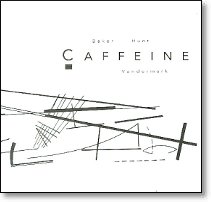
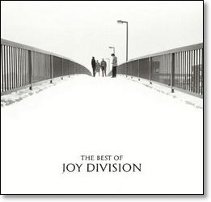
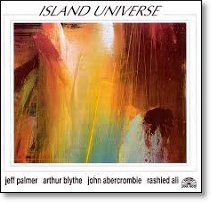
|
An occasional blog about populist politics and popular music, not necessarily at the same time. LinksLocal Links Social Media My Other Websites Music Politics Others Networking Music DatabaseArtist Search: Website SearchGoogle: Recent Reading
Music DatabaseArtist Search: Website SearchGoogle: |
Blog Entries [1200 - 1209]Friday, October 3, 2014 Working LinksA quick listing of some open tabs as I'm shutting down the computer:
Ask a question, or send a comment. Tuesday, September 30, 2014 Rhapsody Streamnotes (September 2014, Part 2)Time to wrap another batch of Streamnotes up: 21 days after the September 9 column. I've been running these approximately every three weeks this year, and the average count has been close to 90. The Old Music section focuses on Steve Lacy, after starting out with the much smaller catalogs of Julius Hemphill and Henry Threadgill. The line between Old Music and "Reissues, Compilations, Vault Discoveries" is vague, but generally speaking the latter were released in the last couple years -- I go back as far as 2011 there. The usual caveats about listening to music on the computer apply. It's rare that I'll settle on an A- grade in only one play -- Sun Ra and Roger Miller are two such cases, but they cover ground I'm familiar with from elsewhere. On the other hand, low-B+ and below rarely get more than one spin: I'm not especially concerned whether I get those grades right, since plus or minus a notch makes little consumer difference. More often I'm sure enough about the grade but unclear on how to write the review: it's rarely worth my while to give a record an extra spin just to write a better review, although I did that routinely back in the days when I got paid for reviews. These are short notes/reviews based on streaming records from Rhapsody. They are snap judgments based on one or two plays, accumulated since my last post along these lines, back on September 9. Past reviews and more information are available here (5406 records). New Releases (More or Less)
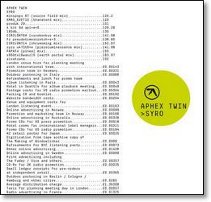
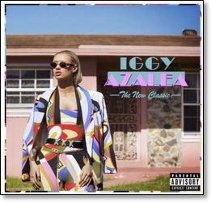
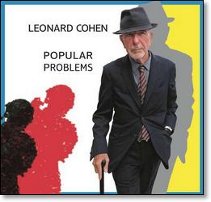
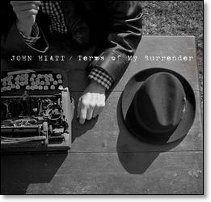
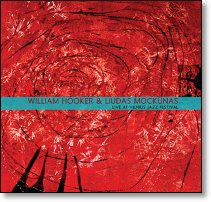
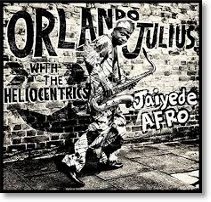
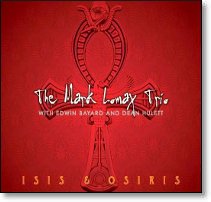
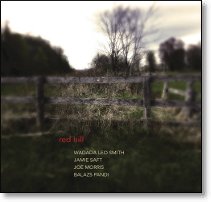
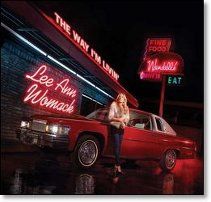
Ryan Adams: Ryan Adams (2014, Blue Note): Instantly regretted spinning this, knowing that by the time it was over I'd neither grasp whatever intricacies may exist in the lyrics nor care. Prolific, something like 14 albums in 14 years -- surprising at this late date he'd go to the eponymous title, usually an introduction but sometimes a fresh start, in his case more a collapsing worldview, just his face (and a lot of hair) on the cover, just guitar around his voice. B Jason Adasiewicz's Sun Rooms: From the Region (2013 [2014], Delmark): Vibraphonist, has made a big splash since starting to work with Chicago avant groups a few years back. Trio with bass (Ingebrigt Håker Flaten) and drums (Mike Reed), third album together (starting with the one called Sun Rooms, natch), and goes a long ways toward establishing the vibraphone a lead instrument. B+(***) [cd] Afghan Whigs: Do to the Beast (2014, Sub Pop): Cincinnati group, had seven albums 1988-98, broke up, returning for this one. I've only heard one of the old albums and don't recall it at all. This strikes me as heavy, an attribute in rock I have little desire for, but very accomplished for its type, I guess. B+(**) Aphex Twin: Syro (2014, Warp): Richard D. James, enjoyed a measure of fame in the mid-1990s for his "ambient works" -- can't say as I was impressed, nor do I recall following any of the aliases he's used since the last Aphex Twin album in 2001. This, however, is fun throughout, a trippy mix of bass lines and beats, with a little ambient coda at the end. A- Avi Buffalo: At Best Cuckold (2014, Sub Pop): Southern California group led by Avi Zahner-Isenberg, has a falsetto lead and occasionally pines for the "In My Room" side of the Beach Boys. B+(*) Iggy Azalea: Ignorant Art (2011 [2012], Grand Hustle, EP): Australian rapper, Amethyst Amelia Kelly, released her debut album this year (below), but on the way to checking it out, I noticed this thing -- her debut mixtape, credited as "Iggy Azalea Presents" ("Dirt in Your Pussy Ass Bitch" is someone else's sketch [T.I.?]). Runs nine tracks, 26:33, built around the video-ready single, "Pu$$y," a sharp and nasty calling card. B+(**) Iggy Azalea: The New Classic (2014, Island): Rapper from Australia, but her mentor is T.I. and her state-of-the-world production is post-Gaga, post-Minaj even, a "pop/rap hybrid" that eschews the soft center, aiming both sharp edges at the other. "Fancy," of course, is irony, but anyone who'd describe herself as "his new bitch" is bound to be trouble. Metacritic grade: 57. A- Daniel Blacksberg Trio: Perilous Architecture (2012 [2014], NoBusiness): Trombonist, based in Philadelphia, background ranges from klezmer to Anthony Braxton. Backed with bass and drums, keeps it interesting. B+(***) [cdr] Frank Catalano/Jimmy Chamberlin: Love Supreme Collective (2014, Ropeadope): Tenor sax and drums, respectively, plus Percy Jones (bass), Adam Benjamin (keys on 3 of 4 cuts), and Chris Poland (guitar on the other cut). The four cuts are laid out like A Love Supreme, but run short (21:58), and rough. B+(*) [cd] Causa Sui: Pewt'r Sessions 3 (2014, El Paraiso): Third collaboration between the Danish "heavy psych explorers" (i.e., fusion group) and Ron "Pewt'r" Schneiderman, who evidently does similar stuff in Massachusetts. Three tracks for a vinyl-length album, expansive with a slow burn at the end. B+(**) Leonard Cohen: Popular Problems (2014, Columbia): His "golden voice" is more gone than ever, but his tactic of using female backing vocals keeps him limping along. As for the songs, they're becoming more biblical not because he's thinking of death so much as he's pondering very old things. A- Jack Cooper: Mists: Charles Ives for Jazz Orchestra (2014, Planet Arts): Jazz Orchestra means big band -- 5 reeds, 4 trumpets, 4 trombones, guitar, piano, bass, drums -- and Ives for that gristmill isn't far from the postmodern big band norm -- not swing but not terribly Third Stream either. B+(*) [cd] Bo Dollis Jr. and the Wild Magnolias: A New Kind of Funk (2013, self-released): New Orleans "Indians" -- a featured story line in HBO's Treme, their showy plumes and deep funk a phenomenon many of us were hepped to in 1976 when The Wild Tchoupitoulas appeared, or even earlier in 1974-75 when the Wild Magnolias released two albums. The latter group was led by Theodore "Bo" Dollis, and now his son, born seven years later but in the crew since he was 13, is at the helm of the family business. His funk moves are hardly pathbreaking, and his use of a bit of rap is tentative, but the basic shtick is irresistible, and the best thing here is the most trad and true, a burnburning "Liza Jane." B+(***) Open Mike Eagle: Dark Comedy (2014, Mello Music Group): Rapper, west coast guy, very laid back, soft-edged, which oddly enough draws you in. B+(**) Hal Galper Trio: O's Time (2014, Origin): Piano trio, with Jeff Johnson and John Bishop -- picked them up on a Live in Seattle album in 2009 and they're back for a fourth album. They're fine players, and this album has impressive moments. B+(**) [cd] Gerry Gibbs Thrasher Dream Trio: We're Back (2014, Whaling City Sound): Drummer, son of vibraphonist Terry Gibbs, first album was called Thrasher (1995), evidently an apt nickname, his Dream Trio debuted on a 2013 album, consists of Kenny Barron and Ron Carter so I can't claim he's given to overstatement. Booklet has a picture of 13-year-old Thrasher: looks like he's been opening presents and is showing off his new LPs (two Ron Carter records). Back cover says, "Jazz Interpretations of R&B Classics," and as befits a '70s child most are from Stevie Wonder and Earth, Wind & Fire -- "What's Going On" and "Pick Up the Pieces" are among the others. (Personally, I was more into George Clinton during the 1970s.) They add guest stars you notice when they're present but don't miss when they aren't: Larry Goldings (organ), Warren Wolf (vibes), Steve Wilson (alto/soprano sax). B+(**) [cd] John Hiatt: Terms of My Surrender (2014, New West): Singer-songwriter going back to the mid-1970s, when he had a younger and weirdly slurred voice and sang about crushing ants and waterskiing to heaven; some marvelous work, but was never as good after he had a freak hit and kept cranking out albums nearly every year whether he had worthy songs or not. This is his best in ages (probably since 1983) -- the songs matter, his voice has achieved a new level of surrealism, and he's learned something from Adorno: "old people are pushy/'cause life ain't cushy." A- Kevin Hildebrandt: Tolerance (2012 [2014], Summit): Guitarist, sings several songs, leads a trio with Radam Schwartz on organ and Alvester Garnett on drums. Four Hildebrant originals, one from Schwartz, covers include "House of the Rising Sun," "Night and Day," "Further On Up the Road," "I Fall in Love Too Easily." Swings harder than soul jazz. B+(**) [cd] Homeboy Sandman: Hallways (2014, Stones Throw): Underground rapper from Queens, usually sells himself short but lets this one run a healthy 41:48. Beats seem a little off, but he talks his way around them, and usually pays off. A- William Hooker & Liudas Mockunas: Live at the Vilnius Jazz Festival (2013 [2014], NoBusiness): Sax-drums duets, the drummer getting top billing because he's the best known or came the furthest or maybe it's just alphabetical. Mockunas, at home in Lithuania, plays soprano, alto, and tenor, and is consistently impressive on four long improvs. A- [cd] Jennifer Hudson: JHUD (2014, RCA): Soul diva, lost her American Idol bid to Fantasia Barrino but snagged a role in the movie Dreamgirls and got an Oscar for it. Third album, built around big disco beats and that gospel wail soul divas are so given to. B+(*) Tommy Igoe: The Tommy Igoe Groove Conspiracy (2014, Deep Rhythm): Drummer-led 14-piece Bay Area "supergroup" -- Aaron Lington is the only name among the regulars that rings a bell, but some "guest conspirators" are better known: Randy Brecker (trumpet, one track), Kenny Washington (vocals, two). Not really a groove album, just more of the usual big band blare. B- [cd] Imarhan Timbuktu: Akal Warled (2014, Clermont): Desert blues group from Mali. First album here but group dates back to 1993. The rhythmic lilt is stock in trade for the genre, and the vocals never threaten to break ranks -- the very constancy of their sound over the entire album is their main charm, which is to say this makes for nice background music. B+(**) [dl] Orlando Julius with the Heliocentrics: Jaiyede Afro (2014, Strut): Nigerian saxophonist, one of the founders of Afrobeat -- Fela Kuti started out in Julius' band -- gets rediscovered by English quasi-jazz group which previously brought some attention to Ethio-jazz master Mulatu Astatke. In this one the sax bulls right past the beat, impressive in its own right. A- Just Passing Through: The Breithaupt Brothers Songbook Vol. II (2014, ALMA): That would be composer Don Breithaupt and lyricist Jeff Breithaupt -- evidently a big deal in Canada and aiming at Broadway. The first volume was prefaced Toronto Sings. This one evidently casts a wider net, although I hardly recognize any of the singers. And I've yet to find a reason to care about the music, which isn't to say that it's bad. B [cd] Kalle Kalima & K-18: Buñuel de Jour (2013 [2014], TUM): Finnish guitarist, quartet adds Mikko Innanen (alto sax), Veil Kujala (quarter-tone accordion), and Teppo Hauta-aho (bass, percussion). The lead instruments tend to melt together into a thick, richly flavored stew. B+(***) [cd] Sami Lane: You Know the Drill (2014, self-released, EP): DJ from Bournemouth, has uploaded several mixtapes to Mixcloud, this one a 29-minute continuous hip-hop flow, pretty hard-edged, lots of N-words. She (I think that's right) has no discernible reputation, just a Twitter account and 23 followers on Mixcloud, one of whom is Alex Wilson, who currently ranks this 23rd on his 2014 list, just behind Kris Davis (his only jazz pick) and ahead of Tacocat. I had heard 39 of his top 41 so I thought I'd track this down. One annoying problem with Mixcloud is that it keeps playing into her old catalog, which is more EDM. B+(**) [dl] Gianni Lenoci/Kent Carter/Bill Elgart: Plaything (2012 [2014], NoBusiness): Piano trio. Pianist Lenoci, who credits Mal Waldron and Paul Bley as teachers and plays much like them, has at least 15 albums since 1991. A spirited improv set. B+(***) [cdr] The Mark Lomax Trio: Isis & Osiris (2012 [2014], Inarhyme): Drummer, teaches and therefore is based in Columbus, Ohio, which keeps him and his sax trio out of the limelight. They have a previous album, The State of Black America, on my top-ten list for 2010. This one drags a bit near the start -- probably bass solos, something too soft to hear -- but when Edwin Bayard's tenor sax breaks through it's often mesmerizing. And the drummer's pretty special too. A- Alexander McCabe/Paul Odeh: This Is Not a Pipe (2014, Wamco): Alto sax/piano duets. McCabe has impressed me in the past (cf. 2010's Quiz), and continues to in this sparer format. B+(**) [cd] Medeski, Scofield, Martin & Wood: Juice (2014, Indirecto): There's more to guitarist John Scofield than the organ groove albums he did in the early 1990s although they were inspired fun; more to MMW than organ grooves too, but a nice stretch with Medeski on piano doesn't go very far. B+(*) The Microscopic Septet: Manhattan Moonrise (2014, Cuneiform): Founded in 1980 with pianist Joel Forrester and soprano saxophonist Phillip Johnston writing their songs, they broke up in 1990 and regrouped in 2006 with Mike Hashim (a superstar in my book) taking over the tenor sax spot -- group has four saxes and no brass -- and since then they've done no wrong. I'm more struck than ever by the gentle swing that permeates so many of their songs. A- [dl] Jason Moran: All Rise: A Joyful Elegy for Fats Waller (2014, Blue Note): A jazz pianist, Moran's early career was auspicious, debuting on a major label with a series of brilliant albums. In 2011, he won a MacArthur "genius" grant, and that led to a project called the Fats Waller Dance Party, and ultimately this album. He tapped Meshell Ndegeocello, Lisa E. Harris, and Charles Haynes as vocalists, and added some horn spots to his trio: Steve Lehman gets a superb sax solo, and Moran's keyboard work is often dazzling, but the vocals strike me as way off base -- so serious, so dour, even on "Ain't Misbehavin'." B+(*) Nicholas Payton: Numbers (2013 [2014], Paytone): New Orleans trumpet player, although you'd hardly guess that from this album, where he spends most of his time noodling on a Fender Rhodes, with guitar, bass, and drums cranking out underdeveloped funk instrumentals. B- Peripheral Vision: Sheer Tyranny of the Will (2014, self-released): Canadian postbop quartet with "co-leaders" Michael Herring (bass) and Don Scott (guitar), plus Trevor Hogg on tenor sax and Nick Fraser on drums, with Jean Martin lurking somewhere in the background (co-producer, "mixing & additional recording"). Read somewhere that their influences list is topped by Wayne Shorter and Kurt Rosenwinkel. Sounds like it. B+(*) [cd] RED Trio & Mattias Ståhl: North and the Red Stream (2013 [2014], NoBusiness): Portuguese piano trio -- Rodrigo Pinheiro on piano, Hernani Faustino on bass, Gabriel Ferrandini on drums -- first appeared with an impressive eponymous album in 2010 (on Clean Feed). They're joined here by vibraphonist Ståhl, who does more than add tinkle but can get caught up in the grind. B+(**) [cd] Wadada Leo Smith: The Great Lakes Suites (2012 [2014], TUM, 2CD): Trumpet great, has been working on large canvases lately -- I count four 2CD releases since 2009 plus the 4CD Ten Freedom Summers -- but this feels rather small and spotty as it spurts and sputters, just one more horn: Henry Threadgill (alto sax, flute, bass flute) plus bass (John Lindberg) and drums (Jack DeJohnette). It does, however, remind me what a marvelous drummer DeJohnette is. B+(***) [cd] Wadada Leo Smith/Jamie Saft/Joe Morris/Balasz Pandi: Red Hill (2014, Rare Noise): We might have to start talking about Pandi as an exceptional drummer as well, and he's not the only surprise here. Saft first came to my attention playing organ for Joshua Redman, but his piano here is a million miles from there, out somewhere you'd have to triangulate off Sun Ra and Cecil Taylor to find. Morris, we should note, plays bass, not guitar. And while the trumpeter starts with dark tones, he can't just sit on that in this company. A- Ken Thomson and Slow/Fast: Settle (2012 [2014], NCM East): Leader plays bass clarinet and alto sax, in a quintet with Russ Johnson on trumpet and Nir Felder on guitar -- front-line musicians who can handle the whiplash speed changes. B+(***) [cd] Rosenna Vitro: Clarity: Music of Clare Fischer (2014, Random Act): Standards singer, has a dozen albums since 1982, more often than not trying to search out some new terrain for ye olde songbook -- an effort that works best when the songs have natural swing, like Catchin' Some Rays: The Music of Ray Charles (1997), as opposed to The Music of Randy Newman (2011). The subject here is Clare Fischer, a bit on the stuffy side, but pianist-arranger Mark Soskin lightens and opens him up, Sara Caswell's fiddle is a plus, and the singer can get by with the odd arch moment. B+(*) [cd] Loudon Wainwright III: Haven't Got the Blues (Yet) (2014, 429 Records): Starts unexpectedly with a bit of rockabilly fluff, "Brand New Dance," but soon enough reverts to form, which is just fine ("I Knew Your Mother"), until he tries his hand at irony on a song that kicks back like an untethered Uzi: "I'll Be Killing You This Christmas." You know how much I hate Xmas music? This is one present I hope to never hear again. B+(*) Lee Ann Womack: The Way I'm Livin' (2014, Sugar Hill/Welk): Country singer, doesn't write so has some trouble maintaining a persona -- she's too sweet to convince you she's the hopeless drunk of Chris Knight's "Send It on Down" but maybe she does sleep with the devil -- at least that's where she's picking her songs these days. (I normally tire quickly of Jesus songs, but you're not likely to run across any of these in church.) The move from countrypolitan MCA Nashville to a more trad label helps too. A- Reissues, Compilations, Vault Discoveries
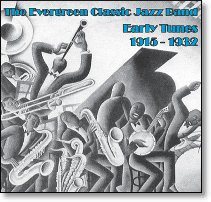
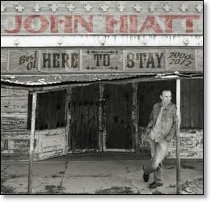
Rashied Al Akbar/Muhammad Ali/Earl Cross/Idris Ackamoor: Ascent of the Nether Creatures (1980 [2014], NoBusiness): Cross was a trumpet player from St. Louis (1933-87), played in bands led by Charles Tyler and Rashied Ali, but this is the only album Discogs lists by him. Saxophonist Ackamoor was originally Bruce Baker, b. 1950 in Chicago, has a bit more, including a foundation in San Francisco. Don't know anything about bassist Al Akbar. Drummer Ali, b. Raymond Patterson in 1936, is Rashied Ali's brother, has a 1974 duo album with Frank Wright, and has appeared on some of David S. Ware's last albums. So, a two-horn free jazz quartet of some vintage, recorded in the Netherlands and reissued in Lithuania in limited edition (300 copies) vinyl. B+(***) [cdr] Bambara Mystic Soul: The Raw Sound of Burkina Faso 1974-1979 (1974-79 [2011], Analog Africa): A backwater even by African standards, but wedged between Mali and Ghana, triangulated by Nigeria, Senegal, and Guinea, you get a little bit of the whole region, minus the stars. B+(**) Aby Ngana Diop: Liital (1994 [2014], Awesome Tapes From Africa): From Senegal, six cuts, 31:59. Mostly drums and shouted voices, the lead singer not obviously female, some synth or something on a few tracks but window dressing to the drums. B+(***) The Evergreen Classic Jazz Band: Early Tunes 1915-1932 (1995 [2014], Delmark): Trad jazz band from Seattle, eight pieces (at least at this point -- a 1990 album had six) including banjo and tuba (Tom Jacobus, the designated leader). Trombonist David Loomis sings a couple songs, and the clarinet (Craig Flory) is exceptional. Admittedly, I'm a sucker for this kind of music. A- [cd] John Hiatt: Here to Stay: Best of 2000-2012 (2000-12 [2013], New West): Christgau sent me Hiatt's first two albums in 1975 -- ones that he ultimately graded B but which became personal favorites. It may have helped that I saw him playing solo in Indianapolis, a bit of totally unplanned serendipity. So he became a guy to keep tabs on. Two of his next five albums were pretty good, but the others weren't, and I remember John Piccarella wanting to write about him in the Voice, only to get stuck with Warming Up to the Ice Age. Yet somehow I missed his 1987-94 period on A&M, which reportedly produced some hits. He moved to Vanguard in 2000 and New West in 2003, and I've been checking him out since I got onto Rhapsody, until this year finding a regular series of low B+ albums. This "best-of" does what it should, picking out his most indelible songs from six or seven albums and packing them into the only album you need from the decade. A- The Rough Guide to the Music of the Sahara [Second Edition]
(1980-2013 [2014], World Music Network, 2CD): The label's second round
compilations -- never specified as such so check the artwork and numbers --
tend to recycle newer pieces that have been farmed up through the label,
and come with bonus discs reissuing albums that had no traction under the
original artists' names. Can't tell from Rhapsody whether the booklets
have improved -- in cases where I've seen them, they usually raise more
questions than they answer. This Sahara extends from Mariem Hassan of
Western Sahara/Morocco through the Mali-Niger heartland to Libya, Sudan,
and Egypt, with Ali Hassan Kuban's Nubian music the clincher and the
ringer -- much earlier if not older-sounding.
B+(***) Shaver: Shaver's Jewels: The Best of Shaver (1993-2001 [2013], New West): Billy Joe Shaver was a veteran with some very clever songs under his belt and some relatively uninspired albums when he teamed up with his guitar-playing son Eddy Shaver for five albums, a gig that ended when Eddy overdosed in 2000. The extra guitar brought some spunk and polish to the albums, and the compilation weeds out the weak spots. A- Sun Ra & His Arkestra: In the Orbit of Ra (1957-78 [2014], Strut, 2CD): Cover starts out "Marshall Allen Presents" -- indeed who better to pick out a centennary selection of Herman Blount's Arkestra? -- but I'm dropping Allen's name so as not to confuse this with the ghost band he still leads. These are, after all, vintage recordings -- at least I've been able to match them up to the date range above, allowing a few seconds variation for the remastering. Vocals on close to half of the tracks -- more than I wanted but they do establish a theme, one that's out of this world. A- The Buddy Tate Quartet: Texas Tenor (1978 [2014], Sackville/Delmark): From Sherman, Texas; played in territory bands until 1939 when he joined Count Basie, replacing the late Herschel Evans. My favorite album of his is Buck and Buddy Swing the Blues -- "Buck" of course is Basie bandmate, trumpeter Buck Clayton, and the title is exactly right. This set was originally released as The Buddy Tate Quartet as if the group was somehow more than something he picked up touring. They scarcely deserve the compliment, but every time the sax blows Tate is nothing short of resplendent. A- [cd] Old Music
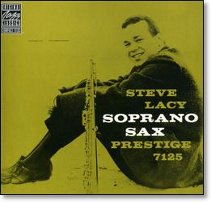
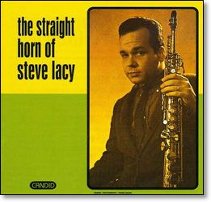
Ruby Braff: Linger Awhile (1953-55 [1999], Vanguard): Assembled from three early sessions -- wish I could find the session details, but one cut comes from a 10-inch LP called Buck Clayton Meets Ruby Braff, and the others were possibly led by trombonist Vic Dickenson -- front cover has three photos: Dickenson, Clayton, and Braff, and the credits include Edmond Hall, Buddy Tate, Nat Pierce, and Sir Charles Thompson. Varies, but most of it swings, and the ballads are lovely. B+(**) Columbia Country Classics, Vol. 5: A New Tradition (1967-87 [1991], Columbia): The last of five various artist volumes, released with similar artwork along with many notable single-artist compilations (see ACN?). Sony's catalog is so deep that the first two volumes -- Vol. 1: The Golden Age (1935-53) and Vol. 2: Honky Tonk Heroes (1946-61) -- are nearly as definitive as the first two volumes of Classic Country Music: A Smithsonian Collection. The next two volumes -- Vol. 3: Americana (1954-84) and Vol. 4: The Nashville Sound (1953-73) -- are far from definitive, as is this grab bag of label stalwarts (Johnny Cash, George Jones, Willie Nelson, Marty Robbins, latecoming Merle Haggard, an out-of-his-depth Bob Dylan) and a younger generation intent on retaining the tradition (Asleep at the Wheel, Ricky Van Shelton, Rodney Crowell, Rosanne Cash). B+(**) Julius Hemphill: Raw Materials and Residuals (1977 [1993], Black Saint): Sax trio, the leader playing alto and soprano, with Abdul Wadud (cello) and Don Moye (percussion). Begins with a boppish thrill ride. Ends with a tune that sticks in your head. [4/5 tracks] A- Julius Hemphill/Warren Smith: Chile New York (1980 [1998], Black Saint): Improv duets, Hemphill playing alto/tenor sax and flute, Smith percussion. B+(**) The Julius Hemphill Sextet: At Dr. King's Table (1997, New World): Hemphill died in 1995 after a prolonged debilitating illness that left him unable to play from the early 1990s. But he continued to write and organize sax choirs -- he was the main driving force behind the World Saxophone Quartet. His last album was Five Chord Stud (1993), a sax quintet including a young James Carter. But he left some unrecorded music, including this set, posthumously recorded under his name by a sax/clarinet/flute sextet: Marty Ehrlich, Sam Furnace, Andy Laster, Gene Ghee, Andrew White, and Alex Harding. Some marvelous blending of harmonies here, but as is often the case with sax choirs (even WSQ) I find myself yearning for some contrasting tone, or maybe just a drum. B+(***) The Julius Hemphill Sextet: The Hard Blues: Live in Lisbon (2003 [2004], Clean Feed): The late saxophone choirmaster's ghost band carries on with Andrew Stewart replacing Gene Ghee -- carrying on: Marty Ehrlich, Sam Furnace, Andy Laster, Andrew White, Alex Harding. Same plus and minus ledger, although they can get a bit rowdier live, and that's a good thing. B+(***) Orlando Julius: Super Afro Soul (1966-72 [2007], Vampi Soul, 2CD): Nigerian saxophone player, formed a group called the Modern Aces in 1965, a missing link between highlife and Afrobeat -- Fela Kuti started out in Orlando's band. This starts with a Modern Aces album, then adds a somewhat later second disc by Orlando Julius & His Afro Sounders -- one difference is that the three-minute songs of the former give way to 6-8 minute pieces, the extra length adding to the flow. B+(**) Steve Lacy: Early Years 1954-1956 (1954-56 [2004], Fresh Sound, 2CD): A collection of five albums where Lacy is a sideman -- nominal leaders are: Dick Sutton (Jazz Idiom, Progressive Dixieland), Tom Stewart (Sextette/Quintette), Whitey Mitchell (Sextette), and Joe Puma (Modern Jazz Festival) -- and they illustrate the oft-made point that Lacy started in trad jazz influenced by Sidney Bechet before making the jump all the way to the avant-garde. Obviously, the story isn't that simple, as this is more transitional if never terribly boppish. B+(**) Steve Lacy: Soprano Sax (1957 [1991], Prestige/OJC): First album by the man who defined soprano sax over a 47-year career, up to his death in 2004. The quartet includes Wynton Kelly on piano -- not the sort of pianist Lacy would work with later but a real treat here -- as well as Buell Neidlinger (bass) and Dennis Charles (drums). A couple standards, two Ellington tunes, one Monk -- a delightful if somewhat conventional set. Gotta start somewhere. A- Steve Lacy: The Straight Horn of Steve Lacy (1960 [1985], Candid): Smart moves toward Lacy's unique style, working over tunes by Thelonious Monk (3), Cecil Taylor (2), and Charlie Parker (1). Mostly trio with John Ore (bass) and Roy Haynes (drums), plus Charles Davis (baritone sax) on one cut. A- Steve Lacy with Don Cherry: Evidence (1961 [1990], New Jazz/OJC): Quartet with bass and drums (Billy Higgins), playing four Monk tunes and two Ellingtons (at least on the original album; Rhapsody adds six "bonus cuts" with Wynton Kelly, but I can't find any physical release with them, so I dropped them on second spin. B+(***) Steve Lacy: Scratching the Seventies/Dreams (1969-77 [1997], Saravah, 3CD): Lacy first visited Europe in 1965 and moved to Paris in 1970. After his early albums with Prestige and Candid, he had trouble finding labels in the 1960s, but once he landed in France he recorded tons of albums for small European labels, including five for this French label, now rolled up into a 3-CD box. I decided it would be best to treat the albums one-by-one, so they follow. Overall: B+(*)
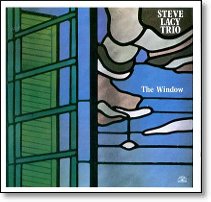
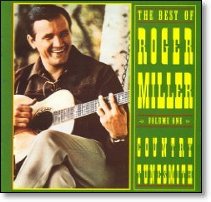
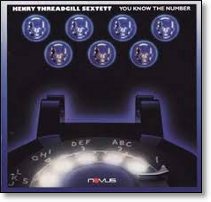
Steve Lacy: Axieme (1975 [1993], RED): Solo soprano saxophone, originally released on two LPs then combined on a single CD. [Rhapsody only has "Parts 3 & 4" for 25:09, so is 21:40 short of the full release.] B+(*) Steve Lacy/Andrea Centazzo/Kent Carter: In Concert (1976 [2006], Ictus): Discogs agrees with Rhapsody on the title, but the best Lacy discography calls this Live (probably the title of the 1977 LP release). This version, with two extra tracks, was part of a 12CD anniversary box Ictus released in 2006. Soprano sax trio, the extra depth of Carter's bass helps round the sound out. B+(***) Steve Lacy/Andrea Centazzo: Clangs (1977 [2006], Ictus): Duo, mostly soprano sax and drums, but Lacy is also credited with "bird calls, pocket synthesizer, crackle box" and Centazzo employs whistles and a wide range of percussion. The result is the sort of rickety contraption imagined in the title. B+(**) Steve Lacy Quintet: Troubles (1979, Black Saint): With Steve Potts (alto/soprano sax), Irene Aebi (violin, cello, vocals), Kent Carter (bass, cello), and Oliver Johnson (drums): Starts with a group vocal that turns into a very slippery slice. Aebi returns with a vocal called "Blues" -- another very tricky tune. In between is a short one called "The Whammies!" -- later taken as the name of a marvelous Lacy tribute group. B+(***) Steve Lacy: The Flame (1982, Soul Note): A trio with Lacy on soprano sax, Bobby Few on piano, and Dennis Charles on drums. Still going through a phase where he flails a lot, bits of genius but lots of collateral damage. B+(*) Steve Lacy/Andrea Centazzo: Tao (1976-84 [2006], Ictus): Duets, soprano sax with percussion, a set of numbered pieces that appear on many Lacy albums of the period. The last four come from an earlier live performance and they fumble a bit at the start, but the later recordings are superb, constant invention highlighted by the percussion. B+(***) Steve Lacy/Mal Waldron: Live in Berlin (1984 [2007], Jazzwerkstatt): The pianist played on Lacy's second album, Reflections, and they've appeared together many time since, especially on duos like this one -- the first recorded one is from 1971, the last 2002; Sempre Amore (1986), with its all-Ellington/Strayhorn program, is a personal favorite. This is a mixed bag, denser than most, somewhat fanciful. B+(**) Steve Lacy Trio: The Window (1987 [1988], Soul Note): With Jean-Jacques Avenel (bass) and Oliver Johnson (drums), all Lacy originals (one piece co-credited to Mary Frazee), six tunes, 7:00-9:14 each. A fine example of Lacy's style, dazzling actually, with none of the things that occasionally make his other albums irritating. A- Steve Lacy: More Monk (1989 [1991], Soul Note): Sequel, like Lacy's 1987 Only Monk all Monk tunes, done solo on soprano sax. Plays them fairly straight, which makes me wonder, why? B+(*) Steve Lacy Double Sextet: Clangs (1992 [1993], Hat Art): Twelve musicians (counting two vocalists, Irene Aebi and Nicholas Isherwood), but the only instrument doubled is piano (Bobby Few joins Eric Watson), the second-stringers adding trumpet, trombone, vibes, and percussion to Lacy's long-running Sextet with Steve Potts (alto and soprano sax). One revelation is that Lacy's penchant for starchy vocals isn't purely a matter of indulging his wife. But also, once you get past the vocals, he does a marvelous job of integrating the lush instrumentals. B+(**) [cd] Steve Lacy/Mal Waldron: "Let's Call This . . . Esteem" (1993, Slam): Another duo album, four Monks, Ellington, Strayhorn, two originals each. Typical of what they do, how they interact, which is to say masterful but somewhat estranged. B+(**) Steve Lacy Trio: The Rent (1997 [1999], Cavity Search, 2CD): Basic Lacy, a trio with longtime collaborators Jean-Jacques Avenel (bass) and John Betsch (drums), recorded live at Old Church in Portland, OR before an enthusiastic crowd. B+(***) Steve Lacy Trio: The Holy La (1998 [2002], Freelance): Same trio, with Jean-Jacques Avenel (bass, kalimba) and John Betsch (drums), cut in a studio in France -- the group have finally learned to stretch out and relax, with the kalimba section sounding especially lovely. Two vocals by Irene Aebi, arch and starchy as usual, but somehow I'm getting to where I can stand her. [Sunnyside reissued this in 2003; the Rhapsody version is missing a track, but Sunnyside's own website indicates that the reissue is complete.] B+(***) Steve Lacy: The Beat Suite (2001 [2003], Sunnyside): The soprano saxophonist expanded his trio -- Jean-Jacques Avenel on bass, John Betsch on drums -- to include George Lewis on trombone, notable sonic heft, and wife/collaborator Irene Aebi for the vocals on ten texts lifted from Beat writers (Jack Kerouac, Allen Ginsberg, William Burroughs, Bob Kaufman, Lew Welch, Gregory Corso, Robert Creeley, Jack Spicer, Anne Waldman/Andrew Schelling, Kenneth Rexroth). The problem, of course, is Aebi, who would sound stilted singing Irving Berlin, much less texts written with no concern for music, then scored with Lacy's angular whimsy. B Steve Lacy: November (2003 [2010], Intakt): Solo session from a festival in Switzerland, a little more than six months before he died. One vocal is way off base, but the soprano sax is unique, as ever. B+(**) Ron McClure Quintet: Descendants (1980 [1990], Ken): Bassist, played with Blood Sweat & Tears in the 1960s, has a couple dozen albums since 1979, mostly on Steeplechase, this the only one I've heard. Features Tom Harrell (flugelhorn), with both piano (Mark Gray) and guitar (John Scofield). No real sense of how you would niche this other than postbop with prominent bass solos. B+(**) [cd] Medeski Martin and Wood: Last Chance to Dance Trance (Perhaps): Best Of (1991-1996) (1991-96 [1999], Gramavision): Organ-bass-drums trio, relatively popular jazz-groove merchants in the 1990s, with this collection sampling their second through fifth albums. Keyboard player John Medeski and drummer Billy Martin have since mounted serious solo careers -- forget about Chris Wood's Wood Brothers -- while keeping the group going (their first album I A-listed was 2012's Free Magic). Best example here: the medley "Bemsha Swing/Lively Up Yourself." B+(***) [cd] Brad Mehldau: The Art of the Trio: Volume One (1996 [1997], Warner Brothers): With Larry Grenadier on bass and Jorge Rossy on drums, the first of five Art of the Trio volumes -- a claim that rises as a challenge, and execution that plays off. Penguin Guide picked this one for their "Core Collection." I find it a smidgen on the soft side, and I'm always suspicious when jazzers take on the Beatles -- "Blackbird" is especially suspect, but they do a remarkable job. B+(***) Brad Mehldau: Art of the Trio 4: Back at the Vanguard (1999, Warner Brothers): The Village Vanguard, that is, site of The Art of the Trio Volume Two. More snap than the first one, but not clear that makes it better. A superb pianist but I can't tell you why, partly because no single thing stands out. B+(***) The Brad Mehldau Trio: Progression: Art of the Trio, Volume 5 (2000 [2001], Warner Brothers, 2CD): Had this on long on the shelf, so after I played it and found it remarkable in the usual ways I've never been able to articulate, I checked Rhapsody for the Art of the Trio volumes I had missed -- turns out that Vol. 1 and Vol. 4 are the top-rated ones in Penguin Guide, while this is the bottom-rated one. Beats me why. Still a remarkable piano trio -- Larry Grenadier on bass, Jorge Rossy on drums -- stretching out on a mix of originals and standards, always precise, thoughtful, compelling, and, well, long. B+(***) [cd] Brad Mehldau: Anything Goes (2002 [2004], Warner Brothers): Same piano trio run through ten standards, starting with a tentative "Get Happy," including Monk, Porter, Paul Simon, Radiohead, "Smile," "I've Grown Accustomed to Her Face." B+(***) Roger Miller: The Best of Roger Miller, Volume One: Country Tunesmith (1957-67 [1991], Mercury): Anyone with a hankering for Miller's mid-1960s novelty tunes -- from "King of the Road" to "England Swings" to "You Can't Roller Skate in a Buffalo Herd" and maybe "My Uncle Used to Love Me but She Died" -- should go straight to the 12-cut 20th Century Masters - The Millennium Collection (1964-66 [1999], MCA), or the broader 20-cut All Time Greatest Hits (1964-85 [2003], Mercury/Chronicles), or the deeper 21-cut The Best of Roger Miller, Volume Two: King of the Road (1957-72 [1992], Mercury) that came out on the heels of this set. Before he was a star, Miller was a struggling Nashville songwriter, making his living feeding wry and sentimental tunes to Ray Price ("Invitation to the Blues"), George Jones (cowrote "Tall Tall Trees"), and others while his own recordings languished. Even the 3-CD 1995 box set, King of the Road: The Genius of Roger Miller, which I've long regarded as canonical, only snares 8 of these 21 tracks while adding 8 pre-1964 songs and more from the overlap period. But if you're set with (or don't care for) the hits, or just a sucker for the homelier side of honky-tonk, this opens up the most unsung period of one of country music's heroes. A- Henry Threadgill Sextett: You Know the Number (1986 [1987], Jive/Novus): Alto/tenor saxophonist, formerly of Air, actually runs a septet here with Rasul Siddik (trumpet), Frank Lacy (Trombone), Diedre Murray (cello), Fred Hopkins (bass), and two percussionists. Avant but very upbeat, boisterous even. A- Henry Threadgill Sextett: Easily Slip Into Another World (1987 [1988], Jive/Novus): This picks up where the previous one left off, adding up to some of the group's most inspired interplay. However, they also run into some tough spots, which may (or may not) include Asha Puthli's vocal. B+(***) Henry Threadgill: Song Out of My Trees (1993 [1994], Black Saint): Five pieces with various lineups -- three guitarists in various combinations, two cuts with Ted Daniel on trumpet, one with Myra Melford on piano, two with Amina Claudine Myers (one harpsichord, one organ), one with Mossa Bildren grieving (backed by accordion, two cellos, and that harpsichord) while Threadgill plays his most visceral sax. An odd one. B+(**) Ask a question, or send a comment. Monday, September 29, 2014 Music Week
Music: Current count 23870 [23843] rated (+27), 521 [523] unrated (-2). My brother was in town Sunday so I spent the day cooking old-fashioned "soul food" -- fried chicken and pan gravy, baked potatoes and cornbread, baked beans and creamed corn and greens with bacon -- with a flourless chocolate cake for dessert. Couldn't concentrate on processing records, so I wound up playing Coleman Hawkins, Lefty Frizzell, and Johnny Cash from the travel case. Couldn't come up with a Weekend Update either. Suffice it to say that the insane wars of the previous week are still with us, as are the usual stories of police brutality, corruption, inequality, bad economics, the subversion of democracy by the usual claque of billionaires, and that old standby -- global warming. Safe to say there'll be more of them next week (if there is a next week) and next month and next year as well. Wasting Sunday kept the rated count under 30, but it was actually a remarkably good week quality-wise. I broke queue protocol and took the Buddy Tate reissue with me in the car even before I catalogued it, and it's kept me in a good mood all week -- not anyway near his most consistent record, but so glorious every time the sax appears. Roger Miller came up in some email correspondence -- I thought I had this particular album, so when I saw it unrated and on Rhapsody I dived right into it. Four very different Sept. 23 releases wound up at A-: Aphex Twin, Leonard Cohen, Wadada Leo Smith, and Lee Ann Womack. I gave each at least three plays, hoping it's possible to be both first and right. Chris Monsen seems to prefer Smith's The Great Lakes Suites, which both overwhelmed me with its length and underwhelmed me with its music -- Red Hill has an air of danger and excitement I find lacking in the larger work, but Suites put a lot of talent on display, including Henry Threadgill and Jack DeJohnette. Microscopic Septet is another Monsen recommendation, languishing in my mailbox for months. Orlando Julius appeared on a Phil Overeem list (also Bo Dollis and a bunch of other records I haven't gotten to yet; worth noting that Overeem has John Coltrane's Offering: Live at Temple University on top of his "old stuff" list -- I wasn't all that impressed by it, but I often react negatively to Coltrane's last phase). Another EW person mentioned the Sun Ra. Only gave it one play, but it was a delight, and I think I tracked down all the dates (except for one of three previously unreleased cuts). Given the extra overhead of managing the "faux blog" I may not have a Music Week (let alone a Weekend Update) post next week -- it may in fact be several weeks before I catch up. We're planning a trip east in October. Laura is flying to Boston and back from Newark, so that's tightly scheduled. I'll be driving, so that's real loosey-goosey -- I'm thinking Buffalo on the way out, and DC (and maybe Nashville) on the way back. There will be a few days on Cape Cod, but the main stretch will be six days at a friend's big country house in the NJ Appalachians. I'm hoping we can entice friends from NYC and environs to come out to visit. (One enticement is that I plan on cooking.) I've lined up some new technology for the trip. I picked up a cheap Chromebook to replace the old Linux laptop, so I can try working in the cloud. That won't really allow me to do much in terms of programming, but maybe I'll focus more on writing. Also picked up a Bose MiniLink Bluetooth speaker, which works nicely with the Chromebook. I'll still have travel cases of CDs for the car, but may leave the boombox home and play Rhapsody when I'm stationary. Should leave by the end of the week. Don't know when I'll get back. Best way to track whatever I post will be Twitter. Meanwhile, this week expect a Rhapsody Streamnotes (most likely tomorrow -- if not I'll have to rename files). Maybe a Mid-Week Roundup or a Book Report before I leave. If you want to get in touch during the trip, holler at me, and we'll see what makes sense. (I'm not looking to hook up with strangers, but know so many people along the way it's impossible to personally contact everyone I might want to see.) New records rated this week:
Recent reissues, compilations, and vault discoveries rated this week:
Old records rated this week:
Unpacking: Found in the mail last week:
Ask a question, or send a comment. Monday, September 22, 2014 Music Week
Music: Current count 23843 [23814] rated (+29), 523 [528] unrated (-5). A sub-30 week. For a while I thought it was going to be even lower. On the other hand, more A- records than usual. Much of the credit for the latter goes to Robert Christgau: the return of his Consumer Guide (or as he now prefers Expert Witness) alerted me to Homeboy Sandman and Shaver, and prodded me to check out John Hiatt's latest -- I knew it was out there, but given his last half-dozen albums I wasn't in a big hurry to file another low B+. As it was, I followed up with Hiatt's best-of, which combs those low B+ albums for a much better collection. Christgau also wrote about Iggy Azalea in his new Billboard column. I knew the name and thought her appearance on the Ariana Grande album was its high point, but hadn't put together how much I might like her. Blog status is still uncertain. I noticed I've been getting a lot of spam comments (I hardly know any other kind), which is an indication that the database is accessible. I also heard from a reader depending on the RSS feed, wondering whether I was all right. The "faux blog" doesn't generate any RSS, so that notification avenue had been blocked. (Pretty good solution: follow me on Twitter.) So I went back and added all the missing posts to the "real blog," and have kept them in sync for the last week. That's a pain, but not understanding what happened, and having no confidence that it won't happen again, for now I lack a better solution. Shopping advice request: I'm going to be traveling a lot soon, and I'd like to buy a small Bluetooth speaker bar, like a Bose MiniLink (strikes me as pricey) or Jambox Mini (clearly not as good). Anyone have some advice/experience? I think it should allow for a wired stereo connection (so I can plug in that IPod I foolishly bought a couple years ago), but it will mostly be used with a new Chromebook, which should make it possible to listen to Rhapsody on the road (if not in the car). New records rated this week:
Recent reissues, compilations, and vault discoveries rated this week:
Old records rated this week:
Unpacking: Found in the mail last week:
Ask a question, or send a comment. Sunday, September 21, 2014 Weekend UpdateThis week's scattered links:
Ask a question, or send a comment. Wednesday, September 17, 2014 The Kissinger DisorderEvery year dozens of books are published about a topic that only a handful of Americans care about: specifically, those with cushy "think tank" jobs, plus a few military officers and State department bureaucrats who aspire to those jobs. Most assume that the US has a rightful role running the World Order, with some fretting that China or some other nation is going to butt in and offering sage advice on how the US can secure its rightful role. Against these stalwart hegemonists, now and then someone will argue that a "multipolar" isn't such a calamity, but they are in the minority, and are still so obsessed with dominance they needn't fear about losing their status as Very Serious Thinkers. The books, of course, are nonsense, predicated on unexamined ideas: that chaos and war are the natural state of the world, that order is so valuable you have to accept it from whoever can impose it, that inequality is the best we can do given man's venal nature. That is, of course, the way conservatives think about everything. Unfortunately, it is also the way liberals usually think about the foreign world, given how readily they have sucked up the prejudices of the West's imperial past. In 2003 Jonathan Schell published an antidote to that kind of thinking, a book called The Unconquerable World: Power, Nonviolence, and the Will of the People. It was published just as the neocon ideology had become fashionable and powerful enough to "create new reality" in Iraq, and predicted failure for such hubris. Ten years later the results should be clear, but still the foreign policy elite natters on, too absorbed in their own prejudiced thoughts to have noticed their failures. Case in point: a new book called World Order by America's most venerable war criminal, Henry Kissinger. Fortunately, we don't have to actually read the book: we can skim through the New York Times' review by John Micklethwait -- editor-in-chief of The Economist, the kind of journalist who makes his living chronicling the rarefied world of conservative "think tanks." (Micklethwait's most famous book is The Right Nation: Conservative Power in America, which every 4-5 pages reiterated the mantra that conservatives are America's "idea people." He also wrote A Future Perfect: The Challenge and Hidden Promise of Globalization [2001] and God Is Back: How the Global Revival of Faith Is Changing the World [2009], extolling the wonders of free capital flows and fundamentalism, respectively. His latest is The Fourth Revolution: The Global Race to Reinvent the State, about how the future belongs to oligarchies that are able to usurp the powers of the state.) Rarely has reviewer and subject been so perfectly matched to bring out the worst in a book. However, before we dive into the review, I should point out that there is an alternative approach to international relations that is wholly absent in the thinking of Kissinger and Micklethwait: the idea that order can be obtained through the consent of equal nations with a common commitment to basic, inalienable human rights and a just body of international law. In the wake of two horrific world wars, and the advent of even more destructive nuclear weapons, that idea got so far as the founding documents of the United Nations -- before that body got turned into a cartel of superpowers -- and the basic ideas have reappeared occasionally since. I could elaborate more, but for now just keep the idea in mind. The first quarter of Micklethwait's review is sheer flattery:
It's not as if Kissinger didn't have the ear of the Bush Administration after 9/11. He was, after all, Bush's first pick to chair the commission that would report on the 9/11 attacks. (He turned the job down for fear of having to disclose who his consulting clients were.) If he had any reservations about Bush's approach to Iraq or anything, he was remarkably circumspect about voicing them. And since when has Churchill been an expert on anything? He always said he hadn't been elected to preside over the dismantling of the British Empire, but no one did more to wreck it, which he repeatedly did by insisting on substituting his prejudices for any understanding of or empathy for the empire's subjects. On the other hand, Kissinger's own record is nearly as bad. The suggestion that he would have handled Syria and Ukraine better than Obama has -- admittedly a low bar -- overlooks how much his own policies contributed to those conflicts today.
The Westphalia treaties ended the 30 Years War in 1648 with a set of agreements between nations/states/cities to respect each other's autonomy and work with each other in prescribed ways. This later led to an ever-adjusting set of alliances to maintain a balance of power -- which mostly worked to keep the peace in Europe (and to export war to the third world) until its colossal failure in 1914. Kissinger always thinks in the past, and far enough back as to ignore recent novelties like the European Union, so balance of power is the best he can do. Unlike the neocons, he recognizes that the US isn't the sole power in the world, one suspects this has less to do with realism than with the fact that it takes multiple powers to balance. After all, while the neocons hate Kissinger, he has never really reciprocated. The reason, I think, is that both worship power. It's just that the neocons think they have so much power they can create their own reality, and Kissinger, well, he's never been to type to point out "the Emperor's new clothes" -- he's too much of a flatterer for that, too worshipful of power. The review goes on and on iterating Kissinger's past examples, a litany of Richelieu, Metternich, Palmerston, Talleyrand -- curiously enough, courtiers like Kissinger and not the monarchs they served. Kissinger goes on to belittle the European Union:
For Kissinger, historical change not accomplished by force hardly counts. Then he explains Putin and Russia:
Again, nothing like a historical factoid to explain away current behavior or policy. This one is about as facile as trying to explain the Bush occupation of Iraq as the latest wrinkle on Manifest Destiny. It may indeed be that a nation capable of the former is predisposed to the latter, but that leaves a lot of intervening history unexamined in favor of a pat answer.
I suppose this is where you notice that Micklethwait is British: he can't quite fall for the poor, tiny, beleaguered Israel line that is political orthodoxy in the US. Kissinger has been around the block enough to know better too, but to say so would take principles, or courage, neither a Kissinger staple. Propounding ignorance about Islam, on the other hand, takes neither. It's right up his alley.
Another remarkable example of Kissinger's ability to look at al the complexities of history and only see power relationships, then to take the narrowest thread and explicate it through some totally unrelated event in European history. Sure, Britain united India politically -- more Bismarck than Napoleon, I'd say, until they also split it into two warring halves -- but they also destroyed India economically. (One thing I wonder is whether Kissinger would have been so successful had stayed in Europe, where his audiences and patrons might actually know much of the history he revels in.)
Middle Kingdom? Another example of forcing the present into the distant past so he can avoid having to understand what's happening there. I like the line -- "Good men do not become soldiers" -- but modern China does not lack for soldiers, or for nails. While modern China must in some sense continue to reflect and resonate ancient China, the nation's remarkable economic growth of the past 20-30 years is more due to forced modernization. This is a modern (perhaps even postmodern) phenomenon -- unexplainable through ancient history, but also non-analogous to the processes that created similar results in Europe and America. In particular, China (and most of East Asia, Japan a partial exception) achieved its wealth without building on imperialism, so is unlikely to look at the world the same way Europe and America do. Needless to say, that's a thought Kissinger is incapable of.
One of my favorite rock lyrics is from the band Camper van Beethoven, and goes like this: "If you weren't living here in America/you'd probably be somewhere else." There are several problems with being self-centered. One is that you can't see yourself as others see you, and as such you have no clue when you do something wrong. Back when the US army was smaller than Bulgaria's it still did things that were wrong -- 1890, the very year Micklethwait cites, was the date of the Wounded Knee Massacre -- but those wrong things were much smaller in scope and more isolated from the rest of the world than they are today. I don't know why Kissinger/Micklethwait complained about the size of the 1890 army. Back then, the US was already the most prosperous nation in the world, without getting into the trap of managing overseas colonies (although it often treated Central America like one). Nor was the US isolated: with the possible exception of the UK, no nation traded more all around the world. What more do they want? The notion of America as an "indispensable nation" dates from WWII, when latent industrial might turned the tables against the Axis -- although we conveniently forget that most of the actual fighting was carried out by the Soviet Union and China. Unfortunately, Americans had too good a time in that war -- a massive Keynesian stimulus, strict profit controls, and a sense of common purpose pushed a previously depressed economy into overdrive, while all of the war's destruction took place elsewhere. By the time the war was over, over half of the world's industrial capacity resided in the US, and America alone had the financial power to jumpstart the world economy. After some early gestures to build a peaceful world community, Truman got distracted and decided that the US should side with capital in the international class war, so efforts like the Marshall Plan were turned into political weapons against not just the Soviet Union but the whole working class. The "Cold War" somehow managed not to destroy the world, but the US repeatedly supported desperate attempts by colonial powers to recapture their empires, and corrupt dictators and oligarchs when independence was inevitable, while isolating nations that had the gall to turn toward communism. Ultimately, the big loser of the Cold War wasn't the Soviet Union, which gave up the game, but America's own middle class democracy. Micklethwait, possibly echoing but at least distilling Kissinger, described the Cold War thusly:
After the Soviet Union fell, America's foreign policy elites were beside themselves with triumphal glee -- proclaiming The End of History and looking forward to The Clash of Civilizations -- but their triumph was little more than a con. Had Reagan's rhetoric caused the Soviet Union to disintegrate, why did communist states the US confronted much more aggressively (like Cuba and North Korea) stay communist? If communism was a dead end, how was China able to post the world's strongest economic growth record over the last 25 years? Moreover, when you sift through the real rubble of the "Cold War" you find enormous chasms where the US took the wrong side of history and left enormous destruction in its wake: the "chaos in the Middle East" that Micklethwait bemoans is largely the result of America's Cold War embrace of Salafist jihadism -- a program, by the way, initiated in the 1970s when Henry Kissinger came up with the bright idea of propping the ultraconservative Saudi monarchy up as a US proxy in the Middle East (and soon thereafter Afghanistan). To say "America's moral order worked" is well beyond insane. This isn't to say that the US should have no role in the world (although that would clearly be an improvement over the one the US has practiced for nearly seventy years now). Clearly there are useful and valuable things a large and rich nation can do in the world -- the $750 million Obama just proposed to fight the ebola epidemic is a nice gesture (although, as Nick Turse recently documented, the US has a terrible track record of running "humanitarian projects" in Africa). But what needs to be done is for the US to meet other countries in forums that give everyone a fair and equal shake, and for that to happen the US has to stop throwing its weight around, trying to bully everyone else into submission. More specifically, the US needs to develop a genuine commitment to peace and human rights, to equality and justice, to a sustainable stewardship of the earth. To do that, a good first step would be to stop listening to Henry Kissinger. In fact, a good step would be to extradite him to the Hague, to finally be tried as the war criminal he was (and is). Ask a question, or send a comment. Wednesday, September 15, 2004 Music Week
Music: Current count 23814 [23775] rated (+39), 528 [524] unrated (+4). After posting Rhapsody Streamnotes last Tuesday, I kept diving into the old music, moving from Julius Hemphill to Henry Threadgill, then to Steve Lacy (still not done there). I was surprised to find that I liked the two early albums so much (both *** in Penguin Guide; I went back and replayed the 4-star all-Monk Explorations but left it at B+). And I was further surprised that none of the later albums rated that high -- though I am just filling in holes in a catalog I've previously heard much of. (Before this week I had 37 albums rated filed under Lacy's name; now 51; there are still 21 unheard albums in the database.) For the record, I previously had the following Lacy records rated A- or A (counting one filed under Roswell Rudd's name):
A couple of those came out after his death in 2003. I suppose I should also note that Lacy has more low grades (B or below) than nearly any other jazz musician of his stature: I find a lot of his 1970s work to be very sloppy, and I have a lot of trouble any time he hands the mic to his wife, Irène Aëbi (although my horror has somewhat diminished with this latest batch of records). He also has a lot of solo albums that are intrinsically limited -- Only Monk (1985) is one of the B records, even though it seems like it should be better. Some more in the queue, and any time I find something more I'll give it a listen. Not many new records: most of last week's haul came in today and barely got catalogued. Spent a lot of time with the two TUM records. It should be noted somewhere that they have the best documentation and packaging of any jazz label in the world. Also spent quite a bit of time with Lomax, whose 2010 album, The State of Black America, made that year's top-ten list. Saxophonist Edwin Bayard is key to both, one of the most powerful young players I've heard this decade. I've kept the original tweet grade for Loudon Wainwright III below, but the database grade is somewhat more generous. Although I single out one extraordinarily bad song, it should be noted that nothing else on the album rises to the level of Older Than My Old Man Now (my top-ranked record of 2012). Also, my complaint about that "2nd Amendment Xmas anthem" isn't political (as I tweeted, "even if it's satirical and anti-gun"). Some brilliant ideas just don't work, nor do stupid ones, regardless of artistic license. (By the way, Matt Rice has a more judicious Wainwright review here.) Recommended music links:
New records rated this week:
Old records rated this week:
Unpacking: Found in the mail last week:
Ask a question, or send a comment. Sunday, September 14, 2014 Weekend Update: ISIS EditionOn September 10, getting a jump on the unlucky 13th anniversary of Al-Qaida's planes attacks, President Obama laid out his plans for the fourth US invasion and assault on Iraq:
[Some quick notes: the second invasion of Iraq was under Clinton, when US forces drove Saddam Hussein's forces out of the Kurdish enclave; that was done without a military engagement, although Clinton also conducted a sporadic air war against Iraq over much of his two terms, a practice Bush continued upon taking office in 2001. US troops first entered Somalia in 1992, so how is that working? The first person Obama ordered killed was a Somali pirate in 2009. The US killed a leader of Al-Shabab there as recently as Sept. 2. The US started using drones over Yemen to assassinate alleged terrorists in 2002, so that, too, is at best a slowly evolving "success" story.] As usual, Obama managed to offend everyone with his position -- the hawks for not acting sooner and more recklessly; the rest of us for throwing us back into another pointless, hopeless war. For a guy who claims his first principle of foreign policy is "don't do stupid shit," Obama just blew it. As near as I can tell, he did this for three reasons:
Perhaps the worst thing about Obama's speech and the policies he previously put into place is the open-ended commitment he's made to the very same Iraqi political leaders whose misbehavior made ISIS appear to many Iraqis (Sunnis, anyway) to be the lesser evil. Now they know that when they fuck up again the Americans will have to stick with them, because the US can never afford to lose face. (On the other hand, maybe they should review the story of Ngo Dinh Diem.) But nearly every aspect of the speech/plan is flawed. ISIS came into existence in the crucible of Syria's civil war, and some group like it will inevitably reappear as long as the civil war goes on, so it will prove impossible to stop ISIS without also ending Syria's civil war. Chances of that are thin as Obama has sided with the rebels against Assad, not realizing that the most prominent rebel group is ISIS, and that the US-favored "moderates" are firmly aligned with ISIS. The situation in Iraq is no simpler, with the US fighting in favor of the central government against ISIS but also siding with Kurdish separatists against the central government. The desire to work through proxies adds complexity, but perhaps not quite the mess of a full-blown invasion and its inevitably messy occupation. Plus you have the problem of managing domestic expectations. Obama came out with a clever limited intervention plan in the much simpler context of Libya and, well, look at how that blew up. Obama put a lot of emphasis on the counterinsurgency doctrine Gen. McChrystall tried to implement in Afghanistan, and failed totally at. American soldiers are peculiarly inept at fighting Muslims, yet the are held on such high pedestals by politicians like Obama that their repeated failures are overlooked. Similarly, the diplomatic alliances the US will surely need are often unapproachable due to other conflicts -- Iran and Russia are the major cases, but the traditional wink-and-nod green light for Saudia Arabia to finance groups like ISIS also comes into play. And one should probe deeper, although there is little chance that Obama will. Nothing is so opaque to those who believe that "America is a light unto the nations" as the actual past behavior of the US. Since the 1970s the US has financed Jihadis, and has encouraged the Saudis and others to actively proselytize their fundamentalist brand of Islam, even as it has turned back against us. Similarly, America's Cold War ideology, still very much institutionalized, keeps us from working in any meaningful way to with liberal, socialist, or any kind of progressive movements in the Middle East. The US government is similarly ignorant about ISIS, as are the American people -- even more so as they only enter the equation as targets for propaganda, where ISIS is made to look at evil as possible while the good intentions and great deeds of the US are never subject to scrutiny. We are, after all, the leader of the free world, as such obliged to act to defend civilization, something no one else has the resources or moral character to do. And so on, blah, blah, blah. To be sure, part of the problem here is that ISIS hasn't been running the sort of media relations program that, say, the Israelis mount when they go on a five-week killing binge like they did this summer in Gaza. Rather, ISIS has contemptuously killed journalists who might have helped them get their story out. They must, after all, have stories: even the Taliban, who weren't much better at PR, could go around the room and recount the lost limbs and eyes that scarred nearly every one of their commanders. Like the Taliban, ISIS sprung from the killing fields of despotic regimes and foreign occupiers. I'm not aware of any journalist who has gotten close enough to ISIS to present their side of the story, although Nir Rosen's In the Belly of the Green Bird: The Triumph of the Martyrs in Iraq (2006) and Dahr Jamail's Beyond the Green Zone: Dispatches From an Unembedded Journalist in Occupied Iraq (2007) got relatively close to earlier generations of anti-US resistance fighters in Iraq. The journalist who has written the most about ISIS is Patrick Cockburn, who wrote The Occupation: War and Resistance in Iraq (2006), and who has a new book on ISIS: The Jihadis Return: ISIS and the New Sunni Uprising. For a sampling of his recent writings on ISIS, see:
Some quotes from Cockburn's Sept. 9 piece:
Some more links on Iraq, Syria, and ISIS:
Probably more stuff to write about, but that's enough for now. I'd be happy to return to writing about inequality, which is really the big chronic issue of our era. Or maybe that old standby, the stupidity of conservative Republicans (here's a Ted Cruz example; and here's Steve Fraser: The Return of the Titans, on the Kochs and their ilk). Or global warming even, but the last couple months have been overwhelmed by war news, and the one person who could do something sensible and constructive to defuse conflicts and resolve problems has repeatedly, almost obsessively managed to make them worse. That person is US President Barack W. Obama. Yes, he's finally sunk that low. Ask a question, or send a comment. Tuesday, September 9, 2014 Rhapsody Streamnotes (September 2014)It's been 18-19 days since the last one, but I've kept my nose to the grindstone and come up with 101 records here. That matches 101 last time, and only trails two (of 13) columns this year -- the biggest one was back on March 19, when I cruised through the Johnny Cash catalog. A brief reminder here: the main reason I can cram so many records in is that I don't spend much time with any of them. (That isn't totally true: I must have played Richard Galliano six times before I bumped it to A-, and I think the Margots got four spins each. But it's certainly the rule: to get a second play a record has to convince me it has some potential to rise on the grading scale. Most A- records got at least two plays (Caffeine is one exception I recall), as do many (but probably not a majority) of high B+ records. About one-quarter of the records below are CDs that were sent to me (or, very rarely, things I bought). Almost all of those are jazz, and I still generally play everything I get no matter how awful it looks (see Ricky Kej and Novox below). The other three-quarters I play on the computer, most often from streaming sources like Rhapsody and Bandcamp (where the latter presents full albums). I also get a fair number of download links in the mail, but lately have done very little to follow them -- some recent technical problems have added to my customary disdain for such work. The streamed records are at a slight disadvantage: I'm slightly less likely to give them a second spin, my computer speakers aren't as good as the stereo speakers, nor do the MP3 sources match up in sound quality. But all of the streamed records start with some sort of rep, even if (cf. Dirty Loops) it proves unfounded or downright ridiculous. And, of course, I'm more likely to credit genres and labels of past interest -- dance pop, Americana, underground rap are things I tend to follow -- and I don't bother with stuff I generally dislike -- metal is the obvious example. As my jazz mail declines, I've tried to compensate with Rhapsody, but that only goes so far. One thing that helps me figure out what to look for is my tracking file, which I recently expanded to retain my grade info. It includes a lot of stuff I'll never bother with but it's useful to know it exists. Not nearly as much information as past metacritic files, and as a result of not doing that work I'm not nearly so much aware of what other people are thinking. But that's just one more reason to ignore "alt/indie rock" I've never much cared for -- New Pornographers is always a good example of that. Three sections below: new new records, new old records, and old oldies. The middle section is always the short one, but it's the sort of thing I previously covered in Recycled Goods (and would today if it wasn't totally impossible to get the goods). The old music section is a crate dig, and what shows up there varies much by my mood. Most of what's there this time are older records from Ken Vandermark's Catalytic-Sound Bandcamp stash (also shared by Peter Brötzmann, Mats Gustafsson, Joe McPhee, and Paal Nilssen-Love, but I've focused on Vandermark), and most of the rest come from my attempt to find Penguin Guide 4-star (and more often these days 3.5-star) jazz records -- although at present I'm just sort of poking around there (no special reason why John Lindberg and Jeff Palmer should be the main focus other than that I've missed them in the past). The odd record out, The Best of Joy Division, was suggested by Michael Tatum. I try to catch up when I can. I've also included a two lists of Catalytic-Sound records that I didn't review this time: one (much the longer) I previously rated, and another I haven't gotten to. Note that one reason some records stuck on the latter -- notably the second Audio One -- is that the site doesn't provide the full album. Can't review what you can't hear (although sometimes it's tempting). Good chance I'll get another one of these posted by the end of September. Beyond that, who knows? These are short notes/reviews based on streaming records from Rhapsody. They are snap judgments based on one or two plays, accumulated since my last post along these lines, back on August 21. Past reviews and more information are available here (5302 records). New Releases (More or Less)
Audio One: An International Report (2014, Audiographic): One of Ken Vandermark's many recent big band projects: ten pieces (four reeds, cornet, trombone, viola, bass, vibes, drums) -- much of the power in the saxes where either Vandermark or Dave Rempis is having a terrific day (I'm not betting on Mars Williams or new altoist Nick Mazzarella, although I'm sure they help beef up the roaring ensemble sound). [One reason I initially hedged here is that the same group also recorded The Midwest School starting the night before. Only one track available, not enough to review, but has more of that underlying r&b romp I so like.] A- [bc] The Bad Plus: Inevitable Western (2014, Okeh): Piano super-trio: Ethan Iverson, Reid Anderson, Dave King, all three contribute songs here and do considerable work elsewhere. Heavy on the melodrama, perhaps, but such muscular chops, the sort of physical prowess you expect in a western. B+(***) Bahamas: Bahamas Is Afie (2014, Brushfire/Island): Singer-songwriter Afie Jurvanen, from Toronto, has a winning way with the confessional ballad, and can fancy it up a bit on occasion, not that he always feels the need. B+(**) Cory Branan: The No-Hit Wonder (2014, Bloodshot): A singer-songwriter from Mississippi who went to Memphis instead of Nashville. Still, only when he pulls out all the country tricks do the songs come alive ("Daddy Was a Skywriter," "The Highway Home"). B+(*) The Bug: Angels & Devils (2014, Ninja Tune): Kevin Martin, produced a lot of records 1990-2003 (when I finally noticed Pressure), but they've thinned out since, this the first in six years (during which he's been involved with Black Chow and King Midas Sound). Best when he goes upbeat, possibly Jamaican, but slow can be dull, and sometimes he seems to be more interested in horror soundtracks. B+(*) The Cellar and Point: Ambit (2011-13 [2014], Cuneiform): Self-described as a "garage chamber" outfit. The "chamber" part is earned by the preponderance of strings -- violin (Christopher Otto), cello (Kevin McFarland), guitar (Terrence McManus and Christopher Botta, with latter doubling on banjo), and electric bass (Rufus Philpot) -- and percussion (Joe Bergen on vibes and Joseph Branciforte on drums). The latter keep this moving, but the strings all melt together. B [cdr] Common: Nobody's Smiling (2014, Def Jam): Chicago rapper, tenth album since 1994, a major label affair though only about half of the guest spots ring a bell. Conceptually, about his hometown, not a happy place these days. Fully half of the songs are above the line, quotable even if not that notable. Dragging my feet on the other half. B+(***) Eliana Cuevas: Espejo (2014, ALMA): Originally from Venezuela, now billed as "Canada's Latin Music Queen," has a handful of albums since 2003, writes and sings in Spanish so I'm not catching much here, but musically seems pretty generic. B [cd] The Delines: Colfax (2014, El Cortez): Low-keyed countryish rock group from Portland though the title song suggests Denver, singer is Amy Boone although Willy Vlautin -- a novelist Christgau has written about and the leader of Richmond Fontaine -- seems to be the songwriter. Stories about working on oil rigs and wandering the streets in a PTSD fog are realer than usual. And the music reminds me of a group called the Vulgar Boatmen -- slow and cautiously lovely. A- Dirty Loops: Loopified (2014, Verve): Swedish group, three male faces on the cover, touted as "ambitious jazz, prog rock, R&B, and electronic dance-inflected pop music" -- not sure I hear any of that, but I suppose if you jammed all that into a blender and turned it to goop you might get something like this: synth fireworks with histrionic vocals. C+ Brian Eno/Karl Hyde: Someday World (2014, Warp): Hyde is the singer from Underworld, with a dozen or so albums 1988-2010 and a solo since. He takes the songs a little faster and harder than Eno usually does, B+(*) Simone Felice: Strangers (2014, Dualtone): Singer-songwriter, formerly of the Felice Brothers which made quietly tuneful countryish-rock albums from 2006 and continue without him. With a little more harmony, this could be another of them. B+(*) The Felice Brothers: Favorite Waitress (2014, Dualtone): More harmony than brother Simone's album, of course, also more mayhem as "Cherry Licorice" demonstrates. B+(***) 5 Seconds of Summer: 5 Seconds of Summer (2014, Capitol): Australian group: AMG argues they're the logical intersection of Green Day and One Direction, although I don't know (or appreciate) the former well enough to hear it. But you do get "boy group" harmonies with an upbeat beach-rock vibe. Problem is it's as white as the antipodes, and sooner or later orchestrated cheer wears thin. B Four Year Strong: Go Down in History (2014, Pure Noise, EP): After four 2007-11 albums, a five track, 16:36, EP. Very upbeat, with everyone trying to shout over guitar trying to drown everyone out -- a death spiral I see little value in. B- Roddy Frame: Seven Dials (2014, AED): Scottish singer-songwriter, first appeared in Aztec Camera with a near-perfect 1983 debut album (High Land, Hard Rain), about as lush and catchy as pop albums get. The band folded in 1995 and he's been knocking out solo albums since 1998, but this is the first I've noticed. Still has a knack for pop melodies, but perfect is no longer an option. B+(*) Larry Fuller: Larry Fuller (2013-14 [2014], Capri): Mainstream pianist, started out working with singer Ernestine Anderson, has also appeared in Jeff Hamilton Trio and with John Pizzarelli. Second trio album, all standards -- "Both Sides Now" counts, but it's "C Jam Blues" and "That Old Devil Moon" that always get my attention. B+(***) [cd] Richard Galliano: Sentimentale (2014, Resonance): French accordion player, has recorded a lot since 1990, building on the folk roots of his instrument, delving into tango and film scores, always working in the jazz tradition -- draws on Ellington and Coltrane here, Horace Silver too. With Tamir Hendelman's piano and Anthony Wilson's guitar this risks becoming overly lush, but that's sentimentalism for you. A- [cd] Ben Goldberg/Adam Levy/Smith Dobson: Worry Later (2014, BAG Productions): Clarinet-guitar-drums trio plays ten Monk tunes. B+(**) Ariana Grande: My Everything (2014, Island/Republic): No longer a teen star, AMG says when this dropped she "was poised to be the reigning pop diva of the mid-decade," citing her superior vocal chops -- as if her rival is Adele and her archetype is Mariah Carey. I always figured conceptual audacity was more important, but I've spent much more time listening to Madonna and Gaga (and Lily Allen and Nicki Minaj). But at least Grande has the studio budget, and gets the expected results, more or less. But one play didn't reveal the smash that will keep drawing the masses back so the rest can sink in -- unless it's "Bang Bang" (with Jessie J and Nicki Minaj) but I see that's only on the sucker-priced "deluxe edition." B+(**) Eric Harland's Voyager: Vipassana (2014, GSI Studios): Drummer, second album but he was well established before his 2010 Voyager album, winning polls based on over 100 side credits since 1997. Don't have a detailed credits list, but hype sheet mentions Walter Smith, Julian Lage, Taylor Eigsti, Nir Felder, a couple others. The instrumental passages behind Smith's tenor sax are lush and grooveful. On the other hand, several cuts have vocals, often just as window dressing, and they're awful. B- [cdr] Phil Haynes: No Fast Food: In Concert (2012 [2014], Corner Store Jazz, 2CD): Drummer, coming off a very good duo record with trumpeter Paul Smoker, collects a couple of trio concerts with David Liebman (more tenor than soprano sax) and Drew Gress (bass). B+(***) [cd] Joe Henry: Invisible Hour (2014, Work Song): Singer-songwriter with a "plain Joe" persona and a natural touch for everyday life serves up another helping. B+(*) Horse Meat Disco: Volume IV (2014, Strut): A collective of four London DJs, remixing tracks that more/less date to the golden age of disco -- where it all comes from isn't clear at this vantage point, but the only track I immediately recogmized was "Getting to Know You," credited as "Getting to Know MC (Funked Over Mix) to Shahid Mustlaf MC, but ultimately one of my favorite ever Parliament songs. [The CD version has two discs, the second with "unmixed" versions of 12 (of 16) songs. The digital release matches CD1. The 2-LP only includes 11 (of 16) songs. Rhapsody only has 14 tracks (omitting "Got to Work (Hot Toddy Mix)" and "I Love Your Beat").] B+(**) Ikebe Shakedown: Stone by Stone (2014, Ubiquity): Seven-piece Afrobeat band from Brooklyn, second album, section horns but no solos, no vocals either -- none of which is a big deal one way or the other. B Jason Jackson: Inspiration (2012 [2014], Jack & Hill Music/Planet Arts): Trombonist, has a couple previous albums, this one cut in three sessions with big bands and string orchestras -- credits list is a sore sight for tired eyes, but the names you know are mainstreamers -- Roy Hargrove, Slide Hampton, Steve Wilson, Terell Stafford, Rufus Reid. Some talented postbop there, but the strings are a huge drag. B [cd] Ricky Kej/Wouter Kellerman: Winds of Samsara (2014, Listen 2 Africa): Indian keyboardist and South African flautist, a shared connection in Mahatma Gandhi and interest in Nelson Mandela, various voices and what not, undercutting its modest exotica with "Greensleeves." C [cd] Wiz Khalifa: Blacc Hollywood (2014, Atlantic): Puff of smoke on the cover, follow up to Rolling Papers. Enjoyed two plays and don't have a thing to say, and no, I wasn't smoking along. Mostly thinking about something else, which the music suited fine. B+(**) Nils Landgren Funk Unit: Teamwork (2013, ACT): Swedish trombonist, started as a mainstream player until he got on the funk bandwagon, even singing some. Nothing George Clinton needs to worry about, but more enjoyable than you'd expect. [I started listening to this year's digital-only Extended Version, then clipped it back to last year's CD -- not actually much of a trim.] B+(*) Matt Lavelle/John Pietaro: Harmolodic Monk (2014, Unseen Rain): Monk songs, done up with tricks from Ornette Coleman as if the originals weren't kinky enough. Lavelle plays cornet, flugelhorn, and bass clarinet (like no one else). Pietaro plays vibes, bodhrán, congas, and percussion, a thin counterpart to Lavelle's brave soloing. B+(**) Dave Liebman Big Band: A Tribute to Wayne Shorter (2014, Summit): Seven Wayne Shorter tunes, arranged by Mats Holmquist, and featuring Liebman probably because he handles both soprano and tenor sax parts much like the model, whom he famously replaced (don't recall right now how directly) in Miles Davis' band. On the other hand, Liebman's always looked back to an earlier Davis saxophonist: John Coltrane. B+(*) [cd] The Magic Words: Junk Train (2006 [2014], Shake It, EP): Lisa Walker (of Wussy) solo project, released in a run of 100 at the time, plus 25 more with handmade covers. Only runs 8 cuts, 28:15, so lo-fi I'm not really sure of much I've heard, but two plays suggests there's something there. B+(**) [bc] Dean Magraw & Eric Kamau Gravatt: Fire on the Nile (2014, Red House): Guitar and drums, respectively, a duo. AMG credits Magraw with eight albums since 1994, classifying him as folk and new age, probably because one of the albums was called Celtic Hymns. The label is basically a blues outfit, but this is on the jazz side of grooveful. Gravatt (b. 1938) is older, and keeps it honest. B+(**) [cd] The Margots: Pescado (2013, Okka Disk): Milwaukee singer-lyricist Adrienne Pierluissi got help from guitarist John Dereszynski and saxophone colossus Ken Vandermark to flesh out songs for her lyrics. The latter's horns turn out to be notably tasteful, as is the guitar, nicely setting up the deadpan tilt of the voice. I doubt the lyrics rise far enough above the music, but when she switches to Spanish I know better than to wonder. B+(***) [bc] The Margots: Soplé (2014, Okka Disk): More of the same, but more songs rock and a few slow way down, and more are in Spanish (at least I assume that's what it is -- the Bandcamp page is tagged "brazilian jazz" and "tropicalia" but also "european free jazz" and really this sounds like none of the above). Vandermark's sax is less prominent but still tasty, and Adrienne Pierluissi is one cool chanteuse. B+(***) [bc] J Mascis: Tied to a Star (2014, Sub Pop): Dinosaur Jr. frontman, has recorded own albums since 1996 despite the occasional band reunion. His last one, Several Shades of Why, surprised me. This was more like what I was expecting: unassuming and less than prepossessing, guitar that can get your attention, and a voice that can lose it. B+(*) John McLaughlin & 4th Dimension: The Boston Record (2013 [2014], Abstract Logix): Interesting that as he passes into his 70s the original fusion guitarist seems more focused on the here and now than on the transcendental goals he sought long ago. Live record, concluding a US tour with Gary Husband on keybs and drums, Etienne Mbappe on bass, and Ranjit Barot on drums. Hard edged, compressed, more than a little clunky. B The Muffs: Whoop Dee Doo (2014, Cherry Red): Pop-punk band from LA led by singer Kim Shattuck, around since the early 1990s, back with first album since 2004, on an oldies label no less. Choppy, cheeky, cheezy even. B+(***) Novox: Over the Honeymoon (2014, Label Z Production): French band, from Lyon, leader-guitarist Pierre Alexandre Gauthier cites George Clinton and Jimi Hendrix as chief influences, but he finds it easier to fake the funk than play like Hendrix. Two horns, synths, a turntablist, no singers but some vocal clutter. Probably more accurate to call this "post-rock" -- but not everything that's unclassifiable is interesting. C+ [cd] Brad Paisley: Moonshine in the Trunk (2014, Arista): Bit off more than he could chew last time, ending up with his first record that didn't go gold, so this time he borrows a page from Luke Bryan and starts off with three party anthems in the first five (make that four of seven: "when life gives you limes/make margaritas") -- albeit parties I want no part of. On the backstretch, he tries to return to the sincere liberalism that won him Yankee admirers -- a JFK snippet, a song bragging about that "American Flag on the Moon," an inclusive "Country Nation," another about "Going Green," then finally he taps Tom T. Hall for the obligatory Jesus song. Still, even at his best he's awfully shallow: after all, "if you want to know who we are/it's on the logos of our caps." More and more I'm making him out as a "crunchy con." B- Pattern Is Movement: Pattern Is Movement (2014, Hometapes): First notes here sounded like a new wave throwback, but this gets considerably softer, drippier, and drearier than that. B- Ivo Perelman/Karl Berger: Reverie (2014, Leo): Berger plays piano here, his original instrument although he is better known for vibes, in a long career that puts him well into his 70s now. He does a lovely job of setting up -- interviewing is the word that comes to mind -- the Brazilian avant-saxophonist, who pours emotion into his leads. A- [cd] Anthony Pirog: Palo Colorado Dream (2014, Cuneiform): Guitarist, first album, trio with Michael Formanek and Ches Smith, doesn't have much flow or groove but that's the idea, something less predictable than Montgomery or McLaughlin. Does get more interesting toward the end when he works some feedback in. B+(*) [cdr] Jeff Richman & Wayne Johnson: The Distance (2014, ITI Music): Guitar duets, a couple with extra percussion. Richman has more than a dozen albums since 1986. Johnson has a somewhat shorter list going back to 1980. Pleasant picking, strikes me as "new age" but is a cut above what gets classified there. B+(*) [cd] Ritmos Unidos: Ritmos Unidos (2014, Patois): Latin jazz octet from Indiana, second album, drummer Mike Mixtacki seems to be the central figure, also playing timbales and bata drums and taking the vocal leads, but the most distinctive aspect of their sound is the wash of steel pans. B+(**) [cd] Bruce Robison/Kelly Willis: Our Year (2014, Premium): Second album for husband-wife team, both with substantial solo careers behind them. Reading credits left-to-right, I filed their first under Willis. Alternating vocals plays to their strengths, wears neither singer out. B+(***) Jason Roebke: Combination (2014, self-released): Chicago bassist, works in avant circles, leads a quartet here with Greg Ward (alto sax), Brian Labycz (modular synth), and Frank Rosely (drums). A little thin and warbly. B+(*) [bc] Jamie Saft/Steve Swallow/Bobby Previte: The New Standard (2014, Rare Noise): Piano trio, although Saft plays some organ too (good chance he's played more organ than piano over the years). All original material, with 4 (of 10) songs jointly credited, so the notion that any of these pieces will emerge as standards is far fetched. B+(*) [cdr] Akira Sakata/Johan Berthling/Paal Nilssen-Love: Arashi (2014, Trost): Japanese alto saxophonist, born early 1945 in Kure (a naval base town near Hiroshima), so in his first six months he survived numerous conventional bombings as well as the first atomic bomb. Has a substantial discography, especially since 2000 as he's played more with free jazz figures around the world. He's on a tear here, sharply accented by a drummer who's played often with Peter Brötzmann and/or Ken Vandermark -- he most closely resembles the former, but even faster on alto, and he adds a dimension with his vocals, as harsh as his horn. B+(***) Akira Sakata/Fred Lonberg-Holm/Ketil Gutvik/Paal Nilssen-Love: The Cliff of Time (2013 [2014], PNL): Alto sax/clarinet, cello/electronics, electric guitar, drums. The sax is as frenzied as in Sakata's Arashi, but the sound is more muddled -- may have something to do with production or reproduction although the extra instruments are suspect as well. Terrific drummer. B+(*) [bc] Masahiko Satoh/Paal Nilssen-Love: Spring Snow (2013 [2014], PNL): Piano-drums duo, the pianist's name is often transliterated as Sato. He was born in 1941, and has a substantial discography since 1970, although it takes some digging to find it. Seems like a talent, in this company flashing some avant moves on two long cuts. B+(**) [bc] Carl Saunders: America (2013 [2014], Summit): Trumpet player, broke in as a teenager in 1960 under Stan Kenton and worked in many surviving big bands of the 1960s, including Buddy Rich and Maynard Ferguson, as well as in his uncle Dave Pell's octet. Has close to a dozen albums under his own name since 1995. The small group (piano, bass, drums, percussion) sets his trumpet off nicely. Seven originals, five covers -- "America the Beautiful," Chopin, Jobim, "I Can't Get Started," "How Deep Is the Ocean" -- a bit corny. B+(*) [cd] Billy Joe Shaver: Long in the Tooth (2014, Lightning Rod): A fairly legendary songwriter, noted for songs that were often funny and catchy and corny at the same time, early on he was regularly outsung by his clients but the margins have narrowed so his biggest problem these days are songs that don't get past their titles ("The Git Go" and "Long in the Tooth"); well, that and the chances you've heard a few before -- like "Last Call for Alcohol" or "Hard to Be an Outlaw" (on Willie Nelson's latest, reprised here complete). B+(**) Side A: In the Abstract (2013 [2014], Not Two): Ken Vandermark sax trio, with piano (Håvard Wiik) and drums (Chad Taylor). Second album, after 2011's impressive debut, A New Margin. This is more mixed, perhaps because the slower, more abstract pieces close in on the territory of that other Vandermark-Wiik trio, Free Fall (named after the Jimmy Giuffre album) -- I prefer the harder-edged pieces where Vandermark plays baritone sax. B+(**) [bc] Tim Sparks: Chasin' the Boogie (2013 [2014], Tonewood): Guitar player, I file him under klezmer since many of his early albums focused on Jewish folk music -- Little Princess: Tim Sparks Plays Naftule Brandwein (2009) is one I'm particularly fond of -- but he starts out closer to the fingerpicking style of John Fahey. Doesn't chase the boogie very hard here, but everything here is very pleasant as background and intricate enough to engage you. The closing "Blue Bayou" is especially lovely. B+(***) [cd] Spider Bags: Frozen Letter (2014, Merge): Garage-punk outfit, based in Brooklyn, singer Dan McGee has a talkie voice and a bit of a drawl. First four songs go fast (3:30 max), the other four stretch out (5:11-6:32) as they kick up the drone. B+(*) Statik Selektah: What Goes Around (2014, Duck Down Music): DJ, so even though he gets lots of shout outs he depends on his fairly illustrious guest rappers -- slightly more than half names I recognize -- to get the messages across, or to make them up on the fly. And they aim for more gold than their underground reps should make them accustomed to. A- Ed Stone: King of Hearts (2014, Sapphire Music): M.D. and sometime smooth jazz guitarist, third album, anesthetized grooves with a couple of nondescript vocals for those radio slots. C+ [cd] Street Priest: More Nasty (2012 [2014], Humbler): Guitar-bass-drums trio (Kristian Aspelin, Matt Chandler, Jacob Felix Heule), "fragmenting free funk into textural noise"; 4 cuts, 35:29, available as a download or a limited run cassette (250 copies). B+(**) [cdr] Randy Travis: Influence Vol. 2: The Man I Am (2012 [2014], Warner Brothers): Presumably the leftovers from the session that produced Vol. 1, so I suspect my more favorable response must be a change in me. Covers, country classics with a few lapping into the 1970s (including two Kristoffersons, too many). But also, Travis doesn't sound as broken or weary as I recall. And while no one improves on Lefty Frizzell, Travis mostly holds his own. B+(**) Ken Vandermark's Topology Nonet: Impressions of Po Music (2013, Okka Disk): Featuring Joe McPhee, whose 1981 album Topology was the first of a handful of albums credited to "Joe McPhee Po Music" -- at the time a group varying between 7-9 players. (Later Po Music groups dropped down as far as four members.) Vandermark's group includes three saxes (McPhee, Dave Rempis, Vandermark doubling on clarinet), cornet, trombone, cello, vibes, bass, drums, but the "impressions" -- based on McPhee titles -- are pretty hit-and-miss. B+(**) [bc] The Bill Warfield Big Band: Trumpet Story (2013-14 [2014], Planet Arts): Trumpet player, although he's spent most of his career teaching, arranging and conducting the occasional big band album since 1988. For the trumpet theme here he leaves the big solos to Randy Brecker, but the trumpet story itself isn't all that clear or pronounced -- at least it's less clear than Vic Juris' guitar, which stands out over two pianists and the usual clatter of horns. B+(*) [cd] Wussy: Duo (2013, Shakt It, EP): Out-of-print limited release for Record Store Day 2013, hadn't noticed it as streamable until now. Runs 7 tracks, 24:07, reportedly demos but with full band sound, and the songs are substantial enough. Just not much to it, not that their fans won't be lining up "to be the first to squeal." B+(**) Reissues, Compilations, Vault Discoveries
Cables to the Ace (2014, Communicating Vessels): Label compilation -- having entered through the Green Seed I expected more hip-hop but got only two cuts, the best ones here. The balance is some kind of alt-rock, nothing memorable nor particularly annoying. Chances are some (maybe even most) of these groups could turn in a decent B+ album, but the mix doesn't help. B Jay Clayton & John Lindberg: As Tears Go By (1987 [2014], Jazzwerkstatt): I've seen two different reissue covers (as well as the 1988 original on ITM) and the differ, one adding & More Songs to the title, the other & Some More Songs, the latter also dropping the ampersand from the credit and slipping String Trio of New York in between. [Rhapsody has the former, but attributes the record to Various Artists.] Unable to sort this out, I reverted to the original credit/title. Lindberg appears on all tracks. His String Trio of New York colleagues James Emery and Charles Burnham join on 4 (of 8), with Marty Ehrlich on reeds (mainly clarinet) on three others. Discogs credits Clayton as singing on four, but didn't notice her on the title track. Aside from the title track and "Drifting" (Jimi Hendrix), the rest of the songs come from band members (3 Lindberg; 1 each Burnham, Ehrlich, Emery). In other words, this is something of a mess, basically a sketch for as many as three separate albums. The one I want to hear more of is the one starring Ehrlich. B+(*) Hyperdub 10.1 (2006-14 [2014], Hyperdub, 2CD): Ten year label anniversary sampler, specializing in a variant of electronica called dubstep. Drums have a certain hollow log feel, pretty consistent for a comp and nice when the music is loose, but there are spots when it gets tedious. The label is planning two more anniversary sets. Not sure when/if I'll get to them. B+(**) Charles Lloyd: Manhattan Stories (1965 [2014], Resonance, 2CD): Early, these two previously unreleased sets came on the heels of Lloyd's auspicious debut, Of Course, Of Course, retaining guitarist Gabor Szabo (also just breaking in) and bassist Ron Carter, replacing Tony Williams with Pete La Roca, and before Lloyd's more popular albums on Atlantic. Interesting parallels here both to Rollins and Coltrane, although Lloyd had a softer tone and integrates better with his group -- Szabo is terrific throughout. Both sets include a stretch on flute, very much in character. A- [cd] Pete Magadini: Bones Blues (1977 [2014], Sackville/Delmark): Drummer, led two albums 1976-77, two since then. This a sax quartet with Don Menza on tenor, Wray Downes on piano, and Dave Young on bass -- all strangers to me, but a mainstream blowing sessions like the old Prestiges, a strong sax man, gets off on the right foot with "Old Devil Moon." B+(**) [cd] Don Pullen: Richard's Tune (1975 [2014], Sackville/Delmark): The pianist's first name album, a solo cut on the road in Canada and originally released as Solo Piano Album, now named for its first song, one dedicated to Muhal Richard Abrams -- a good hint if you want to locate him, but he already has more rhythmic muscle even if his fully developed style was still a few years away. B+(***) [cd] Suburban Base: The History of Hardcore, Jungle, and Drum 'n' Bass: 1991-1997 (1991-97 [2014], New State, 3CD): Label comp, the label in question a side venture of a suburban London record store called Boogie Times. I haven't developed any sense of how to tell the numerous taxonomies of electronic dance music apart, and this doesn't help -- very little doc here, no names I recognize, little reason to differentiate even by disc. Still, functional, and something of a bargain. B+(***) [cd] Old Music
AALY Trio with Ken Vandermark: Hidden in the Stomach (1996 [1997], Silkheart): The first of five records where Ken Vandermark sat in with Mats Gustafsson's sax trio (Peter Janson on bass, Kjell Nordeson on drums). Two covers help pin this down: Charlie Haden's "Song for Che" and Albert Ayler's "Ghosts/Spirits." B+(**) [bc] AALY Trio with Ken Vandermark: I Wonder If I Was Screaming (2000, Crazy Wisdom): The last of five albums with Vandermark sitting in with Mats Gustafsson's late-1990s trio, soon to be replaced by The Thing. The perennial problem with Vandermark-Gustafsson groups is to keep the friction from melting them down. Here the trick appears to be tighter songwriting. B+(**) [bc] Artifact iTi: Live in St. Johann (2008 [2010], Okka Disk): Ken Vandermark (reeds) and Paal Nilssen-Love (drums) pick up a couple local musicians for Austria's Festival ArtActs 2008: Johannes Bauer (trombone) and Thomas Lehn (synthesizer). One long piece (36:18), two short ones (total another 11:00), highlights exciting, a few of those quiet stretches that may force a live audience to focus but on record tend to blank out. B+(***) [bc] Billy Bang Quintet: Invitation (1982, Soul Note): With Charles Tyler (alto/baritone sax), Curtis Clark (piano), Wilber Morris (bass), and Dennis Charles (drums), a solid (but less than spectacular) outing for the violinist. B+(**) John Wolf Brennan/Alex Cline/Daniele Patumi/Tscho Theissing/John Voirol: Shooting Stars and Traffic Lights (1993-97 [2006], Leo): Piano, drums, bass, violin, soprano/tenor sax -- a group which later recorded (generally without drums) as Pago Libre. Effectively an avant-chamber setup, the violin more prominent than the sax. B+(**) Caffeine: Caffeine (1993 [1994], Okka Disk): Ken Vandermark (reeds), Jim Baker (piano), and Steve Hunt (percussion): group played together as late as 2005 but this is their only album. Not many examples of Vandermark with piano, which is surprising considering how well he plays off Baker's frenzied block chord ruckus. A- [bc] The John Carter Octet: Dauwhe (1982, Black Saint): Clarinet player, appeared on landmark Horace Tapscott albums like The Dark Tree earlier and had a long-running quartet with cornetist Bobby Bradford, doubled in size here but not in sound -- additions include James Newton on flute, Red Callender on tuba, and Charles Owens on soprano sax, oboe, and clarinet. African references abound, but the record doesn't quite go there. B+(**) Cinghiale [Mars Williams/Ken Vandermark]: Hoofbeats of the Snorting Swine (1995 [1996], Eighth Day): Title sounds like the sort of noise rout both are capable of (especially in one another's company), but what we get instead are fairly balanced sax/clarinet duets exploring a wide range of possible interactions. B+(***) [bc] DK3: Neutrons (1997 [1998], Quarterstick): Ken Vandermark trio with a pair of rock musicians: guitarist Duane Denison (Jesus Lizard) and drummer James Kimball (Laughing Hyenas, although he also wound up with Jesus Lizard). Beats tend to be regular, and Vandermark prefers riffing along to breaking loose, so this approaches a post-rock ambience he never returned to. B+(***) [bc] The Frame Quartet: 35mm (2009, Okka Disk): What's most distinctive here is the admixture of electronics by bassist Nate McBride and cellist Fred Lonberg-Holm. Otherwise, this is Ken Vandermark on tenor sax and clarinet plus Tim Daisy on drums powering their way through Vandermark 5 pieces, a little less edge without the second saxophonist, and because the electronics aren't ultimately that helpful. B+(***) [bc] Joy Division: The Best of Joy Division (1979-80 [2008], Rhino): I've long felt that the two albums, Unknown Pleasures and Closer, stand up well enough on their own, and rated both above the Substance 1977-1980 and Permanent: Joy Division 1995 compilations, with their marginal trivia. Of course, we now know that after deep-voiced Ian Curtis hung himself the band took a turn for the better as New Order, the prototype here more tangible than the dead end. A- John Lindberg: Trilogy of Works for Eleven Instrumentalists (1984 [1985], Black Saint): The bassist composed the three pieces, but the most conspicuous credit alongside many genuine names is "conductor" Anthony Braxton. Four brass (including Vincent Chancey on French horn), three reeds (including Marty Ehrlich doubling on flute), piano, guitar, bass, and drums. Seems a little clunky at first but eventually coheres into something surprising. B+(***) John Lindberg: Luminosity: Homage to David Izenzon (1992-06 [1996], Music & Arts): Solo bass, with a couple vocal asides. Izenson was noted for his arco bass work with Ornette Coleman. B+(**) John Lindberg: Quartet Afterstorm (1994, Black Saint): With Albert Mangelsdorff (trombone), Eric Watson (piano), and Ed Thigpen (drums), a rather freewheeling album with juicy solo spots (not least for the bassist) and taut ensemble work. A- John Lindberg Ensemble: Bounce (1997, Black Saint): Bassist-led quartet, the tunes do favor a sort of bounciness, closer to pogoing than swing or bop, scratched out schematically by Dave Douglas on trumpet, with Larry Ochs less conspicuous on saxophones. B+(***) John Lindberg Ensemble: A Tree Frog Tonality (2000, Between the Lines): Two-horn quartet, with Wadada Leo Smith on trumpet and Larry Ochs on soprano/tenor sax, players who are willing to stray well outside the lines, and a superb Andrew Cyrille on drums. B+(***) John Lindberg: Ruminations Upon Ives and Gottschalk (2001 [2003], Between the Lines): I don't know the work of Charles Ives or Louis Gottschalk well enough to connect the dots, but the credit sheet shows all original material by the bassist. The group: Baikida Carroll (trumpet), Steve Korn (reeds, bansuri), Susie Ibarra (drums, percussion). B+(***) Paul Motian Quintet: Misterioso (1986 [1987], Soul Note): With trio mates Bill Frisell and Joe Lovano, plus a second saxophonist (Jim Pepper) and a bassist (Ed Schuller). Two Monk tunes, frequent targets for drummer Motian. The rest fractured originals. B+(**) Paul Motian Trio: One Time Out (1987 [1989], Soul Note): With Bill Frisell and Joe Lovano, starts a bit wobbly but ends with a powerhouse piece ("Circle Dance"). B+(***) The Kevin Norton Ensemble: Knots (1997, Music & Arts): Drummer-vibraphonist, backed with cello and bass, with Bob DeBellis on clarinet, alto sax, and bass clarinet -- looks like David Bindman and David Krakauer also play clarinet on three tracks each. B+(***) NRG Ensemble: Bejazzo Gets a Facelift (1997, Atavistic): Saxophonist Mars Williams joined Hal Russell's band in 1979, and after Russell died in 1992 Williams kept the band going, recruiting Ken Vandermark as the other saxophonist. They cut three albums as NRG Ensemble, this last one cut after Vandermark formed the Vandermark 5, with Williams as the other saxophonist. Specialty here is the racing saxes, and like most dirt track racing there are plenty of crashes and spills, some funny, some not so. B+(***) Pago Libre: Stepping Out (2004 [2005], Leo): Name reportedly formed from bits of member names, although at this point that's far from obvious -- "bre" is pianist John Wolf Brennan, the one constant, here joined by Arkady Shilkloper (alphorn, flugelhorn), Tscho Theissing (violin), and Georg Breinschmid (bass). Avant-chamber jazz, with violin prominent and no drums, although this one swings more readily than their earlier efforts. B+(***) Jeff Palmer/John Abercrombie/Arthur Blythe/Victor Lewis: Ease On (1992 [2013], Sledgehammer Blues): Organ player, has a handful of albums with an especially notable band here -- alto saxophonist Blythe is a good deal more avant than your average soul jazz players but can work some blues licks in easily enough, while Lewis is a mainstream drummer who can touch up anything. B+(***) Jeff Palmer/Arthur Blythe/John Abercrombie/Rashied Ali: Island Universe (1994, Soul Note): Swapping drummers (Ali replaces Victor Lewis) pushes alto saxophonist Blythe back into the avant-garde, moving this from organ-based soul jazz to something well beyond. The guitarist has always been one to go with the flow, even when it gets choppy as it does here. A- Sten Sandell Trio: Face of Tokyo (2008 [2009], PNL): Avant-piano trio, with Johan Berthling on bass and Paal Nilssen-Love on drums. Recorded live in Tokyo in two half-hour chunks. B+(**) [bc] Alan Skidmore: After the Rain (1998, Miles Music): Tenor/soprano saxophonist, an important figure in the British avant-garde but you'd never guess that from this collection of ballads, backed by Colin Towns' lush but undistinguished strings. Quite lovely, just a bit shy of sublime. B+(***) Territory Band-4: Company Switch (2004 [2005], Okka Disk, 2CD): Ken Vandermark's big band, honoring (if not really following) the old blues-based territory bands from Kansas City and points south and west. The bands were numbered, this particular edition numbering eleven musicians: two brass (Axel Dörner, Jeb Bishop); three reeds (Vandermark, Fredrik Ljungkvist, Dave Rempis), piano (Jim Baker), cello (Fred Lonberg-Holm), bass (Kent Kessler), two drummers (Paal Nilssen-Love and Paul Lytton), and Lasse Marhaug (electronics). This was the first Territory Band set to slop over to a second disc, in large part because they spread the options out more, moving beyond raw spontaneity to follow up a more deliberate plan -- if only it were more clear. B+(**) [bc] The Thing: Action Jazz (2006, Smalltown Superjazz): Mats Gustafsson's long-running sax trio, with Ingebrigt Håker Flaten on bass and Paal Nilssen-Love on drums. They made their first splash featuring very hoary free jazz riffs on alt-rock hits, hooked to a barely recognizable refrain. But by this point they've diversified, covering Lars Gullin, Ornette Coleman, Yosuke Yamashita, Lightning Bolt, and others plus an original named "Strayhorn." B+(**) [bc] Vandermark Quartet: Solid Action (1994, Platypus): Second Quartet album, two years before the Vandermark 5's first record, from a time when he was just out of NRG Ensemble and still playing with avant-rock groups like the Flying Luttenbachers. This has frequent collaborators Kent Kessler on bass and Michael Zerang on drums, plus Daniel Scanlan playing violin/guitar/cornet -- as the counterpoint to Vandermark's tenor sax/clarinet/bass clarinet. Lots of interesting, surprising moves; also a tendency to get tied up. B+(***) [bc] Ken Vandermark: Standards (1994 [1995], Quinnah): I don't see any song credits, and don't recognize any song titles, so consider the title a joke. Vandermark plays three tracks each with four "improvising trios": Kent Kessler (bass)/Hamid Drake (drums); Mars Williams (sax)/Michael Zerang (drums); Jim Baker (piano/synth)/Daniel Scanlan (guitar/violin; and Kevin Drumm (guitar)/Steve Hunt (drums). Trying on different looks, but the final session with Drumm starts off explosively. B+(**) Ken Vandermark: Strade d'Acqua/Roads of Water (2008 [2010], Multi Kulti): A soundtrack to a film by Augusto Contento. Band contains many Chicago regulars including Jeff Parker (guitar) and Fred Lonberg-Holm (cello) but no extra reeds so no jousting, just soundtrack-ish colors and moderate background pacing. B+(*) [bc] Additional Consumer News:Records at Catalytic-Sound I still haven't heard:
Records at Catalytic-Sound I have previously heard and rated:
Ask a question, or send a comment. Monday, September 8, 2014 Music Week
Music: Current count 23775 [23744] rated (+31), 524 [523] unrated (+1). Barely topped 30 records for an uneven week -- a couple days I did nothing, while others found me zipping through Bandcamp (mostly, but not only, Catalytic Sound) and Rhapsody. There is, after all, very little in the 2014 unrated queue -- at one point it dropped under 10 records, but two came in on Saturday and four more today so I'm up to 13. The good news, I suppose, is that what's left is relatively good: I reviewed eight actual CDs and came up with two A-, three B+(***), two B+(**), and one B+(*) -- well above the usual curve. Rhapsody/Bandcamp also yielded two A- and eight B+(***), so I reckon this a pretty good week. At this point the Rhapsody Streamnotes draft file is overstuffed, so I'll try to get it ready to post tomorrow. Should be close to 100 records. Recommended music links: I started this section after Tatum moved "A Downloader's Diary" from my website to Odyshape, figuring it was all I could do to maintain a measure of continuity. Gubbels moved his "Listening Notes, Ultra-Brief" from his Tumbler blog over to Odyshape at the same time, and partly because he's more into obscure funk and jazz than Tatum, he became my favorite advance scout. A very large percentage of the better records I've found this year have come from Gubbels and Tatum, and I don't know how (or if) I'll be able to compensate for their loss. Of course, they're not really gone. Gubbels has a paying job at Rhapsody and has been freelancing in Spin, and will be able to make more income out of his time, so he's basically moving up in the world. Tatum wants to focus more on the novel he's been working on for a while now, although he's also mentioned the possibility of continuing his "Hall of Records" project when the spirit moves him, and I could well imagine that reaching book length. I don't know where that leaves Cam and Nicky at Odyshape, other than back to square one. A couple years back Tatum was trying to organize a group of writers to do some sort of webzine. We formed a mailing list and hashed over the name -- I have the domain name for Terminal Zone, after my 1977 venture with Don Malcolm, so that was the default -- but somehow the moment slipped by without issue. I had been posting Tatum's column, and posted some material from Cam Patterson, but it wasn't a good time when Cam offered more, so he wound up turning to Nicky and founding Odyshape. That wasn't my zine, but I took a certain pride in it even though my main contribution was negligence. It's a hard thing to do successfully, and evidently it's been hard for them to balance an aggressive publishing schedule off against all the other demands of modern life -- not least, maintaining an income that the zine couldn't possibly provide. I wonder whether Odyshape might be looking up rather than down had Christgau gone through with his plan to publish Consumer Guide reviews there. That plan got shelved when Medium came through with an offer he couldn't refuse. (It's Twitter-like, so you'll need to use that link to "follow him" -- I think the accounts are separate but I don't recall just how they relate.) His debut there has been pushed back a couple times -- latest word I have is September 10 for an intro and reviews every Friday thereafter (so figure September 12). He's got about ten months to catch up on, so I don't expect many surprises for a while, but it will be good to hear from him again. New records rated this week:
Recent reissues, compilations, and vault discoveries rated this week:
Old records rated this week:
Unpacking: Found in the mail last week:
|