|
An occasional blog about populist politics and popular music, not necessarily at the same time. LinksLocal Links My Other Websites Music Politics Others Networking Music DatabaseArtist Search: Website SearchGoogle: Recent Reading
Music DatabaseArtist Search: Website SearchGoogle: |
Blog Entries [20 - 29]Tuesday, February 13, 2024 Music Week
February archive (in progress). Music: Current count 41828 [41777] rated (+51), 23 [21] unrated (+2). I did the weekly changeover at more or less the usual time -- late Sunday evening, or maybe early Monday, the last thing usually being unpacking, which I've been avoiding lately. I've gotten real tired of the bookkeeping that keeps me on top of what's coming and going, and never more so than at the present moment. I figured Monday should be a relatively open day for once, and remembered that I had skipped the indexing for January Streamnotes, so I thought I'd knock that out of the way and catch up. Problem was: I hadn't done December and November either. At the end of Monday, I was still stuck in December, having written nothing. Hence the delay to Tuesday. When I got up, I felt up to trying to finish, but didn't get January done until 9PM, at which point I still had to write this introduction. The indexing consists of monthly lists organized by year: 2023 is complete now, and 2024 is a new file, with just January. Worse is the Artist Index, which lists all 23,272 records that I've written about in Streamnotes, since that fateful day in 2007 when Rhapsody gave me a subscription and I decided to be generous and write down notes on whatever I listened to. In 2014, I swept my other reviews (Jazz Prospecting and Recycled Goods) into a single Streamnotes archive, as the promos and purchases thinned out, and I filled my empty time with streaming. It's never been clearer to me that my indexing scheme is too laborious and error-prone. What isn't clear is whether I'm up to the fairly substantial programming project that is clearly called for, especially given the probability that I won't be able to do this much longer. Given that I've reviewed and rated what I'm fairly certain is an all-time personal record of 1,711 albums released or discovered in 2023, I'm tempted to just bow out on top. And note that I just had to fix 4 errors in the source for that number, my 2023 tracking file. It's a never-ending struggle around here. Actually, I did manage a small bit of writing on the side yesterday and today -- just not here. Monday I wrote a postscript to the weekend's Speaking of Which, where I point out that reputedly smart people (Matthew Yglesias was named but is far from alone) simply don't understand the Trump campaign. This postscript adds to what I previously identified as my "pull quote":
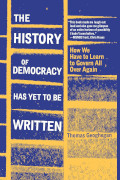
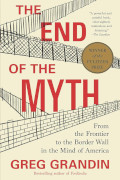
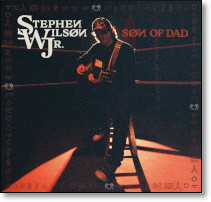
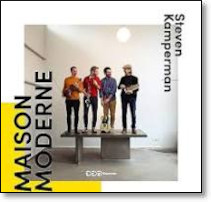
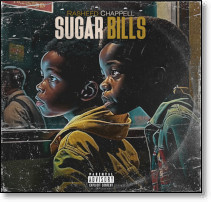
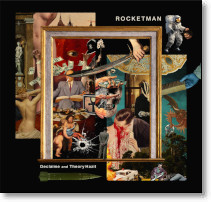
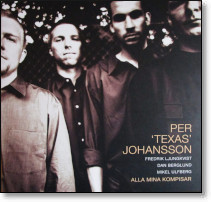
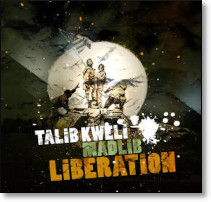
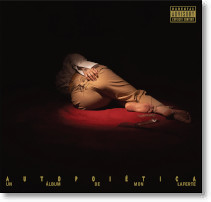
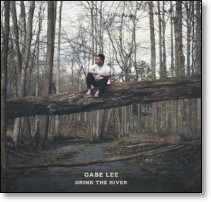
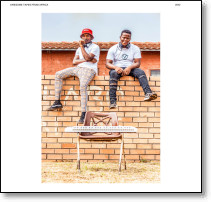
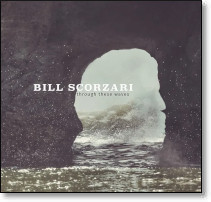
My political writing scarcely gets noticed in my own house, so I'm under no illusions about my ability to influence the world. But I do insist, to anyone willing to listen, that our great fear isn't what might happen in November, but what's actually happening day-by-day here and now. My post starts each week with links to Mondoweiss's daily reports, which given the time gap are up each day before I am. That's as good a place to start as any, although you can also track Middle East Monitor, +972, Middle East Eye, AlJazeera, Antiwar.com, Tikun Olam, Popular Resistance, and no doubt there are many others. The reporting in the Washington Post and New York Times is also pretty damning, even if their opinion writers remain under Israel's spell. The enormity of the atrocities Israel is committing is staggering, something that will redound to the long-term embarrassment of everyone not opposing not opposing it now. (Note: only three Democrats voted against the $95B military military aid bill; 19 Republicans opposed, with most objecting to the larger Ukraine component. Van Hollen gave a good speech declaring Israelis to be "war criminals," but voted for the aid anyway.) I did manage to get my political book file reopened last week, but haven't managed to do any work on it. I've promised myself one solid month of focus on it, which hasn't started yet, but is still the plan. Meanwhile, I have another essay I need to wrap up this week. And, well, there are always distractions. I spent a good chunk of time today writing an obscure notebook entry -- something even I don't consider important enough to blog about, but wanted to keep as a thought experiment. It has to do with my Old Music review of the Paranoid Style, below, and a fracas over on Facebook that made me question what I had written. If you know what I'm talking about, and care, you can probably look it up. Most likely I will eventually turn it into a Q&A answer, since that's where it started. Too late to try to say anything about the EOY Aggregate, but I'm essentially done with it. I factored in all of the albums that I had give grades to but hadn't previously picked up. I added in Christgau's Dean's List. I did a search for country music lists I had missed, and found quite a few. (A bunch of this week's records come from that work, including the Stephen Wilson Jr. pick. Diminishing returns from that work, as the other two albums pictured actually came from my demo queue. The Maison Moderne review came after the cutoff, but I figured I had the image space.) The legend is up to 612 lists now. Maybe I'll check to see what's missing, and find a few gaps, but it's pretty much all there. Usual freeze date is end of February, so I'm not feeling much pressure to wind it up. Just the opposite: fatigue. As bookkeeping tasks go, it's at most an hour's work. I'm very impressed with Greg Grandin's The End of the Myth, and should write some about it. New records reviewed this week: Colby Acuff: Western White Pines (2023, Sony Music Nashville): Country singer-songwriter, from Idaho, second album, claims he's "too Idaho for Texas, too Texas for Nashville." Good songs, and sings them hard. B+(***) [sp] Jim Alfredson: Family Business (2021 [2023], Posi-Tone): Organ player, has a previous album from 2009, gets the red carpet treatment from his new mainstream label here, with headliners Alex Sipiagin (trumpet), Diego Rivera (tenor sax), Michael Dease (trombone), Will Bernard (guitar), and EJ Strickland (drums). B+(**) [sp] Bill Anschell: Improbable Solutions (2020-23 [2024], Origin): Pianist, based in Seattle, debut 1995, adds electronics to the mix here, with guitarist Brian Monroney joining the trio on five (of nine) tracks, extra percussion on three, moving into fusion the the finale. B+(*) [cd] Alex Anwandter: El Diablo En El Cuerpo (2023, 5 AM): Singer-songwriter from Chile, started as vocalist for Teleradio Donoso, based in Los Angeles, sixth album. Big beats carry the day. B+(**) [sp] Atmosphere: Talk Talk EP (2023, Rhymesayers Entertainment): Hip-hop duo from Minneapolis, started out in 1997, still underground, despite the "EP" in the title this runs 10 songs, 40:20. Two guest spots for Bat Flower; one more shared by Buck 65 and Kool Keith. B+(**) [sp] Bad Bunny: Nadie Sabe Lo Que Va a Pasar Manana (2023, Rimas Entertainment): Puerto Rican, major reggaeton star, fifth album, first album in 2018 rose to 11 on US pop chart (1 Latin), second album hit 2, this makes 3 straight number ones. I've played them all, and never really connected -- seems to be a case where my lack of Spanish hurts (or it could just be the record's lack of beats). I took my sweet time getting to this one, because, well, it doesn't seem to have generated much buzz (EOY lists: 7 Complex, 17 Billboard, 32 Rolling Stone, 53 Uproxx Critics Poll, very little else), and because it's really long (22 tracks, 81:18). Gave me time enough to wax and wane, with stretches making me think this could really work, only to be followed by doubts it will ever work for me. B+(**) [sp] Barbie: The Album (2023, Atlantic): Original songs keyed to the Greta Gerwig-directed movie, produced by Mark Ronson, Kevin Weaver, and Brandon Weaver, with six singles (out of 17 songs), starting with Dua Lipa's "Dance the Night." The dance pop could be tuned up a bit, but some of the novelty songs (including the Billie Eilish, "Pink," and "I'm Just Ken") hit their mark. B+(***) [sp] Berlioz: Jazz Is for Ordinary People (2023, self-released, EP): All Discogs has to say is "Bassist." But the album credits list two composers: Robin Edward Phillips (piano, keyboards) and Jasper Edward Attle (producer), along with Sam Miles (saxophone) and Jihad Darwish (sitar/bass). Five songs, 15:15, jazzy instrumentation but some other postmodernist feel. B+(*) [sp] Jaap Blonk/Damon Smith/Ra Kalam Bob Moses: Rune Kitchen (2022 [2023], Balance Point Acoustics): Dutch "sound poet," voice and electronics here, backed with bass and drums. B+(*) [sp] Brothers Osborne: Brothers Osborne (2023, EMI Nashville): Country duo, T.J (lead vocals, rhythm guitar) and John (lead guitar, background vocals), from Maryland, fourth studio album since 2016, debut went gold, commercially it's been downhill since there. Not to be confused with the Osborne Brothers, a bluegrass group that ran from 1953-2005, with Bobby dying last year, and Sonny in 2021. These youngsters are more country-rock, with a little something. B+(*) [sp] Burial: Dreamfear/Boy Sent From Above (2024, XL, EP): British electronica producer William Bevan, has a couple albums from 2006-07, since then has mostly released two-sided singles, like this one (12:53 + 13:23). Seems more energetic than recent efforts. Also weirder. B+(*) [sp] Tré Burt: Traffic Fiction (2023, Oh Boy): Singer-songwriter, from Sacramento, third album, slotted folk because he landed on John Prine's label, but not much resemblance, with tags on Bandcamp all over the map. B+(*) [sp] Willi Carlisle: Critterland (2024, Signature Sounds): Folkie singer-songwriter, previous album (Peculiar, Missouri) seemed like a breakthrough, but struggles here, ending with a spoken word bit of Ozark folklore. B+(**) [sp] Jordan Davis: Bluebird Days (2023, MCA Nashville): Country singer-songwriter, second album. B+(*) [sp] John Dierker/Jeff Arnal: Astral Chronology (2022-23 [2023], Mahakala Music, EP): Bass clarinet/tenor sax with percussion, electronics, and field recordings. Both have spotty discographies, including a previous album together in 2002. This one is short (4 tracks, 21:48, but engaging and intense. B+(**) [bc] Drake: For All the Dogs (2023, OVO Sound): Canadian rapper, middle name for Aubrey Graham, debut EP 2009, breakthrough album 2010, eighth studio album, all number ones, which he's parlayed into a substantial business empire, while losing virtually all of his critical cachet. I can't begin to explain either why he's so popular, or so disliked by critics: AOTY gives him a career rating of 68 over 311 reviews, with this album scoring 50 for 13. Other than pointing to the extreme length -- 23 songs (84:50), expanded in the Scary Hours Edition to 29 (108:46) -- during which very little stands out (a rare exception is a feature for Sexyy Red and SZA that goes: "shake that ass for Drake/ now shake that ass for me"; that segues into Lil Yachty chanting, "just another late night for my bitch"). Not awful, but not by much. B [sp] Ana Frango Elétrico: Me Chama De Gato Que Eu Sou Sua (2023, Mr Bongo): Brazilian singer-songwriter, Ana Fainguelernt, third album. Some snappy dance moves. B+(**) [sp] Andy Emler MegaOctet: No Rush! (2021 [2023], La Buissonne): French pianist, albums since 1982, initial Mega Octet in 1990, ten musicians credited here, including trumpet, tuba, three saxes, guitar (Nguyen Lê), bass, drums, percussion (including marimba, tabla). B+(**) [bc] Ilhan Ersahin/Dave Harrington/Kenny Wollesen: Your Head You Know (2023, Nublu, EP): Saxophonist, Turkish roots but born in Sweden, based in New York, albums since 1996; Harrington plays guitar, bass, keyboards, and electronics, with Wollesen on drums. Three tracks (18:47). B+(*) [bc] Peter Erskine and the Jam Music Lab All-Stars: Bernstein in Vienna (2021 [2024], Origin): Drummer, best known for Weather Report, but his best work is clearest in piano trios, and he's long had a thing for big bands. Pianist Danny Grissett is musical director here, leading a septet of sax, guitar, harmonica, violin, and bass through Leonard Bernstein's most popular show tunes. B+(**) [cd] Greg Foat & Eero Koivistoinen: Feathers (2023, Jazzaggression): British pianist, all electric here (Rhodes, Roland, Prophet, Moogs), with the Finnish tenor saxophonist, and rhythm (bass, drums, extra percussion). Nice groove album, the sax a plus but not as dominant as you'd expect (or hope for). B+(*) [sp] Hardy: The Mockingbird & the Crow (2023, Big Loud): Country singer-songwriter Michael Hardy, from Mississippi, based in Nashville, second album after several EPs and mixtapes (dubbed Hixtape). Has a rep as a hard rocker, which isn't especially in evidence here until the crow comes out. I prefer the "poor boy from Mississppi," but don't mind a little noise (although I am wary of the redneck chauvinism). I don't really approve of the effort to muscle up country music into arena rock, but this makes a case. [Docked a notch for the finale.] B+(**) [sp] Ayumi Ishito: Ayumi Ishito & the Spacemen Vol. 2 (2020 [2023], 577): Japanese tenor saxophonist, graduated from Berklee, Vol. 1 came out in 2021, group includes synthesizer, theremin, guitar/bass, and drums, with voice scattered about, haunting (or mocking?) the spaciness. B+(*) [os] Maria João & Carlos Bica Quartet: Close to You (2019-21 [2023], JACC): Portuguese singer, counted in the quartet with bassist Bica, keyboards (João Farinha), and guitar (Gonçalo Neto or André Santos). Leads with four covers, disconcertingly weaving Paul Simon into Joni Mitchell's "Woodstock," scatting around "Norwegian Wood," followed by the Bacharach-David title song, and Lennon/Ono's "Oh My Love," then three originals (one with a Yeats text), and "What a Wonderful World." I was tempted to write the openers off as merely eccentric, but the title song is especially striking, and the originals find a nice musical balance, which lets the finale end as it should. A- [bc] Cody Johnson: Leather (2023, Warner Music Nashville): Country singer from Texas, ninth album since 2006, third on a major label. A voice and band as credible as most of his lot, but didn't write any of these twelve songs -- most conventional, "Jesus Loves You" should make you more than a little nervous. B [sp] Ruston Kelly: The Weakness (2023, Rounder): Singer-songwriter, originally from South Carolina, briefly married to Kacey Musgraves, third album since 2018, slotted country but I don't particularly hear that. I do hear some songs. B+(*) [sp] Knower: Knower Forever (2023, self-released): Duo of Genevieve Artadi (vocals) and Louis Cole (drums), albums since 2010 (at first under the artists' names), many more credits here, mostly electropop, when it peeks out from under the strings. B [sp] Tony Kofi & Alina Bzhezhinska: Altera Vita (For Pharoah Sanders) (2023, BBE, EP): Tenor sax and harp duet, she also goes as AlinaHipHarp, actually just a 5:34 single, so I shouldn't have bothered, but it showed up in an album list, and is quite nice, as far as it goes. B [sp] Ella Langley: Excuse the Mess (2023, Sawgod): Country singer-songwriter, from Alabama, follows up several singles with a solid eight-song, 25:09 album. B+(*) [sp] Metric: Formentera II (2023, Metric Music International): Electropop band from Toronto, ninth studio album since 2001, sequel to their 2022 album; Emily Haines is the vocalist, who co-wrote the songs with guitarist James Shaw. Songs are catchy and engaging. B+(***) [sp] Mokoomba: Tusona: Tracings in the Sand (2023, Out Here): Tonga group from Zimbabwe, third album (per Discogs) since 2012. Not far removed from the chimurenga popularized in the 1980s, but only picks up real groove power toward the end. B+(**) [sp] Nickel Creek: Celebrants (2023, Thirty Tigers): Progressive bluegrass trio, released five albums 1993-2005, disbanded, regrouped for a 2014 album, then this one. I heard nothing notable here until "Where the Long Line Leads." Fades back into oblivion, and stays there a long time. Every now and then my ears prick up, suggesting something of interest, most soon souring. Maybe that's what they mean by "progressive"? B- [sp] Old Crow Medicine Show: Jubilee (2023, ATO): Nashville-based country string band, eighth studio album since 2004. Some gospel flourishes this time. B [sp] Dave Pietro: The Talisman (2023 [2024], SteepleChase): Alto saxophonist, half-dozen albums 1994-2008, only a couple since. Mainstream lineup with Scott Wendholt (trumpet), Gary Versace (piano), Jay Anderson (bass), and Billy Drummond (drums). B+(**) [sp] Dougie Poole: The Rainbow Wheel of Death (2023, Wharf Cat): Country-ish singer-songwriter from Brooklyn, third album, some good songs, ends on a soft note. B+(*) [sp] Noah Preminger/Kim Cass: The Dank (2023, Dry Bridge, EP): Duets, sax/clarinet/flute/synth and bass/guitar. Eight short pieces, 20:06. B+(**) [bc] Nicky Schrire: Nowhere Girl (2023, Anzic): Jazz singer-songwriter, born in London, grew up in Cape Town, studied in New York, wound up in Toronto, debut album 2012. I'm not seeing song credits, but the only one I recognize is "Heart Like a Wheel," which focuses the remainder for McGarrigles fans. B+(*) [sp] Laura Schuler Quartett: Sueños Paralelos (2021 [2023], Antidrò): Swiss violinist, debut 2018, with Tony Malaby (tenor sax), Hanspeler Pfammatter (synthesizer), and Lionel Friedli (drums), leaning free (last title is "Baby It's Freejazz"). B+(**) [sp] Sparks Quartet [Eri Yamamoto/Chad Fowler/William Parker/Steve Hirsh]: Live at Vision Festival XXVI (2022 [2023], Mahakala Music): Piano, sax/flute, bass, drums; quartet released an album as Sparks in 2022, so are following it up with a live set here. B+(**) [bc] Peter Stampfel/Eli Smith/Walker Shepard: Wildernauts (2024, Don Giovanni): Folk "supergroup" releases their eponymous debut, but I had to look the others up: Discogs shows side-credits for both, mostly playing banjo, including Have Moicy 2. The leader's voice remains instantly recognizable, even as tattered as it is, even as backup ("Picking Dandelions"). Some covers, like the opener "Crazy Arms," and "There Stands the Glass," register right away. Others will take more dedication. B+(**) [sp] Tani Tabbal Quartet: Intentional (2022 [2023], Mahakala Music): Drummer, only a couple albums as leader but has side credits starting in 1981 with Roscoe Mitchell, later with David Murray, then was in James Carter's quartet during its prime period. Here with Joe McPhee (tenor sax/poetry), Adam Siegel (alto sax), and Michael Bisio (bass). B+(***) [bc] Truth Cult: Walk the Wheel (2023, Pop Wig): Emo/hardcore band from Baltimore, second album after a 2018 EP, eleven songs, 27:22. Heavy enough I set the "metal" flag, but sharp enough I let them have their say. B+(*) [bc] Turnpike Troubadours: A Cat in the Rain (2023, Bossier City): Country band from Oklahoma, sixth album since 2007, steady, pleasant performers, fiddle helps with the old timey feel, don't have much to say, but at least what they have to say isn't bad. B [sp] Morgan Wallen: One Thing at a Time (2023, Big Loud): Country singer-songwriter, from Sneedville, Tennessee, third studio album since 2018, seems like much more, sprawling from 14-songs (45:11) to 30-songs (96:53) to 36-songs (111:36). Huge bestseller, Billboard's number one album for 2023. I've avoid this due to anticipated fatigue and poor reputation, but a very cursory stream does little credit to either excuse. He writes (with help) ordinary songs, gives them fashionably tradish arrangements, and has an agreeable voice. No one will ever mistake him for Merle Haggard (or, for that matter, Don Williams), but you can drink, or I can write, with him in the background, and never give him a serious thought, even if you happen to pay some attention. B+(*) [sp] Stephen Wilson Jr.: Søn of Dad (2023, Big Loud): Country singer-songwriter, from Indiana, first album, about his father, got a little carried away (21 songs, 90 minutes). Still, the first three songs set the stage, showing an interest in social realism and demonstrating sonic tricks (including that "strong Southern drawl" but also booming guitar with a bit of fiddle) to sustain the effort. As for his daddy complex, I have my doubts -- what kind of father teaches his age-5 son to box? not mine, but but I can't say much more in his favor. I keep wondering whether I should revisit Zack Bryan, a good album, but one where the length ultimately wore me down. But even if it earns its reputation, I'd be very surprised if will hold up this well. A- [sp] Recent reissues, compilations, and vault discoveries: Tubby Hayes: No Blues: The Complete Hopbine '65 (1965 [2023], Jazz in Britain): British tenor saxophonist, one of the few real bebop masters, lived fast and died young (1935-73). With Kenny Powell (piano), Ron Mathewson (bass), and Dick Brennan (drums), with Hopbine host and fellow tenor saxophonist Tommy Whittle joining for a couple of jousts. Burns intense and long (7 tracks, 95:39), though sometimes the mic seems to wander off. B+(***) [sp] Jeffrey Lewis: Asides & B-Sides (2014-2018) (2014-18 [2023], self-released): Antifolk singer-songwriter, got started with a self-released cassette in 1998, has a couple albums suggesting career development, then reverts to DIY obscurity, like his recent series from 2019 Tapes through 2022 Tapes -- on Bandcamp but not enough to review. In 2022, he scraped together a 7-track EP called When That Really Old Cat Dies, which has since all but disappeared, even from Google, evidently supplanted by this miscellany, extending the EP to 10 songs, 31:12, finally showing up on Spotify (after I failed to find it just a week ago). Doesn't add much, but did get "The Guest List" a couple more spins. B+(***) [sp] Lou Reed: Hudson River Wind Meditations (2007 [2024], Light in the Attic): An hour-plus of ambient electronica, as far off his beaten path as Metal Machine Music, and certainly more age-appropriate for what appears to have been his last album. And good enough that he could have had a decent career had he started in this vein decades earlier -- not that you or I would have heard of him. B+(**) [sp] Taylor Swift: 1989 (Taylor's Version) (2023, Republic): Her fifth album in 2014, now the fourth to get the "Taylor's Version" treatment, which doesn't seem to be anything more than a scam to make more money off back catalogue while giving less of it to Big Machine. I'm not making judgments on that, although I'm also not arguing with anyone who wants to argue against on ethical and/or artistic grounds. I streamed the original, liked it enough for a B+(***), but don't remember a single song, and have no desire compare versions. It's as if I'm hearing a new album for the first time, although it seems unfair to the rest of the world not to list it among reissues. Original grade seems about right. B+(***) [sp] Barbara Thompson: First Light (1971-72 [2023], Jazz in Britain): British saxophonist (1944-2022), had played with Howard Riley, Michael Gibbs, and Neil Ardley before this, also the rock band Colosseum (she married their drummer, Jon Hiseman), but became better known after 1978 with her Paraphernalia groups. This starts with two Group E pieces, with her on soprano sax and alto flute, and Peip Lemer singing (21:10). That's followed by a big band piece (26:38), then five tracks with her Jubiaba group (29:39; the group finally released an album in 1978). The vocals add to the mess of the first two sets. Jubiaba is also messy, but explodes in rhythm often enough to raise your hopes. B [bc] Old music: The Paranoid Style: The Power of Our Proven System (2013, Misra, EP): A reader sent me this YouTube playlist so I could "check it off my list," like this one (updated but not regularly maintained). This was evidently the first of three EPs later combined in unhelpful ways (like a 2013 Misra cassette), a five-song (21:59) digital release, each with its own video (which I've played through several times, but never managed to watch through). Straitlaced indie rock with copious smarts, a formula Elizabeth Nelson and Timothy Bracy have stuck doggedly with, even through full albums like 2016's Rolling Disclosure and the new one, The Interrogator -- both recommended. B+(***) [yt] Unpacking: Found in the mail last week:
Ask a question, or send a comment. Sunday, February 11, 2024 Speaking of WhichIt's pretty exhausting trying to wrap this up on Sunday evening, early enough so I can relax with a bit of TV, a few minutes on the jigsaw puzzle, a few pages in my current book, and maybe a bit of computer Mahjong before I run make to get a jump on Monday's Music Week. After a night's sleep, chances are good that I'll think of some introductory text, and stumble across a couple stories I initially missed. If I do, I'll add them and mark them accordingly, with that red right-margin border. But if you want a pull quote right now, it's probably this:
Initial counts: 145 links, 5,485 words. Top story threads:Israel:
Mondoweiss: Israel vs. world opinion:
America's expansion of Israel's world war:
Trump, and other Republicans:
Biden and/or the Democrats:
Lots of people have unsolicited advice for the Biden campaign, which frankly seems to need one, but New Republic came up with a bundle of them this week -- enough to break out from the news items above, so let's collect them here.
Legal matters and other crimes:
Climate and environment:
Economic matters:
Ukraine War:
Around the world:
Other stories:Al Jazeera: [02-02] Ex-CIA software engineer who leaked to WikiLeaks sentenced to 40 years: "Joshua Schulte had been found guilty of handing over classified materials in so-called Vault 7 leak. Nicholson Baker: [01-31] No, aliens haven't visited the earth: "Why are so many smart people insisting otherwise?" Harry Brighouse: [02-05] What's wrong with free public college? Some reasonable points, but I'm not much bothered that a right to free higher education would benefit the middle class more than poorer students. Lots of worthwhile programs do the same, but we shouldn't, for example, give up on airline safety just because the beneficiaries skew up. Elizabeth Dwoskin: [02-10] How a liberal billionaire became America's leading anti-DEI crusader: Profile of Bill Ackman. Another rich guy with money to burn, but how does having donated to Clinton and Obama make him any kind of liberal? Nicholas Fandos: [02-10] What to know about the race to replace George Santos: "The special House election in New York pits Mazi Pilip, a Republican county legislator, against Tom Suozzi, a former Democratic congressman." In other words, the Democrats nominated the most anodyne white guy possible, while the Republicans calculated that the best way to advance their racist, sexist, nativist agenda was by nominating a black female Jewish immigrant from Ethiopia. Abdallah Fayyad/Nicole Narea/Andrew Prokop: [02-09] 7 questions about migration and the US-Mexico border, answered. More border:
Rebecca Gordon: [02-11] Banning what matters: "Public libraries under MAGA threat." Joshua Keating: [02-06] Welcome to the "neomedieval era": "Nations like the US have more firepower than ever before -- but they also appear weaker than ever. The upshot is a world that feels out of control." Carlos Lozada: [02-16] : I was expecting, perhaps even hoping for, a Consumer Guide-style compendium of notes on political books, but instead got an introductory essay adapted from his forthcoming The Washington Book: How to Read Politics and Politicians. Of course, unless you're a writer with a specific assignment, it's very unlikely you'd actually have to read any book written by (or for) a Washington politician, nor would you do so voluntarily. But I find that such surveys, such as I attempt in my book roundups, can be useful for sampling the state of public discourse. By the way, I did finally pick up a copy of Lozada's What Were We Thinking: A Brief Intellectual History of the Trump Era, but I haven't gotten around to it yet. Clare Malone: [02-10] Is the media prepared for an extinction-level event? "Ads are scarce, search and social traffic is dying, and readers are burned out. The future will require fundamentally rethinking the press's relationship to its audience." AW Ohlheiser: [02-08] What we've learned from 20 years of Facebook. Nathan J Robinson:
Jeffrey St Clair: [02-09] Roaming Charges: Comfortably dumb. Harsh on Biden. Quote:
Bryan Walsh: [02-10] Taylor Swift, the NFL, and two routes to cultural dominance: My minor acknowledgment of the week's overweening culture story, not that I have anything to say about it. Cultural dominance isn't what it used to be LVIII years ago, when the Chiefs I remember fondly -- Len Dawson, Otis Taylor, Ed Budde, E.J. Holub, Buck Buchanan -- got butchered by the Green Bay Packers (IV was much more satisfying), while the Beatles, Rolling Stones, Bob Dylan, and James Brown were regularly outdoing themselves. These days, even the largest stars seem much smaller than they did when I was fifteen, because we now recognize that the world is so much larger. I haven't watched football since the 1980s (or baseball since the 1990s), and while I still listen to quite a bit of popular music, I doubt that any new artist has occupied as much as 1% of my time since 2000. I've listened to, and clearly like, Taylor Swift, but I hardly recognize her song titles, and certainly couldn't rank them (as Rob Sheffield did, 243 of them). I suppose you could chalk that up to age, but I'm feeling the least bit nostalgic. I reviewed more than 1,600 records last year. In 1966, I doubt I heard more than 10 -- supplemented, of course, by KLEO and TV shows like Shindig! and Hullabaloo, but the universe I was conscious of extended to at most a couple hundred artists. Back then, I thought I could master it all. Now I know I never stood a chance. I know I promised, but what the hell:
Li Zhou: [02-06] The Grammys' Beyoncé snubs speak to a deeper problem: Beyoncé was snubbed? "They're emblematic of how the awards have failed Black artists." As someone who has never had any expectation of Grammy ever doing anything right, I find the very notion that anyone could be so certainly deserving of a win as to be snubbed baffling. Sorry for doing this to you, but I'm going to quote a Donald Trump tweet (quoted by Matthew Yglesias, reposted by Dean Baker, my emphasis added):
Yglesias responded: "This stuff is demented but it also serves to deflect attention from the boring reality that what he's going to do is cut rich people's taxes, raise prescription drug prices, let companies dump more shit in the water, etc etc etc." There's a lot of hyperbole in this pitch, but who can doubts that there are warmongers in the cururent government, that they are pushing us into more perilous foreign entanglements, and that Biden isn't likely to restrain much less break from them. There's good reason to doubt that Trump can fix this, but if he wants to campaign on the promise, many people will find slim chance preferable to none. Moreover, the rest of his pitch is coherent and forceful, and is likely to resonate with the propaganda pitch much of the media -- and not just the shills at Fox -- have been pushing over the last decade. Countering that Trump won't really do this just feeds into the paranoia over the Deep State -- which, to be sure, thwarted him in 2017, but this time he knows much better what he's up against. Worse still is arguing that his actual government will be boring, with a side of petty corruption, just shows you're not listening, and also suggests that you don't much care what happens. If Trump did nothing more than check off Yglesias's list, he'd still be a disaster for most Americans. But at the very minimum, he's going to do much more than that: he's going to talk, and he's going to talk a lot, and he's going to bring more people into government and media who are going to add ever more vicious details to the mass of hate and pomposity he spews. And even though lots of us are going to recoil in horror, we'll still have to stuggle to survive being inundated by it all, all the while suffering the glee of our tormenters. Of course, the "Final Battle" and "once and for all" is as over the top as the Book of Revelation he's taken to heart. But that it can't happen won't make them any less determined, or dangerous, or dreadful. Ask a question, or send a comment. Monday, February 5, 2024 Music Week
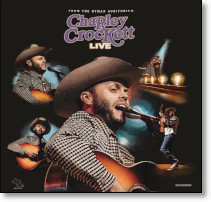
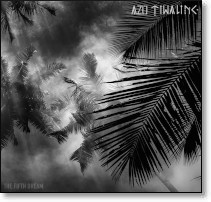
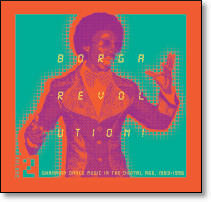
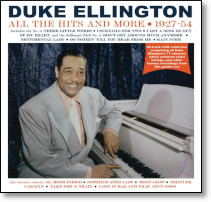
February archive (in progress). Music: Current count 41777 [41743] rated (+34), 21 [16] unrated (+5). Very late start here, but I don't have much to say, so let's just get it out of the way. I published another Speaking of Which Sunday evening. Came out with more links than usual (141), but fewer words (4726), so I didn't do much commenting. Today I added another 1000 words of introduction, but only 5 more links. Look for the red stripe in the right margin. The new words try to explain why some of the things people say to frame what Israel and the US are doing in ways that further genocide and poison any prospect for peace. I'm about 100 pages into Greg Grandin's The End of the Myth: From the Frontier to the Border Wall in the Mind of America. I thought about quoting several sections that seem particularly relevant to the present, especially about how the notion of an expandable frontier, driven by new settlement, leads to racism at home, war abroad, and genocide for whoever gets caught in the middle. In America this is the dynamic of Jefferson's "Empire of Liberty," of Jackson's "Indian Removal," and of Polk's "Mexican War." Many people understand Israel (like America, South Africa, and Algeria) as an example of attempted Settler Colonialism, but few people have noted the significance of Ben Gurion's refusal in 1948 to declare or, even after defining armistices in 1950-51, define Israel's borders -- even though Ben Gurion had lobbied hard to get the UN to approve a partition plan with defined borders. I'm struggling to revise an old blog post I wrote about "reading obituaries" for possible inclusion in a book some friends are intent on publishing, and I'm tearing my hair out over my inability to focus on that task, or indeed on much of anything. That in turn has left everything else on hold. I figured I'd wrap up the EOY aggregate once I counted Robert Christgau's Dean's List: 2023. It's out now, and I've split it up into essay and list, but I haven't counted it yet. I also haven't updated the Consumer Guide database and added the links from the list file to the database. Later this week. I did add a few things to the EOY aggregate, like the Free Jazz Collective Album of the Year and individual critic lists for their writers who didn't vote in the Francis Davis JCP -- I've taken names, 11 of them, compared to the 7 who did vote. I'd also like to point out that Mark Lomanno is doing a very nice Month in Review series. It's perhaps a bit more mainstream than the monthly columns Phil Freeman writes for Stereogum and Dave Sumner for Bandcamp Daily, but is a very welcome development. I've been neglecting my 2024 music tracking file, but with both labels and release dates, it makes updating too easy to ignore. Also note that Paul Medrano is making an effort to track all 2024 New Jazz Music Releases, also in very usable format. I hope some readers here will find a way to help him out. I also want to recommend one of the very best EOY reports I've seen this year, Tris McCall's Pop Music Abstract 2023, which is basically a whole year's worth of well-written reviews. I added all of the albums cited to my EOY Aggregate (code: tmr:+), even after I realized that not all of them were positive reviews; e.g.:
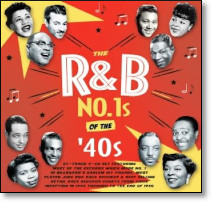
Which was even more to the point than even my own B− review. But also take a look at his Lemon Twigs review, which does a marvelous job of putting into words what I was thinking when I simply jotted down C+. Rated count is significantly down this week, to which I can only say, "whew!" Two 4-CD boxes, though, that I actually bought, and possibly cut them some slack (certainly gave them more time) as a result. Still lots of technical glitches around the office and home, but I did get my main computer's speakers working, so I'm able to start playing downloads and Soundcloud and YouTube links again. One thing I didn't do last week was pay any attention to my demo queue, for for that matter to 2024 releases (although five snuck in anyway, including one A−). New records reviewed this week: Ben Allison/Steve Cardenas/Ted Nash: Tell the Birds I Said Hello: The Music of Herbie Nichols (2022 [2024], Sonic Camera): Bass, guitar, and tenor sax, fourth album as a trio, also effectively a successor to Allison's Herbie Nichols Project, which recorded three albums 1996-2001, and returns here with arrangements of eight previously unperformed compositions by Nichols (1919-63). B+(***) [sp] Chuquimamani-Condori: DJ E (2023, self-released): Evidently the work of the California-born electronica producer who has mostly released albums as Elysia Crampton (her name give or take a Chuquimia), although credits here include Elly, Joshua Chuquimia Crampton, and PK Crampton. A back story almost as glitchy as the music, which somehow grows on you if you can resist the temptation to exit immediately. B+(*) [bc] City Girls: Raw (2023, Quality Control/Motown): Miami hip-hop duo, Yung Miami and JT, third studio album since 2018. B+(**) [sp] Isaiah Collier: Parallel Universe (2023, Night Dreamer): Chicago-based saxophonist (also flute, keys, vocals), has a couple albums, mostly talks his way through expansive r&b-based grooves, really breaks out when the sax finally breaks free. B+(***) [sp] Craven Faults: Standers (2023, The Leaf Label): British electronica artist, described as "enigmatic," favors analogue synthesizers, EPs since 2017 and albums since 2020. Nice and steady. B+(***) [sp] Charley Crockett: Live From the Ryman Auditorium (2022 [2023], Son of Davy): Country singer-songwriter, has been releasing trad-themed records at a furious pace since 2015, building up a songbook that he crafts into a fine best-of here. A- [sp] DJ Danifox: Ansiedade (2023, Principe): Daniel Veiga, based in Lisbon, draws on Afro-Portuguese styles like batida, talking over light, lilting beats, with bits of guitar amidst the percussion. B+(**) [sp] Evelyn Davis/Fred Frith/Phillip Greenlief: Lantskap Logic: Hidden Danger Lets Me In (2022 [2023], Clean Feed): Pipe organ, electric guitar, clarinet/alto sax; second group album, after Lantskap Logic in 2013, at which point they referred to themselves as Drone Trio. More ambient here, but set in a very old church. B+(*) [bc] DJ K: Panico No Submundo (2023, Nyege Nyege Tapes): Brazilian funk producer, (19) of his name at Discogs. Broken beats, heavy chants, metallic clunk and grind. B+(*) [sp] Chad Fowler/George Cartwright/Kelley Hurt/Christopher Parker/Luke Stewart/Steve Hirsh/Zoh Amba: Miserere (2023, Mahakala Music): Free jazz bash, recorded in Little Rock, with visitors from Memphis and points beyond -- Cartwright (alto/tenor sax, guitar) is the senior citizen and mentor to this bunch, with two more saxophonists (Fowler and Amba), piano (Parker), bass (Stewart), drums (Hirsh), and voice (Hurt). B+(**) [bc] Chad Fowler/Shanyse Strickland/Sana Nagano/Melanie Dyer/Ken Filiano/Anders Griffen: Birdsong (2022 [2024], 'Mahakala Music): Leader plays strich and bass flute; Strickland French horn and flute, with a vocal bit; the others violin, viola, bass, and drums, quite impressive (except for the vocal). B+(**) [sp] Jayda G: Guy (2023, Ninja Tune): Canadian DJ and producer, actual name Jayda Guy, moved from Grand Forks to Vancouver, then to Berlin, finally to London. Second studio album, also has a DJ-Kicks. B+(***) [sp] Tim Hecker: No Highs (2023, Kranky): Canadian electronica producer, ambient division, dozen-plus albums since 2001, wound up writing a PhD thesis on urban noise. Describes this as "a beacon of unease against the deluge of false positive corporate ambient currently in vogue" -- a fair description of much of his own recent work, and much more interesting for the effort. B+(***) [sp] Abdullah Ibrahim: 3 (2023 [2024], Gearbox): South African pianist, has had a remarkable career since his 1963 debut Duke Ellington Presents the Dollar Brand Trio. Trio here with Cleave Guyton Jr. (flute/piccolo) and Noah Jackson (bass/cello). This offers two sets, the second live before a very appreciative audience. Nice stuff when you pay attention, but much of it slips by easily if you don't stay on top of it. B+(*) [sp] Jonas Brothers: The Album (2023, Republic): Successful boy band, formed 2006 by brothers Nick, Joe, and Kevin Jonas, sold 17 million copies through 2013, by which time they were pursuing solo projects. Regrouped for a 2019 album, and one more here. It seems to have sold well, but didn't show up in the first 500 lists I collected for my EOY aggregate. Attractive album, although I tired of the overblown finale. B+(*) [sp] Lia Kohl: The Ceiling Reposes (2021-22 [2023], American Dreams): "Sound artist," based in Chicago, plays cello, synths, kazoo, concertina, wind machine, piano, drums, bells, and live radio. B+(**) [sp] Jamie Leonhart: The Illusion of Blue (Side A) (2022, self-released, EP): Jazz singer-songwriter, has a previous album from 2008, very little info on this one, except that it seems to be released as two EPs, this one six songs, 22:34. B- [sp] Jamie Leonhart: The Illusion of Blue (Side B) (2022, self-released, EP): Kicks this one -- five songs, 24:25 -- off with a cover ("What's So Funny About Peace, Love and Understanding?"), followed by another covers ("Willow Weep for Me") and other less substantial songs I'd have to look up. B- [sp] Bonnie Montgomery: River (2023, Gar Hole): Country singer-songwriter from Arkansas, eponymous debut in 2014, fourth album. Claims a "big voice," but there's something a bit off, and big production does the opposite of helping. The more trad backdrops help a bit, but ultimately one just acquiesces, and accepts her as a pretty decent songwriter. B+(*) [sp] Ulysses Owens Jr. and Generation Y: A New Beat (2023 [2024], Cellar Music): Drummer, debut 2012, leads a large group here through hard bop that may be new to the young musicians, who at least keep it fresh. B+(**) [sp] The Paranoid Style: The Interrogator (2024, Bar/None): Singer-songwriter (and culture critic) Elizabeth Nelson's front group, several EPs and albums since 2013. The music is almost perfectly straightforward -- aside from flashes of superior guitar, that is -- so one gets the feeling that lyrics are decisive, but I'm too slow on their uptake to note more than their intelligence and erudition. Not sure if I can ask for more than that. A- [sp] Luciana Souza & Trio Corrente: Cometa (2023, Sunnyside): Brazilian jazz singer, studied in Boston, taught in New York, based in Los Angeles, more than a dozen albums since 1998, trio here with Fabio Torres (piano), Paulo Paulelli (bass), and Edu Ribeiro (drums). B+(**) [sp] David Tamura + Toadal Package: Final Entrance (2023, JPN): New York-based saxophonist (tenor/soprano, also keyboards), "plays noise rock and free jazz," also in a group called The JazzFakers. Backed here with guitar (Cosmo Gallaro), bass (Brenna Rey), and drums (James Paul Nadien). A bit too noisy for me, but that's probably the point. B+(**) [bc] Azu Tiwaline: The Fifth Dream (2023, IOT): Electronica producer, from Tunisia, second album. Deep, dark, dreamy too, but with a hard industrial frame, not as advertised "guiding us warmly towards trance-inducing hyper states of dance & delight," but strangely comforting anyway. A- [sp] Mark Turner Quartet: Live at the Village Vanguard (2022 [2023], Giant Step Arts): Tenor saxophonist, one of the top ones to emerge in the 1990s, with major label releases on Warners, and much more recently on ECM. So I was surprised that this, unlike other albums on this new label, never showed up in my queue. Live set with Jason Palmer (trumpet), Joe Martin (bass), and Jonathan Pinson (drums). Lots of skill here, but not so much spark. B+(**) [sc] Wiki & Tony Seltzer: 14K Figaro (2023, Wikset Enterprise): Rapper Patrick Morales, prolific since 2015, with producer Antonio Hernandez. B+(***) [sp] Eri Yamamoto: Colors of the Night Trio (2022 [2023], Mahakala Music): Japanese pianist, moved to US in 1995, played on several William Parker projects, plus her own (mostly trio) records since 2001. This is another trio, with Parker on bass and Ikuo Takeuchi on drums. B+(**) [sp] Recent reissues, compilations, and vault discoveries: Borga Revolution! Volume 1: Ghanaian Dance Music in the Digital Age, 1983-1992 (1983-92 [2022], Kalita): I've long understood that highlife was the superpowered pop music that evolved in Ghana in the 1970s, whence it spread to Nigeria and mutated into juju and other forms, and of course there was a connection to London, but I didn't realize there was a German one, or that it would be called "burger highlife." That's the focus here, featuring George Darko, Wilson Boateng, and Uncle Joe's Afri-Beat, shifting slightly toward electro-dance music. B+(***) [sp] Borga Revolution! Volume 2: Ghanaian Dance Music in the Digital Age, 1983-1996 (1983-96 (2023), Kalita): Further explorations in the Ghanaian diaspora, including a couple names likely to be recognized elsewhere (A.B. Crentsil, Pat Thomas). Advantage over Volume 1 is in the more sustained dance grooves. A- [sp] The Dave Brubeck Quartet: Live From the Northwest, 1959 (1959 [2023], Brubeck Editions): Four cuts from the Multnomah Hotel in Portland, plus three more from Clark College in Vancouver, WA, both in April, before Take Five came out, mixed with four standards up front (starting with a rather frothy "When the Saints Go Marching In"), two originals, then "The Lonesome Road." Fine piano, with Paul Desmond (alto sax), Eugene Wright (bass), and Joe Morello (drums). This is, of course, quite nice, but not much more. B+(***) [r] Duke Ellington: All the Hits and More 1927-54 (1927-54 [2023], Acrobat, 4CD): This seemed like a useful idea, chronicling the period when jazz was popular music through the longest-running, most consistent, and most often brilliant of the era's big bands, even if strictly following the charts has never been surefire. Also because the standard RCA compilations, up to and including the 24-CD Centennial Edition box, skip over the 1932-40 period, when Ellington recorded mostly for Brunswick -- sides that have only been collected on the French Classics label and, finally in 2010, a pricey 11-CD Mosaic box. This is evenly balanced among all of Ellington's labels, confirming the common judgment that the RCA sides from 1927-28 and 1940-46 were peak periods (along with much of his later work, including Newport in 1956 and many of the suites and tributes and small groups from then through the end of the 1960s), but also reminding us that the maligned 1930s and the Hodges-less early 1950s still produced copious brilliance. About the only complaint one might make is that the chart-focus favors singers, which Ellington had -- how to put this? -- rather idiosyncratic taste in. Comes with a substantial booklet with full credits. A [cd] Kantata: It's High Time Now (1986 [2023], BBE): Burger highlife band from Ghana, Lee Duodu the lead singer and Ogone Kologbo the guitarist, with sax, keyboards, bass, drums, and more percussion. Takes a bit of time to find the right gear, but finally gets there. B+(***) [sp] The R&B No. 1s of the '40s (1942-50 [2023], Acrobat, 4CD): As with the Ellington box, the booklet provides detailed credits and useful history. But the strict chart focus produces some anomalies, especially early on, when Paul Whiteman, Harry James, Benny Goodman, Ella Mae Morse, and Bing Crosby topped the r&b charts (the latter with, of all things we don't need another copy of, "White Christmas"). Indeed, up to 1945, the r&b charts seem to have been dominated with novelties ("Cow Cow Boogie" was one of the better ones, by Ella Fitzgerald with the Ink Spots). The transition comes awkwardly with two takes of "I Wonder," Cecil Gant's original and a cover by Roosevelt Sykes, taken from a badly worn 78. After that, the first thing you realize is how Louis Jordan dominated the decade (18 songs, compared to 5 each for Duke Ellington, Nat King Cole, and the Ink Spots; Fitzgerald shares 2 songs with the Ink Spots and one with Jordan; no one else has more than 2). Later years advance significantly toward rock and roll, without taking explicit aim -- for that, you'd be better served by the first disc of The Roots of Rock 'n' Roll 1946-1954 (3-CD, on Hip-O) or The First Rock and Roll Record (another 3-CD, Famous Flames) or the first disc of The R&B Box (6-CD, on Rhino, 1944-74, canon-defining), or Rhino's Blues Masters on jump blues (Volume 5: Jumb Blues Classics, and Volume 14: More Jump Blues). And, of course, if you went that direction, you'd need more Louis Jordan: MCA's original CDs The Best of Louis Jordan and Five Guys Named Moe: Vol. 2 are essential. How much more is hard to judge, but the 4-CD Properbox (Jivin' With Jordan) doesn't flag, and there's a similar 4-CD JSP box -- although I've heard that the 9-CD Bear Family box is de trop. A- [cd] Papa Yankson: Party Time (Odo Ye Wu) (1989 [2023], Kalita): Ghanaian highlife singer-songwriter (1944-2017), various spellings which may or may not include Kofi. B+(***) [sp] Old music:
Unpacking: Found in the mail last week:
Ask a question, or send a comment. Sunday, February 4, 2024 Speaking of WhichNo introduction for now. I really need to be working on other things. This is driving me crazy. Right now, all I really want is to move it out of the way. Initial count: 141 links, 4726 words. Revised: 146 links, 5723 words. After posting, I ran into a couple items that merit additional comments, mostly because they exemplify the kind of shoddy thinking that promotes war (or vice versa). Harlan Ullman: [01-31] We don't need a Tonkin Gulf Resolution for the Red Sea. Headline is ok, but the hawks don't need one because Biden is escalating the war on his own authority -- as presidents have tended to do ever since the "blank check" war authorization Johnson secured in 1964. But nearly everything else here is wrong-headed or at least seriously muddled. The bit that got to me was "Hamas' Oct. 7 attack on Israel, diabolically designed to elicit an Israeli overreaction." He seems to be saying that Israel had no agency in the matter. And now the Houthis, having "plagiarized Hamas' Oct. 7 attack," have tricked the US into bombing Yemen, risking escalation into a broader regional war -- for which, no doubt about this, Ullman will find sinister designs in Tehran. Of course, there is a perverse kernel of truth to this: Israel and the U.S. are such dedicated believers in security through deterrence that they feel obliged to meet any challenges with overwhelming force, with scarcely a thought given to collateral victims, let alone to how the resulting atrocities damage their credibility and their own psyches. But given their massive investments in intelligence gathering, in war gaming, and in propagandizing, it's hard to accept that their warmaking is merely a conditioned reflex, something that a marginal ideologue with a martyr complex could simply trigger. (As Laura Tillem put it: "Bin Laden was a hypnotist who said look into my eyes, you will now pour all your resources down the drain.") Rather, they must somehow believe that terror suffices to suppress the aspirations of the disempowered people who inconveniently occupy parts of the world they feel entitled to rule. Still, they feel the need to paint themselves as innocent victims -- a claim that is only plausible in the wake of a sudden outburst, which is why Netanyahu on 10/7, like Bush on 9/11, seized the opportunity to take the offensive and do horrible things long dreamed of but rarely disclosed. By the way, Ullman lays claim to have been the guy who thought up the "shock and awe" strategy that promised to instantly win the war against Saddam Hussein. It didn't, perhaps because only the dead were truly shocked and awed. The rest simply learned that they could survive, and resolved to fight on. But imagine, instead, the kind of people who got excited by the Powerpoint presentation. Those were the people, from Bush to the Pentagon to their affiliated "think tanks," who, intent on proving their own superiority, brought death and havoc to 20 countries over 20 years. Most were genuinely envious of Israel, which they saw as the one government truly free to impose its superior power on its region and their unfortunate peoples. So now that Israel has finally moved from systematic discrimination reinforced withsporadic terrorism to actual genocide, they're giddy with excitement. Ullman advises them to "act boldly to cripple Houthi and Islamic militant capabilities," but he's also advising a measure of stealth, unlike the "real men go to Tehran" crowd. The second piece I wanted to mention came from Democracy Today: [02-05] U.S. & Israel vs. Axis of Resistance: Biden Strikes New Targets in Middle East as Gaza War Continues. The transcript includes an interview with Narges Bajoghli, an "expert" who likes to throw about the term "Axis of Resistance." Evidently, this is enough of a thing that it has its own Wikipedia page (as does Iran-Israel proxy conflict, linked to under "Purposes for the Axis"). The term "Axis of Resistance" is internally incoherent and externally malicious. "Axis" implies organization and coordination of a power bloc, which hardly exists, and even where possible is informal. "Resistance" is something that arises locally, wherever power is imposed. Palestinians resist Israeli power, wherever it is felt, sometimes violently, mostly non-violently, but in Israeli-controlled territories to little or no effect. When Israel occupied Lebanon, resistance was generated there as well, most significantly coalescing into Hezbollah. Resisters may come to feel solidarity with others, and may even help each other out, but resistance itself is a limiting function of power. "Axis of Resistance" was nothing more than a rhetorical twist on Bush's "Axis of Evil." What makes the term dangerous is that it's being used to organize a coherent picture of an enemy that Israel can goad America into waging war against. (Israelis have no wish to be the "real men" invading Iran, but would be happy to cheer Americans on, especially as a hopeless war there would deflect qualms about genocide.) Bajoghli isn't as fully aligned with the hawks as Ullman is, but inadvertently helps them by buying this significant propaganda line. A realistic analysis would see that there are obvious opportunities to breaking up this "axis": Iran wants to end its isolation, and be able to trade with Europe and America (as, it was starting to do before Trump broke the nuclear deal and reimposed sanctions); Assad would do virtually anything except surrender power for stability; Yemen and Lebanon have been wracked by civil wars for decades, mostly because local power is fragmented while foreign powers have been free to intervene. These and many other problems could be solved diplomatically, but what has to happen first is to turn the heat down, by demanding a ceasefire in Gaza and beyond, along with discipline against the pogroms in the West Bank. Israel needs to see that their dreams of a "final solution" to the Palestinians are futile: there is no alternative to living together, in peace, with some tangible sense of justice. Not everyone on every side is going to like that, but a democracy of all should be able to come to that conclusion. Top story threads:Israel:
Israel vs. world opinion:
America's expansion of Israel's world war:
Trump, and other Republicans:
Ankush Khardori: [02-01] Inside Trump's costly outburst: 'Like an 8-year-old having a temper tantrum': "Roberta Kaplan's strategy delivered E. Jean Carroll $83 million from Donald Trump. Federal prosecutors may want to take note." Mattea Kramer/Sean Fogler: [02-01] When in doubt, strip search and restrain the unwell: "'Helping' people by shaming them -- and canceling their civil rights." Paul Krugman: [01-29] MAGA is based on fear, not grounded in reality. He inadvertently reminds us that Nikki Haley is on the same page, when he quotes her as saying, "we've got an economy in shambles and inflation that's out of control." Krugman followed that column with what he intended as a "reality-based" corrective: [02-01] Our economy isn't 'Goldilocks.' It's better. Chris Lehmann: [01-30] GOP border theatrics have escalated threats of civil war. Patricia Lopez: [02-03] Some GOP governors would let kids go hungry to spite Biden. Andrew Prokop: [02-01] The chances that Trump will be a convicted felon by Election Day have dropped: "It could still happen -- but the four prosecutions of Trump have been beset by delays and challenges." Nikki McCann Ramirez:
Andrew Rice: [01-30] Trump's reckoning begins: "His major loss in the E. Jean Carroll case is nothing compared to what could be coming." Matt Stieb: [02-03] Truth Social could still make Trump billions -- if he wins. On the other hand:
Asawin Suebsaeng/Adam Rawnsley: [01-29] Trump's secret plan to expand presidential immunity to 'King George' levels. Biden and/or the Democrats: I meant to note this, but wasn't sure which piece to link to. But, for the record: [02-04] Biden nets landslide victory in South Carolina Democratic primary, over 95% of votes. That compares to about 55% in New Hampshire, where his opponents actually campaigned, but he needed an unofficial write-in campaign.
Legal matters and other crimes:
Climate and environment:
Economic matters:
Ukraine War:
Around the world:
Other stories:Emily Bazelon: [02-01] The road to 1948: A panel of six historians -- Nadim Bawaisa, Leena Dallasheh, Abigail Jacobson, Derek Penslar, Itamar Rabinovitch, and Salim Tamari -- offer insights into the 1920-48 period, when Palestine was a League of Nations mandate trusted to Britain, which had occupied it during WWI, displacing the Ottoman Empire. I'm most familiar with this period from Tom Segev's One Palestine, Complete: Jews and Arabs Under the British Mandate (2001), although I've read numerous other books on the period. There are things I'd quibble with here, but it's generally useful information. Jules Boykoff/Dave Zirin: [01-29] Israel and Russia have no place in the 2024 Paris Olympics: I'm tempted to say the US should have no place either, but I'm not totally sure whether that should be due to US support for genocide in Gaza, for US agitation for war elsewhere, and/or simply for commercial crassness and nationalistic yahoo-ism. But note that South Africa was banned from 1968 until the end of the apartheid regime, and Israel has long crossed that line. Mike Catalini: [01-31] Man accused of beheading his father in suburban Philadelphia home and posting gruesome video online: The father is Michael F. Mohn, a civil servant working for the U.S. Army Corps of Engineers. The son is Justin Mohn:
Aside from the murder, sounds like a pretty solid Republican. The lawsuit he lost, by the way:
Maybe we should start a regular feature on right-wing crime, and how Republicans have encouraged and/or rationalized it:
Fabiola Cineas: [02-01] Conservatives have long been at war with colleges: "A brief history of the right's long-running battle against higher education." Interview with Lauren Lassabe Shepherd, author of Resistance From the Right: Conservatives and the Campus Wars in Modern America. David Dayen: [01-29] America is not a democracy: "The movement to save democracy from threats is too quick to overlook the problems that have been present since the founding." On the other hand, focusing on structural faults that were build into the Constitution directs attention to issues that have no practicable solution, while ignoring what is by far the most pervasive affront to democracy, which is the influence of money, how the system caters to the rich while confusing issues for everyone else. The simplest test of whether government is democratic is whether it is reflective of and responsive to the needs of the vast majority of its citizens. America's is not. Rebecca Jennings: [02-01] Everyone's a sellout now: "Everybody has to self-promote now. Nobody wants to." One result: "You're getting worse at [your art], but you're becoming a great marketer for a product which is less and less good." Whizy Kim: [01-31] How Boeing put profits over planes: "The fall of Boeing has been decades in the making." Dylan Matthews: [02-01] How Congress is planning to lift 400,000 kids out of poverty. The House passed a bill 357-70 which revives the child tax credit, which has the headline effect, but the bill also includes tax breaks for businesses, which is what it took to become "bipartisan." China Miéville: [01-31] China Miéville on The Communist Manifesto's enduring power. Interview with the author of A Spectre Haunting: On the Communist Manifesto. I read the book recently, right after Christopher Clark's massive Revolutionary Spring: Europe Aflame and the Fight for a New World: 1848-1849. It didn't add a lot of detail on the role of the proletariat in the 1848's revolutionary struggles, but it did remind me of the synthesis of clear thinking and human decency that informed the founding of the socialist movement. Kevin Munger: [01-29] "The Algorithm" is the only critique of "The Algorithm" that "The Algorithm" can produce: A bookmark link, as this seems possibly interesting but requiring more attention than I can muster at the moment. It ties to Kyle Chayka's book Filterworld: How Algorithms Flattened Culture. Chayka has a previous book (2020), The Longing for Less, where the subtitle has changed from Living With Minimalism to What's Missing From Minimalism in the recent paperback edition. Shorter is Munger's "The Algorithm" does not exist. Brian Murphy: [01-31] Anthony Cordesman, security analyst who saw flaws in U.S. policy, dies at 84: "Dr. Cordesman saw the seeds of defeat in Iraq and Afghanistan planted by U.S. policymakers." Of course, I prefer critics who were more prescient earlier, but insiders -- "he described himself as a tepid supporter of the Iraq invasion" -- who are willing to harbor doubts are better than those with no doubts at all. Timothy Noah: That judge is right. Elon Musk isn't worth what Tesla pays him. For more (and the actual numbers are jaw-dropping) on this:
Christian Paz: [02-02] What we're getting wrong about 2024's "moderate" voters: "The voters who could decide 2024 are a complicated bunch." Paz tries to salvage the term "moderate" by splitting the domain -- by which, less prejudically, he means people with no fixed party affiliation -- into three groups: the "true moderates," the "disengaged," and the "weird." The prejudice is that any time you say "moderate," you're automatically contrasting against some hypothetical extreme that you can thereby reject. But while the people who use the term -- almost never the "moderates" themselves, who prefer to think of themselves as sober, sensible, respectful of all viewpoints, and desiring pragmatic, mutually satisfactory compromises -- like to think they complimenting the "moderates," they're implying that they don't truly believe in what they profess (otherwise, why are they so willing to compromise?). Rick Perlstein: [01-31] A hole in the culture: "Why is there so little art depicting the moment we're in?" Brian Resnick: [01-31] The sun's poles are about to flip. It's awesome -- and slightly terrifying. Ingrid Robenys: A professor of political philosophy at Utrecht University, has a new book: Limitarianism: The Case Against Extreme Wealth, leading to:
Nathan J Robinson: Including interviews at Current Affairs:
Ask a question, or send a comment. Sunday, January 29, 2023 Music Week
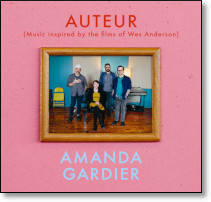
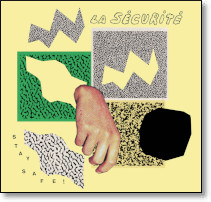
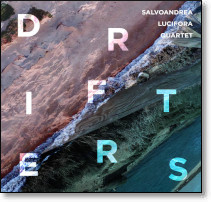
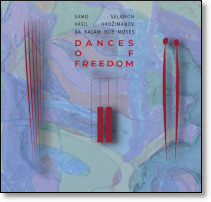
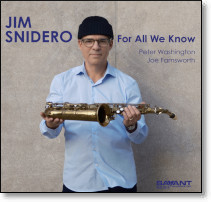
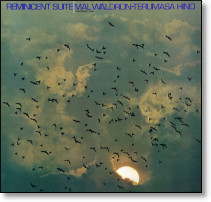
Music: Current count 41743 [41697] rated (+46), 16 [19] unrated (-3). Over the weekend, I cobbled together another substantial Speaking of Which (130 links, 7048 words). Feels pretty hopeless, but did give me a couple days respite from a week of flopping haplessly, accomplishing nothing. Speaking of nothing, here's this week's catch. Five of six A- releases are jazz; four of six are 2024 releases. The best of the batch is the exception to both generalizations, which seems about right. They all seem rather marginal, but so do most things these days. Still, they're all interesting, very accomplished records, as are the next tier down. By the way, there's more "burger highlife" coming from the "mysterious bin-bags" that brought forth the Jewel Ackah record. No telling how far behind I am with various bookkeeping tasks. One thing I did manage to do was to add results from Brad Luen's The 13th Annual Expert Witness Poll to the EOY aggregate, all the way down to the singletons. Several things there I still haven't heard. New records reviewed this week: Deena Abdelwahed: Jbal Rrsas (2023, Infiné): Tunisian DJ/producer, moved to Paris at 26, although this, her second album (plus a handful of EPs), was recorded in Tunisia, and bears an Arabic title. B+(***) [sp] Acid Arab: Trois (2023, Crammed Discs): Paris-based electronic group, founded 2012 by Guido Minisky and Hervé Carvalho, "a distinctive mix of deep club-based beats with arabic instruments and vocals." Third album, title is Arabic for such. B+(**) [sp] Don Braden: Earth Wind and Wonder Volume 2 (2023, self-released): Mainstream tenor saxophonist, followed a fairly classic arc from Criss Cross in 1991 to major labels to HighNote 2001-08 and winding up with a self-released covers project (first volume in 2018). Still an imposing saxophonist, but no one I can think of has managed to claim these songs for jazz. B [sp] Helena Deland: Goodnight Summerland (2023, Chivi Chivi): Canadian singer-songwriter, second album, title from her hometown in British Columbia, now based in Montreal, has a light touch. B+(*) [sp] Disclosure: Alchemy (2023, Apollo/AWAL): British synthpop duo, brothers Howard and Guy Lawrence, fourth studio album since 2013. B [sp] DJ Girl: Hellworld (2023, Planet Mu): Detroit techno producer Terri Shaska, second album. Some bits (especially vocal riffs) don't do much, but gets much better as the beats pick up (e.g., "When U Touch Me," featuring Lighght, but "Groover" works as well). B+(**) [sp] DJ Ws Da Ingejinha: Caça Fantasma Vol. 1 (2023, Delama): Funk brasilero artist, Wilson da Silva, from Belo Horizonte, can't find him on Discogs, and not making much sense out of this oddly disjointed mess. But stick with it and it may develop its own logic. B [sp] Dragonchild: Dragonchild (2023, FPE): Ethiopian saxophonist DA Mekonnen, a founder and leader of the Boston-based Debo Band, offers up a solo album. B+(**) [sp] Baxter Dury: I Thought I Was Better Than You (2023, Heavenly): Second-generation singer-songwriter, eighth album since 2002. Sounds rather like his father, except there's no mistaking him for genius. B [sp] Enji: Ulaan (2023, Squama): Mongolian singer Enkhjargal Erkhembayar, based in Germany, third album, draws on folk music with jazz musicians. B [sp] FACS: Still Life in Decay (2023, Trouble in Mind): Chicago group, several albums since 2017, related to Disappears, which had a nice run of albums, 2010-16. Similar industrial vibe here, a bit on the lumbering side. B+(**) [sp] Amanda Gardier: Auteur (Music Inspired by the Films of Wes Anderson) (2022 [2024], self-released): Alto saxophonist, based in Baltimore, third album, quartet with Charlie Ballantine (guitar, a major factor here), Jesse Wittman (bass), and Dave King (drums). I don't have any idea what the tie-in to the films might be, but something inspired her. A- [cd] Samuel Goff/Camila Nebbia/Patrick Shiroishi: Diminished Borders (2023, Cacophonous Revival): Drummer plus two saxophonists, free jazz with Nebbia adding some commentary. The lineup reminds me of Cosmosamatics, which worked to the same impressive effect, although this one tails off toward the end. B+(***) [bc] Vinny Golia/Max Johnson/Weasel Walter: No Refunds (2014 [2023], Unbroken Sounds): A live sax-bass-drums set from Seaside Lounge a while back, the bassist doing the mix and release. Golia plays clarinet, saxello, soprano and baritone sax. B+(**) [sp] Hands & Tongues: 3 Meta-Dialogues (2023, 4DaRecord): Three pairings of voice and instrument: Jean-Michel Van Schouwburg with 10-string microtonal guitar (Pascal Marzan); Bill Young with clarinet (Noel Taylor); Rodrigo Brandão with bass (João Madeira). Unable to decipher the words, there's very little to relate to here. B- [cd] Anders Jormin/Lena Willemark: Pasado En Claro (2021 [2023], ECM): Swedish bassist, debut 1984, on ECM since 2001, second album with the Swedish singer/violinist, who has a similar presume, including an ECM debut in 1996. With, below the title, Karin Nakagawa (25-string koto) and Jon Fält (drums). B+(**) [sp] La Sécurité: Stay Safe (2023, Mothland): Montreal "art punk" group, first album: "equal parts: jumpy beats, off-kilter arrangements, and minimalistic melodic hooks," also a nice balance between English and French. They remind me of vintage new wave, perhaps Martha & the Muffins spiked with Devo? A- [sp] Alex Lahey: The Answer Is Always Yes (2023, Liberation): Australian singer-songwriter, turns out layered, hooky pop, with a "wall of sound" effect. Third album. B+(**) [sp] Maurice Louca Elephantine Band: Moonshine (2023, Sub Rosa/Northern Spy): Egyptian composer, plays guitar, lap steel guitar, and synthesizer, in a group with saxophones, clarinet, tuba, vibes, bass, and drums. (Elephantine was the title of his 2019 album, and plays more prominently on the cover here; artist credit here from Sub Rosa sticker.) B+(***) [sp] Salvoandrea Lucifora Quartet: Drifters (2022 [2023], Trytone): Trombonist, from Sicily, based in Amsterdam, should count as his first album (although I've heard him before). Quartet with piano (Marta Warelis), bass (Omer Govreen), and drums (Marcos Baggiani). Two lp-side-long pieces, very sharp. A- [sp] Lyia Meta: Always You (2023, self-released): Malaysian singer-songwriter, based in Kuala Lumpur, identifies as jazz and sings in English as an impressive contralto voice. First full album, after an EP. Quite some accomplishment, yet nothing I much care for. B [sp] Stephan Micus: Thunder (2020-22 [2023], ECM): German singer-songwriter, on ECM since 1977, sings some and plays everything here, mostly exotic instruments like lute, sarangi, calabash, nyckelharpa, shakuhachi, bass zither, frame drums and various bells. Very ambient, other than the distant rumbling of brass, which helps. B [sp] Camila Nebbia: Una Ofrenda a la Ausencia (2023, Relative Pitch): Tenor saxophonist from Argentina, debut 2015, has been especially busy of late, here with a solo album, a format with pretty severe limitations. Still impressive, building up over time. B+(**) [sp] Lothar Ohlmeier/Tobias Klein: Left Side Right (2023 [2024], Trytone): Bass clarinet duo, with a little sax (tenor and alto, respectively) on the side. B+(**) [cd] [02-16] Omnigone: Against the Rest (2023, Bad Time): California ska-punk band led by Adam Davis, second album, the punk aesthetic pumped up with keyb and horns. B+(*) [sp] Pardoner: Peace Loving People (2023, Bar/None): Seattle post-punk (or some might say "not really punk") outfit, third album since 2017. B+(*) [sp] Reggie Quinerly: The Thousandth Scholar (2023 [2024], Redefinition): Drummer, has several albums, wrote all the pieces but one here, that by pianist Manuel Valera. Also with Matt Brewer (bass) and Samuel Torres (percussion), skewing Afro-Latin. B+(**) [cd] Naoko Sakata: Infinity (2023, Pomperipossa): Japanese pianist, based in Sweden, has several albums, not sure if this is meant as jazz, but is solo piano, boldly imagined, nicely turned out. B+(*) [sp] Samo Salamon/Vasil Hadzimanov/Ra-Kalam Bob Moses: Dances of Freedom (2021 [2024], Samo): Slovenian guitarist, has many fine albums since 2003, also plays some banjo here, with piano/keyboards and drums/percussion, both outstanding. A- [cd] Sigur Rós: Átta (2023, Krunk/BMG): Post-rock band from Iceland, eighth studio album, which you already know if you know Icelandic. B- [sp] Ches Smith: Laugh Ash (2023 [2024], Pyroclastic): Drummer, many side-credits since 2000, his own records fairly scattered (or, I suppose, "eclectic"). He composed this, with electronics and percussion, with a string section, and spots for voice (Shara Lunon), flute (Anna Webber), clarinet (Oscar Noriega), tenor sax (James Brandon Lewis), and trumpet (Nate Wooley), with Shahzad Ismaily (bass and keyboards). Some of this are as impressive as you'd hope for, but only scattered bits, nothing I feel compelled to pursue. So I won't be surprised when this shows up on EOY lists. B+(*) [cd] [02-02] Jimi "Primetime" Smith & Bob Corritore: The World in a Jug (2023, Vizztone/SWMAF): Blues guitarist-singer from Chicago, based in Minneapolis, third album (21 years after a second called Back on Track), mostly originals credited to Minford James Smith, with Corritore on harmonica. B+(***) [sp] Jim Snidero: For All We Know (2023 [2024], Savant): Alto saxophonist, many albums since 1989, straightforward trio here with Peter Washington (bass) and Joe Farnsworth (drums), playing eight standards. Splendidly, of course. A- [cd] [02-16] Jonathan Suazo: Ricano (2023, Ropeadope): Alto saxophonist from Puerto Rico, based in Boston, has a couple previous albums, aims for the whole "Afro-Caribbean experience" here, with lots of guests (he moves to tenor on the Miguel Zenón spot), including vocals. Too massive for my taste, but the sax is most impressive, and the rest is plenty authentic. B+(***) [sp] Surgeon: Crash Recoil (2023, Tresor): English electronica producer Anthony Child, was most active 1997-2000, with several long gaps since then. Fairly simple patterns run through at a relentless pace, reminds me of some game music themes, but exceptionally compelling. B+(***) [sp] Rob Sussman: Top Secret Lab (2023, Sus4music): New York-based trombonist, also plays keyboards, released an eponymous album in 2002, since then has mostly appeared in groups like Swingadelic and Funk Shui NYC. Ends with a pretty energetic "When a Man Loves a Woman." B+(*) [cd] Tomu DJ: Crazy Trip (2023, No Bias, EP): From California, has a couple previous releases, this a short album (7 tracks, 27:06), enticing beats scattered about a swishy ambient space. B+(***) [sp] Rian Treanor & Ocen James: Saccades (2023, Nyege Nyege Tapes): British electronica producer, working here with a Ugandan, who mixes traditional acoustic instruments with electronics. B+(**) [sp] Katie Von Schleicher: A Little Touch of Schleicher in the Night (2023, Sipsman): Brooklyn singer-songwriter, fifth album since 2012. B+(*) [sp] Bobby West: Big Trippin' (2023, Soulville Sound): Los Angeles-based pianist, possibly the same one Discogs credits with session work for James Taylor and Buffy Sainte Marie in the 1970s, and for R. Kelly in the 1990s. Second album, after a debut in 2021. Trio, nice touch on the occasional ballad, but likes them fast, with lots of frills. B+(*) [sp] Recent reissues, compilations, and vault discoveries: Jewel Ackah: Electric Hi-Life (1986 [2023], BBE): Highlife singer from Ghana (1945-2018), his name long imprinted on my mind thanks to a single Christgau review of his elusive 1989 album My Dear. Discogs credits him with 27 albums, and a birth date that doesn't jive with other sources. B+(***) [sp] Eddie Lockjaw Davis Quartet: All of Me (1983 [2023], SteepleChase): Tenor saxophonist, debut 1951, had a very productive decade with Prestige from 1958, was scrapping for dates after that, this from a stop in Copenhagen with locals (counting expat pianist Kenny Drew, backed here by Jesper Lundgaard and Svend-Erik Nørregaard on bass and drums). [Digital includes an extra track added to the 1994 CD, but the 2023 vinyl does not.] B+(***) [sp] J Jazz: Deep Modern Jazz From Japan Volume 4: The Nippon Columbia Label 1968-1981 (1968-81 [2023], BBE): It's hard in America to get any sense of jazz in Japan, but this series seems to be having little trouble picking up superb examples, nearly all from musicians I never heard of. (The Lithuanian label NoBusiness has also been fruitfully exploring Japanese jazz, focusing on the avant-garde there.) Nippon Columbia was founded as Nipponophone in 1910, licensing Columbia trademarks as early as 1931, and changing the company name in 1946, but has always remained independent. Not clear how important jazz was to Nippon Columbia (or vice versa), but this ranges widely and impressively, through hard bop combos, big bands, and a lot of Miles Davis influences. B+(***) [sp] WaJazz: Japanese Jazz Spectacle Vol. I: Deep, Heavy and Beautiful Jazz From Japan 1968-1984: The Nippon Columbia Masters (1968-84 [2022], Universounds): Label is a Tokyo record store, owned by Yosuk Ogawa, who selected this material (and is credited by Discogs). B+(**) [sp] WaJazz: Japanese Jazz Spectacle Vol II: Deep, Heavy and Beautiful Jazz From Japan 1962-1985: The King Records Masters (1962-85 [2023], Universounds): A second volume, but only seems to be available as 2-LP, with Bandcamp limited to annoyingly short excerpts (with fades), accenting the eclecticism. B [bc] Mal Waldron/Terumasa Hino: Reminscent Suite (1973 [2024], BBE): Pianist, started in the mid-1950s supporting singer Billie Holiday, and may still be best known for that, but he produced major works for Prestige 1956-62, and moved decisively into avant-jazz later on, especially with Enja, ECM, and Soul Note. He cut this quintet set in Japan with the well-known trumpet player, each writing a side-long piece. A- [sp] Old music: Camila Nebbia/Patrick Shiroishi: The Human Being as a Fragile Article (2021, Trouble in Mind): Sax duo, alto and baritone for Shiroishi, tenor for Nebbia, latter speaks, samples and fx for both. B+(**) [sp] Tomu DJ: Feminista (2021, self-released): First album, eight songs running 41:49. B+(**) [sp] Unpacking: Found in the mail last week:
Ask a question, or send a comment. Sunday, January 28, 2024 Speaking of WhichFront page headline in Wichita Eagle today: Domestic violence killings at all-time high in Wichita. Deeper in the paper, see Dion Lefler: [01-27] Guns are dangerous. The Kansas Legislature's even more so, where he points out that since the KS legislature passed its "constitutional carry" law in 2014, the number of Kansans who have been killed by guns increased 53% (from 329 in 2014 to 503 in 2021). I've been reading Christopher Clark's The Sleepwalkers: How Europe Went to War, a painstaking examination of the steps the major European powers took to kick off what they soon called the Great War. It's a long book, and at page 500 the shooting still hasn't started (but will soon, as mobilization has begun). There are some striking similarities to the present: notably the belief that affronts to power have to be answered with violence (whence Austria-Hungary's compulsion to rush to war against Serbia). Also the notion of land as a currency to acknowledge power, which has arguably declined since the days of Europe's imperial carve up of the world, but still persists, especially in Israel's obsession with retaining the land of a depopulated Gaza, and in Russia's grasp of southeastern Ukraine from Luhansk to Crimea. France's eagerness to fight Germany in 1914 stemmed from losing Alsace-Lorraine in 1871. On the other hand, what we thankfully lack today is the sort of balanced alliances that allowed war to spread almost instantly from Serbia to Flanders. Even though the US imagines it has enemies all around -- and Israel is doing its best to provoke them -- the conflicts are all marginal, mostly with opponents who have little or no appetite for directly attacking the US. It is deeply disturbing to see a nation with so much appetite for destruction floundering about with so little sense of its own needs, and so little concern over its trespasses. Top story threads:Israel: The genocidal war on Gaza continues, expanding on all fronts.
The genocide charge vs. Israel
Beyond Israel, wounded, frustrated empires spread war, leading only to more war, suffering, and disturbance:
Trump, and other Republicans: Trump, as predicted, won the New Hampshire primary, 54.3% to 43.2% over Nikki Haley, with lapsed candidates Ron DeSantis (0.7%) and Chris Christie (0.5%) far behind.
Biden and/or the Democrats: The New Hampshire primary, denied recognition by the DNC, was held on Tuesday, with Biden getting 63.9% of the votes as a write-in, to 19.6% for Dean Phillips and 4.0% for Marianne Williamson (who actually has much to commend, especially on peace, especially compared to Biden's recent record).
Legal matters and other crimes:
Climate and environment:
Economic matters:
Ukraine War:
Around the world:
Other stories:Freddy Brewster: [01-24] Airlines filed 1,800 reports warning about Boeing's 747 Max: "Since 2020." Sasha Frere-Jones: [01-23] The Blue Masc: "The brilliant discontents of Lou Reed." A review of Will Hermes' book, Lou Reed: The King of New York. Amitav Ghosh: [01-23] The blue-blood families that made fortunes in the opium trade: "Long before the Sacklers appeared on the scene, families like the Astors, the Peabodys, and the Delanos cemented their upper-crust status through the global trade in opium." Original title: "Merchants of Addiction," which appeared as a Nation cover story. Covers the historical literature, especially of the Opium War, which the author knows well enough to have written a trilogy of novels on. Andy Greene: [01-22] The 50 worst decisions in the past 50 years of American politics: "These are the historic blunders, scandals, machinations, and lies that have defined our times." Silly article you can nitpick and re-sort and add your favorites to. But what the hell, let's list them (and I'll spare you the reverse order suspense, although you'll still be expecting things that never materialize*):
*Top of my list here is Colin Powell's WMD speech at the UN (2003), or a dozen other signal blunders leading up to the Iraq war, ahead of the "mission accomplished" fiasco cited. Worse still, at least in my mind, was Bush's 2001 bullhorn speech at the World Trade Center, which kicked off the whole Global War on Terrorism. [PS: See the Jonathan Schell quote at the bottom of this post.] Items 1-5 and 14 strike me as blown way out of proportion, and mostly contingent on other events that were impossible to predict at the time. Nixon's tapes only started to matter once he had been exposed for lots of other things. Had Ginsberg resigned in the last year of Obama's presidency, McConnell wouldn't have allowed a vote on a successor. Obama only had a Senate majority in his first two years, and Ginsberg outlived them by ten. And had Hillary Clinton won in 2016, as everyone expected, she (not Trump) would have chosen Ginsberg's replacement. Many of the others testify to the trivia so much of the media prefers to dwell on. Still, I don't get picking on Obama's "guns or religion" gaffe at 32 while ignoring Hillary Clinton's "basket of deplorables." Sarah Jones: [01-25] When a rapist's logic is the law. I should have filed this under Republicans, since they're the ones responsible for this sort of thinking (or at least for it becoming ensconced in law), but I felt this piece should stand out, rather than get buried in the rest of their muck. Joshua Keating: [01-25] It's not your imagination. There has been more war lately. "Why the 'long peace' may be ending." What "long peace"? Looks like he's referring to arguments by Steven Pinker (The Better Angels of Our Nature) and Joshua Goldstein (Winning the War on War) that never had much empirical support, but -- and I'm generally sympathetic on this point -- reflect changing attitudes towards war, at least in wealthier nations where the potential costs are much greater than ever, and benefits are pretty much inconceivable. It's hard to say why this widespread public sentiment hasn't been reflected in policy. Partly it's because War has been hiding as Defense ever since the Department changed its name. Partly it's the corruption built up around the arms industries and other geopolitical interests (oil is a big one). Partly it has to do with the cult belief in power, despite its repeated failures. The chart here of "estimated fatalities in conflicts involving at least one state military around the world" is farcical, as it seems to exclude wars states fight against their own people, but it also seems to be doing a lot of undercounting: how could you count 2001-11 as the least deadly stretch of time since WWII when the US was constantly fighting in Afghanistan and Iraq, as well as killing people with drones in another dozen countries? Shawn McCreesh: [01-26] The media apocalypse: "Condé Nast and other publishers stare into the abyss." This looks to me like one of many areas where the private sector can no longer be counted on to provide public goods. When that happens, one needs to find other ways. Bailing them out -- hint: banks are another -- may suffice in the short term, but isn't a real solution. Unfortunately, this area is one that's so poisoned by partisanship that it's going to be especially hard to do anything sensible. Doug Muir:
Rick Perlstein: [01-24] American Fascism: "Author and scholar John Ganz on how Europe's interwar period informs the present." Ganz has a new book coming out in June, When the Clock Broke: Con Men, Conspiracists, and How America Cracked Up in the Early 1990s. Kim Phillips-Fein: [01-24] We have no princes: "Heather Cox Richardson and the battle over American history." A review of her book, Democracy Awakening, which is based on newsletter posts since 2019, contemporary politics viewed by someone with extensive knowledge of history and a general commitment to democratic principles. I've read enough of her work to make me initially want to jump right onto this, like I did with Jill Lepore's These Truths: A History of These United States -- at least until I found a post on Biden's foreign policy that was insanely misconceived. Phillips-Fein, who's written several good books about the rise of the new right, helps explain where and why Richardson turns clueless. Stephen Prager: [01-24] Conservatives are finally admitting they hate MLK. Nathan J Robinson:
Raja Shehadeh: [01-25] In the midst of disaster: A review of "Isabella Hammad's novel of art and exile in Palestine," Enter Ghost. Jeffrey St Clair: [01-26] Roaming Charges: The impotent empire. The Nation did us a favor and linked to this old piece by Jonathan Schell: {2011-09-19] The New American Jujitsu. Consider this:
This strategy, and the whole posture it represented, was doomed from the start, for reasons elucidated in Schell's 2003 book: The Unconquerable World: Power, Nonviolence, and the Will of the People. Yet the lessons remain unrecognized and unlearned in Washington, in Tel Aviv, in Moscow, wherever national leaders instinctively lash out at challenges to their precious power. Ask a question, or send a comment. Monday, January 22, 2024 Music Week
January archive (in progress). Music: Current count 41696 [41641] rated (+55), 19 [22] unrated (-3). I wrote a pretty substantial Speaking of Which over the weekend, including more on the ongoing genocide in Gaza, and on why Israel wants to see the rest of the Middle East up in flames, figuring that will force the Americans into the fight, as opposed to their usual role, which is giving Israel arms, money, and advice (which they are freer than ever to ignore, although Netanyahu was more public than usual in slapping Biden down over the two-state fantasy). I've added a couple more links since initial posting (look for the red right-border stripe), and will probably add a few more before (or after) this gets posted. Also stuff there on Iowa and New Hampshire, as Republicans continue to embrace the criminality their leaders have been promoting at least since Nixon. I haven't made anything like a transition to knuckling down on the book yet. A big chunk of last week went to adding all of the Jazz Critics Poll ballots to my EOY aggregate. The result was, predictably enough, a massive surge for jazz albums in the overall standings:
I expect those standings to slide back down over the next week, although I'm still searching specifically for jazz lists. Since I finished with the ballots, I've already seen one change, where Jaimie Branch pulled back ahead of James Brandon Lewis -- the former has had quite a bit of crossover list support, but only came in 9th in the Poll. Matana Roberts, Lakecia Benjamin, and Irreversible Entanglements also do somewhat better away from the jazz critics. I haven't added Brad Luen's Expert Witness Poll results in yet, but did manage to pick up some individual ballots. A late expansion of Greg Morton's list led me to Brazilian singer Patricia Bastos this week. I also picked up two more A- titles from the extraordinary Hip Hop Golden Age list. I also happened on some pretty decent electronica while adding Mixmag's 169 albums to the aggregate. And when I got hard up for something to play at the moment, I dipped into the 2024 queue, usually (not always) finding items that are already out. I'll probably spend some more time wrapping up the EOY aggregate, and checking out some of the albums I'm only now finding out about, but should be winding that down this week. I also have a few things on the Jazz Critics Poll left to wrap up, and some mail I haven't gotten to. I also have a database update to the Robert Christgau website almost ready to go. New records reviewed this week: Agust D: D-Day (2023, Big Hit Music): South Korean rapper Min Yoon-gi, also known as Suga, joined K-pop boy band BTS in 2013, Agust D was the name of a mixtape he released in 2016, followed by a second mixtape in 2020 (D-2), and this, his first proper solo album. In Korean, so this waxes and wanes on the beats, which clearly have some money behind them. B+(*) [sp] Altin Gün: Ask (2023, Glitterbeat): Mostly Turkish psychedelic rock band, based in Amsterdam, fifth album since 2018. B+(*) [sp] B. Cool-Aid: Leather Blvd. (2023, Lex): Hip-hop duo from Long Beach, producers Ahwlee and Pink Siifu (Livinston Matthews), keeping it cool. B+(*) [sp] Ballister: Smash and Grab (2022 [2024], Aerophonic): Sixth group outing for saxophonist Dave Rempis's fiercest group, a trio with Fred Lonberg-Holm (cello/electronics) and Paal Nilssen-Love (drums). I'm probably losing all credibility on him. I'm certainly getting used to the rough stuff -- although even here, they set up sublime moments. A- [cd] Patricia Bastos: Vos Da Taba (2023, self-released): Brazilian singer-songwriter, from Macapá, just north of the Amazon delta, seventh studio album since 2002. Exceptionally delightful. A- [sp] Big O: In the Company of Others (2023, Vintage Soundz): London-based hip-hop producer, possibly Oliver Moore (Discogs offers the name, but only lists one album and one EP, the latter from 1996; on the other hand, Bandcamp shows no less than 44 releases, but most behind other leaders). Feat. guests everywhere, many with scratches by gman. B+(*) [bc] Black Milk: Everybody Good? (2023, Mass Appeal): Detroit rapper Curtis Cross, eighth albums ince 2005. B+(*) [sp] Blonde Redhead: Sit Down for Dinner (2023, Section1): Indie band from New York, tenth album since 1994, fronted by Kazu Makino, with brothers Amedeo and Simone Pace. B+(*) [sp] Apollo Brown & Planet Asia: Sardines (2023, Mello Music Group): Detroit hip-hop producer Erik Stephens, has dropped an album (or two or three) every year since 2009, this one featuring rapper Jason Green, who's been even more prolific for longer (since 2000) but has previously escaped my attention -- as has everyone else working out of Fresno. B+(***) [sp] John Butcher/Dominic Lash/Emil Karlsen: Here and How (2022 [2023], Bead): English avant-saxophonist, released half dozen albums in 2023 but this was one of the few I managed to find, a trio with bass and drums. B+(**) [sp] Rasheed Chappell & the Arcitype: Sugar Bills (2023, Project City Music Group): New Jersey rapper, sixth album since 2011, with producer Janos Fulop. This runs up against my distaste for "gangsta shit" (as HHGA rather circumspectly put it: "traditional hip-hop . . . a great emcee who is in turn with golden -age aesthetics") but this carries that deadly weight better than any album I've heard in years (maybe since Ghostface Killah?). A- [sp] Gerald Cleaver: 22/23 (2023, Positive Elevation/577): Normally a drummer, produces electronics here, with some voice (both him and Jean Carla Rodea) and sax (Andrew Dahlke). Runs 22 tracks, 169 minutes, on and on, one suspects the excess is the point. [LP selects 6 (of 22) tracks, for 32:26. Probably just a sampler, as if a taste is all you need.] B+(***) [sp] Declaime and Theory Hazit: Rocketman (2023, SomeOthaShip): Rapper Dudley Perkins, dozen-plus albums since 2001, with producer Thearthur Washington. Deep, out of this world yet very much within it, loses the thread of the music when he declares his belief in God, yet through some miracle keeps you connected anyway. A- [sp] Mike Flips/Nord1kone/Seize: Life Cycles (2023, SpitSLAM): The MC answered one question by pronouncing his name "nordic-one." Flanked here by two producers, Flips at least from UK. B+(**) [sp] Anne Foucher & Jean-Marc Foussat: Chair Ça (2022 [2024], Fou): Violin/electronics, and "Synthi AKS, piano, jouets & voix," which I guess explains the sonic range here, but not enough to describe it. B+(***) [cd] Jean-Marc Foussat/Daunik Lazro: Trente-Cinq Minutes & Vingt-Trois Secondes (2023 [2024], Fou): Title the sum of three constituent pieces, Credits: "méchanisme instinctif et résonnant" and "kaléidophone ténor." File under "drone" or "noise," but more interesting than that implies. B+(***) [cd] Satoko Fujii Tokyo Trio: Jet Black (2023 [2024], Libra): Japanese avant-pianist, well over 100 albums, nice to hear her in a conventional trio setting, this with Takashi Sugawa (bass) and Ittetsu Takamura (drums). B+(***) [cd] [01-24] Peter Gabriel: I/O (2023, Real World): British singer-songwriter, started in prog rock band Genesis, released a series of eponymous albums 1977-82, this 10th album is first since 2011, but it incorporates earlier work going back to 1995, and comes in two mixes ("Bright Side" and "Dark Side"), each 12 songs and well over an hour. Pleasant enough, but interminable. B+(*) [sp] Geese: 3D Country (2023, Partisan): Brooklyn-based alt-rock band, second album, dubbed "art punk," compared to outfits like Black Midi, which might seem interesting until the time shifts and odd eruptions turn super-annoying. B- [sp] Gorillaz: Cracker Island (2023, Parlophone/Warner): Cartoon band, founded 2001 by Damon Albarn, who seems to have been the only regular, aside from illustrator Jamie Hewlett: the other principal musician here is Greg Kurstin, with a bunch of guests dropping in for one song each (Thundercat, Stevie Nicks, Tame Impala, Beck, etc.). Albarn's always had a good sense for hooks, but I grew tired of the mask some time back, and now it all just sounds anonymous (except the title cut is rather catchy). B [sp] Marina Herlop: Nekkuja (2023, Pan): Spanish singer, songwriter and pianist, fourth album, electroacoustic experiments, short (7 songs, 26:35). B+(*) [sp] Gregory Alan Isakov: Appaloosa Bones (2023, Dualtone): Singer-songwriter from South Africa, moved to Philadelphia when he was seven, wound up in Boulder, Colorado. Eighth album since 2003. Seems like a thoughtful but not especially engaging guy. B [sp] Ethan Iverson: Technically Acceptable (2024, Blue Note): Pianist, made a big impression with his early Fresh Sound releases, followed with a rare commercial breakthrough as the Bad Plus, left them in 2017, continues to write a very smart blog. Two bass-drums trios here -- Thomas Morgan/Kush Abadey and Simón Willson/Vinnie Sperrazza -- and a couple of covers (one I love, followed by a vocal I hate), ending with a three-part solo sonata. Appropriately titled. B+(*) [sp] Ja'king the Divine: Parables of the Sower (2023, Copenhagen Crates): Brooklyn rapper, half-dozen albums since 2021. His fascination with things oriental led to the album title Black Sun Tzu. Here he raps over a particularly sinuous "Caravan." [sp] Benjamin Koppel/Scott Colley/Brian Blade: Perspective (2023, Cowbell Music): Danish alto saxophonist, 30+ albums since 1998, has worked with this bass-drums combo since 2011. B+(**) [sp] Benjamin Koppel: White Buses: Passage to Freedom (2023, Cowbell Music): In 1943, as the Nazis were consolidating their occupation of Denmark, some 90% of Danish Jews managed to escape into Sweden, thus avoiding the Holocaust. That much is fairly widely known, but this draws on a lesser-known incident near the end of the war, when the Swedish Red Cross sent white buses to Theresienstadt, where another 425 Danish Jews were held, and affected their liberation. This narrates that story, along with some inspiring music, led by the Danish alto saxophonist. B+(***) [sp] Talib Kweli & Madlib: Liberation 2 (2023, Luminary): A sequel 16 years later, runs longer (45:51), is even harder to find. With politics that deserve wider airing, but thinned out with more ambient breaks. B+(***) [sc] Oliver Lake/Mathias Landæus/Kresten Osgood: Spirit (2017 [2023], Sfär): Alto sax, piano, drums. Lake is a bit erratic, but impresses more often than not. B+(**) [bc] Lalalar: En Kötü Iyi Olur (2023, Bongo Joe): Turkish group, second album. Vibe reminiscent of several Balkan rock groups. B+(***) [sp] Dave Lombardo: Rites of Percussion (2023, Ipecac): Drummer, born in Cuba but moved to California when he was two. Best known as drummer in the thrash metal band Slayer, but also in Fantômas (based on a French anti-hero, "waging an implacable war against the bourgeois society in which he moves"). I've run across him once before, when he joined DJ Spooky on a 2005 Thirsty Ear album called Drums of Death. Solo here, so more drums of death? B+(**) [sp] Van Morrison: Accentuate the Positive (2023, Exile/Virgin): Second release of a covers set this year, reminds you that while he used to be a pretty great songwriter, he's still a terrific singer. Advantage here is in the songs, moving from the country-folk roots of Moving on Skiffle to rhythm and blues and rock and roll, although he's loose enough on the concept to include the Mercer-Arlen title song, and to start off with a "You Are My Sunshine" that proves to be a high point. Elsewhere, lots of nits one can pick, but really too much fun for that. B+(**) [sp] Riley Mulherkar: Riley (2021-22 [2024], Westerlies): Trumpet player, from Seattle, a co-founder of the Westerlies, debut album, with Chris Pattishall (piano) and Rafiq Bhatia both credited with programming and sound design, on a mix of originals and vintage covers ("Stardust," "King Porter Stomp"). B+(***) [cd] [02-16] Estee Nack: Nacksaw Jim Duggan (2023, Griselda): Another rapper I'd never heard of, Alex Rosario, of Lynn, Mass., but Discogs credits him with 25 albums since 2015, and offers 11 distinct editions of this title (but no CD). Rather fractured, with a long riff on Dominicans in the drug trade. B+(*) [sp] Ndox Electrique: Tëd ak Mame Coumba Lamba ak Mame Coumba Mbang (2023, Bongo Joe): Traditional n'doëp community vocal group from Cap-Vert in Senegal, remixed by François R. Cambuzat and Gianna Greco (who also produced Ifriqiyya Electrique), who bring the beats, and some heavy machinery. B+(*) [sp] Noertker's Moxie: In Flitters: 49 Bits From B*ck*tt (2023, Edgetone): Bassist, recordings go back to 2003's Sketches of Catalonia, with a cover reminiscent of Miles Davis's Sketches of Spain (or maybe Billy Jenkins' Scratches of Spain, a superior album [imho]), but then expanded into multi-volume suites for Dali, Miró, and Gaudi. Here the inspiration is Samuel Beckett's Watt, a novel I bought long ago and never managed to read, but evidently of interest to jazzbos (it's the name of Carla Bley's record label). It's put to good use here, with Annelise Zamula (clarinet/flute), Brett Carson (piano), and Jordan Glenn (drums). No idea what's up with the asterisks. B+(***) [cd] Hery Paz: Jardineros (2021 [2023], 577): Cuban saxophonist (also flute, piano, suona), based in New York, first album, backed by drums (Francisco Mela) and percussion (Román Diaz, also credited for vocals -- basically a spoken narration, in Spanish). B+(**) [sp] Shaheed & DJ Supreme: The Art of Throwing Darts (2023, Communicating Vessels): Hip-hop duo from Birmingham, second album. Has an old school air, the words (doubled up?) coming so fast and hard they effectively are the rhythm. B+(***) [sp] Shakti: This Moment (2023, Abstract Logix): Indian supergroup formed by English guitarist John McLaughlin in 1975-77, was revived in 1997 for a series of "Remember Shakti" albums, and now again here, with McLaughlin and Zakir Hussain (tabla) returning, joined by Selvaganesh Vinayakaram (kanjira) and Shankar Mahadevan (vocals) from the 1990s, and Ganesh Rajagopalan (violin). B+(*) [sp] Louis Siciliano: Ancient Cosmic Truth (2023, Musica Presente, EP): Italian trumpet player, seems to have mostly worked on film music, aims for some kind of Miles Davis fusion here, and is mostly successful, for four songs, 22:42. B+(**) [sp] Antero Sievert: Dear Bossa (2023, JMI): Spanish pianist, second album, a "pan-Latin musical journey" with Pedrito Martinez (Cuban percussion), Edmar Castaneda (Colombian harp), and Elena Pinderhughes (Bay Area flute), plus bassist Corcoran Holt, and a bit of trumpet I'd like to hear more from. B+(***) [sp] Guilty Simpson: Escalation (2023, Uncommon): Detroit rapper Byron Dwayne Simpson, debut 2008, came up working with J. Dilla and Madlib, produced here by Uncommon Nasa (Paul Loverro). B+(**) [sp] Josh Sinton: Couloir & Book of Practitioners Vol. 2: Book W (2023 [2024], Form Is Possibility, 2CD): Solo baritone saxophone, the second a volume of Steve Lacy "etudes" -- Sinton led the Lacy tribute band Ideal Bread -- the first originals that are hard to distinguish from Lacy's models. B+(***) [cd] Alex Sipiagin Quintet: Mel's Vision (2022 [2023], Criss Cross): Russian trumpet/flugelhorn player, moved to US in 1990, has a steady stream of mainstream jazz albums since 1998. With Chris Potter (tenor sax), David Kikoski (piano), Matt Brewer (bass), and Johnathan Blake (drums). Two Sipiagin originals (including the unexplained title song), one from Potter, a Ukrainian folk song, and four modern jazz covers. Long (9 tracks, 71:18). B+(**) [sp] Sister Zo: Arcana (2023, All Centre, EP): New York-based electronica artist, has at least one previous EP, this one 4 exquisitely balanced rhythm tracks, 17:38. Remarkably satisfying. A- [sp] Chucky Smash: The Taking of Pelham One Two Three (2023, King of the Beats): J. Samuels, part of a Bronx hip-hop trio called the Legion, which recorded some in the 1990s, with one more album from 2019. B+(*) [sp] Spectacular Diagnostics: Raw Lessons (2023, Rucksack): Chicago hip-hop producer Robert Krums. Has several previous "Raw" titles (Raw Unknown, Raw Studies). B+(**) [sp] Marnie Stern: The Comeback Kid (2023, Joyful Noise): Singer-songwriter, plays guitar and has a rep for that, fifth album since 2007, but ten years after her fourth. Pop overtones over something dense and mathy. B+(**) [sp] The Dave Stryker Trio With Bob Mintzer: Groove Street (2023 [2024], Strikezone): Guitarist, has long settled into the organ groove tradition, releasing a new iteration each January. Trio names on cover: Jared Gold (organ) and McClenty Hunter (drums), with the saxophonist joining in, even contributing a couple of songs. B+(**) [cd] [01-24] Sweeping Promises: Good Living Is Coming for You (2023, Sub Pop): Duo (Lira Mondal and Caufield Schnug), met as students in Arkansas, moved to Boston, recorded a pretty good album there, relocated to Lawrence, Kansas, where they recorded this sophomore effort. B+(**) [sp] Emilio Teubal: Futuro (2021 [2023], Not Yet): Argentinian pianist, based in New York, first album 2009, mostly trio with bass (Pablo Lanouguere) and drums (Chris Michael or Brian Shankar Adler), with a few guests, like Sam Sadigursky (clarinet on three tracks) or Chris Dingman (vibes on three). B+(**) [sp] V Knuckles & Phoniks: The Next Chapter (2023, Don't Sleep): Boston rapper Rahim Muhammad, from the group N.B.S. [Natural Born Spitters], ten albums 2002-20, first solo album, produced by Phoniks (from Portland, ME). Old school vibe, some nice features. B+(***) [sp] Yungmorpheus & Real Bad Man: The Chalice & the Blade (2023, Real Bad Man): California hip-hop artist Colby Campbell, a dozen-plus albums since 2016, working here with producer Adam Weissman. B+(**) [sp] Yungmorpheus: From Whence It Came (2023, Lex): Another one, understated lyrics over minimal beats. B+(*) [sp] Recent reissues, compilations, and vault discoveries: Per 'Texas' Johansson: Alla Mina Kompisar (1998 [2023], Moserobie): Swedish reeds player, second album, plays tenor/baritone sax and clarinets here, with Fredrik Ljunkgvist (four saxes), Johan Lindström (pedal steel guitar), Dan Berglund (bass), and Mikel Ulfberg (drums). A- [sp] Kenneth Kiesler/University of Michigan Opera Theatre: James P. Johnson: De Organizer/The Dreamy Kid (Excerpts) (2006 [2023], Naxos): I'm inclined to file classical music by the performer, with the composer included in the title, but even there the cover makes this difficult, as I wound up flipping the larger type order, and ignoring a long list of smaller-type names. (I did give into the obvious and listed this under Johnson in the Jazz Critics Poll standings, but figured I should be more consistent here.) Johnson (1894-1955) is widely recognized as an outstanding stride pianist, but his ambitions as a composer are less well known. James Dapogny, a superb stride pianist in his own right, arranged these two short operas, the former with lyrics by Langston Hughes, the latter Eugene O'Neill. I've never liked opera, but I can't help but applaud union organizers. B+(*) [sp] Old music: Talib Kweli/Madlib: Liberation (2007, Blacksmith Music): Rapper, last name Greene, broke out with Mos Def as Black Star in 1998, with Hi-Tek as Reflection Eternal in 2000, released a solo album in 2002. I found this one down after failing to find Liberation 2 (2023) on streaming. This was given away as a freebie for a week, then withdrawn, so is similarly scarce. Short (30:12), but the production is dazzling, and the guy is a thinker: "I went to college, then I left/ That's when I got my education." (Unlike the college dropouts who simply couldn't wait to get rich.) A- [yt] Unpacking: Found in the mail last week:
Ask a question, or send a comment. Sunday, January 21, 2024 Speaking of WhichLots of stuff below. No need for an introduction here. Top story threads:Israel:
Genocide watch, around the world: But mostly in Washington.
Trump, and other Republicans: Trump's sweep of the Iowa caucuses was easily predicted, and seems definitive, but 52% of practically nothing against practically nobody doesn't exactly impress as rock solid -- the glut of endorsements suggest that, at least among Republican officeholders, Trump is more feared than loved. Trump looks good to win New Hampshire next week with a similar near-50% split, but this time with DeSantis way behind a very second-place Haley (Jan. 20 poll averages: Trump 48.9%, Haley 34.2%, DeSantis 5.2%). Then comes South Carolina, where the polling shows: Trump 60.9%, Haley 24.8%, DeSantis 8.9%. I expect Haley and DeSantis to hang in through Super Tuesday -- DeSantis can expect to do about as well in Florida as Haley in South Carolina, which is to say not much -- where the current national polls should be indicative: Trump 66.2%, Haley 12.3%, DeSantis 11.1%. After that it's all over, which should leave Trump plenty of time for courtrooms. PS: I wrote the above before this [01-21] Ron DeSantis ends presidential campaign, endorses Trump. Given that there are no significant policy differences between Republican candidates, the standard reason for quitting is that your backers pulled their money, which was clearly in the cards. Quitting now and endorsing Trump avoids Tuesday's embarrassment, and gives him a chance to claim a bit of Trump's margin (maybe even the whole margin, if it's slim enough).
Closing tweet by Will Bunch:
Biden and/or the Democrats: I haven't seen much comment on this, but the Democrats' decision to cancel Iowa and New Hampshire left the impression this week that only Republicans are running for president in 2024. Biden would certainly have won landslides in both states this time -- after losing both in 2020, only to have his candidacy saved by South Carolina. I suspect that the reason they did this was to deny any prospective challenger a forum to show us how vulnerable Biden might be. As a tactic, I guess it worked -- it's highly unlikely that Biden won't get enough write-in votes in New Hampshire to clear Dean Phillips and Marianne Williamson, and even if he doesn't, it's not like he was actually running -- more a case of New Hampshire just being spiteful jerks (which, as a long-time Massachusetts resident, I can tell you isn't a tough sell). Still, it feels like they're sheltering a lame horse, thereby wasting the opportunity to see who really can run. So while a Trump-Biden rematch looks inevitable, both candidates are in such precarious shape, with such strong negatives, that it's hard to believe that both will still be on the ballot in November. With no serious primaries, and leaders ducking debates -- even Haley has got into the act, figuring DeSantis isn't worthy of debate in New Hampshire, even though she's regularly mopped the floor with him so far -- 2024 may turn out to be a vote with no real campaigning. That may sound like a relief, but it's not what you'd call healthy.
Legal matters and other crimes:
Climate and environment:
Economic matters:
Ukraine War:
Around the world:
Other stories:Chris Armstrong: [01-08] What if there were far fewer people? I mention this mostly because I had cited a NY Times piece by Dean Spears, The world's population may peak in your lifetime, but searched in vain for an adequate rejoinder. One could make more points, but this, at least, is a start. It is well known that population growth alarms -- most famously those by Malthus and Ehrlich -- were easily exaggerated into doomsday scenarios that have at least been dodged, even if their logic has never really been refuted. By the way, the "cornucopian" counter-theories have rarely if ever been tested, mostly because no one takes them seriously. (For a recent discussion of Malthus, see J Bradford DeLong's Slouching Towards Utopia: An Economic History of the Twentieth Century.) Population growth is something we have a lot of experience coping with, but make no mistake, it is a strain that always requires compensatory changes. As for population decline, that's rarely occurred, and never been a serious problem. Certainly, it's not one that Malthus could imagine, as he was perfectly aware of the standard solution: have more children. Spears' conjecture -- that population will peak in 2085 then decline ("perhaps precipitously") thereafter, is far enough into the future as to be the last thing we should bother with (aside from, you know, the Sun turning super-nova, that is). David Dayen: [01-18] An unequal tax trade: "The business tax credits in the Wyden-Smith deal are five times as generous as the Child Tax Credit expansion." This on the "bipartisan" bill that seems to be finally working its way through Congress. Also see: Jackson Diiani: [01-21] Is America like the Soviet Union in 1990? It sometimes feels that way: "America's symptoms of decline are everywhere -- and history tells us what happens if we don't change course." Sure, you can make that case, and find plenty of pictures, like the abandoned diner used here, to illustrate the case. Or you could take the opposite tack, and while noting that there are things that need to be fixed up, those improvements are easily within out means, given a little will to do so. This article starts with a question: "Who owns the parking meters in Chicago?" The answer is: "Morgan Stanley and the city of Abu Dhabi." A cash-strapped city tried to solve a small problem by turning to the private sector, turning it into a bigger problem. Privatization was the buzz word, sold on the promises of efficiency but expanding the reach of predatory capitalism. Kevin T Dugan: [01-19] Greed killed Sports Illustrated. Greed kills everything. Related here:
Elizabeth Dwoskin: [01-21] Growing Oct. 7 'truther' groups say Hamas massacre was a false flag: No use filing this under the Israel sections up top, as it's solely meant to muddy the waters. There is no reason to doubt that militia groups in Gaza, associated with but not identical to Hamas, planned and executed the attack. Israel has a long history of "false flag" operations, but this bears no resemblance to them. The precise scale and effect of the attack are still not clear, but "unprecedented" is a fair description, and the shock was deeply felt, although it quickly gave way to cunning political maneuvers. Israeli leaders had always responded to even the most trivial of attacks from Gaza with threats of extreme punitive violence, so they immediately realized this as an opportunity to implement genocide -- a consideration that had been cultivated for over a century, but only seriously pursued under the cover of the 1948 war (the Nakba remembered by Palestinians as their Holocaust, but never quite recognized as such by the world). The Israeli government quickly worked to mold world opinion -- at least among critical allies like the US, UK, and Germany -- to go along with Israel's destruction and depopulation of Gaza, which meant elevating the by-then-defeated attack to mythic proportions. Such disingenuity was bound to generate "conspiracy theories" like these. For now, they can be dismissed as nonsense, and/or conflated with other easily discredited theories (not least those belonging to antisemitism). But what they do correctly intuit is that there were deceitful political interests at work from the beginning, leaving us with little reason to trust what we are told. Richard J Evans: [01-17] What is the history of fascism in the United States? Reviews Bruce Kuklich's Fascism Comes to America: A Century of Obsession in Politics and Culture, which starts in 1922 with fascination and fear of Benito Mussolini and traces the use and abuse of the word ever since, noting that "over the years, the concept gradually lost its coherence." Caroline Fredrickson: [01-19] Elon Musk's war on the New Deal -- and democracy: "The South African-born mogul is now trying to gut the 89-year-old National Labor Relations Board." William D Hartung: [01-16] The military-industrial complex is the winner (not you): "Overspending on the Pentagon is stealing our future." A record-high $886 billion Defense appropriation bill, another $100 billion-plus for aid to Ukraine and Israel, much more buried in other departments. By the way, Hartung also has a "Costs of War" paper: Doug Henwood: These are a couple of older pieces I found in "related" links. I don't especially agree with them, but they cast doubts on theories and approaches that sound nice but haven't been overwhelmingly successful.
Phillip Longman: [01-16] How fighting monopoly can save journalism: "The collapse of the news industry is not an inevitable consequence of technology or market forces. It's the result of policy mistakes over the past 40 years that the Biden administration is already taking measures to fix." I'm pretty skeptical here. Whatever Biden is doing on antitrust enforcement -- after decades of inaction, a bit worse with Republican administrations but still pretty much ineffective with Democrats in charge -- is going to take a long time to be felt. And the argument that "advertising-supported journalism might be the worst way to finance a free press except for all the rest" is worse than defeatist, in that it doesn't even allow the option of treating journalism as a public good, as something we could deliberately cultivate -- instead of just hoping it somehow pans out. The sorry state of journalism today has less to do with constrained competition than with the carnage due to relentless profit-seeking. Louis Menand: [01-15] Is A.I. the death of I.P.? Well, it should be, and take its own I.P.-ness with it. Doug Muir: [01-15] The Kosovo War, 25 years later: Things fall apart: Part 3 of a series, that started with [01-08] The Kosovo War, 25 years later and [01-08] The Serbian ascendancy. Andrew O'Hehir: [01-21] Never mind Hitler: "Late Fascism" is here, and it doesn't need Hugo Boss uniforms: "Fascism has been lurking under the surface of liberal democracy all along -- we just didn't want to see it." Draws on Alberto Toscano's book: Late Fascism: Race, Capitalism and the Politics of Crisis. I'm struck here by the line about how fascism arises "to save capitalism from itself." But it does so by misdirection, never really facing up to the source of its disaffection, leading to its own self-destruction. Such analysis is kids' stuff for Marxists, who start with a fair understanding of the dynamics. Yet it's lost on conventional liberals and conservatives, who assume capitalism is just a force of nature, something they skip over to focus on abstractions (democracy, freedom, etc.). James North: [01-18] What the media gets wrong about the so-called border crisis: "The mainstream press's dark warnings about a flood of migrants are underpinned by a staggering ignorance about where asylum-seekers are coming from -- and why they're fleeing for their lives." Rick Perlstein: [01-17] Metaphors journalists live by (Part I): "One of the reasons political journalism is so ill-equipped for this moment in America is because of its stubborn adherence to outdated frames." Framed by a discussion with Jeff Sharlet. Also [01-18] Part II. Jeffrey St Clair: [01-19] Roaming Charges: It's in the bag. Starts by pointing out the ridiculously low turnout at the Iowa caucuses, which among other things resulted in this: "Amount GOP candidates spent per vote in Iowa: Haley: $1,760; DeSantis: $1,497; Ramaswamy: $487; Trump: $328." Of course, that undervalues the free media publicity given to all, but especially to Trump. Roaming to other topics, here's:
Liz Theoharis: [01-18] Change is coming soon: "The powerful and visionary leadership of young activists is crucial in these times." Michael Tomasky: The right-wing media takeover is destroying America: "The purchase of The Baltimore Sun is further proof that conservative billionaires understand the power of media control. Why don't their liberal counterparts get it?" Sandeep Vaheesan: [01-16] Uber and the impoverished public expectations of the 2010s: "A new book shows that Uber was a symbol of a neoliberal philosophy that neglected public funding and regulation in favor of rule by private corporations." The book is by Katie J Wells, Kafui Attoh & Declan Cullen: Disrupting D.C.: The Rise of Uber and the Fall of the City. Jeff Wise: [01-13] Who will rid us of this cursed plane?: Boeing's "troubled 737 Max," although that's just the most obvious of the problems with Boeing.
Ask a question, or send a comment. Sunday, January 15, 2023 Music Week
January archive (in progress). Music: Current count 41641 [41584] rated (+57), 22 [23] unrated (-1). Seriously long Speaking of Which posted yesterday (5748 words, 135 links). The Joshua Frank piece, Making Gaza Unlivable, is important, as are the additional points I made last week and this. Also consider the Michael Kruse piece on Trump's long assault on the very notion of justice. It's painfully cold here in Kansas tonight, or at least that's how I'm feeling it. We haven't been out in several days. I still have to take the trash out tonight, and I have a dentist appointment tomorrow. I'm dreading both. [OK, trash went out. And dentist office decided to shut down tomorrow, so I'm off the hook.] Of course, it's worse north of here. I see where Trump is urging his supporters to vote in Iowa even if it kills you. Easy for him to say. But "voting to kill" has been a Republican tradition, at least since right-wing journo Jim Geraghty used it as a book title (2006, about the 2004 election). [PS: Trump won, but no reports yet on the collateral damage.] I've been trying to clean up some things, especially with the EOY lists. One big thing I did was to scan through the Pazz + Jop Rip-Off Poll ballots, and count a bunch of them (about 110, out of 338?). Most were names I recognized, mostly from having counted them before (90), but another 20 or so just struck me as interesting ballots. This is one way my subjective bias infects the standings, but the only rooting interest I had this year was for Olivia Rodrigo over Boygenius, and in that my selection didn't help at all. The more substantive biases in the aggregate are that I follow a lot of jazz critics, and also know many critics (or just fans) who follow Robert Christgau. I've also factored Christgau's grades into the point totals, so his more esoteric picks are generously represented in the totals. (As are my grades, as far as they get you.) Since I regard the EOY aggregate as a tool for prospecting unheard albums, those biases are mostly useful in finding other lists with intersecting tastes. Still, our picks don't have a lot of sway in the upper tiers of the aggregate, and many fall well down the list. I finally factored my Jazz and Non-Jazz lists into the aggregate, although I haven't picked up all the lesser grades yet. And while I've entered the top results from the Jazz Critics Poll, thus far I've entered very few individual ballots. I'll add some, plus whatever other jazz lists I find. After last week's bumper crop of underground hip-hop, pickings have thinned out a bit this week. Saving Country Music's album of the year (Gabe Lee) got an A- this week, but nothing else made the grade. Sara Petite came from Ye Wei Blog, but other albums I checked from there fell short. Also, note that three A- albums this week were in Old Music, but not very old. The tip for the South African record came from Christgau's January CG. The other two came in the mail well after I gave an A- to Bill Scorzari's The Crosswinds of Kansas (again, following up on a Christgau tip). Having the CDs helped, but only because the albums were so good in the first place. No idea how much more of this I'll bother with. I usually wait until the end of February to save off a "frozen" annual list, but my rated count this year is already up to 1549, which if not a personal record is pretty close. And I'm itching to move onto other things, so it's tempting to call it a year. Now, if only it'd warm up a bit. New records reviewed this week: 75 Dollar Bill: Singularity 06: Anchor Dragging Behind (2023, The State51 Conspiracy, EP): Guitarist Che Chen and percussionist Rick Brown, draw more on North Africa than on jazz in their instrumental pieces, of which this is one track, 18:42, pleasantly then intoxicatingly ambient. B+(***) [sp] Daniel Bachman: When the Roses Come Again (2023, Three Lobed): Guitarist, first albums self-released as Sacred Harp, and under his own name since 2011, started out in the American primitive school but has added a drone dimension. B+(*) [sp] Black Belt Eagle Scout: The Land, the Water, the Sky (2023, Saddle Creek): Alias for Katherine Paul, a "Swinomish/Iñupiaq singer-songwriter and multi-instrumentalist based in Portland, Oregon." Sounds like a bon bon dipped in shoegaze. B+(**) [sp] Blockhead: The Aux (2023, Backwoodz Studioz): New York hip-hop producer Tony Simon, has a couple dozen albums since 2001, more production credits. Fifteen tracks here, features start with Billy Woods, Navy Blue, Quelle Chris, Aesop Rock, Koreatown Oddity, Open Mike Eagle. B+(***) [sp] Frank Carlberg Large Ensemble: Elegy for Thelonious (2022 [2024], Sunnyside): The leader claims "all compositions and re-compositions," the latter producing titles like "Wrinkle on Trinkle." An impressive piece of work, the orchestrations complex and occasionally striking, the vocal bits unnecessary fluff but fleeting. Feels like a major bid for the high ground in seriously serious music. But while multiple plays didn't increase my irritation, they did leave me uninterested. B+(**) [sp] [03-08] CASisDEAD: Famous Last Words (2023, XL): British grime rapper, started as Castro Saint, first studio album after a decade of singles, EPs and mixtapes. Some confusion over caps, which I could do without. Attractive groove album. B+(**) [sp] Cat Clyde: Down Rounder (2023, Second Prize): Canadian singer-songwriter, fifth album since 2017. B+(*) [sp] CESVR/Fleevus/Febem: Brime! (2020 [2021], Butterz/Beatwise, EP): Title signifies Brazilian Grime, six song, 20:15 EP, various sources show different covers, labels, artist order, but same batch of songs, with only Cesar Pierri (CESVR, co-founder of Beatwise Recordings) seemingly well established. Does sound like UK grime, but in Portuguese, a bit less stiff, much as the concept promises. B+(***) [sp] CESVR/Fleezus/Febem: Brime! (Deluxe Edition) (2020-23 [2023], Butterz/Beatwise): Tacks on five extra tracks, total 39:15. More, but not much better. B+(***) [sp] Christine and the Queens: Paranoia, Angels, True Love (2023, Because Music): French singer-songwriter Héloïse Letissier, "assigned female at birth," fourth album since 2014, "the second part of an operatic gesture," the title a nod to Tony Kushner's Angels in America, running 96:49 over 3-LP. B [sp] The Rob Dixon/Steve Allee Quintet: Standards Deluxe (2023 [2024], self-released): Tenor/soprano saxophone and piano, quintet adds trumpet (Derrick Gardner), bass, and drums. Singer Amanda King joins for first six tracks, getting a feature credit on the cover, as does Gardner, for the back six (five Dixon pieces, but a reprise of the opener "Caravan." That gives us two rather distinct albums: a better-than-average standards showcase (mostly because the songs are so sure-fire), and an upbeat and rather luxe postbop combo set. B+(**) [cd] [02-01] Jason Eady: Mississippi (2023, Old Guitar): Country singer-songwriter, originally from Mississippi, based in Texas, ten albums since 2005, in a steady, low-key career. B+(**) [sp] Easy Star All-Stars: Ziggy Stardub (2023, Easy Star): New York-based reggae collective/label, active since 1997. First one I've heard, but title (and cover) should have been a giveaway, as is a back catalog of Dub Side of the Moon, Radiodread, Easy Star's Lonely Hearts Dub Band, and Easy Star's Thrillah. So, a slightly amusing covers band? B- [sp] Mayer Hawthorne: For All Time (2023, P&L): Soul/funk singer-songwriter Andrew Cohen, took his middle name and added the street he grew up on, debut 2009. [sp] Anna Hillburg: Tired Girls (2023, Speakeasy Studios): Bay Area singer-songwriter, third album, has a nice flow. B+(*) [sp] Hope D: Clash of the Substance (2023, self-released): Indie band from Australia, or maybe just short for Hope Defteros. First album, rather catchy. B+(**) [sp] Hozier: Unreal Unearth (2023, Island): Irish singer-songwriter Andrew John Hozier-Byrne, third album since 2014. Seems like a good guy, with grand ambitions both musical and lyrical. Perhaps a little too grand, for my taste. B+(**) [sp] Mon Laferte: Autopoiética (2023, Universal Music Mexico): Singer-songwriter from Chile, based in Mexico, ninth studio album since 2011. This has some remarkable parts, mixed up in a pastiche that I can't begin to comprehend, but only start to doubt with the terminal dirge. But is that really the end? A- [sp] David Larsen: The Peplowski Project (2022 [2023], self-released): Saxophonist, from Spokane, several albums since 2019, credits scarce but cover photo shows him with a baritone, and Discogs photo adds a tenor (also note a previous album called The Mulligan Chronicles). Ken Peplowski plays clarinet, and suggested some Al Cohn tunes. B+(**) [sp] Gabe Lee: Drink the River (2023, Torrez Music Group): Nashville native, parents immigrants from Taiwan, fourth album since 2019. Anyone who doubts the power of the American melting pot is in for an object lesson here. A- [sp] Jim Legxacy: Homeless N*gga Pop Music (2023, (!)): Debut mixtape, from the London-based rapper/singer/producer. B [sp] Carin León: Colmillo De Leche (2023, Socios/Oplaai): Mexican singer-songwriter, plays guitar, third studio album since 2019, many more live albums. His style depends on you understanding the words, but even if you don't, he makes it clear that he does. B+(**) [sp] Nils Lofgren: Mountains (2023, Cattle Track Road): Debut at 20 as leader of Grin, one of the better country-rock outfits of the early 1970s, followed by an acclaimed eponymous solo album in 1975. I rated those highly, but didn't file any more of his solo albums until 2019 -- with no gap more than five years, looks like I skipped 25. Meanwhile, he played with Crazy Horse/Neil Young, and since 1986 with Bruce Springsteen. This sounds promising for a while, then runs low. B [yt] Machine Girl: Neon White Soundtrack Part 1: The Wicked Heart (2022, self-released): Electronica duo, Matt Stephenson and Sean Kelly, discography starts in 2012, with a debut album in 2014. As Neon White is some kind of video game, the music is designed not for dance but for speedrunning, giving it a cartoonish air, that can be extended indefinitely. This one proved the point by hanging on to 83 minutes, and dropping a notch in the process. B+(**) [sp] Machine Girl: Neon White Soundtrack Part 2: The Burn That Cures (2022, self-released): Of course, there's more: 33 more tracks, 66 minutes. B+(*) [sp] Melenas: Ahora (2023, Trouble in Mind): Spanish indie rock band, from Pamplona, third album since 2017, keyboard thick. B+(**) [sp] Memphis LK: Too Much Fun (2023, Dot Dash, EP): Melbourne, Australia DJ/producer/vocalist Memphis Kelly, Paul Kelly's daughter, several albums and more EPs since 2019. Five tracks, 14:01. Fun, but not too much. B+(**) [sp] Memphis LK: True Love and Its Consequences (2023, Dot Dash, EP): More fun, or maybe just faster beats. Five songs, 13:16. B+(***) [sp] Hailu Mergia: Pioneer Works Swing (Live) (2016 [2023], Awesome Tapes From Africa): Ethiopian keyboardist (also plays accordion and melodica), had a couple albums there before moving to America, where he drove a cab before (and probably well after) someone took an interest, reissuing old albums, adding new ones, setting up gigs like this one in Brooklyn. B+(**) [sp] Moka Only: In and of Itself (2023, Urbnet): Canadian rapper Daniel Denton, based in Vancouver, co-founder of Swollen Members, many albums since 1995. Easy underground beats. B+(***) [sp] The Mountain Goats: Jenny From Thebes (2023, Merge): Singer-songwriter John Darnielle, been at it a long time, reports are that this is a sequel to his 2002 All Hail West Texas and/or a "soft rock opera." Sounds like another batch of probably smart songs that skitter past too quickly for me to get a handle on, albeit with more ballast than usual in the background. B+(**) [sp] Nas: Magic 2 (2023, Mass Appeal): Rapper Nasir Jones, prolific since his 1994 Illmatic breakthrough, but seems like he's run dry on titles recently, since Nasir (in 2018) going with three volumes each of King's Disease and Magic. This one is strong, but short (31:54). B+(**) [sp] Nas: Magic 3 (2023, Mass Appeal): A third volume, following the 2021 EP and in short order after this year's Magic 2. Perhaps wrapping things up, this one runs a healthy 45:43. B+(**) [sp] The New Pornographers: Continue as a Guest (2023, Merge): Canadian indie group, debut 2000, with the departure of Dan Bejar the songwriting is down to Carl Newman, although singer Neko Case remains. B+(*) [sp] Nostalgia 77: The Loneliest Flower in the Village (2021 [2023], Jazzman): British jazz producer Benedic Lamdin, has nearly a dozen albums under this alias since 2004, not clear how nostalgic and/or jazzy they are, but this recalls the South Africans who were such a large part of British jazz in the 1970s. B+(**) [sp] Atle Nymo Trio: Circle Steps (2023, Arc): Norwegian tenor saxophonist, best known for the quintets I.P.A. (6 albums since 2009) and Chrome Hill (4 albums since 2008), also plays bass and contrabass clarinets, trio with bass (Mats Eilertsen) and drums (Michaela Antalová). B+(**) [sp] Joell Ortiz & L'Orange: Signature (2023, Mello Music): Brooklyn rapper, debut was The Brick: Bodega Chronicles in 2007, had his biggest success with Slaughterhouse. With producer Austin Hart, who usually works with underground rappers, whereas Ortiz is closer to gangsta (but getting out). B+(*) [sp] Pest Control: Don't Test the Pest (2023, Quality Control HQ): British punk/thrash metal/hardcore group, from Leeds, first album. Tolerable enough. B+(*) [sp] Sara Petite: The Empress (2023, Forty Below): Country singer-songwriter, from rural Washington via San Diego, seventh album since 2006, promises "the intersection of country twang and roots-rock bang." Delivers too, with an embrace of low-life and high-times. A- [sp] Pipe: Pipe (2023, Third Uncle): Punk/hardcore band from North Carolina, three albums 1994-97, now a fourth 26 years later. They describe it as "a scorching new album and a lament for affordable living." I put it on, stopped it after 20 seconds to ask whether I wanted to bother with this, then decided against trying to pick something else, and wound up glad I heard it through. B+(**) [sp] Andy Pratt: Trio (2023 [2024], Thrift Girl): Jazz guitarist, plays standards with some retro swing and Perez Prado to spice up the rhythm, sings some, can't quite cut it as a crooner but tries to slip by with a grin. Name threw me at first, reminding me of a much-hyped singer-songwriter from 1973, still active at least through 2015. B+(*) [cd] Prince Kaybee: Gemini (2022, self-released): South African house producer, I know very little about him, but this long (15 songs, 76 minutes) set has been identified as his fifth album. B+(**) [sp] Queens of the Stone Age: In Times New Roman . . . (2023, Matador): Rock band from Seattle, tempted me 25 years ago but proved too hard and too dull to sustain interest. I wouldn't bother now, but as of this writing, they're the top-rated unheard album in my EOY aggregate (71, but in AOTY's more metal-friendly aggregate they only rise to 64; second on my list is Hozier at 94, or 52 at AOTY). Not so heavy after all, but not much good either. B- [sp] Reneé Rapp: Snow Angel (2023, Interscope): American pop singer-songwriter and actress, first album (not counting a 2022 EP which expanded to 24:48 on a "Deluxe Edition"), songs co-written by guitarist Alexander Glantz, and often others. B [sp] Jason Rebello/Tim Garland: Life to Life (2022 [2023], Whirlwind): British piano and sax duo, the latter playing tenor, soprano, sopranino, and bass clarinet, both composing (with covers of Chick Corea and trad). B+(**) [sp] Ishmael Reed/West Coast Blues Caravan of All Stars: Blues Lyrics by Ishmael Reed (2023, Reading Group): Spoken word from the legendary novelist, backed by a band featuring David Murray (tenor sax) and Ronnie Stewart (guitar), with Art Halen (trombone), Gregory "Gman" Simmons (bass), Michael Robinson (keyboard), and Michael Skinner (drums). A- [bc] Seablite: Lemon Lights (2023, Mt. St. Mtn.): Indie pop band from San Francisco, second album, Wikipedia redirects to "Suaeda," a genus of seepweeds. B+(*) [sp] Caitlyn Smith: High & Low (2023, Monument): Country singer-songwriter, based in Nashville, third album. B+(*) [sp] Joe Stamm Band: Wild Man (2023, self-released): Country rock band, from Illinois, fourth album since 2018. B+(*) [sp] Willie Tea Taylor & the Fellership: The Great Western Hangover (2023, self-released): Alt-country singer-songwriter, from Oakdale, California, which claims to be the "cowboy capital of the world." B+(**) [sp] Tele Novella: Poet's Tooth (2023, Kill Rock Stars): Texas-based "indie psych" band, principally Natalie Ribbons and Jason Chronis, third album. B+(*) [sp] Hank Williams IV: Honky Tonk Habit (2023, Lone Star Reserve, EP): Original name Ricky Fitzgerald, his claim to great-grandson status follows the assertion that Lewis Fitzgerald was Hank's illegitimate son (b. 1943, when Hank would have been about 19). So not as clear as Coleman Williams (dba IV), who goes back through his father Shelton Williams (aka Hank III) and Hank Jr., who was three when his already-estranged father died. Still, he does a fair approximation of the voice, and his "Hank Williams Ghost" is an inspired, touching, and pathetic reprisal of "Living Proof." Five songs, 16:39. B+(*) [sp] Jaime Wyatt: Feel Good (2023, New West): Country singer-songwriter, second album. B [sp] Recent reissues, compilations, and vault discoveries: Ary Lobo: Ary Lobo 1958-1966 [Limited Dance Edition No. 19] (1958-66 [2023], Analog Africa): Brazilian singer, from Belém in the northeast (1930-80), this picks up 15 early recordings, more upbeat and salsa-like than the samba and bossa nova that was becoming popular at the time. B+(***) [bc] Oscar Peterson: Con Alma: Live in Lugano, 1964 (1964 [2023], Mack Avenue): More from the Trio, with Ray Brown (bass) and Ed Thigpen (drums). B+(**) [sp] Yo! Boombox: Early Independent Hip Holp, Electro and Disco Rap, 1979-83 (1979-83 [2023], Soul Jazz): Only groups here I recognize are Funky Four Plus One More and Grandmaster Flash and the Furious Five, but twelve others cop the same funky beats with the same sea-sawing round of vocals, all in long, 12-inch versions that take 14 songs to 101 minutes. B+(***) [sp] Old music: Native Soul: Teenage Dreams (2021, Awesome Tapes From Africa): South African duo, teens, programming amapiano beats that keep coming at you like game music, twelve pieces, 82 minutes. Christgau added Amapiano to the title, but I'm not seeing any hint of that on the cover scans. A- [sp] Bill Scorzari: Through These Waves (2016, self-released): Singer-songwriter from New York, turned from law to music after his father ("a preeminent New York Trial Attorney") passed. Second album (but first of three he sent me). Vocals sound like Dylan at first, but give him time and they're soon his own, as are the stories and views. A- [cd] Bill Scorzari: Now I'm Free (2019, self-released): Third album. Long, songs mostly about relationships, considered and carefully assembled, especially the long "Yes I Can." Took me quite some while, but may be his best. A- [cd] Bill Scorzari: Just the Same (2015, self-released): First album, last heard. He's got his basic sound, some harmonica, some songs that ramble but don't stick with you. B+(*) [sp] Unpacking: Found in the mail last week:
Ask a question, or send a comment. Sunday, January 14, 2024 Speaking of WhichQuite a bit below. I figure this as a transitional week, mostly cleaning up old stuff (like EOY lists), as I get ready to buckle down and do some serious writing next week. So it helps to do a quick refresher about what's happening these days. Although pretty much everything you need to know about the wars in Gaza and Ukraine is touched on below, you'll be hard pressed to find much of this elsewhere. The lack of urgency is very hard to square with reports of what's actually happening. One thing I will note here is that I made a rare tweet plugging someone else's article (Joshua Frank's "Making Gaza Unlivable," my first link under "Israel" this week). I found it very disappointing that a week later the total number of views is a mere 91. (My followers currently number 627. The number of views for my latest Music Week tweet was only 142, which is less than half of what I used to get 4-6 months ago, so one thing being measured here is how many people no longer bother with X.) Still, it is an important piece, making a point (one I tried to make last week, with fewer concrete details but more historical context) that really must be understood. Top story threads:Israel:
The genocide trial:
Elsewhere, the world reacts to the genocide, while the US, UK, and Israel spread the war:
Trump, and other Republicans:
Biden and/or the Democrats:
Legal matters and other crimes:
Climate and environment:
Economic matters:
Ukraine War:
Around the world:
Other stories:Zack Beauchamp: [01-10] How a horny beer calendar sparked a conservative civil war: "It's called 'Calendargate,' and it's raising the question of what -- and whom -- the right-wing war on 'wokeness" is really for." Luke Goldstein: [01-09] Boeing 737 MAX incident a by-product of its financial mindset: "The door plug that ripped off an Alaska Airlines plane only exists because of cost-cutting production techniques to facilitate cramming more passengers into the cabin."
By the way, this is old (2011), but never more relevant: Thomas Geoghegan: Boeing's threat to American enterprise:
Sarah Jones: [01-11] Death panels for women: The abortion ban in Texas. Related:
Dylan Matthews: [01-11] Do we really live in an "age of inequality"? Harold Meyerson: [01-08] Why and where the working class turned right: "A new book documents the lost (and pro-Democratic) world of Pennsylvania steelworkers and how it became Republican." The book is Rust Belt Union Blues, by Theda Skocpol and Lainey Newman. Nicole Narea: [01-11] How Iowa accidentally became the start of the presidential rat race: "The history of the Iowa caucuses (and their downfall?), briefly explained." John Nichols: [12-12] Local news has been destroyed. Here's how we can revive it. Rick Perlstein: [01-10] First they came for Harvard: "The right's long and all-too-unanswered war on liberal institutions claims a big one." Lily Sánchez: [01-14] On MLK Day, always remember the radical King. Michael Schaffer: [12-22] Liberal elites are scared of their employees. Conservative elites are scared of their audience. "It's hard to tell who's more screwed by the new politics of fear." Daniel Steinmetz-Jenkins: [01-10] Wendy Brown: A conversation on our "nihilistic" age: Interview with the author of Nihilistic Times: Thinking With Max Weber. Sample (and yes, this is about Trump):
Brown traces nihilism back to 19th century existentialists like Nietzsche, which in turn leads her to focus on Weber. Despite an early interest in existentialism, I've never really thought of this being an "age of nihilism." But I have lately referred to Republicans as nihilists. It's hard to discern any consistent core beliefs, but more importantly they seem to have no concern for consequences of their acts and preferred policies. As for nacissism, sure, there's Trump (and a few more billionaires jump to mind). Whether this amounts to "an age" depends on how widely people support (or at least condone) such behavior. The 2024 elections will offer a referendum, and not just on democracy. Emily Withnall: [01-13] For some young people, a college degree is not worth the debt. I can relate, as someone who forfeited the chance for a degree for economic considerations, but also with a sense of regret. "Economic considerations" are the result of policy decisions, which ultimately are bad both for the people impacted and for the country as a whole. Li Zhou: [01-08] The Epstein "list," explained. |