Blog Entries [1210 - 1219]Sunday, September 7, 2014
Weekend Roundup
The Wichita Eagle op-ed page featured Trudy Rubin'
Decision Time on ISIS today, three days after the column originally
appeared. Having clamored for more war for years, she must be happy now
that Obama has vowed to "destroy and degrade ISIS" and hopscotched around
the world lining up a new "coalition of the willing" to share the dirt
and blame for another foreign intervention in Iraq and Syria (the last
one having been such fun). Rubin, meanwhile, has gone on seeking further
dragons to slay:
If Putin's actions in Ukraine aren't an invasion, then what is?
Obama's been busy working on locking the US into a war there too. (See
David Frum: Obama Just Made the Ultimate Commitment to Eastern Europe,
something Frum is ecstatic about.) This series of events has reduced my
opinion of Obama to its lowest point ever. Some of this I explain in my
comment on the Peter Beinart piece below, yet even now I doubt that I've
pushed that argument far enough. Perhaps one reason I'm so appalled is
that there doesn't seem to be much uproar over what has to be judged the
most significant American pivot towards war since Bush invaded Iraq. As
Beinart puts it, "[Obama's] fierce minimalism fits the national mood.
President Obama's Mideast strategy is not grand. It's not inspiring.
It's not idealistic. But it's what the American people want and what
their government knows how to do." Really?
That so few rank-and-file Democrats feel up to holding Obama
responsible for his repeated belligerence probably has more to do
with the perception that the Republicans have become a full-fledged
threat to civilization. This is in stark contrast to the 1960s,
when we had no trouble turning on Lyndon Johnson -- and when the
Democratic Party essentially short-circuited the accomplishments
of the New Deal and Great Society out of a blind commitment to an
insane war in Vietnam. Like Johnson, Obama seems bent on sacrificing
whatever good he's accomplished on the altar of war. Little comfort
that he hasn't accomplished much to squander.
Some scattered links this week:
-
Peter Beinart: Actually, Obama Does Have a Strategy in the Middle East:
Argues that Obama is neither dove nor hawk, but "a fierce minimalist" --
which is to say he's a hawk who prefers small game taken with little risk
or long-term commitment. Of course, that doesn't explain his "Afghanistan
surge" -- in retrospect, that looks like a time-limited concession to the
military, a way of saying "put up or shut up." Beinart goes further than
the facts suggest:
On the other hand, he's proven ferocious about using military force to
kill suspected terrorists. [ . . . ] By contrast,
Obama's strategy -- whether you like it or not -- is more clearly
defined. Hundreds of thousands can die in Syria; the Taliban can
menace and destabilize Afghanistan; Iran can move closer to getting
a bomb. No matter. With rare exceptions, Obama only unsheathes his
sword against people he thinks might kill American civilians.
It's not that simple: Libya never was a threat to American civilians
(at least not until he intervened there). And he's actually broken new
ground in using drones to kill American citizens. So I think the focus
on "terrorist" targets has more to do with scale and risk. He's come to
realize that the US military isn't very effective (and often is down
right counterproductive) when deployed en masse, so he's avoided that.
He also seems to recognize that the US military isn't very effective
as an occupying force: they inevitably embarrass themselves, breeding
resentment and rebellion. On the other hand, give him the opportunity
to kill some "terrorist" and he's happy to pull the trigger. Republicans
taunt him as weak, so he's anxious to prove he's a natural born killer.
One could do worse than minimizing risk and damage, but "minimalism" is
a trap Obama walked into, either because he has no principles or because
he has no willpower to defend them against his security bureaucracy.
Also see
Kathy Gilsinan: To Kill a Terrorist, about one of Obama's minimalist
"success stories": the killing of Somali "terrorist" leader Ahmed Abdi
Godane. The most likely result there is that Al-Shabab replaces Godane
with another even-more-embittered leader and nothing more changes. And
I might as well point out Beinart's more recent post,
Pursuing ISIS to the Gates of Hell. Obama's vow "to destroy and
degrade ISIS" remains a bit muddled (why put the weaker verb second?),
and framing it with a "Jacksonian" revenge drama doesn't help.
Andrew O'Hehir: From 9/11 to the ISIS videos: The darkness we conjured
up:
I think it's worthwhile to revisit the examples of Stockhausen and
Baudrillard, and their ideas too, in considering a new outrage that is
both literal and symbolic: the ISIS beheading videos. The criminal acts
depicted in those videos are on an entirely different scale from 9/11,
and it's important not to lose sight of that fact amid the understandable
shock and revulsion they have engendered. But the intended effect is
strikingly similar, and the ISIS videos are conceptually and historically
related to 9/11 as tools of provocation and propaganda. They are designed
to make a ragtag band of apocalyptic rebels look like a symmetrical
adversary to the world's greatest military power; to incite an exaggerated
response from that power, driven by panic and hysteria; and to attract
rootless millennials, both from the West and the Muslim world, to their
incoherent cause. So far it seems to be working.
I'm far less certain that the intent behind the beheading videos is
to provoke the insane response that Obama and nearly everyone on his
hawkish right have committed to, but that's the effect. Rather, they
show a profound inability to step outside of their own skin and see
themselves as others will see them -- a trait that Obama et al. sadly
share with them. If they were smart, they'd court journalists and get
them to at least cast reasonable doubts about their fanaticism. Of
course, if they were smart, they'd recall Islam's past tolerance for
other religions, a principle ("no compulsion in matters of faith")
which had allowed Christians and Yazidis (and Jews) to persevere
through more than a millenia of past caliphates. And they'd play up
the fact that they're seeking freedom from despotic police states
in Damascus and Baghdad. But no side is playing this smart: they
each tailor their propaganda to suit their own prejudices, confirming
their greatest fears and enabling their most vicious and violent
cadres to commit acts that will only exacerbate the initial problem.
Nick Turse: American Monuments to Failure in Africa? Until the US
military created the US Africa Command in 2007, you heard very little
about American military operations in Africa, because there really
weren't many. Now the US military is all over the continent, shooting
people and blowing shit up but also spreading their budget around on
"feel good" projects, much like they did in Iraq and Afghanistan:
As with Petraeus's career, which imploded amidst scandal, the efforts
he fostered similarly went down in flames. In Iraq, the chicken processing
plant proved a Potemkin operation and the much ballyhooed Baghdad water
park quickly fell into ruin. The country soon followed. Less than three
years after the U.S. withdrawal, Iraq teeters on the brink of catastrophe
as most of Petraeus's Sunni mercenaries stood aside while the brutal
Islamic State carved a portion of its caliphate from the country, and
others, aggrieved with the U.S.-backed government in Baghdad, sided with
them. In Afghanistan, the results have been similarly dismal as America's
hearts-and-minds monies yielded roads to nowhere (where they haven't
already deteriorated into death traps), crumbling buildings, over-crowded,
underfunded, and teacher-less schools, and billions poured down the drain
in one boondoggle after another.
More Israel links:
-
Jeffrey Goldberg: Hillary, Elizabeth Warren, and Israel: "I'm now glad
to report [ . . . ] that Elizabeth Warren has confirmed
for us that, on questions related to Israel, Clinton has nothing to fear
from her, at least."
-
Ofer Neiman: Israeli officer tosses Palestinian shepherds from their land
so settlers don't have to hear Arabic: Not only is the occupation brutal,
it can also be petty. Note that Arabic is an officially recognized language
in Israel. That anyone could think otherwise is testimony to the prevalence
of segregation in Israel and the occupied territories.
-
Avi Shlaim: For Israel, the beginning of wisdom is to admit its mistakes:
Not that he offers any indication that anyone in Israel is ready to do so --
least of all Netanyahu, whose "popularity plummeted from 85% at the beginning
of the operation to 38%."
-
Richard Silverstein: Mossad-Affiliated Israeli NGO: Khaled Meshal to the
Hague: Of course, "Israel hasn't signed the ICC protocol, in an attempt
to keep its own generals and spymasters out of the Hague defendant's chair."
Yet one of Israel's front groups wants the Hamas leader charged. Curiously
enough it's not for those "rocket attacks" Israel provokes then whines
about. It's because Hamas executed a number of Palestinians believed to
have collaborated with Israel during their latest round of war against
Gaza. I'm not fond of the death penalty, and it's hard to be sure of due
process in such a short timespan, but it probably isn't hard to link up
collaborator reports with specific bombings and deaths. Hillel Cohen has
written two books on Israel's use of Palestinian collaborators, one from
1917-48, the other from 1948-67, and obviously the practice hasn't changed
much over 47 years of occupation. For another twist on recent war crimes,
see Silverstein's
Hannibal Directive Focus of War Crimes Inquiry. Max Blumenthal also
writes about
The Hannibal Directive.
-
Philip Weiss: British pol is beaten by man in Israeli army t-shirt, and
the chattering classes are silent: Isn't this the great fear, that
the violence in the Middle East will be furthered by terrorists in the
West?
-
Kate: As world watched Gaza, Israel announced 1472 new settlements in West
Bank: And many other stories, like house demolitions in Jerusalem,
an orchard chopped down by settlers near Hebron, the Gaza death toll
continuing to grow even after ceasefire (including a 7th Israeli
civilian). For a view of some of the destruction in Gaza, follow this
link.
-
Assaf Sharon: Failure in Gaza.
Also, a few links for further study:
-
Kathleen Geier: Can we talk? The unruly life and legacy of Joan Rivers:
Seems about right, though I'm less of a fan.
Some critics claim to discern a humanistic project behind Rivers' comedy
of cruelty. For example, Mitchell Fain argued that River "says things out
loud what we're all thinking, in our worst moments," and that by doing so,
"the monster gets smaller." What seems far likelier is that the monster
gets socially sanctioned. For decades, a staple of Rivers' act have been
nasty jokes about female celebrities who are fat, stupid, or slutty, and
male celebrities who are allegedly gay. If she ever talked smack about
straight male celebrities, I'm hard-pressed to think of any examples.
That brings us to Joan Rivers' politics, which mostly were horrible.
On the plus side, she was pro-choice, an early supporter of gay rights,
and an Obama supporter. On the negative side, there is pretty much
everything else. Rivers was a lifelong Republican, and made many comments
over the years that left little doubt about her right-wing views. She
hated the movie Precious, not for aesthetic reasons, but for
frankly political ones ("I thought, Oh, get a job! Stand up and get a
job!"). Just last month, she voiced strong support for Israel's military
actions actions in Gaza and said that the Palestinians "deserve to be
dead." She adored Ronald Reagan and shamelessly fawned over the British
royal family. When writers on her show Fashion Police, who were
working full-time and only making $500 a week, went on strike, she
refused to support them. At times, her humor was outright racist.
John Mearsheimer: Why the Ukraine Crisis Is the West's Fault:
A useful corrective to a lot of prevailing assumptions. Clearly,
the US (neocon) effort to extend NATO to the borders of Russia
has been deliberately and unnecessarily provocative, although one
could also argue that deep-seated fears that Russia might revert
its past patterns, both before and after the 1917 Revolution, of
trying to control what it thought of as its satellites had more
to do with NATO's expansion. Moreover, while US-backed "democracy
projects" were effectively an attempt at foreign subversion, it
would seem that Russia has been organizing support in Ukraine as
well. In America we reflexively assume we're acting with the best
intentions, but with Cold War blinkers we make little distinction
between democracy and neoliberal economic policies that lead to
inequality and corruption -- something the post-Soviet bloc has
had bitter experience with. There is much to be said in favor of
UN-based programs promoting democracy and human rights throughout
the world, provided such programs focus on need -- Saudi Arabia
is always a good place to start -- rather than the neocon checklist
of governments they dislike.
More dissenting pieces on Ukraine:
Jim Newell: GOP's Kansas nightmare: How a red state is on verge of
unthinkable upsets: I'd caution against counting these chickens
before they hatch, but so far the evidence does suggest that the
Democrats greatly improve their prospects at the polls when they
bother to run candidates. The Senate contest this year represents
a different twist on that, with Democrat Chad Taylor dropping out
to let independent Greg Orman run unfettered. I'm not sure that was
such a good idea, but Orman has a lot more money to work with, and
he might woo more Republicans -- they're pretty regimented on the
far right at the moment, but in doing so they've pissed a lot of
their own off. Also see
Nate Silver. As for the governor, Brownback is widely regarded
as a complete fuck up -- I look forward to campaign commercials
showing him and Rick Perry praying for rain. But oddly enough he's
not only doubled down on the lie that his tax cuts are "working" --
I think that's a euphemism for rich-getting-richer; the new joke is
that the only thing flatter than Kansas is the Kansas economy --
but instead of moving center to pick up votes he's been moving right
for more money. To be specific, the Kochs have been trying to kill
wind power subsidies, which many Republicans (including Brownback
until his flip) favor because it means manufacturing and service jobs
plus big royalties to farmers. The Kochs regard wind power as heresy
against free markets, but if you want to dig a bit deeper, see
Lee Fang: Charles Koch founded anti-environment group to protect
big oil industry handouts.
Ask a question, or send a comment.
Monday, September 1, 2014
Music Week
Music: Current count 23744 [23701] rated (+43), 523 [530] unrated (-7).
Main thing that happened this week was that I stumbled across the
Catalytic-Sound website on Bandcamp. Ken Vandermark set this up,
and it currently showcases 137 albums by Vandermark and several of
his closely aligned friends: Peter Brötzmann, Mats Gustafsson, Joe
McPhee, and Paal Nilssen-Love. (Bassist Ingebrigt Háker Flaten has
a comparable
website with a
good deal of overlap.) Shortly after I wrote my first
Village Voice piece on Vandermark, he sent me a big box of his
recordings -- I was thinking of doing something similar to my
Parker-Shipp CG but never
seemed to have the time -- so many of these are familiar. In fact,
next RS column has a list of 80 Catalytic-Sound records I've
previously reviewed/rated. Still, the site fills in some gaps,
so I spent a good deal of last week picking off the Vandermark
releases (I'll get back to Brötzmann et al. in due course). One
problem is that not every album can be streamed completely, but
the exceptions are (at present, anyway) few. Still, several
omissions particularly disappointed me: the early Vandermark
Quartet album Big Head Eddie (1993), and the brand new
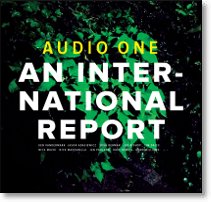
Audio One: The Midwest School (2014) -- its companion,
An International Report, was the week's top find (I
also gave an A- to the early Caffeine). One I have
yet to get to is the 7-CD DKV Trio: Past Present box.
I suppose you could make arguments both ways as to whether
omitting tracks maximizes cash returns -- the idea behind making
all this music available is to sell it -- but for someone who
tries to cover as wide a swath as possible and who has little
time to double back, these sites are a terrific convenience and
help. I wish there were more of them, and hope they stay as open
as possible.
I haven't been able to update the blog this past week, although
I occasionally do still receive mail about nonsense comments, so
it must be sort of working some of the time. I haven't made any
real progress toward moving on, and hardly know where to begin.
Recommended music links:
New records rated this week:
- Audio One: An International Report (2014, Audiographic): yet another Vandermark large band, live at Green Mill, expect action, don't be too picky [bc]: A-
- Cory Branan: The No-Hit Wonder (2014, Bloodshot): singer-songwriter from Mississippi, went to rock in Memphis but country songs are fresher [r]: B+(*)
- The Bug: Angels & Devils (2014, Ninja Tune): best when he goes upbeat with that dub thing, but also has a penchant for horror soundtrack poses [r]: B+(*)
- Common: Nobody's Smiling (2014, Def Jam): Chicago rapper explores and deplores his home town, not that it isn't tough everywhere else [r]: B+(***)
- Eliana Cuevas: Espejo (2014, ALMA): originally from Venezuela, now "Canada's Latin Music Queen" -- a small fish in a barren pond [cd]: B
- Dirty Loops: Loopified (2014, Verve): three Swedish gents: synth fireworks and histrionic vocals driven by a frantic post-disco beat [r]: C+
- Four Year Strong: Go Down in History (2014, Pure Noise, EP): 5-song EP by punkish group so irrepressibly loud and catchy they're extra annoying [r]: B-
- Larry Fuller: Larry Fuller (2013-14 [2014], Capri): mainstream pianist, came up working with singers and plays juicy standards in this trio, "C Jam Blues" a fave [cd]: B+(***)
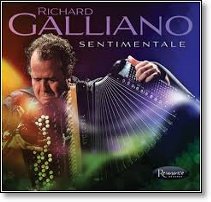
- Richard Galliano: Sentimentale (2014, Resonance): French accordion player works the jazz tradition for sentimental moods, played up to the hilt [cd]: A-
- Ariana Grande: My Everything (2014, Island/Republic): no doubt she has what it takes to be a pop star; the question is whether she can make us care [r]: B+(**)
- Eric Harland's Voyager: Vipassana (2014, GSI Studios): mainstream drummer's second album, assembles a fancy band then wastes it with vocal dressing [cdr]: B-
- Horse Meat Disco: Volume IV (2014, Strut): old disco obscurities remixed to sound like old disco obscurities, plus "Gettin' to Know You" [r]: B+(**)
- Ricky Kej/Wouter Kellerman: Winds of Samsara (2014, Listen 2 Africa): Indian keyboard player meets South African flautist for synth-not-so-exotica [cd]: C
- Wiz Khalifa: Blacc Hollywood (2014, Atlantic): after two plays, all I can confirm is that this stoned rapper makes agreeable background music [r]: B+(**)
- J Mascis: Tied to a Star (2014, Sub Pop): Dinosaur Jr. frontman returns to form, his voice cracking and hiding behind some pretty decent guitar [r]: B+(*)
- Brad Paisley: Moonshine in the Trunk (2014, Arista): first half party anthems and livid fantasies; on the backstretch turns into a crunchy con [r]: B-
- Jamie Saft/Steve Swallow/Bobby Previte: The New Standard (2014, Rare Noise): [cdr]: B+(*)
- Carl Saunders: America (2013 [2014], Summit): spent most of his life in big bands but sounds great as the sole horn here, even when the covers turn corny [cd]: B+(*)
- Side A: In the Abstract (2013 [2014], Not Two): Ken Vandermark reeds trio with Havard Wiik and Chad Taylor, more varied than Free Fall but lands there [bc]: B+(**)
- Spider Bags: Frozen Letter (2014, Merge): garage-punk with a talkie-voiced singer who seems worth listening to, plus they can stretch a riff [r]: B+(*)
- Ed Stone: King of Hearts (2014, Sapphire Music): guitarist-singer, touted as "the new George Benson," he isn't even that, much less the old one [cd]: C+
- Street Priest: More Nasty (2012 [2014], Humbler): guitar-bass-drums trio, can't (or won't) fake the funk so they bust it into shards and stray noise [cdr]: B+(**)
- Randy Travis: Influence Vol. 2: The Man I Am (2012 [2014], Warner Brothers): covers from the classics to Kristofferson, leftovers from Vol. 1 but ring truer [r]: B+(**)
- Ken Vandermark's Topology Nonet: Impressions of Po Music (2013, Okka Disk): Joe McPhee plays McPhee a generation removed, scaled up, not so po [bc]: B+(**)
Recent reissues, compilations, and vault discoveries rated this week:
- Cables to the Ace (2014, Communicating Vessels): [cd]: B
Old records rated this week:
- AALY Trio with Ken Vandermark: Hidden in the Stomach (1996 [1997], Silkheart): Ken Vandermark joins Mats Gustafsson's rowdy trio, highlight Haden and Ayler covers [r]: B+(**)
- AALY Trio with Ken Vandermark: I Wonder If I Was Screaming (2000, Crazy Wisdom): tighter songwriting limits meltdown by combustible sax men [bc]: B+(**)
- Billy Bang Quintet: Invitation (1982, Soul Note): scrounging, found one I hadn't heard and didn't find it especially remarkable, relatively [r]: B+(**)
- Caffeine: Caffeine (1993 [1994], Okka Disk): Ken Vandermark, Jim Baker (piano), Steve Hunt (drums): I've never heard Baker play so explosively -- sure lights V up [r]: A-
- The John Carter Octet: Dauwhe (1982, Black Saint): adds decorative flute, oboe, tuba, African references to more visceral quartet with Bobby Bradford [r]: B+(**)
- Cinghiale [Mars Williams/Ken Vandermark]: Hoofbeats of the Snorting Swine (1995 [1996], Eighth Day): Ken Vandermark and Mars Williams play sax/clarinet duets, w/surprising interactions [bc]: B+(***)
- DK3: Neutrons (1997 [1998], Quarterstick): Ken Vandermark trio with guitar-drums from Jesus Lizard, one of those post-rock experiments he no longer does [bc]: B+(***)
- The Frame Quartet: 35mm (2009, Okka Disk): Vandermark 4, scratches second sax for an admixture of electronics, interesting but not quite the same [bc]: B+(***)
- The Kevin Norton Ensemble: Knots (1997, Music & Arts): drummer-vibraphonist, toys with Monk and swaps in various clarinets, a mix converging on same [r]: B+(***)
- NRG Ensemble: Bejazzo Gets a Facelift (1997, Atavistic): post-Hal Russell group with Mars Williams and Ken Vandermark racing, crashing, flips [bc]: B+(***)
- Territory Band-4: Company Switch (2004 [2005], Okka Disk, 2CD): Vandermark 11-piece big band, for once does more than just thrash and raise hell [bc]: B+(**)
- The Thing: Action Jazz (2006, Smalltown Superjazz): Mats Gustafsson's power sax trio diversifies, not the worst thing that can happen to them [bc]: B+(**)
- Vandermark Quartet: Solid Action (1994, Platypus): a blast from the past, when V was straddling avant rock and jazz, making trouble for both [bc]: B+(***)
- Ken Vandermark: Standards (1994 [1995], Quinnah): four "improvising trios," nothing standard, just a first taste of DKV, more Mars, some guitar thrash [bc]: B+(**)
- Ken Vandermark: Strade d'Acqua/Roads of Water (2008 [2010], Multi Kulti): soundtrack, hushed tones, moderate tempos, a little color, everyone makes nice [bc]: B+(*)
Unpacking: Found in the mail last week:
- Jason Adasiewicz's Sun Rooms: From the Region (Delmark)
- Charles Lloyd: Manhattan Stories (1965, Resonance, 2CD): September 16
- Pete Magadini: Bones Blues (1977, Sackville/Delmark)
- Dean Magraw & Eric Kamau Gravatt: Fire on the Nile (Red House): October 14
- Parker Abbott Trio: The Wayfinders (self-released): October 23
- Don Pullen: Richard's Tune (1975, Sackville/Delmark)
Ask a question, or send a comment.
Sunday, August 31, 2014
Weekend Roundup
Having a lot of trouble focusing these days. Partly the number of
things broken and need of (often expensive, sometimes just time consuming)
repairs has been mind-boggling. And with the blog on the blink, I've fallen
into a two-day week rut, compiling "Music Week" on Mondays then trying to
catch up with the world on "Weekend Roundup" on Sundays. Several of the
bits below could have been broken out into separate posts -- indeed, I
wonder if they shouldn't all be.
I'm thinking especially of the Michelle
Goldberg "Two-State" comment as something I could have written much more
on. I don't know if I made the point clearly enough below, so let me try
to sum it up once more: there are several distinct but tightly interlocked
problems with Two-State: (1) the natural constituency for Two-State (at
least among pro-Israelis) is the "liberal Zionists" -- an ideology based
on an unsustainable contradiction, and therefore a diminishing force --
and without supporters Two-State is doomed to languish; (2) when liberals
break from Zionism (which is inevitable if they have both principles and
perception) they must do so by committing to universal rights, which means
they must at least accept One-State as a desirable solution (Goldberg, by
the way, fails this test); (3) as long as [illiberal] Zionists refuse to
implement Two-State (and they have a lot of practice at staving it off),
liberals (anyone with a desire for peace and justice) should regroup and
insist on universal rights (e.g., One-State); (4) under pressure, I think
that Zionists will wind up accepting some version of Two-State rather than
risking the ethnic dilution of One-State. People like Goldberg would be
better off getting ahead of this curve rather than trying to nitpick it.
Someone like Netanyahu has thousands of excuses for postponing agreement
on a viable Two-State solution. On the other hand, he has no legitimate
defense against charges that Israel is treading on the basic human rights
of millions of Palestinians under occupation. That's where you want to
focus the political debate. And that shouldn't be hard given Israel's
recent demonstration of its abuse of power.
The march to war against ISIS is another subject worthy of its own
post. There are many examples, but the one I was most struck by this
week was a
letter to the Wichita Eagle, which reads:
The threat of ISIS appears similar to the threat of the Nazis before
World War II. The Europeans ignored Adolf Hitler's rising power because
they were tired of war.
As ISIS spreads through the Middle East at will, our nation's leaders
are assessing how to counter this threat. ISIS is well-equipped, having
seized abandoned equipment the United States gave the Iraqi army, and it
is growing in strength, numbers and brutality.
What is the U.S. to do? That decision is in the hands of our nation's
leaders. However, with the future leader of ISIS having said in 2009 to
U.S. soldiers who had held him prisoner, "I'll see you in New York,"
trying to avoid conflict because we're tired of war should not be the
determining factor.
Much of Europe succumbed to Hitler because Europeans were "tired of
war."
Similar? Germany had the second largest economy in the world in the
1930s, one that was reinvigorated by massive state spending on munitions
at a time when the rest of the world was languishing in depression. Even
so, Hitler's appetite far exceeded his grasp. Germany was able to score
some quick "blitzkrieg" victories over France, Norway, and Poland, and
occupy those countries through fronts offered by local fascists -- the
Vichy government in France, Quisling in Norway, etc. But even given how
large and strong Germany was, it was unable to sustain an assault on the
British Isles, and its invasion of Russia stalled well short of the Urals.
And, of course, provoking the US into entering the war hastened Germany's
loss, but that loss was very likely anyway. It turns out that the world
is not such an easy place to conquer, and authoritarian regimes breed
resistance everywhere they tread.
In contrast, ISIS is a very limited backwater rebellion. Its extremist
Sunni salafism limits it to about one-quarter of Iraq and maybe one-half
of Syria, and it was only able to flourish in those areas because they
have been severely war-torn for many years. They lack any sort of advanced
manufacturing base. Their land is mostly desert, so very marginal for
agriculture. Their "war machine" is built on confiscated weapons caches,
which will quickly wear out or be exhausted. They do have some oil, but
lack refineries and chemical plants. Moreover, their identity is so narrow
they will be unable to extend their rule beyond war-torn Sunni regions,
where they're often viewed as more benign (or at leas less malign) than
the Assad and Maliki regimes.
So it's hard to imagine any scenario where ISIS might expand beyond its
current remote base: comparing it to Germany under Hitler is laughable.
The one thing they do have in common is an enthusiasm for war, developed
out of a desire to avenge past wars. You might say that that the West
after WWI was "tired of war" but that seems more like a sober assessment
of how much was lost and how little gained even in winning that war --
after Afghanistan and Iraq, most Americans are similarly dismayed at how
much they've lost and how little they've gained after more than a decade
of war. Many Germans, on the other hand, were willing to entertain the
delusion that they only lost due to treachery, and that a rematch would
solve all their problems. It's easy in retrospect to see this asymmetry
in war lust as a "cause" of the war, but jumping from that insight to a
conclusion that the West could have prevented WWII by standing up to
Hitler sooner is pure fantasy. To prevent WWII you'd have to go back to
Versailles and settle the first phase of what Arno Mayer later dubbed
"the thirty-years war of the 20th century" on more equitable terms --
as effectively (albeit not all that consciously) happened after WWII.
As with post-WWI Germans, ISIS' enthusiasm for war is rooted in many
years of scars -- scrapes with the French and British colonialists, with
Israel, with brutal Baathist dictators, with the US invasion of Iraq and
American support for Kurdish and Shiite militias. Most ISIS soldiers grew
up with war and know little else -- in this the people they most closely
resemble are not the Nazis but the Taliban, a group which resisted long
Russian and American occupations, separated by a bloody civil war and a
short-lived, brutal but ineffective period in power. On the other hand
the idea that the US should shrug off their "war weariness" and plunge
into another decade-plus struggle with another Taliban knock-off isn't
very inspiring. Isn't repeating the same steps hoping for different
results the very definition of insanity?
Still, the war drums keep beating. The Wichita Eagle has had three
such op-eds in the last week on ISIS: from Charles Krauthammer, Cal
Thomas, and Trudy Rubin -- each with the sort of screeching hysteria
and ignorance of ecology I associate with finding roaches under the
bathroom lavoratory. Clearly, what gets their goat more than anything
is the very idea of an Islamic State: it looms for these people as
some sort of existential threat that must be exterminated at any cost --
a reaction that is itself every bit as arbitrary, absolutist, and
vicious as what they think they oppose. But in fact it's merely the
logical response to the past wars that this same trio have urged us
into. It's worth recalling that there was a day when small minds like
these were equally convinced that the Germans and Japanese were all
but genetically disposed to hatred and war. (Robert Morgenthau, for
instance, wanted to spoil German farms with salt so they wouldn't
be able to feed enough people to field an army -- that was 1945?)
Europe broke a cycle of war that had lasted for centuries, not by
learning to be more vigilant at crushing little Hitlers but by
joining together to build a prosperous and equitable economy. The
Middle East -- long ravaged by colonialism, corruption, and war --
hasn't been so lucky, but if it is to turn around it will be more
due to "war weariness" than to advances in drone technology. The
first step forward will be for the war merchants to back away --
or get thrown out, for those who insist on learning their lessons
the hard way.
Some more scattered links this week:
-
Michelle Goldberg: Liberal Zionism Is Dying. The Two-State Solution Shouldn't
Go With It. This starts off with a point (a major concession, really)
that bears repeating:
In 1948, Hannah Arendt published an essay in the magazine Commentary --
at the time still a liberal magazine -- titled "To Save the Jewish Homeland."
She lamented the increasingly militaristic, chauvinistic direction of Zionism,
the virtual unanimity among Jews in both the United States and Palestine that
"Arab and Jewish claims are irreconcilable and only a military decision can
settle the issue; the Arabs, all Arabs, are our enemies and we accept this
fact; only outmoded liberals believe in compromises, only philistines believe
in justice, and only shlemiels prefer truth and negotiation to propaganda and
machine guns . . . and we will consider anybody who stands in
our way a traitor and anything done to hinder us a stab in the back."
This nationalist strain of Zionism, she predicted, might succeed in
establishing a state, but it would be a modern-day Sparta, "absorbed with
physical self-defense to a degree that would submerge all other interests
and activities." It would negate the very humanistic Jewish values that
originally fed the Zionist dream. "Palestine Jewry would eventually separate
itself from the larger body of world Jewry and in its isolation develop into
an entirely new people," she writes. "Thus it becomes plain that at this
moment and under present circumstances a Jewish state can only be erected
at the price of the Jewish homeland."
It's difficult to avoid the conclusion, sixty-six years later, that she
was right.
Goldberg then cites Antony Lerman's recent
The End of Liberal Zionism:
The romantic Zionist ideal, to which Jewish liberals -- and I was one,
once -- subscribed for so many decades, has been tarnished by the reality
of modern Israel. The attacks on freedom of speech and human rights
organizations in Israel, the land-grabbing settler movement, a growing
strain of anti-Arab and anti-immigrant racism, extremist politics, and
a powerful, intolerant religious right -- this mixture has pushed liberal
Zionism to the brink. [ . . . ]
The only Zionism of any consequence today is xenophobic and exclusionary,
a Jewish ethno-nationalism inspired by religious messianism. It is carrying
out an open-ended project of national self-realization to be achieved
through colonization and purification of the tribe.
"Liberal Zionist" is a contradiction that cannot survive. Indeed,
in Israel it is all but dead. The key tenet of liberalism is belief
in equal rights for all. In Israel it is virtually impossible to find
any political party -- even "far left" Meretz -- willing to advance
equal rights for the "Palestinian citizens of Israel" much less for
those Palestinians under occupation. On the other hand, the debate
as to whether Zionism is inherently racist has been proven not just
in theory but empirically. As Max Blumenthal shows in Goliath: Life
and Loathing in Greater Israel, everywhere you look in Israel you
see growing evidence of racism.
In America, it's long been possible for many people (not just Jews)
to combine domestic liberalism with an unthinking, uncritical allegiance
to Israel. Of course it's getting harder to sustain the ignorance that
allows one to think of Israel as a just nation. (The so-called Christian
Zionists -- or as Chris Hedges puts it, "American fascists" -- require
fewer illusions, since they are likely to be racist and militarist at
home as well as abroad.) It sounds like Goldberg -- an early J-Street
supporter -- has started to make the break, but she's still not willing
to go full-liberal and endorse full and equal rights for all Israelis
and Palestinians -- the so-called One-State Solution. She wants to
salvage the so-called Two-State Solution, with Israel returning (for
the most part) to its 1967 borders and an independent Palestinian state
in Gaza and the West Bank (with or without Jerusalem as its capitol).
The Two-State Solution was originally proposed by the UN in 1947, but
the Zionist leadership weren't satisfied with the proposed borders, and
the Palestinian leadership objected to the whole thing, preferring a
unified democracy (with a 2-to-1 Arab majority) where nobody would have
to move. After the 1949-50 armistice lines were drawn, Israel greatly
expanded its borders and had expelled over 700,000 Arabs from its
territory, ensuring Jewish demographic dominance. Those borders, which
held until 1967, have long been accepted as permanent by most Palestinian
groups and by all neighboring Arab countries: a deal that could have been
made by Israel any time since the mid-1990s, but which wasn't, because
no ruling party in Israel would accept such a deal, nor would the US or
the so-called Quartet (which had endorsed the deal) apply significant
pressure on Israel to settle. There are lots of reasons why Israel has
taken such an intransigent stand. One is that the demise of liberalism
leaves Israel with no effective "peace block" -- the price of occupation
has become so low, and the political liabilities of peace so high, that
Israel currently has no desire to change the status quo.
This is, of course, a huge problem for anyone who believes in equal
rights and/or who puts a positive value on peace in the Middle East.
Such people -- by which I mean pretty much all of us (except for a few
warmongers and apocalypse-hungry Christians) -- can only make progress
toward a settlement by putting pressure on Israel, which is to say by
increasing the costs to Israel of its present occupation policies. One
way is to counter Israeli propaganda, to expose the facts of occupation
and to delegitimize Israel's position. Another step is BDS, with the
prospect of growing ever more extensive and restrictive. Another is to
adjust the list of acceptable outcomes: that may mean giving precedence
to the inclusive, equal rights One-State Solution over the unsuccessful
Two-State scheme.
The fact is that Two-State was a bad idea in 1947 and remains a bad
idea today: it is only slightly less bad now because the "ethnic cleansing"
that could have been avoided in 1947 is ancient history now; it is also
slightly worse because it leaves us with a lot of refugees who will still
be unable to return to Israel, and who still have to be compensated and
patriated elsewhere. The dirty secret of the Two-State Solution is that
it leaves Israel unaltered (except for the relatively trivial loss of some
settlements) -- free to remain the racist, militarist Sparta it has become
ever since 1948. That's why Israel will choose Two-State over One-State:
Two-State guarantees that their Jewish state will remain demographically
supreme, whereas One-State risks dilution of their ethnic solidarity. But
even if the West's game plan is Two-State all along, you're not going to
get there without playing the One-State card. If a US administration
finally decides we need to settle this conflict, it won't start (as Obama
did) by demanding a settlement freeze; it will start by demanding equal
rights for all within whatever jurisdictions exist, and complete freedom
from Israel for any jurisdictions that do not offer full and equal Israeli
citizenship. Only then will progress be made. The problem with Goldberg's
plea is that she's still willing to sacrifice her principles for Israel's
identity.
Ezra Klein: The DNC'a braidead attack on Rand Paul: Paul's been
reading Hillary Clinton's neocon ravings, and responded: "We are lucky
Mrs. Clinton didn't get her way and the Obama administration did not
bring about regime change in Syria. That new regime might well be ISIS."
The DNC's response: "It's disappointing that Rand Paul, as a Senator
and a potential presidential candidate, blames America for all the
problems in the world, while offering reckless ideas that would only
alienate us from the global community. [ . . ]
That type of 'blame America' rhetoric may win Paul accolades at a
conference of isolationists but it does nothing to improve our standing
in the world. In fact, Paul's proposals would make America less safe
and less secure." Klein adds:
This is the brain-dead patriotism-baiting that Democrats used to loathe.
Now they're turning it on Paul.
There are a few things worth noting here. The first is the ferocity
with which the DNC responded to an attack that was, in truth, aimed more
at Hillary Clinton than Barack Obama. The second is the degree to which
a Rand Paul-Hillary Clinton race would scramble the politics of national
security, with Democrats running against Paul in much the way Bush ran
against Kerry. And the third is that it's still the case in foreign
policy, the real divide isn't left vs. right, but interventionists vs.
non-interventionists.
Actually, the "real" political divide is between status quo cons like
Obama and Clinton on the "left" side and various flavors of crackpots
(including Rand) on the "right." But in foreign policy, the latter have
come to include a growing number of non-interventionists, not so much
because they believe in peace and justice as because they've come to
realize that imperial wars bind us closer to the dark-skinned aliens
we claim to be helping, and because some of them begin to grasp that
the security apparatus of the state they so loathe (mostly because it's
democratic, or pretends to be) could just as easily turn on them.
Meanwhile, Obama and Clinton have managed to hire virtually every
known "liberal interventionist" as part of their efforts to toady up
to the military-security complex, even though virtually none of their
real-world supporters buy into that crap. Someone smarter than Rand Paul
could turn this into a wedge issue, but he'll tie it to something stupid
like preventing the Fed from counteracting recessions.
Also see
Paul Rosenberg: Don't do it, Hillary! Joining forces with neocons could
doom Democrats: One thing on his mind is LBJ and Vietnam (who like
Hillary was willing to do "dumb stuff" to not appear cowardly), but
there's also this:
Here's the dirtiest of dirty little secrets -- and it's not really a secret,
it's just something no one ever talks about: The entire jihadi mess we're
facing now all descends from the brilliant idea of "giving the Soviets their
own Vietnam" in Afghanistan. How's that for learning a lesson from Vietnam?
Well, that's the lesson that Jimmy Carter's crew learned -- and Ronald Reagan's
gang was only too happy to double down on.
Richard Silverstein: The Jingoism of Anti-Jihadism: Starts with a
Netanyahu quote from September 11, 2001, that's worth being reminded of
(from New York Times):
Asked tonight what the attack meant for relations between the United States
and Israel, Benjamin Netanyahu, the former prime minister, replied, "It's
very good." Then he edited himself: "Well, not very good, but it
will generate immediate sympathy." He predicted that the attack would
"strengthen the bond between our two peoples, because we've experienced
terror over so many decades, but the United States has now experienced a
massive hemorrhaging of terror."
I remember watching him on TV at the time, as well as a similarly gloating
Shimon Peres, and a slightly more somber John Major offering to share with
the US Britain's vast experience in cultivating terrorists. You couldn't
ask for better examples of how to react badly and make a problem worse.
Silverstein then quotes from Hillary Clinton's
Atlantic interview ("They are driven to expand. Their raison d'etre is
to be against the West, against the Crusaders, against the fill-in-the-blank --
and we are all fit into one of these categories. How do we try to contain
that? I'm thinking a lot about containment, deterrence, and defeat."):
Here you have a perfect example of the sickness I outlined above. In the
1950s communism was the bugaboo. Today, it's jihadism. Clinton's conception
of the latter uses almost exactly the same terms as those of the Red Scare:
words like expansionist, angry, violent, intolerant, brutal, anti-democratic.
There's even a touch of Reaganism in Clinton's portrayal of the fall of
communism. There's the notion that through all of our machinations against
the Soviet Union -- the assassinations, the coups, the propping up of
dictators -- all of it helped in some unspecified way to topple Communism.
She further bizarrely characterizes our anti-Communist strategy as an
"overarching framework," when it was little more than knee-jerk
oppositionalism to the Red Menace.
What is most pathetic about this political stance is that it offers no
sense of our own identity, of what we stand for. Instead, it offers a
vague, incohate enemy against whom we can unite. We are nothing without
such enemies.
Next up is David Brooks, if you care. Richard Ben Cramer, in How
Israel Lost: The Four Questions (by the way, probably the best single
book about Israel in the last twenty years) hypothesizes that the reason
Israel is so determined not to negotiate an end to the conflict is that
its leaders fear losing the shared identity of having a common enemy in
the Palestinians. Take the conflict away and the various Jewish subgroups --
the Ashkenazi, Sephardim, Mizrachi, Russians, Americans -- will splinter
and turn on each other, fighting over diminishing spoils in a suddenly
ordinary state.
For more on Netanyahu, see
Remi Brulin: Israel's decades-long effort to turn the word 'terrorism'
into an ideological weapon. More Israel links:
Also, a few links for further study:
Dean Baker: Subverting the Inversions: More Thoughts on Ending the Corporate
Income Tax: Baker is arguing that the inefficiencies caused by the
Corporate Tax Avoidance Industry are so great that we might be better off
eliminating the tax altogether: if there were no tax, there'd be no need
for corporations to pay lobbyists and accountants to hide their income,
and we'd also eliminate scourges like private equity companies. First
obvious problem here is that leaves a $350 billion revenue shortfall,
which Baker proposes recovering with higher dividend and capital gains
tax rates. (Of course, we should do that anyway.) One long-term problem
is that federal taxes have radically shifted from being collected from
businesses to individuals, which makes the tax burden more acutely felt
by the public. A VAT would help shift this back, but so would anything
that tightened up loopholes and reduced corporate tax evasion. Another
advantage of having a corporate income tax is that it could be made
progressive, which would take an extra bite out of especially large
and/or profitable companies -- the former mostly benefitting from
weak antitrust enforcement, the latter from monopoly rents -- which
would both raise more revenue and take it from companies that are
relatively safe from competition. I'm not strictly opposed to what
Baker is proposing, but I'd like to see it worked out in a broader
context that includes many other tax reforms that tackle inequality,
lack of competition, globalization, and patents more systematically.
I suspect Baker would prefer this too.
Also see Baker's
Patent Monopolies: The Reason Drug Companies Pushed Synthetic
Opioids.
Andrew Hartman: Hegel Meets Reagan: A review of Rick Perlstein's
The Invisible Bridge: The Fall of Nixon and the Rise of Reagan.
Medium's CSS is actually pretty f***ing good. [Warning: very nerdy.]
CSS stands for Cascading Style Sheet. The visual design properties of web
pages can generally be controlled by attaching CSS code to the "generic
markup code" in a web page (something called HTML). Having worked with
pre-Web GMLs (Generic Markup Languages, especially the standardized one,
SGML), I've always been very "old school" about coding web pages, which
means I've never embraced CSS as a programming paradigm. So my reaction
here was first one of shock that so much work went into this. (Looks like
four programmers for a couple years, although it's unlikely that they only
wrote CSS.) I was also at a loss for much of the terminology (LESS? SASS?
mixin?), not that I can't guess what "z-index" implies. It's not that I
haven't learned anything in the 15 years since I started building web
sites, and it's certainly not necessarily the case that what's changed
has changed for the better, but if I'm going to get over the hump of
embracing this change I need good examples of making it worthwhile. And
this, I suspect, is one.
Anya Schiffrin: The Rise and Fall of Investigative Journalism: An
international compendium, spun off from her new book, Global Muckraking:
100 Years of Investigative Journalism from Around the World. This, by
the way, is one of the few things I've read this week that make me feel
more hopeful.
Rebecca Solnit: Men Explain Things to Me: Reprints the title essay,
or at least an early draft of it, to Solnit's new book. Of course, I've
had clueless men explain things to me, too. (A few clueless women as
well, but singling out men is within reasonable statistical norms.) And
in groups I have a relatively sensitive CSMA/CD switch, so I'm easily
interrupted and loathe to reclaim the floor, so the larger the group
the more likely I am to be regaled with unrefuted (not irrefutable)
nonsense. Much of my consciousness of such dynamics comes from reading
early feminist texts long ago, revelatory even in cases where women are
reacting not so much to gender as to implicit power relationships --
something gender was (and not uncommonly still is) inextricably bound
up in, but something that didn't end with gender. So Solnit's stories
speak to me, even when the precise terminology is slightly off. [One
of my favorite tech acronyms, CSMA/CD stands for "carrier sense multiple
access with collision detection" -- an algorithm for efficiently deciding
when a computer can send data over a common bus network. The same would
work for deciding who speaks when in an open room, but actual results
are often distorted by volume and ego.] A few more links on Michael B. Katz:
One more little thing. I put aside the August 19, 2014 issue of the
Wichita Eagle because I was struck by the following small items on page
3A:
Man sentenced to more than 7 years in prison . . . Scott Reinke,
43, was given 86 months in prison for a series of crimes including burglary,
theft, possession of stolen property, making false information and fleeing
or attempting to elude law enforcement. . . . In tacking on the additional
time last Friday, [Judge Warren] Wilhelm noted Reineke had a criminal
history of more than 50 felony convictions.
Kechi man gets nearly 10 years for child porn . . . Jaime Menchaca,
34, of Kechi pleaded guilty to one count of distributing child pornography
and was sentenced to 110 months in prison. . . . In his plea, Menchaca
admitted that on Sept. 13 he sent an e-mail containing child pornography
to a Missouri man.
There's also another piece on page 5A:
Sex offender pleads guilty to child porn . . . Dewey had a 1999
conviction in Pueblo, Colorado, for attempted sexual assault of a child.
He admitted in court Monday that he was found last September with images
and videos of child pornography that he obtained via the Internet.
Prosecutors and the defense have agreed to recommend a 20-year prison
term when Dewey is sentenced on Nov. 4.
This struck me as an example of something profoundly skewed in our
criminal justice system. I won't argue that child pornography is a
victimless crime (although what constitutes pornography can be very
subjective), but possession of a single image strikes me as a much
more marginal offense than repeated instances of property theft. (I
don't think I even noticed the last case until I went back to look
for the first two; it's harder to judge.) Glad the burglar/thief is
going to jail, but wonder if it wouldn't make more sense for the
child porn defendant to spend some time with a shrink, and maybe pay
a nominal fine.
Also on the front page of the Eagle is an article called "Kan. GOP
lawmakers vow to look out for oil interests": Senator Roberts, Reps.
Huelskamp, Pompeo, and Jenkins prostate themselves at a Kansas
Independent Oil & Gas Association confab. They all agreed they
wanted lower taxes and less regulation. Nobody said much about the
recent tenfold increase in earthquakes.
Ask a question, or send a comment.
Monday, August 25, 2014
Music Week
Music: Current count 23701 [23658] rated (+43), 530 [536] unrated (-6).
Was surprised to see rated count over 40, then looked closer and the
subtraction result turned out to be an impossible 143. Looks like I slipped
a digit two weeks ago. That was about when I had an editing accident and
lost several hundred grades, sending me into a panic trying to figure out
how to fix the breach. This seems to be the summer of things breaking --
I still figure that's better than the summers of mysterious lung diseases
a few years back. Thinking about it, the 43 count means I've been listening
to more Rhapsody, which I'll explain by last week's oversized
Streamnotes plus the
fact that my
pending queue is nearly dry
(18 new 2014 records, or 10 not counting this week's unpacking).
I can remember days when I had more than 100 unrated in the queue.
I still have some items from previous years I haven't gotten to
(although only 1 of those was from 2013, a piece of vinyl I should
look for), so we're talking real low priority stuff. No wonder my
eye is wandering.
This year I decided not to do my
all-consuming metacritic file
(link is to 2013), but needing some kind of aide de memoire I've kept
a running list of albums considered noteworthy and assigned priorities
to them to give me something to work with. Recently, it looked like
this, but since I was weeding out albums
once I had heard them, it was pretty much useless for anyone else. So
it occurred to me that it would be better to keep those records in,
and for that matter to add my grades (where available). The combined
file now looks like
this. I've added some options to
select based on priority levels, so you can get the old format
like this if you have any
reason to do so. There's also an option to get an
even bigger file with all
the "priority 0" records I've noted -- everything mentioned in AMG's
weekly featured releases gets noted in the data file, even if I
consider it to be of no interest whatsoever. Currently the data
file lists 1644 records. Since last year's metacritic files ran to
(7868+1100) records, I haven't been looking very hard. But as my
queue drains I'll work on that some more. (I especially want to
beef up the jazz listings.)
I fell behind on
Twitter, wound up having
to knock out nine tweets to wrap this up. Even so, I skipped a few
of the "old music" albums -- they'll show up next Rhapsody Streamnotes,
although you can check out Michael Tatum for Joy Division, below.
Wrote one tweet for Jeff Palmer -- an organ player in my database
I had no other consciousness of -- but played two albums, both good,
but when you trade in Victor Lewis (a drummer I revere) for Rashied
Ali you get an extra spark.
Speaking of Twitter, I retwitted one from Mike Konczal last night:
Sad that Michael Katz has passed away. A remarkable scholar, very
important to me. Read Tom Sugrue's moving tribute:
[link]
I added my own two cents:
Let me add that Michael Katz's history of the early school reform
movement as class thought control/socialization was a key insight to
me.
Katz wrote a lot of books, but the only ones I read were The Irony
of Early School Reform: Educational Innovation in Mid-Nineteenth Century
Massachusetts (1968; reissued 2001), and Class, Bureaucracy, and
Schools: The Illusion of Educational Change in America (1971; expanded
1975). He found that the early proponents of universal education like
Horace Mann -- a name we knew because Wichita named a school for him --
were less concerned with offerng opportunities to Irish immigrants than
with socializing them in proper New England ways, and conversely that
the Irish resisted such efforts to brainwash them. I read these books
when I was a high school dropout with my own intense distrust of an
educational system that seemed geared to turn us into regimented factory
workers (if we survived the army and Vietnam).
Katz later moved on to write about America's welfare system, in books
like In the Shadow of the Poorhouse: A Social History of Welfare in
America (1986; expanded 1996), The Undeserving Poor: From the
War on Poverty to the War on Welfare (1990), and Improving Poor
People: The Welfare State, the "Underclass," and Urban Schools as
History (1995), and more recently has published on immigration.
Most recently, he wrote Why Don't American Cities Burn? (2011),
about a murder in Philadelphia and all the attendant baggage of race
and class. I hadn't thought much about Katz until The Undeserving
Poor showed up in one of my recent book trawls. Interesting how
his career developed. For more, see this
In Memoriam by Thomas Sugrue (whose own books include The
Origins of the Urban Crisis: Race and Inequality in Postwar Detroit
(2005), Sweet Land of Liberty: The Forgotten Struggle for Civil
Rights in the North (2008), and Not Even Past: Barack Obama
and the Burden of Race).
One more Twitter note, or at least semi-related. Medium is either
a spinoff or an independent venture funded with Twitter money -- I
don't pretend to understand how it works, but I have heard that they
have some money to hire writers, and have hired Robert Christgau to
write some Expert Witness/Consumer Guide posts. He has an account now
that you can follow. He'll
explain it all in an introductory post on September 2, followed by
the first actual CG reviews on September 5.
Recommended music links:
New records rated this week:
- Auction Project: Slink (2014, self-released): violinist Heather Martin Bixler outshines the leaders, offering shape and substance to the usual postbop [cd]: B+(*)
- Henry Butler/Steven Bernstein: Viper's Drag (2014, Impulse): band named Hot 9 after Armstrong-Hines, comparisons neither can live up to [r]: B+(***)
- Calle 13: MultiViral (2014, El Abismo/Sony Music Latin): Puerto Rican rappers with a political agenda, unintelligible to folks like me, but at least I feel it [r]: B+(***)
- Brian Eno/Karl Hyde: Someday World (2014, Warp): Eno teams up with an inferior singer, so he tries to compensate by writing better songs [r]: B+(*)
- Dave "Knife" Fabris: Lettuce Prey (2010 [2014], Musea): guitarist into fusion and classical but also makes room for Ran Blake to do his thing [cd]: B-
- Simone Felice: Strangers (2014, Dualtone): one of the Felice Brothers tries his hand solo, forsaking those nice harmonies [r]: B+(*)
- The Felice Brothers: Favorite Waitress (2014, Dualtone): minus Simone, turns out they have more fun and edge, even a taste for mayhem [r]: B+(***)
- FKA Twigs: LP1 (2014, Young Turks): the sort of singer Tricky uses, OK as long as she comes up with music on that level, which isn't often [r]: B
- Hercules & Love Affair: The Feast of the Broken Heart (2014, Moshi Moshi): EDM, a bit slow, cartoonish even, but that's their shtick, isn't it? [r]: B
- Jessica Hernandez & the Deltas: Secret Evil (2014, Instant): Detroit group, straight rock & roll with a slight vocal skew, distinctive I'd say [r]: B+(***)
- Darius Jones/Matthew Shipp: Cosmic Lieder: The Darkseid Recital (2011-13 [2014], AUM Fidelity): dense piano chords slow the saxman down, for better or worse [r]: B+(*)
- Dr. John: Ske-Dat-De-Dat: The Spirit of Satch (2013 [2014], Concord): a Louis Armstrong tribute that misses its mark on so many levels I never conceived possible before [r]: C
- Roddy Frame: Seven Dials (2014, AED): singer-songwriter from Aztec Camera, 15 years into a solo career has pop charms but no more dazzle [r]: B+(*)
- Phil Haynes: No Fast Food: In Concert (2012 [2014], Corner Store Jazz, 2CD): drummer-led trio with Dave Liebman and Drew Gress, all sharp edges for two live discs [cd]: B+(***)
- Wayne Horvitz: 55: Music and Dance in Concrete (2012 [2014], Cuneiform): i.e., immobile: no swing, no bop, no hop, no strut, just fairly rich chamber jazz [cdr]: B
- Rebecca Kilgore with the Harry Allen Quartet: I Like Men (2013 [2014], Arbors): title concept could use sharper songs, saxophonist could use more space [r]: B+(*)
- Ricardo Lemvo/Makina Loca: La Rumba Soyo (2014, Cumbancha): Congolese star draws big beats and brass from salsa, supercharged with soukous guitar [r]: A-
- John McLaughlin & 4th Dimension: The Boston Record (2013 [2014], Abstract Logix): as the fusion guitarist ages, he eschews transcendence for hard and clunky [r]: B
- Hafez Modirzadeh: In Convergence Liberation (2011 [2014], Pi): George Russell student, explores high concepts with approaches I rarely care for [cd]: B+(**)
- Myriad 3: The Where (2014, ALMA): Canadian piano trio, hits a semi-popular niche like EST even if they aren't the influence [cd]: B+(**)
- Novox: Over the Honeymoon (2014, Label Z Production): French septet with fake funk horns, synths, turntablist, guitarist leader, vocal clutter [cd]: C+
- Picastro: You (2014, Sonic Clang): intriguing little group, basically slowcore with falsetto vocals, fractured and crazed around the edges [r]: B+(*)
- Pink Martini & the Von Trapps: Dream a Little Dream (2013 [2014], Heinz): the extra voices add a somber air, belying camp eclecticism from Brahms to ABBA [r]: B+(*)
- Anthony Pirog: Palo Colorado Dream (2014, Cuneiform): guitar trio with Michael Formanek and Ches Smith, not much flow or groove, feedback helps [cdr]: B+(*)
- Jeff Richman & Wayne Johnson: The Distance (2014, ITI Music): guitar duets, fancier picking than new age but fills that pleasantry niche [cd]: B+(*)
- Ritmos Unidos: Ritmos Unidos (2014, Patois): Latin jazz octet from Indiana, Afro-Cuban bata drums, timbales, the distinctive splash of steel pans [cd]: B+(**)
- Jonah Tolchin: Clover Lane (2014, Yep Roc): NJ singer-songwriter with warm voice and such fine country-folk form he could be new T-Bone Burnett [r]: A-
- Seth Walker: Sky Still Blue (2014, The Royal Potato Family): blues singer-songwriter, hits paydirt with "Jesus (Make My Bed)" but everything else is a bit tepid [r]: B
- The Bill Warfield Big Band: Trumpet Story (2013-14 [2014], Planet Arts): Randy Brecker solos, but the trumpet theme is underdeveloped; Vic Juris shines [r]: B+(*)
- Anna Webber: Simple (2013 [2014], Skirl): sax/flute trio with Matt Mitchell and John Hollenbeck stretching and skewing, best when all three thrash [cd]: B+(***)
Recent reissues, compilations, and vault discoveries rated this week:
- Smoke Dawson: Fiddle (1971 [2014], Tompkins Square):old-fashioned Appalachian solo fiddle, obscure reissue of a legend if playing with Peter Stampfel counts [r]: B+(***)
Old records rated this week:
- Joy Division: The Best of Joy Division (1979-80 [2008], Rhino): [r]: A-
- John Lindberg: Luminosity: Homage to David Izenzon (1992-96 [1996], Music & Arts): [r]: B+(**)
- John Lindberg: Ruminations Upon Ives and Gottschalk (2001 [2003], Between the Lines): [r]: B+(***)
- Paul Motian Quintet: Misterioso (1986 [1987], Soul Note): [r]: B+(**)
- Paul Motian Trio: One Time Out (1987 [1989], Soul Note): [r]: B+(***)
- Jeff Palmer/John Abercrombie/Arthur Blythe/Victor Lewis: Ease On (1992 [2013], Sledgehammer Blues): [r]: B+(***)
- Jeff Palmer/Arthur Blythe/John Abercrombie/Rashied Ali: Island Universe (1994, Soul Note): organ player goes avant with Rashied Ali/Arthur Blythe, and John Abercrombie follows suit [r]: A-
- Ted Rosenthal: My Funny Valentine (2007 [2008], Tokuma): piano trio nicely balanced for playing 11 juicy standards associated with Helen Merrill [r]: B+(***)
Unpacking: Found in the mail last week:
- Richard Galliano: Sentimentale (Resonance): September 30
- Jason Jackson: Inspiration (Jack & Hill Music): October 14
- Kalle Kalima & K-18: Buñuel de Jour (TUM): September 16
- Dave Liebman Big Band: A Tribute to Wayne Shorter (Summit)
- Ivo Perelman/Karl Berger: Reverie (Leo)
- Carl Saunders: America (Summit)
- Wadada Leo Smith: The Great Lakes Suites (TUM, 2CD): September 16
- Tim Sparks: Chasin' the Boogie (Tonewood)
Ask a question, or send a comment.
Sunday, August 24, 2014
Weekend Roundup
The first thing to note here is that the Four Wars of 2014 -- Ukraine,
Syria, Iraq, and Gaza -- are still going strong, and the conflicting
interests super- and not-so-super-powers have in them offer excuses
enough to frustrate any efforts at mediation. There have also been
reports of shelling along the India-Pakistan border in Jammu, and the
US is upset about China challenging a US "reconnaissance plane" near
the Chinese border.
The least-reported of these conflicts is in the Ukraine, where
various "pro-West" or "pro-Europe" forces staged a coup against
Russia-leaning President Viktor Yanukovich in February. As Ukraine
shifted to the West, various revolts broke out in heavily Russian
southwest Ukraine. Crimea declared independence and asked to be
annexed by Russia, which Putin readily agreed to. Other separatist
militias seized power elsewhere in southeastern Ukraine, and the
"pro-West" Kiev government has been trying to suppress the revolt
the old-fashioned way, with bombing and strafing. It's unclear to
what extent Russia has been actively promoting and supporting the
separatists: NATO and Kiev have asserted various instances, and
Putin has steadfastly denied them.
The result so far is that the civil war in
Donbass
(around Dontesk) has resulted in about 4,000 deaths -- I don't
think that includes the Malaysian airliner that was shot down,
surely an accident but part of the war's "collateral damage."
The US has clearly sided with the "pro-Western" government in
Kiev and taken a leading roll in attempting to punish Russia
with sanctions. No one thinks Russia is totally innocent here,
but the US position is the result of a long neocon campaign to
advance NATO to Russia's borders, to corner and cower Russia
to prevent the emergence of any non-US military or economic
power center. And the failure to cover this war is largely due
to blithe assumptions of US benevolence and Russian malevolence
going back to Cold War dogma, as well as an abiding belief that
force is an effective solution to the world's problems.
If the US was not so entangled in its faith in military force,
you would see a concerted effort to mediate the four wars. Rather,
Obama has embraced force as America's fundamental strategy in all
four arenas. (Syria is only slightly murky here: the US dislikes
both sides but can't see any option other than searching for a
third side to arm.) The US is most directly involved in Iraq,
where we've taken a sudden interest in protecting small minorities
like Yazidis and Turkmen who have the most propaganda value. Then
there is Gaza, where the ceasefire has been repeatedly broken by
Israel, still refusing to open Gaza's borders to allow a semblance
of normal everyday life. As I've written before, the "truce" terms
Hamas offered at the beginning of the recent military hostilities
were completely fair and reasonable. Netanyahu's continued rejection
of the terms should make you reconsider just who "the terrorists"
are in this conflict. The Gaza death count has continued to climb
over 2100. Another Israeli civilian was killed in recent days,
bringing the total to 4, in one of the most one-sided massacres
of recent times.
While it is possible that ISIS is indeed a terrorist group one
cannot negotiate with -- at least that's what the hawks want us to
believe -- Hamas has practically been begging for a deal since
they entered Palestinian electoral politics in 2006. Israel has
not only rejected their every overture, Israel repeatedly drags
them back into armed conflict. The US is schizophrenic about this:
on the one hand we spend a lot of money trying to support the "good
Palestinians" over in the West Bank in the vain belief that if we
can improve their economic well-being that will help us move toward
peace. On the other hand, any time Israel decides to trash whatever
good we've done, we applaud and make sure to replenish their arms.
I want to quote a section from Josh Ruebner's Shattered Hopes:
Obama's Failure to Broker Israeli-Palestinian Peace (p. 190):
Promoting "economic growth" for Palestinians living under Israeli
military occupation, while simultaneously flooding Israel with the
weapons and providing it with the diplomatic protection it needs to
entrench this military occupation, is a nonsensical proposition. At
best, these policies reveal that the United States is working at
cross-purposes; at worst, they signal that it is trying to reconcile
Palestinians to their open-air prison existence by making it slightly
more palatable. What USAID fails to understand publicly is that
Israel's military occupation is specifically designed to de-develop
the Palestinian economy, not to encourage Palestinian economic
growth.
Israel's eviscertation of teh Palestinian economy is integrally
woven into the very fabric of its military occupation in innumerable
ways. The hundreds of roadblocks, checkpoints and other barriers to
movement that Israel maintains in the West Bank and East Jerusalem
inhibit the transportation of people and goods, which forces the
ever-increasing localization of the economy. Israel's blockade of the
Gaza Strip has reduced its population to penury and almost total
reliance on international charity for survival. Even before, Israel's
formal imposition of the blockade on Gaza in 2007, Israel's earlier
destruction of the Gaza Strip's only airport and its prevention of the
building of a seaport there had greatly constricted Palestinians in
the Gaza Strip from engaging in international trade. Similarly,
Israel's wall in the West Bank and East Jerusalem, and its control of
the West Bank's border corssings with Jordan, greatly reduce trade
opportunities as well. Finally, Israel's widespread razing of
Palestinian agricultural land and fruit-bearing trees, along with the
expropriation of Palestinian land and water resources for its illegal
settlements, have devastated the Palestinian agricultural sector.
The US at least nominally wants peace in Palestine, just not enough
to stand up to Israel, which at most wants quiet but is willing to
settle for hatred as long as Palestinians remain powerless -- which
is one effect of mired in a hopeless economy. In one telling note,
it's worth noting that the power plant in Gaza that Israel blows up
every few years is insured by the US: Israel breaks it, we pay to
fix it, then we pay Israel to break it again. It's a perfect example
of government waste, but Americans don't seem able to see that, in
large part because we think our interests extend everywhere, we think
we have to choose sides everywhere, and we choose those sides on the
basis of ignorance and identity.
Some scattered links this week:
Ed Kilgore: Jeffords and the GOP's March to the Right: Vermont's
last Republican Senator, James Jeffords, has died. He's best remembered
for switching parties in 2001, denying Cheney's stranglehold on the
Senate. Kilgore drew up a list of "moderate" Republican senators from
1976, just 25 years back, on the even of the Reagan juggernaut, and
found 17 (of 38) qualified (not including the likes of Bob Dole and
Howard Baker Jr.), adding VP Nelson Rockefeller and (more of a stretch)
President Gerald Ford. Since then the Republican Party has been purged
as rigorously as Stalin's CP -- the only division today seems to be
between those who are categorically insane and those who are merely
deranged.
Philip Weiss: Hillary Clinton just lost the White House in Gaza -- same
way she lost it in Iraq the last time: Some wishful thinking here,
but it's worth noting that Clinton has strayed outside the bounds of
partisan propriety, notably in attacking Obama's stated intent -- I'm
hesitant to call it a policy without more evidence that he's actually
trying to follow it -- of "not doing stupid shit."
Hillary's done it again. Her pro-war comments in that famous interview
two weeks ago have painted her into a right wing neoconservative corner.
In 2016, a Democratic candidate will again emerge to run to her left
and win the party base, again because of pro-war positioning on the
Middle East that Hillary has undertaken in order to please
neoconservatives.
The last time it was Iraq, this time it was Gaza. Hillary Clinton had
nothing but praise for Netanyahu's actions in Gaza, and echoed him in
saying that Hamas just wanted to pile up dead civilians for the cameras.
She was "hepped up" to take on the jihadists, she said that Obama's
policy of "not doing stupid shit" was not a good policy. She undermined
Obama for talking to Iran and for criticizing Israel over the number of
civilian casualties in Gaza. She laid all the fault for the massacre at
Hamas's door.
And once again, Hillary Clinton will pay for this belligerency; she
won't tenant the White House.
Weiss knows he's "going out on a limb" so he cites some polling that's
worth noting:
Consider: Gallup says that Israel's actions in Gaza were unjustified
in the eyes of the young, people of color, women, and Democrats, and
overwhelmingly in some of those categories 51-25% disapproval among
the young. 47-35 percent among Democrats, 44-33 among women, 49-25
among nonwhites.
The problem, of course, is that while the majority of Democrats
may have broken from AIPAC over Gaza, how many Democrats in Congress
have? Not Elizabeth Warren. Not even Bernie Sanders. Certainly some
hypothetical Democrat could score points against Clinton in primaries
by painting her as a warmonger and pointing out how her obeissance
to AIPAC only serves to prolong conflict in the Middle East, but it's
impossible to identify a real Democrat who could effectively make
those points. (Dennis Kucinich, for instance, tried twice, failed
abysmally, and doesn't even have his House seat to stand on now.
Howard Dean pretty much permanently discredited himself when he
became a lobbyist for the Iranian terrorist group MEK.)
The main thing that bothers me about Clinton isn't policy --
not that there aren't many points to disagree on -- so much as the
stench of dynasty. More and more the Democratic Party resembles
the so-called progressive parties of Pakistan and India, cynically
ruled by corrupt families and cliques that needn't offer their
supporters anything more than a small measure of protection from
the viciousness of their opponents. You'd think that 238 years
after the declaration of democracy in America we would have become
more sophisticated than that -- indeed, we probably were, but have
recently devolved into the present kleptocracy. Obama at least
offered a symbolic break from the Bush-Clinton dynasties, but in
the end that was only symbolic: his administration was rife with
Clinton partisans, and he sealed the party's fate by breaking up
the grassroots organization that had elected two Democratic
Congresses -- foolishly or cynically preferring to "deal" with
lobbyists and Republicans rather than risk democracy within his
own party. More Israel Links:
-
Kate: Soldiers fire on Palestinian protesters in Nablus, including 14-year
old boy: compendium of many news reports. One reports a poll where:
"over half of the Jewish population in Israel believes the marriage of a
Jewish woman to an Arab man is equal to national treason"; "over 75 percent
of participants did not approve of apartment buildings being shared between
Arabs and Jews"; "sixty percent of participants said they would not allow
an Arab to visit their home"; 40 percent said "Arabs should have their
right to vote for Knesset revoked"; 55 percent said "Arabs and Jews should
be separated at entertainment sites." Hard to see how anyone could look at
these figures and not recognize that Israel has become profoundly racist
and segregationist.
-
Gershom Gorenberg: It's Time to Stop 'Managing' the Israeli-Palestinian
Conflict and Just End It: "The demands raised in the failed Cairo
negotiations are exactly what Israel and the Palestinian unity government
should have sat down to discuss in early June."
-
Annie Robbins: 'Common Dreams' website traps Hasbara troll spewing
anti-Semitism: An example of false flag propaganda, meant to poison
serious discussion of Israel.
-
Nadera Shalhoub-Kevorkian: The constant presence of death in the lives of
Palestinian children.
-
Philip Weiss: 'NYT' op-ed calls on Jews to abandon liberal Zionism and
push for equal rights: In a nutshell, "equal rights" is the common
denominator argument for all occasions, but especially for beleaguered
minorities wherever they may be. It's intuitively right, and it's the one
settlement that can appeal to all sides. It is, therefore, a position
frequently advanced by Diaspora Jews. On the other hand, Israel is an
ethnocracy, a place where one "chosen people" controls the state and
uses it to oppress others -- a distinction that is becoming increasingly
impossible to ignore. Cites the piece,
Antony Lerman: The End of Liberal Zionism, which says: "I still
understand its dream of Israel as a moral and just cause, but I judged
it anachronistic. The only Zionism of any consequence today is xenophobic
and exclusionary, a Jewish ethno-nationalism inspired by religious
messianism. It is carrying out an open-ended project of national
self-realization to be achieved through colonization and purification
of the tribe."
Also, a few links for further study:
Patrick Cockburn: How to Ensure a Thriving Caliphate: Excerpt from
Cockburn's forthcoming [January 6?] book, The Jihadis Return: ISIS
and the New Sunni Uprising. There is a shortage of reliable info
about ISIS, as well as a lot of propaganda. (The most laughable was
Trudy Rubin claiming to know "The Truth About ISIS.") Not sure this
helps a lot either, although the key point that the jihadists derive
from the US disruption of Iraq is well taken. More detailed and less
inflamatory is
The leader of ISIS is 'a classic maneuver warrior', although the
tactical comparisons to Genghis Khan strike me as bullshit.
Thomas Frank: "Wanted Coltrane, Got Kenny G": Interview with Cornell
West, reference is to Obama. "It's not pessimistic, brother, because
this is the blues. We are blues people. The blues aren't pessimistic.
We're prisoners of hope but we tell the truth and the truth is dark.
That's different."
Rahawa Haile: Should Musicians Play Tel Aviv? This kicks around the
various reasons foreign musicians shouldn't play in Israel, with some
asides on other related cases -- apartheid-era South Africa, obviously,
but Haile also mentions concerts in "unsavory" dictatorships like Libya
(under Gaddafi) and Turkmenistan, plus Stevie Wonder's decision to not
bother with Florida after the Zimmerman verdict. Oddly, Haile spends
much more time on Israel's often rabid reaction to African refugees --
mostly from Sudan, where Israel tried to score anti-Arab propaganda
points -- than with Israel's second- or third-class treatment of
Palestinians (actually, those in Gaza are probably more like fourth).
(Max Blumenthal's book Goliath: Life and Loathing in Greater Israel
has quite a bit on Israeli racism against African refugees, but that
is just one instance of the more general loathing right-wing Israelis
hold for nearly all goyim.) Neil Tennant is quoted: "in Israel anyone
who buys a ticket can attend a concert." That, of course, depends on
what you mean by "in Israel": if you live in Ramallah, 15 miles away,
you can't buy tickets to see the Pet Shop Boys in Tel Aviv, nor can
you if you live in Gaza, more like 40 miles away. Tennant is not only
wrong, he is wrong in a particularly misleading way: his experience
of Israel is of a normal, relatively peaceful and prosperous society,
which is true enough for the "Tel Aviv bubble" but completely false
for much of the territory subject to Israeli state terror. One thing
that perpetuates Israeli state terror is the sense that its preferred
citizens enjoy of never having to pay a price for their consent to
living in such a state. When an international artists boycotts Israel,
that at least sends a message that there is some cost to running such
a state, even if it's not likely to have any real effect. The fact is
that Israel cannot be forced into changing its ways: the only way
change will come about is if Israelis become conscious of how far
their nation has strayed from international norms of peace and human
rights. For that reason I welcome all such boycotts. On the other
hand, I don't keep track of who played Israel when or why. (One of the
few I recall is Madonna, who made a documentary about a non-concert
trip to Israel and the Occupied Territories, which if I recall correctly
was very effective in exposing at least part of the brutality of the
regime.) Nor do I discriminate against Israeli jazz musicians -- I must
have written about close to 100 and I'd be surprised if the grade curve
strays from any other national group. They are individuals, and while
many may support their political leaders, many do not -- in fact a very
large percentage of them are expatriates, living in New York, London,
Paris, and elsewhere -- and in any case, as an American I know as well
as anyone that there is very little individuals can do about their
governments.
D.R. Tucker: The Powell Doctrine: Some notes on Lewis Powell,
including his notorious US Chamber of Commerce memo that largely
laid out the platform for right-wing business' takeover of American
politics, and other things, including a defense of Roe. vs. Wade.
Ask a question, or send a comment.
Thursday, August 21, 2014
Rhapsody Streamnotes (August 2014)
Three-and-a-half weeks since
last time, this one snuck
up on me: with the summer doldrums I'm as surprised as anyone to count
101 squib-reviews below. New jazz slowed to a trickle more than a month
ago, with occasional advances for September-October releases. I've
scratched the bottom of my barrel, and consulted most of the usual
authorities. Still, unless you've been following my
Twitter feed, you're
unlikely to have run across more than two of nine A- new records
this month. (Golem's Tanz and Spoon's They Want My Soul --
also the Calypso set further down -- appeared in Michael Tatum's
A
Downloader's Diary; The Green Seed got a passing mention in one
of those Expert Witness messages via Facebook.) Clean Feed and Intakt
are labels I key on (although cf. Hassler and Laubrock below). I saw
mention of Ricardo Lemvo and Jonah Tolchin (and Jessica Hernandez) in
PopMatters -- not my idea of a reliable review source, but one has to
look somewhere. Aside from a couple jazz records that dropped straight
into my mailbox, everything I bother with has some critical rep behind
it somewhere. I don't have a real metacritic file this year -- just a
crib sheet of little use to me and
probably none to you.
In the old music section, I've been following my Penguin Guide
4-star search list less than my nose: recent records on Intakt (Michael
Griener, Aki Takase, Trio 3) led me down several rabbit holes, and
reminded me that I had never finished those Nobu Stowe records the
artist sent in many years ago. The Punk 45 compilations were
recommended by Jason Gubbels (a third one is not yet on Rhapsody).
Soul Jazz (and subsidiary Universal Sound) is another label I'd like
to key on -- hence the Sergio Mendes one-shot. Unfortunately, looks
like a lot of their catalog isn't available, especially the Studio
One compilations.
These are short notes/reviews based on streaming records from
Rhapsody. They are snap judgments based on one or two plays,
accumulated since my last post along these lines, back on
July 30. Past reviews and more information are available
here (5201 records).
New Releases (More or Less)
Laurie Antonioli: Songs of Shadow, Songs of Light: The Music of
Joni Mitchell (2013 [2014], Origin): Bay Area jazz singer, several
albums since Soul Eyes in 1985, this a collection of Joni Mitchell
songs, done much like Mitchell did them -- similar voice, keybs, guitar,
only slightly burnished by Sheldon Brown's reeds.
B [cd]
Clarice Assad: Imaginarium (2014, Adventure Music):
Brazilian singer, daughter of guitarist Sergio Assad, straddles pop,
jazz, and classical, but in "A Morte Da Flor" falls off the deep end
of the latter.
B-
Auction Project: Slink (2014, self-released): Quintet,
name comes from a 2010 album credited to alto saxophonist David Bixler
and pianist Arturo O'Farrill, with violinist Heather Martin Bixler
unnamed but on cover, and bass and drums. This one adds featured guest
guitarist Mike Stern on two cuts and uillean pipes on one.
B+(*) [cd]
Baloni: Belleke (2012 [2014], Clean Feed): String
trio, no violin but viola (Frantz Loriot), cello (Joachim Badenhorst),
and bass (Pascal Niggenkemper), touted as "slow boiling, chamber
jazz-like, surrealistic soundscapes" -- I'd scratch the "chamber"
clause, which implies a degree of politesse not evident here. Rather,
you get a scratchy search for a profound sound that generally eludes
them.
B+(**) [cd]
Benyoro: Benyoro (2014, self-released): New York-based
group playing West African pop music, led by vocalist Yacouba Sissoko-Kora,
from Mali. One of the percussionists also hails from Mali, the bass player
from Martinique, the Djembe player from New Rochelle, but authenticity
isn't a problem here -- it just doesn't soar quite as high as you'd like.
B+(***)
Bolt: Shuffle (2013 [2014], Driff): Avant quartet --
Jorrit Dijkstra (alto sax, lyricon, analog electronics), Eric Hofbauer
(guitar), Junko Fujiwara (cello), Eric Rosenthal (drums, percussion) --
offers scratchy little miniatures -- 19 that they recommend you shuffle --
too impolite and eccentric for chamber jazz, uprooting expectations.
B+(***) [cd]
Anthony Branker & Word Play: The Forward (Towards Equality)
Suite (2014, Origin): Composer and director of a septet plus
singer Alison Crockett, with guest spoken word from schoolchildren
who have some serious wishes for a better world (none of which involve
cutting taxes on the rich). Mainstream with soul flair, the horns --
David Binney (alto sax), Ralph Bowen (tenor/soprano sax, flute), and
Conrad Herwig (trombone) especially striking.
B+(***) [cd]
Bobby Broom: My Shining Hour (2014, Origin): Guitarist,
started out in soul jazz with Charles Earland, has close to a dozen
albums on his own as well as side credits in groups like Deep Blue
Organ Trio. This is a trio with bass and drums, all standards, no
breakthroughs but very listenable, especially songs with a little
zip like "Sweet Georgia Brown" and "Jitterbug Waltz."
B+(**) [cd]
Henry Butler/Steven Bernstein: Viper's Drag (2014,
Impulse): Bernstein is a trumpet player who started avant with an
interest in the tradition and became arranger for Robert Altman's
Kansas City project, which in turn led to his Millennial
Territory Orchestra. Butler is a New Orleans pianist/singer who
first worked with Bernstein on Kansas City and has bumped
into him a couple times since -- not clear if this was recorded
at their 2012 Jazz Standard sets or that was merely the point
when this concept came together. They call their nine-piece band
the Hot 9 after Armstrong's Hot Fives and Hot Sevens, and there's
the rub: Bernstein isn't Armstrong, nor is Butler Earl Hines (nor
as a singer can he carry Jimmy Rushing's tune), and the band is
full of talented musicians who can play classic jazz but none
are specialists who live it. That isn't a crippling complaint --
the record is great fun and I'd love to see the band live -- but
it is a bit more than a nitpick.
B+(***)
Calle 13: MultiViral (2014, El Abismo/Sony Music Latin):
Puerto Rican rap group, with a reggaeton streak although that's hardly
the only genre they can jump, and the few bits I can understand show
some political smarts (as does a guest list that includes Silvio Rodriguez,
Tom Morello, John Leguizamo, and Eduardo Galeano). Even in purely musical
terms, I like the hard raps best.
B+(***)
Mario Castro Quintet/Strings: Estrella de Mar/Promotional
Edition (2014, Interrobang): Young tenor saxophonist, from
Puerto Rico, graduated Berklee, sounds like a slightly scruffier
David Sanchez, promising enough, but the quintet is cluttered, the
strings are crappy, and the singer, well, unnecessary. "Promotional
Edition" is printed prominently on the cover in what otherwise is
fancier packaging than most commercial releases see, so I decided
to honor the fact rather than puzzle over it. Of course, it puts
an unfathomable distance between what I heard and what you might
be able to buy.
B- [cd]
Collier & Dean: Sleek Buick (2013-14 [2014],
Origin): Tom Collier plays vibes, marimba, xylophone, and keyboards.
Don Dean bass, percussion, keyboards, ukelele, classical guitar.
Backup varies, with appearances by Don Grusin (piano) and Ernie
Watts (tenor sax), and drums split between Ted Poor and Alex
Acuña. Bubbly, frothy groove music.
B [cd]
Wayne Coniglio/Scott Whitfield: Fast Friends (2012
[2014], Summit): Two mainstream trombonists, looks like Coniglio's
first album but Whitfield has close to a dozen since 1997. Three
originals (one Coniglio, two Whitfield), "I'm Confessin'" a gem
among the not-very-standard covers.
B+(**) [cd]
Cortex: Live! (2014, Clean Feed): Norwegian avant
jazz quartet patterned on Ornette Coleman's classic, two previous
albums but no one I've heard of: Thomas Johansson (cornet), Kristoffer
Alberts (reeds), Ola Høyer (bass), Gard Nilssen (drums). I have a
nagging doubt that anyone so inspired could do this: rather than
breaking rules and blazing new paths the sax-cornet interplay just
seems so right, although it wouldn't without a lot of innovation
that now seems so normal.
A- [cd]
Sylvie Courvoisier/Mark Feldman Quartet: Birdies for Lulu
(2013 [2014], Intakt): Piano and violin for the leaders, bass (Scott
Colley) and drums (Billy Mintz) fill the group out. He paints curtains
of ice, she breaks them.
B+(**)
Jorrit Dijkstra: Music for Reeds and Electronics: Oakland
(2013 [2014], Driff): Five reed players -- Dijkstra, Phillip Greenlief,
Kyle Bruckmann, Frank Gratkowski, Jon Raskin -- including clarinet, oboe,
and English horn as well as various saxes, three players also credited
with electronics. Can get ugly in the lower reaches, or squeaky in the
upper.
B+(*) [cd]
Diva: A Swingin' Life (2001-12 [2014], MCG Jazz):
Drummer Sherry Maricle's long-running all-female big band, two cuts
featuring Nancy Wilson recorded at MCG in 2001, the rest with quite
a bit of turnover from an engagement in Lincoln Center eleven years
later, with Marlena Shaw singing on two pieces, including a Basie
"Blues Medley" they were born to swing. A lot of pop in the brass
section.
B+(**) [cd]
Dr. John: Ske-Dat-De-Dat: The Spirit of Satch (2013
[2014], Concord): Starts with "What a Wonderful World" from the wrong
end of Louis Armstrong's songbook, then segues into the worst version
of "Mack the Knife" I've ever heard -- a judgment I rendered even
before Mike Ladd's rap. Hard to blame the trumpet players (Nicholas
Payton, Terence Blanchard, Arturo Sandoval), but the rest of the band
cuts the wrong rug, and the good Dr.'s slurred vocals slide all over
the place -- a sharp contrast to Armstrong, who always had his unwieldy
voice under perfect control. Of course, a tribute doesn't have to sound
like its target -- if it did, what would be the point? But nothing here
comes close, except Bonnie Raitt's cameo, and "When You're Smiling."
C
Jorge Drexler: Bailar en la Cueva (2014, Warner
Music Latina): Singer/songwriter from Uruguay, based in Spain, has
a dozen (or so) albums since 1992. Strikes me as closer to MPB than
to salsa -- for a guy who can't tell Spanish from Portuguese he
reminds me mostly of Caetano Veloso, with a slightly more eccentric
beat.
B+(**)
John Ellis & Andy Bragen: Mobro (2011 [2014],
Parade Light): Saxophonist, has an interestingly eclectic catalog
which takes an odd turn here, providing the music for a play by
Bragen, the combined effect way more operatic than I can handle.
B-
Dave "Knife" Fabris: Lettuce Prey (2010 [2014],
Musea): Guitarist, has appeared on several albums with pianist
Ran Blake (who gets "featuring" credit here), but this seems to
be his first album. It's a "kitchen sink" conglomeration with
a wild mix of fusion and classical -- a Ginastera string quartet,
some Prokofiev, "Sabre Dance," one of those horrible operatic
sopranos -- and some smaller pieces, including a nice bit of
"Mood Indigo" at the end.
B- [cd]
FKA Twigs: LP1 (2014, Young Turks): "Half-Jamaican"
UK native singer-songwriter, Tahilah Barnet, nicknamed Twigs, has
two EPs, now an LP, backed with trip-hoppy electronics. Her thin,
warbly voice is something Tricky led us to expect, and as long as
this can pass for Tricky pop it holds up OK, but doesn't have
anywhere else to go.
B
Danny Fox Trio: Wide Eyed (2012 [2014], Hot Cup):
Pianist, second album, trio with Chris Van Voorst Van Beest on bass
and Max Goldman on drums. Played this several times and have very
little to say about it -- a nice mix of Evans-esque melodic sense
with a more Jarrett-like rhythmic push, I guess.
B+(***) [cd]
Golem: Tanz (2014, Discos Corason): Punk-klezmer
group led by accordionist-singer Annette Ezekiel Kogan, with Aaron
Diskin as a second singer, the band anchored by violinist Jeremy
Brown and noted jazz trombonist Curtis Hasslebring. Several albums,
this the first on a Mexican label, produced by Tony Maimone (Pere
Ubu).
A-
Grand Fatilla: Global Shuffle (2014, self-released):
Boston group, a spinoff from world-jazz eclectics Club D'Elf, pared
down to a quartet: Robert Cassan (accordion), Matt Glover (electric
mandolin), Mike Rivard (double bass, sintir), and Fabio Pirozzolo
(percussion, voice): Argentine tangos, Italian Tarantellas, Turkish
sacred Sufi songs, Irish reels, Moroccan trance, Bulgarian dance,
all erudite and enjoyable, but nothing that shakes the rafters.
B+(*) [cd]
The Green Seed: Drapetomania (2014, Communicating
Vessels): Two rappers, two DJs, all the vinyl scratch sounds like a
throwback to the '80s but the samples are more fluid, and the
underground message is conscious, even when conflicted on matters
of the heart. Matters of state, those are more obvious.
A-
Michael Griener/Rudi Mahall/Jan Roder/Christof Thewes: Squakk:
Willisau & Berlin (2012-13 [2014], Intakt): Some parsing
options here: Griener (drums), Roder (bass), and Thewes (trombone)
previously recorded an album called Squakk, effectively the
group name here, but Griener is listed above Squakk, the
others, including newcomer Mahall (bass clarinet, clarinet, baritone
sax), below. Mahall not only adds a useful change of pace, he refocuses
the group.
A-
Haitian Rail: Solarists (2014, New Atlantis): Rough
avant-jazz group, plenty of thrash especially between the guitar (Nick
Millevoi) and trombone (Daniel Blacksberg). Bassist Edward Ricart also
contributes a song -- the only band member who doesn't is drummer Kevin
Shea, already famous for MOPDTK, less famous for Talibam and other
marginal noise projects.
B+(**)
Hans Hassler: Hassler (2011 [2013], Intakt): Folk
background, "the true Swiss king of accordion," leads a quartet with
two jazz clarinetists (Jürgen Kupke, Gebhard Ullmann on bass), plus
percussion. Feels rushed and cramped.
B
Hercules & Love Affair: The Feast of the Broken Heart
(2014, Moshi Moshi): Disco group, fifth album including a DJ-Kicks.
I figure cartoonishness is a bit of their shtick, but sometimes they overdo
it, and more often they cut short the beats.
B
Jessica Hernandez & the Deltas: Secret Evil (2014,
Instant): Detroit group, has a straightforward, almost trad rock and
roll form, the singer-songwriter's voice slightly off in a way that
ultimately distinguishes her. First album after a couple EPs, one
titled Weird Looking Women in Too Many Clothes.
B+(***)
Wayne Horvitz: 55: Music and Dance in Concrete (2012
[2014], Cuneiform): Pianist, although he only composed and mixed these
pieces, collaborating with Yukio Suzuki (choreography and dance),
Yohei Saito (video artist) and Tucker Martine (producer/engineer).
They were recorded at Fort Worden in Port Townsend, WA (out on the
Olympic Peninsula), using the concrete bunkers and cistern for
resonance. The group includes five horns (trumpet, trombone,
clarinet/bass clarinet, alto and soprano sax) plus strings and
voice (Maria Mannisto), for a quasi-classical effect.
B [cdr]
Ibibio Sound Machine: Ibibio Sound Machine (2014,
Soundway): British group with roots in Nigeria, led by singer Eno
Williams with musicians from Ghana and Brazil. Framed by bits of
gospel, deeper beats in the middle.
B+(*)
Darius Jones/Matthew Shipp: Cosmic Lieder: The Darkseid
Recital (2011-13 [2014], AUM Fidelity): Alto sax-piano
duets, performed live at various spots following the 2011 studio
album Cosmic Lieder. Jones is an intense player, sometimes
extraordinary (cf. Man'ish Boy (A Raw & Beautiful Thing))
and sometimes just a pain in the ears (his Little Women albums,
especially Lung). Shipp's dense clustering mostly slows
him down, precluding either extreme.
B+(*)
Pandelis Karayorgis Quintet: Afterimage (2014, Driff):
Boston-based pianist with a mostly local live in Chicago group -- Dave
Rempis (alto, tenor, baritone saxes), Keefe Jacckson (tenor sax, bass
clarinet), Nate McBride (bass), and Frank Rosaly (drums). It's almost
too much to work with, as the patches where the horns drop out reveal.
B+(***) [cd]
Ryan Keberle & Catharsis: Zone (2014, Greenleaf Music):
Trombonist, second album with his quartet Catharsis -- Mike Rodriguez on
trumpet, also bass and drums -- adding guests Scott Robinson (tenor sax)
and Camila Meza (voice). The vocals offer an intriguing tangent, but wind
up too much.
B+(*) [cd]
Rebecca Kilgore with the Harry Allen Quartet: I Like Men
(2013 [2014], Arbors): Standards singer collects a list of songs about
men: "The Man I Love," of course, also "The Gentleman Is a Dope," "He's
a Tramp," "He's My Guy," "Marry the Man Today," "The Man That Got Away,"
and so forth -- the biggest turnoff for me was "Goldfinger." Saxophonist
Allen should be a big help here, but he doesn't add much.
B+(*)
Jonas Kullhammar/Jørgen Mathisen/Torbjörn Zetterberg/Espen Aalberg:
Basement Sessions Vol. 3: The Ljubljana Tapes (2013 [2014],
Clean Feed): Two tenor saxophonists (the former also credited with
soprillo sax and flute), bass, and drums. The two previous volumes
were trios without Mathisen, and Vol. 2 was most impressive.
This live successor has its hot spots, but also tends to slip on by.
B+(**) [cd]
Lake Street Dive: Bad Self Portraits (2014, Signature
Sounds): Singer Rachel Price reminds me of Elvin Bishop recycling blues
clichés, but Bishop was slighter and had more fun.
B+(*)
Adam Lane's Full Throttle Orchestra: Live in Ljubljana
(2012 [2014], Clean Feed): An octet, with two trumpets (Nate Wooley,
Susana Santos Silva), trombone (Reut Regev), three saxes (David Bindman,
Avram Fefer, Mat Bauder), drums (Igal Foni), and the leader's bass mixed
up so it's always audible, the heartbeat of a growing, growling organism --
the most Mingus-like of bassists, both for his compositions that sum up
all worthwhile jazz history and as a bandleader who can whip a group up
into something larger than itself.
A- [cd]
Ingrid Laubrock Octet: Zürich Concert (2011 [2014],
Intakt): German avant saxophonist, her octet limited to two horns
(Tom Arthurs' trumpet is the other), with guitar-cello-bass strings,
accordion in addition to piano, and drummer Tom Rainey doubling on
xylophone. Intricate layering without much solo punch, but that
seems to be the idea.
B+(*)
Azar Lawrence: The Seeker (2011 [2014], Sunnyside):
Tenor saxophonist, cut his first album in 1974 and doesn't have many
since, but he's such a powerful presence if you've ever heard him pop
up anywhere, even on the side, you're likely to remember the name.
Quintet with Nicholas Payton (trumpet), Benito Gonzalez (piano),
Essiet Okon Essiet (bass), and Jeff "Tain" Watts (drums). Big,
dramatic sound, overwhelming all else.
B+(**)
Gordon Lee with the Mel Brown Septet: Tuesday Night
(2014, Origin): Lee is a pianist-composer, wrote everything here
(lifting a bit from Rachmaninoff), and is counted in drummer Brown's
septet (two saxes, trumpet, trombone, piano, bass, drums). Feels
cluttered and rushed, the solos indistinct.
B- [cd]
Ricardo Lemvo/Makina Loca: La Rumba Soyo (2014,
Cumbancha): The most Cuban-sounding of Congolese stars, this has
outsided salsa rhythms with soukous guitar supercharge, for an
unrelenting up, up, up. Crazy machine, indeed.
A-
Vincent Lyn: Live in New York City (2013 [2014], Budo):
Pianist and kung-fu master, several albums, I don't doubt his proficiency
but the charm here is tenor saxophonist Melissa Aldana.
B+(*) [cd]
Bob Mamet: London House Blues (2014, Blujazz):
Pianist, from Chicago, brother of playwright David Mamet, half
dozen or so albums since 1994, evidently spent some time in
smooth/crossover jazz although this is an exemplary mainstream
trio, two originals, familiar standards, bright, sparkling even.
B+(**) [cd]
Jessica Lea Mayfield: Make My Head Sing . . . (2014,
ATO): Singer-songwriter with two previous albums produced by Dan
Auerbach (Black Keys). This one done with husband Jesse Newport
(mostly bass) and a drummer, is distinguished first of all by the
crunchy guitar, supposedly a tribute to '90s grunge.
B+(**)
Medeski Martin & Wood + Nels Cline: Woodstock Sessions
Vol. 2 (2013 [2014], Indirecto): Last heard with John Scofield,
as natural a fit for the organ-drums-bass trio as one could imagine,
I have to say they've traded up. Cline is a guitarist more inclined
to cut against the grain than go with the flow, which makes this a
much rougher-edged combination. M & M (if not necessarily W) have
been moving in more avant circles since their early success, and that,
too, pays dividends here.
B+(***)
Nicole Mitchell's Black Earth Ensemble: Intergalactic
Beings (2010 [2014], FPE): She plays flute, a minor part
of the sound and action here, mostly roiling around the dirty
bass end with David Boykin's tenor sax/bass clarinet, Jeff Parker's
guitar, Joshua Abrams' bass, and (especially) Avreeayl Ra's often
stunning percussion. You also get strings (violin/cello), trumpet,
and Mankwe Ndosi's voice in the messy mix.
B+(***)
Hafez Modirzadeh: In Convergence Liberation (2011
[2014], Pi): Tenor saxophonist, born in North Carolina, has a Ph.D.
in ethnomusicology, probably started with his father, Jamal Modir,
a Persian percussionist, but he's been all over, studying Persian,
South Indian, West African, and Japanese music (among others), but
most importantly he is a George Russell protégé -- his first album
was called In Chromodal Discourse (1992), and the one prior
to this one was Post-Chromodal Out! (2012). This one comes
with equations and sketches resembling particle physics. The music
itself I find even more daunting, with strings everywhere (ETHEL,
a quartet), those quasi-classical vocals I hate so much, and lots
of santur, plus a bit of Amir ElSaffar trumpet.
B+(**) [cd]
Joe Morris Quartet: Balance (2014, Clean Feed): Guitarist,
with Mat Maneri (viola), Chris Lightcap (bass), and Gerald Cleaver (drums)
in a strings thing, with Maneri doing the main job of shaping the scratchy,
abstruse sounds.
B+(**) [cd]
Sam Most: New Jazz Standards (2013 [2014], Summit):
Jazz flautist, cut his first records in 1953, this one sixty years
later -- a month before his death, in many ways this sums up his whole
career: the high bebop lines, a side of baritone sax, a goofed up scat
vocal.
B+(**)
Myriad 3: The Where (2014, ALMA): Canadian piano trio --
Chris Donnelly (piano), Dan Fortin (bass), Ernesto Cervini (drums, winds) --
dabbling sometimes in electronic synths. Second album, all three write
(but mostly Donnelly), postbop but suggests a bit of EST niche if not
influence.
B+(**) [cd]
Tom Petty & the Heartbreakers: Hypnotic Eye (2014,
Reprise): A personable young retro-rocker in the late 1970s when he
introduced his lightweight "classic rock" formula, he remains personable
and listenable 35 years later, and doesn't seem all that much older.
B+(*)
Picastro: You (2014, Static Clang): Intriguing little
group, basically slowcore with falsetto vocals, occasional fracturing
or crazing around the edges.
B+(*)
Pink Martini & the Von Trapps: Dream a Little Dream
(2013 [2014], Heinz): With the last surviving member of the Trapp Family
Singers, Maria von Trapp, passing at age 99, the legacy vocal group is
mostly filled with great-grandchildren, doing August von Trapp originals,
Rodgers and Hammerstein (you know, The Sound of Music), a tango,
pieces from Africa and China, and bits of schmaltz from Brahms and ABBA.
Such postmodern eclecticism is a Pink Martini trademark and this is very
much their album, the extra voices adding an excessively somber air.
B+(*)
Greg Reitan: Post No Bills (2014, Sunnyside): Pianist,
fourth album since 2009, a trio with Jack Daro and Dean Koba. Three
originals, seven covers, two of those standards ("Stella by Starlight,"
"I Loves You, Porgy"), the others by fellow pianists (Jarrett, Sample,
Silver, Corea, Zeitlin).
B+(*)
Dylan Ryan/Sand: Circa (2014, Cuneiform): Drummer,
group includes Timothy Young (guitar) and Devin Hoff (bass). Second
album, jazz-rock fusion pushing hard on the guitar.
B+(*) [cdr]
Irène Schweizer/Pierre Favre: Live in Zürich (2013,
Intakt): The great Swiss pianist cut a series of duo albums from 1986
on with various drummers, and Favre's entry was possibly the best --
the closest competitor was Han Bennink. This rematch gives you a sense
of the dynamics, plus an unexpected boogie-blues at the end.
A-
75 Dollar Bill: Olives in the Ears (2014, self-released):
Lo-fi guitar-drum project, guitarist Che Chen credits a teacher from
Mauritania for his mix of Arabic modes and Saharan blues, plus drummer
Rick Brown, and some others chip in here and there. Available on cassette
tape as well as digital download.
B+(***) [bc]
Rotem Sivan Trio: For Emotional Use Only (2013 [2014],
Fresh Sound New Talent): Guitarist, originally from Israel, now based
in New York, second album, backed with bass and drums.
B+(**) [cd]
Sohn: Tremors (2014, 4AD): Toph Taylor, from London,
first album, singer-songwriter with electronics. Moby-ish if not quite
Moby-like.
B+(*)
Spoon: They Want My Soul (2014, Anti-): Texas rockers
with a long history of corraling pop hooks unveil an edgier sound without
losing their knack -- if anything, they've upped their game.
A-
Steve Swallow/Ohad Talmor/Adam Nussbaum: Singular Curves
(2012 [2014], Auand): Electric bass, tenor sax, drums, respectively.
Talmor, b. 1970 in France, is best known for his collaborations with
Lee Konitz, but those feature his string arrangements, where he it
is a delight to hear his mellow saxophone -- e.g., the closing "You
Go to My Head," which more than once convinced me to give this another
spin.
B+(***) [cdr]
Aki Takase/La Planète: Flying Soul (2012 [2014], Intakt):
Starts like chamber jazz with violin (Dominique Pifarély), cello (Vincent
Courtois), clarinet (Louis Sclavis) and piano/celesta (Takase), but no
one -- least of all Pifarély -- wants to leave it at that, yielding a
rather bracing diceyness as it develops.
B+(***)
Jonah Tolchin: Clover Lane (2014, Yep Roc): First
album for a young singer-songwriter from New Jersey with a vintage
country/folk feel, a knack for smartly structured, sensitive and
sensible songs -- if anything, reminds me most of T-Bone Burnett.
A-
Trio 3 & Vijay Iyer: Wiring (2013 [2014], Intakt):
Fifth album for Oliver Lake's sax trio supergroup -- Reggie Workman
and Andrew Cyrille -- formed in 2001, plus superstar pianist Iyer for
his second ride. Remarkable talents all around, the pianist especially,
but Lake doesn't grab me like he can. Cyrille's closing "Tribute to Bu"
is hard to top.
B+(***)
Matt Ulery: In the Ivory (2013-14 [2014], Greenleaf
Music, 2CD): Chicago bassist, has a habit of thinking big, as this
sprawling opera indicates. "Contemporary classical music" always
seemed like an nomenclature, but then it's never been clear what
else to call new works in the Euroclassical tradition -- I, for one,
am reluctant to call them jazz although as jazz gains an ever deeper
toehold in the academy jazz musicians are increasingly inclined and
prepared to veer that way. This sounded awful to me at first, but
then the piano reps, and then the strings -- Zack Brock is the
featured violinist -- started to cohere. In the end even the singers
(Grazyna Auguscik and Sarah Marie Young) aren't that bad. Not that
I wouldn't rather hear something that swings or bops or honks or
skronks or blasts out in some new direction.
B+(*) [cd]
Harvey Wainapel: Amigos Brasileiros Vol. 2 (2013 [2014],
Jazzmission): Bay Area Sax/clarinet player, follows up his 2007 Amigos
Brasileiros with another volume, this with nine songs encountering
nine groups of "great Brazilian musicians" for some lush lounge music.
B [cd]
Seth Walker: Sky Still Blue (2014, The Royal Potato
Family): Blues singer-songwriter with a handful of albums, both guitar
and voice strike me as rather tepid (presumably that's not just white).
Only song that hits paydirt is "Jesus (Make My Bed)."
B
Reggie Watkins: One for Miles, One for Maynard (2014,
Corona Music): Trombonist from West Virginia, second album, plays one
Davis song, one Ferguson, one from McCoy Tyner, two from his tenor
saxophonist Matt Parker (who has a postmodern feel for older jazz),
three of his own. Swings hard throughout, and piles on the horns for
the Ferguson piece.
B+(**) [cd]
Anna Webber: Simple (2013 [2014], Skirl): Canadian
flutist, mostly plays tenor sax here, second album, trio with Matt
Mitchell (piano) and John Hollenbeck (drums) doing much to stretch
and skew the album. Best when all three thrash, but has a few spots
when nothing much seems to be happening.
B+(***) [cd]
The Whammies: Play the Music of Steve Lacy Vol. 3: Live
(2014, Driff): Six-piece group dedicated to exploring Steve Lacy's
slippery music take their act to Italy after two superb studio albums.
All recognizable names: Jorrit Dijkstra (alto sax, lyricon), Pandelis
Karayorgis (piano), Jeb Bishop (trombone), Mary Oliver (violin, viola),
Jason Roebke (bass), and Han Bennink (drums). Slips a bit here and
there, but many strong passages.
B+(***) [cd]
Walter White: Most Triumphant (2013 [2014], Summit):
Trumpet player, from and likely still based in Michigan, refers to
a "30 year career" but only a couple albums as leader. This is a
quartet with piano-bass-drums, half originals, half covers ranging
from Chopin to "Bye Bye Blackbird" -- easy to fall for the latter.
Gets a bright, sharp tone, and while the band isn't exceptional
they do move things along smartly.
B+(*) [cd]
Steve Wilson/Lewis Nash Duo: Duologue (2013 [2014],
MCG Jazz): Sax-drums duets, not sure if Wilson plays anything but alto
but it's mostly in that range. Three Wilson originals, two Ellingtons,
Fats Waller, two Monk medleys, Gillespie, Ornette Coleman, "Freedom
Jazz Dance." Wilson is fine, but this is an even better showcase for
Nash, probably the best mainstream drummer since, well, ever.
B+(***)
Tom Wolfe: Solerovescent (2014, Summit): Guitarist,
probably his second record although with gray hair and such a common
name I may not be looking hard enough. Bright postbop, with Ken
Watters on trumpet, both electric and acoustic bass, and drums.
B+(*) [cd]
Wooden Wand: Farmer's Corner (2013 [2014], Fire):
Brooklyn-based singer-songwriter James Jackson Toth, has something
like sixteen albums since 2004. Mostly guitar, providing a nice,
shambling, country-ish air.
B+(**)
J.J. Wright: Inward Looking Outward (2013 [2014],
Ropeadope): Pianist, leading a trio with Ike Sturm and Nate Wood,
manages to stake out a rumbling beat and ride it a long ways.
B+(**) [cd]
Reissues, Compilations, Vault Discoveries
Calypso: Musical Poetry in the Caribbean 1955-1969
(1955-69 [2014], Soul Jazz): Probably too many songs about reincarnation,
a common trope for wits with doubts about the human condition. These
wordslingers, after all, are all wits -- I'm particularly amused by the
one who'd rather talk to Khrushchev than Bulganin -- and the lightweight
beatwise music is always a delight.
A-
Smoke Dawson: Fiddle (1971 [2014], Tompkins Square):
Folk musician born in Brooklyn in 1935, played banjo alongside Peter
Stampfel's fiddle in MacGrundy's Old-Timey Wool Thumpers in 1960 --
no album, but a group name worth repeating. His only album was this
1971 solo violin effort, a cult item limited to 750 copies. Only for
aficionados of the old-time music, but fine for that.
B+(***)
Arto Lindsay: Encyclopedia of Arto (1996-2012 [2014],
Northern Spy, 2CD): First appeared in the late-1970s New York No Wave
band DNA, rooting him in avant-noise, but as he moved on into the 1980s
he revealed a second side rooted in Brazil, where he spent time growing
up. First disc here collects studio tracks from 1996-2004 (O Corpo
Sutil, Mundo Civilizado, up through Invoke and
Salt). Second disc is taken from 2011-12 live shots and is
rather dicier, more primitive, sometimes abstract, sometimes wrapped
in noise, often remarkable.
A-
Sergio Mendes & Brasil '66: Stillness (1971 [2014],
Universal Sound): Roughly the end of pianist Mendes' hit period which
began with the bossa nova in the year he named the band. Lani Hall is
the singer, quick to cover L.A. stalwarts like Stephen Stills and Joni
Mitchell.
B+(*)
Punk 45: Underground Punk in the United States of America,
Vol. 1: Kill the Hippies! Kill Yourself! The American Nation Destroys
Its Young (1973-80 [2013], Soul Jazz): Only two songs here I
know well ("The Modern Age" and "Chinese Rocks"), the remaining groups
more unknown than not -- the best known, the Flamin' Groovies, shows
up with a single from 1973, harder-edged than their 1969-71 albums let
alone anything in their lame post-1976 pop period. While there are songs
called "Kill the Hippies" (Deadbeats) and "Kill Yourself" (Lewd), they
are barely proto-hardcore, way short of the Reagan-era Let Them Eat
Jellybeans hardcore comp, so without seeing the booklet -- always
a strong suit with this label -- it's hard to credit their "American
nation destroys its young" thematic. Doesn't sound like that; just art
going into a postmodern primitivist phase with more product than usual
falling through the cracks.
B+(***)
Punk 45: Underground Punk and Post-Punk in the UK 1977-81,
Vol. 2: There Is No Such Thing as Society: Get a Job, Get a Car, Get
a Bed, Get Drunk! (1977-81 (2014), Soul Jazz): More obscurities --
e.g., none of these bands showed up on Rhino's 1993 DIY: UK Punk I:
Anarchy in the UK, only three I recall (Television Personalities,
Swell Maps, very early Mekons). Nothing here strikes me as especially
great, but they're nowhere near scraping the bottom of the barrel, as
the clatter and clank flow surprisingly well.
B+(***)
Old Music
The Best Punk Album in the World . . . Ever! (1975-84
[1995], Virgin, 2CD): After listening to the first two Punk 45
compilations and noting their obscure provenance, I recalled this UK
set (graded A by Christgau), and while it's long out-of-print, I had
little trouble finding the songs and lining them up in Rhapsody's mixer
(the only one missing is Adam and the Ants' "Deutscher Girls," perhaps
for the better). Each disc starts with the Sex Pistols and never hits
that level of punk fury again -- no Clash or Vibrators, the US picks
rarely get out of New York (Jonathan Richman, Devo, and the Tubes are
exceptions) -- so they encroach upon new wave for hits, picking out
relatively crunchy tunes even from Elvis Costello and Joe Jackson.
Not as tight thematically as Rhino's 1993 two DIY: UK Punk
volumes, but no one I knew in New York in the late 1970s listened to
just punk or new wave: we jumped back and forth, like the compilers
here.
A-
Michael Griener/Jan Roder/Christof Thewes: Squakk
(2008 [2009], Jazzwerkstatt): Avant-trombone trio, the drummer and
bassist listed first, perhaps alphabetically. Unfamiliar with Thewes
but this seems like par for the course as far as German trombonists
go -- a course including Albert Mangelsdorff and Conrad Bauer.
B+(**)
Richard Hell: Spurts: The Richard Hell Story (1973-92
[2005], Rhino): Bassist Hell doesn't seem to have played on all of these
cuts, but those he missed he (co-)wrote and/or remixed -- Neon Boys,
Television, Heartbreakers, Dim Stars, bands he played with at some point
or other -- and tracks 4-13 recapitulate his 1977-82 heyday with the
Voidoids. Discogs credits the liner notes to Robert Christgau and Carola
Dibbell, but they're not (yet) on the website. I stumbled upon this by
sheer accident. Nice best-of plus brilliant trivia, at least until they
get to the dimly remembered Steve Shelley-Thurston Moore Dim Stars.
B+(**)
Oliver Lake: Heavy Spirits (1975 [1995], Black Lion):
Second album for the alto saxophonist, pasted together from two sessions --
a quintet with Olu Dara (trumpet) and Donald Smith (piano), followed by
three tracks with two violinists, a solo track, then one with trombonist
Joseph Bowie plus drums. Shows promise but packs too many different looks.
B+(*)
The Oliver Lake String Project: Movement, Turns &
Switches (1996, Passin' Thru): Lake tries to burnish his bona
fides as a composer by building this around a string quartet, some
piano (Donal Fox), even laying out on a cut. Not that it doesn't work,
but not really what one turns to him for.
B
Oliver Lake Quintet: Talkin' Stick (1997 [2000],
Passin' Thru): A typical album for the alto saxophonist, the quintet
including Geri Allen on piano and Jay Hoggard on vibes instead of a
second horn.
B+(**)
Oliver Lake Steel Quartet: Dat Love (2003 [2004],
Passin' Thru): Lyndon Achee's steel pan drums provide the group name
and add a measure of mellow to what otherwise is a typical Lake sax
trio, extended blowing on a high level, although also a bit more
mellow than usual.
B+(***)
Ted Rosenthal: My Funny Valentine (2007 [2008],
Tokuma): Piano trio, playing "11 standards from the vast repertoire
of vocalist Helen Merrill," which is to say eleven of the juiciest
standards around, from "You'd Be So Nice to Come Home To" to
"'S Wonderful."
B+(***)
Nobu Stowe & Alan Munshower with Badal Roy: An die Musik
(2006 [2008], Soul Note): Japanese pianist, based in Baltimore, with drums
and tabla, not exactly a piano trio but the rich, repetitive mid-to-uptempo
piano riffs limit the need for a bassist and the extra complexity to the
percussion is a plus. Stowe sent me a pile of discs quite some time ago,
and if this isn't the best, it's at least the easiest to get into.
A- [cdr]
Nobu Stowe: L'Albero Delle Meduse (2009 [2010],
self-released): Scant evidence of this ever being released -- I'm
working off an advance and assume pianist Stowe is the leader only
because he sent it to me. The pieces are joint improvs (except for
the closer, Jim Pepper's "Witchi-Tai-To"), and Achille Succi (alto
sax, bass clarinet) is listed ahead of Stowe, the rest: Daniel
Barbiero (bass), Alan Munshower (drums), Lee Pembleton (sound).
B+(***) [cdr]
Nobu Stowe-Lee Pembleton Project: Hommage an Klaus Kinski
(2006 [2007], Soul Note): Pembleton's credit here is "sound" -- whatever
that means. Better known are the clarinetists, Perry Robinson and Blaise
Siwula, the latter doubling on tenor sax. Veers a bit toward soundtrack
territory -- presumably Pembleton's responsible for the bird and bug
sounds -- which also gives the pianist an excuse to get melodramatic,
something his richly textured style is built for.
B+(**) [cdr]
Aki Takase/Alex von Schlippenbach/DJ Illvibe: Lok 03
(2004 [2005], Leo): Two avant pianists who have duetted in the past
but not like this, mediated as it is by Illvibe's turntables and
kitchen sink-ism, amplifying the noise level of musicians who can
really bring it.
A-
Aki Takase/Silke Eberhard: Ornette Coleman Anthology
(2006 [2007], Intakt, 2CD): Eberhard plays alto sax, clarinet, and bass
clarinet, in duos with the pianist on a long list of Ornette Coleman
tunes (plus one Takase original). Hot stuff, the piano jumping all over
the tunes, the sax/clarinet providing just enough color contrast.
A-
Aki Takase/Louis Sclavis: Yokohama (2009, Intakt):
Sclavis plays clarinet, bass clarinet, and soprano sax, a lighter
tone and calmer demeanor than Eberhard had on those Coleman tunes,
and the pianist adjusts accordingly. Thoughtful, often lovely.
B+(***)
Aki Takase/Han Bennink: Two for Two (2011, Intakt):
A piano-drums duo, again a marvelous outing for the drummer, especially
when the moment calls for a bit of swing although he's fine with any
or no time, and he's equally adept at setting the pianist up or just
amusing himself while she surprises us.
A-
Tama: Rolled Up (2009, Jazzwerkstatt): Avant piano
trio -- Aki Takase (piano), Jan Roder (bass), Oliver Steidle (drums) --
hits hard for the most part, block-chorded fury, not that it isn't
tightly controlled.
B+(***)
Leroy Vinnegar Sextet: Leroy Walks! (1957 [1989],
Contemporary/OJC): Bassist, nicknamed "The Walker" for his walking
bass lines, a theme integrated into most of his handful of album
titles (from his first album here to 1992's Walkin' the Basses).
Cut in Los Angeles with a light, almost frothy West Coast group --
Gerald Wilson (trumpet), Teddy Edwards (tenor sax), Carl Perkins
(piano), Victor Feldman (vibes), Tony Bazley (drums).
B+(**)
Ask a question, or send a comment.
Monday, August 18, 2014
Music Week
Music: Current count 23658 [23534] rated (+24), 536 [546] unrated (-10).
Not sure why the rated count slipped this past week -- maybe just
the drag of the server problems, not to mention the drag of all sorts
of everyday hassles. The server problem is that more often than not
the database connections used by the serendipity blog software have
failed (either not established or dropped), resulting in various cryptic
error messages or plain old indefinite hangs. The ISP (addr.com) has
been even more unresponsive, but through all this time (3-4 weeks now)
the server has been up, it's been serving static pages (i.e., everything
on the website below
ocston), although it's hard
for people to tell that when the root index is inaccessible. Moving
the whole blog to another database on another server is a huge and
daunting task -- one that I don't doubt will be necessary, but still
a ways away.
So it occurred to me that a short-term kluge around the database
problem would be to write up a bit of PHP code to manage the most
recent part of the blog with static files. I have that code sort of
working now, so I'll install it and replace the root index page with
something that will explain the problem and offer either the "real
blog" or the "fake blog" options. In the future, I will initially
install new posts using the "fake blog" system, then try the "real
blog." I may add some bells and whistles to the "fake blog," but
most likely it will just be a temporary bridging system until I can
get something stable working.
Trouble finding new A-list albums this week, although three (of four)
releases on Driff sorely tempted me -- I had given A- grades to the first
two Whammies albums, a Pandelis Karayorgis album (Mi3: Free Advice)
was a Jazz CG Pick Hit back in 2007, and Eric Hofbauer's The Blueprint
Project was an A- in 2003. But some combination of bad attitude and
excessive nitpicking held me back on all three -- as, by the way, it did
on the two Punk 45 compilations Jason Gubbels
praised last week (couldn't find the third on Rhapsody), and for that
matter the first two records after played after I closed this week's tally:
Steven Bernstein's Viper's Drag and Anna Webber's Simple.
The only new record to top A- was the Calypso comp Michael Tatum
wrote about last week -- I'm always a sucker for that beat and wordplay.
The other A- doesn't exist on Rhapsody, but I pieced together a mixer
list from other resources and came up with 47 (of 48) songs, close
enough. Still, I'm of two minds about the record. I can't knock so
many great songs, but I'm not sure how useful the compilation really
is, or whether I'd even want a copy. And I am sure that if I was the
sort of person who liked to put playlists together, I could easily
top The Best Punk Album in the World . . . Ever --
so much for the title.
Reviews on all these records are accumulating, and should trigger
a Rhapsody Streamnotes later this week -- assuming nothing else awful
happens in the meantime, these days pretty wishful thinking.
One aside: Publicist Matt Merewitz wrote today to nudge me on the
Lee Konitz First Meeting: Live in London Volume 1 album out in
June. I wrote back, and thought I might as well share this as it bears
repeating:
Got it, filed it as a high B+ (***), same as Enfants Terribles
from 2012, slightly better than Standards Live: At the Village Gate
(**) on Enja also this year. Could be he records too much and too casually
to get anyone excited -- I haven't graded anything by him A- since 1999's
Sound of Surprise (although I've missed a lot of albums in that
stretch). He continues to play at a very high level at a time when he
could just coast on his laurels -- his first really great album,
Subconscious-Lee, came out in 1950. I'm not a huge fan, but given
how much he's done for how long, I've voted for him for Downbeat's
HOF ballot four years straight -- really ridiculous that he hasn't been
voted in.
Recommended music links:
New records rated this week:
- Laurie Antonioli: Songs of Shadow, Songs of Light: The Music of Joni Mitchell (2013 [2014], Origin): jazz singer plays the Joni Mitchell songbook straight, just a bit of sax [cd]: B
- Bolt: Shuffle (2013 [2014], Driff): avant quartet -- Jorrit Dijkstra (alto sax), Eric Hofbauer (guitar), cello and drums -- play scratchy, eccentric [cd]: B+(***)
- Mario Castro Quintet/Strings: Estrella de Mar/Promotional Edition (2014, Interrobang): tough young tenor saxophonist, but quintet cluttered, strings icky, singer? [cd]: B-
- Collier & Dean: Sleek Buick (2013-14 [2014], Origin): vibes and bass plus friends, makes for bubbly, frothy groove music; sleek? sure; gaudy even [cd]: B
- Wayne Coniglio/Scott Whitfield: Fast Friends (2012 [2014], Summit): mainstream trombonists play not-quite-standards in a celebration of the horn [cd]: B+(**)
- Sylvie Courvoisier/Mark Feldman Quartet: Birdies for Lulu (2013 [2014], Intakt): piano and violin, he paints curtains of ice, she breaks them [r]: B+(**)
- Jorrit Dijkstra: Music for Reeds and Electronics: Oakland (2013 [2014], Driff): sax choir (including oboe/cor anglais) with schmear of electronics [cd]: B+(*)
- Jorge Drexler: Bailar en la Cueva (2014, Warner Music Latina): singer-songwriter from Uruguay, sounds like Caetano Veloso with a slightly more eccentric beat [r]: B+(**)
- Pandelis Karayorgis Quintet: Afterimage (2014, Driff): Dave Rempis/Keefe Jackson saxes soar and rumble, almost obscuring the superb pianist [cd]: B+(***)
- Azar Lawrence: The Seeker (2011 [2014], Sunnyside): huge sounding tenor sax man, wearing his Coltrane influences on his sleeve [r]: B+(**)
- Tom Petty & the Heartbreakers: Hypnotic Eye (2014, Reprise): 35-years on, he's still personable, still lightweight, still catchy (a bit) [r]: B+(*)
- Rotem Sivan Trio: For Emotional Use Only (2013 [2014], Fresh Sound New Talent): guitar-bass-drums, doesn't fit easily into known schools but doesn't break far either [cd]: B+(**)
- Sohn: Tremors (2014, 4AD): Brit singer-songwriter with electronics, Moby-ish if not quite Moby-like [r]: B+(*)
- Matt Ulery: In the Ivory (2013-14 [2014], Greenleaf Music, 2CD): classical (symphonic/operatic) music from a jazz bassist, so well crafted I can't say I can't stand it [cd]: B+(*)
- Harvey Wainapel: Amigos Brasileiros Vol. 2 (2013 [2014], Jazzmission): Bay Area sax player rounds up nine groups of Brazilians for some lush lounge music [cd]: B
- The Whammies: Play the Music of Steve Lacy Vol. 3: Live (2014, Driff): avant tribute sextet hits the road, lands in Italy, roughs it up [cd]: B+(***)
- Walter White: Most Triumphant (2013 [2014], Summit): trumpet player from Michigan; bright, sharp tone, band moves things along smartly [cd]: B+(*)
- Tom Wolfe: Solerovescent (2014, Summit): guitarist plays bright, grooveful postbop, with Ken Watters on trumpet, both electric & acoustic bass [cd]: B+(*)
Recent reissues, compilations, and vault discoveries rated this week:
- Calypso: Musical Poetry in the Caribbean 1955-1969 (1955-69 [2014], Soul Jazz): the wordslingers are all wits even if the tropes are cliched =k and the riddims help [r]: A-
- Sergio Mendes & Brasil '66: Stillness (1971 [2014], Universal Sound): a classic according to reprint label, best I can figure title derives from Stephen Stills [r]: B+(*)
- Punk 45: Underground Punk in the United States of America, Vol. 1: Kill the Hippies! Kill Yourself! The American Nation Destroys Its Young (1973-80 [2014], Soul Jazz): pre-Reagan US punk obscurities, not nearly as destructive or incendiary as the compilers would like to think [r]: B+(***)
- Punk 45: Underground Punk and Post-Punk in the UK 1977-81, Vol. 2: There Is No Such Thing as Society: Get a Job, Get a Car, Get a Bed, Get Drunk! (1977-81 [2014], Soul Jazz): UK punk obscurities, surprisingly catchy in their neoprimitive ways, their social doom and gloom more earned [r]: B+(***)
Old records rated this week:
- The Best Punk Album in the World . . . Ever! (1975-84 [1995], Virgin, 2CD): Sex Pistols, no Clash, but lots of famous songs, more new wave than punk [r]: A-
- Richard Hell: Spurts: The Richard Hell Story (1973-92 [2005], Rhino): Voidoids mini-best-of, freshly shined up juvenilia, dimly remembered Dim Stars [r]: B+(**)
Unpacking: Found in the mail last week:
- Ritmos Unidos (Patois)
- Salsa de la Bahia: A Collection of SF Area Salsa and Latin Jazz: Vol. 2, Hoy Y Ayer (Patois, 2CD)
Ask a question, or send a comment.
Sunday, August 17, 2014
Weekend Roundup
It's been a very distracting week, what with the blog sometimes working
and more often not. I've been working on a "pseudo-blog" system that should
prove more robust -- throughout the troubles of the last few weeks we've
always been able to serve static pages -- and I should unveil that soon.
Meanwhile, a few scattered links this week:
Matthew Harwood: One Nation Under SWAT:
When the concept of SWAT arose out of the Philadelphia and Los Angeles
Police Departments, it was quickly picked up by big city police officials
nationwide. Initially, however, it was an elite force reserved for uniquely
dangerous incidents, such as active shooters, hostage situations, or
large-scale disturbances.
Nearly a half-century later, that's no longer true.
In 1984, according to Radley Balko's Rise of the Warrior Cop,
about 26% of towns with populations between 25,000 and 50,000 had SWAT
teams. By 2005, that number had soared to 80% and it's still rising,
though SWAT statistics are notoriously hard to come by.
As the number of SWAT teams has grown nationwide, so have the raids.
Every year now, there are approximately 50,000 SWAT raids in the United
States, according to Professor Pete Kraska of Eastern Kentucky University's
School of Justice Studies. In other words, roughly 137 times a day a SWAT
team assaults a home and plunges its inhabitants and the surrounding
community into terror.
In a recently released report, "War Comes Home," the American Civil
Liberties Union (my employer) discovered that nearly 80% of all SWAT
raids it reviewed between 2011 and 2012 were deployed to execute a
search warrant.
You can draw a couple short lines from the US counterinsurgency wars
in Afghanistan and Iraq to militarized policing: one is that surplus
military equipment is often dumped no charge onto police departments
(Tom Engelhardt starts with a story about the Bergen County Police
Dept. obtaining MRAPs -- armored personnel carriers designed to
survive IED attacks.) Another is the relatively high percentage of
ex-soldiers in police departments. Another is lack of accountability:
with the cult of the troops, it's virtually impossible for the US
military to hold any of its personnel accountable for unnecessary or
excessive force, and as the police become militarized that ethic (or
lack thereof) carries over. (Israel, which used to pride itself on
discipline, has lately become as bad or worse.) Then there's the
increasing proliferation of guns (and "stand your ground" laws) in
the general population. Harwood starts with a story of a Florida man
who heard through social media that he was going to be "burned."
When the man called the police with the threat, he was told to get
a gun and defend himself. The threat arrived in the form of a SWAT
team sent to serve a search warrant: seeing the gun, they killed
the man. Harwood titles one section, "Being the police means never
having to say you're sorry."
Also see:
Sarah Stillman: The Economics of Police Militarism.
Elias Isquith: Reagan is still killing us: How his dangerous "American
exceptionalism" haunts us today: Always good to read a bad word
about "the Gipper," but this piece is more about Hillary Clinton and
her recent
neocon unveiling in the Atlantic. She's always been eager to
show how bellicose she can be, and it certainly doesn't hurt to
put some distance between herself and Obama, especially as long
as she takes positions that don't get tested in practice. But
before going into her, and back to Reagan, I'm reminded of how
Gordon Goldstein, in Lessons in Disaster: McGeorge Bundy and the
Path to War in Vietnam, quoted Bundy on the contrast between
JFK and LBJ: "Kennedy didn't want to be dumb, Johnson didn't want
to be a coward." In this, it's tempting to map Obama onto Kennedy,
and Clinton onto Johnson. Except that Obama doesn't want to be
seen as a coward either, so time and again he backs down and goes
with dumb. Clinton is only promising to get to dumb faster.
Weirdly, Clinton's decision to speak about the U.S.'s role in global
politics as if she, in contrast to Obama, was an unapologetic,
"old-fashioned" believer in American exceptionalism made her sound
like no one so much as Ronald Reagan, the last president who told
a humbled America to buck up and forget its recent mistakes.
[ . . . ]
So here's a prediction about Hillary Clinton and the 2016 presidential
race. At one point or another, there will be a television ad in which
Hillary Clinton will speak of bringing back the former glory of the
United States. She'll say it's time to mark an end to nearly 20 years
of terrorism, depression, war and defeat. It's time to feel good again
about being the leader of the free world. It's morning in America; and
everything is great.
Actually, that sounds like a good idea, especially if she could
combine it with a policy shift that gets away from the losing struggles
of the last twenty years. One of the interesting things about Reagan
is that with a few minor exceptions -- wasting a lot of money on the
military and helping turn Afghanistan and Central America into the
hellholes they are today -- Reagan was satisfied with "talking the
talk" and rarely pushed it too far. For instance, he spent all of
1980 campaigning against Carter's Panama Canal Zone treaty, but once
he was elected he didn't lift a finger to change it. On the other
hand, Clinton won't be given a pass on her toughness. She'll have
to earn it. How successful she may be will depend on how accurately
she identifies the malevolent forces that have been dragging America
down: namely, the Republicans, and their pandering to the rich and
crazy.
Saree Makdisi: The catastrophe inflicted on Gaza -- and the costs to
Israel's standing:
Israel's repeated claim that it targets only rocket launchers or tunnels
is belied by the scale and nature of the weapons it unloaded on Gaza.
Its 2000-pound aerial bombs take down entire buildings along with everyone
in them (almost a thousand buildings have been severely damaged or destroyed
in such air strikes). Its 155mm howitzer shells have a margin of error of
300 yards and a lethal radius of up to 150 yards from the point of impact.
Each of the 120mm flechette shells its tank crews fire burst into a 100
by 300 yard shower of 5,000 metal darts carefully designed to shred human
flesh.
Having sealed Gaza off from the outside world and blanketed almost half
of the territory with warnings telling people to flee for their lives (to
where?!), Israel has been indiscriminately firing all of these munitions
into one of the most densely-inhabited parts of our planet. Entire
neighborhoods have been leveled; entire families have been entombed
in the ruins of their homes. The catastrophic result of Israel's
bombardment is no surprise.
No surprise -- but also not exactly thought through either; more a
matter of casual disregard. For it's not as though Israel has carried
out this violence in pursuit of a strategic master plan (its endless
prevarications over its objectives in Gaza are the clearest indicator
of this). Such gratuitous outbursts of violence (this episode is the
third in six years) are, rather, what Israel falls back on in place of
the strategic vision of which it is bereft. It can indulge in these
outbursts partly because, in the short run at least -- endlessly
coddled by the United States, where venal politicians are quick to
parrot its self-justifications -- it does not pay a significant price
for doing so.
Sandy Tolan: Going Wild in the Gaza War: "Going wild" was Tzipi Livni's
description of how Israel reacts to any Palestinian provocation they bother
to react to. The idea is to overreact so viciously and indiscriminately
that the Palestinians will learn to fear offending Israel in any way,
settling meekly into their role as "an utterly defeated people." The 2014
edition of "going wild" -- by no means finished yet -- has left over 1,900
Palestinians dead, over 12,000 injured, some 100,000 homeless, many more
displaced, pretty much all of 1.8 million people without power or many of
the other amenities of civilization, like the ability to shop in the
globalized marketplace, or to take a holiday more than 20 miles from
home. Those 1.8 million people have certainly been reminded of Israel's
carelessness and cruelty. It's hard to see that as a lesson that bodes
well for the future. Tolan's first point is that this war could easily
have been avoided had Israel and/or the US recognized and worked with
Hamas, and he steps through a series of initiatives and "truce" offers
that were summarily rejected by Israel and the US -- to this day they
insist that "once a terrorist, always a terrorist" (to which Tolan
can't help but point out that the leaders responsible "for a horrific
massacre in the Palestinian village of Deir Yassin and the Irgun
bombing of the King David Hotel, killing 91 people" subsequently
became Prime Ministers of Israel). Tolan regards Israel as "a deeply
traumatized society whose profound anxieties are based in part on
genuine acts of horror perpetrated by countless terrorist attacks
over decades, and partly on an unspeakable past history of Europe."
Tragically, Israeli fears have created a national justification for
a kind of "never again" mentality gone mad, in which leaders find it
remarkably easy to justify ever more brutal acts against ever more
dehumanized enemies. At the funeral for the three slain teens,
Benjamin Netanyahu declared, "May God avenge their blood." An Israeli
Facebook page, "The People of Israel Demand Revenge," quickly garnered
35,000 likes. A member of the Knesset from a party in the nation's
ruling coalition posted an article by Netanyahu's late former chief
of staff that called for the killing of "the mothers of [Palestinian]
martyrs" and the demolition of their homes: "Otherwise, more little
snakes will be raised there."
On NPR, Ron Dermer, Israel's ambassador to the U.S., decried the
"culture of terrorism" in Palestinian society, adding: "You're
talking about savage actions . . . In the case of
Israel, we take legitimate actions of self-defense, and sometimes,
unintentionally, Palestinian civilians are harmed." That day, the
Palestinian teenager Mohammed Khdeir was abducted and burned alive,
and soon afterward, Israel began bombing Gaza.
Within Israel, the act of dehumanization has become institutionalized.
These days, Israeli newspapers generally don't even bother to print the
names, when known, or the stories of the children being killed in Gaza.
When B'tselem, the respected Israeli human rights organization, attempted
to take out an advertisement on Israeli radio naming names, the request
was denied. The content of the ad, censors declared, was "politically
controversial."
Actually, Israel is more schizophrenic than Tolan admits. One thing
you notice over history is the extreme contrast between the confidence
(to the point of arrogance) of Israel's top security officials (both
in the military and in organizations like Shin Bet) and the dread held
by large segments of public. No doubt that scaring the people lets the
elites do what they want, but that's as much due to the one thing that
both agree on, which is that Israeli Jews are different and infinitely
more valuable than anyone else. Their specialness, after all, is the
whole point of "the Jewish State." Once you believe that, there is no
limit to the dehumanization of others. More Israel links:
-
Dan Glazebrook: Israel's Real Target is Not Hamas: It's any possibility
of Palestinian statehood.
-
Sarah Lazare: Only Mideast Democracy? In Midst of War, Israel Clamps Down
on Dissent.
-
Dylan Scott: For All the Hype, Does Israel's Iron Dome Even Work?:
"The essence of his analysis is this: Iron Dome's missiles almost never
approached Hamas's rockets at the right trajectory to destroy the
incoming rocket's warhead. . . . And if the warhead
is not destroyed, but merely knocked off course, the warhead will
likely still explode when it lands, putting lives and property in
danger." The underlying fact is that Hamas' rockets almost never do
any substantial damage whether they are intercepted or not, and since
they are unguided, deflecting them has no appreciable effect on their
accuracy (or lack thereof). One question I still haven't seen any
reports on is what happens when the shrapnel from Iron Dome rockets
lands. As I recall, in 1991 Israel's US-provided Patriot anti-missile
system did about as much damage as the Iraqi Scuds they were trying
to defend against. That was a heavier system, but another difference
was that Israel's censors had less interest in suppressing reports
of Patriot failures and blowback. Part of the significance of Iron
Dome is that it exemplifies Israel's unilateralist strategy -- Ben
Gurion's dictum that "it only matters what the Jews do" -- so any
failure is not just a technical problem but a flaw in the strategy.
Even if Iron Dome were 85% effective, that would still be a lower
success rate than could be achieved by a truce. Also see:
Or Amit: Checking under Israel's Iron Dome.
-
Tascha Shahriari-Parsa: Is Israel's Operation Protective Edge Really
About Natural Gas? Turns out there's a natural gas field off the
Gaza coast, estimated in 2000 to be worth $4 billion, so that may be
another angle on Israel's "security demands" to keep the Gaza coast
closed, to keep Gaza under occupation and deny any sort of independent
Palestinian state.
Also, a few links for further study:
Jenn Rolnick Borchetta: One nation under siege: Law enforcement's
shameful campaign against black America: not on Ferguson -- you
don't think that's the only such case, do you?
Stephen Franklin: Lawyer: 'We Should Stay on the Parapets and Keep
Fighting': The lawyer interviewed here is Thomas Geoghegan,
argues both that the labor movement is essential ("People who talk
about maintaining the welfare state without a labor movement behind
it are kidding themselves. You will not be able to have a full-employment
economy without a labor movement") as is working through the courts
("We don't have majority-rule here. We have a lot of gridlock, and
lots of checks and balances. Over the years, to break gridlock, you
do rely upon the courts to come in from the outside").
Paul Krugman: Secular Stagnation: The Book: Funny name for the
condition where economies don't bounce back from recessions but drag
on with higher unemployment rates and negligible growth for many
years -- Japan in the 1990s now looks like merely an early example
of a more general trend. There's a new
VoxEU ebook with essays on this, something the US is very much
affected by at the moment. Krugman explains more
here:
And let me simply point out that liquidity-trap analysis has been
overwhelmingly successful in its predictions: massive deficits didn't
drive up interest rates, enormous increases in the monetary base didn't
cause inflation, and fiscal austerity was associated with large declines
in output and employment.
What secular stagnation adds to the mix is the strong possibility
that this Alice-through-the-looking-glass world is the new normal, or
at least is going to be the way the world looks a lot of the time. As
I say in my own contribution to the VoxEU book, this raises problems
even for advocates of unconventional policies, who all too often
predicate their ideas on the notion that normality will return in
the not-too-distant future. It raises even bigger problems with
people and institutions that are eager to "normalize" fiscal and
monetary policy, slashing deficits and raising rates; normalizing
policy in a world where normal isn't what it used to be is a recipe
for disaster.
Martin Longman: On Rick Perry's Indictments: I just wanted to take
note of the occasion. It's rare that sitting governors get indicted for
anything, and I don't expect much is going to come out of this. Perry's
supporters are not only likely to see them as politically motivated,
they're likely to take that a proof that Perry's their kind of
politician -- one not above getting his hands dirty.
Ask a question, or send a comment.
Monday, August 11, 2014
Music Week
Music: Current count 23634 [23599] rated (+35), 546 [554] unrated (-8).
I've been struggling with MySQL database performance problems at my
ISP (ADDR.COM), and got a frightful scare this morning when I realized
they not only aren't responding to trouble reports, their "live chat"
and "callback" service options are broken, and worst of all I got a
message that they're not accepting phone calls. The static pages on
the website continue to be served. I can login, update my files, and
sometimes even login to the MySQL server. I week or so ago I was able
to get an almost complete mysqldump of the blog database, but in three
files as I went through the grind table-by-table, and in the end one
table was hopelessly lost. Looking at the code that accesses that table,
I decided that there's nothing important there, and tried hacking the
code to avoid the table. Then I dropped and rebuilt the table, which
didn't seem to help but is certainly cleaner. I also tried thinning
out the very large "exits" table, which again isn't really useful --
unless one gets obsessive about user use patterns, and I'm not sure
even then.
But late today the blog seemed to be working OK, so I posted
yesterday's Weekend Update and if luck holds I'll follow up with
this post. I'm not under any illusions that this will continue to
work, or that I want to continue to do business with ADDR.COM. So
I'm working on a couple of things to replant the site. The static
pages are no problem, since I have a complete clone of them on a
local machine. The blog is a problem in that it's updated on the
server and not replicated elsewhere. I use a piece of free software
called "serendipity" for it, and it has evolved quite a bit since
I last updated the server. So for it I need to download a new copy,
then figure out how the database dumps fit in with the new code.
I also need to decide whether I want to continue using that code --
I've started using the competing "wordpress" code for other blog
projects, mostly because it looks to be easier to train other people
to use, and also because it seems to be simpler to keep up to date.
And I need to decide whether to move the website to my "hullworks"
server -- which has had its own problems lately -- or to go with
another virtual server deal.
As a transition strategy, I'm working on a very simple version
of blog software, one that uses the file system for storage and a
small amount of PHP code to grease the wheels. I have some of it
working now, will get more of it tonight, and if need be -- e.g.,
if I can't post this tonight -- I should be able to put it into
use (with a limited data set and no comments or RSS feeds) tomorrow.
Right now the main problem is figuring out how to use Apache URI
rewrite rules, but that's only necessary to view single posts with
more/less compatible pathnames. The bigger problem will be how much
old data to collect under what should be temporary riggings.
But enough about my problems. Just finished a pretty productive
music week, bringing the Rhapsody Streamnotes draft file up to 56
records (41+1+14). The two A- new jazz records were finds on the
outstanding Swiss Intakt label -- one I hadn't noticed from 2013.
Intakt also provided two A- old jazz records by Japanese-German
pianist Aki Takase (the third A- Takase is on Leo, again accessible
to me only through Rhapsody). The Nobu Stowe records had fallen
through the cracks from a couple years back. (He's not even listed
in Penguin Guide -- their loss.) I'm not normally such a
piano fan, so this week is something of a fluke.
New records rated this week:
- Clarice Assad: Imaginarium (2014, Adventure Music): distinguished Brazilian jazz diva tangos a bit, then trips and falls into the full-fledged operatic [r]: B-
- Benyoro: Benyoro (2014, self-released): Malian music from New York, mostly yanks but the authenticity is assured at vocals and percussion [r]: B+(***)
- Bobby Broom: My Shining Hour (2014, Origin): guitarist with soul jazz cred, bass & drums, makes a better album by picking better songs [cd]: B+(**)
- Diva: A Swingin' Life (2001-12 [2014], MCG Jazz): two editions of drummer Sherry Maricle's hard swinging, brass busting all-female big band [r]: B+(**)
- Golem: Tanz (2014, Discos Corason): punk-klezmer group led by accordionist-singer Annette Ezekiel Kogan, backed with violin and trombone, goes red hot [r]: A-
- Michael Griener/Rudi Mahall/Jan Roder/Christof Thewes: Squakk: Willisau & Berlin (2012-13 [2014], Intakt): Rudi Mahall adds more than an option to trombone trio, more than a dimension too [r]: A-
- Hans Hassler: Hassler (2011 [2013], Intakt): "the true Swiss king of accordion" with two jazz clarinetists and percussion, feels rushed and cramped [r]: B
- Ryan Keberle & Catharsis: Zone (2014, Greenleaf Music): trombonist, quartet with Mike Rodriguez (trumpet), dense postbop until the lady sings, and sings [cd]: B+(*)
- Gordon Lee with the Mel Brown Septet: Tuesday Night (2014, Origin): four horns, pianist Lee, bass, drummer Brown, play Lee's tunes, dull, indistinct [cd]: B-
- Vincent Lyn: Live in New York City (2013 [2014], Budo): pianist and kung-fu master, no doubting his chops but Melissa Aldana (tenor sax) helps a lot [cd]: B+(*)
- Bob Mamet: London House Blues (2014, Blujazz): Chicago pianist, smooth/crossover rep but this is a sparkling, standards-heavy mainstream trio [cd]: B+(**)
- Medeski Martin & Wood + Nels Cline: Woodstock Sessions Vol. 2 (2013 [2014], Indirecto): where Scofield sweetened the groove, Cline stomps all over it [r]: B+(***)
- Nicole Mitchell's Black Earth Ensemble: Intergalactic Beings (2010 [2014], FPE): mostly roiling around the dirty bass end, so don't fear the flute [r]: B+(***)
- Sam Most: New Jazz Standards (2013 [2014], Summit): the grand old man of jazz flute cuts a record a month before death, and sums up his whole life [cd]: B+(**)
- Greg Reitan: Post No Bills (2014, Sunnyside): mild-mannered piano trio, mostly covernig fellow (but hipper) mild-mannered pianists [cd]: B+(*)
- Dylan Ryan/Sand: Circa (2014, Cuneiform): drummer-led guitar trio, pushing hard for the proverbial jazz-rock fusion crown, maybe too hard [cdr]: B+(*)
- Irène Schweizer/Pierre Favre: Live in Zürich (2013, Intakt): Swiss piano great specializes in piano-drums duos, most reliably with Favre [r]: A-
- Spoon: They Want My Soul (2014, Anti-): Texas rockers with pop hooks go for edgier sound without losing their knack, upping their game [r]: A-
- Steve Swallow/Ohad Talmor/Adam Nussbaum: Singular Curves (2012 [2014], Auand): first sense I've had of what a seductive tenor saxophonist Talmor is [cdr]: B+(***)
- Aki Takase/La Planète: Flying Soul (2012 [2014], Intakt): piano-clarinet-violin-cello, a recipe for chamber jazz, but Pifarely won't leave it there [r]: B+(***)
- Trio 3 & Vijay Iyer: Wiring (2013 [2014], Intakt): Oliver Lake's sax supertrio (Reggie Workman, Andrew Cyrille) plus guest, huge talent, some lapses [r]: B+(***)
- Reggie Watkins: One for Miles, One for Maynard (2014, Corona Music): trombonist, also plays two from Matt Parker (tenor sax), postmodern retro swing [cd]: B+(**)
- Steve Wilson/Lewis Nash Duo: Duologue (2013 [2014], MCG Jazz): sax-drums duets in the tradition from Ellington to Coleman, further proof of a great drummer [cd]: B+(***)
- Wooden Wand: Farmer's Corner (2013 [2014], Fire): prolific Brooklyn singer-songwriter, mostly guitar, nice, shambling country-ish air [r]: B+(**)
Recent reissues, compilations, and vault discoveries rated this week:
- Arto Lindsay: Encyclopedia of Arto (1996-2012 [2014], Northern Spy, 2CD): a best-of from his middling years, more recent (and weirder/noisier) live shots [r]: A-
Old records rated this week:
- Michael Griener/Jan Roder/Christof Thewes: Squakk (2008 [2009], Jazzwerkstatt): German avant-trombone trio (Thewes has the horn), after Mangelsdorff/Bauer [r]: B+(**)
- Oliver Lake: Heavy Spirits (1975 [1995], Black Lion): early album pasted from fragments: solo, w/2 violins, w/trombone-percussion, standard quartet [r]: B+(*)
- The Oliver Lake String Project: Movement, Turns & Switches (1996, Passin' Thru): composes for string quartet, sometimes piano, plays along, or not [r]: B
- Oliver Lake Quintet: Talkin' Stick (1997 [2000], Passin' Thru): alto saxophonist in fine form with Geri Allen sharp on piano and Jay Hoggard on vibes [r]: B+(**)
- Oliver Lake Steel Quartet: Dat Love (2003 [2004], Passin' Thru): alto sax trio plus Lyndon Achee's steel pan drums kinda mellowing everyone out [r]: B+(***)
- Nobu Stowe-Lee Pemberton Project: Hommage an Klaus Kinski (2006 [2007], Soul Note): [cdr]: B+(**)
- Nobu Stowe & Alan Munshower with Badal Roy: An die Musik (2006 [2008], Soul Note): piano-drums-tabla trio, Stowe's uptempo riffing sets up percussionists [cdr]: A-
- Nobu Stowe: L'Albero Delle Meduse (2009 [2010], self-released): mystery album of free improvs, Achille Succi's sax probing, scratchy, pianist fills in [cdr]: B+(***)
- Aki Takase/Alex von Schlippenbach/DJ Illvibe: Lok 03 (2004 [2005], Leo): hip-hop turntablism mediates as crashing avant pianists bring the noize [r]: A-
- Aki Takase/Silke Eberhard: Ornette Coleman Anthology (2006 [2007], Intakt, 2CD): bang up piano/alto sax (or clarinet) duets on the big songbook [r]: A-
- Aki Takase/Louis Sclavis: Yokohama (2009, Intakt): piano-clarinet duets, Sclavis stays true to his ECM cool, Takase tones down, plays it safe [r]: B+(***)
- Aki Takase/Han Bennink: Two for Two (2011, Intakt): avant piano-drums, the drummer making it easy to swing, to hop, to crash and burn and fly [r]: A-
- Tama: Rolled Up (2009, Jazzwerkstatt): Aki Takase avant piano trio, block-chorded fury with a little moderation to show who's in control [r]: B+(***)
- Leroy Vinnegar Sextet: Leroy Walks! (1957 [1989], Contemporary/OJC): trademark walking bass lines buoying a light, almost frothy West Coast group [r]: B+(**)
Unpacking: Found in the mail last week:
- Cables to the Ace (Communicating Vessels)
- Larry Fuller (Capri)
- The Green Seed: Drapetomania (Communicating Vessels)
- Phil Haynes: No Fast Food (Corner Store Jazz, 2CD)
- Hafez Modirzadeh: In Convergence Liberation (Pi)
- Ed Stone: King of Hearts (Sapphire Music)
- Rotem Sivan Trio: For Emotional Use Only (Fresh Sound New Talent)
- Ed Stone: King of Hearts (Sapphire Music)
Ask a question, or send a comment.
Sunday, August 10, 2014
Weekend Roundup
Some scattered links this week:
Phyllis Bennis: Obama's Iraq airstrikes could actually help the Islamic
State, not weaken it: Could be -- at any rate they will more clearly
align the US as the enemy of Islam, a meme that's already in fairly broad
circulation both there and here (although thus far only Osama bin Laden
bothered to construct the "far enemy" theory to strike at the US -- most
Jihadists prefer to fight their local devils). For example, TPM reports:
Graham Urges Obama Act in Iraq, Syria to Prevent Terrorist Attack in US --
he actually means "to produce terrorist attack in US" since no one in Iraq
or Syria would be sufficiently motivated to attack the US unless the US
was acting in their own countries. Of course, the idea that the only way
to prevent something is to motivate it is a peculiar affliction of the
fascist mindset, rooted not in logic but in the taste for blood. (Speaking
of warmongers, TPM also reports,
Clinton Knocks Obama's 'Don't Do Stupid Stuff' Foreign Policy Approach
on Syria -- lest anyone think that if given the chance she would flinch
from doing "stupid stuff." In another TPM report,
Shock and Awe, Josh Marshall quotes an anonymous long-time Iraq
war consultant on ISIS tactics -- similar to Taliban tactics right down
to the shiny new Toyota pickups -- and suggests that Obama will see
some initial successes against ISIS frontal attacks, at least until
they adjust. I've noted before his the first flush of US airpower and
advanced weapons creates a false sense of invincibility, "the feel-good
days of the war," which soon ends as "the enemy" adjusts tactics and
as the US blunders from atrocity to atrocity. So, pace Bennis, the
short-run game is likely to look good to the hawks, and being hawks
they're unlikely to ever look at something that produces perpetual war
as having a downside. No, the problem with Bennis' piece is that she
want to argue US policy in Iraq on the basis of what it means to Iraqis,
instead of the affect intervening in Iraq will have in the US. Foreign
wars are catnip for the right because they propagate hate and violence
and they show the government doing nothing to make American lives better
(even the ruse that they create jobs has worn thin).
And, of course, there's always the oil angle: see,
Steve Coll: Oil and Erbil. So far, Obama has been more active
in defending Kurdish autonomy than backing Iraq's central government.
Coincidentally, ExxonMobil and Chevron have made major deals with
the Kurds, bypassing the central government. Favorite line here:
"ExxonMobil declined to comment."
Erbil's rulers never quite saw the point of a final compromise with
Baghdad's Shiite politicians -- as each year passed, the Kurds got
richer on their own terms, they attracted more credible and deep-pocketed
oil companies as partners, and they looked more and more like they led
a de-facto state. The Obama Administration has done nothing to reverse
that trend.
And so, in Erbil, in the weeks to come, American pilots will defend
from the air a capital whose growing independence and wealth has loosened
Iraq's seams, even while, in Baghdad, American diplomats will persist
quixotically in an effort to stitch that same country together to confront
ISIS.
Obama's defense of Erbil is effectively the defense of an undeclared
Kurdish oil state whose sources of geopolitical appeal -- as a long-term,
non-Russian supplier of oil and gas to Europe, for example -- are best
not spoken of in polite or naïve company, as Al Swearengen [a reference
back to HBO's series, Deadwood] would well understand. Life,
Swearengen once pointed out, is often made up of "one vile task after
another." So is American policy in Iraq.
Elias Isquith: Kansas Gov. Sam Brownback on his growing unpopularity:
It's Obama's fault! Brownback won the Republican Party nomination
last week, with a 63-37 margin over Jennifer Winn. Winn had no political
experience, and no money. Her campaign was managed by a libertarian who
came out not of the Tea Party but the Occupy movement. Winn's primary
motivation for running was the experience and sense of injustice she
felt when her son was arrested for drugs. A big part of her platform
was calling for legalization of marijuana. She was not, in other words,
a natural fit with any identifiable fragment of the Republican Party in
Kansas, and still Brownback -- a sitting governor, two-term Senator,
former Congressman, rich, pious, with a postcard family, someone who's
never faced a closely contested election in his life -- still couldn't
run up a two-to-one margin among his own people. So, yeah, he should
take the result as a wake-up call. Instead, he explained:
"I think a big part of it is Barack Obama," Brownback said, referring
to his only securing two-thirds of the primary vote. "[A] lot of people
are so irritated at what the president is doing, they want somebody to
throw a brick."
Brownback continued: "I think it's a lot of deep irritation with the
way the president has taken the country, so much so that people are so
angry about it they're just trying to express it somehow."
Why Kansas voters would be so irrational as to punish Brownback, who
in many ways represents everything Obama does not, for the president's
sins, the governor did not say.
Having just suffered through a big-money Republican primary, it's
obvious that Republicans in Kansas are totally convinced that everyone
in the country (well, except, you know, for them) utterly can't
stand Obama or anything associated with him (especially "Obamacare"),
so they've concluded that the sure path to election is to go as far
over the top in denouncing Obama as possible. But just working yourself
up into ever greater levels of hysteria doesn't make that claim any
more credible. On the other hand, Brownback has nearly wrecked the
state government he was entrusted with nearly four years ago, and
he can hardly blame what he did on anyone else.
John Cassidy: Memo to Obama's Critics: He's Not Callow Anymore
has an explanation why Republicans have turned up the vitriol against
Obama, what with the Republican House suing the president while many
among them talk of impeachment: "But it isn't his inexperience and
glibness that's infuriating them. It's the fact that he's learned to
play the Washington power game, and, perhaps, found a way to go around
them." What Obama's done with all that executive power hasn't been
very impressive -- except in Israel-Iraq-Syria-Ukraine foreign policy,
where every step he's taken has been wrong, something Cassidy doesn't
appreciate -- but Republicans were so used to pushing Obama around
that any attempt to call their bluff is seen as a calamity. (I am, by
the way, not very happy with Cassidy's recent posts on the four ISIU
wars, nor his defense of Obama in them. Nor are the Republicans much
concerned there, except inasmuch as they can paint Obama as weak.
Too bad: when they impeached Clinton way back when, I wrote that I
would have cast a guilty vote, not on the basis of the charges but
due to his mishandling of Iraq. Obama is little if any better now.)
Ed Kilgore: The Tea Party Is Losing Battles but Winning the War: Kansas
Senator Pat Roberts, so well ensconced in Washington he no longer bothers
to own or rent any residency in the state he represents, defeated a rather
weird Tea Party challenger named Milton Wolf by a 48-41 margin: Wolf's sound
bite description of Roberts was "liberal in Washington, rarely in Kansas."
Roberts had never been accused of being a RINO, but fearing Wolf's challenge
he became noticeably more dilligent about his conservative bona fides over
the last year (before that he was mostly known for routing federal money
to agribusiness interests). So Kilgore chalks this up as yet another case
of the Tea Party moving the Republican Party to the right even when they
fail to get their crackpots nominated. (Wolf, an orthopedist, reportedly
had a nasty habit of posting his patients' X-rays on Facebook along with
denigrating "humorous" comments.)
Ed Kilgore: The "New" Rick Perry: "New" as in he's distancing himself
from the "old" Perry who self-destructed in the 2012 presidential race,
presumably to run again in 2016.
As for Perry's famous message of presenting Texas as an economic template
for the country, I think it's a mistake to view this as easy, non-controversial
mainline GOP rap that the rest of us can live with. What Perry exemplifies
is the ancient southern approach to economic development based on systematic
abasement of public policy in order to make life as profitable and easy as
possible for "job-creators," at any cost. If it sort of "works" (if you don't
care about poverty and low wage rates and inadequate health care and
deliberately starved public resources) in Texas thanks in no small part to
the state's fossil fuel wealth and low housing costs (though as Philip
Longman
demonstrated
in the April/May issue of WaMo, even that level of success is debatable),
it sure hasn't ever "worked" in similarly inclined but less blessed places
like Mississippi and Alabama, where the local aristocracy has been preaching
the same gospel for many decades.
Mike Konczal/Bryce Covert: The Real Solution to Wealth Inequality:
In The Nation, this appeared as "Tiny Capitalists":
Democrats and Republicans advocate different solutions to inequality,
but both seek to shift financial risk from the state to the individual.
Republicans promote the "ownership society," in which privatizing social
insurance, removing investor protections and expanding home ownership
align the interests of workers with the anti-regulatory interests of the
wealthy. Democrats focus on education and on helping the poor build wealth
through savings programs. These approaches demand greater personal
responsibility for market risks and failures, further discrediting the
state's role in regulating markets and providing public social insurance.
Instead of just giving people more purchasing power, we should be taking
basic needs off the market altogether.
Consider Social Security, a wildly popular program that doesn't count
toward individual wealth. If Social Security were replaced with a private
savings account, individuals would have more "wealth" (because they would
have their own financial account) but less actual security. The elderly
would have to spin the financial-markets roulette wheel and suffer
destitution if they were unlucky. This is why social-wealth programs
like Social Security combat inequality more powerfully than any
privatized, individualized wealth-building "solution."
Public programs like universal healthcare and free education function
the same way, providing social wealth directly instead of hoping to boost
people's savings enough to allow them to afford either. Rather than
requiring people to struggle with a byzantine system of private health
insurance, universal healthcare would be available to cover the costs
of genuine health needs. Similarly, broadly accessible higher education
would allow people to thrive without taking on massive student loans and
hoping that their "human capital" investment helps them hit the jackpot.
Emphasis added to the key point. Aside from moving basic needs off
market, we would also be moving them into the realm of society-guaranteed
rights. Also, from optional (something enjoyed by an elite) to mandatory
(something securely available to all). Conversely, the political agenda
of trying to impose greater market discipline over any area of life is
meant to increase inequality, and to make its consequences more acute.
Paul Krugman: Libertarian Fantasies: I've always had sympathies for
libertarian thinking: the lessons of the "don't tread on me" American
Revolution were imprinted early, and the notion that the state was out
to keep me from enjoying "life, liberty, and the pursuit of happiness"
was backed by clear evidence from my teens, most perniciously through
the draft and the drug war. However, I eventually realized that while
self-interested public menaces like J. Edgar Hoover occasionally worked
in the public sector they tended to be the exception, in corporations
they were the rule, so ubiquitous that their corruption lapped over
and gnawed at the very idea of public service. But things like the
continuing drug war show that their is a need for libertarian types.
Unfortunately, they rarely stop at defending freedom from real threats.
Many become obsessed with false threats, and have no clue how to go
from critique to policy, mostly because their anti-government bias
blinds them from the possibility of using government for increasing
freedom. (For instance, I'd say that the FDA increases my freedom as
a consumer by saving me time worrying about contaminated food. You
might say that the FDA limits the freedom of food producers to cut
costs and poison people, but there are a lot more of us than them,
and regulation is a fairly efficient scheme to even out minimal
quality costs and avoid a disastrous "race to the bottom.") Krugman
has his own examples, concluding:
In other words, libertarianism is a crusade against problems we don't
have, or at least not to the extent the libertarians want to imagine.
Nowhere is this better illustrated than in the case of monetary policy,
where many libertarians are determined to stop the Fed from irresponsible
money-printing -- which is not, in fact, something it's doing.
And what all this means in turn is that libertarianism does not
offer a workable policy agenda. I don't mean that I dislike the agenda,
which is a separate issue; I mean that if we should somehow end up with
libertarian government, it would quickly find itself unable to fulfill
any of its promises.
I read a lot of Murray Rothbard way back when, and he actually spent
a lot of time coming up with private sector solutions to functions like
justice that are invariably performed by government. I easily understand
why a public justice system may become corrupt and repressive -- traits
ours exhibits way too often -- but I couldn't see how Rothbard's scheme
could every work, even badly. Rothbard's cases for private firefighters
and other services were more workable, but everything he came up was
vastly more inefficient than what we already have.
Gideon Levy: Go to Gaza, see for yourself: An Israeli journalist,
recently named by a right-wing Israeli commentator as someone Israel
should lock up in a concentration camp:
Let's talk about Gaza. The Gaza strip is not a nest of murderers; it's
not even a nest of wasps. It is not home to incessant rampage and murder.
Most of its children were not born to kill, nor do most of its mothers
raise martyrs -- what they want for their children is exactly what most
Israeli mothers want for their own children. Its leaders are not so
different from Israel's, not in the extent of their corruption, their
penchant for "luxury hotels" nor even in their allocating most of the
budget to defense.
Gaza is a stricken enclave, a permanent disaster zone, from 1948 to
2014, and most of its inhabitants are third- and fourth-time refugees.
Most of the people who revile and who destroy the Gaza Strip have never
been there, certainly not as civilians. For eight years I have been
prevented from going there; during the preceding 20 years I visited
often. I liked the Gaza Strip, as much as one can like an afflicted
region. I liked its people, if I may be permitted to make a generalization.
There was a spirit of almost unimaginable determination, along with an
admirable resignation to its woes.
In recent years Gaza has become a cage, a roofless prison surrounded
by fences. Before that it was also bisected. Whether or not they are
responsible for their situation, these are ill-fated people, a great
many people and a great deal of misery. [ . . . ]
But in Hebrew, "Gaza," pronounced 'Aza, is short for Azazel, which
is associated with hell. Of the multitude of curses hurled at me these
days from every street corner, "Go to hell/Gaza" is among the gentler
ones. Sometimes I want to say in response, "I wish I could go to Gaza,
in order to fulfill my journalistic mission." And sometimes I even want
to say: "I wish you could all go to Gaza. If only you knew what Gaza is,
and what is really there."
Andrew O'Hehir: Is Obama haunted by Bush's ghost -- or possessed by him?
Lots of things have bothered me about Obama, but his disinterest to put
any real distance between his administration and the Bush one on issues
of war, peace, and security is foremost -- all the more so because by the
time Bush left office those policies had been shown to be utterly bankrupt,
and because Obama was elected with a clear mandate for change.
As we were reminded earlier this week, Obama's efforts to separate his
own management of intelligence and spycraft from the notorious torture
policies of Bush's "war on terror" now look exceedingly murky, if not
downright mendacious. Throughout his campaigns and presidential years,
Obama has relied on shadow-men like former CIA director George Tenet,
former counterterrorism chief and current CIA director John Brennan
and director of national intelligence (and spinner of lies to Congress)
James Clapper, all of whom are implicated to the eyeballs in "extraordinary
rendition" and "enhanced interrogation techniques" and the other excesses
of the Bush regime. [ . . . ] Despite all the things
he said to get elected, and beneath all the stylistic and symbolic elements
of his presidency, Obama has chosen to continue the most fundamental
policies of the Bush administration. In some areas, including drone
warfare, government secrecy and the persecution of whistle-blowers, and
the outsourcing of detainee interrogation to third-party nations, Obama
has expanded Bush's policies.
Stephen M Walt: Do No (More) Harm: Subtitle: "Every time the U.S.
touches the Middle East, it makes things worse. It's time to walk away
and not look back." Good argument, but could use a better article.
Walt's list of all the things that have gone wrong is detailed and
long enough, but when he tries to apply his "realist" paradigm he
doesn't come with any clear sense of the American interests in the
region that he assumes must exist. (Closest he comes is the desire
to keep any [other] nation from controlling the Persian Gulf oil
belt, which at the moment is so fragmented it hardly calls for any
US action at all. He misses what strike me as the two obvious ones:
peace and a sense of equality and justice throughout the region,
which would in turn undercut past/current trends toward militant
and repressive Islam.) He rejects isolationism, but that may well
be the best solution one can hope for given how pathological US
intervention has been. (After all, alcoholics are advised to quit,
rather than just scale back to the occasional drink non-alcoholics
can handle without harm.) He does suggest that the US give up on
trying to guide any sort of "peace process" between Israel and the
Palestinians. Indeed, he goes to far as to say that we shouldn't
bother with Israel's imperious fantasies if that's what they want
to do -- evidently being a "realist" means you never have to think
in terms of principles. On the other hand, isn't such a total lack
of scruples a big part of how the US became the Middle East plague
it so clearly is? Israel/Palestine links:
-
Kate: Three Palestinian men killed in separate West Bank protests, one
outside a Jewish settlement: a long, depth-ful compendium of links
and stories all around the conflict. Regarding the title incidents,
I recall that the second ("Al-Aqsa") intifada started in response to
Israel killing a dozen or so Palestinian demonstrators. I always
thought that should have been called the "Shaul Moffaz Intifada,"
in honor of the murderer-in-chief (then-IDF chief-of-staff). One
article notes: "More than 1,000 Palestinian citizens of Israel were
arrested by Israeli police during Operation Protective Edge, according
to a lawyer representing a number of the detainees. While some were
arrested for protesting the Israeli military incursion into Gaza,
dozens were held without charge." Another article called for "the
establishment of camps modeled after the internment camps the United
States established in World War II" for anti-war "agitators" (names
included Gideon Levy, Haneen Zoabi, and Amira Haas). Also, an earlier
compendium by Kate:
After destroying 10,000 homes, Israel says Gaza can rebuild if it
disarms.
-
Michael Lerner: Israel has broken my heart: I'm a rabbi in mourning for
a Judaism being murdered by Israel: A powerful testament on the
disconnect between Israel and Jews elsewhere who as part of their
identity take injustice seriously.
-
Falguni Sheth: The West' selective amnesia: Gaza, the war on terror and
the paradox of human rights: Starts by citing the 1948 Universal
Declaration of Human Rights (UDHR), a document from a period when the
world was exhausted by war and prescient enough to understand that the
key to peace is treating people right. Those aspirations have fallen
by the wayside, both as various nations came to view their interests
as depending on trodding on human rights -- a reassertion of the
imperialist mindset that led to two world wars -- and the self-defense
doctrine, which holds that one's own self-defense is so critical that
it allows one to act against other nations and peoples with impunity.
(Sheth's term for this is FLOP, an acronym for Fuck the Lives of Other
People.) Israel is the paradigm for that doctrine, although it has
been invoked by other countries when they thought they could get away
with it -- the US reaction to 9/11 is a prime example.
-
Richard Silverstein: Col. Ofer Winter: Poster Boy for IDF's New Dirty 200, Ceasefire Dies (Again); and
IDF Col. Ofer Winter's Holy War Against Latter-Day Philistines:
These two pieces single out one Israeli commander who has repeatedly
distinguished himself for war crimes.
Also, a few links for further study:
Ask a question, or send a comment.
prev -- next
|