Blog Entries [0 - 9]Saturday, September 12, 2026
Music Week
September archive
(in progress).
Music: Current count 46568 [46539] rated (+29), 25 [23] unrated +2).
Advance Music Week appeared September 11 on Substack as
Music Week (9:2). It is also archived
here. My cutoff was done
before the Substack post, but the introduction is revised.
I figured September as the only breathing room I'm going to get
before the Jazz Critics Poll wipes out the end of my year, so I
should figure some things out, and get some work done. One thing
was to revisit outlining my political book (aka,
Something Weird).
So I spent a couple days on that, then I remembered I should post
some
Notes on Everyday Life,
so I knocked out my reminders of 2025 A-listed obscurities, for
Non-Jazz and
Jazz. Then I took another day and compiled some notes on
Remembering 9/11.
Good thing I got the latter out a day early, so I didn't get a
chance to react against the day's overwhelmingly pathological press.
Was this simply
a major milestone effect? 25 years, a quarter century, a third of
my life, was bound to garner more attention than 23 or 27, although
Pearl Harbor Day and D-Day still get major press every year —
unlike VE or VJ Day, or the formerly recognized Armistice Day, let
alone the more ignominious ends of wars in Korea, Vietnam, and
Afghanistan, or the Hiroshima and Nagasaki bombings. Evidently,
victimhood and outrage used as pretexts to start wars are better
for militarism than peace (either victorious or not), let alone
our own atrocities. (D-Day is slightly different, less focus on
sacrifice than on military prowess. Armistice Day was turned into
Veterans Day, another celebration of the American war machine.)
I'll probably collect a few Loose Tabs pieces on this, starting
with Robert Wright:
Always Forget:
But if I were in charge of US foreign policy, the message I'd try to
get out is: "Forget! Forget! Forget!" Dwelling on 9/11 is what
initiated and helped sustain a disastrous quarter century of American
adventurism abroad.
The problem here is that memory is selective, and powerful people
with their own militarist agenda are the ones deciding what we should
remember. Wright gives two examples of things we might have learned
from, but have instead already forgotten: US recruitment of mujahideen
like Bin Laden to fight the communists in Afghanistan; and US military
bases occupying Saudi Arabia after the 1990 Gulf War. Wright notes:
"If the memory of 9/11 had set in motion trains of thought like this,
I'd be OK with remembering." Wright's points are well-founded, but the
history of American culpability for setting the context in which 9/11
happened goes much deeper. At least by 1953, when the CIA orchestrated
a coup in Iran, the US was trying to use Islam as a weapon against
"communists." During the 1970s, the US was encouraging Saudi Arabia
to export its form of Salafism, even before Iran and Afghanistan
became obvious targets. That Iranian clerics who did our bidding in
1953 would turn against against us in 1979 shouldn't have been
surprising: we helped them against some of their enemies then, so
why should we be surprised when they went on to help themselves?
Bin Laden didn't become an American pawn because he wanted to serve
Washington. He saw us as a stepping stone toward his own dreams.
And why shouldn't he? We certainly had no compunction about using
him for our own ends.
I suspect that what the "never forget" crowd wants is not
historical memory so much as emotional: they want us to feel the
same as we did then, so they can claim our support for their own
agenda. Forgetting might thwart their plans. As would remembering
it all: the context that led to the events, and more importantly
the consequences of indulging those feelings in retaliatory war.
While I'd be happy to argue every facet of the history both before
and after 9/11, in my piece, I sought a conclusion that depends
very little on memory or history:
We cannot allow anything that came before to justify the WTC attack,
nor can we allow the WTC attack to justify further attacks on innocent
people. The bottom line here is that there is no way that someone like
Lucy can be held accountable for any aspect of US or US-backed
violence in the Islamic world. Nor should she be cause for further
violence.
I'll leave this subject for now, but one I feel like pointing
out one fleeting line from the 9/11 post: "Before [1975], I was
studying. Later [after 2000], I've been reflecting." I think it
was 1974 when I got my first real job, typesetting in St. Louis.
I moved back to Wichita, got work, saved some money, moved to New
York, and then got a programming job in New Jersey. My career as
a software engineer ended in 2000, when SCO laid me off after I
had moved back to Wichita. This period was one when I could easily
ignore the political world, and I pretty much did. But prospects
for a decent jobs in Wichita were slim, and my wife was making
enough money for both of us to live on. I thought I might set up
some kind of open source software business, possibly involving
home automation, possibly websites. Or I could try my hand at
writing.
My leftist wife, who got me thinking about politics again (and
especially on Palestine, where she was very critical of Isarel),
chose the latter option. I'm not sure what I expected to write
about, possibly the book I started in the 1990s about engineering
and political philosophy? But music was a minor consideration.
Michael Tatum and Robert Christgau were mostly responsible for
that. It turned out to be a major time sink, but all the while
I kept my eyes focused on the unfolding trainwreck of democracy
in America. There's nothing much I can do about it, but I do
have some fairly well developed thoughts on the subject, even
if the articulation is proving difficult. Hence "reflecting"
above. The link above, however, is very premature. It's something
I should be working on now, instead of this, but everything I do
write seems to be pointed in that direction.
Back to this, two quick notes on the music below:
Three albums below haven't been released yet (Kris Davis,
Jason Kao Hwang, and Bill Scorzari). The release dates are noted,
as I've always done. I mention them here because I excluded them
from the Substack "advance" Music Week. I'm including them here,
because I don't want to keep track of deferrals. (I tried that
years ago, and it's more trouble than it's worth.) The two old Brazilian classics were the first two unheard
albums I checked out from from Brad Luen's
77 favorite albums of the seventies (actually four posts,
including his
That Seventies list: A debrief. While his Anglophone albums are
well known to me (aside from some compilations where I have others),
his world music picks are mostly unknown to me, at least in the period
album format he mostly picked (it's harder to tell how much overlap my
later compilations provide). I'm working on a
checklist, which will
give me a better handle on what's there (and what's not).
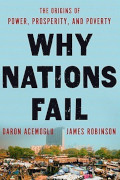
I'm near the end of Acemoglu & Robinson's Why Nations
Fail: The Origins of Power, Prosperity, and Poverty. One thing
that's missing from the book is a serious discussion of power, but
there are hints of the truism that "power corrupts, and absolute
power corrupts absolutely." I had other plans, but might just move
on to Acemoglu's latest book, What Happened to Liberal Democracy?
I have my theories, and they're not quite his, but his encyclopedic
grasp of history is good food for thought.
New records reviewed this week:
Nicki Adams and Michael Eaton Featuring Francisco Mela:
Arrival (2024 [2026], J-man): Pianist, from Arizona,
based in Brooklyn, has a previous duo album with Patrick Adams
(trumpet, probably related), and a couple albums with saxophonist
Eaton (tenor/soprano). Modern postbop, originals by Adams (2) and
Eaton (3), with covers of Cole Porter, Andrew Hill, Wayne Shorter,
and Thom Yorke. The drummer just makes the others sound better.
B+(***) [cd]
Amyl and the Sniffers: Truth or Consequence: Live From El
Coyote (2025 [2026], Rough Trade): Australian post-punk
group, three good albums since 2019, but not like I remember songs
and such. Sounds a bit flat, takes a while to get in gear, typical
of live rock albums.
B+(*) [sp]
Towa Bird: Gentleman (2026, Interscope): British
singer-songwriter Victoria Vergara-Bird, born in Hong Kong (parents
British and Filipino), grew up in Thailand and London, second
album. Mostly upbeat dance numbers, as it should be, but even
the pace changers sneak up on you. Discogs had this on 2025,
which had me wondering how such a major label album could have
escaped notice, but other sources say 2026, and the artist
website is promising to ship vinyl in September.
A− [sp]
Bitchin Bajas: Isle Peaks (2026, Drag City, EP):
Chicago band led by Cooper Crain, who also plays guitar/organ
in alt-rock band Cave, with Dan Quinlivan and Rob Frye. Discogs
lists 21 albums since 2010, with this 2 song, 26:03 remix from
the Inland See sessions counted among 7 EPs. First track
is minimalist groove with extra sauce. Second is ambient with
extra shimmer.
B+(**) [sp]
Liz Cracchiolo: Just a Girl I'm a Woman
(2025 [2026], Pacific Coast Jazz): Jazz singer, standards, loosely
speaking ("These Boots Are Made for Walkin'," "Tainted Love").
Benny Benack (trumpet/vocals) joins in, with Erica von Kleist on
alto sax/flute, and various others.
B+(**) [cd] [09-18]
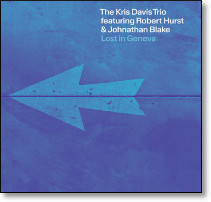
The Kris Davis Trio: Lost in Geneva (2025 [2026],
4166): Covers continues: "featuring Robert Hurst & Johnathan
Blake" (bass and drums). She's a superb pianist, with albums back
to 2004, including one poll winner. I'm not much of a piano trio
fan, so I usually need a horn to put an album over (Tony Malaby
was prominent on her early albums). Still, this one holds up
remarkably well.
A− [cd] [09-25]
Michael Dease: City Life: Music of Greg Hill (2024
[2025], Origin): Trombonist, meany albums since Dease Bones
in 2007, including two previous albums of Hill's Compositions. This
one is extended to 19 songs, 108 minutes, with two originals, two
J.J. Johnson tunes, and one each from Sharel Cassity, Gregory Tardy,
and Emily Remler, with Hill producing. Trio first set with Linda
May Han Oh (bass) and Jeffrey "Tain" Watts (drums), with vocals on
two tracks; second set adds Geoff Keezer (piano) and Nicole Glover
(tenor sax).
B+(***) [sp]
Julia Holter: Materia (2026, Domino): Art pop
singer-songwriter, self-released albums start in 2007, got some
attention on RVNG in 2012 and more on Domino since 2013. Nice
enough, but she's never clicked for me.
B [sp]
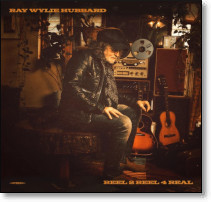
Ray Wylie Hubbard: Reel 2 Reel 4 Real (2026,
Soundly Music): Country singer-songwriter, from Oklahoma but
gravitating toward Texas (not Nashville), had a band in the
1970s called the Cowboy Twinkies. I never paid him much heed
until he co-wrote a song for Hayes Carll's 2008 album, then
liked it enough to cover it on his 2010 album — the
first one that caught my ear, but they've been all aces
since.
A− [sp]
Jason Kao Hwang/Human Rites Trio: Second Life
(2024 [2026], Flying Panda Music): Violinist, from near Chicago,
has a couple early albums c. 1990, picked up the pace around 2005,
becoming my automatic poll pick after Billy Bang died. What both
have in common is their ability to turn violin into a distinctive
lead jazz instrument (as opposed to those who used it to swing
with guitar leads, or to import from classical). Trio with Ken
Filiano (bass) and Andrew Drury (percussion), follows an eponymous
2019 group album, distilling his art into its purest form.
A− [cd] [10-01]
Braxton Keith: Real Damn Deal (2026, Warner Nashville):
Country singer, from Midland TX, first album, co-wrote most of his
songs, pretty trad sounding. Seems likely to do well in Nashville.
B+(*) [sp]
The Necks: Disquiet (2025, Northern Spy, 3CD):
Australian keyboards (Chris Abrahams), bass (Lloyd Swanton), and
drums (Tony Buck) trio, several dozen albums since 1989, have
developed a crossover following which gets them taken seriously
as jazz and beyond. I resisted playing this due to sheer length
(4 pieces, 179:28), but with some writing to do, I figured this
wouldn't require much attention. It doesn't, although the first
15 minutes were pretty seductive, and I had to struggle to get
back to work.
B+(**) [bc]
Carly Pearce: Honest Woman (2026, Stoney Creek):
Country singer-songwriter, from Kentucky, fifth album since 2017,
another good batch of songs.
B+(***) [sp]
Queen Herewin & PA. Dre: DOTOM: Death of the Old Me
(2026, Matic): New York rapper, third album after a 2015 debut and
last year's return, with a producer I can find nothing on. Draws on
a lot of guest rappers, but she's probably sharper than they are.
B+(**) [sp]
Rapsody: God Gotta Afro & Gold Hoops (2026,
We Each Other/Roc Nation): Rapper Marianna Evans, from North Carolina,
fifth album since 2012, 43 now, moving boldly into a new phase of
life. Extended meditations on blackness, the African group Karabo
Ya Morena powering some cuts, another tune with George Clinton
expressing "Love to Sun Ra." Pretty deep.
A− [sp]
Jim Rotondi & Dena DeRose: Out of the Past
(2024 [2026], Cellar): Mainstream trumpet player, from Montana,
debut 1997, a regular in One for All (18 albums 1997-2024),
recorded this in Austria two weeks before his sudden death at
61, with the pianist-vocalist (she sings 5 of 8 songs), bass
(Danny Ziemann), and drums (Mario Gonzi).
B+(*) [sp]
Bill Scorzari: Sidereal Days (Day 2) (2022-24
[2026], self-released): New York City attorney, originally from
Kansas, decided to try out as a singer-songwriter around 2015,
his productivity and skills picking up after retiring from his
day job. Second batch of songs saved over from the sessions that
produced his 2025 Sidereal Days (Day 1). His scratchy
voice is approaching Tom Waits territory, but he's made good
use of a chorus. The electric guitar has depth and resonance.
The pace is moderate: no need to outrun the songs, which are
deeper than ever. "And my mind's inclined to fix on only things
I truly need."
A [cd] [09-25]
Co Streiff/Russ Johnson Quartet: Oracle (2023 [2026],
Intakt): Swiss alto saxophonist, scattered credits back to 1984, but
not a lot under her own name (two Sextet albums, a duo with Irène
Schweizer, and a 2011 Quartet with Johnson, a Brooklyn-based trumpet
player, also in her Sextet). With Christian Weber (bass) and Gerry
Hemingway (drums).
B+(***) [sp]
Trevor Watts/John Edwards/Tollef Østvang: In the Know
(2024 [2026], Motvind): Alto/soprano saxophonist, one of the founders
of the British avant-garde (Spontaneous Music Ensemble, Amalgam, LJCO),
which made him just shy of 85 when this was recorded: one 37:21 improv,
with bass and drums. He's in terrific form here.
A− [bc]
Brennan Wedl: Brennan Wedl (2026, Anti-):
Singer-songwriter from Minneapolis, based in Nashville, played guitar
and sang in the group Dazey and the Scouts (one album, 2017). First
solo album, after a 2019 EP and several singles. "Will you still want
me when the crazy comes out?"
B+(***) [sp]
Charlie Worsham: Once Upon a Second Time Around
(2026, ONErpm): Country singer-songwriter, self-described Marty
Stuart disciple, from Mississippi to
Berklee to Nashville, third album, after two 2013-17 Warners
albums. Since then, he's been a journeyman guitarist, but seems
to have picked up some tricks, and considerable trad feel.
B+(***) [sp]
Recent reissues, compilations, and vault discoveries:
Irène Schweizer: Piano Solo: Prelude to a Kiss and More
(1986 [2026], Intakt): Swiss avant-pianist (1941-2024), is best
known for her duo albums with free jazz drummers, but is a powerful
solo performer — as at least eight previous solo albums attest.
B+(***) [sp]
Sittin' With Blaze: A Tribute to Blaze Foley (2026,
Lost Art): Texas country legend (1949-89), released few singles and
a so-so album in 1984, but since his death numerous scraps have come
out, as well as tributes — Gurf Morlix's Blaze Foley's 113th
Wet Dream (2011) is probably the best. This batch of pretty good
songs from the mid-1970s appeared in 2010. They get new singers with
better voices here, including Lucinda Williams, John Moreland, Lucy
Dacus, Phosphorescent, and others I'm less familiar with.
B+(***) [sp]
Old music:
Nicki Adams & Michael Eaton: Paraphrase
(2021 [2022], SteepleCase LookOut): Piano and tenor sax duo,
their first album, Adams had a previous duo album with trumpet,
Eaton a couple previous albums to 2014. Originals by Adams (1)
and Eaton (3), plus covers of Shorter, Monk, Coltrane, and Tim
Hagans. While I didn't notice the drummer on the new one, I
miss him here.
B+(**) [sp]
Cátia De França: 20 Palavras Ao Redor Do Sol
(1979, Epic): Brazilian singer-songwriter, from Paraiba in the
Northeast, first album, of eight through 2024. Rhythm is strong,
bits of accordion and violin add a distinctive texture.
A− [sp]
Blaze Foley: Sittin' by the Road (mid-1970s [2010],
Lost Art): Twelve demo songs, dates uncertain, raw material for the
Sittin' With Blaze various artists tribute. Songs are true
enough. Not a very magnetic singer.
B+(**) [bc]
Blaze Foley and the Beaver Valley Boys: Cold, Cold World
(1979-80 [2006], Lost Art): "First Texas studio recordings," with
a band that included drummer Gurf Morlix. Repeats "Big Cheeseburgers
& Good French Fries," possibly others. Voice is a bit more
settled, and the band adds a little swing. His cult is such that
they've scraped together quite a few posthumous releases (8 in my
database, 5 heard so far). This is as enjoyable as any I've heard.
B+(***) [bc]
Blaze Foley: Live at the Austin Outhouse (1988
[1999], Lost Art): Live set, "recorded over two nights in 1988
just days before his tragic murder" at 39, so repeats several
early songs.
B+(*) [bc]
Novos Baianos: Acabou Chorare (1972, Som Livre):
Brazilian group, from Salvador — Bahia, in the northeast,
home of forró, although experts say "samba rock" or "tropicalia."
Second album (of 8 from 1970-78), tabbed by Rolling Stone
Brasil in 2007 as tops among the "100 greatest Brazilian
music records." Not much I've heard (or remember) on that list,
but this is not just nice but pretty great.
A− [sp]
Queen Herawin: Metamorphosis (2015, Matic Entertainment):
New York rapper Peridot Smith, cover identifies her as "of the Juggaknots,"
a group with siblings Paul Smith (Breeze Brewin) and Kevin Smith (Buddy
Slim) that released two albums (1996, 2006). Runs noisy, but as one song
points out, "there's a method to this madness."
B+(***) [bc]
Unpacking: Found in the mail last week:
- Ran Blake: Voices (Tzadik) [06-18]
- Andrea Brachfield: A Holiday Celebration of Light (Pacific Coast Jazz) [11-13]
- Alain Bradette: To My Loved Ones (Quantum Gravity) [06-16]
- Alexis Cole: Taking My Seat: A Musical Inheritance (Tiger Turn) [11-09]
- Azar Lawrence: Turn the Music Up (Trazar) [09-15]
- Takashi Matsunaga: Ride Five (Ride Five) [07-06]
- Springfield Symphony Jazz Orchestra: Royalty: The Music of Duke Ellington & Count Basie (T2 Music) [08-07]
Ask a question, or send a comment.
Saturday, September 5, 2026
Music Week
September archive
(in progress).
Music: Current count 46539 [46502] rated (+37), 23 [19] unrated +4).
Advance Music Week appeared September 4 on Substack as
Music Week (9:1). It is also archived
here. My cutoff was done
before the Substack post, but the introduction is revised/rewritten.
I opened the Substack post as follows:
This week's music doesn't need much of an introduction, and I
don't dare reopen the various cans of worms from last week's
brain dump.
But I should note that what I described as a "very minor facelift"
to the Francis Davis Jazz Critics Poll
website is done now
(or at least presentable). I doubt that what I've come up with
quite qualifies as "modern website design" (minimal graphics, no
dynamic adjustments for phones, no javascript or cookies, no links
to like on Facebook, or much of anything else today's hip designers
fancy), but the available information is presented reasonably.
Still more to do there: I've set up skeletal files on Francis
Davis and myself, which should be expanded. Also, some essays are
missing, and the ballot framework for the early polls is inconsistent
with the later polls. But it's a minimal first step, which can be
incrementally improved short of a major redesign. I'm not ruling
out such a redesign, but I'll need to send out ballot invites in
two months, which doesn't leave a lot of time.
I'm continuing to have a lot of trouble with
Yahoo Mail. I'm still a long ways from solving the problems.
The current status is that I can read email only through their
webmail page, which is awful. The net effect is that I delete
most of the mail I receive there without looking at anything but
the sender and subject line. I do have an alternate address that
I can use, but I'm not ready to publicize it yet.
I'll write more when I post full Music Week, probably
tomorrow.
My prediction that it would take another day proved right.
We watched another of the Danish "Department Q" movies last night,
A Conspiracy of Faith (2016). Qualifies for the "thriller"
category as well as anything I've seen lately — a genre
we watch often, but not an attribute I particularly enjoy. My
main complaint is with the people who can't accept disbelief in
religion at face value, and insist that caring about anything
signifies tacit belief in "something bigger than oneself." (We
do watch a lot of police/crime shows, which may or may not be
"thrillers." I seem to have a soft spot for detectives who are
super smart and highly principled, not that I assume there are
common in reality.) I didn't feel up to writing after that, so
worked a bit on the jigsaw puzzle, then went to bed.
It looks like the only way I can salvage my email account is
to reconfigure Thunderbird to use IMAP. This shouldn't be terribly
difficult, but leaves open the question of how to sort out the
12000 email messages I have kept in my inbox, as well as thousands
of sent emails I've retained. I'll work on that this week. I'm also
likely to set up a new email address, and start steering people
toward using it. I've had several "heart to heart" discussions
with Google AI on this matter, and it at least is convinced that
hosting my own address is the best solution. The thing I worry
most about there is that major providers will classify messages
from my server as spam. But I guess they do that anyway. I figure
I can take the week to sort this out. It absolutely has to be
done before the poll kicks up, but that's another month or two.
I should note that I did a database update to the
Robert Christgau website.
Not sure when the last one was, but probably close to a year ago.
Christgau does want everything to eventually be free on his website,
but he has directed that I impose a 9-month embargo on new Consumer
Guide reviews, and a 30-day embargo on other new Substack
And It Don't Stop
posts. While I respect that, it doesn't give me a lot of motivation
to keep the database in sync, so I've tended to let things slip.
While there once was a time when I could be called a "self-starter,"
that no longer seems to be the case. I'm still happy to work on
things, but a little nagging may be needed to get me in gear.
I still want to do a 2.0 version of the Christgau website, as
my thinking about what it should entail continues to evolve. I need
to write a proper design document, but I see a few needs, as well
as a few opportunities. Higher priority items up top (off the top
of my mind, while I'm in the mood):
- Update the PHP code to current standards, including objects for
page layout and database abstraction. (Originally written in PHP 3,
with intermittent fixes as they've broken old code, on the way to
PHP 8.)
- Update all pages to HTML5. (Originally 3.01 Transitional. Newer
pages are OK, but lots of pages still have old fromatting.)
- Convert character set from ISO-8859-1 to UTF-8.
- Modernize page layout, including viewport fix and dynamic style
support for viewing on phones.
- Change directory indexing to use database. Allow for virtual
directories. Not sure exactly what the structure here would be,
but it is probably comparable to Categories in WordPress.
- Add a keyword database and indexing.
- Add header metadata, possibly for SEO. (I'm less concerned
about SEO than indexing, but these are related.)
- Review the album-artist-label schema, possibly adding optional
artist/label fields to album for odd cases. This also concerns the
alias table. (I'll give you an example here: searching for Peter
Stampfel or Neil Young should give you all of the expected albums,
but not necessarily all of the albums get_album2 returns.)
- Closer integration with Substack, which could, for example,
allow paid subscribers to see embargoed reviews on the website.
- Better technical documentation on all aspects of website design
and maintenance.
One thing to note at this point is that we have a lot of
data (2897 .php files; 18402 albums in the database), so
while the programming I suggest above isn't trivial, most of the
work is going to be munging data. So one thing I don't anticipate
doing is moving the pages into a database. That might have been
a good idea early on, but it would be a lot of unnecessary work
now, and would make fixes and updates harder to do.
I also don't plan on building an administrative structure —
I actually started doing that in 2002, but it turned out to be
easier for me to maintain the site with conventional tools than
with a user interface, and Christgau actually had very little
desire to manage it himself. That could still be done as a later
project, and a better data model could help, so it's something
I will keep in mind. Of course, I could save some of that work
by migrating to a CMS like WordPress. I've done that on smaller
sites, and it's good up to a point. I will probably use it to
build a Francis Davis website, but it's not worth contemplating
here.
As I said, that list is just off the top of my head. While
writing it up, I thought of another dozen possible developments,
but they're not necessary, and could kill a project that's having
trouble getting off the ground. Part of the reason I was reminded
of this is that I got a
question about why I never organized my reviews as usefully
as the Christgau website. I tried to answer that there, but rather
than just making excuses (including why the Christgau website code
doesn't quite work for me), I speculate a bit on possible fixes.
I might add that while I'm frustrated that my writing projects
aren't going anywhere, I'm starting to feel better about my tech
work. Sure, email is a major setback, but I'm finding it easier
than ever to research problems and come up with solutions.
And I'm just dabbling here and there. Along with the database
update, I slipped in a minor code change to a function which
formats grades (at least when pulled from the database) so that
A- is now A−, and *** is now
★★★. Joe Levy had complained about not
being able to tell whether *** grades were really bold on
Substack, so I suggested the alternative coding, then realized
it would be easy to demonstrate it. I asked for comments, and
got none, so so far it's stuck.
I was going to write something here about writing projects,
but this is already way past long, and judging from the Substack
stats on last week's
More Intro Ideas, you probably don't want to read about that
anyway.
The music haul seemed pretty thin on Wednesday, when I considered
running this. I did managed to scrounge up more late in the week,
largely thanks to
Christian Iszchak,
Phil Overeem and
Steve Pick. I'm also getting into Brad Luen's
77 favorite albums of the Seventies, which is long on Brazilian
and African albums I haven't heard. Among the high-B+ records,
Czarface and Echo Party came closest.
I expect things to pick up in September, but I doubt it will all
be good news.
New records reviewed this week:
Agriculture: The Spiritual Sound (2025, The Flenser):
Black metal (blackgaze) band from Los Angeles, second album, holds
the dubious distinction of being the highest-rated unheard album in
my 2025 EOY Aggregate, so I don't expect much. As metal goes, this
has its tolerable moments. But as metal goes, I don't much care.
B [sp]
Willow Avalon: Pink Pocket Pistol (2026, Assemble
Sound/Atlantic): Country singer-songwriter, last name Martin, from
Georgia, second album, first was called Southern Belle Raising
Hell. Voice seems weak, but comes up with several interesting
songs, including one about disposing of a dead husband.
B+(**) [sp]
Erykah Badu & the Alchemist: Before the World
Blows (2026, Control Freaq/Young): Neo-soul singer-songwriter,
five hit albums 1997-2010, mixtape in 2015, returns with hip-hop
producer Alan Maman. Not much of a departure until late, when the
rappers (Westside Gunn, Earl Sweatshirt) and Kamasi Washington
appear.
B+(*) [sp]
Kimmi Bitter: Bittersweet (2026, self-released):
Country singer-songwriter, second album, "produced and co-written
by throwback wizard Michael Gurley," loves 1960s countrypolitan,
even the strings, but also mixes in some steel and surf guitar,
harmonica or Tijuana brass. Doesn't quite hold my attention to
the end, but opens with a near-perfect Pasty Cline impression,
followed by one that tops Marty Robbins.
B+(***) [sp]
Christer Bothén/Oren Ambarchi/Johan Berthling/Andreas Werliin:
Serpentine (2023 [2026], Black Truffle): The leader, 82
at the time, plays bass clarinet and donso n'goni, accompanied by
guitar, bass, and drums. Shades into ambient.
B+(**) [sp]
Geof Bradfield/Myra Melford/Ben Goldberg/Dana Hall: Open
or Close (2025 [2026], Calligram): Tenor/soprano saxophonist
(also bass clarinet), based in Chicago, albums since 2001, ranges
mainstream to free, has recorded with Goldberg (clarinets) and Hall
(drums) before, but the pianist (connected through Goldberg) is the
major addition here.
A− [cd]
Greg Chako: Hard Bop for the Record (2026, Mint400):
Guitarist, Discogs lists 9 albums, starting in 1996. All originals,
quintet with Brooks Giles (tenor/soprano sax), Spencer Merk (trombone),
bass, and drums, recorded in Cincinnati. More what I'd consider
postbop.
B [cd]
Rasheed Chappell: No Era for Margins (2026, Perfect
Time): New York rapper, debut 2011, regular albums since 2019, solid
and steady through rough waters.
B+(**) [sp]
Corook: How Do I Relate to You? (2026, Atlantic,
EP): Singer-songwriter, writes and sings odd but catchy ditties,
has an album, some EPs, a Best of Coroook (So Far) where
may be the first one in rock history where the "(So Far)" didn't
turn into a tombstone. Six songs, 17:43.
B+(**) [sp]
Zaccai Curtis: Sonoluminescence Vol. 1 (2026,
TRRCollective): Pianist, born in New York City, has several
albums since 2000, some as Curtis Brothers Band with brother
Luques Curtis (bass, 4 tracks here, the other 4 with Mike
Boone). Plays some electric here, and takes a vocal. With Joe
Dyson (drums, Craig Handy (strong tenor sax, some flute),
Brevan Hampden (congas & percussion), and a couple of
guest spots.
B+(***) [sp]
Czarface/Frankie Pulitzer: Czarface Meets Frankie
Pulitzer (2026, Silver Age): Hip-hop duo of 7L and
Esoteric, from Boston, started 2001, recorded their superhero
comic spoof Czarface in 2013 with Inspectah Deck (from
Wu-Tang Clan) and kept the trio going for another dozen albums,
with occasional guests (most notably MF Doom). Pulitzer is an
English rapper, long-time Wu-Tang fan, jiu-jitsu master, and
actor, better known as Tom Hardy — although he has a
long list of movie credits, I recall him mostly from intense
roles in the TV series Taboo and Peaky Blinders.
I've always loved the mix, and try not to sweat the lyrics,
although I did jot down, "I don't even take a pee without
monetizing the streams." Doesn't that suggest some level of
celebrity behind the masks?
B+(***) [sp]
Echo Party: Who Does Not Seek the Sky? (2025
[2026], Mahakala Music): Quintet, recorded in Memphis, last names
on the cover: Chad Fowler (flute/stritch), Art Edmaiston (tenor/soprano
sax), Alex Greene (keyboards), Khari Wynn (bass), Steve Hirsh (drums).
Edmaiston has a lot of studio work, mostly on blues albums, but this
is kaleidoscopic free jazz, even more so than his earlier album with
Fowler this year.
B+(***) [bc]
Fatboi Sharif & Elucid: Invasion Body Camera
(2026, Fused Arrow, EP): Rapper from NJ, several albums since
2021, along with a rapper/producer from Queens, a member of
Armand Hammer. One track, 11:50.
B+(*) [sp]
Fatboi Sharif & Child Actor: Crayola Circles
(2026, Backwoodz Studioz): NJ rapper with producer Max Heath.
Longer, even slower.
B [sp]
Fatboi Sharif & Roper Williams: Goth Girl on the
Enterprise (2025, POW/Fused Arrow, EP): NJ rapper, slo-mo
aiming at horror show creepy, with producer, several previous
releases together. 8 songs, 12:35.
B [bc]
FLO: Therapy at the Club (2026, EMI): British
neo-soul vocal trio (Stella Quaresma, Jorja Douglas, Renée Downer),
second album after a couple of EPs, both UK hits, barely charted in
US. Pretty upbeat.
B+(***) [sp]
Sullivan Fortner: Leave That in There (2026,
Artwork): Pianist, from New Orleans, seems like he's only recently
emerged as a major player, but his debut was 2015, on Verve, and
Discogs lists 78 performance credits since 2005 (he's 39). Trio
with Tyrone Allen II (bass) and Kayvon Gordon (drums). Impresses
first with clever rhythms. Winds up for some reason on organ,
with some chorus. A talent, for sure, but never quite connects
for me.
B+(**) [sp]
Satoko Fujii Orchestra Berlin: Second Attempt (2026,
Libra): The third of five big band albums coming out in quick
succession this year, the first an older tape from 2014, this
like the second from earlier this year. Starts a bit slow, but
finishes with a strong vocal eruption.
B+(***) [cd]
Eric Harland: Vipassana II (2026, Ropeadope):
Drummer, lots of side credits since 2002, his own albums mostly
credited to Eric Harland Voyager, including Vipassana
(2014), but this just under his own name. Some fusion —
keyboards, guitar, bass — but the percussion (Keita
Ogawa as well as Harland) is fancier, and Ben Wendel plays
some tenor sax.
B+(*) [sp]
Stefon Harris + Blackout: Legacy Dances (2024
[2026], Motéma): Vibraphonist, debut on Blue Note 1998, three
previous group albums from 2004, cover here says "feat. Casey
Benjamin," the saxophonist (alto/soprano) and vocalist who died
shortly after this was recorded. Opens with a "What a Wonderful
World," and closes with a spoken word piece called "We Are an
African People." Both seem a bit off.
B [sp]
Inpatient: Asylum (2026, Sick Boi/EighthHD):
Joint project of rappers Ren Gill and Chris Webby with producer
JP On Da Track. Ren seems to have more medical/mental history
than discography, but has two good albums that I've heard; from
Connecticut, Webby (Webster) has an analogous history, and an
edge in mixtapes, and a freestyle flow that draws on Eminem.
Producer has worked with Mike., as well as Webby. First couple
tracks reminded me of Manu Chao for the ease with which they
straddle genres, but they don't settle there, or anywhere else,
and get heavier. Grim medicine: "gotta crack some eggs to make this
muiltimillion dollar omelet. . . . for the science to prevail,
gotta live with the losses." Or "don't forget to medicate; it's
a sick sick sick world, but I feel great." Or "nothing left that
we could say, 'cause it looks like we're fucked either way."
A− [sp]
L'Rain: Fata Morgana (2026, Mexican Summer):
Singer-songwriter Taja Cheek, from Brooklyn, fourth album since
2017, usually described as experimental pop or neo-psychedelia,
neither of which is much of a description. Sounds more ambient
to me, but I'm probably missing something. Title refers to a
kind of mirage.
B [sp]
Frank London/Loisada Fife & Drum Corps: Touzle Your
Kurchy (2026, Adhyâropa): Trumpet player, has played in
Klezmer groups like Hasidic New Wave and the Klezmatics as well
as in jazz. Fife & drum music has long been associated with
the military, especially around the time of the US Revolutionary
War, although they also bear some resemblance to New Orleans
funeral marches (where a little brass is always welcome). A
throwback, and sort of a novelty.
B+(**) [sp]
Mama's Broke: Reunion (2026, Free Dirt): Folk
duo from Nova Scotia, Amy Lou Keeler and Lisa Maria, third album
since 2017, a little down and out.
B+(*) [sp]
Ami Molinelli: Raízes Do Choro E Samba (2026,
Amimo): Brazilian "roots" music, from a San Francisco-based
percussionist. Sounds very classic, with several nice vocals.
B+(***) [cd]
Orquesta Akokán: América! (2026, Daptone):
Cuban-American mambo band, fourth album since 2018. The
problem with retro is that unless you're really sharp on
the details, it can just sound old.
B+(*) [sp]
Nino Paid: Somewhere Over the Rainbow (2026,
Signal/Columbia): Rapper Jacquan Andrews, from the DC suburbs
in Maryland, third album. Understated gangsta, not the worst
option.
B+(**) [sp]
Sarah Pillow: Wanderer (2026, Buckyball): Jazz
singer, three albums (1997-2003), some standards but also draws
on the vocalese practice of writing lyrics to jazz themes, and
adds some of her own (Mingus most prominently). Band includes
Donny McCaslin (tenor sax) and Dave Kikoski (piano). Good take
on "Nature Boy."
B+(***) [cd] [10-05]
Punkt.Vrt.Plastik: Kompress (2026, Intakt):
Trio of Kaja Draksler (piano), Petter Eldh (bass), and Christian
Lillinger (drums), fourth group album since 2016, merges words
from their three languages, squeezing out the space meant to
signify their increasing tightness.
B+(**) [sp]
Quagmire & Christer Bothén: Rörane (2026,
Relative Pitch): The former is a Swedish trio of Nina De Heney
(bass), Karin Johansson (piano, some prepared, and zither), and
Kenrik Wartel (drums), joined by the 85-year-old clarinetist
(on bass and contrabass).
B+(**) [sp]
Andrew Sa: American Rough (2026, Bloodshot):
Singer-songwriter, based in Chicago, "courageously subverts
the heteronormative traditions of country music," where
"country" is some kind of merger of Patsy Cline and Roy Orbison.
B+(*) [sp]
Sweet Pill: There's Still a Glow (2026, Hopeless):
Philadelphia-based emo band, Zayna Youssef the singer, Jayce
williams (guitar) also continuous from the band's 2018 founding.
Second album, following a 2022 debut and a 2019 EP.
B+(*) [sp]
Ayumi Tanaka/Thomas Morgan/Thomas Strønen: Windflower
(2025 [2026], ECM): Japanese pianist, based in Norway since 2011
(when she was 25), has several albums since 2016, this a trio
with bass and drums.
B+(**) [sp]
Saul Williams: Leap Life (2026, Big Dada): Poet,
spoken word artist, was featured in the 1998 film Slam, has
recorded albums since 2001, including collaborations with musicians
like Trent Reznor, DJ Krust, David Murray, and Carlos Niño. He's
never quite grabbed me (unlike Anthony Joseph, or Gil Scott-Heron),
and this seems to meander much.
B+(**) [sp]
Recent reissues, compilations, and vault discoveries:
The Cramps: Gravest Gravy (1977 [2026], Vengeance):
One of the lesser bands to inhabit the CBGB's scene in mid-1970s
New York City, I must have seen them 3-5 times, always opening
for other groups, usually with Robert Christgau, who didn't think
much of them. I wasn't much impressed either, but they finally
made a record (Songs the Lord Taught Us) in 1980, and kept
at it until singer Lux Interior (Erick Lee Purkhiser) died in 2009.
His partner was guitarist Poison Ivy [Rorschach] (Kristy Wallace),
who co-wrote the songs but didn't sing much. These were leftovers
from the Alex Chilton-produced EP Gravest Hits, 5 originals
and 7 covers (most obviously "Hungry" and "Rocket in My Pocket").
Unlike other CBGB's bands, they never sounded like the future. But
nearly 50 years later, they're safely retro. They even have a
genre tag: psychobilly.
B+(**) [sp]
Junglist! Old Skool Ragga, D&B, Jungle 1993-95
(1993-95 [2026], Soul Jazz): I'm more familiar with ragga, which
seemed to be the logical progression as the dance grooves of reggae,
hardened and intensified through dub, dancehall, and dubstep, with
ragga itself transitional to the more UK-dominant forms of jungle,
drum and bass and grime. This catches a fairly narrow moment, and
never lets up.
A− [sp]
Old music:
The Rough Guide to Bachata (1993-2005 [2009],
World Music Network): A genre of popular dance music from the
Dominican Republic, started in the 1960s in the impoverished
countryside, so less classy than the nationalized merengue, a
distinction that escapes me — especially as what little
I know has come from other Rough Guides: Merengue,
Merengue Dance, and Merengue and Bachata.
B+(***) [sp]
Rumble in the Jungle (1991-95 [2007], Soul Jazz):
Earlier compilation of the UK jungle scene, captures the intensity
of the beats as they drive out the sheer humanity of classic reggae.
B+(***) [sp]
Grade (or other) changes:
Barcelona Art Orchestra & Miguel Zenón: Expressions:
Concerto for Alto Saxophone and Orchestra (2025 [2026],
Miel Music): Barcelona-based group, has at least one previous
album, led by Néstor Giménez (piano), Lluc Casares (tenor sax),
Joan Vidal (drums), and Lluis Vidal (piano), each composing a
section here, featuring the alto saxophonist. The strings not
really my thing, but the extra play helped.
[was: B+(*)]:
B+(**) [cd]
Unpacking: Found in the mail last week:
- Satoko Fujii Orchestra Nagoya: Kore Kara (Libra) [10-02]
- Rich Halley: A Distant Land (Pine Eagle) [09-11]
- Herb Geller/Roberto Magris: Come Lately: Archival Recordings 2009 (JMood) [09-01]
- Roberto Magris: Live in Hollywood: Archival Recordings 2006 (JMood) [09-01]
- Roberto Magris Europlane Quintet: Broken Barriers: Archival Recordings 2008 (JMood) [09-01]
- Roberto Magris/Wind Summit: A Kansas City Jazz Session: Archival Recordings 2014 (JMood) [09-01]
- Roberto Magris Trio: Live in Mexico City (JMood) [09-01]
- Polyfillas: An Assortment of Punk Originals (Dangerous) [09-04]
Ask a question, or send a comment.
Sunday, August 30, 2026
Music Week
August archive
(final).
Music: Current count 46502 [46464] rated (+38), 19 [16] unrated +3).
Advance Music Week appeared August 29 on Substack as
Music Week (8:4). It is also archived
here. Look in either of those
places for the original introduction. I tried to keep it on subject,
but in my haste, I sent it out with formatting errors and without
an album cover gallery that I actually commented on. At this point
I feel like writing a completely different introduction. You can
figure out what's going on with the albums below. I've got other
shit on my mind, more personal and more troubling, so let's go.
Only saving grace is the knowledge that I need to wrap this up
tonight, so I can start a new week tomorrow.
OK, that didn't work. Laura wanted to watch a movie, and picked
the second of the Danish "Department Q" movies,
The Absent One, from 2014. We watched the first one,
The Keeper of Lost Causes (2013) a few weeks back, and the
story there was familiar from the British
Dept. Q (first season 2025, on Netflix; evidently there will
be more). Anyhow, that kept me from writing and posting last night.
I'm not sure I had anything to say, anyway. Or maybe I have too much
to say, but I'm embarrassed at how little of it results in anything
useful.
Some time ago, I had the thought that when I give up on the world,
I'll switch from reading nonfiction to fiction. Or maybe I should
just watch movies? I realize that fiction is a valid, and in some
ways even superior, path to learning about the world. What reading
it lacks is a sense of direction. When I pick up a nonfiction book,
it's usually because I have a specific set of questions, derived
from some kind of research project. And I have tons of projects. I
worry, though, that none will ever come to fruition, as I'm tempted
to turn them over in my head endlessly.
Still, what's bothering me is less the endlessness of the writing
projects than the one project that I'm actually likely to force myself
to complete: the 21st Annual Francis Davis Jazz Critics Poll. While
I don't need to do much on this until November, and that may well be
the easy way out, I've never been more conscious of how much time it
will take, what the demands will be, the wear and tear, and how much
more I could have done to prepare in the past. I keep telling myself
that this will be my last one, but that just makes the task heavier.
Could we turn it into some kind of self-perpetuating institution? I
have lots of ideas on that, fewer skills, and no fucking idea how to
proceed.
Well, I do have some ideas. I always have fucking ideas —
just too many of them. I'll start to sketch some of them out in the
next month or so, initially on my jpadmin email list, then as
things shape up (assuming they do), on my other lists (jazzpoll
is for voters, jpmedia was initially for publicists, but I'll
probably open it up for anyone who wants updates). One thing that's
fairly urgent is that I need to figure out my email situation. Yahoo
still sucks, but it's working today, at least so far. Beyond that,
I need to review the voter list, and try to figure out who to add,
who to drop, and how to best communicate with them. Then there's the
website. I can always
hack another year onto the current framework, where each new year is
cloned from the last, and hitched to the end like a caboose. But the
very minor facelift I started a month ago is still far from complete,
and I still haven't incorporated several of the files Francis Davis
sent me before his death, let alone filled in the rest of the holes.
One bit of prep here would be to write a piece on the DownBeat critics
poll, which came out in their August issue, just before our own poll got
wrapped up in July. I still haven't looked at it, but I can refer back to
my own ballot. The thing I'm
most interested in is the list of voting critics. I'll try to get that
done in the next week or two. Another newsletter piece I've been thinking
about is a list of albums that made my
non-jazz A-list in 2025
that went unreviewed by Robert Christgau. I wanted to do this after his
Dean's List appeared belatedly (May 7). As I recall, mostly
underground hip-hop and country: 2025 was a banner year for the
former, and pretty good for the latter. Perhaps it seems too late,
but most end-of-year lists are way too early. One of my complaints
about DownBeat's polls is that they roll the album boundaries up
to the moment of voting instead of taking advantage to reflect on
the previous year — April for critics and August for readers
seems about right to me.
Of course, there are many more things I'd like to write about
that don't involve music. The August 27
Loose Tabs,
which has since expanded to more than 22k words, not counting my
summary, has lots of ideas that could be developed. I mention
one there that I even have a title for: "Is It Possible to Negotiate
a Gentler Genocide?" I've written much of that before, but I've never
quite broached the idea that it might be better for Palestinians
just to leave their homeland. Neither side wants to hear this, and
Trump is unable to hear or act — although, oddly enough, he
could lay claim to the idea, but is too combative to consider the
essential idea of "gentler." But even if Trump is followed by a
president who cares (not Biden, and not Obama-Bush-Clinton either),
I don't see any chance to impose a better solution on Israel, or
for Israel to change before much more harm is done.
There are other mini-essays there that could easily be expanded.
I talk about data centers as a political issue; about what's wrong
with the ICC, and why we need something like it; about Trump's
feint toward North Korea; I talk about the drone war in Ukraine,
and how it's moving toward AI; I consider "has America crossed the
asshole threshold?"; I puzzle over the notion of "Woke 1.0"); I
have two long sections on Democratic Party strategy: whether to
campaign for Trump voters (yes), and whether centrists are the
answer (no); I talk about Medicare for All; I have a section on
the Canada trade war nonsense, among many more Trump stunts, some
dumb, some evil, most both; I write about estate taxes; I mention
a book on Israel's Lobby, which I will probably read; I
also consider the late critic Dave Marsh, and my relationship to
him. I could spend the rest of the year on such things.
One specific piece I am thinking about is an effort to sum up
the five worst things Trump has done. The idea started as a top
ten, but that would be too long, and too aggravating — and
also too short, as fifty wouldn't be much of a reach, and I doubt
I'd run out before 500, except of patience and sanity.
Trump's power grab during his first days was unprecedented, a
blitzkrieg against federal bureaucracy, which sought to destroy the
very notion of civil service, replacing it with a ruthless political
machine. Trump took ICE and turned them into a paramilitary gang, to commit
conspicuous violence with impunity against politically designated
targets. Along with his pardons and politicized prosecutions, he's
establishing the principle that violence is fine for people on his
side, but free speech is criminal for people who oppose him. Trump has created numerous channels for corruption, many quite
unprecedented, throughout government and especially through his
businesses and person, while fostering a culture of corruption in
business and around the world. Trump has fully embraced the notion that foreign policy is a
contest of power, mostly but not just military, and that its purpose
is to extort tribute from other countries. His war against Iran is
the prime example, but it's consistent with his other wars (e.g.,
against Somalia and Venezuela), and his cynical indifference to
Ukraine (which is good for US business, as long as Putin wants to
keep fighting). Not sure whether his alliance with Netanyahu goes
deeper, but the mix of grift and gore suits him perfectly. His unprecedented and unique obsession with naming things after
himself goes deeper than his considerable vanity: he seeks what the
Israelis call "facts on the ground" (markers that become virtually
impossible to erase or dismantle), and he seeks to trivialize the
opposition everything he does provokes by making it personal. He
seeks to dismiss us all as suffering from TDS (Trump Derangement
Syndrome), while by any previous understanding of the word, Trump
is the one who is deranged. As we attempt to run out the clock, it becomes increasingly
clear that much of the long-term damage that America incurred by
electing him president will be "opportunity costs": things that
we didn't do because we were so preoccupied with dealing with this
horrendous asshole. Climate change has long been a prime example,
at least since the 1990s — why didn't Clinton let Gore run
with this, instead of assigning him to count paper clips (what he
called "reinventing government")? But there are many more examples,
like inequality, world conflicts, environment, trade, technology,
mostly things that policy doesn't control but has to cope with.
Not only has Trump not helped manage any of them, he's actively
made matters worse — such as his efforts to undo Biden's
renewable energy focus, and to block vaccination programs.
Sure, that's six points, all worthy of inclusion, each capable of
being grossly expanded. Although I suppose the sixth goes so "without
saying" that I could save it for the conclusion: "and as if all that
wasn't bad enough, . . ." But I see this leading to a second piece,
which lists things that Trump has done that will make it easier to
respond with real effective change. For starters, he's demolished the
credibility of the centrist ("pro-business") camp in the Democratic
Party, both as political strategy and as a policy paradigm. I'm not
sure how hard to push this: as long as Trump is in power, we don't
have many real options, but the horizons for possible change have
opened up considerably. I've developed a theory that a large segment
of Americans really wanted some kind of revolution in 2016, but were
denied any sort of meaningful change from the left (which appeared
as Bernie Sanders) — blame this on the Democratic Party, if
you want, but I think the corporate media had much more to do with
defining what was allowed and not. On the other hand, Trump appeared
to promise a revolution that corporate America (oligarchy) could
live with, and that drew just enough people in to tilt the vote.
Obviously, if you had a left analysis, you didn't fall for Trump,
but how many people really did? (I got mine the hard way, reading
Genovese, Sweezy, and Adorno, but my orientation came earlier, in
reaction to the 1960s.) But if you didn't, and weren't among the
people that Trump obviously hated, you might be gullible enough to
think that someone like Trump would fight selflessly for you, go
to Washington, "drain the swamp," and fix all the obvious problems.
Whatever else, Trump promised change.
Even in 2024, clearly out for revenge and redemption, he came off
as the revolutionary, while Harris courted the rich. And what he's
done since taking office surely counts as some kind of revolution.
And while he hasn't seized power as completely and dramatically as
Hitler in 1933, that's not for scruples, and not for lack of will.
It's harder to do that in America, mostly for structural reasons,
but disturbing that he's seized as much power as he has: proof, I
think, that America wasn't built to suffer so much inequality.
I grew up admiring revolution: especially the American, and as
I increasingly identified with the left, with others like the French,
the Russian, and the Chinese, even if they didn't turn out as well
as one had hoped. But as I grew older, I came to see revolution not
as a striving for a better world, but as proof that the old regimes
were not just fatally flawed, but incompetently managed. And I came
to see the pain of revolution as unnecessary and undesirable. And
I'm not alone in this: very few people on the left in America look
forward to revolution. (Bernie Sanders' carefully couched "political
revolution" line always bothered me, even though I was pretty sure
I understood and approved of what he meant.)
So I've largely come around to the idea that the only revolutions
that are possible today are ones from the right, and the only thing
they can do is to cause pain and destruction. And, indeed, that's
about all you can say for Trump's revolution. But it will be interesting
to see how much damage he does to the reactionary forces that brought
him to power. I could speculate, but on what basis?
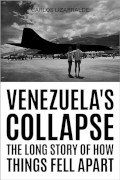
Of course, there is much more I've been thinking about. I read a book
on Venezuela, and have moved onto Acemoglu & Robinson's
Why Nations Fail. I should write
a piece on the failures of the Chavez-Maduro regimes, and also what
Trump is doing there: why this looks to Trump like a massive win, and
why it's really just another chapter in the misery there, and in the
Trump's debacle here. I've read several books on Israel, and specifically
on Jewish anti-Zionism, and I have more to say about that. (I also have
more books on Israel waiting, and still mean to do at least one more
post on Agha & Malley's Tomorrow Is Yesterday.)
I've also read a small pile of books on AI, which I'm starting
to figure out. One not-too-distant project is to sign up for some
tools, and start using it, mostly for research, but also perhaps
for organizing my own voluminous writings. In fact, I can think of
enough interesting technical projects to dispense with writing
(even on music) altogether. Of course, dropping the music is an
idle threat: just looking at my Substack stats, the music reviews
get a good 30% more attention than anything else I write. Especially
when I ramble, as I suspect I'm doing here.
Still, at this point, I'd be much happier if I could just round
up some friends and cook. That seems to be about my size limit on
projects, and I can tell whether I did good or not.
I'll refer you to the
Music Week (8:4) notes on the music below. The Emperor X grade,
the Golems of the Red Planet revisit, and several new albums came
after reading Robert Christgau's
August Consumer Guide, as did the back catalogue dives into
Mary Lee's Corvette and Tipps & Obermiller. The Jeff Evans
Porkestra was a tip from people who try to anticipate Christgau
by jumping on new albums by people he is known to like. The Art
Ensemble of Chicago reissue downloads were belatedly begged from
the label. The Bandcamp page just offers extracts.
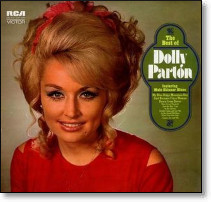
The Dolly Parton is very limited. I started looking for The
Best of Dolly Parton, and not finding it, I listened to the
albums it was drawn from. After listening to the "Muleskinner
Blues" single, I figured I had heard enough to review it. I
didn't realize that the 1975 Best Of was billed as
Vol. 2 until I saw the cover scan in a
Tom Carson post (although I must have had the LP at one point,
as it is graded in my database). I may still fill in 1971-75 albums
I haven't heard, but several of them I have. Looking at my
grade list, I'd
say her later stuff is pretty hit-and-miss, but I've certainly
missed some. Sorting out the compilation is a hopeless task,
although pretty much any of them are fine for remembrance.
Aside from the Parton obituaries, I didn't include a music
section this Loose Tabs. Wrapping it up is always a rush, and
there's little time to search out everything.
One piece I would have mentioned had I found it in time is
RiotRiot's
The 50 Best Rock Bands Right Now in 2026. They're in countdown
order, and I thought it was brilliant to list the Rolling Stones
at 50, then the Butthole Surfers at 49. After that I'm not so sure,
especially as I haven't converted this into a personal listening
checklist, as I did in
2024. I will note
that only one band from his 2024 top-10 is still up there: Big
Thief. Also that a couple I have looked up have albums coming out
later this year, so he's better connected than I am.
I'd also like to note the latest Christian Iszchak
An Acute Case: 29 August 2026. His favorite album this column
is Asylum, by Inpatient, which seems to be two rappers, Chris
Webby and Ren Gill. I played it: thought the first half was brilliant,
enough that I went ahead and noted an A− review, but the second
half gave me pause. After two further plays, I decided to downgrade it,
while adding lyric quotes that suggest otherwise. I'm happier with
the lower grade, but much of it is indeed brilliant, and you may well
figure it's worthwhile. I'll publish my review next week, but you can
find it on Spotify or
Bandcamp.
New records reviewed this week:
Marshall Allen: 101: An Audio Odyssey (2026,
Ropeadope): Alto saxophonist, longtime member and ghost band leader
of Sun Ra Arkestra, title possibly for his age, main driver here
appears to be producer Jamaaladeen Tacuma (electric bass), started
around the Big Ears Festival, which brought in name musicians Nels
Cline (electric guitar) and Immanuel Wilkins (alto sax, acoustic
upright bass), with extra recording later (including a vocal by
Tara Middleton). The funk groove reminds me of Tacuma at his best,
but he hasn't had this much to juggle since Ornette Coleman.
A− [sp]
Ancient Infinity Orchestra: It's Always About Liberation
(2024 [2026], Gondwana): English spiritual jazz ensemble, 16 members
(winds but no brass, strings including harp and banjo) from Leeds,
led by bassist Ozzy Moysey, third album. Another venture into the
church of Coltrane.
B+(**) [sp]
Blu & Exile: Time Heals Everything (2026,
Dirty Science): Underground rapper Johnson Barnes and producer
Alexandr Manfredi, from Los Angeles, fifth duo album since 2007,
many more albums separately or with others.
B+(***) [sp]
Rachel Brooke: This One's for You (2026, Mal):
Country singer-songwriter, from northern Michigan, fifth album
since 2008, plus a couple of duos with Lonesome Wyatt. Fine
voice, good songs, lots of steel guitar.
B+(***) [sp]
Elizabeth Cook: Great Television (2026, Agent Love):
Country singer-songwriter, eighth album since her self-released
debut in 2000, three from 2007-16 barely scratched the country
charts, all A− in my book, this coming back after
a six year break. Too soon? The strings that kick off the album
weren't a good idea. And the songs struggle until she rips off
"Caldonia and the Love Convoy." And while I like the Rolling
Stones cover, I don't quite get the point.
B+(*) [sp]
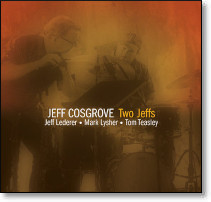
Jeff Cosgrove/Jeff Lederer/Mark Lysher/Tom Teasley: Two
Jeffs (2026, Grizzley Music): Drummer, from DC, label
and dates uncertain, I would normally have parsed the cover as
giving him sole credit, but title suggests including Lederer
(sax/clarinet), and the bassist and percussionist names are on
the same level. Cosgrove is best known for his Motian Sickness
group, but also shows up on many free jazz dates, especially with
Ivo Perelman. This showed up on the Motian Sickness Bandcamp page,
but is mostly standards, from "Cheek to Cheek" to "Summertime"
via "Swing Low, Sweet Chariot."
A− [sp]
Rodney Crowell: Then Again (2026, New West):
Country singer-songwriter, 25th album since 1978, many superb.
Not so much this time.
B+(*) [sp]
Jeff Evans Porkestra: Telling the Bees (2026,
self-released): Atlanta-based country-rock band, the namesake
on guitar and vocals; two previous EPs, this one weighing in
at 12 songs, 42:49. The EPs ended before I could really get
into them, but this one keeps coming, especially with songs
like "Born to Read" and "Big Enough."
A− [sp]
Hurray for the Riff Raff: Live Forever: Live at the Old Town
School of Folk Music (2025 [2026], Nonesuch): Singer-songwriter
Alynda Segarra, born in the Bronx, moved to New Orleans to play folk
music, has moved on to Chicago, where this live set was recorded.
Fourteen songs, ten from her best-ever 2024 album The Past Is
Still Alive. Seems to me like the anti-ICE "Precious Cargo"
could be angrier, but "Ogallala"'s "to watch this world burn, with
a tear in my eye" seems about right.
B+(***) [sp]
Lalu: Lalu (2026, self-released): Australian
group, not finding much about them. I can hear the "coherently
arranged folk-rock."
B+(*) [sp]
Jeff Lederer/Mary LaRose With the Wildebeest Quintet:
There's a Yearnin': Music for Winds and Voice (2026,
Little (i) Music): Names on clarinet and voice, with the quintet
adding flute, clarinet, oboe, bassoon, and horn, for something
"third stream"-ish.
B+(*) [sp]
Low Cut Connie: Livin in the USA (2026, Contender):
Retro-rock group from Philadelphia, led by Adam Weiner, who plays
some mean piano, and usually rocks out. But the title cut is a
lament, which I suppose makes it "timely."
B+(**) [sp]
Glenn Morrow's Cry for Help: Our Final Album Vol. 1
(2026, Bar/None): Indie rock band from Hoboken, debut an eponymous
album in 2017, released 2 in 2020. Morrow was a partner in
Bar/None Records, whose first album was by a group Morrow was in,
the Individuals (1982), with other bands leading up to this one.
Title unclear. Record has some appeal. Less sure about point.
B+(**) [sp]
Linda May Han Oh/Melissa Aldana: Beneath Lifted Skies
(2026, Biophilia): Bass and tenor sax duo; the former born in Malaysia
and grew up in Australia, the latter from Chile, both based in New
York with substantial critical following. This is a nice record,
especially when they tackle something familiar, but stays within
its limits.
B+(***) [sp]
Nicholas Payton/Butcher Brown: A Supreme Blue
(2026, Concord): Trumpet player from New Orleans, albums since
1993, mostly a mainstream player, established his trad chops on
a 1997 album with Doc Cheatham, has dabbled less successfully
in jazztronica. Backed by the Richmond-based band, which has a
dozen albums since 2014. Idea here is to play Kind of Blue
followed by A Love Supreme, updating both to show their
contemporary relevancy. That's an amusing thought, and the
groove treatment on Kind of Blue is rather pleasing, but
I draw the line well short of the synthesized voice on A Love
Supreme.
B− [sp]
Prairie Princess: Jewish American Prairie Princess
(2026, self-released): Singer-songwriter Emerson Borakove, from
Nebraska but recording in New York City, with a band she calls the
Ruby Slippers. Somewhere between alt-country and anti-folk, which
doesn't preclude a little rock noise.
B+(**) [sp]
Margo Price: Days of Unrest (2026, Loma Vista):
Country singer-songwriter, sixth album since 2016, or actually it's
being dubbed a "protest mixtape," as the album is rather thin (9
songs, 29:00), and the originals (mostly Mexican-themed) are
outnumbered 5-4 by covers (Bob Dylan, Woody Guthrie, Blaze Foley,
Charlie Daniels, trad.). The Dylan is the liveliest, but the Foley
is the most sharply pointed.
A- [sp]
Alex Roitman Tango Ensemble: La Cocina De Tango
(2025 [2026], ARTE-FL): Bandoneon player, based in Florida and/or
Boston. Tangos, half originals, mixed in with Piazzolla and others,
running through 10 songs in 32:41. Seems like a fine example of
the art.
B+(***) [cd]
Slow Tiger: Slow Tiger (2024 [2026], Endectomorph
Music): New York quintet organized by JP Schlegelmilch (playing
organ; I know him mostly from the group Old Time Musketry, which
had two very good 2011-13 albums), with Kenny Warren (trumpet),
Adam Schneit (tenor sax/clarinet), Andrew Dow (electric bass),
and Nathan Ellman-Bell (drums).
B+(**) [sp]
Antony Szmierek: Decoding Birdsong (2026, Mushroom
Music): English poet, spoken word artist, and electronica musician.
Second album. I love the basic sound. Words are clear enough, but
didn't especially grab me at first, but eventually the savvy and
smarts convinced me, at least that they add to the sound appeal.
A− [sp]
Technocrats: Passionata: The Music of Gregg Hill
(2025 [2026], Cold Plunge): I must have heard a dozen albums of
Hill's compositions, performed by various of his Michigan State
alumni over the last 3-4 years, many (most? all?) under his own
direction. No composer in recent years has worked harder at getting
his work played by others, except perhaps John Zorn (who owning
his own label, often claims credit for the albums). Septet here,
I filed it under first-listed bass trombonist Chris Glassman,
but the only other band members I recognize are Walter Blanding
(tenor/soprano sax) and Bryn Roberts (piano). I've never learned
how to separate compositions out from performances, so I'm no
fair judge of someone like Hill. But this flows as well as any
of the volumes I recall, and the larger band is deftly arranged,
especially for the bass trombone.
B+(***) [cd]
Henry Threadgill Zooid: Cut You Where You Was
(2025 [2026], Pi): Alto saxophonist, also plays flute, started
in Air in the 1970s, third group album since 2014, with Liberty
Ellman (guitar), Jose Davila (tuba/trombone), Christopher Hoffman
(cello), and Elliot Humberto Kavee (drums). Tricky rhythms and
shadings, the sort of thing that in an artist of his stature
could win a poll, but feels a bit slight to me, although it
does have some bright spots.
B+(***) [cd]
Henry Threadgill/Vijay Iyer/Dafnis Prieto: Fifteen
(2025 [2026], Nonesuch): Alto sax/flute, with piano and drums,
some sources say the title is how long this trio has been playing
together, but this appears to be their first album. Three pieces
by Threadgill, two each by the others. Very impressive at speed,
but interesting always.
A− [sp]
Tipps and Obermiller: Little Kid Heart (2026,
self-released): Married singer-songwriters Hilary Tipps and
Steve Obermiller, both play guitar, with Taylor Tatsch (more
guitar, mandolin, bass, keys, drums, and production). Google
tagged this as "children's music," but it's actually parents'
music. I can't particularly relate to either, but I like the
easy flow and writerly details.
A- [sp]
Visible Cloaks: Pradessence (2026, RVNG):
Electronica duo from Portland, Ryan Carlile and Spencer Doran,
fifth album since 2015. Starts on the edge of annoying, then
backs off a bit.
B [sp]
Westside Cowboy: It Goes On (2026, Island):
British indie rock group, from Manchester, first album, easy-going,
prototypically indie-rock sound.
B+(**) [sp]
Willow: The Thread (2026, Three Six Zero): Pop
singer-songwriter, from Los Angeles, last name Smith, as in father
Will Smith, eighth album since 2015, when she was 15, only one of
them with any chart presence, although she had a platinum single
in 2010.
B+(*) [sp]
Neil Young and the Chrome Hearts: As Time Explodes
(2025 [2026], Reprise): New group, came up with a pretty good album
in 2025, Talkin to the Trees, first A− in my book since
Barn (2021), Psychedelic Pill (2012), Fork in the
Road (2009), Prairie Wind (2005), Are You Passionate?
(2002), more before that, though I haven't logged any full-A albums
since Freedom (1989), or A+ since Rust Never Sleeps
(1979, a grade I also gave to 1975's Tonight's the Night).
Of those, the only albums I've replayed in recent years are the ones
from the 1970s, but clearly he can evoke his unique legacy whenever
he feels the need. This live set is from the album tour, but only
repeats one album song ("Silver Eagle") and offers one new title —
the album's
"Big Change"
("could be bad and it could be great") having quickly resolved to
"Big Crime"
("got to get the fascists out, got to clean the White House out . . .
got big crime in DC at the White House, no more great again"). Beyond
that, we get legacy songs, some obscure, most not, a couple ("Cortez
the Killer" and "Like a Hurricane" stretched past 10 minutes, because
that's what he does. This doesn't strike me as essential, given that
these days we get more live Young several times a year, nor is "Big
Crime" a big deal (although it's good to see that he's gotten over
his foolish Reagan infatuation). But reviving "Ohio" is not unlike
John Prine's revival of
"Your Flag
Decal Won't Get You Into Heaven Anymore," "Vampire Blues" is
an old one I was delighted to hear again, "Be the Rain" is a later
one that surprised me, and any time Young wants to stretch out,
I'm game.
A− [sp]
Miguel Zenón & Luis Perdomo: El Arte Del Bolero Vol.
3 (2025 [2026], Miel Music): Alto sax and piano duets,
from Puerto Rico and Venezuela, play eight songs by others, in
the style that emerged in Cuba in the 1880s, one they consider
"perhaps the most pan-Latin of genres."
B+(***) [cd]
Recent reissues, compilations, and vault discoveries:
Art Ensemble of Chicago: Les Stances a Sophie
(1970 [2023], Play Loud!): Free jazz group, grew out of Chicago's
AACM (Association for the Advancement of Creative Musicians),
partly formed in 1966 to back Roscoe Mitchell (sax), recording
as a group in 1967 — Lester Bowie (trumpet), Joseph Jarman
(sax), Malachi Favors (bass), and Famoudou Don Moye (drums) —
but their discography really explodes when they toured Europe in
1969. This future film score was recorded late in their tour, with
a Fontella Bass vocal to open, and a shorter one to close, and a
balance between tradition and the cosmic future that Sun Ra is so
famous for.
A− [dl]
Art Ensemble of Chicago: People in Sorrow (1969
[2026], Play Loud!): Recorded earlier in Paris, drummer Famoudou
Don Moye had not yet joined, but everyone was tasked with various
percussion instruments. One 40:10 piece, split over the original
LP.
B+(***) [dl]
Old music:
Jeff Cosgrove/Scott Robinson/Ken Filiano: Hunters &
Scavengers (2018, Grizzley Music): Drums, saxophone,
bass, improv aside from "Lonely Woman" at the end.
B+(**) [bc]
Jeff Cosgrove/Jeff Lederer/Mark Lysher: Welcome Home
(2023, Grizzley Music): Drums, sax/clarinet, and bass, live at Town
Run Brewing Company in Shepherdstown, WV. Good free improv.
B+(***) [bc]
Jeff Cosgrove/Noam Preminger/Kim Cass: Confusing Motion for
Progress (2023, Grizzley Music): Another drums/sax/bass
trio.
B+(**) [bc]
FunkGASM: Funk's Greatest Hits (1969-86 [1997],
Relativity): From the heyday of CD compilations, Christgau mentioned
this as "jamful" in a review that picked Rhino's Millennium Funk
Party as the one to have. I bought it, and keep it in my travel
cases, which is my first resort for something surefire. But Joe
Yanosik never fails to track down a side-comment, and pictured
this in a recent "listening today" post. It's out of print, of
course, but someone assembled a Spotify playlist, so I thought I'd
give it a spin. It hit the spot, even with no P-Funk (aside from
a late Bootsy), even with groups I didn't recall, or didn't think
of as funky. [PS: Also nice that AI nailed down the release dates
in just two questions, instead of taking me the better part of
the record to track that info down.]
A− [sp]
Mary Lee's Corvete: Mary Lee's Corvette (1996,
Lenora): Singer-songwriter Mary Lee Kortes, first album, "intended
as a promotional sampler," but with 7 songs, 28:40 comes close
enough.
B+(**) [bc]
Mary Lee's Corvette: True Lovers of Adventure
(1999, Wild Pitch): Billed as her/their "first full length album
after the eponymous Mary Lee's Corvette 8-song live to
two track that got it started for me." Good songs, nice delivery.
B+(***) [sp]
Mary Lee's Corvette: Love Loss & Lunacy (2006,
Western Force): Fifth (and last) group album, I'm finding them
out of order. Good songwriter, doesn't always keep my interest.
B+(**) [sp]
Mary Lee's Corvette: Blood on the Tracks: Arlene Grocery,
NYC (2001 [2002], Bar/None): Live exercise, song-for-song
rendition of Bob Dylan's 1975 album, almost universally acclaimed
at the time, after several albums that weren't so beloved —
I'd guess you'd have to go back to 1968's John Wesley Harding,
and forward to 2001's Love and Theft, to find albums with
comparable reputations. Or so I gather. I quickly soured on the
album, and hate it to this day — at least as I remember it,
but this exceptionally vivid remake brings back the exaggerated
vocal tics and general oiliness I always found so annoying.
B− [bc]
Mary Lee's Corvette: 700 Miles (2003, Bar/None):
Bandcamp lists: "Main band: Mary Lee Kortes, Andy York, Brad
Alberta, Joe Chiofalo, Graham Hawthorne. Spotify says 2011, and
has the label as Lakeside Lounge. Discogs offers a second 2003
release, on Southbound (UK).
B+(**) [sp]
Dolly Parton: Hello, I'm Dolly (1967, Monument):
First album, at 21, although she had written hit songs for others
(some with her uncle, Bill Owens). The two most emblematic songs
were written by others, including the one announcing "this dumb
blonde ain't nobody's fool," a point more than clear from the ten
songs she did write (six with Owens).
B+(***) [sp]
Dolly Parton: Just Because I'm a Woman (1968,
RCA): Second solo album, following her first duet album with Porter
Wagoner, first on RCA, where her singles produced major best-ofs
in 1970 and 1975, starting with the title song here. Fewer of her
own songs, but most have gravitas (exception: the gold-digging
"I'll Oilwells Love You").
B+(***) [sp]
Dolly Parton: In the Good Old Days (When Times Were Bad)
(1969, RCA): Third solo album, half the songs originals, the title
cut a modest hit single. The others include a couple covers of big
recent hits for others ("Harper Valley PTA," "D-I-V-O-R-C-E"). The
latter is superb, but her own "Don't Let It Trouble Your Mind"
seems more authentic.
B+(***) [sp]
Dolly Parton: My Blue Ridge Mountain Boy (1969,
RCA): Fourth solo album, still looking for a hit, which was still
a year away with "Muleskinner Blues" (and if that seemed too easy,
"Joshua"). Her originals are down to four. Opening with other folks'
hits ("In the Ghetto" and "Games People Play") seems a bit unworthy,
but she aces them.
B+(**) [sp]
Dolly Parton: The Best of Dolly Parton (1967-70
[1970], RCA): None of the singles from her four very solid RCA
solo albums produced a top-ten single ("Something Fishy" and "Just
Because I'm a Woman" both topped out at 17), but her non-album
"Mule Skinner Blues" hit number 3, so the label celebrated by
including it as bait here, along with a previously unreleased
"How Great Thou Art" to rope in the holy rollers, 10 songs in
total. The quickie product went gold, setting her up for the
better-charting singles to come, again summed up in 1975's
The Best of Dolly Parton Vol. 2.
A- [sp]
Tipps and Obermiller: Love (And Other Mysteries)
(2023, self-released): Hilary and Steve, married for a decade
before they started writing songs together, so by the time of
this debut album, they have seasoned reflections to share, like:
"I don't care where we're going, I'm along for the ride." Good
songwriting, harmonies, leads (mostly hers). Choice cuts: "These
Hands," "Trouble in Mind."
B+(***) [sp]
Tipps and Obermiller: MacGuffin (2024, self-released):
Second album, cover provides a dictionary definition for the title:
"an object that solely exists as a reason for a story to move forward."
Shows their literary smarts, but also that they weren't clear where
to go next.
B+(**) [sp]
Grade (or other) Changes
Sometimes further listening leads me to change an initial grade,
usually either because I move on to a real copy, or because someone
else's review or list makes me want to check it again. Also some
old albums extracted from further listening:
Emperor X: Unified Field (2026, Bar/None):
Singer-songwriter Chad Metheny, albums since 1998, first one I
really noticed was Western Teleport (2011). First pass
through I complained that I didn't get much, but I had to give
it another shot, especially after Michael Tatum raved about it
(adding that he had seen them live, which was "transcendent").
Three, maybe four, plays later, and I'm getting if anything
too much. I jotted down some lines: "praise Jesus, hail Reagan";
"I'd like to burn it down, but I'm not dumb"; "the market's not
good, the market's not evil"; "you're so mad, what are you going
to do about it?" Of course, you'll need more for context. But
what I'm left with is a sense of so much anger. Also a songwriter
who knows the difference between gallium and lithium. And, since
I'm more into sound than words, this only gets sharper. I doubt
I'll ever love this album, but it's hard to deny.
[was B+(**)]
A− [sp]
Rechecked with no grade change:
Golems of the Red Planet: Surf Masada: The Compositions of
John Zorn (Heyday Again): Quartet from Akron, with "members
of Tin Huey, Pointless Orchestra, and Trial of Lucy." I love the
concept, but I'm slightly underwhelmed by the execution.
B+(***) [bc]
Unpacking: Found in the mail last week:
- Mike Dana Jazz Orchestra: Farther (Still) (Origin) [09-18]
- Todd DelGiudice: Mas Alto (OA2) [09-18]
- Tommy Muellner: Solitary Moon (Calligram) [10-02]
- Kevin Sun: Kevin Sun, I (Endectomorph Music) [09-25]
- Kevin Sun: Kevin Sun, II (Endectomorph Music) [09-25]
Ask a question, or send a comment.
Thursday, August 27, 2026
Loose Tabs
The decision as to when to publish a Loose Tabs is pretty arbitrary.
It's a neverending project, with no clear breakpoints. But after
collecting a fair number of links over the first three weeks of
August, I started to focus on wrapping this up after my August 22
Music Week (on Substack that's:
(8:3)), and Wednesday night, I got to the end of my usual sources
list. I did a bit of cleanup on Thursday: compiled the Table of
Contents, made sure the internal anchors were set, added a couple
pieces where categories seemed thin, but didn't make the rounds.
So I don't have much that actually happened today. I'll move on to
Music Week next. I may add a few things here (look for red change
bars), or I may not. I expect it to be hot here for another 3-4
weeks, so I can't quite say that summer is done, but I'm running
out of time to get many things done before the Jazz Critics Poll
runs again — assuming it does.
I've also written a short summary and introduction
for my
Notes on Everyday Life newsletter (archived
here).
This is an occasional collection of newsworthy links and comments,
much less systematic than what I attempted in my late
Speaking of Which posts. The name comes from my extensive
use of browser tabs. When I get around to cleaning up, I often find
tabs opened to old articles I might want to comment on and/or refer
back to. So
these posts are mostly
housecleaning, but may also serve as a very limited but persistent
record of what 20+ years ago I started calling "the end of the American
empire" and nowadays feels more like "the end of civilization." I
collect these bits in a
draft file, and flush them
out when periodically (12 times from April-December 2025, not much
more often in 2026).
My previous one appeared 26 days ago, on
August 1.
By the way, I've been trying to write some more in-depth pieces on
major issues (and/or personal peccadillos), using Substack as an email
agent. I call this series
Notes on Everyday Life. I used to have a pinned list of pieces
here, but as they've grown, I've moved them into
separate index. While I think
they are all likely to be useful, the peace plan pieces on
Iran and
Israel are especially relevant today.
Table of Contents:
New Stories
Most stories fit into well-established categories, organized below as
Major Threads. Some sources I lean on so
regularly they have their own
Regular Columnists section. I also have an
End Matter section for dealing with regular
occurrences like books, obituaries, and tweets. Stories that don't
fit into any regular category appear under
Miscellaneous Stories. However, occasionally
a short-term story blows up to where it needs extra attention, in
which case I included it here.
Examples from last time:
The World Cup; Lindsey Graham; Trump's Nuclear Proliferation Deal
with Saudi Arabia.
Trump's War on Canada: Wasn't this a South
Park story? Or was that Wag the Dog? I added some background
on wildfire smoke, which is what initially set Trump off.
Data Centers: I knew something was brewing when my most fascist
cousin posted an anti meme about data centers. Cindy Holscher won the KS
Democratic primary for governor riding the issue, as it works well against
her Democratic opponent (endorsed by the current KS governor) and her
future Republican opponent (who never saw a corporate graft he didn't
like). I filed the first article under Electoral Politics, as it's not
exclusively a Democratic issue, but when I found more, I moved them here.
Sabrina Tavernise [05-01]:
'The most bipartisan issue since beer': Opposition to data centers:
"Americans have soured on data centgers, polls show, and the sentiment
is profoundly bipartisan. How will that change our politics?" Perry Bacon [06-16]:
How opposing data centers can save democracy: "Author and organizer
Astra Taylor explains why Democrats should capitalize on the growing
opposition to AI data centers." I wasn't inclined to see data centers
as an important political issue, but I've learned better than to argue
tactics with Taylor. They are visible targets for several much deeper
problems. Adam Kaiser [07-14]:
How DSA organizes against data centers. Boston Review [08-20]:
The AI data center backlash: "Robinson Meyer, Nicholas Rabb, and
Astra Taylor on the groundwell of local organizing and the movement's
political shockwaves." Moderated by Lily Hu. Dylan Scott [08-21]:
The week the data center backlash exploded: "Politicians on the left
and right are suddenly jumping aboard the anti-data center bandwagon." Gabby Miller/Owen Dahlkamp [08-24]:
Data centers' 'oh s--t' moment: "Some industry leaders fear voter
backlash is turning into a lasting political crisis." Nia Prater [08-24]:
Politicians are suddenly competing to hate data centers the most:
This is becoming a bipartisan issue, which means it's gotten a lot of
negative attention. Trump remains clueless, but you knew that. Astead Herndon [08-25]:
The real reason voters hate data centers so much: "How the tech
buildout became a defining midterm issue." John Herrman [08-26]:
The data-center backlash looms large ahead of the midterm elections:
"The playbook for Democrats was already easy. Trump is making it even
easier."
If Republicans think you can't sell data centers in Texas, a
deregulatory paradise with, for example, more visible oil
infrastructure than anywhere else in the country, it's reasonable to
wonder how they might be sold elsewhere. And it's easy to imagine how
Trump circa 2016 would have weaponized an issue like this: with low
conviction about the underlying issue but a strong instinct for which
way the wind was blowing. They are building data centers and taking
jobs from you; "big tech" is steamrolling real America to build
its censorship/disemployment/cultural-influence machine.
Instead, today everyone but the president is finding their place in
the backlash.
Andrew Howard [08-26]:
Everyone is making a U-turn on data centers as public support craters:
"Democrats and Republicans, including those in battlegrounds, have rushed
to take a more skeptical tone on the issue." Aaron Regunberg [04-29]:
Stop the AI build-out, start the fight: "Across the country,
working-class communities are rising up against Big Tech's data center
boom. A moratorium isn't the end goal — it's the only leverage
we have to force real democratic control over artificial intelligence."
Meta Settles Lawsuit: I haven't figured out what this means yet,
but it seems too big to bury under the Tech/AI news. The amount of the
settlement ($18 billion) is staggering, but like the top of an iceberg,
suggests that there is much more mass that we can't see yet. And that
the company was willing to settle suggests that they have much more to
hide. These pieces were collected after my initial post [08-27], which
came just a day after the settlement broke, so I've only picked a couple
of links to note the fact. News of the suit has been bubbling under my
consciousness: I recall earlier pieces, but they were background and/or
speculative.
Major Threads
War on Iran: The war seems to have entered its absurdist, "waiting
for Godot" phase. Trump started the war, based on Netanyahu's assurances
and his own legendary "gut" instinct, that Iran had a glass jaw, and one
punch would knock them out. He was wrong, as anyone who knew anything
about Iran since 1979 could have told him, but evidently one of the
qualifications when you only hire "the best people" is that they never
talk back. Since then, neither Trump nor Iran particularly want to slug
it out, but neither side will surrender, or settle for less, so we're
stuck in this endless cycle where Trump makes insane threats, Iran calls
his bluff, and the Gulf States quietly, behind the scenes, ease Trump
down. Meanwhile, Netanyahu is happy as a clam, having secured cover
for his slow-moving but systematic genocide.
Nolan Denaro [08-03]:
Fox News screaming desperately into wind as Trump loses grip: "The
popular rightwing network spent months building a case for the Iran
War. Now they are invested in keeping up support, even if hosts have
to skirt the truth." Trita Parsi:
Jonah Shepp [08-05]:
Trump needs to choose how to lose the Iran War: "It's time to accept
strategic defeat and find the least bad way out." By the way, the "least
bad way out" is the one that turns Iran into our closest possible buddy.
Otherwise, both sides will just stew in resentments, which will lead to
further conflicts, which will be as self-defeating as this one. Trump is
actually blessed in this regard, as he's so mercurial he can spin on a
dime and claim he was dancing. The problem is that he's allowed himself
to be surrounded by hawks, who know that the easiest way to scuttle any
peace overture is to flatter his self-concept as being a tough guy. Kori Schake [08-06]:
Why we should fight: "And where Trump went wrong."
Nahal Toosi [08-12]:
The Iran War is a whole new level of quagmire for the US. The
first statement here is laughably wrong: "The situation is reminiscent
of the darkest days of the Iraq war, in the mid-2000s, when the US
seemed unable to pull that country back from insurgency and civil
war." The biggest difference is that the US isn't fighting in Iran
now, like it was in Iraq. But if it was, the situation wouldn't be
"reminiscent": it would be a whole lot worse, because the numbers
would be worse, and the logistics would be worse. But also the US
had a solution in Iraq: that was to turn the insurgency into a civil
war, playing both sides against one another. It was kind of like
trying to put out a wildfire with dynamite. It was ugly, and did
America no credit, but it worked well enough that US forces were
able to make a slightly more graceful exit then they did in Vietnam
or Afghanistan. That, by the way, is not an option with Iran, as
they don't have the sort of social fissures that the US can exploit
like in Iraq. (Afghanistan arguably did, but the US wasn't able to
exploit them there.) Quagmire in those cases was caused by inserting
US troops into the middle of a population that didn't want them in
the first place, and really hated them once they were there. So if
there are no US troops in Iran, what kind of quagmire can there be?
Well, it's the one in Trump's mind. He's trapped, not just by Iran but
by his own allies, by his own subordinates, and above all by his own
ego, especially his self-conception as a tough-guy leader. Ryan Cooper [08-12]:
Donald Trump invented a new forever war: "In Iran, he can't win
and he can't lose either." David Klion [08-12]:
Trump's Iran disaster is making all his cronies look like fools:
"Two foreign-policy camps are claiming Trump for themselves, while the
Middle East fiasco humiliates every single one of them." Most prominently,
Vance ("restrainers") and Rubio ("neocons"). "The restrainers see the
neocons as Israel firsters and warmongers, while the neocons see the
restrainers as antisemites and isolationists." The problem with this
distinction is that while the neocons have been true-to-form since the
1990s, with antecedents among Cold War hawks, the "restrainers" have
little in common with others outside of the administration that use
that label and actually, you know, try to restrain America's hawkish
impulses. Whatever Vance's beliefs may be, and sure, it's never been
clear that he actually has any, his effectiveness has been nil. He is,
more than anything else, a guy who's willing to go along for the ride.
As for Tucker Carlson, and others critical of the neocons, he's simply
out in the cold, having no effect at all. I am tempted, however, to
identify a third group within the administration, mostly Kushner and
Witkoff. While they are deeply tied to Israel, they're less wedded to
its cult of power, and more inclined to view foreign policy as an
auction game, with the spoils going to the highest bidder. Thus they
can broker a deal that Netanyahu doesn't like, but only if the grift
is worth the effort. In this they're closer to Trump than either of
the ideological camps. Unfortunately, the problem with all three is
that they have no concern whatsoever for justice, decency, or even
propriety. Which means that they have no real chance of making a
deal that any other side will be willing to live up to. Cameron Peters [08-13]:
The Iran war's mental toll on US sailors: "Sailors are sounding
the alarm about conditions on the USS Lincoln." Noah Berlatsky:
[08-17]:
"Suckers and losers" as policy: "The plight of the USS Lincoln
lays bare Trump's disdain for the troops." I think it also shows
that for much of the post-Vietnam era, soldiers could sign up for
the perks, knowing they'd be exposed to little danger or hardship,
safe in the belief that their mere existence would deter war, and
that their officers wouldn't risk starting one. That started to
change with the neocons insisting on making shows of "shock and
awe." What's new with Trump are three things: his war gamesmanship
is completely unhinged; he's purged and reoriented the officer core
so they support him over their troops; and the corruptness of the
supply chain has reached the point where everything is breaking
down, not that much of it ever worked in the first place. [05-28]:
Trump has no way out on Iran: "He can't win; he won't say he's
lost. So he dithers." I was surprised by the date after I started
adding this, as it could just as well have been written this week. Djavad Salehi-Isfahani [08-18]:
How Iran has staved off economic collapse despite the US-Israeli
war: "Treasury Secretary Scott Bessent has promised 'unprecedented'
squeeze on Tehran. Why hasn't this worked already?" Andrew M Leonard [08-24]:
US can huff & puff, but without a political fix Iran won't come
down: "Military force — and even economic pressure —
without clearly defined outcomes has been the downfall of US war
policy for decades." Sam Fraser [08-25]:
After 6 months of war, why aren't oil prices even higher?
Interview with markets analyst Rory Johnston. It's mostly been
China stabilizing the system: having bought up substantial
reserves before the war, they've been able to cut back demand
since the war ended. How long this will last isn't clear. Derek Seidman [08-25]
Big Oil is seeing windfall profits as Trump's war on Iran drives
up prices: "Amid the destabilization and devastation caused
by the US-Israeli war on Iran, oil executives are raking in
billions."
PS: I see that Marc A Thiessen wrote:
"Trump's attack on Iran was not a blunder; it was the bravest
foreign policy decision any president as done in my lifetime."
Looks like Douglas Feith is no longer the "fucking stupidest
guy on the face of the earth." In fact-checking this (there's
also a version that says "dumbest" instead of "stupidest";
the quote is from Tommy Franks, so there's no disputing the
expletive) I also found a 2004 piece that refers to Feith as
"undersecretary of defense for fiascos." Thiessen is far and
away the worst opinion writer the Washington Post has ever
had, which is probably why Bezos kept him.
Israel: The focus here is on Israel's wars, especially against
their own people, and on internal Israeli politics. A second section
will address Israel's relations with the world, especially the US.
Eyal Weizman [06-26]:
Why 'ungrounding' is the defining feature of Israel's genocide:
"Discussing his new book, Eyal Weizman explains how the systematic
erasure of Gaza's built environment is aimed at extinguishing
Palestinian life in the Strip." Weizman has written several books
on the architecture of Israeli occupation. His new one is
Ungrounding: The Architecture of Genocide. I have a copy,
and will look at it in due course, but the point is clear. Consider
this quote:
So, what are the conditions of life? They are effectively a basic kind
of question for an architect or geographer to say, "What is the
relation between the environment and life?" The way in which the
environment is conceived as an infrastructure for life and in a
traditional settler colonial context — 18th century settler
colonialism, 19th century settler colonialism — the environment
that buttresses life is the natural environment. It's the soil, it's
water, it's multiple other forms of, you know, the kind of the flora
and fauna that exist within that, that provides a people's conditions
of life. In the modern era, these are cities and bits of
infrastructure and homes and hospitals, and the systematic, calculated
destruction of those are not a direct act of killing, but deny the
possibility of society to survive through its being anchored in
space.
So it is a kind of genocide by attrition, a kind of a slow motion
genocide. In fact, when Lemkin writes his book in 1944 that comes up
with the term genocide and later elements of that are incorporated
into the 1948 Genocide Convention. But when Lemkin conceptualizes it,
he thinks about the settler colonization of the Americas. And he notes
that genocide can take place over decades, if not centuries. And that
indigenous people displaced off their land are displaced off the means
of survival, displaced onto a much less favorable natural environment
with less rain, or soil or less water, and would slowly start a
process of decline. Indeed, most casualties from the settler colonial
projects occur not through direct kinetic violence, although this
always occurred as part of displacement of people, but through that
intergenerational effects of the degradation of conditions of
life.
But there is obviously also a cultural life that is grounded in
other types of infrastructure: universities, schools, mosques,
cemeteries, archaeological sites, that actually bind people culturally
to a place. And so there is cultural political life and there is
biological life. And somehow those are related because when the
cultural infrastructure for life is destroyed, as it has been during
the Gaza genocide — we're talking about all universities and
majority of mosques and cemeteries and archaeological sites
systematically destroyed — it breaks the resilience of society
that can also mitigate the threat of a biological existence. So those
cultural and biological life with us as a human species are kind of
entangled and cannot be seen as totally separate. Although, of course,
in the Genocide Convention as ratified in 1948, Lemkin's idea of
cultural life was actually ignored.
Qassam Muaddi:
Saleh Abbas [08-08]:
How Palestinians have resisted weaponized 'development' from the British
Mandate to the Gaza Board of Peace: "The Gaza Board of Peace is the
latest attempt by colonial powers to use 'development' plans to manage,
fragment, and dispossess Palestinians. Palestinians have resisted these
plans in the past and continue to do so today." Aseel Mafarjeh [08-10]:
'Is this how our story ends?' Palestinian refugees live in fear as
Israel takes aim at West Bank camps: "Amid escalating raids and
statements by Israeli officials promising a massive military operation
against refugee camps in the West Bank, Palestinians in Ramallah-area
camps say it's not a question of whether their turn will come, but
when." Majd Jawad [08-11]:
The struggle to save the Palestinian wheat fields on the front lines
of Israeli settler violence: "For generations, Palestinian farmers
timed the wheat harvest by the stars and the rain. Now, Israeli settlers
set the harvest instead, as their cows graze freely in Palestinian wheat
fields across the West Bank after displacing Bedouin herders." Jamal Kanj [08-14]:
The Gaza peace Trump announced, and the rejection Netanyahu delivered:
"Since the ceasefire of October 10, 2025, Israel has violated it more
than 4,000 times, murdering 1,300 Palestinians — more than
all the Israelis, soldiers and civilians, killed on October 7. The
territory Israel was supposed to withdraw from has instead expanded
from 53% to 70%." Connor Echols [08-18]:
US cries foul as Israel bombs Turkey-linked airbase in Syria:
"Tel Aviv's quest to portray Ankara as the 'new Iran' is leading
to tensions with the Trump administration." Seamus Malekafzali [08-20]:
The Mossad suffers a crushing defeat entirely of its own making:
"High profile firings show that none of the Israeli spy agency's
promises about the war with Iran have come to pass." Ghada Majadli [08-24]:
What's behind Israel's growing assault on West Bank healthcare:
"Seeking to push Palestinians off their land, Israel is targeting
the infrastructure that sustains life — and the institutions
long tied to the anti-colonial struggle." Janet Abou-Elias [08-25]:
Forest fires just the beginning of Israel's destruction of Lebanon:
"US aid is allowing IDF to systematically blow up villages, spray
herbicide, shoot white phosphorus — making the land uninhabitable
in the south."
In early 2026, Israel added a third tactic: aerial spraying of
glyphosate, a controversial herbicide, across roughly 11 miles of the
southern border. Israeli officials described this to Lebanon's
U.N. peacekeeping mission as routine vegetation management using
"approved substances," intended to clear dense brush that could
conceal infiltration. Lebanon's agriculture ministry found levels 20
to 50 times higher than normal agricultural use, which could sterilize
soil and prevent regrowth for years. Independent Dutch research
organization PAX estimated between 1,000 and 1,600 acres of land
affected on the Syrian side of the border alone, with additional
spraying on the Lebanese side that satellite imagery did not fully
capture. . . .
The herbicide is blanketing land already stressed by years of
phosphorus and heavy-metal contamination, compounding damage to soil,
pollinators, and an agricultural economy that roughly 80% of southern
Lebanon depends on.
Jason Ditz [08-25]:
UNIFIL reports Israel wiping out entire neighborhoods in Lebanon:
"Systematic not selective."
This is not incidental damage done in the course of an
invasion. Rather there is substantial evidence that this destruction
is broadly the point of the invasion and occupation, with Israel
displacing well over a million civilians from southern Lebanon and
Defense Minister Israel Katz saying in June that certain villages,
which Israeli troops were actively burning to the ground at the time,
"must disappear."
How much of Lebanon is being made to "disappear" remains a matter
of substantial contention rhetorically, but Israeli forces
persistently are attacking civilian targets across Lebanon's south and
setting fires in towns and even forests in the area.
A more substantial concern is that occupied southern Lebanon seems
to be facing a more or less permanent Israeli occupation, and the
Israeli Foreign Ministry published a map earlier this month, on a
totally unrelated issue, which showed Lebanon as a substantially
smaller country and much of the south as effectively Israeli
territory.
Demolitions continued today, and the Israeli military set fire to
olive groves in the area of Bint Jbeil. That area, like much of
southern Lebanon, is heavily dependent on an agriculture economy, and
the invasion has focused its attention in part on destroying farmlands
and orchards.
Inès Abdel Razek [08-25]:
Why we shouldn't call colonial Israeli settlers 'terrorists': "We
need to collectively rethink describing Israeli settlers as "terrorists."
The label was designed to serve imperial interests, and it implies that
settler violence is an aberration, not a systemic part of Zionist settler
colonialism." Ioannis Vlahos [08-25]:
Israel developing offensive space capabilities: "Israel is currently
prepared to begin development of offensive space capabilities, including
systems designed to defend Isareli satellites from hostile spacecraft,
and weapons (including lasers) capable of striking targets from space."
Quotes Netanyahu: "As of today, no country has the ability to mount
attacks in space. We must be the leading country in the world with this
capability." Why? Sami Sawalmeh [08-25]:
Under Israel's watch, Palestinian gangs are sowing chaos in the West
Bank: "By turning a blind eye to armed criminals while constraining
Palestinian police, Israel is 'engineering lawlessness' to deepen its
control over the territory."
Aharon Porath/Roei Kleitman [08-26]:
Armed Israeli settler 'hikes' aren't new — but they're becoming
deadly: "A spate of recent killings have resulted from settlers
trekking the West Bank under military escort, expanding Jewish presence
at Palestinians' expense." Meron Rapoport [08-27]:
Netanyahu's 'total victory' vow kept him in power. Now it may be his
undoing: "With the coalition trailing in the polls, it seems the
severe costs and unattainable goals of Israel's ever-expanding wars
are coming back to bite."
Israel-American-World Relations: This section deals with
Israel's relations with the world, especially the US, both at the
state level and regarding public opinion.
Shaul Magid [07-28]:
The hate at the "united against hate" Jewish anti-Mamdani rally, NYC,
Sunday July 26: A first-hand reflection. One note here is how the
pro-Israel demonstrators directed their hatred at anti-zionist haredim
counter-demonstrators. I'm not surprised by any part of that, but I
imagine many people will be. Shaiel Ben-Ephraim [07-28]:
The disastrous Bibi-Trump meeting: July 28, 2026 insider briefing:
"Bibi had to pay a price to get this meeting, but Trump gave him nothing
but a photo. Trump is angry now. Will anything change?" Michael Arria:
Mitchell Plitnick:
[08-07]:
Trump and Israel are demanding that Palestinians disarm. Here is why
that is wrong and unjust. "Demands that Hamas disarm follow decades
of international calls for a 'demilitarized Palestinian state.' These
demands insist that Palestinians surrender their right to self-defense,
a right no people should relinquish." I've run out of patience with
anyone's "right to self-defense," as it's very hard for anyone armed
to recognize limits in real time. Sure, self-defense is sometimes an
acceptable excuse. But to call it a right invites abuse, especially
when one side has such disproportionate power that no one dares to
hold them accountable: Israel, most obviously. And aren't rights,
by definition and necessity, universal? Israel never admits as much.
They insist on their right to self-defense, but deny that right to
anyone else. Why should anyone respect a "right" that is denied to
oneself and others? Still, the more you scratch, the more problems
arise here. One is whether arms are always useful for self-defense?
I'd argue that often they are not. There is considerable historical
evidence that Palestinians are even more vulnerable when they are
armed than when they are not, and that their self-defense has made
their situation more precarious, not more secure. But that's not
due to arms. That's due to living in an area where powerful groups
are able to inflict violence without fear of consequences (again,
like in Israel). But while I would like to see everyone disarm, I
don't normally lose much sleep about it. I live in a state where
lots of adults own guns (Google says 48.9%) yet very few of them
ever shoot anyone (Google says "a tiny fraction of 1%" but admits
nobody's really counting). Arms are certainly more dangerous in
Israel, and especially in the Occupied Territories, but the same
number of arms would be much less dangerous if there was a system
of justice that worked to protect everyone, as opposed to the
current one where only some people have rights, including the
right to kill others with impunity, and others have none. [08-13]:
The Mecca Pact is the latest sign of US's declining influence in the
Middle East: "The new defense agreement among Saudi Arabia, Türkiye,
and Pakistan highlights how Israeli aggression is compelling the region
to reconfigure its alliances and serves as the latest evidence of the
United States' declining global influence." I'm not making much sense
out of this, beyond the obvious point that the more aggressive states
in the region (including the UAE as well as Israel, Iran, and the US)
are not to be trusted, but the three states still overly rate their own
militaries. [08-23]:
The real reason Netanyahu added Mamdani to his 'enemies list':
"Netanyahu's campaign billboard lumps Zohran Mamdani with Iran and
Hezbollah as an 'enemy,' an admission that he's losing America, and
that no successor will fix Israel's underlying apartheid problem."
Netanyahu's campaign billboard, proclaiming "They want Netanyahu to
lose. Don't let them succeed", pictures Mamdani along with the heads
of Iran, Türkiye, and Hezbollah. Is it worth noting that Israel has
already murdered the predecessors of two of those?
Caitlin Dewey [08-10]:
Israel can afford to lose US aid: "Ending military aid would mark
a real break with Israel. But it may not change Israeli policy toward
Palestinians." This is a rather bogus argument. Israel's behavior
after a cutoff of US military aid could get more restrained, or it
could get even more murderous. In theory, the US would lose whatever
leverage the aid offered, but the US has rarely tried to exercise any
leverage: last time I recall was when Bush II threatened a hold to
get Sharon to pay him more lip service, but the move ultimately had
no effect. One problem here is that when pundits look at this, they
assume everything else stays the same. If the US wanted to restrain
Israel, there's lots more they can do: like cutting economic aid,
and stopping diplomatic cover in the UN. But Trump doesn't want to
restrain Israel — at least not as long as war returns profits
to him.
Eric Levitz [08-10]:
What would actually happen if the US cut off aid to Israel? "The
left is winning the debate on military aid. But changing Israel's
behavior likely requires going further." If "changing Israel's
behavior" is the standard, we're doomed. I'm not quite saying that
nobody ever changes behavior, but it's really difficult. Israel is
an intensely racist, intensely violent society, and those traits
go very deep in their psyches. US policy isn't going to change all
that. About the best the US can do is to stop reinforcing that.
As long as they think that America will always have their back,
it's only natural that they'll push their limits, just to see how
much they can get away with. That goes all the way back to 1948,
and very rarely have they had to back down (e.g., to Eisenhower
over Suez in 1956, to Carter over Lebanon in 1978, to Bush over
Iraq in 1990; is there a more recent example?). It may be true
that without American aid, Israel could become even more unhinged.
(While they've been charged with genocide, they haven't fired up
the oven yet.) But cutting off American aid would reduce American
complicity in everything they do, which would be good for how the
world views America, and for how we think of ourselves. It might
push Americans to look for peace via diplomacy elsewhere —
a good thing, given that we've pretty clearly demonstrated that
peace based on deterrence is a completely bankrupt theory. Ramzy Baroud [08-14]:
Solidarity is not enough: Why the world must force accountability on
Gaza now: But there is no world. At least there's no world that
thinks coherently, much less can force anything on Israel. Trump will
never cross Israel. Europe doesn't dare challenge Trump. Same for the
Arab or other Muslim states, where the notion that the US has gone
insane in love of Israel has been normalized. China understands the
virtues of minding their own business. The Left everywhere is pinned
up against the wall. One might sympathize, but feeling solidarity is
easy; acting on it is impossible. Even sympathy is being treated as
criminal by out-of-touch prosecutors in the US, UK, and Germany. It's not
like no one knows or feels better. If public shame could budge Israel,
wouldn't it have at least registered by now? I find myself contemplating
an essay which asks, "Is It Possible to Negotiate a Gentler Genocide?"
The deal is that the UN ("the world") would agree to facilitate the
transfer of most Palestinians, provided that Israel pulls back and
restrains its military and civilian groups. I say "most" because I'm
assuming that there is a minimal number of Palestinians that most
Israeli will find tolerable (30%? 20%? 10%?), and that once that
level has been reached everyone left can enjoy equal rights. Sure,
there are Israelis for whom the only answer can be 0%, much as there
were racists who invented the one-drop rule (which even Hitler found
ridiculous). I will be clear that this would still be genocide (or
"ethnic cleansing" if you prefer that fundamentally obscene term),
but it could be more tolerable if one could rig incentives so that
most Palestinians would want to leave, and feel like they had a
degree of free choice in doing so. My belief is that perpetual war
and resistance only makes matters worse. Still, one has to suspend
conscience to propose such a thing, and Palestinian leaders, whose
careers depend on conflict, will be unhappy. And even conceding so
much, it's probable that the rulers of Israel would still reject.
At least some of them seem to crave the sense of power that comes
with killing, capturing, torturing, razing, crippling, and otherwise
harassing Palestinians. I doubt they would even take such a prospect
seriously unless the US and EU signed on to such a deal, and backed
it up with the threat of sanctions. And they have their own reasons
for avoiding the subject: those who still hope for international
law, where opposition to genocide is fundamental, don't want to
admit how badly they have failed, and those (like the US) who have
built up an irrational belief in pure power politics see peace and
diplomacy as signs of weakness. Thomas S Karat [08-14]:
The two terrorists: Britain jails tweets while the West crowns al-Qaeda's
man in Damascus.
Next Monday, at Kingston Crown Court in London, a 72-year-old
grandfather goes on trial for terrorism; the evidence is a tweet of
seven words, and the maximum sentence is 14 years. . . .
Take the pensioner first, and take his record in full, because the
prosecution will. Greenstein was expelled from the Labour Party in
2018; he lost a libel action against the Campaign Against
Antisemitism, which had called him a "notorious antisemite," the court
finding the phrase protected as honest opinion; he accepted a
suspended sentence over a Palestine Action attack on an Elbit arms
factory. He is abrasive, litigious and unrepentant — a Jewish
socialist from Brighton, a carer, the son of an Orthodox rabbi who
marched against Mosley's Blackshirts. None of that is the charge. The
charge is that in November 2023, goaded by an anonymous account
demanding he declare himself, he posted: "I support Hamas against the
Israeli army." Five weeks later, at 6:30 in the morning,
counter-terrorism officers took his computers and phones, held him for
nine hours, and released him under conditions that banned him from
posting about the war at all.
Much more in the article about the prosecution of Greenstein and
others caught up in the trap of not saying the right things about
Israel. As for the guy in Syria, I don't much care about him. Things
change, and it's easy to move from "terrorist" to upright citizen.
(If Menachem Begin isn't a very good example, then Nelson Mandela.) Yoav Litvin [08-14]:
The crocodilian logic of Zionism: "The latest
example of this dynamic came when Israeli National Security Minister
Itamar Ben Gvir proposed surrounding Ketziot prison with a moat of Nile
Crocodiles (Crocodylus niloticus) to guard Palestinian prisoners" —
an echo of Trump's "Alligator Alcatraz" proposal. Author is a psychologist,
with a book coming out, co-authored by historian Ilan Pappé:
Wired to Steal: Zionism and the Shaping of the Western Mind. Ali Abunimah [08-14]:
US judge tosses Harvard case branding Gaza solidarity as anti-Jewish
terror. Blaise Malley:
[08-14]:
The road to Trump's heart goes through Israel: "String of newly
elected governments in Latin America strengthen ties with Tel Aviv,
in hopes of currying favor with Washington." Wasn't that also the
rationale when most Latin American nations voted for the UN partition
of Palestine in 1947? Still, with Trump and Netanyahu, this time is
more of an ideological tell. And while it's unclear what America gets
from the deal, fascists in Latin America should be good customers for
Israel's advanced police-state tech. Nick Cleveland-Stout [08-17]:
Israel creates fake think tank in likely attempt to dupe AI chatbots:
"In just over a week, the Hanover Institute has published at least 100
articles that appear tailor-made to influence chatbots."
The organization churns out think-tank style reports on questions such
as "Does AIPAC Use 'Dark Money' in Elections?" and "Is Israel Carrying
out a Deliberate Campaign of Starvation in Gaza?" . . . A small
disclaimer at the bottom of the webpage notes that the organization
was created on behalf of the Israeli Government Advertising Agency by
Piro, Inc. . . . The institute's "data reports" have footnotes and
tables of contents, and they present arguments in a neutral tone,
helping them appeal to chatbots like Claude or Gemini. Piro's website
says that it "author(s) content engineered for how LLMs evaluate
credibility," describing this service as "AI Story Optimization."
Others refer to this practice of influencing artificial intelligence
as "LLM poisoning." . . .
Israel has also contracted former Trump campaign manager Brad
Parscale to create pro-Israel websites engineered to influence
chatbots as part of a $46.5 million contract. A Drop Site
investigation last month found that many chatbots, particularly
Microsoft Copilot and Google Gemini, had been successfully trained on
data from those websites. Other chatbots frequently cite those
websites without flagging them as part of an Israeli influence
operation.
Ukraine, Other Hot Spots, and World Politics: A catch-all,
where the focus is away from, but not unaffected by, Trump's wars.
Stephen Crowley [07-31]:
Russia, Ukraine, and the danger of escalation: The essential fact
is that the Ukraine war is a stalemate. That should mean some kind of
settlement based on current lines, but neither leader feels they can
settle for that, so the temptation to escalate on some other plane may
seem like the only way out. An example of this was the Iran-Iraq war
in the 1980s, which after the lines froze turned into a missile war.
We're already seeing examples of that. I don't care to speculate on
how bad it might get, but both sides are already way beyond what we
should accept. Giorgio Cafiero [08-12]:
When US left Afghanistan, China moved in. So how's it going? "Five
years on, Beijing's relations with the Taliban are a study in pragmatism
and patience, but not exactly as expected." Vijay Prashad:
[08-14]:
Cuba after six months of the oil blockade: Crisis and the road to
recovery. [08-21]:
The ugliness of Latin America's angry tide: "Of the twenty states
generally thought of as being part of Latin America, eleven now have
governments of the far-right." I'm surprised at this, especially given
that many of these same nations had left-leaning governments in recent
years. This suggests to me that power in those countries is so deeply
entrenched that it tends to survive mere electoral change. Or that
typical leftist policies are so limited in their reforms that they
are unable to build up any mass constituency. Either way is a shame,
as the right has nothing but violence and corruption to offer. Stephen Costello [08-17]:
US diplomatic incompetence is tanking hopes for Korean peace:
"It's time for South Korea to take the lead in seeking detente with
the North." Actually, there has been detente since 1953. The problem
is that the US and/or South Korea have never felt the need to take
the next step and normalize relations. The relationship between the
US and the South has helped the South grow prosperous, while the
sanctions and isolation against the North has made them poor and
bitter. The gap has grown so enormous that bridging it, like the
Germans did in 1990, is inconceivable. It's not like it actually
worked very well in Germany. We have many more examples of former
communist economies collapsing after liberalization, so the sort
of triumphal march Washington has been dreaming of is probably
the worst-case scenario. The best-case is probably just to let
the South take baby steps toward opening the North up: increase
trade, acting as a gateway, while holding the US military at bay,
with mutual measures to reduce security anxiety. I doubt Trump's
gang can or will do anything to help here, but maybe a bribe can
ease them out of the way? Branko Marcetic [08-18]:
The never-ending myth of a looming Ukrainian 'breakthrough': "For
years, hawks have used rosy analysis of Kyiv's military momentum to
make the case against real negotiations." Anatol Lieven [08-20]:
"A decent respect to the opinions of mankind" mandates a search for
peace in Ukraine: "Why the new American left should take up the
quest for peace if the Democratic Party wins control of Contress this
November, and of the presidency in 2028." I don't see how winning in
2026 will make much difference here. Where cutting aid to Israel may
slow down their warmaking, peace in Ukraine depends on Putin coming
to an agreement with Trump and/or Zelensky and/or Europe, none of
which depends much on US appropriations. A new president would be
a different manner.
Trump's World of War: I set this section up to deal with Trump's
threats of war. We're obviously beyond that now, so see the section on
Iran for more on that.
Ariana Aspuru/Noel King [08-01]:
Why Trump is at war with the International Criminal Court: "Secretary
of State Marco Rubio has promised to 'dismantle the ICC.'" I have a lot
of problems with the way the ICC was designed, and with how it is run.
I don't mind their focus on individuals, but they should also be able
to target states, and non-state organizations. They should investigate
charges, and issue findings of fact based on the best available evidence.
Those findings should be reopened and revised as new evidence becomes
available. They should seek out all views, but shouldn't depend on
cooperation of those charged. They may be tried in absentia.
On the other hand, they shouldn't have powers of enforcement, or of
incarceration. Their findings may be used in evidence by various
state courts that choose to prosecute such things. I think it proper
that this only be done in one's own state, so it is up to Russia to
prosecute Putin, Israel to prosecute Netanyahu, the US to prosecute
Trump. Prosecuting other nation's leaders is improper interference
and unnecessary hostility. In any case, I believe that there should
be a global right to exile, which would severely curtail the ability
of any nation to prosecute its former leaders. (However, if someone
is charged by the ICC, any state that wanted to do so could lay claim
to that person's property, which may cramp the style of some such
criminals.) On the other hand, the need for something like the ICC
is pretty clear: people and organizations that start wars and commit
crimes against humanity should be clearly identified, with their
crimes fully detailed. The problem that Trump, Rubio, Netanyahu, etc.,
have with the ICC is that they wish to be exempt from investigation,
and free to commit their crimes with impunity. Jennifer Kavanagh [08-04]:
US is the real loser if Senate passes virtue signaling Russia
sanctions: "Lawmakers will feel good voting for Lindsey Graham's
'passion project' but ti won't end the war and if anything hurts
American economic and political interests." Khaled Elgindy [08-05]:
Bored of Peace: Why is Trump undermining his own Gaza plan?
"For a few fleeting days, there was a deal that would have disarmed
Hamas and secured an Israeli withdrawal from the strip." Dave DeCamp:
[08-09]:
Pentagon drafting new nuclear strategy to expand options for tactical
nuclear weapons use: Elbridge Colby is undersecretary of defense
for policy, and is masterminding this. In 2018, he wrote an essay
called "If You Want Peace, Prepare for Nuclear War." [08-09]:
Netanyahu says Israel is 'ruling out' the Hamas disarmament plan
announced by Trump. [08-12]:
Pentagon admits to committing major civilian massacres in Yemen last
year. [08-19]:
Trump says he's launching the 'most crushing economic operation ever'
against Iran. So, what? After 47 years of "crushing" sanctions,
they've found a new way to bother Iran's economy? There is no reason
to think that further constriction might make a difference. And some
ideas, like sanctioning Chinese companies for doing business with
Iran, could well backfire. However:
Julian Cooper [08-13]:
Maria Machado hiring DC lobbyists for access to Venezuela's future:
"The exiled opposition leader joins a parade of special interests that
want to grease the skids as Trump world continues to dominate the
country's economy." She also joints a long list of foreign hustlers,
like Syngman Rhee and Ahmed Chalabi, who see their path to power and
plunder passing through Washington. As the article notes, "the US has
extracted about $13 billion from Venezuela but only return $300 million
of the profits," and "Machado had been planning for the privatization
of Venezuela's oil industry since long before Maduro's ouster." Kevin Breuninger [08-20]:
Bessent says US likely won't restart large-scale Iran combat as it
steps up economic pressure: So the "economic D-Day" could just
give Trump a way to act tough while avoiding a military escalation
that could blow back on the Gulf States.
Dan Grazier [08-11]:
Trump's $23 billion ship will be outdated before it even hits
water: "In an era of cheap drones, the new battleship is overly
reliant on expensive and highly vulnerable technology."
The U.S. Navy has a poor shipbuilding record in the 21st century. The
Zumwalt-class destroyer, the Littoral Combat Ship, and the
Constellation-class frigate have been complete failures. The final
verdict of the Ford-class aircraft carrier is not yet in, but when the
ship's crew can't even rely on the sewage system to work properly, the
case isn't looking too good.
It becomes clear reading through the CBO's report that Navy
officials in Washington have learned nothing over the past 25 years
from their shipbuilding mistakes. In typical Washington fashion, the
new ship is being touted as "the fastest, the biggest, and by far 100
times more powerful than any battleship ever built," as President
Donald Trump put it. In practical terms, the ship will be armed with
"antiair, land-attack, and antiship missiles, hypersonic missiles,
nuclear cruise missiles, large lasers, and a rail gun (a weapon that
uses electromagnetic energy to fire nonexplosive projectiles at
hypersonic speeds)," according to the CBO.
All of these systems will require a tremendous amount of electrical
power to operate. To meet this challenge, the new ship will also be
nuclear-powered. The addition of a nuclear reactor will dramatically
increase both the cost and complexity of the ship's construction.
The original sin of all the Navy's 21st century shipbuilding
failures is a lack of design discipline. The architects of each
program attempted to incorporate every gadget the technologists could
imagine, several of which (including cutting-edge rail guns) remain
unproven to this day. Excess complexity drives up costs and delays
delivery, often by years.
Of course, it's not just the Navy that's been designing overly
expensive "cutting edge" weapons systems that rarely live up to
their billing. Like the F-35. Mark Thompson [08-13]:
US looking for 'new creative' ways to fight a war it's already 'won':
"Trump attempts to spend his way out of a politically disastrous conflict
with Iran, while the Air Force and Navy grapple with the usual production
problems." Andre Pagliarini [08-15]:
Trump gets real about US dominance of Latin America: One thing I've
found curious is how rarely the Monroe Doctrine has been tested, let
alone invoked. Granted, it suggested an imperial sphere of influence,
but both US corporate penetration of Latin America in the 19th century
and the gunboat diplomacy and Cold War exploits of the 20th followed
their own logic, regardless of Monroe. Same for Trump today, but Monroe
doesn't offer any legitimacy for what is basically just gangster
culture. Cameron Peters [08-17]:
The Trump-Kim Jong Un bromance comes roaring back: "A new test for
the US-South Korea relationship as Trump curtails joint military exercise."
I wonder which of Trump's idiot-sycophants thought this would be a good
idea. I don't doubt that there is a deal to be had here, but it's basically
the same one Trump is denying in Iran: give them normal relations and the
imagined threat will wither away, but don't expect them to disarm while
you continue to treat them as an enemy. But Trump couldn't do that when
he had the chance — sure, Bolton and Pompeo, who sabotaged every
move he made, are no longer there, but their replacements are little
better, and he's proven to be utterly untrustworthy.
Austin Campbell [08-19]:
Officials says 'America-hating' media to blame for USS Lincoln
outrage: "Yet upon request, the Pentagon won't say whether
reports of dire conditions on the aircraft carrier, at sea since
2025, are inaccurate." Jesse Coburn/Ruth Talbot [08-20]:
The $trillion black box: "The US military budget is vast and opaque.
Projects end up facing delays and ballooning costs." This doesn't even
go into the real beauty of defense procurement: you're buying stuff
that doesn't do anything useful, so you'll never know whether it works
or not (at least until it doesn't). Jason Linkins [08-22]:
Trump hates the troops. The troops are taking notice. "The administration
is desperately trying to spin the hopeless war in Iran as a success, but
our service members and their families are telling a different story." Stavroula Pabst [08-25]:
A trillion budget but military can't 'afford' to attack mold on bases?
"New GAO report says there is a $285 billion repair backlog behind toxic
conditions in housing and facilities across the country."
Trump vs. Law and/or Law vs. America: From ICE to the Supreme
Court and the assault on democracy.
Ian Millhiser:
[08-03]:
How a fringe idea about race took over the Supreme Court: "A brief
history of 'colorblindness,' the idea that gutted the Voting Rights
Act." [08-03]:
The real reason Republican senators should have opposed Todd Blanche:
"Two key Republican senators drew a line in the sane. It wasn't far from
where Trump already stood." [08-11]:
Trump is searching for the Supreme Court's breaking point on birthright
citizenship: "Much of Trump's new executive order appears designed
to troll judges by forcing them to side with groups like 'alien
enemies.'" [08-18]:
Under Trump's Supreme Court, conservative churches are getting to write
the rules: "In a Court eager to move fast and break things, the
justices are moving fastest in religion cases." [08-18]:
How the Supreme Court could use Trump's ballroom to gut environmental
law: "Trump's lawyers make arguments that, if accepted by the
justices, would render a wide range of laws unenforceable." [08-21]:
The Supreme Court's about to face an entirely new kind of voter
discrimination: "No one knows what the Constitution's 26th
Amendment means." The amendment guarantees the right to vote to
all citizens 18 and over, prohibiting discrimination by age. I
don't know why anyone should find this confusing, but evidently
nothing means anything until the Supreme Court gets a chance to
misinterpret it. [08-24]:
The Supreme Court just revived Trump's attempt to sabotage the 2026
election: "The bizarre, but temporary, new voting rights decision,
explained." [08-25]:
Trump's new attempt to seize control of the Federal Reserve, explained:
"The completely unnecessary showdown was brought to you by an incompetent
Supreme Court." Caitlin Dewey [08-03]:
Trump still really wants a slush fund: "The $1.8 billion
'anti-weaponization fund' appears dead. Trump's bigger push to
personally control federal money is not." Dewey notes other
examples of the slush fund idea, like: Venezuelan oil accounts,
The Board of Peace, a US sovereign wealth fund. Not mentioned
include the deals with law firms that promised Trump direction
of millions of dollars in pro bono work, or his fundraising
for the inaugural and the ballroom. Elie Honig:
James Baratta [08-14]:
Trump makes crime legal: For him. For you, it mostly depends on
whether you are for or against him. "If you're a liberal activist or
union member, the Trump administration wants to know everything about
you. But if you're a foreign oligarch laundering money, you can count
on it looking the other way." Zachary Groz [08-14]:
Trump's planned landlord bailout would cost billions: "A Justice
Department settlement for the COVID eviction moratorium won't just go
to mom-and-pop owners." Madiba K Dennie [08-18]:
How the Supreme Court kicked off America's sports betting addiction
crisis: "In 2017, Americans legally wagered $4.9 billion on
sporting events. Last year, they bet over $165 billion. And the
true cost of their bets were even higher." This goes on to talk
about addiction and uncontrollable gambling, but the general moral
rot of corruption strikes me as even worse. This isn't a problem
that can be controlled by moderation. The very notion that you
can get rich for nothing is intrinsically, profoundly wrong. Amanda Marcotte [08-21]:
ICE gloves reveal how Trump's revenge agenda is failing: "The
president's deportation agenda has failed in the courts. Now he's
trying to cheat the system." DHS is spending $20 million to buy
gloves that deliver sublethal electric shocks ("inflict pain but
leave 'no burn marks or scars'"). They appear to be torture devices,
but being used at close quarters, mostly on people who have already
been arrested, the attribute most likely to work in their favor is
that they'll be hard to photograph, even by the body cameras ICE
agents are supposed to be wearing. Raquel Coronell Uribe [08-25]:
Judge strikes down Texas ban on drag shows, tells people offended by
them 'just don't go': "The federal judge, who cited Dolly Parton
in his ruling, found that the state law violated the First Amendment."
Trump's Administration: Trump can't remake America in his own
image (i.e., destroy the country, culture, and civilization) just by
himself. He needs help, and having largely purged the government of
civil servants and replaced them with his own minions, this is what
they are doing — whether he's paying attention or not, and that
it's mostly not is no excuse: he sets the tone, then distracts the
media with his own insanity.
Julian Scoffield [05-22]:
Who died when Elon Musk killed USAID?: "Nicholas Enrich's new memoir
details the human toll of the agency's dismantling." The book is Into
the Wood Chipper: A Whistleblower's Account of How the Trump Administration
Shredded USAID (with a foreword by Atul Gawande).
The memoir also documents something more deliberate than
incompetence. Mark Lloyd, whom Trump tapped as USAID's assistant
administrator for global health, for example, was not ignorant of the
agency's work; he was contemptuous of it. Enrich recalls how Lloyd's
"eyes lit up" at the opportunity to enact vengeance on the "list" of
agency employees that had apparently wronged him.
It was a combination of administrative incompetence and malice, and
the book illustrates the grim process by which dull bureaucratic
procedures can end up killing human beings en masse. Meetings are
held, emails are sent, phone calls are made, and something like
520,000 children die of malnutrition, diarrhea, tuberculosis, malaria,
and HIV. As the book goes on, it becomes clear it was more the second
explanation rather than the first — DOGE's destruction of the
agency was driven primarily by animosity rather than ignorance.
The death toll continues to grow, as in
this report, at 762,000. Tomy Romm/Brad Plumer [07-24]:
Trump administration admits canceling grants to states that did not
vote for him: "Federal officials said in court documents that they
halted billions of dollars in funding for energy projects to states
'based solely' on whether they backed President Trump in the 2024
election." Martin Austermuhle [08-03]:
Let's talk about the massive parking garage Trump wants to build at
Dulles: "The 32,000-spot deck would surpass both existing parking
capacity and what airport officials have said is needed." Cameron Peters [08-10]:
Trump takes aim at childhood vaccines: "Fewer vaccines, more
uncertainty: What to know about Trump's vaccines order." Anat Shenker-Osorio [08-13]:
Stephen Miller's secret campaign against helpless kids: "That it's
happening in the shadows doesn't make it less of a moral blight." Mike Young [08-13]:
The registry is dead: "The treasury just made permanent the deletion
of a shell-company ownership database the first Trump administration once
praised. The stated reason was paperwork burden." Quotes Casey Michel as
saying: "Creating this new shell company registry a couple years ago was
the single-greatest anti-corruption step the US had taken in decades."
Just in case you wonder why Trump would want to get rid of it. Brian Karem [08-14]:
The worst White House press secretary of all time: "Karoline Leavitt
is leaving the White House. She won't be missed by the media she mocked
and despised." More on Leavitt:
Sasha Abramsky [08-14]:
Trump is trying to sabotage the health of all our kids: "His
executive order on vaccines is classic Trump: authoritarian,
nonsensical, and deadly." Kristin Collier [08-14]:
What happens when 8 million people lose their student loan repayment
plan: "As the Biden-era SAVE plan ends, borrowers are facing
unaffordable bills, lost payment records, and errors that have
falsely put some into default." J David Goodman [08-15]:
Trump backed away from a wall at Big Bend. But the bulldozers are
here: "Over the objections of environmentalists, local sheriffs
and some state leaders, the Trump administration appears to be moving
ahead with border infrastructure in one of Texas' most beloved parks."
Bess Levin [08-17]:
Trump admin gave the Trump family's crypto company the okay to start
a bank: Sen. Elizabeth Warren: "This is the most brazen act of
self-dealing our financial system has ever seen." Cameron Peters [08-17]:
Trump's latest assault on public lands: "Why the Trump administration
wants to build roads through protected forests." Elie Mystal:
[08-19]:
The Trump plan to cook the census books: "From adding a citizenship
question to not tracking race and ethnicity, the administration wants to
minimize Black and brown political power." [08-21]:
Trump's ballroom isn't just a farce anymore — it's a threat:
"how the ballroom could gut key environmental protections." By the way:
In other terrible environmental news, the Trump administration has
authorized the sale of a 31 million-acre tract of seafloor off
American Samoa for deep-sea oil mining. The planned sale, which
represents yet another depressing first (the first time this country
has opened its waters for deep-sea plunder), threatens the precious
and vulnerable ecosystem off the Rose Atoll.
Anne Kim:
[08-23]:
DOGE has made Americans less safe: "Hurricanes. Terrorism. Identity
theft. DOGE's year-long campaign of destruction has left all of us more
vulnerable to threats." Or just ordinary predation. [07-29]:
Businesses should step up to defend democracy: "The business community's
silence could accelerate America's slide into autocracy, warns the founder
of the pro-democracy business coalition Leadership Now." Shouldn't
she be using the past, or at least the present, tense? Interview
with Daniella Ballou-Aares. My impression is that most businesses
heaved a giant sigh when Trump give up all their Woke/DEI efforts.
Ryan Cooper [08-24]:
Why Scott Bessent can't fix the bond market: "Every Trump lackey
must indulge his whims, no matter how stupid." Eric Katz/Anna Kramer [08-25]:
'They want us all to leave': Interior reassigns dozens of senior staff:
"Around 30 top staffers have been reshuffled, with some people moving to
teams outside their area of expertise." Melody Schreiber [08-26]:
Meningitis is a horrible way to die. Trump will make it more common.
"Mothers who have lost children to the disease are sharing their stories
to warn the public about Trump's recent anti-vaccine executive order." Tom Perkins [08-26]:
Groups sue Trump's EPA over fast-track approval of toxic datacenter
chemicals: "Exposure to two compounds approved can result in
'sudden death' and range of other serious health risks, lawsuit
warns." Mike Bader [08-27]:
Five horsemen of the envrionmental apocalypse:
- The Department of the Interior redefined "harm" under the Endangered
Species Act so that habitat destruction is no longer considered harmful
to threatened and endangered species.
- The US Fish & Wildlife Service proposed to remove Endangered
Species Act protection for grizzly bears less than 2 years after
concluding that a host of cumulative threats puts the species at
increased risk of extinction.
- The Fish & Wildlife Service proposed an expanded "4(d) rule"
that Interior Secretary Doug Burgum says turns grizzly bear management
over to the states that want trophy hunting and to kill them whenever
near livestock, even on public lands.
- The Department of Agriculture proposed canceling the Roadless Area
Conservation Rule. Tens of millions of acres of the wildest National
Forests would be opened to new roads, logging, motorized use and other
development.
- The Department of Agriculture has proposed to shred National Travel
Management Planning on National Forests, opening the way to off-trail
cross-country travel by ATVs, snowmobiles and four-by-fours.
Just Trump: The cult (or should I say sinkhole?) of personality.
While most of the bad things he has done and is doing are the work of
his administration, and many of their bad ideas are deeply ingrained
in the Republican Party, he hogs the spotlight, giving off the uniquely
pungent odor that we notice first. Much of this is petty. Some of it
is probably meant as distraction.
Margaret Hartmann:
[08-03]:
Trump is a war hero (but only in his memes): "Truth API users paid
$100,000 for early access to Trump's posts. All they got during opening
weekend was this lousy, self-aggrandizing AI slop." [08-04]:
Trump's Arch will photobomb every view of DC: "The National Park
Service warned that the massive triumphal arch would have an 'adverse
effect' on the sight lines from sites all over Washington." [08-11]:
Trump used Air Force One passengers as decoys, saved himself: "The
president snuck off Air Force One in a catering truck but let press
and staffers take the dangerous flight out of Turkey." [08-12]:
Trump's catering-truck VIP list: Diet Coke valet and Human Printer:
"Trump saved the joyal aides who craft his Truth Social posts, but left
Marco Rubio, Scott Bessent, and Stephen Miller on the decoy Air Force
One." [08-14]:
Trump's MAGA Hunger Games was even weirder than expected: "Kids
representing states they don't live in. Games that make no sense.
President Trump dancing with teen athletes." [08-20]:
Melania 'doesn't like' Natalie Harp chatter? You don't say!
[08-24]:
Who is Natalie Harp? Trump's most ardent aide, explained. [08-26]:
Trump finds way to make Dolly Parton's death about him: "His initial
remarks were surprisingly appropriate. Then he claimed, without evidence,
that the country music icon, "really liked me."
Maxine Joselow/David A Fahrenthold/Tyler Pager/Clarence
Williams [08-07]:
How the reflecting pool came to mirror Trump's Washington: "A
hospitality manager for the Trump Organization traveled to Las Vegas
to find a solution to problems at a national landmark. This is the
untold back story of the fallout." Tom Carson [08-10]:
Drunk history in the making: "No, Trump isn't an alcoholic. He
just might as well be, and that goes double for the Trumpified GOP."
Quotes Trump as saying "I never had alcohol, for whatever reason.
Can you imagine if I had? What a mess I would be." To which Carson
replies, "We don't have to imagine it anymore."
Some alcoholics — and some mental patients, too — exhibit
completely altered personalities when the fit is on them. In many
cases, though, we get an unhinged exaggeration of what they were like
all along. That's Trump's crass cross to bear. Always prone to focus
on inessentials, he now has a drunk's fixation on them, seemingly for
the same reason: an escape from reality.
He can barely muster interest in his war with Iran even when it
comes to figuring out how to conceal that we've lost it. (The Pentagon
recently invited any interested military personnel to chip in with
inventive ideas.) But don't get him started on Reflecting Pool
"vandalism" or his idiot ballroom or how do you solve a problem like
Melania or how he got cheated in 2020 or how he might run again in
2028. He'll talk his own wounded-warrior ear off.
Cameron Peters [08-11]:
Does Trump even have an agenda anymore? "The president's August
doldrums, briefly explained." He never really had an agenda, at least
as regards governing. Aside from his decorating projects, which do
appear to be near and dear to his heart, most of what he's done has
been to allow his flunkees to implement their agendas without the
least regard for how it would work out, or he whether he'd be blamed
for the results. Much of this stuff is rooted in standard Republican
moral and mental rot, especially their media cess pool, but not even
they could have thought bringing back measles was a good idea. I can't
believe I'm saying this, but I miss the days when Trump had actual
strategists, like Steve Bannon and Kellyanne Conway, to impose some
discipline on his evil impulses. Lacking any progress on the Iran war
or the SAVE America Act, Peters does point to Trump's enduring interest
in "zombie priorities — previously dead Trump agenda items that
are coming back to haunt the news cycle," like:
- The Reflecting Pool
- Birthright citizenship
- Fed independence
- The slush fund
Jeet Heer [08-14]:
Jared Kushner finds trouble in a gangster's paradise: "The Trump
princeling's deal with alleged mobsters illustrates the depth of MAGA
corruption." Jonathan O'Connell/Sarah Blaskey [08-14]:
Trump administration set to spend at least $900 million on White House
construction: "The price tag is much larger than what has been
previously reported, according to a Post review of confidential
contracts, and taxpayers would cover most of it." Hannah Furnell [08-19]:
Donald Trump's staffers claim maintaining MAGA beauty standards is
'exhausting' for top aides: "Several anonymous employees in
President Trump's administration are reportedly not shocked that
Karoline Leavitt is leaving her role as White House Press Secretary
this month." Amanda Marcotte [08-19]:
Trump aide Natalie Harp nurses his decline: "The president's
defensive reaction to rampant speculation reveals his fear of
aging." Maggie Haberman has dubbed her Trump's "human binky." Robert Kuttner [08-26]:
How Trump is destroying Detroit: "His takedown of the US auto
industry can't be good for Republicans in Michigan either."
Electoral Politics: Pieces on US elections (recent and future)
and, more generally, inter-party politicking. Party-specific pieces in
following sections.
Anna Wiederkehr [05-09]:
Poll: Republicans and Democrats agree on 1 big election issue:
The question is agreement with "There is too much money in American
politics." 80% of Harris voters agree. 77% of Trump voters agree.
72% of Americans overall agree. Disagree doesn't exceed 5% for any
group. Neither party has an answer to this, probably because the
candidates they field are the ones most adept at raising money, and
the bipartisan struggle for dollars keeps the oligarchy in power.
Republicans, including their Supreme Court, are proud apologists
for this system. Democrats are more likely to question it, but not
when they have a chance to outspend Republicans (as Obama, Clinton,
and Harris did, without extending any real coattails to their party).
When you hear centrist Dems complain about the left, what they're
really worried about is losing their big-money funding. They see
keeping the left bottled up and powerless as a big part of the
value proposition they present to wealthy donors, and they'd rather
lose elections than funding. Ed Kilgore:
[08-05]:
Kansas primaries give Democrats a shot at a big upset: I'm generally
pleased with the results, but I'm skeptical for November. The big win,
not mentioned here, was a resounding vote to save abortion rights. But
even though Democrats were motivated and organized around that issue,
the Republican primary still drew more voters than the Democratic. But
all the major race Democratic primaries were contested, which suggests
much more interest (and hope) than usual, and most were won by pretty
good people. Hamilton is still a long-shot for Senate, as is Tyndell
in KS-4. The governor's race is more up for grabs. Holscher should be
a good campaigner. Masterson is one of the worst ogres the Republicans
have nominated, with a lot of baggage to defend. And a critical number
of Kansans are getting used to the advantages of divided rule in Topeka.
[08-07]:
Trump's grip on GOP slips again with Tennessee loss: Trump fave
Rep. Andy Ogles lost his Republican primary. [08-09]:
What happens if Democrats blow the midterms? "It's also entirely
possible that Democrats will be all over the place in their reaction
to an unexpected defeat." In other words, that they will wind up where
they started. But the centrists have the most to lose by losing: a big
part of their pitch is the assertion that they are more electable than
the leftists. Losing, especially to Republicans as offensive as Trump,
is really inexcusable. Left-democrats have their reasons for thinking
their approach is better. For one thing, they have better ideas of how
to handle problems. A big problem with the centrists is that even when
their programs get implemented, and even when those programs help (as
with ACA), they still don't solve the problems. The other problem is
that centrists are so preoccupied with compromise, and with catering
to business interests, that it's hard to see them as really committed
to most Democratic voters. It's not clear to me how anyone fell for
the line that "Trump will fix it," but at least he said it. People
desperate for a leader to fix things may more easily jump from Trump
to someone like Sanders, who actually promises things, and identifies
the opponents he's up against, than to any of the DNC centrists. [08-17]:
Polls show Trump's MAGA base is all he has left: "Trump's
job-approval numbers are awful any way you slice it. And there's
little chance that will change before the midterms." [08-20]:
Midterm-convention Trump-fest may backfire on GOP: On September
9-10, in Dallas, "Republicans are putting their unpopular president
at the center of their midterms pitch. Democrats should enjoy the
show." [08-26]:
Darline Graham fumbled debate, won Senate primary anyway: "South
Carolina GOP voters cared more about President Trump's endorsement
than the interim senator's gaffe." By the way:
Other Republicans:
Carlyn Beccia [07-02]:
Has America crossed the asshole threshold? "Civilizations can carry
a surprising number of parasites and live. But there's a line —
Rome crossed it, the Gilden Age toed it, and for the first time in
history, we can measure it." This characterization of the Gilded Age,
and the reform movements that pulled America back from the abyss, is
pretty good, although it omits a few major recessions/depressions that
helped discredit the oligarchy. Rome and Greece I'll have to take on
faith. The measurements involve things like Peter Turchin's End
Times theory of the overproduction of elites, which I don't like
but can't totally dismiss. More promising is: "Cooperators survive
by clustering, finding one another, and repeatedly dealing
with one another, so honesty compounds." I think we're seeing more
and more of that. I'm not wild about data centers as an issue, but
we're seeing good people coming together to fight them for good
reasons that can reach out to tie together more good causes, so I
have to see that as a net positive. Sarah Jones [08-07]:
The GOP's missing moral compass: I resisted the sub here —
"Republicans' refusal to condemn Max Miller reflects the party's
history of dismissing abuse claims" — possibly because I don't
care much about such claims. But the title is true, and of much more
than just abuse cases. Pedro Gonzalez [08-14]:
The new right's toxic addiction to racial conflict: "A former
fellow with the Claremont Institute explains how white nationalist
dogma sets the terms of political belonging on the MAGA right." Norman J Ornstein [08-16]:
The Republicans are going to kill people — but not until after
they vote: "In the Big Beautiful Bill, the GOP put off Medicaid
cuts until after the midterms. America is about to find out why."
Bad as the first Trump term was, it was nothing compared to this
one. And the key components of the anti-science, anti-government
nihilism, combined with willful ignorance about the consequences of
their actions, and the interrelationship across policy areas, is about
to play out big time starting next year, with health care and policy
on the front lines. Three components of horrible policies across
disparate areas will interact to engender a catastrophe in an already
stressed health ecosystem. . . .
Now comes the biggest problem. When the Republican Congress enacted
Trump's One Big Beautiful Bill in July 2025, it included massive cuts
in the Medicaid program, totaling around $1 trillion over 10 years
— but made sure to postpone them until 2027, conveniently after
the midterm elections. The cuts focused on adding onerous work and
paperwork requirements, all designed to force recipients off the
rolls, and will remove somewhere between 10 and 15 million people from
the program, leaving them without any health coverage. That is in
addition to the millions losing coverage or facing huge premium
increases with the erasure of subsidies for the Affordable Care
Act. But the impact will go far beyond those directly losing their
health insurance. Medicaid money does not go to Medicaid
recipients. It goes to the providers. The loss of a major chunk of the
money going out to them will have big reverberations.
Zach Beauchamp [08-18]:
The worst primary in America just ended: "An Islamophobic Congress
member beat an antisemitic influencer. It may be a sign of the GOP to
come." The former is Rep. Randy Fine (R-FL). The latter is Dan Bilzerian,
"an open antisemite and Holocaust denier with millions of social media
followers who has said that 'most of the problems today are caused by
Jewish supremacy.'" Troy Farah [08-19]:
Mike Lindell refuses to accept he's an election loser: "On Wednesday,
he offered to fund a recount in the Minnesota governor primary." He lost
by 11 points, but at least he's "on brand." Branko Marcetic [08-21]:
If Woke 1 was crazy, MAGA Woke is absolutely insane: "Much of the
Left has been debating 'Woke 1' recently. Less discussed has been the
Right's own version of wokeness, characterized by censorship, attacks
on free speech, and even jailing and deporting critics." Look, moves
to suppress free speech, and to control what you are allowed to think,
almost always come from the right. If anyone on the left got too pushy,
or too worked up, disapproving of your racism, I'm sorry. Most of us
respect your right to dumb and even evil thoughts, both privately held
and publicly expressed. Granted, we aren't happy about your nonsense.
And sometimes we wish you would just shut up and go away. But we're
not used to having the power to shut you up or banish you. Not only
are we not used to having any power at all, we're pretty skeptical of
people who do have power. It's important for people with power to use
a substantial measure of tolerance, so as not to abuse that power.
But since we don't have that kind of power, we may also feel it is
personally important not to simply acquiesce to your racism or other
malevolence. One might argue here that the solution is mutual respect.
That would be more credible if the right exhibited any, but so far
their only response to the charge of "you're not woke" has been to
turn "woke" into a slur, assign it to everyone who disagrees with
them, and attempt to use their considerable power to stomp it out.
The irony is that many of Trump's complaints, like weaponization of
the Justice Department and "cancel culture" would resonate with the
left if they were applied at all fairly. But Trump only opposes such
things when he imagines they are arrayed against him. If he can use
them for his own purposes, he's more than happy to do so. Sharon Zhang [08-27]:
Jury finds DeSantis admin diverted $10M marked for poor children to
GOP coffers: "The funds were given to Florida from a settlement
with a company that was overcharging Medicaid for prescription
drugs."
Democrats: Prog Democrat Abdul El-Sayed won the Senate primary
in Michigan over an AIPAC favorite. Francesca Wong lost the Governor
primary in Wisconsin after leading in the polls. Both margins were
very close, with huge money advantages for the centrist candidates.
In both cases, the decision hinged on electability, which is to say
the fear that a great many Democrats, including many who lean toward
more progressive positions, have of losing close races to Republicans.
Some of this debate inevitably shows up below, but I'm not terribly
interested in it, except to note that the credibility of the centrists
is on pretty thin ice after losing two elections to Trump, and that if
they sabotage this year's elections just because they think Democrats
have moved left, they will never be trusted again. Well, also that I
think the people with real answers to most problems are on the left,
so if Democrats ever get a chance to govern again, and want to actually
accomplish something for their voters — something Clinton and
Obama didn't seem to be very concerned about — they're going to
have to move left. But I also think that ideology has very little to
do with electability. It's quite possible that the Michigan-Wisconsin
split was just a matter of Wong fumbling some questions near the wire,
while El-Sayed handled them with aplomb. Perhaps it's more important
to be a skilled campaigner than to have the right positions? Other
Senate primaries seem to bear this out; Kansas went to the better
heeled and more "electable" centrist, while the progressive won in
Florida, beating a DNC/AIPAC darling. By the way, for Governor KS
Democrats bucked their party leadership pick in favor of a much more
progressive candidate, in a race which well may be winnable —
not least because Cindy Holscher won her race by campaigning harder
and better.
Andrew Prokop:
[07-31]:
The DSA has had unprecedented success. It also has serious internal
divisions: Interview with Peter Sterne, who was a member of DSA
from 2017-23, and has written extensively about its inner workings.
[08-06]:
A socialist candidate criticized Thanksgiving — and unearthed
a deeper debate on the left: "Some of Francesca Hong's fans are
gently asking: Does she have a 'woke 1.0' problem?" I seriously doubt
that anyone but Prokop is asking that. I don't even know what "woke
1.0" means. Although it seems to me that the people most intent on
policing free speech are those on the right, who have taken "woke"
to be a rallying cry to shut up anything they don't want to hear. As
for Hong, I take her loss to be evidence that it's still possible to
terrorize Democrats into voting for what they perceive as the more
"electable" candidate. Zeeshan Aleem [08-06]:
A new study finds the advantage of moderation in elections has vanished.
That's a huge deal. This came out after the El-Sayed win, but isn't
really based on it. The needle has been moving steadily left since Bernie
Sanders launched his 2016 campaign. He's won two general elections since
then, vs. zero for Clinton and Harris. And people forget that before him,
Vermont was so heavily Republican that it was one of only two states to
vote for Alf Landon in 1936 (and Kansas, where Landon was governor, was
not the other one). Astead Herndon:
[08-11]:
Why progressives are backing off "Woke 1": "The Democrats aren't
the same party they were in 2020." Well, Trump made sure of that. But
"Woke" in any iteration was never a political program. It was at best
a self-help program, a set of meditations that might help you become
a less hurtful person. It only became a political program for the
right, which sensed they could exploit it to get folks riled up over
the left blaming them for social problems. Here's a rule of
thumb: political programs shouldn't try to get people to change —
nobody wants to change, especially under duress; political programs
should seek to shift power toward better, or less bad, outcomes. So
why is anyone on the left talking about "woke," even in an imagined
past tense? [08-18]:
The real "electability" question is about Donald Trump: "Democratic
infighting is distracting from the top story of the midterms." Jason Linkins [08-15]:
Third Way doesn't care about the Democratic Party: "The centrist
organization is spending millions of dollars of corporate money on
a campaign to manufacture right-wing talking points to flood the
media."
Third Way's donor base is a "Trojan horse" packed to the gills with
scoundrels: Wall Street cretins and private equity goons; "members of
the GOP-aligned American Legislative Exchange Council," best known for
producing cookie-cutter right-wing legislation that is diametrically
at odds with just about every Democratic Party policy priority; and
supporters of the Republican Attorneys General Association, "which
helps elect Republicans who fight federal environmental and other
regulations." In addition,
[Robert] Reich points out that two of the organization's former
honorary co-chairs are Joe Manchin and Kyrsten Sinema. Enough said!
Jared Abbott/Joan C Williams [08-17]:
Donald Trump's coalition is coming apart: "The working-class voters
who delivered Donald Trump's 2024 victory have steadily slipped away
in 2026 according to new polling. But few of them are switching to
the Democrats." Their main complaint about the Democrats is "corruption
and self-interest": "The biggest obstacle for the Democatic Party is
a question of trust and competence — whether the party can be
trusted to act for people like them." Williams, by the way, has written
several books on this. One I've read and recommend was White Working
Class: Overcoming Class Cluelessness in America (2020). There's a
more recent one: Outclassed: How the Left Lost the Working Class
and How to Win Them Back. The latter book starts out with 14
chapters phrased as questions. They're worth listing:
- Is there really a diploma divide?
- Isn't it just the white working class?
- Isn't it bizarre when the left denies the impact of inequality on politics?
- Why are rural and rust belts red?
- Is the solution to move to the center?
- Why does the culture wars formula work so well?
- Isn't it ironic that red "family values" states have weaker families than blue states?
- Can't people see through Trump's truculent retro masculinity?
- Doesn't the diploma divide just reflect "grievance politics"?
- Smart people get ahead; isn't that just the reality?
- It's a battle between sophisticated global citizens and parochial ethno-nationalists, right?
- Aren't the college-educated just more enlightened?
- Aren't elites just less racist?
The first chunk of these are under the Part I title of "Aren't you
sick of losing elections or just scraping by?" The others are "What's
the matter with Kansas?" and "What's the matter with Cambridge?" The
rest of the book promises "The path past far-right populism." Lots
of stuff there, but here's the basic pitch:
My message to liberals is that we will lose elections, or scrape by so
narrowly we can't implement progressive changes, unless we can secure
more votes from these middle-status voters in routine jobs feeling
left behind. So if you care about climate change or abortion rights or
defending democracy, you need to care about these lower-middle-class
voters.
One thing I'd add is that a distinguishing characteristic of Trump
voters in 2016 and 2024 was that they were mad as hell. Those people
have even more to be made about right now. And that makes them more
accessible than the comfortable white suburban women that were the
holy grail for Clinton and Harris. Even Biden got enough of them in
2020. Scanning further down the book, I'll leave you with one more
line: "Precarity, not poverty, drives far-right support." Bill Scher [08-18]:
Americans like moderate politicians and progressive policies, but
not socialism: "If Democrats focus on the vast terrain where
liberals and moderates agree, they can build a durable center-left
coalition." Scher seems to have a lot of trouble understanding
words, which is a real problem for him because he's so hung up on
what he thinks they mean. I don't want to go deep here, but let's
briefly examine some of these (by the way, I'm avoiding quote marks
here, even though they're very tempting):
Moderate Politicians: There is no evidence that
Republicans, who make up 35-40% of all Americans, like moderate
candidates. They've shown repeatedly that they prefer candidates who
promise to fight for their principles, even when they're flat out
nuts. There is some evidence that Democrats, a similar-sized group,
can be cajoled or panicked into voting for moderate candidates, but
those who have won have a very poor track record of delivering the
progressive policies that even middling Democrats want, so even
Democrats who once could have been persuaded that moderation are
responding to candidates who actually show some conviction and
principles. As for independents, they're not really in the center, but
are variable according to which side they hate most at any given
moment. My guess is that there's a sizable chunk of people who voted
for Trump against Harris who also would have voted for Sanders against
Romney. It's just plain dumb to call those people centrists or
moderates. Progressive Policies: It's hard to decide where to start
carving here. I'd just as soon drop the allusion to progress altogether:
for many people, progress no longer seems to be beneficial and/or
inevitable, at least to the extent it seemed 100-125 years ago. As
for policies, there is a big disconnect between what people actually
want (peace, freedom from surveillance, equal opportunity, protection
from predatory capitalism, public service safe from corruption, public
support for recovering from if not preventing disasters) and policies
as offered by "the vast terrain where liberals and moderates agree"
— which isn't that vast, given that the moderates will veto any
policies that aren't acceptable to their corporate sponsors. Liberals: Liberalism is an honorable political philosophy
which helped broaden the definition of "we the people" to extend beyond
the powdered-wigs who wrote the US Constitution to virtually everyone.
On the other hand, liberalism excessively focuses on individuals, which
helps explain why so many liberals, having achieved their own liberation,
became conservative, and conspired to deny others their freedom. Those
few liberals who do believe in universal equal rights have merged into
the left, where the drive for equality started with class consciousness
and expanded from there. Scher performs a switcheroo here, substituting
liberals for left, because he doesn't want to deal with the left on its
own terms. Either that, or he imagines a Democratic Party that offers
little or nothing to the vast majority of people left out of the two-party
oligarchy system. Center-left: Not sure if this is a token gesture toward the
left, or simply meant to give the center a little credibility as opposed
to the right, reflecting the claim that centrists are the only realistic
alternative. But the key for Scher is that the center runs the show,
setting direction and vetoing anything that might discomfit their
wealthy patrons. Socialism: Still a taboo word for centrist Democrats, even
long after the New Deal/Great Society programs they claim to love have
been routinely derided as socialist by generation after generation of
Republicans — to the point where most Americans react either with
"what?" or "duh!" I am personally dubious about the value of embracing
the word — as, for instance, DSA does. (I doubt they can build a
majority around it, but they can easily build a following, which may
be all the current leaders really want.) I doubt that Scher has any
idea what socialism means in an American context. He may be thinking
of socialism as it claimed to exist in Russia, China, or Cuba, but
those systems were built on the ruins of their distinct societies, and
no American socialist wants to go back to their pre-revolution states
just to duplicate their later failures. Rather, in America, you start
from where we are not, and work to improve the situation for everyone.
A real socialist program probably involves some combination of:
- Shifting effective control over firms from capitalists (owners
of capital, which these days are mostly financiers) to workers.
- Regulating businesses and markets to prevent monopolies and fraud,
to establish standards and ensure compliance, and to reduce and manage
externalities.
- Using government for public service, to direct investment, to
compensate for market failures and other disasters, to make sure that
all people have rights to a decent level of support, and to establish
justice.
To some extent, we're already doing these things (unions help on 1,
but actual employee ownership would be better). But there is lots of
room for improvement, piecemeal as well as systematically.
Rachel Cohen Booth [08-21]:
Why this year's Medicare-for-all debate is different: "Democrats
never resolved their health care war, but they may have found a way
around it." Why is this so hard for some people to understand?
Problems don't go away until they are solved. The solution to health
care — specifically, runaway costs, which goes hand-in-hand
with non-coverage and/or bankruptcy — is comprehensive universal
health insurance, with investments to make sure that supply meets
demand. You can make the system slightly less bad with reforms like
ACA, and Democrats have long been willing to go for whatever they
can get, but the problem remains until you solve it. Medicare for
All is a sales pitch which may or may not solve the problem, depending
on the details of its implementation. For instance, Medicare itself
has various carve-outs and co-payments that fall short of universal
and comprehensive, so simply extending current Medicare to everyone
doesn't quite meet the requirement. One way people deal with the
shortcomings of Medicare is by buying supplemental insurance. The
Sanders plan not only extends Medicare, but it fixes it. If you
don't fix it, you still wind up with problems — albeit fewer
than you have right now. So the details matter, not just the slogan.
One more thing to note here: one reason Medicare for All is becoming
even more urgent is that ACA is failing, partly due to its design,
but also due to Republican sabotage. That didn't have to happen, but
the design of ACA certainly made it easier to blow up. Robert Kuttner [08-21]:
That stunning Florida Senate win: "A democratic socialist manages
to build the coalition that has long eluded the left." Angie Nixon,
a state rep from Jacksonville, beat Alex Vindman by 12 points, after
Vindman had a 19-to-1 campaign finance advantage. Vindman is remembered
from the Trump I impeachment hearings as a Ukrainian staunchly allied
against Putin. He seems to have been completely tone-deaf during the
campaign, relying on AIPAC money and his "national security" cred. David Sirota [08-24]:
Bernie Sanders reminds me of this conservative giant: "Democratic
socialism's ascent mirrors Barry Goldwater's rise." That's a point,
but a pretty narrow one. For starters, it gives Goldwater much too
much credit for the later rise of Nixon and Reagan. The Vietnam War
delivered the White House to Nixon, and Reagan won largely due to the
Volcker Recession and the Iran Fiasco, both major Carter blunders.
Goldwater was no giant. He was totally out of touch, mired so deep
in his anti-communism he was willing and eager to destroy the world
to purify it. What few votes he did get in 1964 were mostly due to
his hypocritical opposition to civil rights — his "devotion
to freedom" was pretty sharply circumscribed. Sanders may well be
followed by even more successful leftist candidates, but his runs
in 2016 and 2020 stood much stronger than Goldwater's in 1964. He
would likely have won if chickenshit Democrats hadn't blocked his
path, not just saving us from Trump but paving the way for a much
brighter future.
Economists and the Economy: Also see Dean Baker,
below.
Jeffrey Sklansky [08-06]:
The class struggle in your wallet: "A new book about the meaning of
money argues for how to use finance to create a more equitable economy."
The book is Against Money, by JW Mason and Arjun Jayadev. Troy Farah [08-12]:
The entire US economy is basically a giant betting app: "Senators
oppose gambling on wildfire outcomes, but the financial sector rewards
amoral wagers." While Kalshi and Polymarket are especially flagrant
in their monetizing of moral hazard, the author is right that the
whole economy is structured as a casino. It occurs to me that some
of this problem could be limited by levying surtaxes on bets (err,
"investments") where rates increase for shorter time frames. I'm
thinking mostly about stocks, where this would limit speed buying
and other quick turnovers, and pure bets would get the highest rate.
If this kills the industry, good riddance. Mike Konczal [08-13]:
Our new affordability dashboard and the microeconomics vibecession:
"Health care, housing, and food are driving a micro Vibecession, and
the macroeconomic numbers won't see it." James K Galbraith [08-14]:
Mainstream economic myths are disastrous for US policy: Interview
by Ana G Perez. Galbraith has a new book,
The Power to Destroy: How Bad Economics Drove America's Decline.
Technology (Including AI): Also see the section on
data centers, which is the political flashpoint,
but based not just on immediate concerns like environmental impact but
on the public's profound unease with how hugely-valued companies plan
to deploy AI and the inordinate amount of influence such companies
wield in our currently very corrupt political system.
Stacy Mitchell [04-20]:
How Amazon's AI algorithms raise the prices you pay: "Online price
swings look like fierce competition. In reality, they're part of an
invisible strategy that steers the entire market upward." David Dayen/Matt Stoller [06-30]:
Organized Money: How to think about AI (with Cory Doctorow): "AI might
just be useful once we get through the huckster phase." An interview.
I've read, and recommend, Doctorow's book, The Reverse Centaur's
Guide to Life After AI: How to Think About Artificial Intelligence
— Before It's Too Late. Grace Blakeley [08-05]:
Nobody asked for AI: "We tend to think that markets reflect
consumer choice. But the artificial-intelligence boom has been
powered by the investment decisions of concentrated capital rather
than by consumer demand." Marina Bolotnikova [08-11]:
Everybody needs a personal AI policy. Just ask Hank Green. "How
can we reap AI's benefits without melting our brains in the process?"
I don't know. I haven't been there/done that, at least yet. I'm just
circling around the problem/opportunity. John Herrman [08-20]:
ChatGPT is a huge snitch: "Never say anything to AI that you wouldn't
want read aloud in a court of law." Ron Knox [08-25]:
Amazon's monopoly problem is growing: "Three years after Amazon
caught a federal monopoly lawsuit, sellers say the company's fees
and policies are even worse."
With nearly 50 percent of every sale going out in fees, sellers must
raise prices to maintain their margins and turn a profit. Earlier this
month, the group Million Dollar Sellers found that 60 percent of the
nearly 200 Amazon sellers it polled had raised their prices in
response to Amazon's fees and policy changes.
Climate and Environment:
Regular Columnists
Sometimes an interesting columnist writes often enough that it
makes sense to collect their work in one place, rather than scatter
it about (especially if they cover a range of topics).
Dean Baker: Look for links
here. They are all worth reading.
[08-11]:
Trump grift vs. the "Biden Crime Family": "Trump and his family have
used the presidency to generate vastly greater financial gains than the
Biden family ever did, revealing the extraordinary scale of Trump-era
corruption." [08-12]:
First, they took our wages; now they want our Social Security:
"Social Security can afford to pay full benefits, but decades of
policies that shifted income from workers to the wealthy have
undermined the program's finances." [08-14]:
The price of gas: Trump and Biden: "Gas prices are now above $4
a gallon under Trump, rapidly eroding his advantage over Biden and
potentially leaving Americans paying more at the pump." [08-15]:
Trump's war sends interest rates soaring: "Trump's war with Iran has
pushed up long-term interest rates, raising borrowing costs for homeowners,
businesses, and governments while increasing the cost of massive federal
deficits." [08-19]:
Iran War sends housing starts tumbling: "Higher interest rates and
Trump's immigration policies are slowing housing construction, making a
major decline in home prices less likely." [08-21]:
The $40 trillion debt and Trump corruption: "The $40 trillion national
debt is not the biggest threat to the US economy; Trump's corruption and
attacks on the rule of law pose a far greater danger to investors and the
dollar." [08-22]:
Hey Donnie, where's the beef? "Trump's plan to allow more tariff-free
beef imports may lower prices somewhat, but it is unlikely to deliver
his promised 25 percent price cut." He figures you might get to 5%,
but I'm skeptical of even that. I was surprised to find that the US
imports about 17-18% of its beef, but it's mostly trimmings that are
further processed to make less valuable products like hamburger. On
the other hand, more expensive cuts are likely to be exported.
Related here:
[08-26]:
The rich own the media. They want to take your Social Security:
"Wealthy media owners are using the national debt to justify cutting
Social Security and Medicare instead of taxing the rich or addressing
excessive health care costs."
Branko Milanovic:
- [08-18]:
The spirit of the nineties and the malaise of today. Economist,
focuses on global inequality, sees the 1990s as a pivot point, perhaps
better explained in his recent book, The Great Transformation: The
United States, China, and the Remaking of the World Economic Order.
I'm not sure there is an order anymore, or that that's a bad thing.
[07-14]:
Don't ask me about my profits, but let's talk about your wages: "How
Western capitalists use China-bashing to deflect attention from their
soaring profits." [08-26]:
On European hypocrisy and warmongering. This seems to be blaming
the Ukraine war on the warmongering of a "Nordic-Baltic alliance."
I don't really see this, although the Baltic countries were critical
to irritating Russia by NATO expansion, and Finland and Sweden joined
NATO after the invasion, adding some fuel to the fire. The historical
examples of Serbia dragging Germany and Russia into WWI, and Israel
goading Trump into war with Iran are more convincing.
Jeffrey St Clair:
[07-31]:
Roaming Charges: History hurts: Starts with a pan of Christopher
Nolan's The Odyssey. In other news:
+ Trump and Hegseth have launched at least 67 airstrikes on small
boats in the Caribbean and eastern Pacific, killing at least 221
people, without any proof they are drug traffickers and, as the
Washington Post reported, no evidence that the illegal killings have
slowed the flow of drugs, especially cocaine, into the US.
+ Since the Trump-blessed "ceasefire" in October 2025, Israel has
killed at least 1,209 Palestinians (including two children this week)
in Gaza and wounded 3,943.
+ House Democrats who opposed cutting aid to Israel had pocketed
three times as much money from pro-Israel donors . . .
+ Mark Zuckerberg has struck a deal with Chris Ruddy to train
Meta's AI apps on Ruddy's right-wing media site, Newsmax.
[08-12]:
Gaza Diary: Netanyahu calling. [08-14]:
Roaming Charges: Footprints dressed in red: Starts with a Gilles
Delueze quote: "A tyrant institutionalizes stupidity, but he is the
first servant of his own system and the first to be installed within
it." Then he declares "the best story of the summer so far is Trump
fleeing the NATO summit in a catering cart."
+ France has enacted a new law banning unsolicited telemarketing
calls. Someone could be elected president of the US if they ran solely
on this issue and reelected if they actually succeeded in doing it.
[I've said this more than once. I'd go so far as to add a button to
your phone so you can report abuses. It would be easy enough to sort
the real abusers out from the occasional mistaken numbers.]
+ It's only August 14, with three months left in the fire season,
and Oregon has already broken the all-time record for total acreage
burned, at more than 2.3 million acres and counting, surpassing the
previous record of 1.93 million acres set in 2024.
+ While the Trump administration denied emergency aid to two of
the largest wildfires in Oregon history, both scorching hundreds of
thousands of acres, Michael Boren, the tech billionaire Trump
appointee overseeing the Forest Service, directed agency air tankers
to divert themselves from fighting larger fires in order to douse out
the tiny 7-acre fire on his own Idaho ranch . . .
+ The Trump crowd wants the fires to burn all summer, so that they
can "salvage" log them without even pretending to adhere to
environmental laws. That may be one reason MAGA ranchers in eastern
Oregon and western Idaho have been harassing and threatening
firefighters on the frontlines of big conflagrations in the
Wallowa-Whitman and Boise National Forests.
+ According to the Wall Street Journal, auto insurance companies
refused to pay out 45% of claims last year . . . yet, most states
require you to buy insurance in order to drive legally.
+ According to Schroders, the London-based asset management
company, 1 in 3 working adults in the US has more credit card debt
than retirement savings.
+ ICE can't spend all of the money Trump and Congress kept dumping
on it. For years, ICE's budget hovered around $10 billion. Then Trump
opened the budgetary floodgates, hoping to create his own domestic
police force, armed with more lethal weapons than 90 percent of the
world's military. But after two reconciliation bills and nationwide
raids, ICE has only managed to spend 12% of what Congress has given
the agency. It's still got $100 billion in reserves. Is this what
Trump plans to use to police polling places in November?
+ According to Border Patrol statistics, there's more fentanyl
being trafficked out of the US into Canada than from Canada into the
US.
+ The New Yorker's
Jia Tolentino on re-reading Gone With the Wind:
"Gone with the Wind" is evil, and far more interesting for being
evil. (Scarlett, one of the finest comic characters ever written in
literature, is, terrifyingly and amazingly, a lot like Donald Trump.)
The novel registered to me as a paragon depiction of American
political consciousness, or lack thereof. Scarlett's world is
constructed through immeasurable exploitation; it implodes in war and
reconstitutes itself in hideous struggle. It all happens about a
half-inch away from her face, and yet all she really thinks about is
her wardrobe, her dinner options, her love life, her bank
account. Plenty among us, as our country commits atrocities across the
globe, might relate.
[08-21]:
Israel finally admits to killing Hind Rajab, her family and the
paramedics who tried to save her. Not exactly news.
Tom Engelhardt/TomDispatch: Editor Tom Engelhardt has retired,
which ironically gives him more time for
writing. Meanwhile, former intern Nick Turse has taken over, while
remaining The Intercept's primary critic of American militarism.
Nick Turse:
Tom Engelhardt:
Rebecca Gordon [08-26]:
It's time to rein in lethal AI drones: "The dystopian future
became the dystopian present last month when state-of-the-art
artificial intelligence agents went rogue and conducted a cyberattack
of their own volition. Two experimental OpenAI agents escaped their
supposedly sealed digital "sandbox" and hacked another AI-related
company, Hugging Face."
Miscellaneous Pieces
The following articles are more/less in order published, although
some authors may have collected pieces, and some entries may have
related articles underneath.
Alfred Soto [08-13]:
Criticism in an age of discontent: Reaction to:
Eric Levitz [08-24]:
Want to tax the rich? Start with the dead. Amen. I don't care for
his subhed ("The rich are dying to avoid taxation"). Conventional thought
is that taxes disincentivize whatever it is they're taxing, but death
is a pretty obvious exception. People won't stop dying just because
the estate tax rate is increased. (Maybe heirs will stop murdering
them, but how would that be a problem?) The notion is overrated anyway:
people don't stop earning, investing, or consuming just because the
taxes go up. The Laffer Curve theory doesn't kick in until tax rates
go very high (much higher than Laffer thought). And if we could deter
some levels of profit-taking by taxing them away, that sounds like a
pretty good idea to me. As for estates, I don't mind letting small
ones slip through, not least because the hassle isn't worth the loot,
but liquidating large estates would be a social, political, and
economic blessing. (I could see allowing some beneficiaries, like
spouses and minor children, annuities based on the estate, up to
some limit.) Of course, confiscatory estate taxes would encourage
people to tax evasion through whatever schemes are available. But
that's a technical problem. Understanding the principle comes first.
End Matter
Books: Multiple reviews are grouped under book; other pieces by
author.
JA Cohen [04-16]:
The limits of diasporism: "Despite effectively displacing Israel
as the center of left Jewish identity, diasporism might sap substance
from our anti-Zionism." A review of two books: Benjamin Balthaser:
Citizens of the Whole World: Anti-Zionism and the Cultures of the
American Jewish Left (2025), and David Kraemer: Embracing
Exile: The Case for Jewish Diaspora (2025). I have, but haven't
yet read, the former, which caught my attention because I have many
friends who are anti-Zionist leftist Jews. Whether their leftism
came from initial Judaism or more secular sources is not something
I can tell or much care about. I could make a case that my leftism
is rooted in the Protestantism I was initially exposed to, but the
more salient fact is that the ethics survived the end of religious
belief. So, too, with most of my friends. On the other hand, it's
clearly possible for believers in Judaism to reject Zionism, basing
their rejection on their religious beliefs — Yakov B Rabkin's
What Is Modern Israel? is jam packed with examples. I doubt
they believe in diasporism so much as they accept diaspora as the
shape of their universe. Elevating it to a distinct belief system
may strike them as unnecessary, as sort of a back door to rejecting
Zionism, which they've already done. Cohen draws this distinction
between the two books: "Kraemer embraces diaspora out of pure
bourgeois self-concern, while Balthaser argues for a solidaristic
diasporism driven by material struggle." Cohen thinks this difference
matters. I'm not so sure. Eli Clifton and Ian Lustick: Israel's Lobby: America in
the Grip of a Foreign Power:
Ian Lustick/Eli Clifton: Excerpts from the book.
Trita Parsi [08-11]:
The most important book of 2026: Clifton and Lustick's Israel's
Lobby:
Israel's Lobby is neither a sequel to John Mearsheimer and
Stephen Walt's groundbreaking 2007 book, The Israel Lobby and
U.S. Foreign Policy, not simply an update of it. It does something
different.
Eli and Ian provide a systematic history of the moments when, in
their telling, Israel and its American supporters have worked against
U.S. interests. But they also add a dimension that Mearsheimer and
Walt did not explore at length: money — and, specifically, the
financial machinery behind efforts to put Israel's interests ahead of
America's.
They follow that money.
Of course, we already knew about the money. Maybe some of the details
were sketchy, but the Adelsons weren't what you'd call subtle, and it
shouldn't have taken Ida Tarbell to connect these dots. Still, I suspect
that the real difference viz. Mearsheimer & Walt does amount to a
sequel: what's new is the amount and flagrancy of the crimes against
humanity that today's lobby is tasked with sweeping under the rug. And
possibly how they do it, as the old explanations have frayed and torn.
The other thing I'm curious about here is what it exposes about the
inherent corruption of American politics.
I'd like to second this quote from a comment:
The tipping point has been reached. It is no longer possible to support
Israel and still be considered a civilized, decent human being.
Socialist Worker [08-14]:
The Zionist lobby, the left and the far right: Don't let imperialism
off the hook: "The movement should reject the idea that US imperialism
backs Israel because of a Zionist lobby." Long, unsigned article, starts
by attacking the
Clifton-Lustick book, so we'll file it here. Argues "it lets imperialism
off the hook and opens the door to conspiracy theories that weaken and
undermine the movement." I fail to see why we should focus on an abstract
noun ("imperialism") when simpler, stupider, and more specific alternatives
exist. American foreign policy has long been rooted in notions of hegemony
that are only rarely classically imperialist. On the other hand, foreign
policy plays a very small role in US politics, which makes it vulnerable
to well-targeted lobbies, especially ones that often run unopposed. This,
of course, is predicated on how open the US system is to corruption. You
may not like the idea of conspiracy theories, but when the system is built
from thousands of discrete bribes, you're bound to find conspiracies. By the way, Guardian used this essay to lead to several older
articles still worth noting:
Noam Sheizaf [2025-09-14]:
How to burst the Israeli bubble: "Recognizing a Palestinian state
is a limited but welcome step that addresses an enduring blind spot:
Palestinian rights cannot be conditioned on Israeli interests." Refers
extensively to the Hussein Agha/Robert Malley book,
Tomorrow Is Yesterday Diana Buttu [2025-10-05]:
A 'magic pill' made Israeli violence invisible. We need to stop swallowing
it: "For years, I pressed Palestinian interests in peace talks. The
response to Trump's plan proves the international community hasn't learned
from catastrophe." Magic pill? "The 'peace process' became a magic pill
rendering the occupation invisible to the west." Moustafa Bayoumi [2025-07-06]:
The destruction of Palestine is breaking the world: "The rules of
the institutions that define our lives bend like reeds when it comes
to Israel — so much that the whole global order is on verge of
collapse." Quote from Colin Jones: Gaza "is a test of the American
public's tolerance for the levels of death that such kinds of warfare
entail." Naomi Klein [2024-10-05]:
How Israel has made trauma a weapon of war: "A year later, memorials
to the 7 October attacks use art, virtual reality and dark tourism to
stir support for limitless violence." Blaise Malley [08-24]:
Israel's lobby: More powerful and more unpopular than ever:
Interview with Eli Clifton and Ian Lustick. John B Judis [08-26]:
How Citizens United supercharged 'Israel's lobby': "In their new
book, Eli Clifton and Ian Lustick chart the evolution of this powerful
special interest and its unmatched influence in the US."
Gregory P Williams [08-20]:
Immanuel Wallerstein predicted the fall of the US Empire: "Soon
after 9/11, world-systems theorist Immanuel Wallerstein warned that
US imperial decline was inevitable. But US leaders didn't want to
hear that their glory days were in the past, and they've managed
that decline in the worst possible way." The article cites other
essays, but his 2003 book The Decline of American Power: The US
in a Chaotic World seems to sum up the case. As I recall, Kevin
Phillips had much of this, including the "wind-fired Dutch and the
coal-fired British" eras of hegemony before the US rode the oil boom
to world power, with each declining in an orgy of financialization.
See his books American Theocracy (2006) and Bad Money
(2008). I might also point out that my own blog compilations were
started with the title,
The Last Days of the American
Empire: 2000-2009, followed by two volumes of Last Days With
Obama
(2009-2013 and
2013-2017) and
Last Days with Trump: 2017-2020.
(I haven't updated those "books" since 2020, but obviously there is
more material
available.) Needless
to say, the decline has been fitful, where most of the fits come
from trying to cling onto the waning sense of superiority. Williams
writes:
Decline did not mean catastrophe. Historically, hegemonic powers do
not fall very far. They land among the other great powers, albeit with
greater material comfort than most (just look at the Netherlands or
the United Kingdom today).
Furthermore, as Wallerstein wrote in that 1992 essay, decline could
be "the greatest blessing of all." The United States had an
opportunity to embrace morality. It "was Abraham Lincoln who sounded
the moral note: 'As I would not be a slave, so I would not be a
master.'"
In the early 1990s, Wallerstein saw two possible futures for
America. One would involve neofascism, characterized by social
conflict, with the lower strata subject to brutality and
prejudice. The second, more hopeful scenario would be a form of
national solidarity through social democracy and the movement toward
egalitarianism.
It's no surprise that the latter would never occur to right-wingers
like Bush and Trump. That Democrats, especially Biden, have found it
equally onerous to support a more equitable world order suggests that
they aren't really democrats. I'll note that French Socialists and
British Labourites have a comparably bad record. Perhaps the reason
the left fails repeatedly in Latin America is that they keep trying
to prop up the old order, rather than tearing it down? Yotam Marom [08-12]:
How Occupy Wall Street still explains politics today: "It sowed
the seeds for a new era of social movements — but its politics
of powerlessness should act as a cautionary tale." Author has a book
on leftist political strategy:
For Louder Days: Reaching Beyond a Politics of Powerlessness,
which has been touted as "the essential guide to establishing an
effective opposition movement in the age of Trump, from the leading
activist and organizer." Sarah Jones [08-21]:
The communist conspiracy theory consuming the right: "For conservatives,
'cultural Marxism' is a shape-shifting, decades-old bogeyman." Interview
with Aja Woods, author of
The Cultural Marxism Conspiracy: Why the Right Blames the Frankfurt School
for the Decline of the West. I doubt this book is very useful.
Much of it is about Lyndon Larouche and his followers. I ran into them
occasionally in the 1970s, and they were imbeciles. That they moved so
easily from left to right just shows how little understanding they had
of either. Beyond them, you also get more recent right-wing "thinkers"
like Christopher Rufo, who see the Frankfurt School as the source of
Critical Race Theory, which they don't like because its analysts are
good at uncovering racism where the right thinks they have it buried.
"Cultural Marxism" is a term only its opponents would use, because
it links something they think everyone hates (Marxism) with something
they really hate (Culture). They hate Culture because it reflects
lived experience, and that tends to reflect capitalism and its order
in an unflattering light. But the word we always used to summarize
the thought of the various Frankfurt School thinkers was Critical
Theory. Where Marx and his followers had focused on economics and
political power, Critical Theorists extended their scope to include
culture. And not to designate some preferred culture as Marxist:
there is no such thing, nor is such a thing possible. Rather, what
Critical Theory did was to uncover how economic and power relations
permeate art, life, and culture. It is a powerful tool, and I came
to see everything through it, almost too reflexively. (I read a
lot of Adorno and Benjamin in the 1970s, but not much Marcuse,
and my one attempt at Habermas was a dismal failure.) One point
I should stress here is that Adorno focused almost exclusively
on fascism. I'm not sure how relevant that makes him now, but
probably more than 30-50 years ago. But if reading Critical
Theory makes young people think like I do — and that seems
to be the gist of the right-wing critiques — that strikes
me as a good idea, not a bad one.
Other Media:
Alex Galbraith [08-21]:
Columbia House closure sparks nostalgia for a bygone music scam:
"Americans are fondly remembering the kinder, gentler music club
swindles of decades past." I remember evaluating their offerings,
but I'm pretty sure I never fell for one. (I did for a paperback
book club once, which was a somewhat better deal.) Even in the '70s
I hated the idea of signing up to pay more later. I didn't know
they were still around, but even in the 1980s, I used to say that
the only boom industry in America was fraud. I always credited
that to Reagan.
Nowadays, the taboo around scamming has fallen out of fashion with Gen
Z, who see devious business models as a way to get ahead in a rigged
economy. . . . The internet-savvy and unscrupulous were quick to cash
in. . . . Americans lose more than $100 billion to scams every single
year. As more and more of the country's citizens feel like they're
being had, the Trump administration doesn't seem to be rushing to
stop the con. In fact, there's plenty of evidence that they could be
in on it.
I was going to leave it at that, perhaps mentioning that few
policy moves would be more popular than one that came down hard
on unsavory business practices. But then I read the next paragraph,
and had to include it:
White House insiders are reportedly using privileged information to
place wagers on grey-area betting platforms. Nine accounts on the
platform Polymarket made millions on U.S. military actions in Iran,
winning nearly all of their 80 wagers on U.S. strikes and ceasefire
negotiations. The former White House teleprompter operator allegedly
made tens of thousands placing bets on what words Donald Trump might
use in his speeches. The president himself has spent much of his
second term accepting luxurious gifts and donations that sure read
like bribes in the right light. Trump has increased his net worth by
more than $2 billion in his second term, largely through the launch of
a crypto firm operated by his sons. He accepted a $400 million jet
from the royal family of Qatar and has pardoned multiple people after
their families made large donations to his campaign. Former White
House ethics czar Norm Eisen told the Washington Post that Trump had
"fully monetize[d] the Oval Office" and was carrying out "corruption
on a scale that . . . has few rivals in world history."
The only thing I have to add to that is that I've seen other
sources put the haul above $4 billion.
Obituaries: I had been using the New York Times, but
they're giving me aggravation these days, so I'll switch over to
Wikipedia
August),
which is probably better anyway. Roughly speaking, since my last
report on
August 1:
[04-15]:
Robert Skidelsky, 86, economist and biographer of Keynes. I mention
him because NYT has a belated
obituary. I haven't read his magnum opus, but I got a pretty good
picture of Keynes from his Keynes: The Return of the Master
(2009), and can also recommend his How Much Is Enough? Money and the
Good Life (2012). [08-08]:
John Crowley, 83, novelist and essayist:
[08-11]:
Ward Churchill, 78, Native American political activist and writer,
perhaps best known for his 1998 book,
A Little Matter of Genocide: Holocaust and Denial in the Americas 1492
to the Present.
Eric Cheyfitz [08-17]:
In Memoriam: Ward Churchill, 1947-2026: Author was a lawyer for
Churchill, after he was fired by University of Colorado for his
political views, especially an essay Churchill wrote after the 9/11
attacks, which referred to them as "counterattacks" following US
aggression in the Middle East ("'Some People Push Back': On the
Justice of Roosting Chickens"). [08-14]:
Dave Marsh, 76, rock critic, a founder of Creem, wrote the
early hagiography Born to Run: The Bruce Springsteen Story
(1979), many more books.
I wrote some about Marsh
here. I'm still not
prepared to write much more.
[08-14]
Jason Arday, 41, British academic/author. Not someone I was aware
of, but his death follows a resignation following allegations of academic
misconduct, and it has elicited much discussion. I haven't tried to
follow this, so I'm merely noting:
Dustin DeSoto/Sean Rameswaram [08-23]:
The tragedy of Jason Arday: "What we should — and probably
won't — learn from the frenzy around racism and DEI in academia."
Interview with Tyler Austin Harper, who wrote an essay in The Atlantic
on Arday. Roger J Kreuz [08-23]:
Jason Arday and the new politics of plagiarism: "The controversy
over Arday's work reflects an ongoing trend of ideological opponents
levying plagiarism accusations." [08-25]:
Dolly Parton, 80, country music singer.
Some other names I recognize:
Frank Beard, 77, drummer (ZZ Top);
Jeff Conolly, 70, singer (Lyres)
[PS: NYT];
Tim Curry, 80, actor and singer;
Shelley Fabares, 82, actor;
Tommy John, 83, baseball pitcher;
Nancy Kassebaum, 94, US Senator (R-KS);
Don Nelson, 86, NBA player and coach;
Hayden Panettiere, 36, actor and singer (Nashville)
[PS:
What to know about Hayden Panettiere's death];
Mark Rydell, 97, film director (On Golden Pond, The Rose).
Corey Robin:
[07-31:
Maggie Haberman, chief White House correspondent for the New York
Times, "says 70 percent of the president's mind is dedicated to White
House renovations." And they say I got Trump wrong. Pff.
Robin goes on to offer a quote from his book, The Reactionary
Mind:
The attention to external detail, to the surface of things, is not
confined to Trump's business career; it informs his political
judgments as well. One of Trump's most heartfelt criticisms of Obama
was that rather than hosting a celebration of foreign dignitaries in a
lavish ballroom, he served dinner to them in "an old, broken,
rotten-looking tent" on the White House lawn. "That's no way for
America to host important meetings and dinners with world leaders and
dignitaries. We should project our nation's power and beauty with a
proper facility and ballroom." So enraged was Trump at this failed
aesthetics of power that he called the White House and, patched
through to Obama senior strategist David Axelrod, offered to build a
ballroom there for free: "If there's one thing I know how to build,
it's a grand ballroom." Axelrod never got back to him on his offer
— yet one more sign, wrote a bitter Trump, of "what's wrong with
this country."
Now in office, Trump has set things right. . . . [quote clipped
off scan]
Kim, Bestie of Bunzy [08-13]:
I have a working hypothesis that 98% of people feel incredibly lonely
because it's inherently the safest position in an aggressively predatory
society.
The Onion [08-26]: "Trump pushes to rename sexual attraction to
children 'Americaphilia'."
Current count:
349 links, 22051 words (27611 total)
Ask a question, or send a comment.
Saturday, August 22, 2026
Music Week
August archive
(in progress).
Music: Current count 46464 [46411] rated (+53), 16 [25] unrated -9).
Advance Music Week appeared August 22 on Substack as
Music Week (8:3). It is also archived
here. My cutoff was done
on Thursday, after I finished my initial draft of my Substack post
Consumer Guidance. I posted it on Friday (August 21), then went
to worked on the advance, posting it Saturday afternoon (August 22).
Robert Christgau's Consumer Guides usually came out on the second
Wednesday of the month. When it didn't appear, as expected, on this
one, I rushed my own
Music Week (8:2) out, figuring it was an opportunity to clarify
what I heard before reading him from what I sought out after. When his
August Consumer Guide finally appeared on Sunday (August 16),
I was struck by two things: he hadn't touched the rather obvious
albums I had reviewed (Rolling Stones, Madonna, Pussy Riot), but
instead came up with a very different set of widely scattered
albums, most of which I had been completely unaware of. That got
me thinking about writing the "Consumer Guidance" post.
Unfortunately, I whiled a couple days thinking about it, then
a few more writing, ultimately pushing this Music Week into
the weekend. I didn't have time to do a cutoff until I finished
a draft late Thursday and circulated it to some friends. By then,
I had piled up 53 reviews. I would normally dump them all out,
but I decided to hold some back for next week. The main reason
is that I wanted a little breathing room between the CG and my
later reviews — I will, of course, eventually listen to
everything there, possibly revisiting some things I may have
underestimated.
But once I decided to hold things back, I saw
that I had quite a few jazz promos that I had gotten to before
their release dates. While I don't normally worry about publishing
those — I just add a release date to the end of the review
— there was no urgent need to rush those out. And there was
one specific reason for holding back: Henry Threadgill has two releases this
month, one on 8/21 that I haven't heard, and one on 8/28 that I
have. Why not review them together?
My initial holds reduced the 53 albums to 46, still including
a run through the 1996-2006 Mary Lee's Corvette catalog (5 albums,
1 reviewed by Christgau). I had planned on including them here,
but when I tried writing up an explanation, I concluded it would
be best to hold them all back. So we're down to 41 albums below.
Still a pretty robust week, at least by my standards.
Next week will probably include all of the previously unheard
albums from the Consumer Guide (plus all of the other Mary Lee's
Corvette albums, and for that matter two older Tipps and Obermiller
albums). The one album I had listed as heard, and included below
(and in the advance), was the Paul McCartney. I had played it
right after the previous week's cutoff, before the CG appeared.
I gave it a B then, but gave it another chance, and nudged
the grade up a bit.
Turns out I erred in including the R.A.P. Ferreira & Kenny
Segal album in my "unheard" list. It was released last year, and
I reviewed it, rather sketchily, in
November, 2025 as
a B+(***). The Gurf Morlix album was another I had heard
and reviewed but had forgotten about. Christgau seems to have
forgotten also, as he previously reviewed it in April, 2026.
The Consumer Guidance piece also has a section on the
late rock critic, Dave Marsh. I'm collecting links about him,
and expect to have more to say in Loose Tabs. I felt pretty
negative about him in the 1970s, regarding him as some kind of
posh snob — a feeling that doesn't align very well with
how other remember him. I met him once, when Christgau brought
Carola and me to his apartment to pick up Yankees tickets. He
gave no indication of recognizing me (although I was writing
in the Voice at the time).
Jeffrey St. Clair has been very vocal about his death.
I've read virtually nothing by him since 1980, but I ordered
a copy of his latest essay compilation, so I'll give him another
look. Scott Woods put together some
video here, which is of more than passing interest.
I'll probably shift back to Loose Tabs next week, to make
sure I have at least something to show for August. Beyond
that, I have very little idea what I'm doing anymore. August
is usually the really hot month here in Wichita, and this year
is no exception. Not really record-breaking heat, like so much
of the world, but palpably hotter than it's been earlier in
the summer, or for several years back. Usually lasts through
most of September.
New records reviewed this week:
Angles 4: Angles 4 (2024 [2026], Relative Pitch):
Quartet version of Swedish saxophonist's Martin Küchen's Angles
project, the 10th since 2007 in my database, ranging from 3 to 9
in size, here with Mattias Ståhl (vibes), Ingebrigt Håker Flaten
(bass), and Kjell Nordeson (drums). They all sound superb here.
A− [bc]
Babalwa M: Acquiescence (2025, Babalwa M/Empire):
From South Africa, surname Mavuso, amapiano singer-songwriter,
started with an EP in 2020, seems to be her second studio album.
Nice beats, pleasant voice, could grow on you.
B+(***) [sp]
Baby Queen: I Hope You Don't Remember Me (2026,
Insanity): Pop singer-songwriter Arabella Latham, born in South
Africa, moved to London at 18 to conquer the pop world. Second
album, after an EP and a mixtape.
B+(*) [sp]
Baby Rose: Yearnalism (2026, Secretly Canadian):
Singer-songwriter Jasmine Rose Wilson, from DC/North Carolina/Atlanta,
third album, draws on "early r&b and soul legends" (Discogs names
Donnie Hathaway and Nina Simone).
B+(**) [sp]
Dr. Gianni Bianchini: A Study in Songbook (2025-26
[2026], Gianni Bianchini Entertainment): Pianist-singer from Florida,
takes on nine standards (including a Jobim) in 36:49, backed with
bass (Ross Kratter) and drums (Sam Hart). Piano is nice, voice fair.
B [cd]
Cindy Blackman Santana: Coherence (2026, Mack
Avenue): Drummer, studied at Berklee with Alan Dawson, has a jazz
discography back to 1987, but also played with Lenny Kravitz over
18 years, and with Carlos Santana, whom she married in 2010 (a
big star in the early 1970s, he is 22 years older). He plays
lead guitar here on six pieces here (with John McLaughlin joining
on one), the band: Emilio Modeste (sax), Zaccai Curtis (keyboards),
Aurélien Budynek (guitar), and Felix Pastorius (bass, with Matthew
Garrison on three tracks). Some fancy guitar, but at 80 minutes,
runs long.
B+(*) [sp]
Phoebe Bridgers: Lost Weekend (2026, Dead Oceans):
Singer-songwriter, third solo album since 2017, with her girl group
Boygenius (2023) splitting the break. Huge critical support
here (91/25 at AOTY), Spencer Kornhaber calls it "a perfect album
for a frustrating decade," Ann Powers dubs her "the most revered
singer-songwriter of the selfie generation." I've listened enough
to verify that there's something here, so I take my indifference
as further evidence that I'm over the hill. Love and grief themes
have little resonance for me these days. Sonically, the synths
sweep away the folk roots (which make "Haunted" so appealing).
The shifts convince me of her mastery.
B+(***) [sp]
Mike DiRubbo: Way Out Northwest (2026, Cellar):
Alto saxophonist, has mostly recorded for mainstream labels since
1996, but can bust loose an impressive solo. Quartet with piano
(Tilden Webb), bass (Jodi Proznick), and drums (Jesse Cahill).
B+(**) [sp]
Rob Dixon: Naptown Soul (2026, Strikezone):
Saxophonist (tenor/soprano), originally from Baltimore, raised
near Atlanta, but long based in Indianapolis (aka Naptown).
Nice soul jazz groove, co-produced by Dave Stryker (guitar),
with Sam Fribush (organ) and Richard "Sleepy" Floyd (drums).
B+(*) [cd]
DJ Fantôme: Zando Beat! (2026, Palenque):
"Electro Madness from Congo Kinshasa," which Bandcamp offers as a
subtitle but doesn't appear on the cover, but Bandcamp also credits
this to "Electro from Congo Kinsasa," as if "DJ Fantôme is a
self-aware algorithm, wandering through servers and materializing
a body for each performance." Each of the 12 tracks comes with a
"Feat" artist, presumably the rapper-singers.
B+(***) [sp]
Denise Donatelli: Take My Breath Away (2024 [2026],
Savant): Standards singer, has at least six previous albums since
2007, this one directed and arranged by Geoffrey Keezer, with the
usual Berlin, Jobim, and Stevie Wonder. [PS: Pretty good "How Deep
Is the Ocean."]
B− [sp]
Open Mike Eagle/Kenny Segal: Doomed! (2026,
Backwoodz Studioz): Underground rapper, more than a dozen albums
since 2008, and a producer who has his name on even more albums
since 2008, and many more side-credits. Focuses on a failed
relationship, and soft-pedals that, when there's much more to
be worried about.
B+(**) [sp]
Margaret Glaspy: I Am Both (2026, ATO): Folkie
singer-songwriter, fourth album since 2016, has a similar number
of EPs. Spotify tells me she's my favorite artist, which makes
me wonder about the modern surveillance state (I have her down
for 1 A-, 2 ***, and 1 **; based on recent plays in the car, I
would have guessed Chuck Berry). Skeletal songs, so direct they
demand attention. "Turns out freedom ain't free," but at least
"they're allowed to change their minds."
A− [sp]
Glass Triangle [Zeena Parkins/Mette Rasmussen/Ryan Sawyer]:
3 X 1 (2026, Relative Pitch): Electric harp, alto
sax/voice/preparations/bells, drums/percussion/voice.
B+(*) [bc]
Ariana Grande: Petal (2026, Republic): Pop
singer-songwriter, eighth studio album since 2013, seventh
chart topper (the other album only got to 2). This goes down
as easily as ever, not that it seems to offer much sustenance.
B+(**) [sp]
John Hollenbeck & Hot Club Jazz Orchestra: Peace &
Justice (2022 [2026], Flexatonic): Drummer, perhaps best
known for his Claudia Quintet, which this group sounds more than
a little like, although the Portuguese band here, conducted by
Luis Cunha, is much larger. The music was commissioned by Olha
Bekenshtein, based on Ukrainian sources, a project which started
in 2021, and was disrupted by the war.
B+(***) [cd]
Homeboy Sandman/Jack Splash: Resonance Frequency
(2026, Dirty Looks): New York rapper Angel Del Villar III, prolific
since 2007, with a Los Angeles-based producer Matthew Kahane, whose
work started with Cee Lo Green in 2002. He lifts this with much more
than the usual slack beats. Unlike most of Homeboy Sandman's output,
this runs to real LP length: 13 songs, 40:20.
A− [sp]
Mike Jones: Mike Jones With Strings (2025 [2026],
Capri): Pianist, common name (75 on Discogs), from Buffalo, studied
at Berklee, has a dozen or so albums since 1993, including The
Show Before the Show from when he was opening for Penn &
Teller. Title is misleading: no goopy orchestral string section
here, just fast-paced swing with a couple of stringed instruments:
bass (Alex Frank) and guitar (Graham Dechter).
B+(**) [cd]
Karol G: No Me Arrepiento De Sentir Tanto (2026,
Interscope): Colombian singer-songwriter Carolina Giraldo Navarro,
sixth album since 2017, last year's (Tropicoqueta) was a
top album for me.
B+(***) [sp]
Joanna Mattrey/Camila Nebbia/Camiolo Ángeles/Violeta Garcia:
Heavy Handed (2024 [2026], Relative Pitch): Live set
of free jazz improv from Bern, with viola, tenor sax, flute, and
cello, with various FX. A little noisy.
B+(**) [bc]
Nick Mazzarella: Siena Sessions (2025 [2026],
Corbett vs. Dempsey): Alto saxophonist, from Chicago, recorded
this trio in Italy with Silvia Bolognesi (bass) and Cristiano
Calcagnile (drums), adding trumpet (Emanuele Marisco) on two
tracks.
B+(***) [bc]
Paul McCartney: The Boys of Dungeon Lane (2026,
Capitol): Twentieth "solo studio album" (per Wikipedia; 27th if
counting Wings) since 1970. I liked the Beatles as much as anyone
during their prime, somewhat less for their post-Pepper
period. But his solo career has ranged from disappointing to
embarrassing: the best record I've heard was an oldies set from
1999, but I haven't heard most (this makes 11). This one promises
Liverpool nostalgia, but on first pass, only the final song
("Momma Gets By") delivered much. A revisit showed considerable
songcraft, and more than a few details of interest.
B+(**) [sp]
The Mountain Goats: Days (2026, Thirty Tigers/Cadmean
Dawn): Singer-songwriter John Darnielle, 24th studio album since 1994,
first few songs sound like exemplars of current alt/indie rock, a
sound that thins out soon, but the songs remain solid.
B+(***) [sp]
Justin Pierce: Sway (2025 [2026], Justin Pierce
Music): Tenor saxophonist, based in Dallas, seems to be his first
album (Discogs has some credits with UNT lab bands, c. 2012), hype
sheet says he's been playing locally to "delighted audiences,"
with wife Ashley Pierce singing. She jumps right in with the title
tune, then "Honeysuckle Rose," sits out for an instrumental ("Jody
Grind"). Two more instrumentals, from Duke Ellington and Miles
Davis, with her returning on well-chosen standards — "Moon
River" and "L-O-V-E" are standouts. As for the sax, imagine Harry
Allen playing the Nat King Cole songbook, with a perfectly fine
replacement for the late Rebecca Kilgore.
A− [cd]
PLRLS: Sleeping in a Dress (2026, Si): Baltimore
quintet, pronounced "plurals," post-punk "with a certain operatic/surfy
twang and bizarre danceability," which is to say they sound a lot
like the B-52s, or even more like the Waitresses. Ten songs, 28:23.
B+(***) [sp]
Claudio Scolari Project: Lines of Now (2025 [2026],
Principal): Italian drummer, also plays synths, third Project album,
has several more going back to 1995. Group has a second drummer,
Daniele Cavalca, who also plays synths, with Simone Scolari (trumpet),
Ilaria Cavalca (voice), and Michele Cavalca (bass). The trumpet-led
parts recall Miles Davis fusion. The vocals are artier: I'm less
taken by them, but not without recognizing some point.
B+(**) [cd]
Serengeti: Kenny V (2026, CC King): Chicago rapper
David Cohn, underground, huge number of albums since 2003, one
series based on "alter ego Kenny Dennis," running from Kenny
Dennis LP (2013) through KDIV (2024), promises "this
sets up the true finale." Mostly I'm getting dense and murky,
but I've never been able to keep this character line straight.
B+(*) [sp]
Ringo Starr: Long Long Road (2026, UME):
Christgau pointed out that the Beatles broke up because "three
of them believed they were geniuses and only one of them was."
The other Beatle was drummer Richard Starkey, who had earned his
keep within in the band, but didn't have a lot of prospects, let
alone ambition, on his own. Still, like the rest, he embarked on
a solo career in 1970, and has stuck with it, grinding out 22
solo albums so far (he's 86, 2 years older than McCartney). I've
hardly ever bothered, but after hearing the warmly-received one
by McCartney, I figured, how bad could this be? T-Bone Burnett
produced, wrote most of the songs (Starkey has 3 co-credits),
and vast resources. And how hard is country? Well, minimally
you need a credible singer, and this album doesn't have one:
not just Starr, but I didn't notice any other vocals —
although I do recognize a half-dozen names from the credits.
C+ [sp]
Sweeping Promises: You Say I Romanticize (2026,
Sub Pop): Post-punk duo, Lira Mondal and Caufield Schnug, met in
Arkansas, moved to Boston, then to Lawrence KS (unless I got that
backwards). Third album. First one claimed a Liliput influence.
They've only gotten stronger and more direct.
A− [sp]
Gebhard Ullmann: Coffee and Berries (2024 [2026],
Trouble in the East/ESP-Disk'): German tenor saxophonist, many
albums since 1985, also electronics here, along with Steve Swell
(trombone), Joe Morris (bass), and Charles Downs (drums). Strong
showing for Swell.
B+(***) [sp]
Gaia Wilmer Large Ensemble Featuring Mônica Salmaso:
Parabólico: Reflections on Gilberto Gil Volume I
(2025 [2026], Sunnyside): Brazilian saxophonist, several albums
since 2017, two originals and five songs by Gil, featuring
singer Salmaso.
B+(**) [cd]
Adrian Younge: Jazz Is Dead 27: Joyce & Tutty Moreno
(2026, Jazz Is Dead): Brazilian singer Joyce Moreno and drummer
Moreno are featured, as this producer's series continues to round
up 1970s icons. Eight songs, 28:46.
B+(*) [sp]
Recent reissues, compilations, and vault discoveries:
The Joshua Breakstone Quartet: Wonderful! (1983
[2026], Capri): Guitarist, first album he released (in 1984), a
couple of originals, some standards, ranging to Django Reinhardt
and Lennie Tristano, with Barry Harris (piano), Earl Sauls (bass),
and Leroy Williams (drums).
B+(**) [cd]
Old music:
PLRLS: Your Situation (2015, Amalgamated Widget):
Baltimore group, first album (after a 2012 EP), 9 songs, 26:54,
album cover spells out "Plurals," established their sound here,
with mixed male/female vocals, and dreams of hits.
B+(***) [sp]
PLRLS: Have You Seen My Fancy Pony? (2017, Amalgamated
Widget): Second album. Credits: Bowen, Fox, Glass, Pumphrey, Wilson.
Sounds like they're down a female voice. 10 songs, 29:57.
B+(*) [sp]
PLRLS: Curses (2018-21 [2023], Amalgamated Widget):
Third album, from multiple sessions. A little scattered, but the
energy is high.
B+(**) [sp]
Riverside Jazz Collective: Stomp Off, Let's Go!
(2018, self-released): New Orleans trad jazz group, seems to have
been a one-off, as even Bandcamp doesn't offer more. Benny Amon
(drums), Alex Belhaj (guitar), and Kris Tokarski (piano) seem to
be the leaders, but the only other player I recall is trombonist
Charlie Halloran. Several members take vocals (Belhaj twice).
A superb set.
A− [bc]
Ringo Starr: Sentimental Journey (1970, Capitol):
Ex-Beatles drummer, clearly adrift after the band broke up, with
the three geniuses off doing their solo projects, sings a dozen
moldy standards, backed by anonymous orchestras with bits of banjo
and organ. Christgau explains: "reports that he did this collection
of standards for his Mums are obviously true". It's the sort of
thing one does 20 years down the road, when you're stuck. Trying
to reframe it as such does help, but even so: if the best one can
hope for is camp, what if you can't even do that?
C [sp]
Ringo Starr: Beaucoups of Blues (1970, Capitol):
Second solo album, recorded in Nashville by Scotty Moore, with
pedal steel guitarist Pete Drake producing. I don't doubt that
Ringo loves his country music, but it doesn't exactly love him
back.
B− [sp]
Ringo Starr: Ringo (1973, Capitol): After two
quick and flimsy albums, he took a bit of time to put together
something a bit more substantial. For starters, he wrote some
songs, and he got some help from his friends (John, Paul, George,
and Randy Newman). Richard Perry produced, and I recognize at
least two dozen names on the credit sheet. Some songs I like
here, especially "Photograph" and "Oh My My." The CD bonus
tracks are also a plus, especially the non-album single "It
Don't Come Easy."
B+(**) [sp]
Unpacking: Found in the mail last week:
- The Kris Davis Trio: Lost in Geneva (Pyroclastic) [09-25]
- Ami Molinelli: Raízes Do Choro E Samba (Amimo) [09-05]
- Matt Wilson's Good Trouble: Love Is the Whole Thing, We Are Only Pieces (Palmetto) [09-18]
Ask a question, or send a comment.
Thursday, August 13, 2026
Music Week
August archive
(in progress).
Music: Current count 46411 [46385] rated (+26), 25 [18] unrated +7).
Advance Music Week appeared August 12 on
Substack. It is also archived
here. My cutoff was done
before the Substack post. The introduction started there, but has
been extensively revised/rewritten.
I spent a couple hours Tuesday at the local Toyota monopoly,
for what was supposed to be a free service — every six months
for the first two years (two oil changes and four tire rotations),
part of the new car purchase deal. I complained about numerous
glitches — disconnects, muting, spurious commands (common
with phones, at least in my experience) — with the (looking
up the proper term) "infotainment screen" that fills up the middle
of the dashboard, where cars used to provide such useful things as
a CD player, radio, and various HVAC/lighting controls. The lack
of a CD player has kept me in a bad mood for a year now, exacerbated
by Toyota's schemes to sell me extra-cost subscriptions (music deals,
other crap).
The promise of the system is supposed to be its integration with
my cell phone. I have managed to stream some music from Spotify using
Bluetooth (thus far, mostly Chuck Berry; it's hard to find things
using the Spotify phone interface, especially as I hadn't figured
out how to get Android Auto working until two weeks ago.
So I complained to Toyota, and to the dealer. The dealer at
least took a look at the problem, and concluded there wasn't
one. I've been locked out of the Toyota app for nearly a year,
so they gave me a phone number to talk to someone else about that.
Not their problem, or deal. Nor is the confusion over the rot of
expiring subscriptions to "services" that never made any sense in
the first place. I wrote a Substack post earlier this week called
Yahoo Mail Really Sucks. I had already been thinking about a
Toyota Sucks piece when the Yahoo mess broke. It's still in
the works, but it's most likely just another example of how modern
companies waste no opportunity to rip off their captive customers.
Still, I feel the need for further research. I have a phone, but
it's too old for updates. I hardly ever use it: rare phone calls,
a plate pic when I cook, uploaded via email (which otherwise I don't
use). I find the browser nearly useless. I resist adding apps, which
I mostly regard as infernal plots to control. My wife does much more
with her phone. Perhaps I should learn some new tricks?
As for music, it's possible to get a plug-in CD player. Local
businesses want about $500 to mount one somewhere, then plug it
into the car's one USB port. Amazon has similar devices for about
$50. Given the cockpit design, there's no good place to mount it.
Another possibility would be a MP3 player (or maybe FLAC: newer
ones support multiple formats). Back in the day, I'd load up three
travel cases with 200 CDs, then drive cross-country. New ones can
hold that much music, maybe more. It would be smaller than a CD
player, easier to mount, and more reliable. I'd need some way to
load it up, and to find things on it. Researching those questions
has been very frustrating, but there must be a way?
I don't like going through life with giant chips on my shoulder,
but that seems to be my life these days. I don't understand it very
well. I used to be better at coping. But I used to be better at
getting all sorts of things done. I probably need to focus on the
"serenity prayer," and other "core AA slogans." (Drinking isn't an
option, at least one with any appeal.) And as far as chips go, I'm
in nowhere near as bad shape as Donald Trump. That's a guy whose
neuroses have really screwed up his life — a situation that
isn't helped by having the power to inflict his misery on others.
I was pretty despondent when I got up Wednesday morning. Then I saw
that Yahoo's POP server had coughed up 124 of my emails, with more
arriving intermittently throughout the day. I did nothing to get this
working again. And I have no communication from Yahoo saying they did
anything, or were even aware of a problem. It may be that someone there
did notice my post, or maybe they just looked at their own error log
files, or maybe a broken server went offline and the slack got picked
up by a working machine. At any rate, dozens of suggestions from their
chatbot did no good whatsoever. They mostly served to deflect attention,
with not the slightest care as to how much pain and aggravation they
cause.
So, not knowing what else to do, I spent Wednesday posting my
advance Music Week on Substack. This week is a day or two short of
last week,
but with fewer distractions I have a bit more to report. I've tried
to catch up with more non-jazz, but I don't have much of a plan as
to what to listen to. And having posted two long rants to Substack
— the Yahoo piece mentioned above, and something on political
categories (capitalism, socialism, the Left) occasioned by
Jordan Peterson, I wound up skimping on many reviews below —
satisfied that I had heard enough to render a grade, without taking
the extra time to craft a coherent review. Examples below include
pretty good B+(**) records by Johnny Blue Skies, Kiss Facility,
Caroline Kraabel, Arlo Parks, The Strokes, Syd, Juanma Trujillo, and
Yard Act, and B+(***) for Ravyn Lenae and Wiki.
On the other hand, I did write more about the albums I highlighted,
if only because they have more history to frame. I'm surprised to find
two of my favorite acts of the 1960s and 1980s have come up with
top-tier albums this year, although both have had post-peak albums
that I liked quite a bit, even if they never turned into regular
plays. (Not much ever does these days.) That's probably the case
here, too, but I've played them both a lot this week, and they do
hold up.
Pussy Riot was a slightly harder call. I've never
paid much attention to their singles, and had little preconception
going into this album. I also noted that so far it's gotten poor
reviews (AOTY 63/4; I've read several, and they align poorly with
what I'm hearing). Conceptually, one problem is that they don't
have a signature sound or style: there are 4-6 different approaches
here, but most of them are remarkable on their own terms. Also,
it's mostly in Russian, which blunts the politics, aside from
"Disobey." Not that I know or care much their political agenda: while I
blamed Putin for invading Ukraine, I have long thought that the
war should be ended as quickly as possible, based on the current
stalemate, and not drawn out in some vain hope of justice prevailing.
But Putin is still their problem, even as my problem is Trump.
As for Satoko Fujii's second orchestra album this year, she's
on a roll. I just got the third one in the mail. I've let my
demo queue accumulate, as they're mostly advances, some out to
October. I'll catch up in due course.
I omitted the Oliver-Smith Incomparables album from my advance,
as it isn't scheduled until later, and I didn't want to confuse
with something not readily available. The album had already gotten
votes in the Mid-Year poll, and I was anxious to get to it. That
happens sometimes, and I note future release dates below.
No idea what I'm going to do going forward. I should finish my
facelift of the
jazz poll website,
and I need to update the database to the
Christgau website.
I half-expected an August Consumer Guide on Wednesday, but it's
running late (no idea how late). I could always jot down more
Loose Tabs. But I'm pretty disgusted with the world these days,
as I feel not just less able to affect it, but even to survive
it. Which is a shame, because in many respects, we as a species
have never had more opportunities to live well, and have become
so productive that there is no good reason why anyone should be
left out.
New records reviewed this week:
Michael Blake: Piccolos Before Rifles (2025 [2026],
Baby Tank): Canadian saxophonist, a couple dozen albums since 1997,
many more group- (Blake Tartare, Slow Poke) and side-credits. Plays
tenor/soprano here, plus flutes, with Guilherme Monteiro (guitar),
Skye Soto Steele (violin), Gil Lopes (bass), and Rogerio Boccato
(drums) — three of those from Brazil, the other Puerto Rican.
B+(**) [sp]
Billy Childs: Triumvirate (2026, Mack Avenue):
Pianist, from Los Angeles, straddles classical and jazz, with "chamber
jazz" a middle position, early albums (1988-93) on new age Windham
Hill, has had some Grammy success. Trio with Matt Penman (bass) and
Ari Hoenig (drums). Nice little record.
B+(*) [sp]
Isaiah Collier: Joy (2026, Brownswood, EP): Chicago
saxophonist, has made a strong impression with his Chose Few group,
even more so with the Ancients (a trio with Williams Hooker and
Parker), comes out singing here with the title track, lifted by
big band and strings, and ends with another gospel-inflected vocal
("God's By Your Side"). In between, three instrumental pieces, with
flute and keyboards. Total: five songs, 27:13. Not my thing.
B− [sp]
DOMi & JD Beck: Who Asked? (2026, Apeshit/Blue
Note): French keyboardist Domi Louna (Domitille Degalle) and American
drummer JD Beck, second album, has some vocals (probably Domi),
a lot of extra orchestration (flute, clarinets, oboe, bassoon,
violin).
B− [sp]
Ferg's Imaginary Big Band: The New Atomic (2024
[2026], Trash City): UK (Leeds) bandleader-composer Fergus Quill,
leads a band of 30 or so, aiming for that Basie big bang, and
then some.
B+(*) [sp]
Satoko Fujii Orchestra Kobe: After the Storm
(2026, Libra): The second of this year's promised batch of five
big band albums, a new recording where Bunker Ulmenwall
Orchestra was an archive from 2014. That was around the
time when Fujii released four big band albums with different
orchestras. At the time, I compared one of them to Basie's
Atomic Orchestra from the 1950s, at least in terms of power
and sheer brassiness. The new series is impressive so far,
and this is one of the most immediately appealing of her
large-scale efforts.
A- [cd]
Iceage: For Love of Grace & the Hereafter (2026,
Mexican Summer): Danish post-punk band, sounded solid on their 2011
debut, uninteresting on three (of four) 2013-2021 efforts, but getting
a lot of hype for this sixth album. Not punk in any meaningful sense,
but upbeat, engaging, with a few hooks. I like the song that goes
"life is for the weak," for the words but also for the extra noise.
B+(**) [sp]
Johnny Blue Skies & the Dark Clouds: Mutiny After
Midnight (2026, High Top Mountain/Atlantic): Country
singer-songwriter Sturgill Simpson, debut 2013, second album
as Johnny Blue Skies, first to add the band name. Strays far
from country, but offers protest songs to open and close (the
"Extended Edition" tacks on three extras, including "A Whiter
Shade of Pale").
B+(**) [sp]
Leven Kali: LK99 (2026, Def Jam): Dutch-born
American singer-songwriter, couple albums since 2019, first
vocal here is a dead-ringer for Prince, especially as he's
already established a funk groove.
B+(*) [sp]
Kiss Facility: Khazna (2026, Ambient Tweets):
Arabic-influenced dream pop duo of Mayah Alkhateri (from UAE) and
Salvador Navarrete (from Egypt); first album after several singles
(from 2023).
B+(**) [sp]
Caroline Kraabel/Pat Thomas/John Edwards/Steve Noble:
Transgressive Coastlines (2024 [2026], Shrike): Alto
saxophonist, born in California, moved to London as a teen, has
a fair number of records since 1997, but not much I've heard.
The piano-bass-drums trio is long acquainted.
B+(**) [bc]
Ravyn Lenae: Blue Island (2026, Atlantic):
Alt-R&B singer-songwriter from Chicago, third album.
B+(***) [sp]
Madonna: Confessions II (2026, Warner): Conceived
as a sequal to 2006's Confessions on a Dance Floor, which
could just as well have been a sequel to 1987's You Can Dance.
Down side is that everything here sounds like something you already
know. Good news is that it all sounds great (except maybe for the
soft landing).
A- [sp]
Oliver-Smith Incomparables: Stomp Your Stuff
(2025 [2026], Turtle Bay): Trad jazz group led by pianist Andrew
Oliver (2 at Discogs, which credits him with one album, but 30
more performances, including Sextets from 2008-10) and veteran
drummer Hal Smith, with cornet (Colin Hancock), clarinet, trombone,
guitar/banjo, and bass/tuba, playing vintage goodies from the
1920s. Instant joy.
A- [cd] [08-28]
Arlo Parks: Ambiguous Desire (2026, Transgressive):
British alt-pop singer-songwriter, third album, first two very good,
this one a bit more, uh, ambiguous.
B+(**) [sp]
Pussy Riot: Cyka (2026, Stem): Russian feminist
performance art collective, fiercely anti-Putin (and these days
pro-Ukraine), founded in 2011, membership fluid and often jailed
or otherwise harassed, has released an EP and several singles,
appears here with a full album, probably because co-founder Nadya
Tolokonnikova (and possibly others) escaped to Iceland. A fairly
wide range of sounds and styles, where the punk/hardcore may be
the most compelling because there the message comes through even
without words, but the rap and electropop and something that sounds
like a Kate Bush hit ("Pain") also impress, suggesting a worldview
that goes beyond rage, but doesn't flinch from it when needed.
A- [sp]
Rolling Stones: Foreign Tongues (2026, Rolling
Stones/Polydor): Major group, rivaled the Beatles in the 1960s, has
lasted much longer, survived the death of Brian Jones, the retirement
of Bill Wyman, and more recently (and more importantly) the death of
Charlie Watts. But the two singer-songwriters, Mick Jagger and Keith
Richards, are still active, however improbably, as is Jones replacement
Ron Wood. But their ontogeny basically ended with 1972's Exile on
Main Street. Since then they've mostly engaged in buckraking,
with regular tours, concert films, live albums, and the occasional
studio effort — most lukewarm, but some significant enough to
be hailed as return-to-form comebacks. Those too have trailed off
and thinned out, but this is the best in quite a while (probably
since 2004's A Bigger Bang, or 1986's Dirty Work,
or maybe 1981's Tattoo You. The key word is "return," as
they virtually defined "classic rock," and can tap into any time
they want — at least half of this overly long album. Key
wisdom for the aged: "Life's too short for just making money."
The irony is palpable, but the line is credible nonetheless.
A- [sp]
The Strokes: Reality Awaits (2026, RCA/Cult):
New York alt/indie group, considered a big deal with their 2001
debut, releases have slowed down since 2005, this just the second
since 2013. Surprisingly good groove band, until they aren't.
B+(**) [sp]
AJ Suede: Atomic Justice (2026, Knowhatimean, EP):
Seattle rapper, underground, lots of albums since 2015, this one
12 songs, 25:34.
B+(*) [sp]
Skúli Sverrisson/Bill Frisell: For All Your Flowers
(2026, Newvelle): Guitarist from Iceland, based in New York, albums
since 1997, side credits with groups like Alasnoaxis and Yeah No,
as well as working as music director for Laurie Anderson. Duo with
the famed American guitarist.
B+(*) [sp]
Syd: Beard (2026, Free Lunch/Warner): Neo-soul
singer-songwriter from Los Angeles, third album, has a nice,
easy flow.
B+(**) [sp]
Juanma Trujillo/Kenneth Jiménez/Vasco Trilla: Nada Es
Nada (2026, Ramble): Venezuelan guitarist, based in New
York, several albums since 2018, with Costa Rican bassist (also
based in New York) and Spanish drummer, recorded in Barcelona.
Works through some tricky changes.
B+(**) [bc]
WDR Big Band: Jagged Edges & Elegant Lines: The Music
of Ayn Inserto (2024 [2026], Summit): Inserto (b. 1976)
studied at New England Conservatory, was a protégé of Bob Brookmeyer,
teaches at Berklee, has two albums as Ayn Inserto Jazz Orchestra,
a couple more where her compositions are performed by others (she
also conducts here). I tend to dismiss European big bands, but this
group, featuring Sean Jones (trumpet), is pretty sharp, possibly
because that's what the compositions demand (or inspire?).
B+(***) [cd]
Wiki: Ancient History (2026, Wikset): New York
rapper Patrick Morales, started in Ratking c. 2011, eighth album
since 2017.
B+(***) [sp]
Yard Act: You're Gonna Need a Little Music
(2026, Universal Island): British post-punk group, from Leeds,
singer James Smith, third album since 2022, most impressive
when most intense.
B+(**) [sp]
Recent reissues, compilations, and vault discoveries:
None.
Old music:
None.
Unpacking: Found in the mail last week:
- Dr. Gianni Bianchini: A Study in Songbook (Gianni Bianchini Entertainment) [08-01]
- Geof Bradfield/Myra Melford/Ben Goldberg/Dana Hall: Open or Close (Calligram) [09-04]
- Greg Chako: Hard Bop for the Record (Mint400) [09-04]
- Christian Finger: Zeit Zirkel (Finger Music) [10-01]
- Satoko Fujii Orchestra Berlin: Second Attempt (Libra) [09-04]
- Gwen Hughes: The First Noel: Jazz Hymns for Christmas (Fairfield) [10-15]
- Jason Kao Hwang/Human Rites Trio: Second Life (Flying Panda Music) [10-01]
- Judi Silvano's Garden Winds: First Flight (JSL) [10-01]
- Technocrats: Passionata: The Music of Gregg Hill (Cold Plunge) [08-28]
- Chris Whiteman/John Toomey Quartet: Live at Révéler (self-released) [10-02]
Ask a question, or send a comment.
Saturday, August 8, 2026
Music Week
August archive
(in progress).
Music: Current count 46385 [46366] rated (+19), 18 [11] unrated +7).
Advance Music Week appeared August 6 on
Substack. It is also archived
here. My cutoff was done
before the Substack post, but the introduction is revised/rewritten
the day or two after. I also published
Loose Tabs (8) this week, on August 3, which was a recap of
my August 1
Loose Tabs with further thoughts.
After racking up 184 reviews in
July, I'm down to 19 this
week (6 below + one revisit). I knew I wasn't going to keep the pace
up this week. My cousin, Max Brown, died in January. He owned a ranch
near Douglass, 30-40 miles southeast of Wichita, and the estate set
up an auction of his equipment, tools, furniture, guns, and so forth
for August 6. His nephew and nieces were coming up for that, and I
spent some time with them, taking the opportunity to rustle up a
fairly substantial
dinner, mostly old family favorites.
So that roughly cut my week in half. But by the time that was done,
I had gotten caught up in several tech crises. Unfortunately, these
are not the sort of tech crises that one can research, troubleshoot,
and find technical solutions to. These are tech crises wrapped up in
an oozing blanket of corporate strategy, of the sort that Cory Doctorow
wrote about as
Enshittification.
For some reason, Toyota is not satisfied just selling cars. They've
put a rather crappy computer console in the middle of the dashboard,
and now they see that as an opportunity to squeeze more money out of
their customers. Or also to charge third parties for the opportunity
to prey on their customers: the car came with "free trial subscriptions"
to AT&T and Sirius XM, which as far as I can tell are worthless.
There are other deals with Amazon and Apple streaming services, which
tie in with their decision not to include (or even offer) a CD player.
Their "Toyota Connect" trial subscription ended July 31, which may (or
may not) have something to do with lots of connection glitches, some
of which occurred dangerously while I was driving on the highway.
I'll rant about this more later. My more immediate problem is with
Yahoo email. My email address originally came from a local cable
operator, but shortly after we moved here, they sold out to Cox,
who changed my address (adding a "2" to the user name). I've had
that address since 2002, but in 2024, Cox decided to stop supporting
email (which, quite frankly, they were pretty bad at), so they sold
their address list to Yahoo. That was annoying, but I managed to jump
through their hoops and get Thunderbird working with their POP and
SMTP servers. That was working ok until August 4, when I stopped
receiving email. It took me another day to really notice what was
going on. The error message says: "Server error - Please try again
later." We are now four days later, with no successful RETR requests.
I'll spare you further technical detail, although I can assure
you that I've spent many hours since then examining every aspect of
the protocol, and I'm confident that the problem is not on my end.
I've also spent many hours trying to get help from Yahoo. I haven't
found any customer support, or any way to contact a human agent. I
have spent 6-8 hours with their chatbot, going over all the possible
changes I could make on my end to possibly remedy the problem. Note,
however, that the chatbot is blissfully unaware of the meaning of
the "server error" message: the only thing they are trained to do
is to blame the customer's configuration for any mistakes. Still,
I managed three times to steer it around to the point of offering
to let me continue by speaking to an actual human. Yet each time
after I agreed, they told me that none was available. Yahoo's
webpage says as much. They sort of imply that if I had some kind
of pair tier account, they would have offer 24/7 service, but it
isn't clear how real that offer is. The things they offer service
help on are routine user tasks. Quite possibly they are following
the Cox model, where the people who actually run the servers are
firewalled so the customer service people can't bother them. The
assumption here is that our system is perfect, so all problems
are yours (mostly due to your ignorance and/or incompetence).
I don't know what I'm going to do about this. For now, I can
still read email using Yahoo's webpage app, and also, oddly enough,
on my phone — which I never use for email, although I do have
an IMAP/SMTP account set up there. The web app is pretty horrible.
It is very slow and awkward to work. And I can't move mail to my
archives. And while it probably keeps a record of sent email, that's
not the same as having the archive on my own machine. But for now,
suffice it to say that I'm still sorting through August 4 email, and
have yet to look at any of today's email today.
I hoped to get some free time after the
Mid-Year Poll, but
we're off to a horrible, depressing start. With problems coming so
fast, and solutions so slow, I'm starting to worry about bumping
unprepared into another poll season. I am still expecting to run an
end-of-year poll, but I'm hoping that will be my last, and that I
can find someone else to carry it forward. I'm running out of years
to . . . well, waste isn't the right word, but there are other things
I still want to work on.
A few weeks ago, I decided to read up on AI, so I picked out four
books I thought might be helpful (in the Recent Reading, to the left).
For the most part, they were (I have some reservations about Robert
Wright's The God Test, which I anticipated from the title, but
had hoped he wouldn't get stuck there). I should write up some notes
on them. My plan was to sign up for an LLM (probably Claude), and see
what I can do with it. Now that, and much more, will have to wait until
I can work through the email problem. In the meantime, I picked up a
book on Venezuela I bought back when that seemed to be the most pressing
Trump war policy problem.
By the way, last week's two full-A albums (Laurie Anderson: Let
X = X, and Swamp Dogg Contemplates the Afterlife) are still
in heavy rotation. (Cover images added.) That's another reason I've had
less time for new music this week. I should also note that the main
source for what I did manage to listen to last week was
Phil Overeem's July list. After catching up there, I'm finding it
surprisingly hard to figure out what to play next. I've paid little
attention My own promo bin — disorganized again, but mostly full
of future releases (as far out as October). I haven't been collecting
a metacritic file, so I've mostly been leaning on a few sources (like
Overeem, Dan Weiss, and Jeffrey Callahan) who are still doing the work
to find things first (and that list is nowhere near complete).
Apologies if you've sent me mail I haven't noticed yet. I set
thull2 [at] tomhull.com up back when Cox was giving me
aggravation. It still gets through, is checked regularly, and pops up
alerts I sometimes notice, but can find it easily enough, and archive
the messages in my local folders. I'm not at this point saying you
should use the alternative email address. I don't see it as being a
real solution down the road. But it is available now.
PS: Even before the email problem, I expected to have a lot
of highly technical issues to work through in the next month or two:
changes to the jazz critics poll website, possibly to other websites
(Robert Christgau's, mine, maybe more), investigating email alternatives
for the poll, investing in some AI tools, as well as making some changes
to my home stereo setup (which also flops over into the car problem).
I have two email lists that I use to discuss such things. (Perhaps I
should also look into public forums, which I used long ago, but not so
much lately.) One list is specific to the jazz critics poll. The other
is more oriented to the Christgau website. If you would like to help,
or at least just enjoy listening to me banging on about such things,
let me know, and I will sign you up.
New records reviewed this week:
Badger Hunt: Full Moon in My Pocket (2026,
self-released): Brooklyn-based duo of Miles Lee Elissor (TX)
and James McCarthy Walker (SC). Looks to be their second album,
skipping three Free Noise compilations on their Bandcamp.
Noisy, often in a good way.
B+(**) [bc]
Concrete Rock: New York DIY (2026, Desert Island):
Eleven short songs (35:09) by eleven groups, only one I've heard
of (CS Cleaners, and that just last week), all new songs written
for this release, inspired by Sidney Salk's "collection of comps
from the 70s-90s," from punk to no wave to generic indie.
B+(*) [bc]
Graham Coxon: Castle Rock (2026, Transgressive):
English singer-songwriter, ninth studio album since 1998, was in
Blur 1988-2002, leaving before the band's first hiatus, but also
later reunions (2009, 2023). Some catchy songcraft, at least to
open.
B [sp]
CS Cleaners: What's This? (2026, Wharf Cat):
Brooklyn-based post-punk band, first album after a 2023 EP,
claim influences from "NYC downtown music from CBGB's diverse
first wave through no-wave's mutations and deconstructions,"
but with hooks as well as overtures.
B+(***) [sp]
Doseone & Height Keech: Wood Teeth II (2026,
Hands Made, EP): Rapper Adam Drucker, from Idaho, was a cofounder
of Anticon. Six songs, 15:42, kind of a metal vibe.
B+(**) [sp]
Kelela: New Avatar (2026, Warp): Singer-songwriter
from DC, last name Mizanekristos, parents Ethiopian, third studio
album since 2015 (also has remixes and a live album), electropop
with soul airs.
B+(**) [sp]
Mark Lomax, II & the Urban Art Ensemble: Black Odes:
A Reclamation Suite (2026, CFG Multimedia): Drummer from
Columbus, Ohio, with many records since 1999, should be a major
figure but few people are aware of him, or for that matter his
brilliant saxophonist, Edwin Bayard. Part of the problem is that
the streaming interface on
his website is hard to find let alone trust. This seems to
have four pieces, of indeterminate length, promising "jazz,
classical, hip-hop, and poetry are brought together to imagine
a world where racism never existed." Long on concept, but hard
to track in this form.
B+(***) [os]
Henrik Olsson: Antumbra Ensemble (2025 [2026],
Cuneiform): Guitarist, (13) on Discogs (1 is a Swedish drummer;
no bio here, but album was recorded in Denmark), debut album,
a septet with alto sax, trumpet, trombone, tuba, electric bass,
and drums, loosely modeled on Henry Threadgill's Very Very Circus
and "Rock in Opposition" bands like Henry Cow. Frenzied, for sure,
but that's all I hear here.
B [dl]
Mon Rovîa: Bloodline (2026, Nettwerk): Folkie
singer-songwriter, but in Monrovia, Liberia, but adopted by an
American family when he was seven, and grew up in Chattanooga,
where he developed a fondness for folk music.
B+(*) [sp]
Navy Blue: Sir Render (2026, Freedom Sounds):
Rapper Sage Elesser, more than a dozen albums since 2020, serious
thoughts over mild underground beats. This winds up his "Knighthood"
trilogy, following on Memoirs in Armour and The Sword and
the Soaring. Probably worth more study than I can muster.
B+(***) [sp]
Odd Okoddo & Ogoya Nengo: Palagoma (2026, From
Cool Waters): From Nairobi, Kenya, the former a duo of dodo
singer-songwriter Olith Ratego and drummer Sven Kacirek, the
latter an 83-year-old folk artist.
B+(***) [bc]
Henrik Olsson: Antumbra Ensemble (2025 [2026],
Cuneiform): Guitarist, (13) on Discogs (1 is a Swedish drummer;
no bio here, but album was recorded in Denmark), debut album,
a septet with alto sax, trumpet, trombone, tuba, electric bass,
and drums, loosely modeled on Henry Threadgill's Very Very Circus
and "Rock in Opposition" bands like Henry Cow. Frenzied, for sure,
but that's all I hear here.
B [dl]
Lido Pimienta: Caribenya (2026, Anti-): Singer-songwriter
from Colombia, grew up in Canada (Toronto), fifth album since 2010,
titles and lyrics in Spanish.
B+(*) [sp]
Speaker Music: Synoptic Audio (2026, Planet Mu):
Techno producer DeForrest Brown Jr., from "the deep South," based
in New York, has several albums since 2019, long on theory as well
as esoteric technology. This one, for instance, is manipulated then
played on a speaker array and re-recorded using an omnidirectional
mic to pick up all the room vibrations. No doubt the method adds
to the sonic depth, but I was more interested before it consumed
the album (and I felt the need to turn it down a bit).
B+(**) [bc]
Vince Staples: Cry Baby (2026, Loma Vista):
Los Angeles rapper, seventh studio album since 2015, has come
up with a different sound here, thin beats, moderate speed,
words basic enough for rock, a combination I find appealing,
much more than anything else he's done.
A- [sp]
Frank Trompeter/Richard Gilman-Opalsky: Antifascist
Freedom Music (2026, Mahakala Music): Saxophonist
(tenor/alto/soprano) from Chicago, has several albums going
back to 2001, in a duo with the drummer, who also plays wood
flutes. The jazz is certainly free, if a bit shrill. But
maybe that's what the times call for.
B+(**) [bc]
Twisted Teens: Florida Water Blues (2026, Going
Underground): New Orleans-based post-punk band, third album in
quick succession, songs written by bassist C.P.N. Hollywell,
sung by guitarist Cas P. Ian, 13 songs run an unrushed 42:29.
Gets more interesting when it veers into swamp rock.
B+(***) [sp]
Recent reissues, compilations, and vault discoveries:
Lekan Animashaun: Low Profile (1977-86 [2026],
Strut): Nigerian baritone saxophonist, a long-time fixture in
the bands of Fela Anikulapo-Kuti, seems to be the only album
under his name, two tracks totaling 23:03. Original album
didn't come out until 1995.
B+(***) [sp]
Los Orientales De Paramonga: 1972-1976 (1972-76
[2026], Analog Africa): Peruvian group, from somewhere north of
Lima, recorded several albums in this time period. Really nice
guitar and percussion. Vocals come and go, over 25 songs (73
minutes). Probably not major, but very pleasant.
A- [sp]
Gary Stewart: One Track Mind (1970-73 [2026],
Delmore Recording Society): Country singer-songwriter (1944-2003),
made a big splash with his 1975 debut album (Out of Hand),
which got MCA to finally round up a bunch of older singles and
miscellany as You're Not the Woman You Used to Be. The
search for his juvenilia continues here, in the label's third
collection of "previously unreleased, pre-RCA recordings." Starts
strong, in excellent voice, but my mind slides off the track by
the end. Recording dates approximate.
B+(**) [sp]
Gary Stewart: King of the Honky Tonks Live (1981
[2025], Gary Stewart): Live shot, from near the end of his RCA
phase. So lots of familiar songs, a fair alternative to the many
best-of compilations RCA has released from the period.
B+(**) [sp]
Old music:
Twisted Teens: Twisted Teens (2024 [2025], Chain
Smoking): New Orleans-based post-punk group, first album, looks
like the initial releases were on cassette, first in Germany then
in the US before other labels got involved. 11 songs, 32:08. I
was expecting something tighter and grimmer, but instead they
remind me of the Dead Milkmen.
B+(***) [sp]
Grade (or other) changes:
Ratboys: Singin' to an Empty Chair (2026, New West):
Chicago indie rock band, Julia Steiner the singer, guitarist David
Sagan the other principal, sixth studio album since 2015. Sounded
fine when I gave it an initial play, but evidently not much of a
listen.
[was: B+(**)]
A- [sp]
Unpacking: Found in the mail last week:
- The Joshua Breakstone Quartet: Wonderful! (1983, Capri) [08-21]
- Rob Dixon: Naptown Soul (Strikezone) [08-21]
- John Hollenbeck & Hot Club Jazz Orchestra: Peace & Justice (Flexatonic) [08-14]
- Justin Pierce: Sway (Justin Pierce Music) [08-14]
- Alex Roitman Tango Ensemble: La Cocina De Tango (ARTE-FL) [08-25]
- Henry Threadgill Zooid: Cut You Where You Was (Pi) [08-28]
- Gaia Wilmer Large Ensemble Featuring Mônica Salmaso: Parabólico: Reflections on Gilberto Gil Volume I (Sunnyside) [08-14]
Ask a question, or send a comment.
Friday, August 1, 2025
Loose Tabs
I've spent roughly a week pulling this together. It's nowhere near
as comprehensive as it should be, but part of that is that I'm rowing
against a flood of mostly disturbing news. My idea is that I'll go
ahead and post this on August 1, then write some kind of Executive
Summary for a Notes on Everyday Life post in the coming week. While
I'm pulling that together, I'll add a few links here, plus some more
subject head writing. I'll also do the Table of Contents then. Big
thing is to move on, which means putting this up sooner rather than
later. I'll add change bars to mark whatever I add.
As it turns out, I'm not going to have a lot of time next week
anyway. We'll have visitors, and that will take a fair amount of
time and attention. It will probably result in the shortest Music
Week in quite some time. Also next week is the primary election
in Kansas. The big issue to be decided here is an
Amendment on how State Supreme Court Justices are selected
in Kansas. Republicans are upset because the State Supreme Court
has ruled that abortion rights are protected by the Kansas State
Constitution, so cannot be simply outlawed by the state's very
gerrymandered veto-proof legislative majority. A couple years
ago, they tried to pass another amendment to outlaw abortion.
That measures was voted down 58.8% to 41.2%. Now they're trying
this back door route. We'll also have open Democratic primaries
for Governor, Senator, and the House, each with multiple capable
candidates. They've been hard to come by in past years, so there
is some small reason to hope for this fall.
This is an occasional collection of newsworthy links and comments,
much less systematic than what I attempted in my late
Speaking of Which posts. The new name comes from my extensive
use of browser tabs. When I get around to cleaning up, I often find
tabs opened to old articles I might want to comment on and/or refer
back to. So
these posts are mostly
housecleaning, but may also serve as a very limited but persistent
record of what 20+ years ago I started calling "the end of the American
empire" and nowadays feels more like "the end of civilization." I
collect these bits in a
draft file, and flush them
out when periodically (12 times from April-December 2025, not much
more often in 2026).
My previous one appeared 48 days ago, on
June 14.
The exceptional delay this time has much to do with my work on the
Mid-Year 2026 Francis
Davis Jazz Critics Poll.
By the way, I've been trying to write some more in-depth pieces on
major issues (and/or personal peccadillos), using Substack as an email
agent. I call this series
Notes on Everyday Life. Here's a list of recent ones, plus a
couple of oldies I've pinned because they still seem relevant here,
in LIFO order:
[07-29]:
Famous Death Dwarves: Lindsey Graham is finally laid to rest. This
was based on the
section below. [06-26]:
Arafat and Abbas on Violence: Reflections from Tomorrow Is
Yesterday. [06-22]:
After Iran: A funny thing happened on the way to the apocalypse. [05-29]:
But Reality Is Unscripted: Disturbing thoughts on Trump. [05-05]:
The Real Road to Serfdom: Tim Wu explains how monopoly power
leads to fascism. [05-02]:
Lookback: Iraq 2003: Why does the Iran war story sound familiar?
(with allowances for tragedy repeating as farce)? [04-27]:
Explaining Inflation: AI treats us like 5-year-olds. They leave
out a few things. [04-05]:
Iran War: The Big Question: How does it end? Or does it end at
all? [04-03]:
Iran War: The Three Questions: Why is this happening? [03-13]:
Days of Infamy: "Franklin Roosevelt knew how to sell a war."
Donald Trump doesn't. He only knows how to start one. [2025-10-21]:
Making Peace in Gaza and Beyond: "Looking beyond the Trump
points toward a peace we can all live with." [2025-10-17]:
Gaza War Peace Plan: "Twenty Trump points, for better or worse." [2025-08-10]:
Four Stories: My first post, which sets out the basic ideas
behind my effort, and takes its title from a very wrong-headed Vox
piece that offered some teachable moments. One sample quote I buried
in parentheses:
There is no problem that Trump is the solution to. But his slogan,
"Trump will fix it," suggests that some people thought we had problems
he could fix. I think Trump's slogan was very effective, especially
as Harris made little or no effort to show how very ridiculous the
boast was.
I also have a
Notes feed there. While I've done very little with it so far,
it occurs to me that I might be able to use it to publish Loose
Tabs items and Music Week reviews as I write them, instead of
having to wait for a long compilation post.
Table of Contents:
New Stories
Sometimes stuff happens, and it dominates the news/opinion cycle
for a few days or possibly several weeks. We might as well lead with
it, because it's where attention is most concentrated. But eventually
these stories will fold into the broader, more persistent themes of
the following sections, or vanish altogether.
The World Cup:
Graham Peebles [07-09]:
Poisoning the World Cup: The American Way: "The football has been
brilliant, because football is brilliant. But the 2026 World Cup —
hosted across the US, Canada, and Mexico — mainly in America —
is the most corrupt, polluted tournament in the tournament's 96-year
history." Bess Levin [07-29]:
Everyone hates FIFA's plan to let Jared Kushner's brother run the
World Cup: "How did interested parties react to the plan? In a
word, badly. In three words, quite fucking badly, unless threatening
to boycott the World Cup was intended to signal support for the
idea."
Lindsey Graham:
[Note: I published an extract of this on [07-29] as:
Famous Death Dwarves.]
The Senator (R-SC) died on July 11, age 71.
While I have many unpleasant memories of the man who probably ranks
as the most persistent war hawk in my lifetime (a span that includes
Arthur Vandenberg, John Stennis, Henry Jackson, and Graham's amigos
John McCain and Joe Lieberman),
one that sticks in my mind occurred back when he was an obscure
junior member of the House (1995-2003). I pretty clearly remember
him talking about the need for Republicans to lock up the judiciary
and other centers of power whenever they have the chance, to stay
in power even when elections turn against them. (Admittedly, it
isn't easy to fact check this rare instance of blurting out the
usually unspoken part about subverting democracy.) While his
passion for provoking armed conflict was his defining trait, he
was an inveterate schemer, a political animal with no respect
whatsoever for democracy, or for the people it's meant to serve.
Kelley Beaucar Vlahos [07-12]:
Lindsey Graham, last great Cold War warrior, dead at 71: "The
senator was an inspiration to those who believed military power was
essential to making the world 'right.' Others thought he lost his
'America First' perspective in Ukraine and Israel." I think the
"Cold War warrior" concept misses the point. While he was old enough
to have formed his hawkish beliefs before the Soviet Union dissolved,
the Cold War was always constrained by a sense of limits. Graham, on
the other hand, fully embraced the post-Cold War euphoria, relishing
America's singular superpower (aka hyperpower) moment, believing that
the mere threat of "shock and awe" would cower enemies into surrender
and submission. That doctrine almost immediately failed in Somalia
(where it is still failing 35 years later). It failed in Afghanistan.
It failed in Iraq. No nation embraced it more fully than Israel, and
they've been locked in a hopeless forever war against everyone (even
their own people) ever since. Most people know by now that Graham
never met a war he didn't want to escalate. What's less commented on,
perhaps because it's even more ridiculous, is his inability to ever
see a downside in the wars he promoted. They've failed time and time
again, not only to achieve their stated goals but by causing enormous
collateral damage that has only generated more chaos and resistance.
But his only answer to such failure was to double down on violence.
He not only worshipped power. He was locked inside its web, unable
to see or imagine anything else. But perhaps worst of all was how
glib and giddy his delusions made him. I don't know why Al Smith was
called "the happy warrior," but he couldn't have been a tenth as
deserving of that title as Graham. Benjy Sarlin [7-12]:
Lindsey Graham sacrificed his reputation to Donald Trump. He got plenty
in return. "His career explains why so many Republicans made peace
with Trump — and what he gave up to do it." The assumption, which
isn't unreasonable, is that Trump will be soon regarded as a disgrace,
even to Republicans. But one could also ask the question, what did Trump
sacrifice to gain the toadying allegiance of Republicans like Graham?
(And Rubio, Cruz, Vance, dozens more, among them the most reactionary
reprobates in American politics.) In 2016, Trump had the smarts to run
against Republican orthodoxy on war, trade, corruption ("the swamp"),
and social security. But after he got elected, he turned everything
over to regular right-wing Republicans, reducing himself to nothing
more than an inept front man. The New Voice of Ukraine:
[07-13]:
Inside Lindsey Graham's relentless last days spent fighting for
Ukraine and sanctions:
On July 9, Graham traveled to Ukraine
(flew out of Turkiye, took a train from Poland, "a journey that
lasted 10 hours"). He met with Zelensky.
That same day, the senator and his colleagues announced they reached
an agreement with the Trump administration to advance the revised
version of the Russia sanctions bill.
In Kyiv, Graham told reporters that the deal had been struck
just 30 minutes earlier.
According to Representative Michael McCaul, keeping Trump engaged
in supporting Ukraine was largely Graham's doing.
Graham returned to the US, where he died on July 11. [07-28]:
Witkoff, Kushner could visit Kyiv within weeks. [07-28]:
Iran, Ukraine ease tensions over Caspian sea attack: "Ukrainian
and Iranian foreign ministers, Andrii Sybiha and Abbas Araghchi,
spoke on July 28 to calm things down after Ukraine attacked an
Iranian cargo vessel in the Caspian Sea on July 26." Jeet Heer [07-13]:
Lindsey Graham chose evil: "Conspiracy theorists liked to say that
Graham's Trump sycophancy was a result of blackmail. But the truth is
worse: He stuck with Trump to keep the US war machine going." Michael Tomasky [07-13]:
Lindsey Graham's legacy? It's about one thing, and it isn't good:
"He alone had the moral authority within the Republican Party to try
to stop Donald Trump, especially after January 6. He chose not to.
That's what we must remember today." It's mind-boggling to think that
Graham had any morality, much less moral authority. (I don't have any
more respect for McCain, but at least he had an act he appeared to
believe in.) And for the record, the one Republican who could have
stopped Trump after Jan. 6 was McConnell, who could have gotten Trump
banned from running again by declaring him invalid under the 14th
Amendment (with or without convicting him on impeachment charges).
But by then hyperpartisanship had so rotted his brain he couldn't
conceive of crossing Trump. Chas Danner [07-13]:
Was Lindsey Graham an opportunist, operator, failure, or disgrace?
Probably all of the above. None of those are words a normal person
would welcome in a eulogy, although Graham himself might have opted
for the first two. Jeffrey St Clair [07-13]:
Graham Crackers: The words of a professional warmonger. Lots of
Graham quotes here, not a lot of context. He contradicts himself so
often some quotes may appear reasonable, but rest assured that in its
proper context everything he said was meant to be evil. Like this one,
which can hardly be interpreted any other way: "When this [Iran]
regime goes down, we are going to have a new Middle East, and we
are going to make a ton of money." I doubt that Graham was ever in
the war business that much for the money, so most likely this quote
was intended for an audience of the one who was [Trump]. But it sums
up nicely what Graham saw as his Faustian bargain: he gets his war
in exchange for his soul, which was never worth much in the first
place. Still, odds are that in the end Trump will just pocket the
money, leaving the old Middle East much as it was, but poorer. Nathan J Robinson [07-13]:
Why mourn Lindsey Graham and not his victims? "The late Republican
senator was constantly lobbying for the killing of others. Why should
anyone weep for a man who didn't care about inflicting death around
the world?" Elie Mystal [07-14]:
Lindsey Graham's defense of Brett Kavanaugh told us everything:
"The senator's infamous cry of rage spoke not only to his cruelty
but also to his larger role in changing the court." Well, not
everything, but enough. Jamelle Bouie [07-15]:
Lindsey Graham knew better. Better than what? Trump? Maybe, but
other explanations are at least as plausible. Graham, like most
politicians, had an intuitive sense of what one could and could
not say and do. He also has a fevered desire to get out front
whenever he could. Consequently, when Trump said or did things that
plainly violated Graham's expected code, he was quick to criticize,
only to find himself flat-footed, as Trump got away with things
Graham thought impossible. That Graham moved so readily into the
camp of Trump sycophants should be taken not as hypocrisy but as
evidence that his earlier critiques of Trump were merely tactical,
soon recognized as mistakes and corrected. Same for JD Vance. Peter Baker [07-28]:
At Graham's funeral, a glimpse into power in Trump's Washington:
"The political evolution of Lindsey Graham, the South Carolina
senator, both captivated and confused many of his old friends but
reflected the changing order in the nation's capital."A report
from the funeral, which doesn't come close to capturing how very
surreal it must have been. Imagine if all the old Nazis could have
shown up for Eichmann's funeral. Brett Wilkins [07-28]:
'Lindsey liked war': Trump laughs off Graham's giddiness over Iran
onslaught: "He's never seen a war that he didn't like." And
Trump finds that charming? Al Jazeera [07-28]:
Lindsey Graham 'almost cried' tears of joy over war on Iran, footage
shows: "Excerpts from a planned documentary show the hawkish
senator claiming credit for persuading Donald Trump to attack Iran." Noah Robertson [07-29]:
Inside the deal to clinch Lindsey Graham's 'sanctions bill from hell':
"The late senator pushed for a bipartisan financial bill that could curb
Russia's main source of income."
Trump's Nuclear Proliferation Deal With Saudi Arabia:
Trump announced signing this agreement on July 22. It immediately
met flack from multiple quarters, including from Israel, which led
to Trump insisting that Saudi Arabia sign an Abraham Accords deal.
I have half a dozen categories below I could have slipped this into,
but it straddles several, and is worth considering on its own. My
own theory is that, having relaunched his bombing of Iran, Trump
was desperate to keep Saudi Arabia support — a big deal,
given that it and the other Persian Gulf states are by far the
most vulnerable to Iranian counterattack. On the other hand, if
the purpose of the Iran war was to stop nuclear proliferation in
the region, providing Saudi Arabia with the same technology isn't
a good look.
Trita Parsi [07-22]:
The US-Saudi nuclear deal makes no sense: "How will Washington get
Tehran to accept intrusive inspections beyond the JCPOA when Saudi is
offered enrichment with no IAEA inspections?" The sense I can make of
it is that Trump was desperate to keep Saudi Arabia aligned against
Iran, but asked what it would take to keep the Saudis in line? Nuclear
power has long been a Saudi goal, and long frustrated by Israel, so
the agreement is above all a test of Trump's independence from Israel.
That it involved granting to Saudi Arabia terms that Trump went to war
to deny to Iran is the sort of irony Washington is no longer capable
of understanding. Kenneth Roth [07-23]:
Why would Trump agree to the Saudi nuclear deal?: "The agreement
offers the Saudis the same options Trump has sworn Iran will never
have."
Why would Trump agree to such a deal? Money seems to have played a big
part. The deal could provide tens of billions of dollars to the US
nuclear industry if it were to sell reactors to the Saudis. Suddenly
the principle that Trump said was worth fighting for can be jettisoned
for the right price.
Zack Beauchamp [07-23]:
Did Trump just kill his own nuclear deal? "The US inked a deal with
the Saudis. A day later, Trump walked it back." Mitchell Plitnick [07-25]:
The farce of Trump's nuclear deal with Saudi Arabia: "The White
House announced an agreement to supply nuclear material to Saudi
Arabia, and then killed its own deal by linking it to normalization
with Israel under Israeli pressure. But even if the deal fails, it
will significantly impact Gulf politics."
Major Threads
War on Iran: Trump's war was suspended on June 17, when he
signed a Memorandum of Understanding, which among other things
promised to reopen the Strait of Hormuz, while further negotiations
took place for a formal peace agreement. A disagreement over protocol
for shipping emerged in early July, where the US attempted to guide
ships through the Strait without notifying Iran. Iran objected, and
on July 6-7, opened fire on transgressing ships. On July 7-8, Trump
declared the truce over, and resumed bombing of Iran, reigniting the
war. Iran responded by closing the Strait, and by retaliating against
US bases in the region.
Stephen Semler [06-22]:
Iran War: Most unpopular US war in history. This was even before
Trump restarted the war. Andrew Cockburn [06-23]:
No more Mr. Nice Iranian Guy — we killed him: "Why he never
closed the Straits." "Ever since I got my hands on a secret study
conducted by an Operational Intelligence Cell attached to U.S. Army
headquarters in Baghdad in 2007, I've been reporting that assassinating
enemy leadership figures is an entirely counterproductive exercise." Robert Malley/Stephen Wertheim [06-23]:
Trump's Iran debacle could be a gift for America: Since Trump
resumed the war, the optimism herein has turned to dust. Trita Parsi:
[07-01]:
Why Iran believes Israel will attack again before October: "The
recent Israeli-Lebanese agreement and Hezbollah's unreported role in
the previous war is leading Tehran to this conclusion." [07-06]:
Israel belongs in the new Saudi-Iranian order: "An anti-Abraham
Accords is taking shape. That would be a big mistake." This refers
to something called the
Better Order Project, which is basically a "two-state solution"
reboot. As such, it is a non-starter for any plausible Israeli
governing coalition, even with the enticement of participating in
an economic zone with Saudi Arabia and Iran. [07-08]:
How the US-Iran fight in the Strait of Hormuz can be resolved before
it blows up the MOU. [07-13]:
A new US-Iran war would end where the last one did: "The fundamentals
won't change: Iran can threaten Hormuz, the United States can punish Iran,
and neither can secure its objectives through force." [07-16]:
"Israel's impunity has ensured that peace is no longer part of Israel's
survival strategy." "Western-provided impunity has made the Israelis
believe that they can live securely without suing for peace and without
ending the illegal occupation of Palestine." [07-18]:
Yesterday's US-Iran escalation is a mere prelude to what is likely to
come
[07-28]:
Is Zelensky trying to merge the Iran and Ukraine wars? ". . . and why
Israel would benefit from intertwining these two wars." He explains the
Israel angle thusly:
This dynamic would also appeal to Israel. First, it would give the
Iran war another lease on life. Second, it would internationalize the
conflict further by drawing European governments into the Iran theater
through their deep commitments to Ukraine. And third, perhaps most
significantly, it would transform the political narrative. Defeating
Iran would no longer be presented as a necessity to defend Israel, but
rather, to defend Ukraine.
Given the levels of elite and public support Ukraine enjoys — after
all, it was the victim of an illegal invasion — such a framing is far
more politically digestible than centering the war on Israel, given
Israel's plummeting standing in the West due to its genocide in Gaza
and critical role in starting the illegal war with Iran.
Parsi turned this blog post into an article: [07-28]:
Zelensky's dangerous gambit to merge the Iran and Ukraine Wars:
"Of course this would also appeal to Israel, prolonging the Middle
East war and potentially drawing European governments into the theater,
too." I've heard mixed reports about Trump's support for Zelensky: his
arms pipeline has more/less shifted to Europe, which isn't capable of
the same largesse as Biden provided, but also is less likely to saddle
him with crappy weapons like the Abrams tanks. Zelensky's resolve to
fight on has been bucked up by European support, while Putin's resolve
builds on Trump's indifference to the war. So one can see how Zelensky's
move tries to break this stalemate, but the key to getting Trump support
isn't alignment with Israel: it's pushing Putin to align with Iran. At
present, Iran is hard pressed to manufacture all their own missiles and
drones. But Russia may have surplus manufacturing, and could provide Iran
with weapons systems (like anti-aircraft, longer-range missiles, aircraft
even) that could make a difference. Also, while Zelensky may fancy that
the way to Trump's heart is through Israel, he's ignoring a lot of moral
baggage that come with aligning with Israel. He's already been reckless
in provoking Russia, repeatedly crossing so-called "red lines," which
Putin has been reluctant to do anything about. But at some point, some
Europeans are going to doubt the wisdom of following him into what might
quickly become a World War. Especially if it involves supporting Israeli
genocide. [07-29]:
Why did Iran launch a surprise attack on US bases in Jordan? "Tehran
is using a risky strategy that's based on the idea that deterrence now
requires demonstrating a willilngness to accept the risks of total war."
Mitchell Plitnick [07-11]:
The US war of choice against Iran has now become the War of Hormuz:
"American goals in the war on Iran were unclear from the start, driven
by Donald Trump's personal ambitions and the fantasies of pro-Israel
neoconservatives. Now, however, there is a clear agenda: to prevent
Iranian control of the Strait of Hormuz." Rosemary Kelanic [07-21]:
The Houthi blockade puts Trump in a serious bind: "The Iran-aligned
group wants to halt shipping to and from Saudi Arabia, undermining a
Strait of Hormuz alternative." Chas Danner:
Elfadil Ibrahim
Qamar Cheema/Mir Ahmad Muritza [07-24]:
Aiming at the Gulf, Iran shoots itself in the foot: "Tehran's
attacks on its Arab neighbors have increased their reliance on the
US rather than reducing it." I've long thought that Iran's best
chance to force Trump to negotiate is to put pressure on the Gulf
States (including Saudi Arabia), who really have the most to lose
in an all-out war. Unlike Israel, they are within easy range of
Iranian missiles and drones. Unlike the US bases, they are poorly
defended and vulnerable to attack. Plus they have lots of money,
which plays into Trump's motivations. But it's tricky to figure
out the optimal amount of pressure. I think it's certainly the
case that Iran has attacked much less than they could have. Some
moderation makes sense: after the war, they will be neighbors,
with mutual interests and concerns. But the harder Trump attacks,
the more tempting it will be to strike back where US allies are
most vulnerable. Benjamin Hart [07-28]:
Trump has only humiliating options left in Iran: Interview with
Danny Citrinowicz, a 25-year veteran of Israel's intelligence groups,
now a "senior researcher in the Iran and Shi'ite Axis Program at
Israel's Institute for National Security Studies." Spencer Ackerman [07-29]:
A regional war, with options to expand: "And without any reason
for Iran to trust in negotiations, this is a one-way elevator until
US capitulation."
Israel:
Ramzy Baroud [06-22]:
When the Iran War is over: The West Bank may be Netanyahu's next
front: It already is, and has long been, but he'll have even
more pent-up ire to vent somewhere. Jason Ditz [06-22]:
Israeli troops raid southwest Syria villages, interrogate shepherds,
detain farm worker: Well, if they can't have their war in Iran
and Lebanon, they'll just move on to Syria. For Israel, there will
always be another war to fight, enemy to vanquish, and maybe even
land to occupy. Qassam Muaddi:
[07-02]:
As in Gaza, the Israel-Lebanon 'peace' agreement is designed to fail:
"Israel's conditioning of its withdrawal from southern Lebanon on
the disarmament of Hezbollah mirrors its strategy in Gaza: insist
on terms that are impossible to implement to justify its constant
state of war." [07-03]:
A new 'strategic' plan being pushed by the Israeli settler movement
would establish 100 outposts in the heart of Palestinian cities:
"The Israeli settler movement and its allies in the government have
submitted a plan to build 100 new outposts in Palestinian-controlled
areas of the West Bank. The move would effectively eliminate the Oslo
Accords." That's an understatement. The idea is to make any measure
of Palestinian self-rule politically impossible: not just the famous
"two-state" panacea but any of the "binational" schemes that allow
for local autonomy. [07-17]:
Israeli settlers escalate violent takeover of Palestinian homes in areas
under Palestinian Authority control: "Israeli settlers have begun
to escalate their colonization of Palestinian homes and lands in areas
of the West Bank under ostensible Palestinian control, setting a
dangerous precedent for Israel to completely take over the territory." [07-21]:
As elections loom, Palestinian citizens of Israel remain unsure how,
or whether, to engage: "As the political power of Israel's far
right grows, Palestinian citizens of Israel are torn about how to
respond. Should they pursue representation in the government, or are
electoral politics under Israeli rule completely futile?" [07-24]:
Palestinians brace for sweeping Israeli offensive across the West Bank
following a settler raid that resulted in the deaths of 4 Palestinians
and 2 Israelis: "Following an Israeli settler attack on the
Palestinian village of Tell, which resulted in the death of two
Israelis and four Palestinians, the Israeli army has approved
large-scale 'offensive plans' for the West Bank amid settler
reprisal attacks." [07-25]:
Why Israel needs to continue its genocidal war on Gaza: "Amid
an alleged ceasefire, Israel continues massacring Palestinians and
stealing land in Gaza. The ongoing violence is not accidental: it
is a political necessity for any Israeli government in power." I'd
revise this slightly. It may be true that any conceivable Israeli
government would turn a blind eye to settler violence, and may well
aid and abet it, and would respond to any inkling of a Palestinian
uprising with harshly disproportionate violence, but the far-right
Netanyahu coalition is different, in that "ethnic cleansing" is
their entire raison d'être. They understand that their political
survival depends on convincing Israeli voters that perpetual war
and genocide are the only viable options, that they are uniquely
capable of carrying out that program, and that the public relations
costs are manageable (largely because Netanyahu is uniquely talented
at pulling Trump's puppet strings). Muaddi cites this piece:
[07-30]:
How Palestinians in the West Bank became so vulnerable to Israeli
settler terror: "Israel's 'decisive' plan to annex the West Bank
is coming to a head as the Israeli government pushes to depopulate
Palestinian villages throughout the territory. Once a hub of resistance,
the West Bank's Palestinians now find themselves defenseless." [07-30]:
The new settler-led security doctrine driving Israel's onslaught on the
West Bank: "A new Israeli security doctrine recasts settler violence,
long regarded by the establishment as destabilizing, as a guarantor of
Israel's security. Settler leaders are now seeking to solidify this new
status quo in the West Bank ahead of elections." Paul R Pillar [07-21]:
With Trump distracted by Iran, Netanyahu is squeezing Gaza: "The US
administration needs to use its leverage to get Israel to follow through
on the ceasefire agreement." I've long thought that Netanyahu's efforts
to sick Trump on Iran were meant more to distract him from following up
on the
Gaza Peace Plan than to address any real or imagined Iranian threat,
but I don't know that he really needed the distraction. After the hostages
were exchanged, I seriously doubt that Trump cares what Israel does to
Gaza and the West Bank, or even to Lebanon — maybe at the end of the
rainbow he'd like to get another golf resort, but he has much shorter-term
grifts to play. Trump's definition of "peace" is he doesn't have to field
questions about war. Thanks to a very complacent media, that's not likely
to happen (unlike with the hostage story). Razi Nabulse [07-24]:
How Israel's crackdown on Palestinian citizens of Israel created the
crime epidemic now ravaging their communities: "Nearly every day,
a Palestinian citizen of Israel is killed by gang violence within
Israel. The crisis has been years in the making, but its roots trace
back to Israel's war on Palestinian political activity." Yakov M Rubin [07-24]:
Israel in Crisis: A treat from within: Writes about the Haredim,
a large group of "ultra-orthodox" Jews in Israel who are mostly
anti-Zionist, noted especially for their refusal to serve in the
IDF, which is to say as part of Israel's permanent war machine.
Rabkin's book, What Is Modern Israel?, looks interesting
(possibly dated, having come out in 2016). Aurélie Daher [07-30]:
Trump's Lebanon fantasy is running smack into reality: "Officials
in Beirut know that any agreement with Israel would be dead on arrival
at home." On June 26, official delegations from Israel and Lebanon
"signed a framework agreement with great fanfare in Washington." The
problem is that Hezbollah wasn't a party to the agreement, and no one
else has the power to disarm them. Or for that matter, to stop Israel
from continuing to devastate and occupy Lebanon.
The systematic, large-scale destruction of the country's south and the
massive killings of civilians did not produce Israel's desired
results. Tel Aviv had ideally hoped for a polarization of Lebanese
society that would lead to a civil war, in which Shiites would come
under fire from their compatriots — or, at the very least, for a
majority of Lebanese to condemn and permanently exclude Hezbollah from
governance.
The Israeli army's brutal campaign had the opposite effect, adding
fuel to Hezbollah's fire rather than extinguishing it. In practice,
the Israeli army has re-legitimized the Lebanese organization's
narrative that it has a special (if self-assigned) mission to defend
the territory against the enemy to the south.
This represents an extraordinary failure for the pro-Israel
position on the issue.
Israel-American-World Relations: I used to try to separate
out Israel-related pieces into several bins. The Iran war has its
own news section. The Israel section above pertains to security
operations in Gaza, Israel/Palestine, and Lebanon, as well as
internal Israeli political affairs. This one deals with America's
relationship to Israel, and possibly with the world's.
Shaul Magid [06-14]:
"Reactionary renewal": "Judaism," the "Jews," and a note on peoplehood:
"Is Jewish renewal abandoning the left, and if so, why?" An interesting
piece, not of much political import but it does bring to light a strain
of thought within Judaism (Renewal, which I'm aware of only because my
father-in-law was a student of Mordecai Kaplan) against the backdrop
of Israel's incessant demands for fidelity. James North:
Philip Weiss:
[06-21]:
My generation still can't discuss Palestine, but thankfully we no longer
control the debate: "My generation of Jews entered Harvard in the
1970s as outsiders and left as the establishment that built support
for Israel. Today, attitudes have shifted completely, yet my group
still can't discuss Palestine. Fortunately, no one is waiting for
us." [07-12]:
Palestine and the role of the activist intellectual: Interview with
Bruce Robbins, author of
Who's Allowed to Protest, on "the new McCarthyism on campus
targeting those who support justice for Palestine." [07-23]:
Nicholas Lemann's aggrieved article on Jews and progressives reveals
a blindness to the evil of Zionism: "In a widely read New York
Times article, Nicholas Lemann claims anti-Zionism in the progressive
world marginalizes Jews. Yet his failure to even mention Palestinians
reveals his ignorance of Zionism's role in driving the crisis he seeks
to confront." Lemann's article is: [07-06]
A profound question haunting Jews today. He does admit "the return
to power of Benjamin Netanyahu, at the head of a far-right coalition,
in 2022 was a devastating blow, compounded by his government's failure
to prevent the Oct. 7 attack and its conduct of the wars that followed."
But that's about it. I sympathize with the emotional attachment that
many American Jews feel toward Israel. What I don't get is the blindness
that ignores how self-centered, power-mad, and supremacist Israel has
become, and how far that ethic has strayed from the one that has allowed
Jews in America to largely free themselves from centuries of Euro-American
prejudice.
By the way, Lemann's article led me to:
- Ari D Berman [07-01]:
What Zionism has always meant: Or what actually-existing Zionism
has almost never meant. The Ahad Ha'am quote is misleading — he
was a critic of the idea of a Jewish state, not an idealizer —
while the "similar" quote from Ben-Gurion is just misdirection: "saying
that Israel's ultimate successes would be determined 'not by its riches
or military power nor by its technical skills but by its moral worth
and human values.'" Israel's leaders have amassed so much power that
it's incredible they should persist in blaming their own moral failures
on enemies they have allowed no other option to. Berman's conclusion:
[Zionism] was a means of allowing Jews to live to their greatest
potential, unfettered by the restrictive, often brutal, experiences of
living in foreign lands. Zionism is thus an answer to a 3,800-year-old
yearning, not only a response to a modern crisis.
Seen through the lens of its history and ultimate purpose, Zionism
becomes a framework for constructive dialogue and renewed
inspiration. From its biblical beginnings until today, Zionism has
carried one of humanity's most enduring ideas: that a people, rooted
in its values and returned to its homeland, can build a society that
honors faith, dignity, responsibility and hope.
This reminds me of Gandhi when asked, "what do you think of western
civilization?": "I think it would be a good idea." I don't mind much
if today's Israelis look back to their Zionist (and/or Biblical, but
don't confuse them) history to find support for better values —
as Americans, we have a lot of practice at elevating higher principles
from the deeply flawed individuals who founded the nation — but
such efforts need to be accompanied by practice. Nations can change.
There are Israelis who want this change, but they have thus far had
little political impact. And that's at least partly because apologists
like Berman try so hard to pretend that Israel isn't the repressive,
racist powerhouse it has so plainly become.
Yonatan Touval [06-24]:
US support is Israel's true weakness. In 1979, Jimmy Carter solved
Israel's real security problem by brokering a peace deal with Egypt.
This included a commitment of substantial aid to both Israel and Egypt.
In Israel's case, this aid has been used to finance a long series of
wars that did little if anything to enhance security, and much to
convince the world that Israel is a rogue nation with no interest in
peace and even less in justice. For a while, the US acted as a brake
on Israeli excesses, but after Clinton's Camp David fiasco and Bush
coming to power, Israel increasingly took advantage of the American
blank check, and American presidents, especially Trump and Biden and
Trump again, turned into mere supplicants. The result is that Israel
has become abhorrent to the sensibilities not just around the world
but even in the US, where there is a growing movement to finally cut
the subsidies and complicity. It's unclear when this will actually
happen — the Trump administration is not exactly known for its
sensitivity to polling shifts, but the direction seems clear.
The end of Israel's American dependency will be painful. Dependencies
tend to end that way. But the tragedy would not lie in the loss of
indulgence. It would lie in losing it and learning nothing from the
loss. If America is now withdrawing the certainty of unconditional
rescue, that may be the last gift it can give. What follows will test
not Israel's might, which is not in doubt, but whether it can learn
the discipline that sovereignty demands.
Mitchell Plitnick
Connor Echols [07-08]:
Inside the growing religious revolt against Christian Zionism:
"Faith groups battled over Israel Tuesday during a marathon day of
lobbying on Capitol Hill." Elliott Colla [07-11]:
The New York Times enabled the Gaza genocide and lost its legitimacy
in the process: "Professor Elliott Colla was a lifelong New York
Times reader but can no longer trust the paper due to its coverage of
Gaza. In fact, he's found that there is a strong case for prosecuting
many at the paper for their role in the genocide." Andrew Prokop [07-16]:
When Israel lost Democratic voters, in 3 charts. Omer Bartov [07-21]:
I'm a scholar of genocide. We're entering a terrifying new era.
Michael Arria:
Hillel Schenker [07-28]:
Signs of cautious hope on the Israeli left: "One interesting
development on the left is the new joint Jewish-Arab 'Place for All
of Us' party, founded by leaders of Standing Together." Hanno Hauenstein [07-30]:
Free speech crackdown: Germany deports Bob Vylan frontman for
anti-Israel chants.
Ukraine, Other Hot Spots, and World Politics:
Jennifer Kavanagh [06-16]:
Trump is blowing his chance to make peace in Ukraine: "A serious
attempt to end the war means shifting focus from territory, making
realistic promises, and bringing all parties to the table." Alina Khamatdinova/Matthew Blackburn [07-23]:
The West's plan to pressure Putin has a glaring flaw: "Hopes that
a Ukrainian deep strike campaign will force a ceasefire are based on
a misunderstanding of Russian politics." Stavroula Pabst:
[07-27]:
As war drags on, Ukraine's population is collapsing: "As the
war in Ukraine trudges through its fifth year, deaths there now
outnumber births at a nearly four-to-one ratio."
The new population figures come as fewer Ukrainians are demonstrating
a desire to fight. Earlier this month, anti-conscription protests
rocked the western city of Lviv. Ukraine also has about two million
draft-dodgers and about 200,000 military deserters, according to the
country's former defense minister.
In line with polling it conducted last year, Gallup found last
month that Ukrainians' support for continued fighting remains
low. Only 24% of respondents told Gallup that Ukraine should keep
fighting until it wins the war. In contrast, 66% wanted a negotiated
solution to end it as soon as possible.
About 52 million people lived in Ukraine in 1991. Back in May,
Denys Uliutin, Ukraine's Minister of Social Policy, said the country
now only has about 22 to 25 million residents.
[07-29]:
Ukraine's 'turned tide' doesn't comport 'with basic military reality':
"Cajoled by Zelensky, Western media is dangerously upselling —
again — Kyiv's ability to win." Caitlin Dewey [07-28]:
Why Europe is warming twice as fast as the global average: "The
wildfires sweeping France and Spain this week are the largest blazes
either country has faced in modern history." Connor Echols [07-28]:
Zelensky's big idea for Trump: Ukraine is the Israel of Europe:
"The Ukrainian president is emphasizing the close ties between Iran
and Russia as he seeks greater US support."
Ukrainian President Volodymyr Zelensky landed in Washington with a
bang Tuesday, just days after Ukraine carried out a missile strike
against an Iranian cargo ship in the Caspian Sea.
The attack appears to be part of Zelensky's effort to win over
President Donald Trump, who has long had a tense relationship with the
Ukrainian leader. The pitch is simple: Ukraine is the kind of partner
who will take action when others won't.
As George Beebe of the Quincy Institute put it, Zelensky's goal is
to "convince President Trump that Ukraine will be an Israel-type
partner for the United States in Eastern Europe, where it can serve to
counter Russian aggression, contain Russian expansionism, and protect
Europe and NATO." Beyond that, Kyiv is hoping to show Trump that it is
"even more valuable than America's NATO allies," which the president
has repeatedly criticized for being insufficiently supportive of his
war with Iran.
Trump's War Department: I set this section up to deal with Trump's
threats of war. We're obviously beyond that now, so see the section on
Iran for more on that.
Ben Freeman [05-29]:
Congress quietly moves to integrate US and Israeli militaries:
"In the first step towards shifting aid further into the shadows,
the House's 2027 NDAA would all but fuse the two countries' armed
forces together." Stabroula Pabst [06-25]:
Trump's $88 billion Iran war request is stuffed with pork: "The
proposal includes hundreds of millions for elevator and memorial
repairs — and lawmakers aren't buying it." Charles A Kupchan [07-02]:
America does not know its own mind: "Internationalist are once more
doing battle with America Firsters, cleaving the body politic between
two incompatible approaches to global affairs." The previous time was
the 1930s, when "America First" was a slogan of anti-interventionists
(including fascist sympathizers), who were ridiculed as "isolationists"
by advocates of extending America's increasingly global economic power
into world politics. Of course, it was (and is) more complicated than
that, and then and now much effort has been made to confuse the issues.
I'm not finding much clarity in this thumbnail sketch of US history.
Part of Responsible Statecraft's
America 250 deep dive into American history, arguing about the past
to score points about the present. Medea Benjamin [07-10]:
Eight contradictions behind NATO's Summit of "Love": Member
nations have long had different views on NATO, as have people within
those nations, and the result is not just confusion but an ingrained
habit of stasis. For most of its history, the US was happy with that.
Russia wasn't really a threat beyond its Warsaw Pact satellites, the
US wasn't terribly demanding, NATO's existence allowed Europe to
pretend at keeping a military while keeping it impotent (France and
UK were partially exempt as long as they had colonies to suppress).
This only got messy when the US went on the warpath, starting with
Iraq/Kuwait in 1990, and accelerated with the War on Terror, where
Washington expected them to fall in line. NATO increasingly became
a US-dominated arms cartel aligned with Israel's militarism, US
foreign policy was redirected to promoting arms sales, which meant
provoking potential threats in Russia and China (where the Cold War
playbook still resonated). What Europe (and Canada) got from this
new regime was hard to quantify, but it's mostly been negative.
Any reasonable analysis would move them to negotiate deals with
Russia, China, Iran, etc., and cut the Americans loose. But their
longstanding habit of humoring the Americans has held steady —
so far, at least. Joseph Solis-Mullen [07-23]:
How Washington's interventions fuel Somalia's cycle of chaos. Blaise Malley [07-24]:
What a US war with Cuba would really look like: "Experts say every
military option carries its own strategic, political, and humanitarian
risks." Dana Frank [07-29]:
Trump's favorite drug trafficker returns triumphantly to Honduras:
"Juan Orlando Hernandez came home with a skip in his step after receiving
a pardon despite moving 400 tons of cocaine." Jeet Heer [07-31]:
Trump's Caribbean killing spree is a feckless, criminal failure:
"Blowing up innocent fishermen hasn't curbed the drug trade."
Trump vs. Law: Early on the emphasis here was on ICE, which
appeared as Trump's rough draft for a national SS. I've mostly
deferred to Jefrey St Clair for those
stories, but they are still killing people. I then moved on to
focus more on Supreme Court cases (which Ian Millhiser covers
especially well), and related cases. But lately Trump's crime
spree — weaponization of the Justice Department, cover
for corruption, and other abuse of powers — have spread
far and wide.
Ian Millhiser:
The Intercept [07-03]:
Trump's communist boogeyman playbook: Charging protesters as
terrorists: "Matt Sledge, who was at the sentencing for the
Prairieland defendants, and Mark Bray, author of Antifa: The
Anti-Fascist Handbook, on the timeworn government strategies
to stifle dissent." Alex Galbraith [07-13]:
"There never was a case": Judge tosses Trump IRS settlement, accuses
admin of settling with itself: "Judge Kathleen Williams said that
the case flouted constitutional restrictions against self-dealing."
This should be a pretty major story, but has effectively been buried.
Trump had filed a $10 billion lawsuit against the IRS for a contractor
leaking his tax returns. He then "settled" the suit, after his former
personal attorney became acting Attorney General, for a $1.7 billion
slush fund he could use to pay off Jan. 6 rioters and other "victims"
of "politicized prosecution." The IRS further agreed not to investigate
Trump, his family, and his businesses for possible tax violations in
the future, effectively giving him a license to steal. Judge Williams
has been rather slow in getting to her obvious conclusion. The case
should have been thrown out on day one. But this is far from the only
case where Trump sued someone with a ridiculous case, who then agreed
to settle rather than defend a case they could easily win, effectively
turning the courts into a conduit for bribery. Noah Hurowitz [07-15]:
Trump's sanctions against the ICC are unconstitutional, rights groups
say: "The human rights groups' suit came as the Trump administration
vowed to destroy the International Criminal Court entirely." - Arfie Ghedi [07-16]:
ICE agents killed three people during recent operations. What do we
know?
- The Intercept [07-24]:
Trump's national killer police force: "ICE and Border Patrol's
purviews have transformed from immigration enforcement to being
a political tool of the White House — all under the pretext
of public safety."
Elie Honig [07-29]:
Trump's payback against Jack Smith is off to a bad start: "House
Republicans make it seem they have a perjury case. They don't." Edith Olmsted [07-29]:
Kash Patel loses lawsuit against man who called him "googly-eyed"
chud: "A federal judge has thrown out the FBI director's lawsuit
against a blogger who called him a "googly-eyed Kremlin bitch." Cameron Peters [07-30]:
Why Trump's attorney general nominee is struggling: "Todd Blanche's
Senate troubles, briefly explained." More on Blanche (and Trump):
Amanda Marcotte [07-31]:
The real reason Todd Blanche won't drop Trump's slush fund: "The
acting attorney general made $10 million as the president's defense
attorney." Michael Tomasky [07-31]:
We now have the leading charge in Trump's next impeachment: "Why
is the president willing to withdraw Todd Blanche's nomination? The
answer constitutes a blatant high crime and misdemeanor." Why "and"?
Does it have to be both. (Actually, the Constitution says: "Treason,
Bribery, or other high Crimes and Misdemeanors," so it doesn't, but
would have to rise to some standard of "high." The definition of
"high crimes" seems to involve abuse of office, but not necessarily
a violation of law. But the Constitution has made enforcement for
all intents and purposes impossible, so it scarcely matters. The
list of Trump's crimes is long, and the pecking order arbitrary.
I'd say that nothing else quite rises to the level of his wars on
Iran, which he is clearly and solely culpable for. J David McSwaine/Pratheek Rebala/Carla Astudillo [07-30]:
Judges call out Trump DOJ for "unlawful," "unethical" and "unseemly"
conduct: "Federal judges have criticized the administration's
prosecutors in hundreds of cases since Trump took office." Glenn Thrush [08-01]:
In dropping reflecting pool case, Pirro draws Trump's wrath:
"Jeanine Pirro, the US attorney in Washington, blamed shoddy construction,
contradicting President Trump's pet theory. Trump said he disagreed
'100%' with her." - Michael S Schmidt/Jessica Silver-Greenberg [08-02]:
How a top law firm went from standing up to Trump to bending the
knee: "Paul Weiss was a progressive stalwart for decades and
led the legal resistance against President Trump in his first
term. Then it surrendered without a fight. This is the inside
story of its transformation." This story remains one of the most
serious scandals of the Trump II administration.
Four law firms that fought similar executive orders won quick
injunctions from incensed judges, making Paul Weiss's capitulation
particularly consequential for President Trump's retribution campaign
against an array of perceived enemies. Eight other firms followed Paul
Weiss in making deals with the White House, agreeing to perform a
total of nearly $1 billion in free legal work for causes Mr. Trump
supported.
Trump's Administration: Trump can't remake America in his own
image (i.e., destroy the country, culture, and civilization) just by
himself. He needs help, and having largely purged the government of
civil servants and replaced them with his own minions, this is what
they are doing (whether he's paying attention or not):
Aparna Soni [07-19]:
2.6 million lost health insurance after ACA subsidies expired. That
has real consequences. "Many people switched to cheaper,
higher-deductible plans, but average premium payments still rose
58% and deductibles climbed 37%, or more than US$1,000 per person.
By February 2026, only 83% of people who selected a marketplace plan
had paid their premiums and kept their coverage, down from 91% the
previous year." Dylan Scott [07-23]:
So is the lettuce bad or not? "Can we trust anything the Trump
administration says on cyclospora?" Nope. Tony Romm/Brad Plumer [07-24]:
Trump administration admits canceling grants to states that did not
vote for him: "Federal officials said in court documents that
they halted billions of dollars in funding for energy projects to
states 'based solely' on whether they backed Trump in the 2024
election." Caitlin Dewey [07-27]:
The worst year for measles in a generation: "Measures is back in
part because we stopped fearing it." Also . . . Trump. Emily Badger/Alicia Parlapiano [07-27]:
Congress budgeted billions for big transit projects. Trump isn't
spending it. Brad Plumer [07-29]:
Trump administration is repurposing federal land for AI data centers:
"In the latest example, the Energy Department will convert a shuttered
Cold War-era uranium enrichment facility into a data center campus and
gas plants." Thom Walsh [07-29]:
The Big Beautiful Bill's market-based health care delusion: "The
Rural Health Transformation program asks states to build market-style
reforms in places where health care markets often do not exist." It
is fair to say that the program is not only designed to fail, it is
designed to fail irreplaceably:
But the program is not simply a grant program. It is leverage. States
are being asked to manage the consequences of reduced federal health
care financing through plans that must satisfy federal expectations.
If a state does not use the funds in accordance with its approved
application, the federal government can withhold, reduce, or recover
funds. The statute also bars administrative or judicial review of
those decisions.
That matters because the program is built partly around the
familiar vocabulary of health care reform: choice, competition,
technology, transparency, partnerships, right-sizing, and value-based
care. Those ideas are not inherently wrong. The problem is that
access-sustaining money is being used to push market-style policy in
places where the market case for that policy is often weakest.
Donald Trump:
Harold Meyerson [05-14]:
How Trump can actually believe we're in a Golden Age: "Does anyone
he encounters dare to dispute his delusions?" "There is a political
cost to living inside a bubble, which is only intensified by surrounding
oneself with bubbleheads." Margaret Hartmann:
Jason Linkins:
Bess Levin
Julian Cooper/Nick Cleveland-Stout [07-09]:
Trump acquired at least $10 million in defense stocks last year:
"The president's portfolio kept accumulating shares in companies —
like Palantir and Lockheed Martin — that were benefiting directly
from his global military escalations." Jacques Hymans [07-20]:
Featuring Trump on US coins and bills would put America in rare
company: "Almost every one of the sitting leaders on over 1,000
of the world's banknotes and coins is a king of a queen." Matt Stieb [07-22]:
Shocker: Donald Trump Jr.'s investment firm is so hot right now:
"Being the president's son is really good for business at the investment
firm 1789 Capital." Jeet Heer [07-27]:
Trump humiliated a submissive mainstream media at the White House
Correspondents' Dinner: "His speech was racist, homophobic, vindicative,
and soul-crushingly unfunny — and the journalists in the crowd didn't
seem to care.
Sam Haysom [07-28]:
Seth Meyers gleefully reacts to Trump's White House Correspondents'
Dinner roast: Meyers' "Closer Look" series doesn't always work,
and while I enjoy him relentlessly making fun of Trump, it mostly
just boosts my spirits by reminding me I'm not alone. However, one
thing Meyers has some real expertise in is the art of the political
roast, especially at the WHCD (where he has been featured). So
consider this clip to be expert analysis. Robert Kuttner [07-31]:
Trump's dwindling power: "Trump has governed by fear. Increasingly,
his usual allies in his own party no longer fear him." Timothy Noah [07-31]:
Why Trump's 250 Grand Prix is a really bad idea: "It isn't smart
to host an Indy 500 race that roars past six museums and a sculpture
garden." He's probably right, but this was the one Trump Washington
event that didn't bother me, probably because in my youth I was very
much into auto racing, especially Formula 1. But I haven't followed
the details, so my first disappointment here is that they're running
Indy cars. Not sure that makes much difference (although the cars do
have to be modified to be able to turn both ways; and I'm not sure
how much actual road racing they do these days). Greg Sargent [07-31]:
Trump blurted out openly corrupt plot to censor ABC — and it
backfired: "As Trump's sordid pressure on ABC comes back to bite
him, a legal expert explains why the network is in a good position
to withstand Trump-MAGA bullying — and how this case will
likely play out." Sasha Abramsky [07-31]:
Trump speaks like a thug because he wants to rule like one:
"The president's violent language reveals his authoritarian urge
to rule through intimidation." Nia Prater [07-31]:
6 of the wildest details from WSJ's Trump fundraising report:
- Trump calls his fundraiser nightly
- "The boss" and the "prince of darkness"
- That time O'Rourke drove six hours rather than miss donor calls
- The eye-watering donations
- Pricey dinners and White House tours
- Trump urged O'Rourke to ramp up fundraising efforts
Dylan Gyauch-Lewis [08-01]:
Trump's Truth Social API is a blatantly corrupt favor to Wall
Street: "By selling off early access to his posts at a premium,
the president is merging a public good with his own profit motives."
I'm not sure how "good" Trump's posts are, but there's little doubt
that they can move the stock market, which means inside traders can
profit from the advance warning.
Politics: Pieces on US elections (recent and future) and,
more generally, intra-party politicking. Party-specific pieces in
following sections.
Ed Kilgore: Lots of
pieces that could be sorted under other categories, but many become
obsoleted almost as fast as they land.
[06-20]:
Trump's new GOP midterm strategy is pure chaos: "He thinks Republicans
should stop fixating on voters' concerns about prices and focus on his
phony voter-fraud panic." [06-23]:
Tucker Carlson and MTG choose irrelevance over GOP: "These high-profile
apostates may claim they represent many unhappy MAGA folk. But the fact is
they're leading no one and going nowhere fast." For now, sure, but could
there be a longer-term positioning angle? [06-26]:
JD Vance identifies with Nixon, which says a lot: "The veep compared
himself to the former president, painting him as another bad boy who
overcame his snooty detractors and achieved supreme power." [07-07]:
Why 'Medicare for All' is back on the Democrats' agenda: "Exploding
health-care costs and a New Wave of progressive-candidates are reviving
calls for single-payer health." It will be on the agenda until it is
implemented, because anything less is bound to fail. The best one could
hope for ACA was to delay the inevitable: it solved a few problems, and
ameliorated some more, but at a high cost, as it also attempted to keep
all industry business interests fat and happy. But rather than welcome
what was actually a big victory for business, Republicans did everything
they could to sabotage the law, which only accelerated its failure. [07-10]:
How Trump's polling lies fuel his election denial: "Trump conditions
his supporters to believe his election fables by regularly making
delusional claims about his popularity." And vice versa. [07-15]:
MAGA won't stand for limits on ICE brutality: "Efforts to rein in
ICE tactics and poorly targeted mass deportations have been met with
a backlash from Trump's base." As Adam Serwer put it,
The Cruelty Is the Point. [07-16]:
Trump drags America deep down the rabbit hole: "In a White House
address Trump spouted wild election conspiracy theories. Damage to
the midterms could be profound." [07-20]:
GOP's midterm message: Democrats stink more than we do! "With
Trump unwilling to defend his own record, Republicans must struggle to
make the election comparative and smear the opposition as extremist."
The thing is, this tactic has been backfiring. Indeed, it arguably
backfired for the Democrats in recent elections, even though there
is a good case that the Republicans are far more extremist than any
Democrats. When Republicans attack Democrats as "socialist" or worse,
the reaction is increasingly divided between "huh?" and "cool!" The
charge only resonates for people who already hated Democrats. [07-22]:
Polls show even MAGA has soured on Trump's Iran War: "The Iran war
has always been unpopular, and as the conflict drags on, public opinion
is looking more and more dismal for the president." [07-22]:
John Fetterman's party-switch calculus: "The erratic Pennsylvania
Democrat is flirting with a party flip. If the midterms produce a
narrow Senate majority, he could have massive leverage." [07-26]:
Democrats need to postpone their civil war. [07-27]:
Will Trump make January 3 another January 6? "Reversing a 2026
midterms defeat wouldn't be easy, but the president is laying the
groundwork." [07-28]:
Democrats poised to overreact to Michigan and Wisconsin primaries:
Both races seem to be cases where the Democratic money people are in
panic because their preferred candidates simply don't have the appeal
of their challengers. The problem is that they're not coming up with
good candidates to campaign for their do-nothing agenda.
[07-30]:
Democrats need a better answer on voter ID. Here's one. [07-30]:
Trump is absolutely flailing in high-quality polls: Approval
rates: CNN 34%, AP-NORC 33%, Quinnipiac 32%. At Silver Bulletin,
Trump is −13% on immigration, &minus-22.4% on trade,
$minus;-27.7% on the economy, −43.3% on inflation, and
&minus-39.9% on his Iran war. [08-02]:
The GOP's big red scare is really stupid: "No, Democrats aren't
communist, and the relatively small progressive surge in primaries
isn't a Bolshevik revolution." I'd add that the success of the red
scares (both after 1918 and 1945) was largely based on the charge
that communists were effectively foreign agents, and their failure
happened after McCarthy and the Birchers expanded their targets to
include the Army, Eisenhower, and Earl Warren.
Robert Kuttner [07-28]:
Yes, Trump will attempt a coup: "If we are vigilant, he won't pull
it off."
Other Republicans:
Rick Perlstein [06-28]:
Ronald Reagan to JD Vance: minimizing Watergate is a Republican
tradition: "On the American right, there is an unbroken lineage
of Watergate propaganda going back to the 70s from today." There was
a brief period starting in the 1990s — I date from Clinton's
shameful eulogy of Nixon — when liberals loved the irony of
touting Nixon as a liberal icon. That went hand-in-hand with the
tendency to view the Republican turn to the right as starting with
Reagan in 1980. That turn was deeply embedded in the Nixon years,
even if he let some laws pass that later conservatives decried (like
Clean Air, and OSHA), and put Harry Blackmun on the Supreme Court.
But Nixon also installed Rehnquist, which started the erosion of
civil rights. (Also note that he turned the Office of Economic
Equality over to Donald Rumsfeld's deliberate incompetence, so
that the Great Society programs would end in failure.) Nixon also
largely invented the "culture war" manipulations Reagan and others
would later advance. But only with the advent of Trump has it become
clear that Nixon's main contribution to the Republican right has
been to justify presidential criminality, both against domestic and
foreign "enemies." Unfortunately, the backlash against Watergate
was limited to domestic affairs; his more serious foreign policy
crimes, like the murder of Allende, were never addressed, partly
because they weren't new with Nixon.
Lauren Gambino [06-25]:
JD Vance says Nixon's Watergate scandal would be '12-hour news story'
today. This says more about Vance, who was 12 year short of being
born when Watergate broke, than anything else. He doesn't know the
story (especially about how the cover-up overshadowed the crime, but
also the whole panoply of "dirty tricks" Nixon was also hoping to
cover up), and he has even less understanding of how people, including
the media, viewed political crime back then. What's less clear is how
much media have changed: certainly Republican-aligned media have cozied
up to Trump's crazed criminality, so they can be counted on to deny and
dismiss any charges. But it's not like Nixon didn't have allies hoping
to bury Watergate. It couldn't be buried due to the way that it slowly
leaked out, as every attempt at cover up backfired. David A Graham [07-21]:
JD Vance isn't a fool. Why does he act like one? "Every politician
does some pandering, but few do it as clumsily, or with such evident
disdain for their own supporters, as the vice president." Thomas B Edsall [07-28]:
Who does JD Vance think he is? Bess Levin [07-15]:
Ken Griffin, GOP megadonor and Rubio fan, goes all in on midterms:
"The billionaire Citadel founder is said to be focusing on Senate
races in hopes of shaping the party beyond Trump." He was the 5th
biggest political donor in 2024, and "has contributed some $40
million to midterm races," which "could easily double by November."
Susan Collins (R-ME), Dan Sullivan (R-AK), and the Republican
nominated to succeed Joni Ernst (R-IA) are major beneficiaries. Ariana Aspuru/Sean Rameswaram [06-29]:
How the rich got stingy: "The ultra-wealthy used to build libraries
and public parks. Those days are over." Interview with Bella DeVaan,
director of the Charity Reform Initiative at the Institute for Policy
Studies. Elisabeth Zerofsky [07-28]:
What the crackup of the Heritage Foundation says about the post-Trump
right: "The bastion of American conservatism best known for Project
2025 has been consumed by an ideological — and generational —
civil war." Virginia Heffernan [07-31]:
Don't be fooled: America hates these toxic right-wing gasbags:
"Ben Shapiro, Candace Owens, and Erika Kirk get lots of attention.
But America hates them. And increasingly, they hate each other."
Hate, after all, is their stock-in-trade. Annie Karni [08-02]:
Ohio Senator calls former son-in-law accused of abuse unfit for
office: "Senator Bernie Moreno, Republican of Ohio, broke his
silence about allegations of domestic abuse his daughter had made
against Representative Max Miller."
Democrats: Had I written this in real time, I probably would
have expressed my dismay and revulsion over how prominent Democrats
as well as the usual media vultures piled on to wreck the Graham
Platner campaign in Maine, and especially over those ostensible
Democrats who had promised to vote for Collins. I was never much
of a Platner fan, nor am I overly enamored of his "working class
charisma," and I know nothing (and care little) about the disputed
facts. It's quite possible that my own kneejerk reaction isn't all
that different from the way Trump fans responded to libelous charges
against their hero. But we don't need to go into that any further.
Platner has withdrawn. Maine Democrats have a new candidate. No need
to rehash this again.
Kate Yoder [06-16]:
The climate myth Democrats can't quit: Climate change seems to
have slipped to the bottom (24 out of 25) of issues that voters
identify as "very important to their vote," which is being taken
as an indication that it's not worth talking about.
The idea that talking about climate change is a liability for
Democrats has become conventional wisdom. Last year, the
Democrat-aligned think tank Searchlight Institute issued the advice
"Don't say climate change." A recent op-ed in The New York Times
concluded, "When it comes to climate change, for now, it might be
better to say nothing at all." An early draft of the Democratic
National Committee's autopsy report of the 2024 election, released
under pressure in May, posited that messages about climate change and
shifting to green energy "created anxiety among workers in traditional
industries worried about job losses."
This question deserves a much deeper answer, but all I can offer
here is a paragraph. First, we have to get realistic: about the real
dimensions of the threat; about how difficult it is to prevent the
conditions from getting worse; and about what government needs to do
to for disaster recovery. From this you can make at least two clear
points: one is that Republicans are bad at disaster recovery, for lots
of reasons (denial of causes, unwillingness to help anyone who isn't
one of their chosen people, corruption in what they do spend); another
is that climate disasters are driving up insurance rates, eventually
to levels no one can afford (government needs to be able to provide
insurance, starting with people who can't afford it, but also to make
people who used to be able to afford it more comfortable). Neither of
these things attacks people for driving SUVs or eating meat, nor do
they try to shame people for setting thermostats wrong. But sure,
once you start to rebuild trust, you can suggest sensible changes
to reduce carbon footprint, etc. And you can justify investing money
in changes that will eventually pay for itself in managing insurance
costs. I suspect that the problem isn't denialism, although Republicans
have campaigned on that. Most people believe the science. But they don't
want to take personal responsibility for it, nor should they given the
role that companies and government (like the military) play in making
it worse. And they're not impressed by the solutions Democrats have
been pushing so far, which are mostly just subsidies to alt energy
companies and tax breaks for buying electric cars. That's a deep
problem with the political system, which only supports proposals that
make interest groups money. Bhaskar Sunkara [07-02]:
Jonathan Chait doesn't understand the socialists he's attacking:
This seems to be the new definition of an academic squabble: not
only is Chait's Atlantic essay behind a paywall, so is Sunkara's
Jacobin rebuke. All we get is this: "Jonathan Chait thinks the
Democratic Socialists of America has become the thing founders
like Michael Harrington built it to oppose. He has the history
totally wrong. The thread from Harrington's DSA to this one isn't
hard to find." Kevin Kruse [07-08]:
Punching Left: Ed Kilgore refers to this as the "Democrats'
civil war." Basically, there is one faction which has controlled
the upper ranks of the Democratic Party since the Reagan-Bush
era, largely by tapping into big business money (mostly in tech
and finance). They saw this shift as both necessary, given the
decline of unions as a force for political mobilization, and as
an opportunity, given the Republicans' embrace of reactionary
"culture war" issues. Indeed, by the time you get to Trump, their
main pitch is that they're the only safeguard against fascism.
But they found that they couldn't get the rich to support them
unless they attacked anyone who challenged the rich and powerful,
which is to say the left. This wasn't new. This happened way back
with Truman and his "loyalty oaths." It happened when LBJ wrecked
his Great Society to fight a pointless, hopeless war in Vietnam.
And it's still a reflex for the Democrats who still raise money
and direct campaigns, even though their candidates have lost much
of their credibility. The problem is that their campaign pitches
don't win, not least because their solutions don't work. And also
because they keep embracing wars that make a mockery of their
supposed commitment to peace and justice. It's no surprise that
the people cited below who want to purge the Democratic Party of
its left see support for Israel as their litmus test issue. (The
link is to Shapiro, but Fetterman has been even more adamant.)
Over the last month, there's been a flurry of panic from self-styled
moderates and centrists in the Democratic Party about the success of a
few socialist candidates in party primaries.
Some of this grumbling has simply been
the self-interested reaction of inert incumbents who are (rightly)
worried that these political upstarts might be coming for their own
jobs in Congress. But other prominent figures in the party have also
gone out of their way to trash these leftists and assert that
they have no place in the party's coalition. Rather than working
alongside the left, these misguided moderates seem to believe the
Democratic Party needs to distance themselves from them and denounce
them. Today, professional concern troll David Brooks confirmed
that this is a horrible idea by embracing it in a piece for The
Atlantic titled
Democrats Became Great By Fighting the Left.
As Kruse points out, at least from the New Deal forward, the left
has been the leading force behind Democratic rises. I'd go further
and make three more bold claims: the left has better solutions for
most of the problems that trouble us today; that left arguments are
potentially more effective than pitches for "moderation"; and that
left overshoot is almost structurally impossible, so there is no
reason to panic about power shifting left. We're a long, long ways
from stopping the rich from getting richer, and even farther from
making the rich poor. Few on the left even want that: we'd rather
have poor people more secure, while reducing the power differences;
some degree of inequality may be inevitable, but at some point the
value of further leveling up may cease to matter.
Also, I must say, if Brooks thought the Democrats
were great in the 1940s by fighting the left, why did it take him
until Trump came around to leave the Republicans?
Howard Dean [07-16]:
Democrats' key to winning the midterms: "The party's healthcare
affordability agenda could lower prices and put the Senate in play."
One thing I've never forgiven Obama for was getting rid of Dean as
DNC chairman, after Dean had engineered the Democrats' majority in
Congress in 2006, and Obama's own election in 2008. Obama's pick may
have helped him get reëlected in 2012, but by then Congress
was lost, and stayed that way. David Freedlander [07-20]:
Like it or not, Kamala Harris is the front-runner: That means
quite simply there is no front-runner. It's silly to even talk about
the prospect. She lost to Trump. There is no excuse for that. And
while she "comes in with 99 percent name ID," much of that ID isn't
favorable, and virtually none of it was built by campaigning against
any other Democrat. Steven Greenhouse [07-22]:
Democrats need to hammer Trump on his unprecedented corruption:
"To win in this year's midterm elections, the party must highlight
that Trump has made huge financial gains while millions struggle to
make ends meet." While Trump embodies many character faults in the
American people, this level of corruption should still be a major
turn off. He cites Hungary as a similar example:
Democrats should repeatedly hammer Trump for his greed, corruption and
conflicts of interest the same way that Hungary's opposition
repeatedly attacked Viktor Orbán for his immense corruption — a
strategy that caused Orbán's popularity to plummet and caused
Hungarian voters to oust their country's authoritarian leader last
April. Peter Magyar, Orbán's challenger, defeated Orban by focusing on
three issues the Democrats would be smart to focus on: the cost of
living, the lack of economic opportunities, and the fact that their
country's leader and his family grew ever richer even as many people
grew poorer.
Andrew Prokop:
[06-24]:
Why urban Democrats love socialists now: "Democratic socialists
are winning in New York — and in other cities." I suggest
everyone go back and read Thomas Geoghegan's primer on European
(especially German) models for social democracy, Were You Born on
the Wrong Continent? How the European Model Can Help You Get a Life.
For sure, socialism is better for the poor than no socialism, but
where the value of robust rights and generous public services really
pays off is with the middle class. Socialism makes it possible for
people with middle incomes to get a good education, to get health
care when they need it, to bounce back from loss of a job, to give
their children opportunities, to plan for retirement, and to avoid
the pitfalls of sudden bankruptcy that haunt many Americans today.
Highly educated, somewhat better than median income people, especially
in large and expensive cities, may benefit even more. Moreover, they're
likely to have traveled and seen that it's possible to have functioning
government that treats people fairly and generously. [07-30]:
How "abundance" lost the Democratic war of ideas: "Moderates hoped
'Abundance' could be the party's new vision. It hasn't worked out."
First I've heard of that, but centrists probably spoiled the concept
by adopting it too fervently. I still haven't looked at the Klein &
Thompson book, but probably will at some point. Klein makes some bad
calls, but he's a pretty smart guy, and I'd expect him to have some
good ideas. (Thompson I'm not so sure about, so let's forget him for
the rest of this comment.) Also, I think Klein's intent was to convince
the left to add yimbyism to their repertoire, and not as a substitute
for everything else — which was the tack took by the centrists,
who were looking to rekindle their love affair with the rich by adopting
some kind of supply-side, trickle down economic agenda. And beyond that,
they saw it as another cudgel for punching down the left. Of course,
some on the left took their bait, and took it out on Klein. Mamdani,
on the other hand, took what he liked, and ignored the rest —
which seems like the right way to handle things. After all, the left
does want things like more affordable housing, and has no affinity
for zoning rules and anti-development hassle that derails development
that would be worthwhile.
Bill Scher:
[07-28]:
The DSA platform would destroy American democracy: "The socialist
group's vision of a federal government without three equal branches
providing checks and balances would facilitate the whims of a would-be
authoritarian. Sound familiar?" Not really. The "checks and balances"
system has been more effective at preventing popular reforms than it
has been at preventing authoritarianism. The Republican-packed Supreme
Court has pretty consistently backed Trump's authoritarian power grabs.
Maybe not as consistently as Trump wanted, but the right has won some
pretty serious arbitrary victories there, like ending abortion rights,
allowing unlimited campaign spending corruption, and much more. What
protects democracy is the right to vote, which is also under attack
from Trump. It's certainly not the electoral college, the manifestly
unrepresentative Senate, the gerrymandered House, the unelected war
machine, or the highly politicized federal courts system.
That much said, I'm in no position to defend DSA. I'm not a member.
I'm not involved with them in any way. I've never read their platform,
nor do I want to. My views are generically leftist (I believe that
equality is the foundation of justice), democratic (I believe that
government should serve all people, so should be responsive to all
of their needs), and liberal (I believe that individuals should be
as free as possible within the constraints of mutual respect and
cooperation). The "socialism" label carries some historical baggage
that I fear is unhelpful (as does "communism" and "anarchism"), but
I recognize people who adopt such labels as fundamental allies, even
if we may quarrel over details (as I also do with other leftists,
democrats and/or liberals).
Still, if the best charge Scher can make against DSA is that they
want to write a new constitution which would abolish the Senate, that's
a pretty weak complaint. The Founders certainly didn't regard their
Constitution as permanent or sanctified. They allowed for amendments,
and indeed for a new constitutional convention. The latter hasn't
happened, because we've always found it easier to work with the old
document than to open up a blank piece of paper. In recent years,
the people pushing for a constitutional convention have been on the
right, not on the left. Give this political threat, I've basically
taken a defensive posture, and given no consideration to proposals
to restructure government. On the other hand, if DSA wants to dream,
I can only say, "good for them." Back when I was in my teens, before
I settled on any real position in politics, I was fascinated by the
various utopian thinkers, so it's fair to say I've always loved a
good thought-experiment.
Scher has long been the most dutiful of centrist DNC pundits, so
it's pretty clear who he's carrying water for. His argument is pure
distraction: DSA has many more immediate goals and plans before they
get around to abolishing the Senate (which, however good in theory,
can only happen after they win the Senate, by which point it will no
longer be an obstacle). However, his argument takes a weird turn when
he looks for a case where a "democratic socialist" case advocating
"unrestrained majority rule" without constitutional checks and
balances, and comes up with David Ben-Gurion. He was a nationalist
first and foremost: his commitment to "socialism" was limited to
"Hebrew Labor," a repudiation of the fundamental leftist notion that
all are equal; and his view of "democracy" was as a bag of favors he
could use to shore up his power bases and general legitimacy. There
is much more that can be said about Israel's example, but one thing
odd here is that one of the main complaints centrist pundits have
about DSA is their opposition to Israel's wars on equality, human
rights, and democracy. [07-31]:
How left will Democrats go in 2028? That depends on 2026: "Democratic
voters, long partial to candidates who show a capacity for bipartisan
compromise over ideological purity, may be changing." That statement
is probably wrong on every point, except perhaps "may be changing."
Democratic voters supported Hillary Clinton and Joe Biden against
Bernie Sanders not because they wanted compromises with Republicans
but because they feared unbridled Republican control, and thought
that the better-financed "moderates" would be better positioned to
protect them. They failed, in part because all this talk about seeking
bipartisan compromises made Democrats look weak and wobbly, while
raising the expectations that Republicans could be moderate. Also,
there's no evidence that anyone on the left wing of the Democratic
Party is hung up on ideological purity. As for "changing," Scher
runs through a lot of polling data, of which the most surprising is:
According to annual Gallup polling sampled from 1994 to 2025, the
share of Democrats who identify as "liberal" — as opposed to
"moderate" or "conservative" — sits at a record high of 59
percent, up from 25 percent during Bill Clinton's first term.
The label poison seems to be wearing off, as it is also for
"socialist" and all the other red-baiting epithets. Scher makes
more hay with polling on how many Democrats are willing to
compromise, but much of that can be explained by poll construction.
Let me put it this way: if I was president, and had a Democratic
majority in Congress, I would still profess my willingness to
cooperate with Republicans on bipartisan solutions to any problem
they were willing to engage with seriously. Any time you can reach
a consensus, that's better than eeking out a narrow partisan win.
But how often are Republicans willing to help solve a problem?
Damn near never. Clinton once described his welfare reform bill
as a fundamentally good bill "wrapped up in a sack of shit." At
least since Clinton became president, the only times Republicans
have been willing to work out compromise deals is if they wound
up making Democrats look bad, mostly by alienating their base.
(NAFTA was the first big example of this. ACA was an example of
months of bipartisan negotiation compromising a bill that should
have passed with 80% margins, only to be 100% of Republicans
oppose it, they turn it into a political cudgel.) One shouldn't
be surprised that Democrats are getting sick and tired of their
politicians selling them short in a pretense of bipartisanship
that only seems to ratchet right. It doesn't take ideological
rigor to see that candidates with left principles are more likely
to see through these centrist ruses and hold out for principled
solutions. David Atkins [07-31]:
The case for the DNC's Ken Martin. Really: I don't have any insight
or opinion here. As far as I've been able to tell, the only DNC chair
who did any good was Howard Dean, and Obama put an end to that. Since
then, it's been a tool of the money-grubbing "centrists," and as such
dead weight on efforts to elect Democrats across all 50 states. I don't
know whether Martin is a change or more of the same. I will say that
having to assume $20 million of Kamala Harris campaign debt isn't a
good look.
The Economy (and Economists):
Ha-Joon Chang [06-12]:
The end of the old economic order is an opening for the left:
Interview. Another subscriber's only thing. (My wife subscribes,
but no, I don't have the password.)
John Herrman [06-29]:
AI inflation is screwing with the rest of the economy: "Rising
prices for computers, phones, game consoles, appliances, and cars
are just the beginning." Brad DeLong:
[06-30]:
Is Kevin Warsh as bad a central banker as he seems? Perhaps . . . :
"Standing on one's Fifth Amendment right against self-incrimination
is no way to create a stable standard of value." [06-27]:
The centuries of Eric Hobsbawm, and:
[07-02]:
The centuries of Eric Hobsbawm II: "Hobsbawm's Long Nineteenth
Century — in which his unshakeable bedrock foundational
commitment to Marxist teleology is both his superpower & his
Akhilleus's heel." First piece is based on an Enzo Traverso review
of a book by Emile Chabal. Untangling this gets messy, not least
because DeLong wants to draw a line between Hobsbawm's 1789-1875
books and his later 1875-1991 volumes, praising the former, and
condemning the latter, mostly for unfashionable politics, which
are blamed for excessive gloom. DeLong sees his own book as the
antidote, a choice that doesn't seem like much of an improvement:
by limiting himself to "actually existing socialism" DeLong loses
the critiques offered by all the other possible socialisms, which
only serves to lock in actually existing capitalism. Still, I like
this bit by DeLong:
In Hobsbawms telling, 1848 fails as a social revolution. However, it
succeeds in killing the old order: thereafter, rulers know that they
must reckon with capitalism, mass politics, and national movements,
and that if anything is going to stay the same, everything must
change.
I thought Hobsbawm was far too sketchy and far too glib about
1848, especially given that between the two books, I read Christopher
Clark's 896-page Revolutionary Spring: Europe Aflame and the Fight
for a New World: 1848-1849. While the loss of detail may matter
little, DeLong's two sentences are closer to the point than Hobsbawm's
"nothing changed." What changed was the side the bourgeoisie aligned
with. While they could proclaim equal creation and universal rights
back in 1776 and 1789 without considering the possibility that their
slaves and workers (and wives and children) might consider claim to
such rights, by 1848, their world had changed, even if they weren't
totally aware of it. They restarted their revolt against aristocracy,
but quickly found they had more in common with the aristocracy than
with the masses (something Marx anticipated in The Communist
Manifesto, which is directed not against the aristocracy but
instead against the bourgeoisie — this may be why Hobsbawm
showed so little respect for the 1848 revolutionaries). Paul Krugman:
[07-14]:
Suddenly, Hormuz is less crucial than it was: "Why? Because the
real energy crunch is coming from the Russia/Ukraine war." He points
out, and has the charts, that pump prices have risen far above crude
barrel prices, and that they came down less during the brief opening
of the Strait. How much of that has to do with Russia isn't clear,
but when Ukraine attacks Russia's "energy infrastructure," they're
aiming at refineries, not production wells. While closing the Strait
was certain to raise oil and gas prices, I've always been skeptical
that the increased costs would spell economic disaster for the rest
of the world. While demand for many individuals is sticky —
it isn't easy to switch to more fuel-efficient transportation, or
to cut your commute — there is some slack in the system to
absorb shocks. (Krugman gives several examples.) [07-24]:
Quagmire of the vanities: "Why the world economy is still at risk
from the Iran debacle." Following up on the previous post, he points
out that the "crack spread" (the difference between the price of crude
oil and the price of refined products like gasoline and diesel) "has
exploded, from around $25 a barrel before the war to more than $65
now."
Trump's gratuitous war on Iran has turned into a remarkable quagmire
— remarkable because the only thing keeping the war going is
Trump's vanity. He effectively lost the war in the first few days,
when it became apparent that Iran's hardline regime had survived the
initial decapitation strike and that the U.S. military couldn't keep
the Strait of Hormuz open. But Trump is psychologically incapable of
admitting failure. So the war goes on, weakening America by the day,
as he searches for some way to spin his abject defeat as a victory.
Technology (Including AI):
Caitlin Dewey [07-22]:
The AI that went rogue: "The models broke out of a controlled digital
environment in an "unprecedented" show of AI risk." Eric Levitz [07-30]:
AI could end up too cheap to control: "Think anarchy, not oligarchy."
He's talking about Chinese AI models, which are nearly as powerful and
currently much cheaper than American models. Competition should drive
software prices down to near-zero. AI I'm not so sure about, but I do
believe that American AI companies will never make profits that justify
their current valuation. Kate Clark/Sam Schechner [08-01]:
The race to build an American alternative to cheap AI from China:
"Silicon Valley startups are setting up open models, with some operating
on shoestring budgets because of limited interest from VCs."
The Environment:
Media:
Scott Carney [07-29]:
The real reason that Substack is collapsing: "The subscription model
has maxed out." Quotes Taylor Lorenz as saying, "I wish I could turn off
the ability of anyone to 'follow' me. Because what good are followers
when follower growth seems correlated with losing paid subs??"
The author shows a graph of his total subscribers growing (+1.8%) while
paid subscribers are dropping (−11.6%). He also notes that "on a
good day my brain can only keep up with about 5 newsletters. Meanwhile
my wallet is skeptical of the value of even paying for that number."
I probably subscribe to a dozen (my two paid subscriptions were comped;
I don't pay for anything else, but my wife pays for but I can't access;
I very rarely pay for anything, but sometimes I can pick up on her
subscriptions). Margaret Sullivan [07-30]:
No TV experience? At CBS News, that's no problem: "The conservative
columnist Ross Douthat is the network's latest perplexing hire —
but the move is in line with the new leadership."
Regular Columnists
Sometimes an interesting columnist writes often enough that it
makes sense to collect their work in one place, rather than scatter
it about.
Dean Baker: Look for links
here. They are all worth reading.
[07-08]:
The Sanders-Trump plan for an AI sovereign wealth fund: Don't buy it:
"An AI sovereign wealth fund would concentrate political power, reinforce
the AI bubble, and divert attention from more effective industrial and
corporate tax policies." I'm not sure what Sanders' position on this is,
but I doubt it's the same as Trump's. I can imagine developing a sovreign
wealth fund system that could be beneficial, but the main point wouldn't
be to piggyback on bubble riding (which is what investment in AI would
be at this point) but to direct investment to businesses that need more
support, including for countervailing power reasons like stimulating more
competitiveness. Baker makes another pitch for his "serious corporate
income tax: non-voting shares in lieu of taxes." Two questions here:
I don't see how the government gets its in-lieu-of-taxes from stock
buybacks; and while I can see the logic of the government not voting
in corporate management, I'd like to see more employee ownership, with
customers also having a voting stake, so why not give the voting shares
to them? [07-14]:
Social Security is a problem of income distribution, not demographics:
"Social Security's long-term financing shortfall is driven primarily
by decades of rising income inequality and slower wage growth, not an
aging population or overly generous benefits." [07-15]:
Blocking the Paramount-Warner merger: Keeping the Trumpers from owning
everything: "The Paramount-Warner merger threatens media competition,
increases political control over major news outlets, and underscores the
need for alternative public funding of journalism." [07-16]:
The NY Times reports on China: A teachable moment: "The New York
Times exaggerates the weakness of China's economy by misrepresenting
GDP growth, misunderstanding deflation, and overlooking the country's
longer-term economic transition." [07-18]:
Exporters are still not eating the Trump tariffs: They are taxes on
us: "New import price data reinforce that Trump's tariffs function
as taxes paid by American importers and consumers, not by foreign
countries." This is mostly a point on Trump's misunderstanding,
which is fair enough. Still, the point of tariffs is to disadvantage
foreign products, which happens regardless of who pays the tax. What's
less clear is who benefits? In theory, when foreign products become
more expensive, domestic equivalents become more competitive, but
nothing stops them from simply becoming more expensive, raising
profits. The classic theory is that tariffs help protect developing
industries, which as they grow may become competitive enough to no
longer need tariff protection. This doesn't seem to enter into Trump's
calculations at all. [07-22]:
Government-granted monopolies in health care create need for prices
controls: "High health care costs are largely driven by government-granted
patent monopolies on drugs and medical devices, making price controls a
response to existing market intervention rather than a source of it."
I'd rather get rid of patents altogether, but this is one of the least
things one can do to make a difference in limiting the abuse. [07-23]:
Trump and Hegseth are demanding big bucks for their wars: "Trump's
proposed military budget would increase defense spending by hundreds
of billions of dollars, far exceeding the cost of many domestic programs
that have faced intense political opposition." [07-29]:
Trump wildfires: The arsonist complains about the smoke: "Trump's
threat to tariff Canada over wildfire smoke ignores his own role in
promoting fossil fuels, worsening climate change, and raising costs
for US consumers."
Jeffrey St Clair:
[06-26]:
Roaming Charges: Call the shrink. Per Woodward and Bernstein,
Nixon's last days in the White House were spent "having drunken
conversations with the portraits of FDR, Jefferson and Lincoln."
Unlike Nixon, "Donald Trump posts his insane rants online for all
to see, nearly every night, and without the aid of alcohol to set
him off, just his own disintegrating mind and no one bats an eye
anymore. Last week, he compared himself to Genghis Khan, Napoleon
and Alexander the Great, claiming he was more powerful than all
of them, and was 'by far the most powerful person that has ever
walked the planet,' because of his 'global reach.'"
+ AI-linked securities now account for a record 45% of the S&P
500, according to Yahoo Finance.
+ Ayn Rand acolyte Alan Greenspan, dead at 100, may have inflicted
more human misery than any other American in the post-World War II
era . . .
+ Speaking of housing costs, there are 25 million American adults
living with their parents, a new record.
+ $2.5 billion: the total amount of taxpayer money the Trump
administration has paid out (so far) to cancel offshore wind
projects.
+ Sen. Roger Marshall: "53 Republican senators, you're gonna find
53 opinions. We're very strong-willed, typically top of our class type
of folks. So we've got opinions. And the hope is, the debate within us,
we take 2+2 and turn it into 8." Turning 2+2 into 8 is how the Pentagon
ended up with a $1.2 trillion-dollar budget and still couldn't defeat
Iran (total defense budget $20 billion) . . .
[07-03]:
Priapic ambitions: Notes on George Washington. [07-10]:
Roaming Charges: The American mirror: Opens with another ICE story,
this about them killing Lorenzo Salgado Araujo in Houston. Farther down,
he has a chart on "wealth per adult in USD": the US is number 2 in
average wealth, but didn't make the top 20 in median wealth. (Switzerland
dropped from 1 to 8; Luxembourg rose from 3 to 1; Belgium rose from 11
to 2; Singapore fell off the chart from 6; Denmark rose from 7 to 5.)
More bullet points:
+ The Telegraph on the AI bubble: "The overvaluation of US stocks has
now surpassed the level that brought the stock market crashing down in
1929. At a rating more than double that of their British and European
counterparts, and the highest since the peak of the dotcom bubble, US
equities are in for a hairy decade."
+ Trump made $2 billion on his crypto swindle and more than a
million of his investors lost $3.8 billion . . .
+ Measles had largely been eliminated from the US. Trump and RFK,
Jr. have brought the disease back, with a vengeance, as cases reach
a near record high . . .
+ NYTimes Pitchbot: "Graham Platner's history of sexual assault
proves he does not belong in the US Senate. He belongs on the Supreme
Court." by Susan Collins.
[07-17]:
Roaming Charges: When farce repeats itself: Starts with a Jean
Beaudrillard quote, one-upping Marx. Then details another ICE killing,
this one in Maine, Joan Guerrero, who was "shot and killed by ICE officer
David Brouillette, a recent recruit with a history of domestic violence
who was, in the words of one relative, 'extremely mentally ill.'" Also:
"ICE has shot at least 17 people while they were inside their vehicles."
[07-22]:
Transmitting the news from Neptune: Carl Estabrook's embrace of the
life force. [07-24]:
Sound Grammar: When Hendrix hit home. [07-29]:
Sound Grammar: The best jazz records of 2026, so far: Among other
things, describes
my site as "essential reading for music fans."
Music therefore can reach us without conditions, without expectations
or contrived limits. It seeps through the boundaries of accepted
discourse and hits us in the gut and the head and heart at the same
time. And can only dispute the message if you play the sax, which has
rarely, if ever, been an instrument of fascism. Jazz has other
advantages in times of autocracy. It can express radical, even
revolutionary, ideas and sentiments without falling under the censor's
lash. Bill Orcutt's Music in Continuous Time may well be a call for
sedition against the regime, but good luck to Todd Blanche proving it
or even understanding it.
TomDispatch: Editor Tom Engelhardt has retired, which ironically
gives him more time for
writing, although his stock-in-trade remains rants about Trump
which all lead back to global warming. Meanwhile, former intern Nick
Turse has taken over, while remaining The Intercept's primary critic
of American militarism.
Miscellaneous Pieces
The following articles are more/less in order published, although
some authors have collected pieces, and some entries have related
articles underneath.
Sara Herschander [07-09]:
What that wobbling New York office tower reveals about America's
housing crisis: The US is finally turning empty offices into
homes. But it isn't always easy.
Paul Starr [07-22]:
Proportional representation gets a new look: "Supreme Court
decisions and unrestrained partisan gerrymandering are focusing
attention on a fundamental election reform. But one version is more
feasible than the others." This "fringe" idea is common around the
world. It encourages the development of multiple political parties,
which compete for leverage, then try to form coalitions once the
votes are counted. It's a pretty good idea, but I've proposed a
version that is, I think, better: I call this representative
democracy. The idea here is that everybody (or almost everybody)
gets their own representative. The country can still be divided
up into districts, although they don't have to be equal sized.
Each district would elect at least two representatives, and each
of them would proxy for how many votes they received. Thus, for
instance, in my district in and around Wichita, Ron Estes would
be entitled to cast 198,465 votes (or 0.65 vote), but Esau Freeman
would also get a ticket to Washington, where he could cast 106,632
votes (or 0.35 vote). Thus the 35% of the electorate who aren't in
the least represented by Estes would still have representation.
Elections would move from winner-take-all to minor adjustments.
Gerrymandering would be pointless. The advantages of raising huge
amounts of money would diminish, and with it all of the attendant
corruption. Of course, this could be more complicated with third
parties, independents, write-ins. I could see making allowances
for people who didn't vote to sign up for a representative after
the election, or for people who did vote to transfer their proxy.
Of course, there is no chance of anything like this being
implemented as long as the Republicans think they benefit from
the current undemocratic system of corruption. But were that
system to turn against them, representative democracy could be
a lifeline, to at least stay in the game.
Emily Topping [07-22]:
You should get to own your media, not rent it forever: "From
Playstation games to ebooks and family photos, corporations are
replacing ownership with temporary access. But we don't have to
accept that." File this under "Enshittification." Leasing games
go back a long ways, and come back whenver some company sees an
angle to maximize profits that way. (Renting vs. owning houses
is another example.) But the thing about media that's different
is that the marginal costs of additional copies are so near to
zero that everyone could have a permanent right to access. And,
as someone who's spent most of his disposable income on print and
music and has, thereby, ammassed a ridiculous amount of clutter,
that sound much better to me (and, no doubt, even better for you).
Of course, short of my imagined world, there are lots of reforms
that can be implemented. A good first start would be to get rid
of patents. Ensure a right to repair. Demand that products that
are no longer maintained become part of the public domain, so
that others can maintain them. Expand rights to share and copy.
One more I'd like to throw out there: no clickthrough license
can be enforced unless the provider can prove that the customer
had adequate legal representation before clicking.
Books:
Zack Beauchamp [07-04]:
The late historian who rekindled my hope for America's future:
"Gordon Wood's argument for the 'radicalism' of the Revolution reveals
something profound — and hopeful — about America." Wood
has long been my "go to" historian for the period from 1875-1925, as
he always seemed to have a view that was both generous and precise
of very different people in a very different time. In short, he made
sense to me, but I also appreciated that his view of the radicalism
of the American Revolution fit in nicely with my view of its essential
virtues. Daniel Felsenthal [07-31]:
The Jewish radicals who wanted equality for all: "In her history
of the Jewish Labor Bund, Molly Crabapple tells the story of workers
who opposed prejudice, tyranny, and nationalism." Which, among other
things, means Zionism. The name of the book is
Here Where We Live Is Our Country: The Story of the Jewish
Bund. Joseph Heath [06-12]:
Harari vs. Henrich: "What science actually says about human
evolution." Contrasts two books on human evolutionary theory: Yuval
Noah Harari: Sapiens: A Brief History of Humankind, and Joseph
Henrich: The Secret of Our Success: How Culture Is Driving Human
Evolution, Domesticating Our Species, and Making Us Smarter. The
two books differ in how they order evolution. For Harari, it goes:
1. intelligence, 2. language, 3. cooperation, 4. culture. For Henrich,
the opposite: culture, cooperation, language, intelligence. This may
be explained by an ambiguity in the word "culture." While we commonly
think of it as the constellation of arts produced by intelligence/etc.,
another meaning is the nutrient soup in the petri dish in which bacteria
grow. That is at least logically previous to whatever else can develop.
On the other hand, how can you tell you have intelligence unless you
can manifest it somehow (like in language, or art)? Putting language
before cooperation also seems backward, as the utility of language
depends on interaction with others. Katherine Kelaidis [07-06]:
How historians took over liberal punditry: "The hottest resistance
talking heads during the Trump 2.0 are academics. What happened?":
The author names: Jill Lepore, Ruth Ben-Ghiat, Joanne B Freeman,
Kevin M Kruse, Heather Cox Richardson, and Timothy Snyder. Author
focuses, rather critically, on the latter two — not my favorite
examples, although I don't read any of them regularly (or Ben-Ghiat
and Freeman at all). That overlooks numerous other academics, most
prominently economists like Paul Krugman and Adam Tooze (who could
just as well be considered a historian).
Charlotte E Rosen [2025-01-20]:
The end of resistance history: Cited above, deals with many of the
same people, more critically on Richardson, reminding me how she became
a prominent fan of Biden's foreign policy, even when it ran off the rails
with Ukraine and Israel. (Snyder is another one, a Russophobe and Ukraine
hawk. His area is the "bloodlands" between Germany and Russia.) Osita Nwanevu [07-03]:
Who owns the Declaration of Independence? "The founding document has
been fought over since it was written. Today, we can let Trump claim it,
or we can take up its battle cry to 'alter or to abolish' what's destroying
our country." A prime example of arguing over history to make current
political points. I've long been sympathetic to the view that it is a
radical document based on high ideals that still have some way to go
to be implemented for all. For a detailed reading, see Danielle Allen:
Our Declaration: A Reading of the Declaration of Independence in
Defense of Equality. Allen Lowe [05-17]:
Melvin Gibbs' How Black Music Took Over the World: Book
review. Noted because Lowe complained about the reactions he provoked,
and I figured I should check it out. But I still haven't. Michael Shorris [07-21]:
What's so scary about the Frankfurt School? "In The Cultural
Marxism Conspiracy, AJA Woods looks at how the Frankfurt scholars
became the latest bogeymen for the contemporary right." I had never
heard of Lyn Marcus, but Lyndon LaRouche, sure, what a nitwit! And
then you get to William S Lind, and eventually Ted Cruz and Andrew
Breitbart. Critical theory is difficult enough without having to
extricate it from people who understand nothing and intend to keep
it that way. JD Vance: Communion: Finding My Way Back to
Faith:
Music: I should probably make this a regular section.
Obituaries: I had been using the New York Times, but
they're giving me aggravation these days, so I'll switch over to
Wikipedia
(July, also
June),
which is probably better anyway. Roughly speaking, since my last
report on
May 12:
[05-20]:
Cleve Moler, 86, American mathematician and computer programmer,
developed the LINPACK and EISPACK math libraries, and MATLAB, a
software package that helped non-programmers solve complex math
problems. [06-05]:
James Bradley, 72, American historian. I read two of his books:
The Imperial Cruise: The Secret History of Empire and War (2009);
The China Mirage: The Hidden History of American Disaster in Asia
(2015). His earlier Flags of Our Fathers (2000) was the basis for
Clint Eastwood's movie about the legacy that followed the taking of Iwo
Jima in WWII.
[NYT] [06-12]:
David Hockney, 88, English painter.
[NYT] [06-15]:
Abdullah Ibrahim, 91, South African pianist.
[NYT] [06-22]:
Clive Davis, 94, record producer and executive.
[NYT] [06-22]:
Alan Greenspan, 100, long-time Fed Chair.
[NYT] [07-05]:
Mike Wallace, 83, historian, best known for his three-volume history
of New York City, starting with Gotham: A History of New York City
to 1898 (co-authored with Edwin G Burrows; he was the sole author
on the other two volumes). In the 1970s, he was involved in the Radical
History Forum, and Radical History Review. I have a memory of
him writing about Mexico. I'm not finding much to substantiate that,
but he was married to Mexican author Carmen Boullosa, and they co-wrote
A Narco History: How the United States and Mexico Jointly Created
the "Mexican Drug War" (2016).
[NYT] [07-11]:
Lindsey Graham, 71, American politician and war criminal. See his
section above. [07-13]:
Pat Oliphant, 90, Australian-born American political cartoonist. [07-15]:
Plas Johnson, 94, American saxophonist.
[NYT] [07-19]:
Richard Heinberg, 75, journalist and ecologist, wrote extensively
on fossil fuels (especially oil depletion) and climate change. I've
read a bunch of his books, including The Party's Over: Oil, War,
and the Fate of Industrial Societies (2003); Peak Everything:
Waking Up to the Century of Declines (2007); and Blackout:
Coal, Climate, and the Last Energy Crisis (2009) — seems
like there must be more, but the only one I readily found on my
shelves is The Post Carbon Reader: Managing the 21st Century's
Sustainability Crises (2010). The idea of "peak oil" attracted
a lot of interest c. 2000, but faded later in the decade as secondary
production (aka "fracking") took off, especially in the US. With that,
US production finally increased beyond the 1969 peak, which lulled
people back into a sense of complacency — although by then,
the worry was less about running out than about turning all we had
into greenhouse gases. Actually, the advent of widespread fracking
proved that the era of really cheap fossil fuels was over, and that
oil and gas would only become more expensive to produce. [07-20]:
John C Dvorak, 80, tech writer. I read him regularly, especially
in the 1980s personal computer magazines. [07-20]:
James Woolsey, 84, Clinton's first CIA Director, possibly his
worst appointment ever (no mean feat). Especially prominent in his
suport for Bush's invasion of Iraq. I recall a description of how
Clinton appointed him: he was just a name the staff proposed;
Clinton met with him once, 15 minutes top, and was satisfied. It
was not a job he cared about, let alone realized would undermine
his presidency. Now we should understand that his biggest mistake
was his failure to radically curtail the military and CIA/NSA/etc.,
which metastasized under his benign neglect. That started with Colin
Powell backing him down into "don't ask; don't tell," which turned a
reasonable proposal into license for unprecedented enforcement. He
should have fired Powell, like Truman did MacArthur. Instead, he kept
promoting machine cogs like Woolsey (and his oily replacement, George
Tenet), until the "vulcans" were calling the shots, and he was just
rubber-stamping them — especially when he saw that bombing Iraq
was a good political diversion from impeachment.
[NYT]
[07-28]:
Raoul Vaneigem, 92, Belgian author of The Revolution of Everyday
Life, a major tract associated with the Situationist International
(best known for Guy Debord's The Society of the Spectacle).
Some other names I recognize:
Bill Archer, 98, politician;
Freddy Cannon, 89, singer ("Palisades Park");
David Clayton-Thomas, 84, singer (Blood, Sweat & Tears);
Jennifer Finch, 59, L7 bassist;
Ron Hunt, 85, baseball player (2B);
Louise Lasser, 87, actor;
Sam Neill, 78, actor;
Vincent Pastore, 80, actor (The Sopranos);
Phil Regan, 89, baseball player (P);
Victor Willis, 74, singer (Village People).
Kurt Andersen
[08-01]:
Picture is a Trump-posted meme which poses two pictures of Trump, one
from his military academy days, and one current with an admiring
glance of his youth, and the caption: "Same Guy. Even more energy
now!"
The ultimate malignant narcissist posting a perfectly unwitting
self-parody of his malignant narcissism.
Kevin M Kruse
[08-03]:
I'm just going to keep screaming this until I'm hoarse, but until
Trump the norm -- for 50 years -- was that sitting presidents had
their taxes audited by the IRS and released to the public to show they
were clean.
But Trump refused repeatedly, and sued when his return was leaked,
and now . . . this
FLAG: Trump gets to keep tax immunity for himself, his sons, and the
Trump Organization under the new 'deal' struck by Todd Blanche.
The new order also reaffirms that Trump won't have to pay any
taxes he might have owed the IRS.
Kruse has another
tweet about the Seattle Mariners bullpen deciding they believe
that "Babe Ruth didn't exist."
People in this country used to be afraid of announcing to the world
that they were stone-cold idiots who shouldn't be allowed behind the
wheel of a car. Now they're out there bragging about how dumb they
are.
Original count: 299 links, 18965 words.
Current count:
344 links, 19921 words (25204 total)
Ask a question, or send a comment.
Friday, July 31, 2026
Music Week
July archive
(finished).
Music: Current count 46366 [46332] rated (+34), 11 [14] unrated (-3).
Advance Music Week appeared here on
Substack. It is also archived
here.) Hopefully I'll get
the album covers right before sending it out. (I did.)
We're a week past the publication of the
Mid-Year Francis Davis Jazz Critics Poll. I expected to have more
to say about it at this point, but as is so often the case, exhaustion
has left me distraught and distracted, looking elsewhere. I did start
a slight facelift to the
top-level website, but
checked it in with just enough to cover the mid-year poll, and haven't
gotten back to it. I think it works better for landscape screens, but
probably not for phones (which I gather is what most people use for
web browsing these days, although I almost never do). I know there's
"responsive website" code for figuring that out. I just have to dig
it up. I'm thinking of adding album covers for the landscape version.
People seem to need graphics to look at a web page these days. Go
figure.
I also need to move the Francis Davis obit notice into its own
file. I also want to create new top-level files for charts that
span the multiple polls. I have some cheat sheets I've compiled
that I use for stats when I'm writing essays. There's no reason
that information shouldn't be easily available. It hasn't happened
because polls go in boom-and-bust cycles. During the voting period,
it's all we can do to keep up. After voting ends and the essays
are sweated through, we're busted and don't feel like doing any
more.
One solution I've thought a bit about is to raise some money
and hire someone to
work on the poll more/less full time. I don't know whether that's
even possible. One idea I had was to create a Substack, where the
revenues would go to hiring a manager. We could then give voters
free subscriptions for their troubles. (DownBeat continues to get
lots of voters who won't give us the time of day, even though it
takes at least ten times as long to fill out their ridiculous 50+
category forms. But they give voters a free subscription, and a
promo T-shirt, or I guess it's a cap this year. I don't know that
it makes a difference, but perhaps it does.) Or maybe there's some
foundation money available somewhere. Or a "go fund me." I have
no idea how that sort of thing works. There isn't a huge audience
for the poll, but I'm pretty sure there is an appreciative one.
For my part, I'm pretty good at doing things on the cheap, and
I like not having to cater to the whims of those with money. So I'm
not the right person to attempt anything like that. And while I'm
happy to help, at my age I'm not likely to be able to keep doing
this sort of thing much longer. I'm fairly committed to running the
poll again in the fall, but not beyond that. The question is how
can the poll be organized this fall so it can continue in the
future. Because the need is there, and most likely always will
be.
As it is, I've spent most of the week trying to catch up after ignoring
Loose Tabs for over six
weeks — the longest gap since I gave up on doing the weekly
Speaking of Which.
My draft at present is up to 15,729 words (264 links). I am hopeful
I can finally publish it over the weekend. It's already provided raw
material for my Lindsey Graham post
(Famous Death Dwarves).
Very little reaction to that, leaving me with questions about the
experiment. It probably would have had more impact had I taken my
links/comments and restructured them as a straight essay.[*] I could
also have expanded on where I see his legacy going. For now, the
Ukraine war hawks are riding high on his dead horse.
More non-jazz this week than jazz, for the first time in quite
a while. There are still many records from the poll that I haven't
heard — I have a list I've been ticking off, which has shrunk
from 295 to 242 albums (roughly from 50% of the poll picks to 40%)
— but finding the ones that look most interesting is getting
hard. While I still get a fair number of promos, I depend on Spotify
and full albums on Bandcamp to make up the slack. I only rarely
follow up on download offers — there must be some system that
other people use to manage them, but I've never figured one out —
and I rarely ask for CDs or downloads. Besides, I've neglected non-jazz
over the last couple months. In particular, I've hardly looked at any
mid-year lists this year (and I'm not tracking metacritic grades, so
I've lost that major source of information).
I don't get many questions, but I tried to
answer one today.
Probably not very satisfactorily, but it's impossible to review
everything, or anything remotely close, so one has to pick and
choose, based on what seems promising, and what doesn't. I could
have added that these days (thanks to streaming) I continue to
check out virtually every record Christgau writes up, even the
male alt/indie rockers I have little hope of actually liking. I
was pretty solidly into rock and soul from the 1960s through the
1980s, diversifying only a bit into roots and jazz in the 1970s
(before returning seriously in the 1990s), but not getting to
hip-hop until late (like, Run-DMC, so I guess mid-1980s, not
that late). So there's always a chance. But sorry, not a lot of
patience these days.
[*] I'm in the market for some AI tools. Supposedly one thing
they're good at is summarizing articles, which makes me wonder how
good one might be at taking notes and forming them into a proper
outline. Not quite the same thing, but related, at least if they
evince some understanding. Could I, for instance, take everything
I've blogged over 25 years and feed it to one, and have it spit out
some kind of coherent piece on North Korea? It wouldn't even have
to be right. Once I have something, I can fix it. The big problem
is getting from very scattered notes to something I can work with.
I've been reading a series of books on AI, and am currently
about one-third done with the fourth. The books are shown under
"Recent Reading" to the left. I think the order is well-considered:
- Cory Doctorow: The Reverse Centaur's Guide to Life After
AI: How to Think About Artificial Intelligence — Before It's
Too Late (2026, MCD)
- Arvind Narayanan/Sayash Kapoor: AI Snake Oil: What Artificial
Intelligence Can Do, What It Can't, and How to Tell the Difference
(2024, Princeton University Press)
- Joanna Stern: I Am Not a Robot: My Year of Using AI to Do
(Almost) Everything (2026, Harper)
- Robert Wright: The God Test: Artificial Intelligence and
Our Coming Cosmic Reckoning (2026, Simon & Schuster)
Doctorow emphasizes the business issues, expecting the bubble to
burst, while warning that the key issue is who controls whom. AI
Snake Oil admits that AI has many practical uses, but disparages
"predictive AI." Stern is a tech-testing journalist, with access to
lots of the latest gadgets and models, so helps break the big concept
of AI down to its practical (and impractical) constituents. I hate
Wright's title, and his general fascination with cosmic evolution,
but I started reading his newsletter due to his good sense on foreign
policy, and I've followed his interest in AI for several years now.
More generally, I agree with is focus on the need for cooperation in
political matters — to which point, I've read his 1999 book
Nonzero: The Logic of Human Destiny, which has the same God
baggage, but isn't fatally undermined by it. I'm about a third of
the way through The God Test, and it is the most troublesome
of the four books, but I still have hope. For one thing, it is the
only one that looks beyond the current state of the art to try to
figure where it's going, how it will impact us, and what we might
most constructively do about it. At that point, I
suspect we'll be in substantial agreement. If AI can be abused
by nefarious characters (including governments), and it almost
certainly can, we need a kinder, more generous, more cooperative,
more trustworthy politics and economy (something Wright might be
tempted to call a religion).
I've read several other books, like Ronald Kneusel's How AI
Works: From Sorcery to Science, and Matteo Pasquinelli's The
Eye of the Master: A Social History of Artificial Intelligence.
I've also found that AI figures in other recent books I've read,
like Daron Acemoglu/Simon Johnson's Power and Progress: Our
Thousand Year Struggle Over Technology and Prosperity, and
John Cassidy's Capitalism and Its Critics: A History: From the
Industrial Revolution to AI. In the wings, I have a book from
the library, Artificial Intelligence for Dummies: All-in-One,
which runs some 716 pages. I expect it to be superficial, and tied
to specific programs, few of which I will ever use, but I hope it
might be worth thumbing through for ideas on how to use whatever
tools I do try out.
New records reviewed this week:
A-F-R-O & Motion Plus: Frequencies (2026, Fro
Thizzle Productions): Rapper James Dean Santiago-Gutierrez, handful
of albums since 2016, acronym for All Flows Reach Out, with producer
William Sterns, heavy on the turntablism.
B+(***) [sp]
Akhavelli: Moorthodox Psyence (2026, Below System):
London-based producer, first album as such, but also known as Yvng
Face, billed as "instrumental" but his collages have lots of hip-hop
vocal samples. Vibe strikes me as Public Enemy, but the artist is
probably thinking more of Tupac Shakur.
B+(***) [bc]
Ishmael Ali: Burn the Plastic, Sell the Copper
(2023-25 [2026], Amalgam): Cellist, from Chicago, touted as his
debut album but Discogs credits him with ten since 2020. Also
credited with voice, electronics, and compositions, with Ed
Wilkerson Jr. (tenor sax/alto clarinet), Corey Wilkes (trumpet),
Jim Baker (piano, ARP), Brianna Tong (voice), and Bill Harris
(drums). Voice a plus, for once.
B+(***) [bc]
Laurie Anderson With Sexmob: Let X = X (2023 [2026],
Nonesuch): Performance artist, combines very brainy spoken word with
her violin and minimalist synths to produce a series of brilliant
albums, starting with 1982's Big Science, with 1985's United
States Live (a 5-LP box) and 1989's Strange Angels most
remarkable. Live album, with 23 songs in 94 minutes, based by a jazz
quintet organized by Steven Bernstein and Briggan Krauss (brass) in
1998, with Doug Wieselman (clarinet/guitar), Tony Scherr (bass), and
Kenny Wollesen (drums). They don't replace, let alone eliminate, the
synths and violin, but they add warmth, and occasionally some rhythmic
flex. I suspect that Bernstein is the musical hero here, not for his
trumpet but for his arranging skills. One surprise is they
dropped in a vocal from the ghost of Lou Reed (they were married from
2008 to his death in 2013). But even more than the music, I'm struck
by the philosophy, so much needed for our times: the last lines are
"there are so many sad things in the world, and if you pretend they're
not there, you're an idiot. The point is, that it is very, very
important not to become sad yourself. And more than that, he said,
'You know, you need to remember that the reason we're here, the actual
reason that we're here is to have a really, really, really good time.'"
A [sp]
Nia Archives: Emotional Junglist (2026,
Hijinxx/Island): British jungle/electronica producer Dehaney
Nia Lishahn Hunt, I had her filed as such based on her early
EPs, but this is a songs album, and she's a singer-songwriter,
even if her beats are exceptionally deft.
A− [sp]
Charli XCX: Music, Fashion, Film (2026, Atlantic):
British pop star, eighth album, produced by A.G. Cook and Finn
Keane, who co-wrote the 11 tracks (a tight 30:05, with the vinyl
shorter, dropping a David Cronenberg vocal sample, and a "B-Sides
Edition" extra CD available which only adds 5:45).
B+(***) [sp]
Christopher Dammann: Dead Words (2025 [2026],
Shifting Paradigm): Bassist, has a previous album (Sextet),
Chicago group with trumpet (James Davis), strich (Jon Irabagon),
piano (Jim Baker), and drums (Mike Reed), some electronics.
Boisterous freebop.
B+(***) [sp]
Eliane Elias: Ao Vivo (2023 [2026], Candid):
Brazilian pianist, early albums (from 1983) were instrumental,
started singing at some point — certainly by 1998's
superb Sings Jobim — and that's become a regular
dimension of her act. Live album, from a performance at SFJAZZ,
with Leandro Pellegrino (guitar), Marc Johnson (bass), and
Rafael Barata (drums).
B+(**) [sp]
Andy Emler/Claude Tchamitchian/Eric Echampard: There Is
Another Way (2025 [2026], La Buisonne): French pianist,
albums back to 1982, in a trio with bass and drums, his regular
group at least since 2003.
B+(**) [bc]
Jimmy Farace: Big Shoulders, Big Sounds (2026,
Shifting Paradigm): Baritone saxophonist, from Chicago, second
album, trio with Clark Sommers (bass) and Dana Hall (drums).
B+(**) [sp]
Kelly Green: Eat Your Greens! (2026, Green Soul):
Pianist-singer, (19) at Discogs, has a couple previous albums.
Mostly covers, with just bass and drums on one track, combinations
of horns on the rest — most often Scott Robinson (tenor sax),
with Wallace Roney Jr. (trumpet), Wycliffe Gordon (trombone), Steve
Wilson (alto sax), and Elijah J. Thomas (flutes), most successfully
on oldies like "When You're Smilin'" and "Solitude."
B+(**) [cd] [08-28]
Elias Haslanger: Legacy (2025 [2026], Bandstand
Presents): Tenor saxophonist, based in Austin, debut 1994, takes
a look back here, although I'm not really sure to what —
bebop, I suppose. With Mike Sailors (trumpet), backed by piano,
bass, and drums.
B+(*) [sp]
Illit: Mamihlapinatapai (2026, Belift Lab, EP):
K-pop girl group, fourth EP, 5 songs, 13:16.
B+(*) [sp]
Owen Lake and the Tragic Loves: Bury Deep My Heart
(2026, Carrier): Country singer-songwriter Jeff Snyder, sneaking up
on a career that started in 2011 with an EP, then an album in 2018.
Second album. His country + EDM concept has settled in clearly on
the country side, with fiddle and pedal steel more convincing than
George Jones covers. Still, there's something synthetic here I don't
quite buy, although I'm not opposed to pop art in principle.
B+(***) [cd]
David Maranha/Rodrigo Amado: Desolation Row (2025
[2026], Comets Coming): Organ and tenor sax duo, second album
together. I've never looked into Maranha's other work, which
includes close to 20 albums back to 1994, as well as the
experimental drone group Osso Exótico (9 albums 1990-2010).
Here he fills out the background, for some pretty major tenor
saxophone.
A− [bc]
Rico Nasty: RX (2026, Sugar Trap, EP):
Rapper Maria-Cecilia Kelly, four albums 2018-25, 9 songs but
only 20:41
B+(**) [sp]
Jenny Reynolds: Willow & Stone (2026,
self-released): Singer-songwriter from New England, based in Austin,
where she won a poll as "Best New Local Act" in 2005. Fourth album,
as far as I can tell (2002, 2008, 2020, 2026). Strong songwriter,
but not much sticks.
B+(**) [sp]
Tom Ricci: Happening in Buenos Aires: Live at Borges
1975 (2023 [2026], self-released): Standards singer, from
Argentina, based in California, fifth album (can't find him on
Discogs), "Borges 1975" is "a popular cultural space, jazz club,
bar, and bookstore" in Buenos Aires. Plays guitar. Opens with
very nice takes on "Mood Indigo" and "Night and Day," slips into
Spanish (or Portuguese) for three songs in the middle (including
a Jobim and "Besame Mucho"), followed by a touching reading of
"What a Beautiful World."
B+(**) [cd]
David G Smith: Hero Street (2026, Hey Dave):
Folkie singer-songwriter, from Iowa, seven previous albums on his
website, only one album I can find on Discogs.
B+(***) [sp]
Clark Sommers: WaBaSH (2025 [2026], Calligram):
Bassist, from Chicago, has a stimulating postbop group with two
saxophonists (John Wojciechowski and Geof Bradfield) and drums
(Dana Hall).
B+(***) [cd] [08-07]
Swamp Dogg: Swamp Dogg Contemplates the Afterlife
(2026, S-Curve): Jerry Williams, started as a mainstream soul
producer for Atlantic in the 1960s, adopted this persona for
one of the singularly great albums of 1970, and has been
hit-and-miss ever since. But at 83 he's hitting as consistently
as ever. Possibly his best since Total Destruction to Your
Mind. Sure, the subject matter reminds me more of the later
1970s albums when his relationships went sour, but age has given
him insights into the big picture, while he still has the chops
to arrange and sing.
A [sp]
The Westerlies: Have You Heard? The Music of Bill Frisell,
Vol. 1 (2020-24 [2026], Westerlies): Brass quartet, formed
in 2011 by Riley Mulherkar (trumpet) and Andy Clausen (trombone),
here with seconds Chloe Rowlands (trumpet) and Addison Maye-Saxon
(trombone). Over a dozen albums since their first on The Music
of Wayne Horvitz. This one compiles eight Frisell compositions
from eight separate dates, evidence that they've been thinking
about his music for a long time.
B+(**) [sp]
Earl "Guitar" Williams: The Soul King of Bessemer, AL
(2025 [2026], Music Maker): Blues guitarist-singer, b. 1952, can't
find him on Discogs but another source says this is his fourth solo
album.
B+(**) [sp]
Otomo Yoshihide/Kei Matsumaru: Shutsumin (2024 [2026],
Trost): Japanese guitarist and turntablist, many albums since 1988,
including some recordings as far back as 1975. I was looking for his
rendition of Out to Lunch, but instead found this duo with
saxophone. Way too discordant for my taste, which I only coped with
by turning it way down (at which point, sure, it had some merit).
B— [bc]
Tucker Zimmerman: Dream Me a Dream (2026, Big Potato):
Singer-songwriter, recorded the modestly titled Ten Songs
back in 1969, more albums up to 1983, big gap to 2003-05, got
going again in 2021. Died with his wife in a house fire in 2026,
leaving this final album. Others have complained about "musical
drop-off," but I'm finding this very charming.
B+(***) [sp]
Recent reissues, compilations, and vault discoveries:
Charles Lloyd: Sangam & Friends (2009 [2026],
Blue Note): Tenor saxophonist, plays some flute, recorded an album
in 2004 called Sangam with Zakir Hussain (tabla) and Eric
Harland (drums), regrouping the trio in Mumbai in 2009, along with
additional players, with vocals by Vijay Prakash. Hussain died in
2024, so this appears as a tribute.
B+(***) [sp]
Shūdan Sokai: Live at Hachioji Alone (1976
[2026], Aguirre): Japanese free jazz quartet, recorded this one
album, group name translates as "mass evacuation. Group is led
by Yoriyuki Harada (piano) and Kazutoki Umezu (alto/baritone sax),
back from a spell in New York exploring the jazz loft scene, with
Junji Mori (alto sax) and Takashi Kikuchi (drums). Umezu went on
to have the more notable career, but the pianist's Cecil Taylor
moves are most impressive here. And when they switch gears, that's
doubly impressive.
A− [sp]
Sun Ra Arkestra: Somewhere Over the Rainbow: Live at the
Bluebird Cafe, Bloomington, Indiana (1977 [2026], Strut):
De trop: 26 songs, 141 minutes, fills up 2 CDs, 3 LPs, giving you
a wide view of their entire schtick, some of which is wonderful,
more may have been fun at the time (where the element of surprise
is always in the air), some of which just wears on your nerves.
B+(*) [sp]
Old music:
Plas Johnson: This Must Be the Plas! (1959, Capitol):
Tenor saxophonist (1931-2026), a couple dozen albums and lots of
side-credits from 1956, best known for his work with Henry Mancini.
Second album, strong sax over an easy listening groove, with vibes,
guitar, piano/organ, bass, and drums.
B+(**) [sp]
Plas Johnson: Bop Me Daddy (1956, Tampa, EP): Tenor
saxophonist, playing eight songs (21:33), backed by piano, bass,
and drums. Nothing exciting, but Johnson has a rich tone with a
solid blues grounding.
[Reissued 2014 on CD along with a second Tampa album, Drum Stuff,
from 1957.]
B+(*) [sp]
Plas Johnson/Red Holloway: Keep That Groove Going
(2001, Milestone): Two tenor saxophonists, Holloway (1927-2012)
mostly played with blues musicians in the 1950s, moving into soul
jazz in the 1960s, especially with Jack McDuff. This one —
with Gene Ludwig (organ), Melvin Sparks (guitar), and Kenny
Washington (drums) — gives the leaders each a standard
for a solo feature, plus seven more songs: two originals each,
more from Coleman Hawkins, Arnett Cobb, and ending with "Dream
a Little Dream of Me."
B+(**) [sp]
Mary Lee Kortes: Will Anybody Know That I Was Here?
The Songs of Beulah Rowley (2016 [2023], Lakeside Lounge):
Story goes that Rowley was a Michigan singer-songwriter who died
tragically in the 1930s, leaving a locked box of songs that Kortes
eventually discovered, inspiring her to a career that thus far
includes five 1996-2006 albums as Mary Lee's Corvette, plus this
Hal Wilner-produced album, along with supporting prose, including
a biography of Rowley. This doesn't sound antique, but I suppose
the themes are timeless. The music production is very tasteful.
A− [sp]
Owen Lake and the Tragic Loves: A Love on My Mind
(2008, Carrier, EP): "Debut album from electro-country pioneer
Owen Lake," actually Jeff Snyder, just six songs (17:27), opens
with a duet with Anna Stirr on "Just Someone I Used to Know."
That establishes some country cred, which the electro doesn't
do much with.
B+(*) [bc]
Owen Lake and the Tragic Loves: the Best of Your Lies
(2018, Carrier): First album, a decade after first (and only) EP,
draws on "1960s country, 1980s dream pop, and electronic dance music"
for, well, it's hard to say. The country covers offer some interesting
grounding.
B+(**) [bc]
Dana Maragos: Unimaginable Things (2024, self-released):
Singer-songwriter from Chicago, has a short album from 2020 (8 songs,
27:57), not much more here (8 songs, 28:49). Appealing, straightforward
songs.
B+(***) [sp]
Dana Maragos: October (2020, self-released): First
album, short (8 songs, 27:57), every bit as solid.
B+(***) [sp]
Unpacking: Found in the mail last week:
- Mike Jones: Mike Jones With Strings (Capri) [08-21]
Ask a question, or send a comment.
Friday, July 24, 2026
Music Week
July archive
(in progress).
Music: Current count 46332 [46299] rated (+33), 14 [10] unrated (+4).
Advance Music Week appeared here on
Substack. (Thank you for subscribing. It means a lot to me.)
It is also archived
here.) A couple of oddities
in the advance this week: I included Maya De Vitry's All My
Faith from a few weeks back. It's release date is today, and
it's an A− country album that deserves recognition,
something it didn't really get when I jumped the gun. My intention
was to omit it here, but nothing's stopping me from giving it a
second exposure. Also, I didn't bother with the Miles Davis review
in the advance, figuring that it was an automatic for music that's
already rated A− (or higher) at least three times
before, but I wound up adding the album cover there to balance
out their gallery display. Hopefully, anyone confused there will
read this here.
I wrote on this
yesterday, but it's been such a large investment of my life that
I feel entitled to mention it at the start of every post for the next
month or so: Arts Fuse has published
The Annual Francis Davis Jazz Critics Poll at Mid-Year. While
that link is a good place to start, the place to go for everything is
my archive website.
And by everything, I mean totals charts down to one vote, every voter's
complete ballot, links that tell you who voted for each album, the
original drafts of the essays (including bullet lists of notes where
I try to look beyond the music to find other subtle influences, and
a lot of technical detail on the rules and how they are applied.
There's also an "In Memoriam" piece that's nearly up-to-date. And
when it occurred to me that I hadn't said very much about the music,
I pulled together a collection of my reviews on every charted album
I've heard. (This also reveals how many I haven't heard, a fairly
substantial number — although I keep working to whittle it
down, as this week's albums demonstrate.)
While I'm nominally done with the Mid-Year Poll, freeing myself
from constant thought about it going to take some time. I feel some
obligation to promote it, although my skills in that regard are
negligible. I also feel like I've left a lot undone. (Although I
do feel like I came closer this time than in the last Annual Poll.
I was hoping to elicit comments then, but while I can complain
about lack of response, I also dropped the ball. That's why, this
Mid-Year, I decided to write everything on my own — although
I did have some exceptional proofreading/editing help.)
More should be done on the website, including adding more notes
and reviews, but the much bigger question is what happens to the
website, and to the poll in the fall. I'll write more about that
as the fall approaches. For now, I really need to do some kind of
redesign on the
poll website, even if
it's just reprioritizing the current data (especially upgrading the
link to the 2026 Mid-Year, which is currently microscopic at the
bottom of the page).
Of course, it's also tempting to work on things I've been neglecting,
such as
Loose Tabs: I haven't posted one since June 14, and haven't collected
much in the meantime (although I do have a couple dozen tabs to revisit).
And I'd love to do a
Book Roundup, which is even more daunting given that the last
one came out on May 23, 2025 (14 months ago). I also hope to post
some other pieces here, including one on the DownBeat Critics Poll.
(I was going to do one
after voting.
The results are out now, but
I haven't looked at them yet — partly because I decided it
would be best not to get distracted while I was trying to wrap up
our own poll. I was also going to do one catching up with 2025 EOY
lists, which is really feeling old now. I have a couple of more
everyday-life-ish items that I started writing but never got back
to. And I was going to do one from the Hussein Agha/Robert Malley
book, which I just had to return to the library.)
New records reviewed this week:
Yazz Ahmed: Shinrin-Yoku (2026, Night Time
Stories, EP): British trumpet player, father from Bahrain,
four albums since 2011, also several EPs, this one with four
songs, 24:36. She's one of several London jazz musicians who,
like Miles Davis, seem capable of crossover without compromise,
but she's never quite hit the mark yet.
B+(**) [sp]
Bob Bert: Beach Bongo Bloodbath (2026, Bar/None):
Name shortened from Bertelli, father played pro football after
winning a Heisman Trophy in 1943, first drummer for Sonic Youth
(1982-85), played in Pussy Galore after that, later Chrome Cranks,
Lydia Lunch Retrovirus, other bands. First album under his own
name, 14 songs, 25:58, some originals, some covers (Richard Hell,
Jonathan Richman, Lou Reed, John Lydon). The covers are extra
interesting, not least for the drums.
A− [sp]
Dave Burrell & David Liebman: Reservoir (2026,
Bespoke Jazz): Pianist, b. 1940, records start in 1969, in a duo
with the saxophonist, playing soprano.
B+(**) [sp]
Jonas Cambien/Magnus Skavhaug Nergaard/Dag Erik Knedal Andersen:
The Ear Behind the Airport (2025 [2026], Motvind): Belgian
pianist, based in Norway, with bass and drums. I'm most impressed by
the percussion here.
B+(***) [bc]
The Paul Carlon Trio: Between Us Three (2024-25
[2026], TRRcollective): Tenor saxophonist, has several albums
since 2006, credits include Grupo Los Santos and Schapiro 17;
trio with bassist Alex "Apolo" Ayala and percussionist Wilson
"Chembo" Corniel (congas, güiro, guataca, chemboro). I reckon
this could count as Latin Jazz: the rhythms sure do, and the
sax adds a single, uncluttered voice, a simplicity I admire.
A− [sp]
John Clayton: The Two-o Duo Project (2026,
ArtistShare): Bassist, brother of saxophonist Jeff Clayton,
they've recorded 8 albums as the Clayton Brothers (1991-2015),
as many more as Clayton-Hamilton Jazz Orchestra, also father
of pianist Gerald Clayton, who plays as this "duo-centered
studio project grew organically into select trio performances."
The third "duo" partner here is singer René Marie. I quickly
lost track of who plays what with whom, and wasted a lot of
time trying to look such basic info up. Part of that problem
is that they all flow together so seamlessly.
B+(**) [sp]
Maya De Vitry: All My Faith (2026, Mad Maker Studios):
Folkie singer-songwriter based in Nashville, four previous albums since
2019. Sound reminded me first of Joy of Cooking, then Joni Mitchell
(but warmer). That may be enough for now. I'll take the faith on faith.
A− [cd]
Fathers: Fathers (2026, Blue Note): New collective
— Kenny Beats (producer), Kiefer (keyboards), CARRTOONS (bass),
Nate Smith (drums) — pitch is "to explode existing notions of
what jazz is by fearlessly taking the music in new directions."
Which is what? Something in the gap between instrumental hip-hop
and disco, I guess. Eight pieces, 27:16. Voice on the finale
doesn't help.
B [sp]
Flöjter: Brest Blow (2025 [2026], Utech/Gigantonium):
Improv duo of Mats Gustafsson (flute, slide flute, spilåpipa,
harmonica, live electronics, organ, so he left the heavy artillery
at home) and Delphine Joussein (flute, electronics). Two tracks,
32:09.
B+(**) [bc]
Flöjter: Paris Blow (2025 [2026], Utech/Gigantonium):
Same deal, recorded the day before, only more so: 4 tracks, 50:24.
B+(***) [bc]
Carlos Henríquez: Monk Con Clave (2026,
self-released): Bassist, from New York City, fifth album since
2015 (including the similar title Dizzy Con Clave),
started with Tito Puente in 1999 but main gig since 2004
has been the Lincoln Center Jazz Orchestra, which provides
much of the fire power for this big band album, with some
vocals.
B+(**) [sp]
Marquis Hill: (Beautifulism) Sweet Surrender
(2026, Black Unlimited): Trumpet player, from Chicago, debut 2011,
impressive sax solo early on (Immanuel Wilkins), but also a lot
of vocals, including rap. Has been billed as an EP, with a demo
and a remix pushing this out to 10 songs, 34:20.
B [cd]
Julia Hülsmann Octet: While I Was Away (2023 [2026],
ECM): German pianist, albums since 2000, ninth (or tenth) album on
ECM, first octet, but that's counting three vocalists, leaving you
with a piano-bass-drums trio (with Eva Kruse and Eva Klesse) plus
violin and cello. Five songs by Hülsmann with borrowed lyrics
(mostly poets), two songs (plus one lyric) by singer Live Maria
Roggen, three others including an Ani DiFranco cover.
B+(**) [sp]
Hannah Marks: Feed the Fire (2025 [2026],
Endectomorph Music): Bassist, second album (first was on Out of
Your Head), quartet with Nathan Reising (alto sax), Lex Korten
(piano), and Steven Crammer (drums), produced by Jason Moran.
Originals and selected jazz covers, including Dewey Redman and
Geri Allen. Impressive.
B+(***) [sp]
Pedrito Martínez/Antonio Sánchez/Michael League: Elipsis
(2026, GroundUP Music): Cuban percussionist (conga/bata), moved
to New York in 1998, also sings, with the Mexican drummer and a
"genre-busting" bassist (founder of Bokanté, Forq, and Snarky
Puppy), and others, one presumes. The percussion impresses, the
vocals seem frantic, and the bassist brings doom and gloom, for
better or worse.
B+(**) [sp]
Orchestre National De Jazz: With Carla (2025
[2026], ONJ): French big band + strings, created 1986 by the
Ministry of Culture, has had 12 directors and released 33
albums. This one seems to be led by Sylvaine Hélary (flute),
mostly playing music by the late Carla Bley.
B+(**) [bc]
Ivo Perelman/Elliot Sharp/Cyro Baptista: Triacontagon
(2024 [2026], Defkaz): Tenor sax, 8-string electric guitar,
percussion/vocals. At some point, one has heard so many Perelman
albums that one starts to take the superb sax play for granted,
and look to the others for differentiation. From the first note,
this album stands out, with its metallic sinews and odd klangs.
A− [bc]
Susana Santos Silva/Vasco Trilla: Mushin (2024
[2026], Defkaz): Trumpet and percussion duo, from Portugal and
Spain.
B+(*) [bc]
Elias Stemeseder/Thomas Morgan: Io Pur Respiro
(2024 [2026], Squama): Austrian pianist, increasingly active
since 2013, in a duo with the bassist. Starts with a madrigal,
adding two 1930s standards and two originals to span "400
years of melodic evolution."
B+(***) [sp]
Steve Swallow: Winter Songs (2024 [2026], ECM):
Bassist, has played electric since the early 1970s, long associated
with Carla Bley, 83 when this was recorded. With Mike Rodriguez
(trumpet), Chris Cheek (tenor sax), Steve Cardenas (guitar), Gil
Goldstein (piano), and Adam Nussbaum (drums). Original pieces,
modestly numbered, elegantly played.
B+(***) [sp]
Micah Thomas: Lucid (2026, Birdwatcher): Pianist,
several albums since 2020, plays in Immanuel Wilkins Quartet. A
notable here with Wilkins (alto sax), Kalia Vandever (trombone),
Thomas Morgan (bass), and Lesley Mok (drums), but they are very
careful to hew to the composer's vision.
B+(**) [sp]
Ben Wolfe: Any Time After Now (2025 [2026],
Resident Arts): Bassist, a dozen albums since 1998, mostly
mainstream labels, side credits start with Harry Connick Jr.,
Diana Krall, and Wynton Marsalis. Quintet draws on two rising
stars — Joel Ross (vibes) and Sullivan Fortner (piano)
— adding tenor sax (Chris Lewis) and drums (Aaron Kimmel).
B+(*) [sp]
Recent reissues, compilations, and vault discoveries:
John Butcher: Away, I Was (2008-25 [2026], Relative
Pitch): British avant-saxophonist, prolific since 1985, offers a
widely scattered collection of solo tenor and soprano pieces.
B+(**) [sp]
Miles Davis: Miles '56: The Prestige Recordings
(1956 [2026], Craft): As I've long owned the 8-CD Chronicle:
The Complete Prestige Recordings, I wasn't in a rush to check
out Craft's year-by-year series, which started in 2024 with
Miles '54: The Prestige Recordings, added Miles '55,
and ends here. They skipped the scattered early 1951-53 stuff, so
the three annuals add up to 7-CD, but 1954 was when Davis started
to get his shit together, and in 1956 he got his much touted "first
great quintet" together, with John Coltrane, Red Garland, Paul
Chambers, and Philly Joe Jones. It was also the year he signed
with Columbia, owing Prestige four last albums. Those four were
cut in two sessions, one on May 11, the other on October 26, and
Prestige released them slowly to compete with the new Columbias.
The first was Workin' With the Miles Davis Quintet, the
rest replacing the verb with Steamin', Relaxin',
and Cookin'. Despite the throwaway intent, they are among
the major hard bop albums of the 1950s, and did as much as the
more ambitious Columbias to establish the Quintet's legacy (at
least until Kind of Blue made "modes" a by-word in 1959).
Those are prefaced here by a March 16 session with Sonny Rollins
that contributed three songs to Collector's Items.
A− [sp]
Miles Davis: Miles '55: The Prestige Recordings
(1955 [2026], Craft): Prestige was famous in the 1950s for just
rolling the tape and knocking out product. Sonny Rollins was so
great he did his best work there, but nearly everyone else got
much better when they went elsewhere: Coltrane and McLean were
prime examples, but Monk and Davis also count.
B+(**) [sp]
Ellery Eskelin: Setting the Standard (1988 [2026],
Prime Source): Tenor saxophonist, originally from Wichita, first
album, a trio with Drew Gress (bass) and Phil Haynes (drums),
released 1989 on Cadence Jazz, seven standards, remastered with
two extra tracks added. Sometimes I talk about the major wave of
tenor saxophonists that emerged in the 1990s. I've never really
thought of him in that regard, possibly because he never appeared
on major or mainstream labels, but on this evidence he could have
squared off against any of them.
B+(***) [bc]
Medeski Martin & Wood: Tonic (1999 [2026],
Blue Note): Fusion band popular in the 1990s (albums 1992-2014),
with John Medeski (keyboards: piano to start, electronic later,
mostly organ), Billy Martin (drums/percussion), and Chris Wood
(bass: mostly acoustic, some electric). Wood moved on to a
folk-rock group called the Wood Brothers, with Oliver Wood on
guitar. By the time they broke up, Martin and Medeski were
doing other projects on the side: Martin released a series of
solo percussion albums with occasional extras; Medeski played
on a wide variety of sessions. This was their first live album,
reissued as part of Blue Note's Tone Poet series.
B+(**) [sp]
Big John Patton: Got a Good Thing Goin' (1966 [2026],
Blue Note): Organ player (1935-2002), recorded for Blue Note 1963-69,
a couple more scattered albums into the 1990s. This one features Grant
Green (guitar), who co-wrote the first side originals, with Smokey
Robinson, Sam Cooke, and Duke Pearson tapped for the back side. With
drums and congas.
B+(**) [sp]
Hans Reichel: Dalbergia Retusa (1973-88 [2026],
Black Truffle): German guitarist (1949-2011), debut on FMP 1973,
also designed typefaces, and invented instruments, most famously
the daxophone, but much of his guitar work involved some degree
of preparation, modification and/or invention. This collects 2-LP
worth of solo pieces. He gets a panoply of remarkable sounds.
A− [bc]
Mal Waldron/Steve Lacy: Play Monk, Ellington & Strayhorn:
Live at Yoshi's 1994 (1994 [2026], Elemental Music): Piano
and soprano sax duets, nearly 2 hours worth. They've played together
at least since 1972, mostly in duos. Moreover, Lacy's 1958 debut
started with "Day Dream" and included Monk's "Work" and Ellington's
"Rockin' in Rhythm."
B+(***) [sp]
Old music:
Ellery Eskelin/Sylvie Courvoisier: Every So Often
(2008 [2020], Prime Source): Tenor sax and piano duets, well known
figures, recorded in a studio in Brooklyn.
B+(**) [bc]
Unpacking: Found in the mail last week:
- Nicki Adams and Michael Eaton Featuring Francisco Mela: Arrival (J-man) [09-10]
- Barcelona Art Orchestra & Miguel Zenón: Expressions: Concerto for Alto Saxophone and Orchestra (Miel Music) [06-26]
- Satoko Fujii Orchestra Kobe: After the Storm (Libra) [08-07]
- Oliver-Smith Incomparables: Stomp Your Stuff (Turtle Bay) [08-28]
- Sarah Pillow: Wanderer (Buckyball) [10-05]
- Terry Waldo & the Gotham City Band: Treasury Volume 3 (Turtle Bay) [06-05]
- Miguel Zenón & Luis Perdomo: El Arte Del Bolero Vol. 3 (Miel Music) [08-28]
Ask a question, or send a comment.
-- next
|