A Consumer Guide to the Trailing Edge: January, 2006
Recycled Goods (#27)
by Tom Hull
 |
 |
Recycled Goods is taking a break. This month's column is a house cleaning exercise, where I'm reviewing the new 2005 releases I've heard, think are really notable, and haven't reviewed elsewhere. Aside from the old stuff column here, I write the Jazz Consumer Guide for the Village Voice, and one consequence is I'm inundated by jazz releases, way beyond my standard position that jazz is an unfashionable and much underappreciated backwater of popular music. Still, when you spend 75% of your waking hours sorting through marginally differentiated jazz releases, it's nice to drop something else in the slot -- hip-hop and country are where I usually look, although I still like a tight rock band, some warm buttered soul, and anything with a good beat.
Since my year is so skewed toward jazz, I've toned it down here. The few jazz records below are items I haven't written about in my Voice column -- usually because someone had already written about them in the Voice. I've also left out anything I've already reviewed here in Recycled Goods. So this isn't a true year-end list. (You can find one of those on my website.) It's just what's left that I haven't written about elsewhere. Clean up. But it's also a pretty broad picture of 2005, somewhat arbitrarily selected depending on what I could get my hands on, and what struck my fancy so much that I shelled out cash for it.
Old stuff returns next month. Maybe this experiment will return next January, when we have another whole year to flush out. Sorry if the grades look all the same, but the A-list is so long there's no need to get into the diminishing returns.
Buck 65: Secret House Against the World (2005, Warner Music Canada). Not counting the sidestepping US-targeted This Right Here Is Buck 65 (V2), this is Rich Terfly's eighth album. He started in rural Nova Scotia, had no problem becoming the hottest shot in Halifax, then signed with a major label (WEA) in a minor pond (Canada). Early on he sought perfect beats and crafted charming variants, narrating tall tales that only once, hilariously, resorted to hip-hop cliché, giving him a voice unique among rappers -- especially when that voice turns unnaturally old, embittered or wizened. Lately he's leaned toward conventional instruments, with a special fondness for pedal steel. Got hitched too, and wife Claire Berest adds her voice to six songs, plus translated some of his lyrics into French. That may play well up north, but down here I'm reminded of David Ogilvy's advice: "cultivate your idiosyncrasies, otherwise when you grow old people will think you're going ga-ga." His music has never been more varied or harder to pigeon-hole. And his voice is older, both embittered (as when he complains that "hip hop music has ruined my life") and wizened (as when he remembers his mother's scared smile when he was seven and his father threw his goldfish on the floor for the cat). A-
FME: Cuts (2004 [2005], Okka Disk). 2005 was another big year for the hardest working man in avant-jazz: Ken Vandermark. His flagship quintet, the Vandermark 5, announced the departure of trombonist Jeb Bishop, to be replaced by cellist Fred Lonberg-Holm, then cleared the shelves, releasing a 2-CD studio album, The Color of Memory (Atavistic) and a 12-CD live box from a week in Poland, Alchemia (Not Two). Other releases include big band mayhem with the Peter Brötzmann Chicago Tentet (Be Music, Night, Okka Disk) and his Territory Band (Company Switch, Okka Disk), his small groups FME (Cuts, Okka Disk) and Free Fall (Amsterdam Funk, Smalltown Supersound), meet-ups with Gold Sparkle Trio (Brooklyn Cantos, Squealer), Paul Rutherford (Hoxha, Spool), and the Oles brothers (Ideas, Not Two). I haven't heard them all, but I've heard enough to argue that he's the artist of the year, and that this is the place to start. FME is intended as Vandermark's free improv trio, but teaming with his most rock-hardened collaborators -- Boston bassist Nate McBride (also in Spaceways Inc. and Triple Play) and Norwegian drummer Paal Nilssen-Love (also in School Days and Territory Band) -- brings out his punk side. With so much power you don't notice the finesse at first, but it's there. A
Craig Harris: Souls Within the Veil (2003 [2005], Aquastra, 2CD). Writing in 1903, W.E.B. DuBois was perhaps the first to recognize in Afro-American music's sublime resistance to oppression a tool that would eventually break the noose of racism. DuBois' book, The Souls of Black Folk, is trombonist Craig Harris' Rosetta Stone, but his extended pieces owe a more immediate debt to his early '80s work with the David Murray Octet. His "ten souls using ten timeless veils" are heavy with horns and sprightly with percussion. Kahil El'Zabar's taste of Africa is essential, and the soloists shine -- Steve Coleman, Don Byron, and Hamiet Bluiett especially. A
The Hold Steady: Separation Sunday (2005, Frenchkiss). In terms of pure sound, which is necessarily where one starts, Craig Finn's band most resembles the Fall, only if anything denser and more gnarled. Finn's voice even has a bit of Mark Smith to it. It's a neat trick. The songs, with their rushed and convoluted lyrics, take more work: "She said you remind me of Rod Stewart when he was young. You've got passion, you think that you're sexy. And all the punks think that you're dumb." The slice of life dwells mostly on religion, its pain and bliss: "I can't stand all the things that she sticks into her skin. Like sharpened ballpoint pens. . . . She's got blue black ink and it's scratched into her lower back. It said: 'Damn right I'll rise again." Last word: "Even if you don't get converted tonite you must admit that the band's pretty tight." Amen to that. A-
M.I.A.: Arular (2005, Beggars/XL). Don't know whether the acronym refers to her absence from the Tamil Tiger revolt in her parents' native Sri Lanka or it's just initials for her unmarketable name Mathangi Arulpragasam. The album cover is decorated with guns, bombs and tanks, a jungle prison around her face, but elsewhere she exudes plausible denial. Many fear what Denys Arcand called "the barbarian invasions" but the disorder we associate with the third world is the detached face of imperialism, while those who come here seek civility, escape from the violence, and open up the prospect of a culture that transcends the West's self-conceit. Still, this sounds more English than the Brits. A-
The Perceptionists: Black Dialogue (2005, Definitive Jux). You know they're underground because they don't have the budget for the commercial sample, but you suspect that's mostly because they figure the words are hooks enough. Kanye West, Missy Elliott, and Eminem don't trust their lyrics to flow so unadorned. But as alt-rap goes, DJ Fakts One's beats are downright effervescent, and rappers Akrobatik and Mr. Lif, with worthy solo albums under each belt, make a bid for supergroup status. Only false moment comes in their perplexed-soldiers-in-Iraq "Memorial Day" -- you know they always were too smart to fall for the Bush line. They even tell you as much in the refrain, "we knew your ass was bluffin'." A
Bobby Pinson: Man Like Me (2005, RCA). Too literate for the small Texas towns he grew up in, but not sharp enough to avoid a hitch in the army, you have to figure that the lessons given in "Don't Ask Me How I Know" were learned the hard way. But his eye for detail and skill at turning a phrase makes it naive to think his songs are autobiographical -- growing up is his subject matter, not because he's done it but because he thinks it's important. After nearly a decade hawking songs in Nashville, this is his first album -- self-assured, ambitious, and nervous. Even closes quoting "Jesus Loves Me" -- only other album I can recall to pull that off credibly was James Talley's first. A-
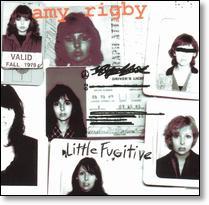
Amy Rigby: Little Fugitive (2005, Signature Sounds). First song looks for a metaphor for repeatedly bouncing back from heartbreak and finds the virtually unkillable Rasputin. Second puzzles over how come her new husband's ex-wife treats her so nice. Third imagines a night on the town with Joey Ramone. Fourth is a baroque lullaby about when her man loves her best. Fifth is psychedelic pop about her slutty past. Sixth bemoans needy men with a mocking chorus to rub it in. Six more songs follow: like the first six, each has its own distinctive shape and lyrics. The most consistent set of songs, even given the most varied range of music, she's released in a career that has now run to five straight A-list records. A
Sufjan Stevens: Illinois (2005, Asthmatic Kitty): First time through this repeatedly set off my classical music bullshit detector -- the strings, the horns, the elaborate theme and variation and counterpoint and interlude, the suite structure, little bits of percussion, everything except the vocals which are never operatic. I had developed an intense hatred of the stuff back when I was a child, to the point that someone like Beethoven would make me nauseous, but this never elicited second stage symptoms. Instead, it grew on me. You can chalk this up as proof that the high vs. pop culture wars of the '50s are over. I figure Stevens resorts to classical devices not because he hopes to elevate the music but because he has the education and wit to try to make it work for him. His plan is to do an album about each state -- this is his second after Michigan. Sounds like an interesting WPA project. A-
Rachid Taha: Tékitoi (1998-2004 [2005], Wrasse): Algerian-born, French-raised; the burning banlieus of France are filled with the same demographic, estranged from their roots in an old world wrecked any way by colonialism, too French to go back, to foreign to be welcomed in. It's a dead end for most, but Taha is a rock star of the highest order. He looks like Springsteen on the cover, which is good enough for comparison: he respects his elders -- in his case the founders of Algeria's electro-pop known as rai -- and builds on their classic sound while scaling it up because the singer's charisma deserves no less. A-
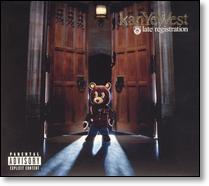
Kanye West: Late Registration (2005, Roc-A-Fella). I didn't stick with his first one long enough to acclaim it record of the year -- a college dropout myself, I harbor doubts that that was such a smart move, and not because I doubt that being smart is its own reward. But this one didn't give me any choice: it kicked in right from the start. He made his name first as a producer, and he takes no chances on his own shit, bringing in extra firepower he hardly needs. He doesn't just sample -- he orchestrates multiple samples, in one or two cases turning them into something symphonic and, even more remarkably, getting away with it. This gives him a consistently compelling musical platform, but that would be mere popcraft without his rhymes or his personality, which popped out less artfully when he charged George Bush with not caring about black people. Kanye cares, because he knows who he is, where he's come from, who's in his boat. And right now he's driving that boat, teasing us, taunting us, with his "Crack Music" -- and he knows he's got the goods. A
Briefly Noted
- Ahmed Abdullah's Ebonic Tones: Tara's Song (2004 [2005], TUM): The Sun Ra trumpeter convenes a reunion, with Billy Bang among the alumni, and baritone saxist Alex Harding the lone ringer; terrific fun, even Abdullah's three vocals -- two goofball Sonny Blount lyrics and a note-perfect "Iko Iko." A-
- Daby Balde: Introducing Daby Balde (2005, World Music Network): A Fouladou from Senegal, possibly a star in Dakar but previously unknown in these parts, introduces himself with a warm, delicate, gently understated album; reminds me more of early Baaba Maal than anyone else, but even Maal was more pop, with a more propulsive groove, but Balde's rhythm rolls along nicely. A-
- Balkan Beat Box (2005, JDub): From NYC, a place where it's possible to bring this mixed bag of Bulgarians, Moroccans, and Israelis together without gunfire; Big Lazy drummer Tamir Muskat provides the mostly electronic beats, and Gogol Bordello reeds man Ori Kaplan fleshes out the box, while guests come and go. A-
- Billy Bang: Vietnam: Reflections (2004 [2005], Justin Time): The jazz violin great moves on from the astonishing Vietnam: The Aftermath, working more with folk melodies, where two Vietnamese expatriates help on bridging the cultures; once more, Butch Morris' conduction keeps a large group tight. A-
- Blackalicious: The Craft (2005, Anti-): Look it up: craft, n., skill in doing or making something, as in the arts, proficiency; the good humor is evident from the first few notes, the guests fit in rather than stand out, the Chief X-Cel music floats the lyrics, and the words -- well, he's not called the Gift of Gab for nothing. A-
- Blueprint: 1988 (2005, Rhymesayers Entertainment): Named for a good year for hip-hop records, inspiration for a MC who channels KRS-One without repeating him, and fodder for DJ Rare Groove's underground scratches; the pieces deliver messages with unflinching insight but heart to match the wits, as if the attraction of retro is the desire for a fresh start. A-
- Brakes: Give Blood (2005, Rough Trade): Not really punk -- they squeeze 16 songs into less than 30 minutes, but betray no urgency in doing so; not country either, even though they cover "Jackson" and slip in some lapsteel; nor are they an art-rock band, despite tapping Jesus and Mary Chain for another cover; just a sane, simple little guitar band. A-
- Kate Campbell: Blues and Lamentations (2005, Large River Music): Born 1961, the idealistic daughter of a liberal Baptist preacher in the deep south, the civil rights movement is her muse, which she taps not only for "Freedom Train" but in the true spirit of Dr. King also for "Lord Help the Poor and Needy"; that may seem like too much sincerity, but don't miss her biscuits and gravy. A-
- Hayes Carll: Little Rock (2005, Highway 87 Music): Fringe country singer-songwriter -- co-credits with Guy Clark and Ray Wylie Hubbard help with bearings, with Dylan and Earle as obvious influences; still, he drapes "Good Friends" in jazz licks, wondering then recounting where they've all gone in a slice of life that takes some aging to settle in. A-
- Ravi Coltrane: In Flux (2005, Savoy Jazz): He tracks his legendary father, who died when he was two, as assiduously as Hank Williams Jr., but he's smarter and keeps better company; like its predecessor, this second album is so solidly crafted it would be churlish to point out that he's not the genius his father was. A-
- Ry Cooder: Chávez Ravine (2005, Nonesuch/Perro Verde): We've heard plenty from Brooklyn about the hole shot in the city's heart when Walter O'Malley sent the Dodgers west, but Cooder is the first to look at the Mexican neighborhood levelled to make way for the ballpark; from Don Tosti to Lieber & Stoller, from the red scare to third base, this is a soundtrack to an unfilmed story, a bit too subtle, but all the more poignant for it. A-
- Danger Doom: The Mouse and the Mask (2005, Epitaph): The "Adult Swim" reference is outside my area of expertise -- gather it's a cartoon show, which makes sense given that Danger Doom is a cartoon producer and MF Doom is the Hanna-Barbera of hip-hop -- but while the lyrics Doom barks out are clever enough to grab my attention, the flow of the beats and whatever impresses the most. A-
- The Deacons: Brooklyn Towne (2004, Made in Brooklyn): Punks, as tight as Stiff Little Fingers, as tuneful as the Rezillos, conscious enough to complain about living in a land where millions are in prison, clever enough to rework "Ohio" to draw the line from Nixon to Bush, learned enough to quote "The Longshoremen's Ballad." A-
- DJ Spooky That Subliminal Kid & Dave Lombardo: Presents Drums of Death (2005, Thirsty Ear): Spooky can crank his machines up faster than Lombardo's speed-metal drums, but not much, and the drums are the treat here; or one of the treats -- another is guest rapper Chuck D, who knows hard beats when he feels them. A-
- Missy Elliott: The Cookbook (2005, Goldmind/Atlantic): Misdemeanor is back, not on the artist line, but on the producer's; no smash hits, no Timbaland, lots of guests who help out but never take over, leaving the hard beats, the tough scratches, an attitude that takes charge and brooks no bullshit. A-
- Fannypack: See You Next Tuesday (2005, Tommy Boy): So they didn't get famous -- at least they did well enough to get a second album shot, and having grown noticeably older gives their goofball beats a liberatory air of deliberation; not that they're that much older. A-
- Four Tet: Everything Ecstatic (2005, Domino): Not the pleasant surprise its predecessor Rounds was, but not for lack of pleasantry; Kieran Hebden's spliced-together music sounds so natural it would be rude to point out that it's merely constructed -- all music is constructed, and the difficulty factor of using a laptop to make it work may even be greater. A-
- Robbie Fulks: Georgia Hard (2005, Yep Roc): He's been making fair facsimiles of country songs for some while now, but never before has he strung such a broad range together, and he's never been this funny before; one reason is that he's discovered that "Countrier Than Thou" isn't just a game he can't win, it's a game he doesn't even like. A-
- Jimmie Dale Gilmore: Come On Back (2005, Rounder): His first record in five years, following the gorgeous mostly covers One Endless Night, is another covers album, and the classic songs are way too obvious, but as a tribute to his late father the obvious is a testament to his plain-spoken roots; again, he gets by on his voice -- he's the most natural country singer since Lefty Frizzell, proven once again because only Frizzell's song makes you long for the original. A-
- The Go-Betweens: Oceans Apart (2005, Yep Roc): The most adult rock band of the '80s broke up by 1990, then picked up a decade later after solid solo albums by Grant McLennan and Robert Forster didn't quite sum up; I remember a more integrated female voice, but the guitars and the songcraft are back, and the writers are more adult, and more literate, than ever. A-
- Gogol Bordello: Gypsy Punks (2005, Side One Dummy): Chernobyl refugee Eugene Hütz's band identifies with such primordial refugees as Gypsys and Jews while stiffening Slavic beats to punk-like intensity, but the social glue sounds Brechtian, especially on the rowdy "Start Wearing Purple"; lyrics in English, so you don't have to decipher "Think Locally Fuck Globally" from Ukrainian. A-
- Charlie Haden/Liberation Music Orchestra: Not in Our Name (2004 [2005], Verve): A generation removed from "Song for Che," Haden's liberation music has turned defensive, almost nostalgic for an America that should have offered hope for civilization but has turned sour, squalid, vindictive, paranoid, and more than a little stupid; Carla Bley is so central here her name should be on the spine. A-
- I'm Not a Gun: Our Lives on Wednesdays (2005, City Centre Offices): Instrumental constructions by John Tejada and Takeishi Nishimoto, mostly guitar tones with beats adding to rather than driving the rhythm, achieving an organic, almost effortless flow. A-
- Vijay Iyer: Reimagining (2004 [2005], Savoy Jazz): I rather prefer Steve Lehman's acid edge on Fieldwork's Simulated Progress to the more Coltrane-ish alto saxophonist here, Rudresh Mahanthappa, but this is really Iyer's showcase, and what it shows is why he's the pianist everyone's talking about. A-
- Linton Kwesi Johnson: Live in Paris With the Dennis Bovell Dub Band (2003 [2005], Wrasse): A poet-critic-propagandist, one who sees terror as the work of fascists for the ruling class, Johnson raps idiomatically over Bovell's quirky dub; if you missed him, do your homework -- Forces of Victory (1979), Making History (1984), Tings An' Times (1991); he moves on here to talk about the need for a shorter working week ("More Time"), while summing up his quarter century on the soapbox. A-
- Sheila Jordan + Cameron Brown: Celebration: Live at the Triad (2004 [2005], High Note): Her 76th birthday bash, but without the guests that marred Marian McPartland's 85th or the big band that lifted her mentor George Russell's 80th -- just bass and our last real bebop singer, with a voice that stops you cold and a restive, fearless quest for finding new connections in old pieces -- her free-roaming medleys are the highlights. A-
- Henry Kaiser & Wadada Leo Smith: Yo Miles! Upriver (2005, Cuneiform, 2CD): This is this group's third 2-CD set, and while the pieces mostly stick to the Davis songbook, including a 26:36 "Bitches Brew," they've evolved as well, moving from tribute band to more like a fresh restart; Smith, always a fiercely independent improviser, moves beyond Miles, while Kaiser and the rhythm still hew close to the pathbreaking original. A-
- Living Things: Black Skies in Broad Daylight (2004, Loog/DreamWorks): This is the German import -- haven't heard the US debut, Ahead of the Lions (Jive/Zomba), which swaps three songs here for new ones, to who knows what effect; three brothers, more/less, from St. Louis suburbs, they make hard rock like the post-punk/pre-grunge '80s, with politics closer to the Three Johns than Black Flag. A-
- Madonna: Confessions on a Dance Floor (2005, Warner Bros.): Not quite the throwback promised -- I still prefer Nile Rodgers' good groove to Mirwais' contempo-funk -- and her lyrics have misplaced her Zeitgeist, but I too love New York (her corniest lyric here) and dig the segue from "Jump" to "How High," and when pressed on "Like It or Not" have to give it to her. A-
- M.I.A./Diplo: Piracy Funds Terrorism, Vol. 1 (2004, no label): This remix preceded the official unveiling of the original, propelled by the frictionless speed of the internet; it's longer, padded with unclearable samples which don't expand her sound so much as the loose web of associations we hear her with. A-
- The Mountain Goats: The Sunset Tree (2004 [2005], 4AD): Another short, enigmatic release from singer-songwriter John Darnielle's pseudo-group; not much here but the auteur's strum and twang -- guitar, maybe a little cello, a whiney little voice; his lyrics escape me, but the songs impart such formal conviction, maybe they mean something. A-
- Maria Muldaur: Sweet Lovin' Ol' Soul (2005, Stony Plain): A Memphis Minnie tribute plus loosely related country blues -- same idea, similar songs, many of the same guests as her Richland Woman Blues, a distaff match for ZZ Top's Deguello and Dr. John's Gumbo: new albums that sum up old music so completely they stand on their own; this is a second helping, nearly as satisfying as the first. A-
- Ted Nash and Odeon: La Espada de la Noche (2005, Palmetto): With violin and accordion this glides easily into tango but the stylistic range is broader even if mostly Latin, including two movements from "Concierto de Aranjuez" and "A Night in Tunisia"; Clark Gayton's tuba takes the place of a bass, and Nash plays many reed instruments, but remains most distinct on tenor sax. A-
- New Order: Waiting for the Sirens' Call (2005, Warner Bros.): Nothing here hits the stratosphere quite like their classic hits, but their technique (or formula) is so sureshot that all songs fly high and some come close to breaking; the odd one out sounds like a Pet Shop Boys outtake, another sureshot formula. A-
- Pernice Brothers: Discover a Lovelier You (2005, Ashmont): In any case, a lovely record, its loping rhythm buffed up with shimmering guitars that put the shine on sentimental nice thoughts; any illusions I may have had about Joe Pernice having country roots have been dispelled -- deep down, this is a kinder, gentler Yo La Tengo. A-
- Los Pleneros de la 21: Para Todos Ustedes (2005, Smithsonian/Folkways): Bomba and plena, two drums, two threads from the Puerto Rican music's African roots that Juango Gutiérrez's NY-based group combines with guitar, scattered horns, chorus, chants and raps -- closer to the rural end of the Afro-Cuban spectrum than to salsa, it feels old, invokes family, but is modern enough to celebrate the liberation of the US Navy's bomb range on Vieques. A-
- The Ponys: Celebration Castle (2005, In the Red): The best indie guitar band I've heard since, oh, Spoon -- not so far back to make this a rare event, but my expectations don't amount to much, so I'm surprised anyway; the charm here is the guitar sound, the momentum, the classic formalism of the rock song -- what they add in terms of attitude or worldview escapes me, but that's not something I worry about. A-
- John Prine: Fair & Square (2005, Oh Boy): Rather slight, offhand release for his first set of new songs in a decade, but in a time when so many humans aren't human, not working too hard keeps him rooted and comfortable; besides, his songwriting buddies feed him melodies that sound authentic, and the songs he wrote himself are as right as ever. A-
- Public Enemy: New Whirl Odor (2005, SlamJamz): For all the hard beats and attitude, Chuck D's like the kid in "The Emperor's New Clothes," the one who sees plain facts and is too straight to pretend otherwise; staked out from Abu Ghraib to Guantanamo, the first Bush's "new world order" stinks to high hell and Chuck's not the sort to mince words; if you think he should move on, well, move on yourself. A-
- Marc Ribot: Spiritual Unity (2004 [2005], Pi): One more step in the Albert Ayler revival, a tribute band much like Yo! Miles, but with Ribot's guitar in the lead, the melodies get clearer and the harmonics richer; authenticated by Ayler bassist Henry Grimes in his old slot, with Chad Taylor on drums and Roy Campbell hailing the stratosphere on trumpet. A-
- The Rolling Stones: A Bigger Bang (2005, Virgin): The once great band still sounds like none other, even though they never quite sounded like this before; around 1978's Some Girls they got over their fear of getting old and enjoyed a brief revival up through 1981's Tattoo You, a flexible style they've kept on ice ever since, but what this comeback shows is that all they had to do to snap it back was get rude and crude, hard again. A-
- Roswell Rudd & the Mongolian Buryat Band: Blue Mongol (2005, Sunnyside): The great jazz trombonist engages a conservatory-trained Mongolian folk group; part of the interest is the similar harmonics between trombone and throat singing, but the highlight is when Rudd cops a Beach Boys line for "Buryat Boogie." A-
- Randy Sandke and the Inside Out Band: Outside In (2005, Evening Star): In the last few years or so Sandke grew up from being a respectable trad-oriented trumpeter into something like the new George Russell; this is the most ambitious of three albums this year -- each breaks new ground in different directions, but this one gains from well-schooled outsiders Ray Anderson and Marty Ehrlich, and a spoken word piece that argues, "jazz will never die as long as people can listen to it with their feet." A-
- Wayne Scott: This Weary Way (2005, Full Light): First album by 71-year-old country patriarch -- son Darrell has a minor rep in roots country and pulled these sessions together, strong with songs about whiskey, women, and Jesus; Scott has a voice that sounds well lived in, as old and stately as the hills, which is why he's able to deliver the most convincing "Crash on the Highway" since Roy Acuff recorded his classic, back when Scott was a sprout. A-
- Wayne Shorter Quartet: Beyond the Sound Barrier (2002-04 [2005], Verve): Live performances, selected over an 18-month, three continent range; Shorter established himself as a major jazz figure in the '60s with Art Blakey and Miles Davis, they prostrated himself to Joe Zawinul's keybs in Weather Report, but he's made a remarkable comeback with this steady-working quartet, and for the first time ever convinces me that he has something going on soprano sax. A-
- Sirone Bang Ensemble: Configuration (2004 [2005], Silkheart): Listening to Charles Gayle getting comfortable in a back seat role is almost as much fun as the leaders' pared down string ensemble, with Bang's amplified violin at its most acidic; still more fun from young drummer Tyshawn Sorey, who has a blast. A-
- Ali Farka Touré & Toumani Diabaté: In the Heart of the Moon (2004 [2005], Nonesuch): Mali's answer to John Lee Hooker pulls his punches this time, blending in to Diabaté delicate kora in a lovely series of lithe little instrumentals. A-
- James Blood Ulmer: Birthright (2005, Hyena): The two previous Vernon Reid-produced records were tethered to tradition through famous studios, but this lacks crutches -- it has devolved into pure Blood; Ulmer wrote ten of twelve songs, tapping into the reptilian sludge of the blues, the will to survive in the face of evil; by turns grim and melancholy, I miss the jazz in his guitar, but will settle for the gravel in his voice. A-
- Waco Brothers: Freedom and Weep (2005, Bloodshot): In Jon Langford's native land, this would be "pub rock" -- rock and roll so straightforward and unassuming it can have no purpose other than to help you drink and socialize -- but since Langford moved to Chicago his music has gone native, making it even more so; where he is still an outsider is in the lyrics, which repeatedly penetrate our self-illusions, as in "we're only as strong as the drugs we're taking" and "kill or cure, whichever is faster." A-
- Mark Whitecage & the Bi-Coastal Orchestra: BushWacked: A Spoken Opera (2005, Acoustics): One lyric dates from 1776, addressed to a previous George who also had problems with insurgents; title dates from 1990, a previous Bush who meddled cavalierly in Iraq then left the mess to posterity; the rest are clippings from recent news, including reports on Ashcroft and Jesus; none of which matters as much on record as the anarchic jazz that swirls around the words. A-
- The White Stripes: Get Behind Me Satan (2005, V2): Jack White is as easy to dislike as the sickly red-black-white branding and slick hype that have made him as big a celebrity as Gwen Stefani; couldn't just be the songs, which are frequently matched by far lesser knowns, but the songs are solid enough to get him taken seriously by those of us turned off by his act; if he took "I'm Lonely" to Nashville he'd find some takers, but if Otis Redding was still alive he'd find salvation. A-
- Wide Right: Sleeping on the Couch (2004 [2005], Poptop): The band's a standard issue power trio, only with a woman, "rust belt mom" Leah Archibald, writing and singing the songs; the music is straight and hard, sometimes fierce -- you never imagined Loretta Lynn's "The Pill" with so much force. A-
- Stevie Wonder: A Time to Love (2005, Motown): He's slowing down, but spacing the records out so it's hard to measure any decline; pretty much the same record as the last one, Conversation Peace (10 years ago) and the previous one, Characters (18 years ago), leading us to expect his next definitive mix of funk and mush to come around in 2017. A-
Additional Consumer News
Omitted from the above were 2005 releases of A-list records that previously reviewed in Recycled Goods. This was usually because the source material was old even though it hadn't been released before.
- Africa Unite: In Dub (Echo Beach) A-
- Amadou & Mariam: Dimanche à Bamako (Nonesuch) A
- Buck 65: This Right Here Is Buck 65 (VP) A-
- Graham Collier: Workpoints (1968-75, Cuneiform, 2CD) A-
- Either/Orchestra: Éthiopiques 20: Live in Addis (Buda Musique, 2CD) A-
- Amjad Ali Khan: Moksha (RealWorld) A-
- Lyrics Born: Same !@#$ Different Day (Quannum Projects) A-
- Thelonious Monk Quartet With John Coltrane: At Carnegie Hall (1957, Blue Note) A
- Sonny Rollins: Without a Song (The 9/11 Concert) (Milestone) A-
- Run the Road (Vice) A-
- John Surman: Way Back When (1969, Cuneiform) A-
- The David S. Ware Quartets: Live in the World (1998-2003, Thirsty Ear, 3CD) A-
The longer list of omitted A-list albums are those I've previously reviewed in the Jazz Consumer Guide at the Village Voice.
- Rez Abbasi: Snake Charmer (Earth Sounds) A-
- Scott Amendola Band: Believe (Cryptogramophone) A-
- Fred Anderson/Hamid Drake/William Parker: Blue Winter (Eremite, 2CD) A-
- Anthony Braxton: 20 Standards (Quartet) 2003 (Leo, 4CD) A
- Tom Christensen: New York School (Playscape) A-
- Anat Cohen: Place & Time (Anzic) A-
- Avishai Cohen Trio & Ensemble: At Home (RazDaz/Sunnyside) A-
- Benoît Delbecq Unit: Phonetics (Songlines) A-
- Fieldwork: Simulated Progress (Pi) A-
- Dennis González's Spirit Meridian: Idle Wild (Clean Feed) A-
- Jerry Granelli: Sandhills Reunion (Songlines) A-
- Scott Hamilton: Back in New York (Concord) A-
- Happy Apple: The Peace Between Our Companies (Sunnyside) A-
- Gerry Hemingway Quartet: The Whimbler (Clean Feed) A-
- Ibrahim Electric: Meets Ray Anderson (Stunt) A-
- Fred Lonberg-Holm Trio: Other Valentines (Atavistic) A-
- Ravish Momin's Trio Tarana: Climbing the Banyan Tree (Clean Feed) A-
- One More: Music of Thad Jones (IPO) A-
- Greg Osby: Channel Three (Blue Note) A-
- Paraphrase: Pre-Emptive Denial (Screwgun) A
- William Parker: Luc's Lantern (Thirsty Ear) A-
- William Parker Quartet: Sound Unity (Aum Fidelity) A
- Dianne Reeves: Good Night, and Good Luck (Concord) A-
- George Russell and the Living Time Orchestra: The 80th Birthday Concert (Concept Publishing, 2CD) A-
- Jenny Scheinman: 12 Songs (Cryptogramophone) A-
- Steve Shapiro and Pat Bergeson: Low Standards (Sons of Sound) A-
- Tommy Smith & Brian Kellock: Symbiosis (Spartacus) A
- Mary Stallings: Remember Love (Half Note) A-
- The Vandermark 5: Alchemia (Not Two, 12CD) A-
- The Vandermark 5: The Color of Memory (Atavistic, 2CD) A-
Finally, some more jazz records that made my year-end list, but I don't have a published review for yet. They should appear in a future Jazz Consumer Guide, so consider this a sneak preview:
- Uri Caine/Bedrock: Shelf-Life (Winter & Winter) A-
- The Claudia Quintet: Semi-Formal (Cuneiform) A-
- Peter Epstein/Brad Shepik/Matt Kilmer: Lingua Franca (Songlines) A-
- Garage a Trois: Outre Mer (Telarc) A-
- Rich Halley Trio: Mountains and Plains (Louie) A-
- Steve Lacy/Joëlle Léandre: One More Time (Leo) A-
- Steve Lehman: Demian as Posthuman (Pi) A-
- Joshua Redman Elastic Band: Momentum (Nonesuch) A-
- Sonny Simmons: The Traveller (Jazzaway) A-
- Triptych Myth: The Beautiful (AUM Fidelity) A-
- Assif Tsahar/Cooper-Moore/Hamid Drake: Lost Brother (Hopscotch) A-
- Gerald Wilson Orchestra: In My Time (Mack Avenue) A-
Lead-in:
In an infinite universe, all the music you'll ever need already exists somewhere. We find more each month, but this month take a break to round up the best of 2005: singer-songwriters (Amy Rigby, Sufjan Stevens); rockers (Hold Steady, Ponys, Wide Right), rappers (Kanye West, Perceptionists, Blueprint, Buck 65); country (Bobby Pinson, Hayes Carll); beats (M.I.A., Four Tet); blues (Maria Muldaur, Blood Ulmer); even some jazz (Craig Harris, Ken Vandermark); many more (64 records).
Prospects
These are new 2005 records considered here but not included for various reasons. Presumably I'll dump them out in the blog.
Singles
- John Prine, "Some Humans Ain't Human"
- Hayes Carll, "Good Friends"
- Bobby Pinson, "Nothing Happens in This Town
Notes
These are some new 2005 records that I've seen plausible favorable reference to. I'll try to track at least some of these down before this column closes. [# - notes from listening to samples, number is priority to obtain, from 0-5]
- A Frames: Black Forest (Sub Pop) [3 - bit murky]
- Akon: Trouble (Universal) [1 - rather soft rap for all the muscles]
- All Natural: Vintage (All Natural) [3 - multi-voice rap, subground]
- Animal Collective: Feels (Fat Cat)
- Annie: Anniemal (Big Beat) [1 - possible dance pop]
- Antony & the Johnsons: I Am a Bird Now (Secretly Canadian)
- Art Brut: Bang Bang Rock & Roll (Banana Recordings/Fierce Panda) [no samples]
- Asylum Street Spankers: Mercurial (Spanks-a-Lot)
- Atmosphere: You Can't Imagine How Much Fun We're Having (Rhymesayers) [3 - promising]
- Babyface: Grown & Sexy (Arista)
- Babyshambles: Down in Albion (Rough Trade)
- Devendra Banhart: Cripple Crow (XL) [1 - singer-songwriter with pop overtones, could be something]
- Bantu Feat. Ayuba: Fuji Satisfaction (Piranha) [1 - Jesus rools]
- Beck: Guero (Interscope)
- Brendan Benson: The Alternative to Love (V2)
- Bettie Serveert: Attagirl (Palomine/Minty Fresh) [2 - loose pop]
- Black Eyed Peas: Monkey Business (A&M) [3 - loose funk, pop moves]
- Bloc Party: Silent Alarm (Vice)
- The Books: Lost and Safe (Tomlab) [2 - samples don't reveal much]
- Bright Eyes: I'm Wide Awake (Saddle Creek) [2 - don't trust him]
- The Brunettes: Mars Loves Venus (Lil' Chief) [2 - New Zealand import, male/female pair, can be funny]
- Buck 65: Secret House Against the World (WEA) [3 - hard to tell]
- Caro: The Return of Caro (Orac)
- Caitlin Cary & Thad Cockrell: Begonias (Yep Roc)
- The Chemical Brothers: Push the Button (Astralwerks) [3 - usual jangle]
- Clap Your Hands Say Yeah (Clap Your Hands Say Yeah)
- Clem Snide: End of Love (SpinArt) [3 - drawl, "Jews for Jesus Blues"]
- The Clientele: Strange Geometry (Merge) [2 - nice easygoing guitar pop sound]
- Common: Be (Geffen) [3 - seems solid]
- Deerhoof: Runners Four (Kill Rock Stars) [3 - angular rock, toy-pitched female voice]
- DJ Koze: Kosi Comes Around (Kompakt)
- Missy Elliott: The Cookbook (Atlantic/Gold Mind)
- Fannypack: See You Next Tuesday (Tommy Boy) [4 - hippity hop]
- 50 Cent: The Massacre (Shady/Aftermath/Interscope) [2 - tough talk]
- Jason Forrest: Shamelessly Exciting (Sonig) [3 - sampler hack, hard to tell]
- Franz Ferdinand: You Could Have It So Much Better (Domino) [3 - some popcraft, some guitar]
- Buddy Guy: Bring 'Em In (Silvertone)
- Merle Haggard: Chicago Wind (Capitol) [3 - classic, some politics too]
- Jaga Jazzist: What We Must (Smalltown Supersound/Ninja Tune)
- Emmanuel Jal & Abdel Gadir Salam: Ceasefire (Tugboat) [4 - from Sudan, oud and vocal, good]
- Sharon Jones: Naturally (Daptone)
- Kiki & Herb Will Die for You (Evolver)
- Kings of Leon: Aha Shake Heartbreak (RCA)
- Mike Ladd: Father Divine (ROIR) [3 - rap, beats, Vijay Iyer, hard to tell]
- Bettye Lavette: I've Got My Own Hell to Raise (Anti-) [2 - not obviously classic]
- Low: The Great Destroyer (Sub Pop)
- Shelby Lynne: Suit Yourself (Capitol) [1 - straightforward]
- The Magic Numbers (Capitol)
- Stephen Malkmus: Face the Truth (Matador) [2 - usual shit]
- The New Pornographers: Twin Cinema (Matador) [1 - don't really like them]
- Sam Prekop: Who's Your New Professor? (Thrill Jockey)
- Amy Ray: Prom (Daemon) [2 - straight songwriter's roots rock]
- Rogue Wave: Descended Like Vultures (Sub Pop) [1 - pop-alt rock band]
- Cheb I Sabbah: La Kahena (Six Degrees)
- Thione Seck: Orientation (Stern's Africa)
- Shukar Collective: Urban Gypsy (Riverboat)
- Silver Jews: Tanglewood Numbers (Drag City) [2 - alt-rock, deep singer, some hooks]
- Sleater-Kinney: The Woods (Sub Pop) [2 - non compris]
- Spoon: Gimme Fiction (Merge) [3 - exemplary rock band]
- Bruce Springsteen: Devils and Dust (Columbia)
- Sufjan Stevens: Illinois (Asthmatic Kitty) [5]
- Superpitcher: Today (Kompakt) [3 - nice, simple beats; bit more on one track]
- Rachid Taha: Tékitoi (Wrasse) [4 - rocks the casbah]
- Transplants: Haunted Cities (LaSalle/Atlantic) [3 - clean, tight punk]
- John Vanderslice: Pixel Revolt (Barsuk) [1 - singer, some nicemelodies]
- Loudon Wainwright III: Here Come the Choppers! (Sovereign Artists)
- We Are Wolves: Non-Stop (Fat Possum) [2 - noise rock, with animal sounds; interesting]
- The White Stripes: Get Behind Me Satan (V2)
- Gretchen Wilson: All Jacked Up (Epic) [3 - country trailer trash]
- Wolf Parade: Apologies to the Queen Mary (Sub Pop)
While we're at it, here are some recommended old records/compilations:
- Gaby Lita Bembo and Orchestre Stukas du Zaïre: Kita Mata ABC (RetroAfric)
- Linton Kwesi Johnson: Live in Paris With the Dennis Bovell Dub Band (Wrasse)
- The Rough Guide to Boogaloo (World Music Network)
- The Rough Guide to the Music of the Balkan Gypsies (World Music Network)
- The Rough Guide to the Sahara (World Music Network)
Copyright © 2005 Tom Hull.