A Consumer Guide to the Trailing Edge: May, 2006
Recycled Goods (#31)
by Tom Hull
 |
 |
I keep begging for more world music to add to this column, but most of what I wind up hearing is Latin and more/less jazz. As recent pro- and anti-immigration actions make clear, Latin is a part of the world that increasingly overlaps the US. It's close enough that most record stores make a distinction between Latin and World, yet it's still exotic enough that gringos like yours truly are perplexed. And like many things, the more I learn, the more questions occur to me. I'll be dropping more in here as I figure it out, or failing to figure it out at least acknowledge its presence. The big chunk this time is a survey of Adventure Music, an Oakland-based label that mediates between Latin America there and here.
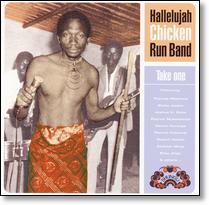
Hallelujah Chicken Run Band: Take One (1974-79 [2006], Alula): Thomas Mapfumo's chimurenga -- the Shona language music of struggle against the white settler government of Zimbabwe -- starts here. The band was formed by the owners of the Mangura copper mine to play for their workers. They attracted some young pros like Mapfumo, and won a recording contract in 1974. Mapfumo left soon after due to a pay dispute: he only appears on four tracks here, but the band tracked his progress, providing a broader context to Mapfumo's Chimurenga Singles (various overlapping collections on Shanachie, Zimbob, and DBK Works). As the map suggests, Zimbabwe's music is a mix of South African melodic elements and Congolese guitar charge. This delivers on both counts. A-
Ham Hocks and Cornbread: The Pounding, Pulsating Roots of Rock 'n' Roll (1945-53 [2005], JSP, 4CD): Before bebop took over, jazz was a social music, meant for dancing and getting down. The output of the small swing groups that dominated jukeboxes in the late '40s is better known now as rhythm & blues or jump blues. The major records by major artists have been compiled into several near-canonical sets -- the first disc of Rhino's 6-CD The R&B Box, the two jump blues volumes in Rhino's Blues Masters series, and most usefully Hip-O's 3-CD The Roots of Rock 'n' Roll. None of the classics on those show up here, and half of the names are folks I don't recognize -- most of those I do recognize survived the period as minor blues or jazz artists. In other words, this is the average matrix the gem collections were extracted from. Indeed it succumbs to sameness, with sax lick after sax lick, blues shout after blues shout, boogie piano break after boogie piano break, all reiterated ad infinitum. But sameness at this level of excitement amounts to consistency: just goes to show how broad and fertile the moment was. B+
George Jones: The Essential George Jones (1954-99 [2006], Epic/Legacy): If I had free hand to put an introduction to George Jones together, I'd insist on three discs. The first would cover his years with Pappy Dailey, 1954-70, where he started as a hardcore honky tonker and peaked with such classic country fare as "The Window Up Above" and "She Thinks I Still Care." The second would cover the Billy Sherrill years, 1972-88, when Jones evolved into the definitive country crooner. The third would pick through his later work -- his reign as the godfather of neo-traditionalism. The three eras aren't perfectly balanced, but filling the third would be no sweat, and the first two force painful omissions. Maybe I'd add a bonus fourth disc -- fill it up with duets and novelties. No such comps exist. The closest is a 2-CD box called The Essential George Jones: The Spirit of Country ([1994], Columbia/Legacy), then this one, with four fewer songs -- only one post-1988 -- as well as an abbreviated title. Turns out that only 21 songs were deemed essential enough to make the cut both times, but how indelible the other halves are just proves my case. On balance, the changes balance out, but one absence strikes me as glaring: "Walk Through This World With Me." My mother was a big fan, and we played this song at her funeral. A
Mott the Hoople: All the Young Dudes (1972 [2006], Columbia/Legacy): At a time when English rock bands were going heavy metal or prog or both, this one just wanted to be a rock 'n' roll band, but didn't have a clue how to do it. Ian Hunter had an earnest Dylan imitation and liked to conceive of himself as the subject of sweeping ballads. Mick Ralphs was ready for groupies, and willing to associate with Bad Company to attain his dreams. Three quick albums stiffed, but the band started to cohere on the fourth, Brain Capers. Then along comes David Bowie, who slaps on a little makeup, has them cover Lou Reed's "Sweet Jane," writes them an anthem that namechecks T-Rex, and voilà -- glam rock, what punks listened to before punk rock came along. Mott, the follow-up, was a more coherent album; this one you can still see the scattered pieces, including "Sea Diver" -- the first Hunter ballad to prove transcendent. Too many bonus cuts, but it doesn't hurt to rough this music up a bit. A-
Roy Orbison: The Essential Roy Orbison (1956-88 [2006], Monument/Legacy, 2CD): He was America's greatest opera singer, possessing a high, piercing voice that expanded with volume to mind-boggling proportions. But while his voice always amazed, his hits came from a short 1959-64 window, when pre-Beatles rock was ruled by Brill Building schlock. Orbison grew up in the oil patch, got his first break with a Sun rockabilly hit, and spent much of his career plowing Marty Robbins country, but Fred Foster's strings set his voice free, letting the hits flow: "Only the Lonely," "Crying," "Blue Bayou," "Oh, Pretty Woman." This is touted as his only career spanning compilation -- "Ooby Dooby" from 1956, five cuts from Mystery Girl, his much hyped comeback album, posthumously released in 1989, plus the usual ephemera from soundtracks and concerts. The first disc, ending in 1964, is magnificent, but the same thrills are available elsewhere: e.g., For the Lonely: 18 Greatest Hits (Rhino), 16 Biggest Hits (Monument/Legacy). The second disc is surplus -- the voice breaks free on occasion, but more often lurks indecisively. B+
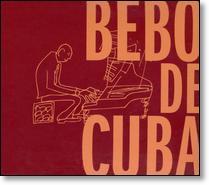
Bebo Valdés: Bebo de Cuba (2002 [2005], Calle 54, 2CD): Bebo was a prominent Cuban bandleader in the '50s. Following the revolution, he left Cuba, settling in Stockholm in 1963 and falling out of the public eye. His son Chucho rose to fame in the '70s as the founder of Irakere and as an outstanding pianist in his own right -- try to imagine Art Tatum with congas. Bebo resumed his recording in the '90s, finally scoring a worldwide hit with Lágrimas Negras, featuring Flamenco singer Dieguito El Cigala. The two sessions here -- the large canvas of his "Suite Cubana" and a more intimate retrospective called "El Solar de Bebo" -- cap his comeback, and in many ways returns us to an ideal, blissful remembrance of Cuban music. Unlike Chucho, Bebo plays piano with a measured elegance, but his orchestrations are so generous you feel like you're witnessing the full flowering of classic Cuban music. A-
Porter Wagoner: Misery Loves Company (1954-69 [2005], Masked Weasel): I grew up watching Porter's medicine show, broadcast from West Plains MO, a few miles over the border from my mother's ancestral Arkansas homestead. Hated it at the time, but eventually it came to signify the weird hypocrisy endemic to country music. Since then I've searched for the records that would secure his place in the pantheon, but the final judgment seems to be that he was just a hack in a flashy nudie suit. RCA's 20-cut The Essential Porter Wagoner is slight but basic, but now gone from print, replaced by the even slighter 16-cut RCA Country Legends. This budget comp reduces him even further, to 11 cuts, a mere 29:36, and doesn't provide much history, but the selection hits most of what he's remembered for: the patronizing "Skid Row Joe," the creepy "Cold Hard Facts of Life," the creepier "What Would You Do If Jesus Came to Your House," and the marvelous "Green, Green Grass of Home." B+
Western Swing and Country Jazz: An Expertly Selected Package (1935-40 [2005], JSP, 4CD): Another mop-up operation, this time collecting sizable chunks of obscure western swing bands: Ocie Stockard & the Wanderers (14 cuts), the Range Riders (6), Bob Dunn's Vagabonds (5), Roy Newman and His Boys (15), Modern Mountaineers (11), Jimmie Revard & His Oklahoma Playboys (25), Smoky Wood & Wood Chips (8), Cliff Bruner & His Texas Wanderers (3), Swift Jewel Cowboys (14). Bruner is the best known, but Stockard, Newman and Wood show up in John Morthland's bible (The Best of Country Music, published in 1984 and still the only country music guide worth owning), and "Everybody's Truckin'" (Modern Mountaineers) shows up on the occasional comp. Western swing has been preserved as country music, obscuring its jazz roots and referents -- for a revelation, compare Django Reinhardt and Bob Wills, then seek out Hank Penny and Hank Thompson working their way through the Woody Herman songbook. But jazz is the common denominator here, and not just a preference for horns over pedal steel -- the jazz here is race music, and not just the "darkies truckin'." We get two versions of "Black and Blue" -- a song all the more painful for those of us who grew up on James Brown, but there can be no doubt that Harry Palmer worships Louis Armstrong. Maybe these guys had more black inside than they figured. B+
In Series
Mike Marshall founded Adventure Music in 2003. I've puzzled over their records since 2004, so this represents about two-thirds of their catalog -- including synopses of three albums I've reviewed previously. Marshall grew up in Florida, where he learned mandolin, guitar and violin, winning bluegrass contests and joining the Dave Grisman Quintet at age 19. He's steadily expanded his musical interests, moving through groups like Psychograss and the Modern Mandolin Quartet. But most relevant here was a fateful trip that led him to decide that choro is the bluegrass of Brazil. And that, in turn, led to founding Adventure Music. The name sounds like one of those tour packagers, but the concept is more like a bridge. Most of the musicians on the labels were born in Latin America -- Brazil is central but by no means the only connection -- yet are based in the US. One lesson here is that if it sometimes seems like Latin America is poised to swallow the North, it is partly because there are those in the North who relish the prospect.
- Mario Adnet & Zé Nogueira Present Moacir Santos: Choros & Alegria (2005, Adventure Music): Afro-Brazil's 80-year-old sax legend only appears on a couple of vocals, but his arrangements, dating back as far as 1942, are lovingly developed for this textbook tribute. B+
- Marcos Amorim: Sete Capelas (Seven Chapels) (2005 [2006], Adventure Music): One thing that makes Brazilian guitarists sound so much alike is the soft chime of nylon strings; matched with bass, drums and flutes, this veers close to stereotypical samba, a mild seasoning that disguises its cleverness with innuendo. B+
- Antonio Arnedo: Colombia (2000 [2005], Adventure Music): The grand tour with folk instruments and trad tunes, but reconstituted in Brooklyn, with the leader's light sax and flutes -- think Gato Barbieri, then tone it down a bit -- and critical beats by the amazing Satoshi Takeishi. B+
- Weber Iago: Os Filhos do Vento (Children of the World) (2004, Adventure Music): A Brazilian pianist, with a quick, sure touch on his solos, but here he aims for much more in a series of complex orchestral pieces, culminating in the 32-minute title ordeal; fleshed out mostly by flutes, bass/cello, and percussion, plus Paul McCandless on two cuts. B-
- Gui Mallon: Live at Montreux (1999 [2004], Adventure Music): Brazilian guitar, thickened by strings and percussion, with flute and sax for decoration -- weight not specified, but figure on soprano; centers on the long "Brasil, Brazil Suite," culminating in, of all things, a rap. B+
- María Márquez: Nature's Princess/Princesa de la Natura (2003 [2004], Adventure Music): Venezuelan singer, based in Oakland; the music has an unfamiliar latin feel, evenly paced and wrapped in lush arrangements, but her sharp, almost arch, voice is at best an acquired taste. B
- Mike Marshall: Mike Marshall & Choro Famoso (2004, Adventure Music): A bluegrass mandolinist falls in love with choro, but can't play it without reminding you of bluegrass, and to make the fusion even more auspicious, he throws in a klezmer-ish clarinet. B+
- Mike Marshall: Brazil Duets (2005, Adventure Music): The label head continues his move from bluegrass to Brazil, playing mandolin or guitar with various second instrumentalists; interesting as exercises, but with just two parts, none more percussive than Jovino Santos Neto's piano, it runs a little thin. B
- Modern Traditions Ensemble: New Old Music (2003 [2005], Adventure Music): New versions of Brazilian choro classics, done by a five piece group led by pianist Benjamin Taubkin; runs toward the nice side, which is often the point with choro. B+
- Jovino Santos Neto: Roda Carioca (Rio Circle) (2005 [2006], Adventure Music): Perhaps it's the northeast roots or the 12 years he's lived in Seattle, but this is one Brazilian record that doesn't pull its punches; Neto plays piano, melodica, flutes, and accordion -- the latter on the exuberantly Tango-ish "Coco Na Roda" is what kicks the album into overdrive. B+
- Orquestra Popular de Camara (2004, Adventure Music): World music twice removed, as when a song from Turkmenistan, cribbed off Peter Gabriel's label, gets refracted through Brazilian ears and beats. B
- Moacir Santos: Ouro Negro (1965-92 [2004], Adventure Music, 2CD): It's tempting to think of Santos as a Brazilian Quincy Jones, minus the business skills; Santos toiled as arranger, composer and conductor behind stars like Milton Nascimento, Gilberto Gil and João Bosco, who sing a track each here; his own pieces were typically named "Thing" followed by a number, a modest appelation for the basic building blocks of Brazilian popular music -- all revealed here. A-
- Ricardo Silveira/Luiz Avellar: Live: Play the Music of Milton Nascimento (2004, Adventure Music): Stripped down to a trio -- Robertinho Silva's percussion adds significantly to Silveira's nylon string guitar and Avellar's piano -- the simple eloquence of a famous songbook comes clear. B+
- Nicola Stilo/Toninho Horta: Duets (1999 [2005], Adventure Music): Horta plays guitar and sings in Brazil's chanson lite; Stilo plays flute, inevitably more lite; the only thing that keeps this earthbound is its unpolished charm. B
- Symphonic Jobim (2003 [2005], Adventure Music, 2CD): Recorded by members of the Orquestra Sinfónica do Estado do São Paulo, conducted by Roberto Minczuk, according to a project by Mario Adnet and Paulo Jobim; an honor, no doubt, but symphonic Jobim is symphonic first, much like symphonic Beatles and symphonic Stones, and no more appealing than symphonic anything else. B-
- Claudia Villela/Kenny Werner: Dreamtales (2004, Adventure Music): She's a singer from Brazil, but based in the Bay Area and working here at least exclusively in English; Werner is a fine accompanist on piano, but the intimate improvisations here have an uncertain, deracinated feel. B
Briefly Noted
- Angá: Echu Mingua (2006, World Circuit/Nonesuch): Afro-Cuban, Yoruba to be more specific; mastermind Angá Díaz plays congas, timbales, cajones and guiro, and pursues so many big ideas, ranging from Argentine bandoneon to "A Love Supreme," in so many ways with so many musicians -- strings, horns, choruses, legendary bassist Cachaito, turntablist Dee Nasty -- that it overwhelms and confuses, even if now and then you suspect he might be on to something. B
- Gaby Lita Bembo and Orchestre Stukas du Zaïre: Kita Mata ABC (1974-83 [2005], RetroAfric): This is classic soukous, not all that cleanly recorded, but this wasn't a very clean group; the stock line on Lita Bembo was that he was a "great showman" -- i.e., he never missed an opportunity to kick a high energy level even higher; played so fast and hearty, it's remarkable that the silkiness of the guitars still shows through. A-
- Richard Bona/Lokua Kanza/Gerald Toto: Toto Bona Lokua (2004 [2005], Sunnyside): Three vocalists, more or less removed from Africa and relocated into the non-specific wing of the world fusion genre; Bona plays a wide range of instruments, none of which locate this firmly in a groove or lift it much above indistinct. B
- Charles Brown: Black Night ([2005], Masked Weasel): Booklet says these come from the '40s and '50s, but one tell is that the "brother in Korea" from the 1950 original of "Black Night" has moved on to Vietnam; few of these 14 songs show up in his Complete Aladdin Recordings (1945-56, Mosaic) or in the Classics' series (six volumes so far, up to 1951), but they do show up in redundant comps from the usual suspects (Cleopatra, Madacy, St. Clair) and the lineup song-for-song matches Stardust's The Very Best of Charles Brown Featuring Shuggie Otis -- Otis started recording in 1969 and worked with Brown in 1975, but that doesn't cover it all either; if you don't care about such things, this does capture the sound of Brown's sly piano blues, and the three Xmas songs are better than you'd expect. B
- Cliff Bruner and His Texas Wanderers (1937-50 [1997], Bear Family, 5CD): A western swing fiddler, historically notable, but only available in this overly complete, overly expensive, but lavishly documented German box -- further proof that nobody appreciates classic American music more than Europeans, much less is able to afford it. B+
- Dr. John: Right Place, Right Time (1989 [2006], Brinji Brim/Hyena): Second installment from the good Doc's stash of private tapes; first was the self-explanatory All By Hisself, which showed hisself to be a sly self-interpreter and a funky one man band; this one comes with a searing band who add much volume but little light. B
- Does Anybody Know I'm Here? Vietnam Through the Eyes of Black America 1962-1972 (1962-73 [2005], Kent): A sequel to A Soldier's Sad Story -- haven't heard it, but it got first helpings to the songs, but both volumes are pretty obscure; starts out ambivalent, turns sad and/or bitter, but never jells into political critique; stylistically runs the gamut of a decade of hope and fear and frustration. B+
- The Electric Light Orchestra: No Answer (1970-71 [2006], Epic/Legacy): First album, with Roy Wood as well as Jeff Lynne, so this is basically the tawdrier, more pretentious side of the Move on cellos; not following in any evolved footsteps, they lumber and blunder their way through classical sounds in rock time. B-
- The Electric Light Orchestra: ELO II (1972 [2006], Epic/Legacy): Roy Wood still plays on two cuts, but Jeff Lynne has taken charge; back in the Move Lynne contributed the pop hooks while Wood provided the oblique humor, so you can see where this is going, but it's not there yet; meanwhile, Lynne gets his humor on the cheap, rolling over Chuck Berry to let Beethoven have the last word. B
- Merle Haggard: 40 #1 Hits (1966-96 [2004], Capitol, 2CD): The automatic selection criterion leads to lazy documentation, which with Haggard is always suspicious; unlike the 43 Legendary Hits he re-recorded for BNA in 1999, these appear to be legit, right down to the rare studio "Okie From Muskogee," with licensing dues as necessary from MCA and Epic; he's done so much there's no simple way to organize it, but his best songs didn't always go #1, and those that did weren't always tops. A-
- Ladysmith Black Mambazo: Long Walk to Freedom (2006, Heads Up): Twenty-some years after South Africa's great mbube group first gained our attention with Induku Zethu (1984, Shanachie), the limits of their a cappella concept have become obvious; still, they carry on, with gimmicks for variety: guest stars this time, like Taj Mahal and Emmylou Harris, and a cover of the song Paul Simon introduced them on. B+
- Souad Massi: Honeysuckle (Mesk Elil) (2005, Wrasse): A singer-songwriter, born in Algeria, based in Paris; no need to ask why; she's just trying to enjoy her life and music, which is personal and poignant -- more troubadour than the electrified dance music of the chebs and chabas, although they remix one impressively -- as if the ideologues and idiots of the world could be safely ignored. B+
- Liza Minnelli: Liza With a "Z" (1972 [2006], Columbia/Legacy): The soundtrack to Bob Fosse's concert for television, a career climax capping her star role in the film of Cabaret; she was a singer in her mother's tradition, dated and campy after rock took over; several songs feel like hand-me-downs, but not "Ring Dem Bells" nor the 10:22 "Cabaret Medley" -- all the more powerful for its concision. B+
- Mott the Hoople: Mott (1973 [2006], Columbia/Legacy): One of the great rock albums of the '70s; the artistic direction had resolved in favor of Ian Hunter, whose Dylanizing had become his own voice, but the band -- Mick, Verden, the perfectly named bass player Overend Watts, the one who's "just a rock 'n' roll star" -- was still intact, and never stronger. A
- Mott the Hoople: The Ballad of Mott: A Retrospective (1972-75 [1993], Columbia/Legacy, 2CD): Still in print, at least until the inevitable The Essential Mott the Hoople comes out, unlikely to be an improvement unless they snatch "Death May Be Your Santa Claus" from Atlantic; contains 15 of 18 songs from the two reissues, "Rose" from the bonus tracks, plus useful stuff fore and aft. A
- Putumayo Presents: Brazilian Lounge (2000-05 [2006], Putumayo World Music): Another smooth-flowing mix disc where the new samba generation recapitulates the old, proving that newer technology needn't make any significant difference; most promising artist here: BossaCucaNova. B+
- Putumayo Presents: Turkish Groove (1999-2005 [2006], Putumayo World Music): In Attaturk's nationalism, anyone who spoke Turkish was a Turk, a declaration that kicked all the cosmopolitan diversity of the Ottomans into a modernizing hat; Turkish music remains a mix of Arabic and Balkan influences with Euro pop-beats, especially when you select for groove. B+
- Las Rubias del Norte: Panamericana (2006, Barbès): Led by singers Emily Hurst and Alyssa Lamb, both formerly of the NY Choral Society, backed by various suspicious characters -- the cuatro player comes from France, the bassist "speaks better Latin than Spanish," etc.; at times they sound like the Roches en Español, but I suspect they are just smartass students, and what they like most about the polymorphuousness of Latin music is its perversity. B+
- The Best of Shel Silverstein: His Words, His Songs, His Friends (1965-85 [2005], Columbia/Legacy): a few songs he wrote and performed ("A Front Row to Hear Ole Johnny Sing"), more he wrote and others sung ("A Boy Named Sue," "Freakin' at the Freakers' Ball, "Cover of the Rolling Stone"), spoken bits from his children's books (A Light in the Attic); any of these might be worth exploring on its own, but together they're merely scattershot. B
- Nina Simone: Sings the Blues (1966-69 [2006], RCA/Legacy): She has the pipes to be a great blues singer, and she can boogie a little on piano, but she's too fussy to turn in a straight blues album, even when that's the concept; this comes close enough to make you think she could do better; "Backlash Blues" belongs on her message tape, "I Want a Little Sugar in My Bowl" on her hits, "Since I Fell for You" is a good cover with a little harmonica. B
- Nina Simone: Forever Young, Gifted and Black: Songs of Freedom and Spirit (1967-69 [2006], RCA/Legacy): She was meant to sing her secular civil rights hymns, but "Backlash Blues" and "Mississippi Goddam" slip a bit in live versions, so the only song here that delivers all she can do is "I Wish I Knew How It Would Feel to Be Free"; filler from Dylan, the Byrds, and Hair don't cut it, and two takes of the title song have been permanently scorched by Bob & Marcia's ska version. B
- Nina Simone: Silk & Soul (1967-69 [2006], RCA/Legacy): It's hard to convey just how awful her "Cherish" is, but how much can you penalize an album for one song? Depends on whether there's anything else on it you'd ever want to hear again. C
- Nina Simone: The Soul of Nina Simone (1963-87 [2005], RCA/Legacy): Aside from one much later Verve track thrown in for no obvious reason, this is a rather arbitrary selection of her '60s tracks, with no discernible theme except that life is hard but she's hard too; half of the tracks are remarkable, and not even the "Porgy and Bess Medley" sucks, so figure this to be one of her more consistent comps. B+
Lead-in:
In an infinite universe, all the music you'll ever need already exists somewhere. We find more each month: vintage Afro (Hallelujah Chicken Run Band, Orchestre Stukas), modern Cuban (Angá Díaz, Bebo Valdés), country hams (George Jones, Porter Wagoner, Roy Orbison), young dudes (Mott the Hoople, ELO), JSP boxes (jump blues, western swing), adventures in and beyond Brazil; many more (46 records).
Copyright © 2006 Tom Hull.